Plants Every Oregon Gardener Is Choosing For A No-Fuss Yard In 2026
Some Oregon yards seem to handle everything the weather throws at them, while others feel like a constant project.
With months of rain followed by long, dry stretches, it does not take much for a high-maintenance landscape to become overwhelming.
That is why more Oregon gardeners are shifting toward plants that can keep up without constant attention.
Across the Willamette Valley, coastal areas, and even the high desert east of the Cascades, these low-fuss choices are gaining traction.
They bring color, structure, and reliability without turning your yard into a full-time job.
1. Oregon Sunshine Brings Bright Color With Very Little Effort
Sunny yellow flowers that practically take care of themselves sound too good to be true, but Oregon Sunshine proves otherwise.
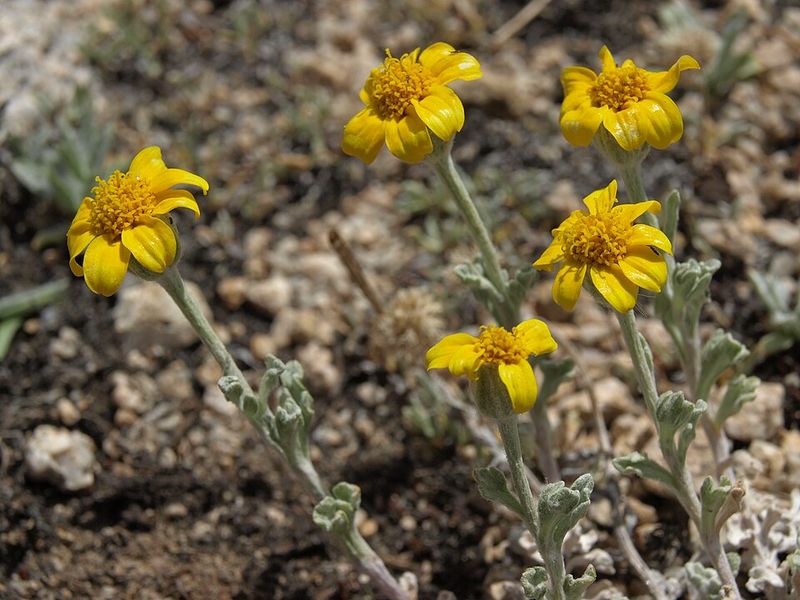
Known botanically as Eriophyllum lanatum, this cheerful native wildflower has been quietly winning fans across Oregon landscapes for its ability to bloom brilliantly without much help from the gardener.
It thrives in dry, well-drained soils and handles summer drought with ease once it gets established.
Oregon Sunshine grows naturally across rocky hillsides and open meadows throughout the state, so it’s already well-adapted to the local climate.
It typically reaches about one to two feet tall and spreads into a soft, silvery-green mound that looks tidy without regular trimming.
The flowers bloom from late spring into early summer, giving yards a warm burst of color right when other plants are still finding their footing.
Planting it in full sun with lean soil actually encourages better blooming. Rich, amended soil can cause it to get leggy and produce fewer flowers.
After blooming, a light trim helps keep the plant compact. It pairs beautifully with native grasses and other drought-tolerant Oregon natives, making it a natural fit for low-water garden designs that are gaining popularity heading into 2026.
2. Oregon Grape Adds Tough Evergreen Structure Year Round
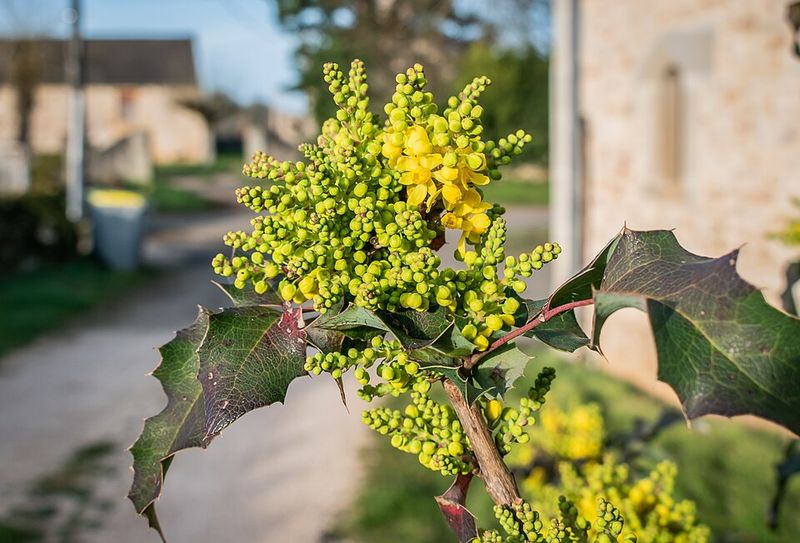
Walk through almost any Oregon forest and you’ll spot the glossy, spiny leaves of Oregon Grape catching the light between the trees.
Mahonia aquifolium is the state flower of Oregon and one of the most reliable evergreen shrubs a homeowner can plant.
It holds its deep green color through cold, wet winters and dry summers alike, giving the yard a sense of structure no matter the season.
In early spring, clusters of bright yellow flowers appear and fill the air with a subtle honey-like fragrance. By late summer, those flowers turn into clusters of blue-purple berries that birds go absolutely wild for.
This makes Oregon Grape a double win for gardeners who want beauty and a little wildlife action in the backyard.
It grows in full sun to full shade, which is rare versatility for any shrub. In shadier spots it tends to stay more open and upright, while sun exposure encourages denser, more compact growth.
Oregon Grape handles clay soils reasonably well and needs very little supplemental water once established.
Your Oregon Garden Changes Every Week. Your Plan Should Too.
Gardening in Oregon changes quickly throughout the season. Every Friday you’ll receive a simple weekly plan showing exactly what to plant, prune, fertilize, harvest, and protect so you never miss the right timing.
Spacing plants about three to four feet apart allows them to fill in naturally and form a low hedge or layered border without constant attention from the gardener.
3. Salal Spreads Easily In Shady, Low-Maintenance Spaces
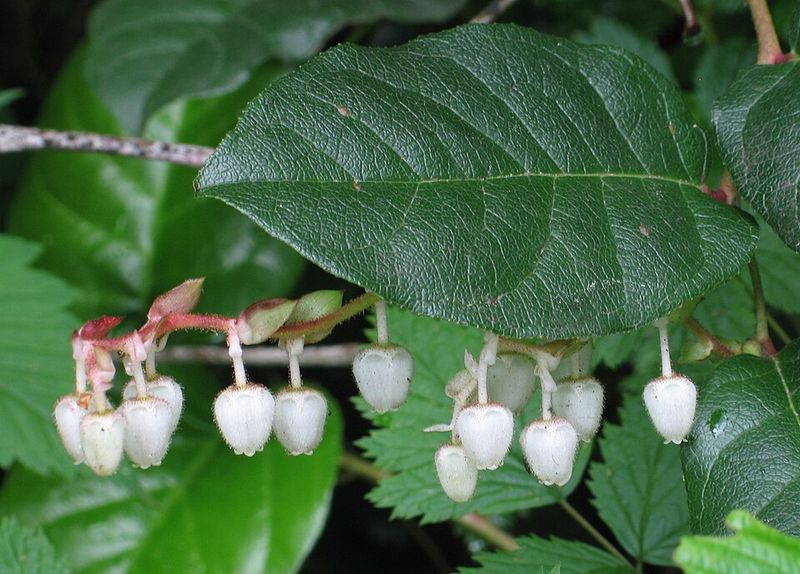
Shady corners of Oregon yards can be notoriously difficult to fill. Grass struggles, most perennials sulk, and bare soil invites weeds to move right in.
Salal, known scientifically as Gaultheria shallon, solves that problem with almost zero effort required from the gardener.
It spreads steadily through underground rhizomes, forming a dense, weed-smothering mat of leathery evergreen leaves that stay attractive through every season.
Native to the coastal forests and western slopes of Oregon, Salal is genuinely built for the conditions most gardeners find difficult.
It thrives in moist, acidic soils with good organic content, which describes much of western Oregon’s native ground quite well.
Under tall conifers or near the north side of a house, Salal fills in where little else will grow reliably.
The small bell-shaped flowers that appear in late spring have a delicate, pinkish-white charm that’s easy to appreciate up close. Dark purple berries follow and provide food for birds and other wildlife through late summer and fall.
Established plants need almost no supplemental water in western Oregon’s climate.
For gardeners looking to cover ground under trees without fighting nature, Salal is one of the most sensible and satisfying choices available heading into 2026.
4. Red-Flowering Currant Lights Up Early Spring Gardens
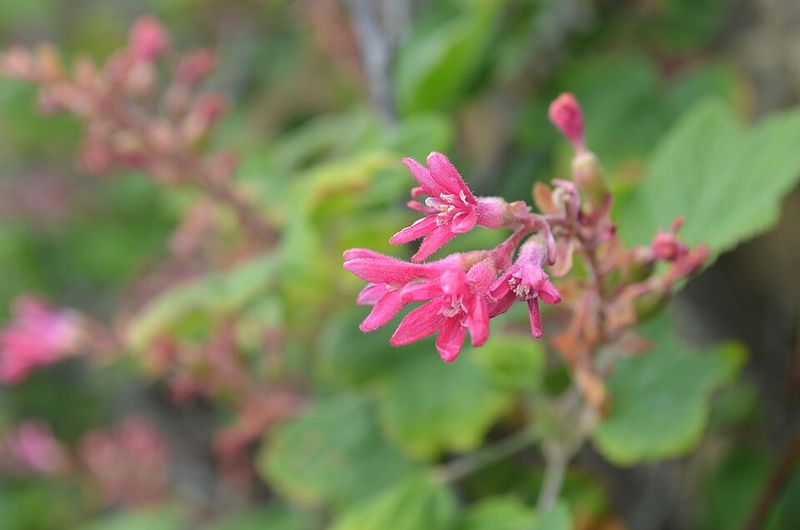
Before most plants have even thought about waking up from winter, Red-Flowering Currant is already putting on a show.
Ribes sanguineum bursts into bloom in late February or early March in much of western Oregon, draping its bare branches with hanging clusters of deep pink to rosy-red flowers that hummingbirds can’t resist.
For gardeners who feel like spring takes forever to arrive, this shrub is a real morale booster.
It grows quickly into a medium-sized shrub, typically reaching six to ten feet tall and wide, which makes it useful as a background plant, informal hedge, or wildlife screen.
The flowers are followed by small blue-black berries that birds enjoy, and the foliage takes on warm tones in autumn before dropping for winter.
That seasonal variety keeps it interesting across multiple months of the year.
Red-Flowering Currant adapts to a wide range of soil conditions and tolerates both sun and partial shade, though it blooms most heavily in full sun. Once established in Oregon’s climate, it rarely needs supplemental irrigation during summer.
It’s worth giving plants a little extra water during their first dry season to help roots settle in. After that, this shrub largely takes care of itself with just occasional light shaping if needed.
5. Evergreen Huckleberry Forms A Dense, Reliable Screen
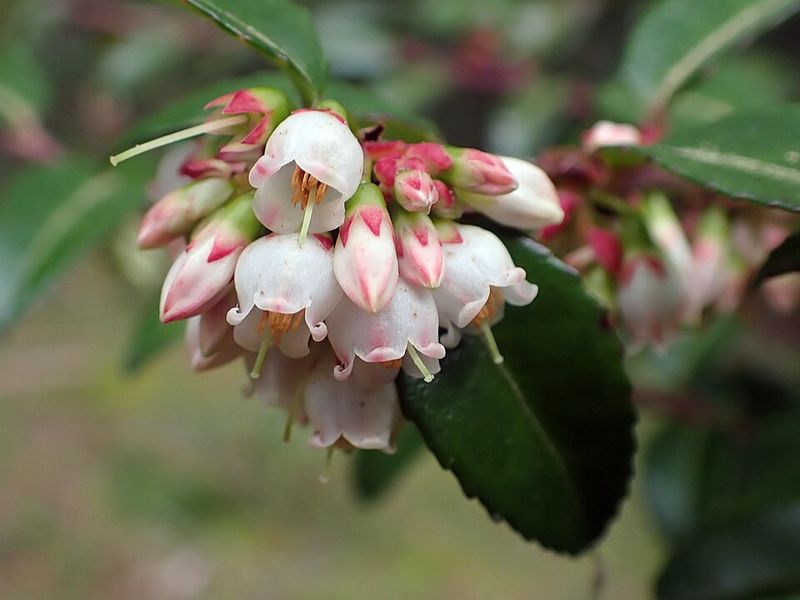
Privacy screens made of clipped boxwood or laurel hedges demand regular trimming and plenty of water to stay looking sharp.
Evergreen Huckleberry offers a far more relaxed alternative that still delivers a dense, attractive barrier without the constant maintenance cycle.
Vaccinium ovatum is a native Oregon shrub that grows slowly into a full, layered form with small, glossy leaves that stay green and fresh-looking year round.
Along Oregon’s coast and in the western valleys, Evergreen Huckleberry grows naturally in forest understories, which tells you exactly what kind of conditions it prefers.
It does well in partial to full shade with moist, acidic, well-drained soil.
In shadier spots the growth stays more open and graceful, while plants in brighter light tend to be denser and more compact. Either way, it earns its place in the garden without demanding much in return.
Clusters of small pinkish-white flowers appear in spring, followed by dark purple berries that are genuinely tasty and a favorite among birds.
The new growth flushes in a coppery-bronze color that adds visual interest before maturing to deep green.
Spacing plants four to six feet apart gives them room to fill in naturally over several seasons. For Oregon gardeners wanting a living screen that practically manages itself, few plants come close to this one.
6. Douglas Spirea Handles Wet Areas With Ease
Soggy spots in the yard are the bane of many Oregon gardeners, especially during the long, wet winters that drench the western part of the state.
Most ornamental shrubs struggle or rot outright when their roots sit in standing water for extended periods.
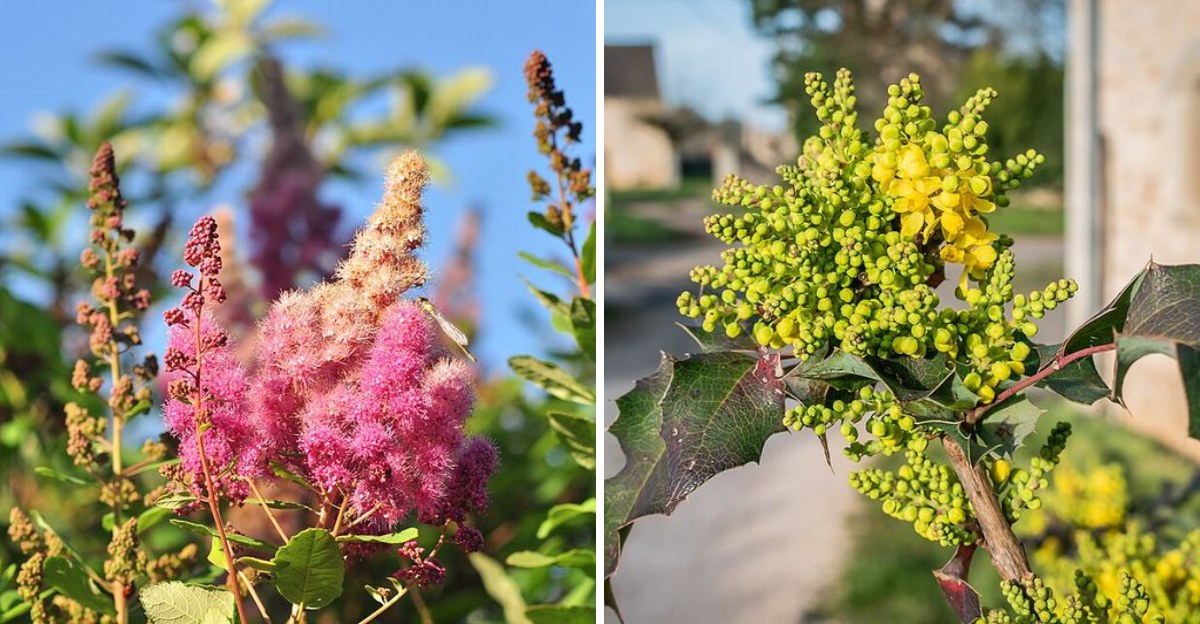
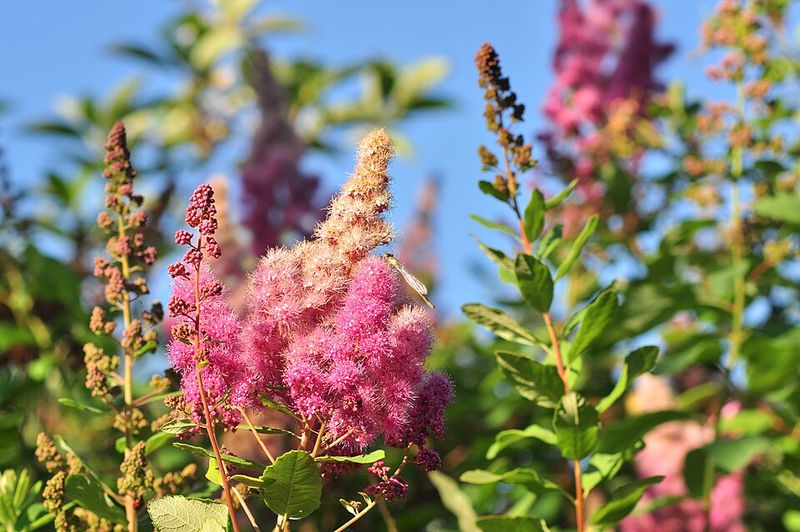
Douglas Spirea, or Spiraea douglasii, is one of the few attractive shrubs that genuinely thrives in those challenging wet areas rather than just tolerating them.
Native to stream banks and moist meadows throughout the Pacific Northwest, Douglas Spirea is completely at home in Oregon’s wetter microclimates.
It sends up upright stems topped with fluffy, deep pink flower plumes in midsummer that are striking from a distance and beloved by pollinators.
The blooms last for several weeks and attract a steady stream of bees and butterflies during the heat of summer.
It spreads gradually through root suckers, which makes it useful for stabilizing slopes or filling in along drainage swales and rain gardens. In a typical yard, planting it in a low-lying area that collects water turns a problem spot into a feature.
It grows four to six feet tall and handles occasional dry spells during summer once its roots are well established.
Very little pruning is needed beyond cutting old stems back in late winter every couple of years to refresh the plant.
7. Sword Fern Fills Shady Spots With Lush Green Texture
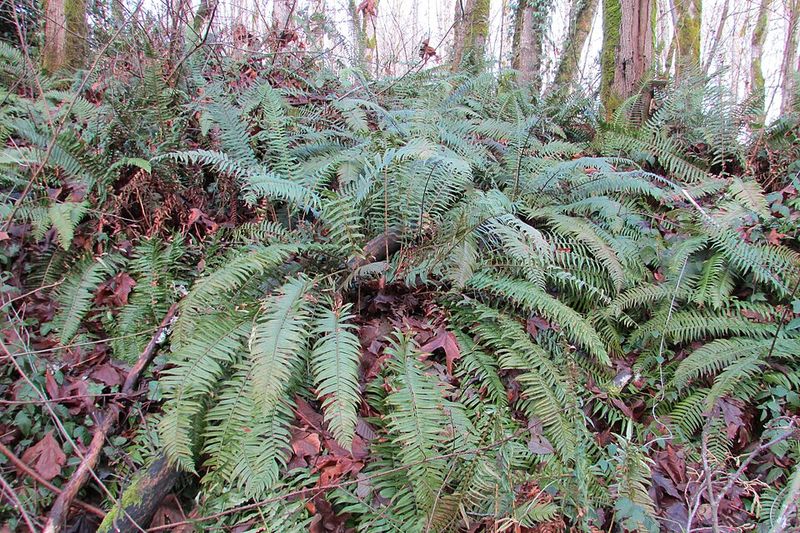
Few plants bring the kind of deep, layered greenness that makes a shady Oregon garden feel truly alive the way Sword Fern does. Polystichum munitum is a staple of Pacific Northwest forests, and for good reason.
Its long, arching fronds hold their rich green color through the coldest, darkest winters and keep looking good well into summer without any watering help from the gardener.
Sword Fern forms tidy, vase-shaped clumps that grow about two to four feet tall and wide over time.
Under mature conifers, where dry shade makes growing conditions especially tough, Sword Fern handles the challenge better than almost any other plant.
It prefers well-drained, humus-rich soil but adapts to a surprising range of conditions once established in Oregon’s climate.
Maintenance is minimal by any measure. Old fronds can be cut back in late winter before new growth emerges, which keeps the clump looking fresh, but even skipping that step won’t hurt the plant.
It spreads slowly and politely through offsets, filling in gaps in the garden without becoming invasive or aggressive.
Planting Sword Fern alongside Salal or Oregon Grape creates a layered, low-maintenance understory planting that mimics the natural forest floor and practically takes care of itself through the seasons.
8. Kinnikinnick Creates A Low-Maintenance Ground Cover
Slopes, sunny banks, and dry exposed areas can be genuinely frustrating to plant and maintain.
Grass slides off, mulch washes away, and many ground covers need far more water than those spots can realistically receive during Oregon’s dry summers.
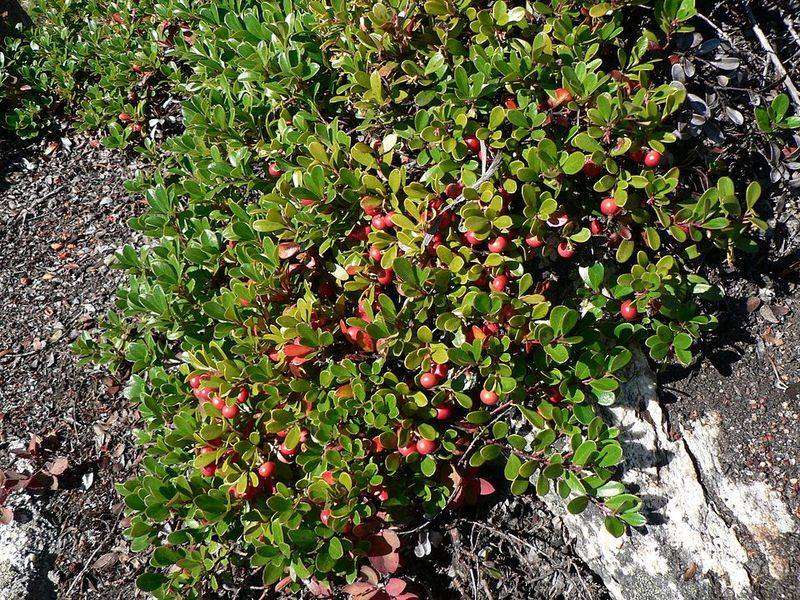
Kinnikinnick, or Arctostaphylos uva-ursi, is a native trailing shrub that handles these tough conditions with low, dense, weed-suppressing growth that stays attractive all year without irrigation once established.
The small, glossy leaves stay green through winter, making Kinnikinnick one of the more reliable evergreen ground covers for Oregon’s variable climate.
Tiny pink, urn-shaped flowers appear in early spring and are followed by bright red berries that persist into winter and provide food for birds and small mammals.
The combination of flowers, berries, and evergreen foliage gives it year-round appeal that many ground covers simply can’t match.
It spreads slowly to form a mat about six to eight inches tall, which means it takes a season or two to fill in but remains easy to manage once established.
Planting on two-foot centers and mulching between plants during the first season helps suppress weeds while the cover fills in.
Kinnikinnick prefers well-drained, sandy or gravelly soil and full sun to light shade. Overwatering or heavy clay soil is the main thing to avoid with this plant.
9. Yarrow Thrives In Dry Soil With Minimal Care
Oregon summers east of the Cascades can be brutally dry, and even western Oregon gardeners deal with months of little to no rainfall between June and September.
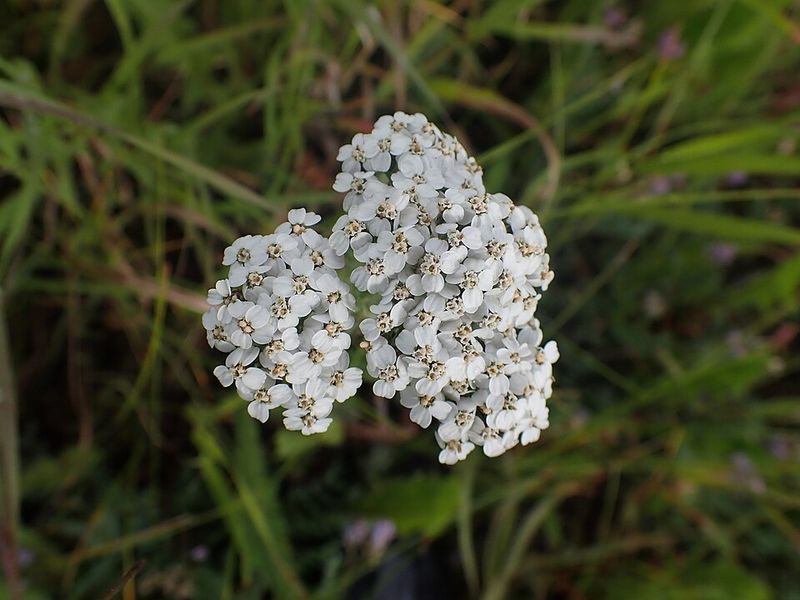
Yarrow, or Achillea millefolium, is one of the toughest flowering perennials for exactly these conditions.
Its feathery, aromatic foliage and flat-topped flower clusters in shades of white, yellow, pink, and red make it both practical and genuinely eye-catching in the summer garden.
Yarrow has been used in gardens for centuries, and its reputation for toughness is completely earned. It grows in poor, dry soils where other perennials give up, and it spreads steadily through underground rhizomes to fill in bare areas over time.
In fertile, well-watered soil it can become aggressive, so lean conditions actually suit it better and keep growth more manageable.
Removing spent flower clusters encourages a second flush of blooms later in the season and keeps the plant looking tidy. Cutting the whole plant back by about half in midsummer can also refresh the foliage and promote new growth heading into fall.
Yarrow attracts a wide range of beneficial insects, including predatory wasps and hoverflies, which help keep garden pest populations in check naturally.
For Oregon gardeners wanting color through the dry season without running the sprinklers constantly, Yarrow is a dependable and rewarding choice.