Flowers Eastern Oregon Gardeners Should Plant For More Butterflies
There’s something special about spotting butterflies drifting through the yard on a warm Eastern Oregon afternoon. It turns an ordinary space into something that feels alive and a little more connected to the season.
But in this part of the state, with dry air, strong sun, and limited rainfall, not every flower will bring them in.
Some plants offer exactly what butterflies look for, while others get ignored no matter how nice they look. Choosing the right mix can make a noticeable difference in how often those colorful visitors show up.
If your garden has felt a bit quiet or missing that movement, a few smart planting choices can change that quickly. The flowers ahead are known to attract butterflies and handle Eastern Oregon conditions with ease.
1. Showy Milkweed Powering Monarch Visits
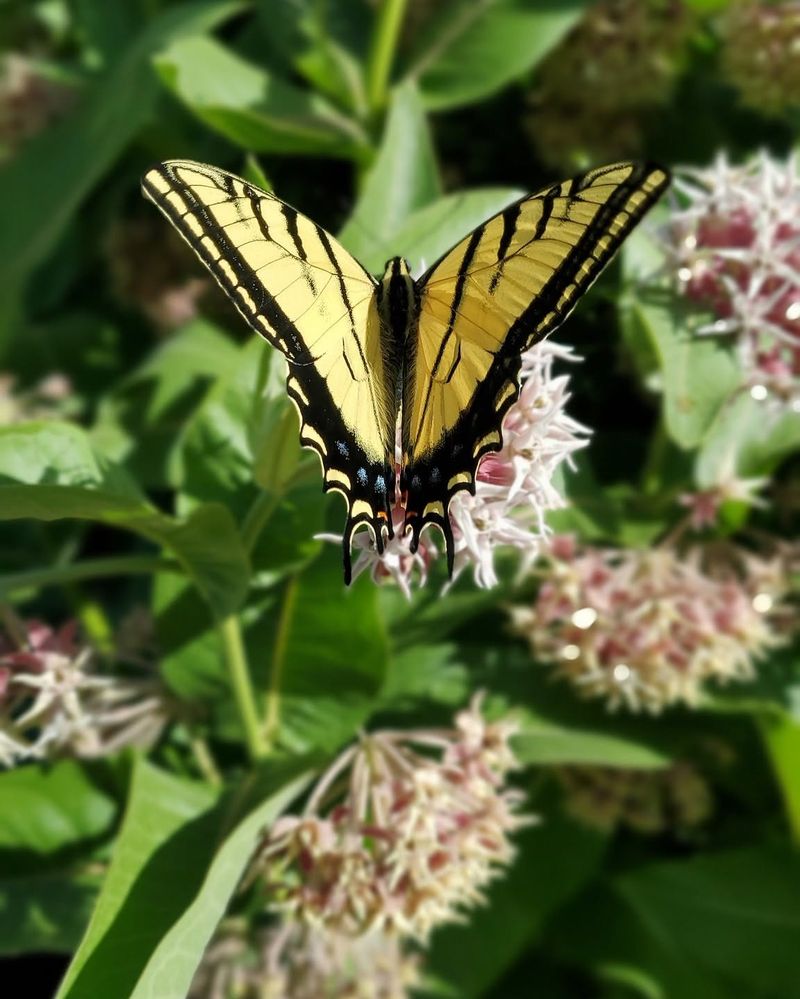
If there is one plant that Monarch butterflies simply cannot resist, it is Showy Milkweed. Known scientifically as Asclepias speciosa, this native perennial is the go-to host plant for Monarchs across the western United States, including Eastern Oregon.
Female Monarchs lay their eggs exclusively on milkweed plants, making it more than just a nectar source. It is a nursery, a dining room, and a home all in one.
The blooms are something special. Soft pink, star-shaped flower clusters appear from late spring through summer, releasing a sweet fragrance that draws in butterflies from surprisingly far away.
Each flower is packed with nectar, making it a favorite stop for many other butterfly species beyond just Monarchs, including Fritillaries and Painted Ladies.
Growing Showy Milkweed in Eastern Oregon is refreshingly straightforward. It loves full sun and well-drained soil, which is exactly what most gardens in this region naturally offer.
Once established, it handles drought conditions without much fuss, making it a low-maintenance choice for busy gardeners. It spreads slowly through underground rhizomes, so you will gradually get a fuller patch over time.
Plant it along a sunny fence line or in a dedicated pollinator bed, and watch the activity it brings. Eastern Oregon gardens that include Showy Milkweed may see more Monarch activity during the summer, especially where local populations are present. It is a powerful plant that punches well above its weight when it comes to supporting butterfly populations in your yard.
2. Silvery Lupine Feeding Early Season Pollinators
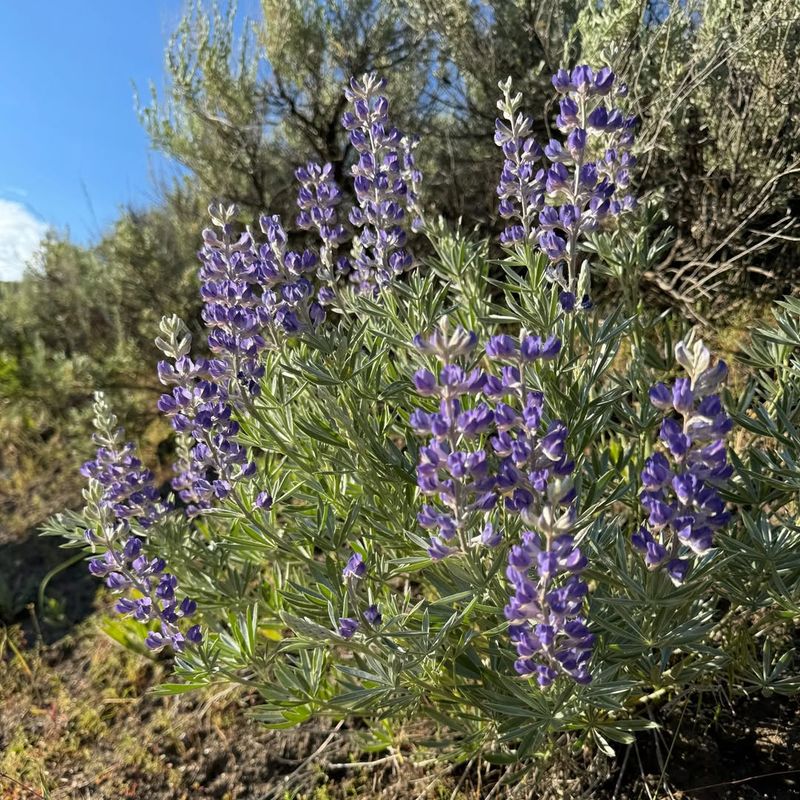
Tall, striking, and covered in silvery-green foliage that shimmers in the afternoon sun, Silvery Lupine is one of those plants that earns its place in any Eastern Oregon butterfly garden on looks alone. But the real magic happens when butterflies start showing up.
Several species, including the Melissa Blue, use certain lupine species as host plants for caterpillars, while others like Painted Ladies may visit the blooms for nectar.
Lupinus argenteus, or Silvery Lupine, produces upright spikes of purple-blue flowers that bloom from late spring into midsummer. The flowers are arranged in a tight, vertical cluster that makes them easy for butterflies to land on and feed from.
The plant is native to much of the western United States, meaning it is perfectly adapted to the dry, rocky soils and intense summer sun that define Eastern Oregon landscapes.
Your Oregon Garden Changes Every Week. Your Plan Should Too.
Gardening in Oregon changes quickly throughout the season. Every Friday you’ll receive a simple weekly plan showing exactly what to plant, prune, fertilize, harvest, and protect so you never miss the right timing.
One of the most practical things about Silvery Lupine is its ability to fix nitrogen in the soil. That means it actually improves the ground it grows in over time, benefiting nearby plants as well.
It is a natural team player in a pollinator garden.
Sow seeds directly into the garden in early spring or fall, and be patient. Lupines can take a season or two to really establish themselves, but once they do, they come back reliably year after year.
Plant a cluster of them together for the best visual impact and the strongest butterfly-attracting effect in your Eastern Oregon garden.
3. Penstemon Drawing In Native Bees And Hummingbirds

Often called Beardtongue, Penstemon is one of the most diverse native plant genera in the Pacific Northwest, with dozens of species suited to different growing conditions. For butterfly gardeners, it is an absolute must-have.
The tubular shape of Penstemon flowers is perfectly designed for long-tongued pollinators. Swallowtail butterflies may visit Penstemon blooms for nectar, although hummingbirds are typically the primary pollinators.
Planting Penstemon essentially turns your garden into a wildlife hub. Blooms typically arrive from May through July, filling that important late-spring window when other nectar sources can be scarce.
Eastern Oregon gardeners will appreciate how well Penstemon handles tough conditions. It thrives in dry, gravelly, or rocky soils with full sun exposure, which describes a huge portion of available garden space in this region.
Overwatering is actually the biggest risk with this plant, so less is genuinely more here.
Choose native species like Penstemon speciosus or Penstemon strictus for the best regional performance. These varieties are already adapted to the climate and will reward you with reliable blooms season after season.
Plant them in clusters along a dry border or rocky slope, and you will have a showstopping display that butterflies flock to from early summer onward. Few plants deliver this much beauty with this little effort.
4. Goldenrod Fueling Late-Season Butterfly Activity
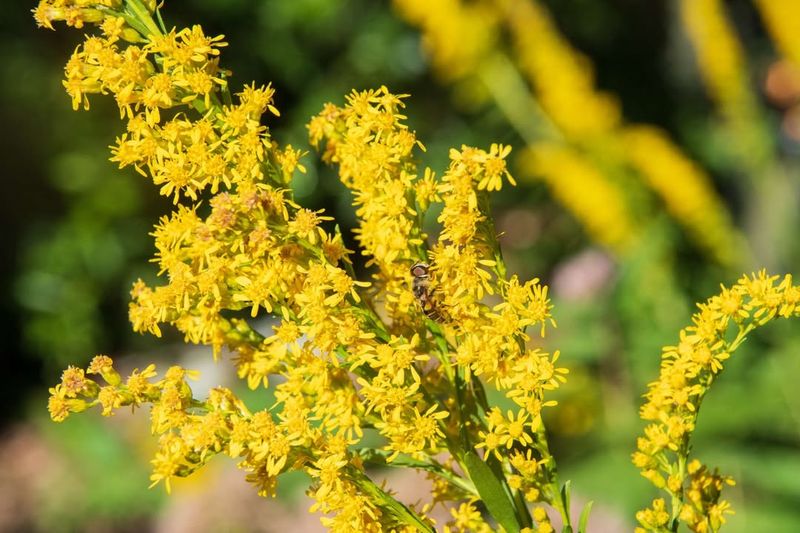
Late summer in Eastern Oregon can feel like a quiet stretch for butterfly gardens, but Goldenrod refuses to let the season wind down without a fight. This bold, golden-yellow native perennial blooms from August through October, right when many other flowers are finishing up.
That timing makes it incredibly valuable for butterflies that need to fuel up before cooler weather arrives.
Solidago, the scientific name for Goldenrod, produces tall, arching plumes of tiny golden flowers that butterflies find completely irresistible. Monarchs, Fritillaries, Skippers, and Painted Ladies are among the many species that regularly visit Goldenrod blooms.
On a warm late-summer afternoon, a mature Goldenrod patch in Eastern Oregon can look like a butterfly convention.
One common misconception worth clearing up: Goldenrod does not cause hay fever. That reputation actually belongs to ragweed, which blooms at the same time.
Goldenrod pollen is too heavy to travel through the air and is carried only by insects. So you can plant it with confidence near your patio or walkways.
Goldenrod grows well in average to dry soils with full sun, making it a natural fit for Eastern Oregon conditions. It spreads gradually through rhizomes, so give it a bit of room to expand over time.
Cut it back in early spring to keep it tidy and encourage fresh, vigorous growth. Adding Goldenrod to your garden is one of the easiest ways to extend butterfly season well into fall, when every nectar source counts.
5. Orange Butterfly Weed Lighting Up Beds With Nectar-Rich Blooms
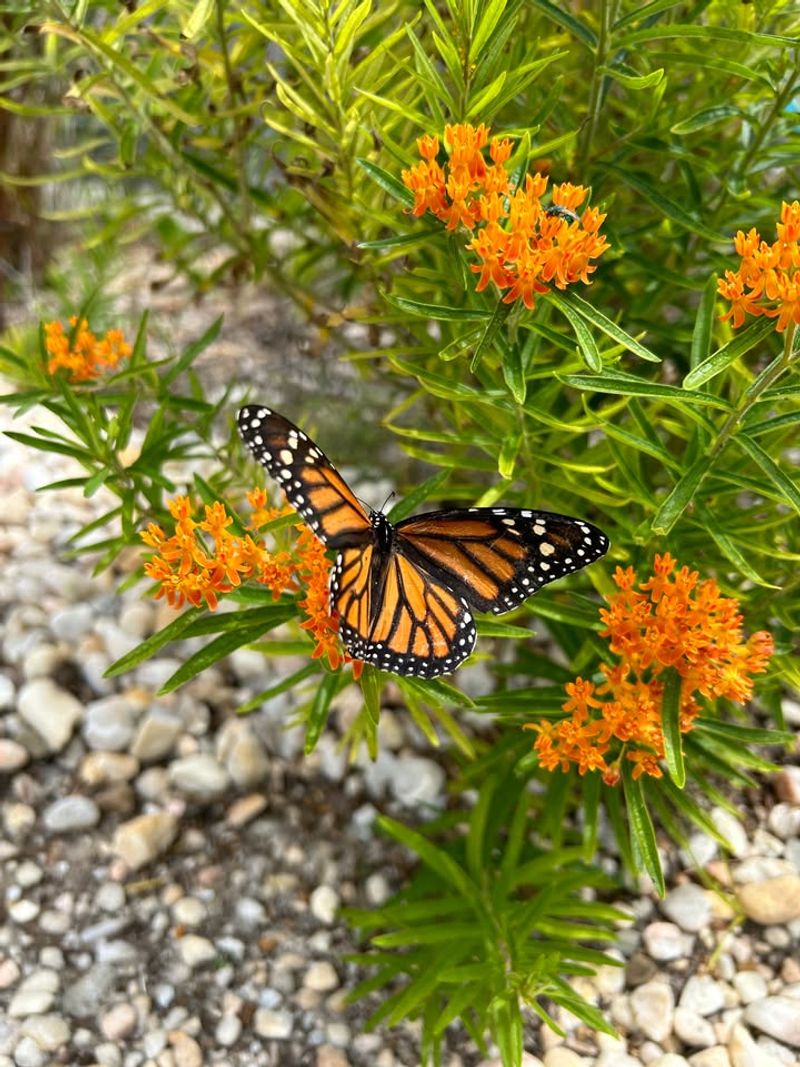
There is a reason this plant has the word butterfly right in its name. Orange Butterfly Weed, or Asclepias tuberosa, is one of the most reliable butterfly magnets you can grow in Eastern Oregon, and its blazing orange flower clusters are almost impossible to miss from across the yard.
It is a showpiece plant that also happens to be genuinely useful for local butterfly populations.
Like its cousin Showy Milkweed, Butterfly Weed is a known host plant for Monarch butterflies. Beyond Monarchs, the nectar-packed blooms attract Swallowtails, Fritillaries, and a wide variety of native bees.
Blooming from midsummer into early fall, it fills an important nectar gap in the Eastern Oregon garden calendar.
What makes Orange Butterfly Weed particularly well-suited to Eastern Oregon is its deep taproot, which allows it to access moisture far below the soil surface. This makes it remarkably drought-tolerant once established, and it actually prefers the kind of dry, sandy, or rocky soils that many other plants struggle with.
Avoid planting it in heavy clay or overly wet spots.
One heads-up for new growers: Butterfly Weed is slow to emerge in spring, sometimes not showing above ground until late May. Do not assume it has not survived the winter.
Mark its location in the fall so you do not accidentally dig it up. Once you see those first bright orange blooms, you will understand why so many Eastern Oregon gardeners consider it completely worth the wait.
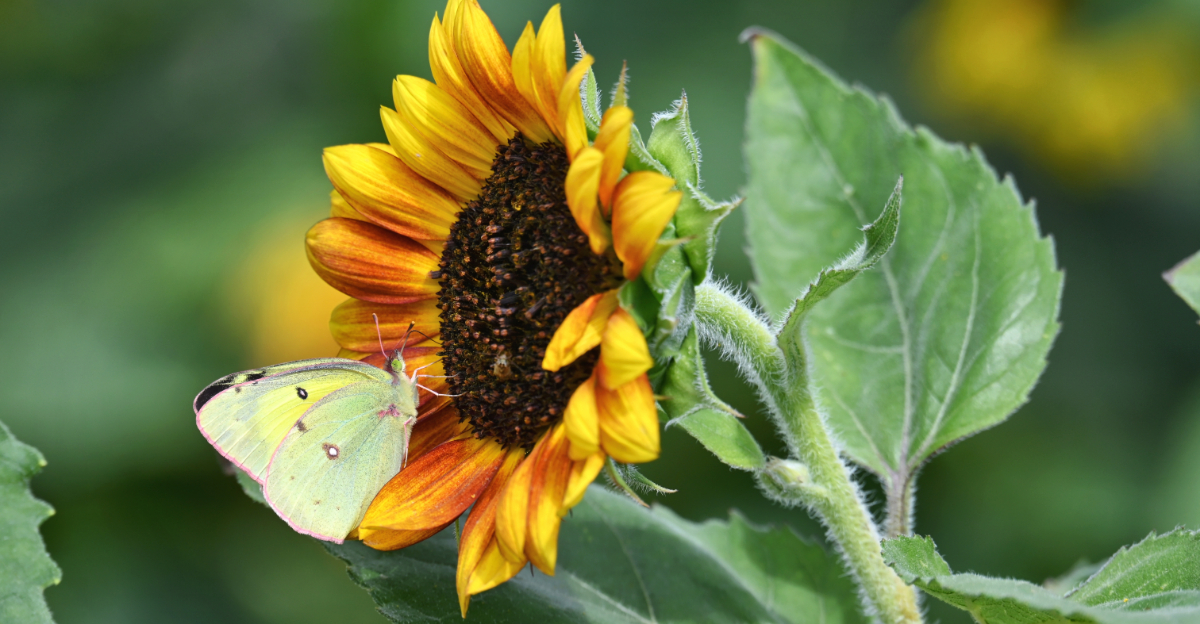
6. Sunflower Standing Tall As A Pollinator Magnet
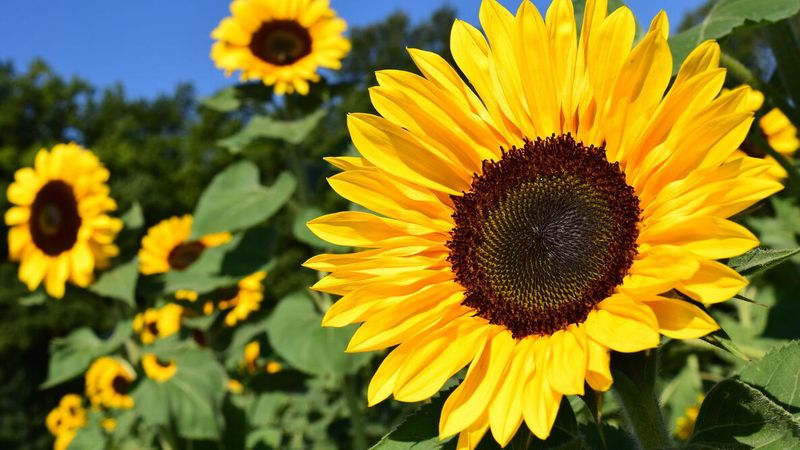
Few flowers bring as much cheerful energy to a garden as sunflowers, and as it turns out, butterflies feel exactly the same way. Helianthus annuus, the common sunflower, is native to North America and has deep roots in the ecology of the western United States.
In Eastern Oregon, where summers are sunny and soils tend toward the dry side, sunflowers feel completely at home.
The large, open flower heads of sunflowers are easy for butterflies to land on and explore. Painted Ladies, Skippers, Buckeyes, and Fritillaries are all regular visitors.
The central disk of each flower is packed with tiny individual florets that each produce nectar, giving butterflies plenty of reason to linger. As the season progresses and seeds develop, the plants also attract seed-eating birds, turning your garden into a multi-species gathering spot.
Growing sunflowers in Eastern Oregon requires almost no special effort. Direct sow seeds after the last frost into well-drained soil in a sunny location, water regularly until established, and then step back and let them do their thing.
They are fast growers, often reaching full height within a couple of months.
For maximum butterfly appeal, choose varieties with open, pollen-rich centers rather than fully double blooms, which can reduce nectar and pollen access. Native or heirloom varieties like Helianthus annuus are especially good choices.
Plant a row or cluster along a fence or at the back of a border, and enjoy the parade of butterfly visitors that follows throughout the summer months in your Eastern Oregon yard.
7. Zinnia Keeping Butterflies Coming All Summer
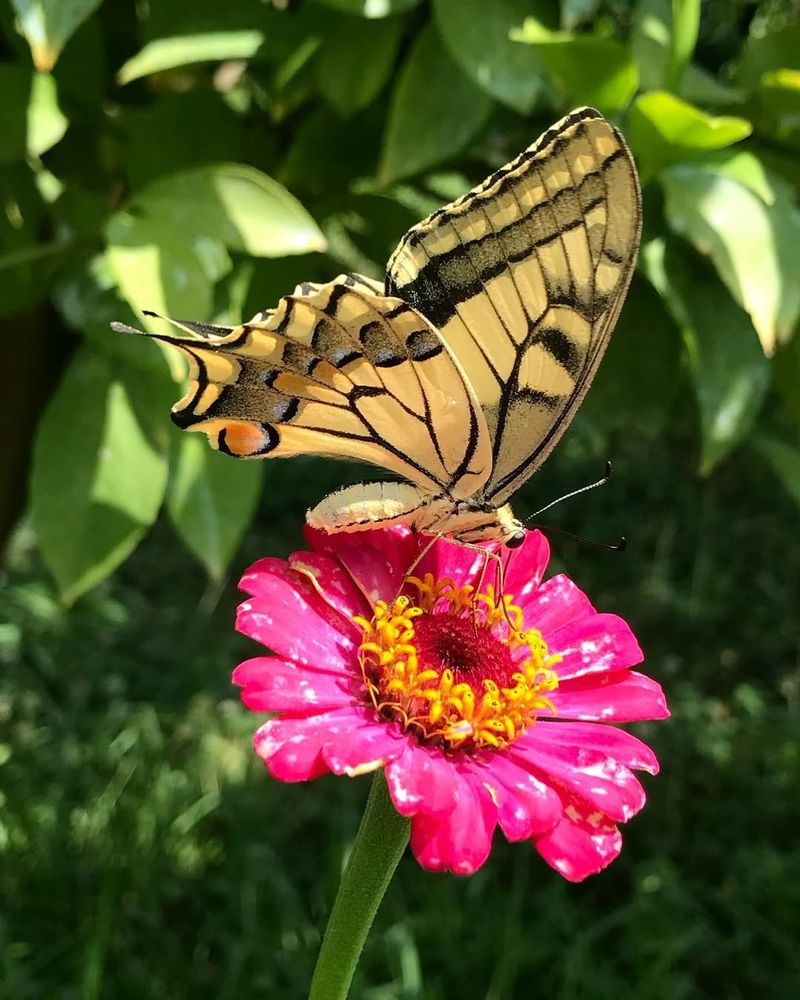
These cheerful, heat-loving flowers are practically a butterfly buffet. In Eastern Oregon, where summer temperatures climb and sunshine is abundant, zinnias absolutely thrive, producing a nonstop parade of blooms from early summer right through the first frost.
Monarch butterflies, Swallowtails, Painted Ladies, and Skippers are all drawn to zinnia flowers with remarkable consistency. The flat-topped blooms serve as easy landing platforms, and the nectar supply is generous.
Garden observations and extension guidance often note that zinnias are highly attractive to butterflies in summer gardens.
Zinnias are not native to Eastern Oregon, but they perform exceptionally well here because the climate suits them perfectly. They love full sun, warm temperatures, and relatively dry conditions, all of which Eastern Oregon delivers in abundance.
Sow seeds directly into the garden after the last frost date, and they germinate quickly. Deadhead spent blooms regularly to keep new flowers coming throughout the season.
Choose a mix of colors and flower sizes to attract the widest variety of butterflies. Tall varieties like Benary’s Giant are especially popular with larger butterfly species.
Plant zinnias in masses rather than single plants for the best visual effect and the strongest butterfly-drawing power. A patch of zinnias in full bloom on a warm Eastern Oregon afternoon is genuinely one of summer gardening’s greatest rewards.
8. California Poppy Thriving In Dry Soil With Bright Color
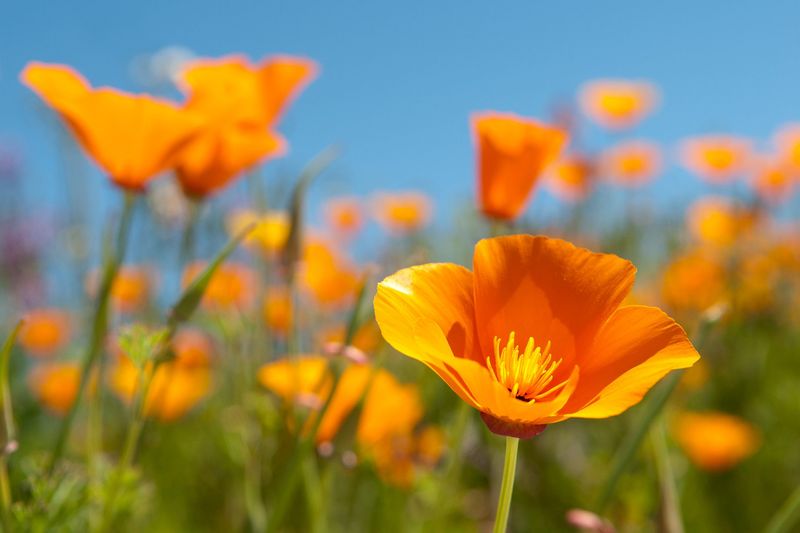
Golden, glowing, and nearly impossible to ignore, California Poppy brings a splash of warm color to Eastern Oregon gardens that few other flowers can match. Eschscholzia californica is actually a native of the western United States, and it naturalizes beautifully in the dry, open conditions that define much of Eastern Oregon.
Once you plant it, it tends to reseed itself year after year, creating a self-sustaining patch of color.
Butterflies are attracted to California Poppies for their pollen, which is produced in generous quantities. Skippers, Blues, and various native bee species are among the most frequent visitors.
The wide-open, cup-shaped blooms make pollen easy to access, and on sunny afternoons the flowers practically glow, acting like natural beacons for pollinators across your yard. Blooms typically appear from spring through early summer, with some plants reblooming in fall if conditions are right.
One of the best things about California Poppy for Eastern Oregon gardeners is how little it asks of you. It prefers poor, dry, sandy, or rocky soil, and it actually struggles in rich, heavily amended beds.
Skip the fertilizer, skip the extra watering, and let it grow in the toughest corners of your garden where other plants might not perform well.
Scatter seeds directly on the soil surface in early spring or fall, press them lightly into place, and let nature handle the rest. The plants dislike being transplanted, so direct sowing is always the best approach.
Few flowers are as effortlessly rewarding or as perfectly suited to the Eastern Oregon landscape as this brilliant, sun-loving bloom.