What Florida Palms Need In April Before The Heat Kicks In
Think your palms are ready for Florida heat, or are they just putting on a brave face before summer hits full blast? Ever heard the saying “an ounce of prevention is worth a pound of cure”?
April is exactly that moment for palms. Everything may look fine on the surface, with green fronds and steady growth, but this is when palms quietly prepare for the stress that comes with intense sun, humidity, and heavy summer rains.
Florida’s spring conditions push roots and new growth into action, which makes this the ideal time to step in with a little attention that goes a long way. Skip it, and small issues can snowball once the heat settles in.
Stay ahead now, and your palms handle the season with stronger growth, richer color, and far fewer problems when conditions get tougher.
1. April Is The Right Time To Start A Smart Fertilizing Routine
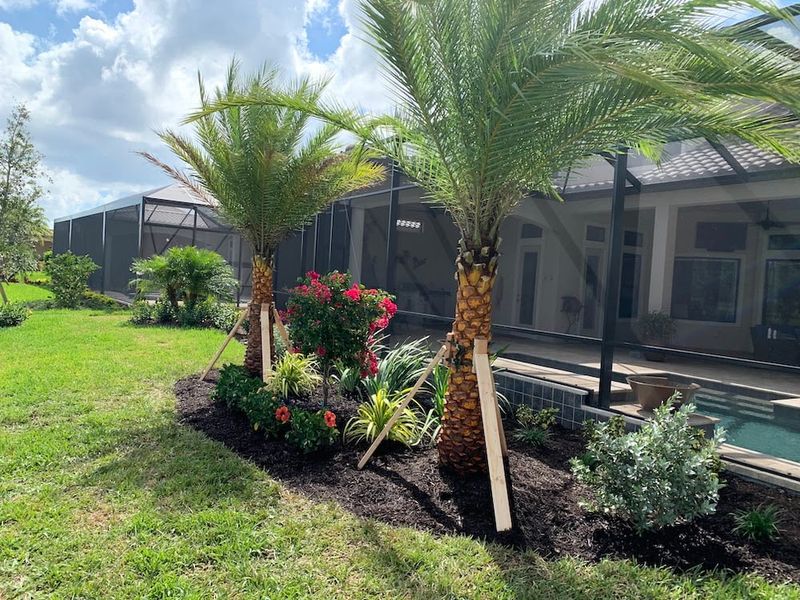
Right around April, Florida palms shift into active growth mode, and that means their appetite for nutrients picks up fast.
Missing this window is one of the most common mistakes homeowners make, leaving palms struggling to push out new fronds just when conditions are most favorable.
According to the University of Florida IFAS Extension, fertilizing in spring is a key part of keeping palms healthy in Florida’s nutrient-poor sandy soils. Nutrients leach quickly through sandy ground, especially once the summer rains begin.
Getting a slow-release fertilizer down in April means your palm has a steady food supply ready as growth accelerates.
A good fertilizing routine is not complicated. Apply a palm-specific, slow-release fertilizer evenly under the canopy, out to the edge of the root zone.
Avoid piling fertilizer directly against the trunk, as this can cause unnecessary stress to the base of the plant. Fertilizing three to four times a year, starting in April, gives Florida palms the consistent nutrition they need to stay strong through intense summer heat and heavy rainfall.
2. Slow Release Palm Fertilizer Supports Strong Warm Season Growth
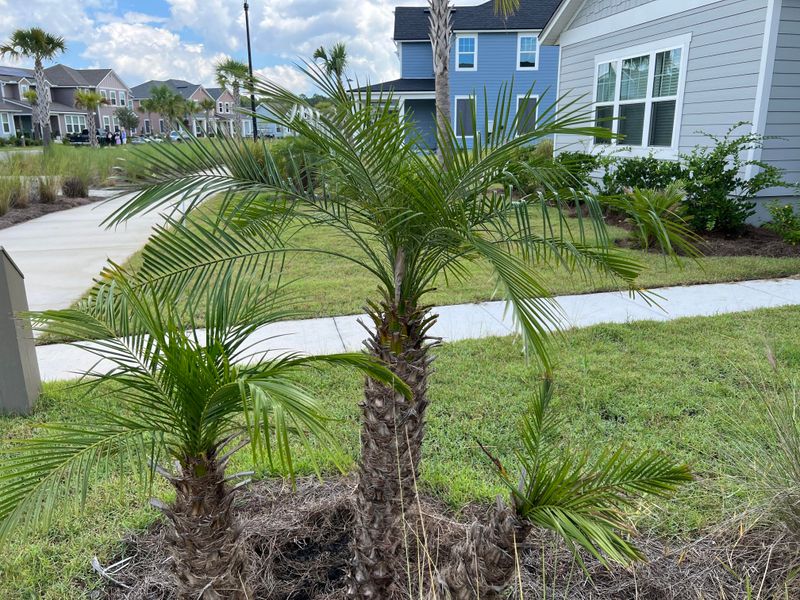
Walk into any Florida garden center in spring and you will find shelves stocked with all kinds of fertilizers, but not all of them are right for palms.
Grabbing a generic quick-release product might seem like an easy fix, but it can actually create more problems than it solves by delivering a burst of nutrients that washes away before the roots can fully absorb them.
Palm-specific, slow-release fertilizers are specially formulated to match how palms actually feed. The University of Florida IFAS Extension recommends a formulation commonly labeled 8-2-12-4Mg, which stands for nitrogen, phosphorus, potassium, and magnesium.
This blend addresses the most common nutrient gaps in Florida’s sandy, fast-draining soils and supports steady growth over several months rather than a short spike.
Slow-release granules break down gradually, feeding the palm consistently through the warm season. This steady supply supports stronger root development, better frond color, and improved resistance to heat stress.
Look for fertilizers that clearly state “slow-release” or “controlled-release” on the label. Applying the right product in April means your palm is already building the nutritional reserves it needs well before the hottest months arrive.
Your Florida Garden Changes Every Week. Your Plan Should Too.
Gardening in Florida changes quickly throughout the season. Every Friday you’ll receive a simple weekly plan showing exactly what to plant, prune, fertilize, harvest, and protect so you never miss the right timing.
3. Magnesium And Potassium Help Prevent Common Palm Deficiencies
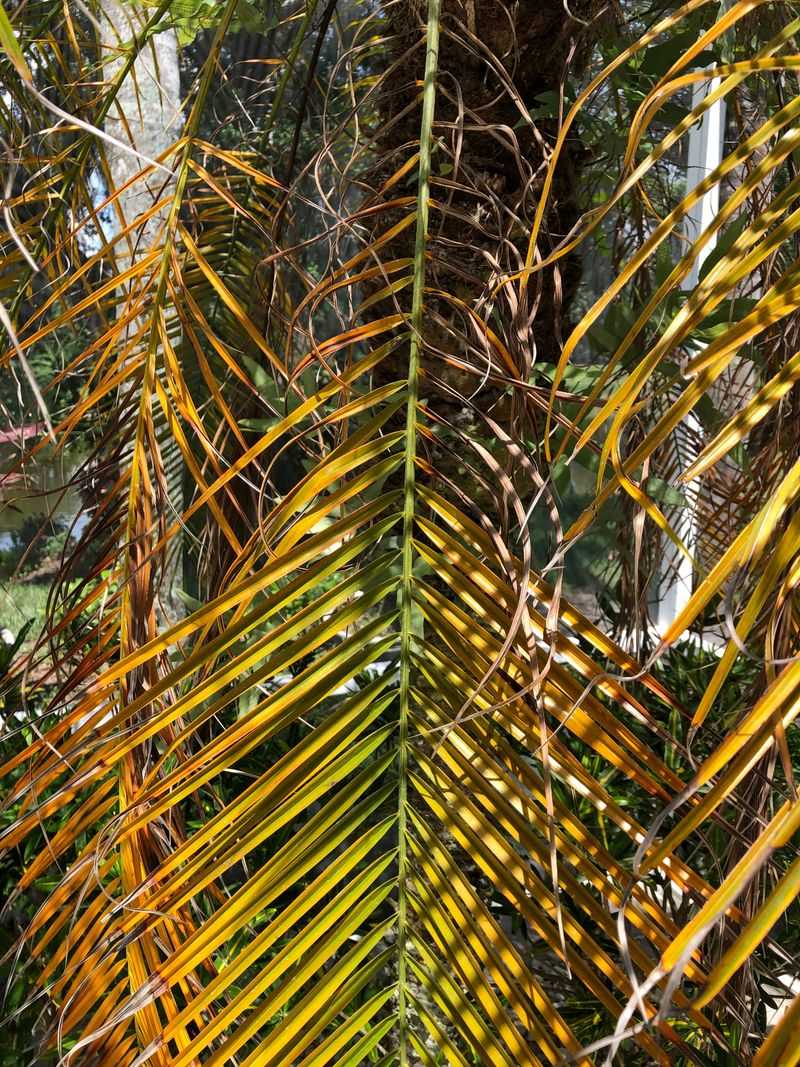
Yellow fronds, brown leaf tips, and stunted new growth are not just cosmetic problems. They are signs that a palm is missing nutrients it urgently needs, and in Florida, potassium and magnesium deficiencies are among the most widespread issues affecting palms of all types.
Potassium deficiency shows up as translucent yellow or orange spotting on older fronds, often progressing toward the tips. Magnesium deficiency looks different, usually appearing as a broad yellow band along the outer edges of older leaves while the center stays green.
Both deficiencies are worsened by Florida’s rainy season, which flushes nutrients out of sandy soil before palms can fully absorb them.
Correcting these deficiencies starts with the right fertilizer. A palm-specific formula with added magnesium, such as the 8-2-12-4Mg blend recommended by UF IFAS, helps replenish what sandy soils cannot hold.
Supplemental applications of magnesium sulfate, also known as Epsom salt, can help in severe cases, but a balanced palm fertilizer used consistently is the most effective long-term solution.
Addressing these issues in April, before growth surges, gives corrective nutrients time to absorb and make a visible difference in frond health.
4. Deep Watering Now Builds Drought Tolerance Before Summer
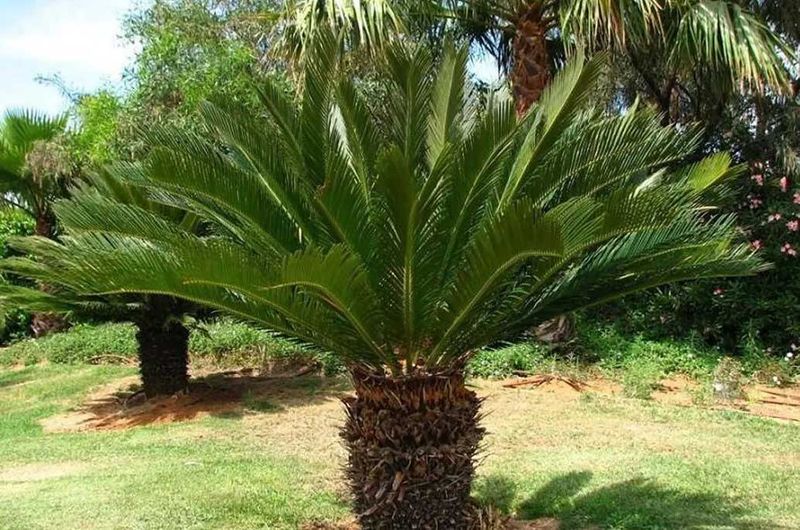
Florida summers are relentless, and palms that head into July without a strong root system are the ones that show the most stress when rain is unpredictable and temperatures stay above 90 degrees for weeks at a stretch. April is the best time to start building that root strength.
Deep, infrequent watering encourages palm roots to grow downward in search of moisture rather than staying shallow near the surface. Shallow roots are much more vulnerable to drought because the top layer of sandy Florida soil dries out quickly between rain events.
Watering deeply once or twice a week, depending on rainfall, trains roots to go deeper where moisture is more consistent.
For established palms, a slow, thorough soaking of the root zone is far more effective than a quick daily sprinkle. Let the water penetrate several inches into the soil before moving on.
Newly planted palms need more frequent watering during their first few weeks as they get established, but even they benefit from deep sessions rather than light surface wetting.
Building this watering habit in April prepares palms to handle the unpredictable dry spells that often hit between Florida’s summer rain bursts.
5. Old Fronds Should Be Removed Carefully, Not Overpruned
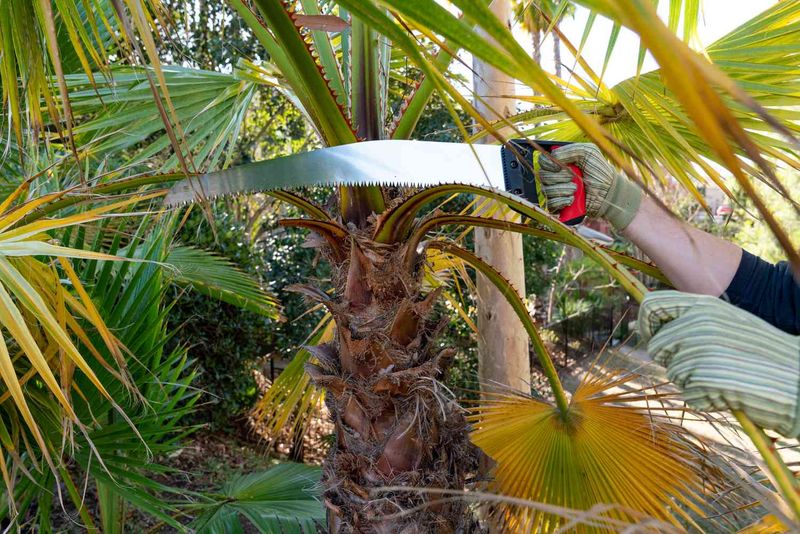
Few things look tidier than a freshly pruned palm, but the line between helpful trimming and harmful cutting is easier to cross than most people think.
A practice sometimes called hurricane cutting, where large numbers of green fronds are removed to give the palm a slim, tidy profile, is one of the most damaging things you can do to a palm tree.
Green fronds are working fronds. They produce the energy the palm needs to push out new growth, fight off pests, and recover from stress.
Removing healthy green fronds in the name of aesthetics puts the palm in a weakened state right as it heads into the most demanding season of the year. According to UF IFAS, overpruning is a leading cause of nutrient deficiency and reduced vigor in Florida palms.
Proper pruning means removing only fronds that are fully brown and hanging downward. If a frond still has any green color, even just at the base, leave it alone.
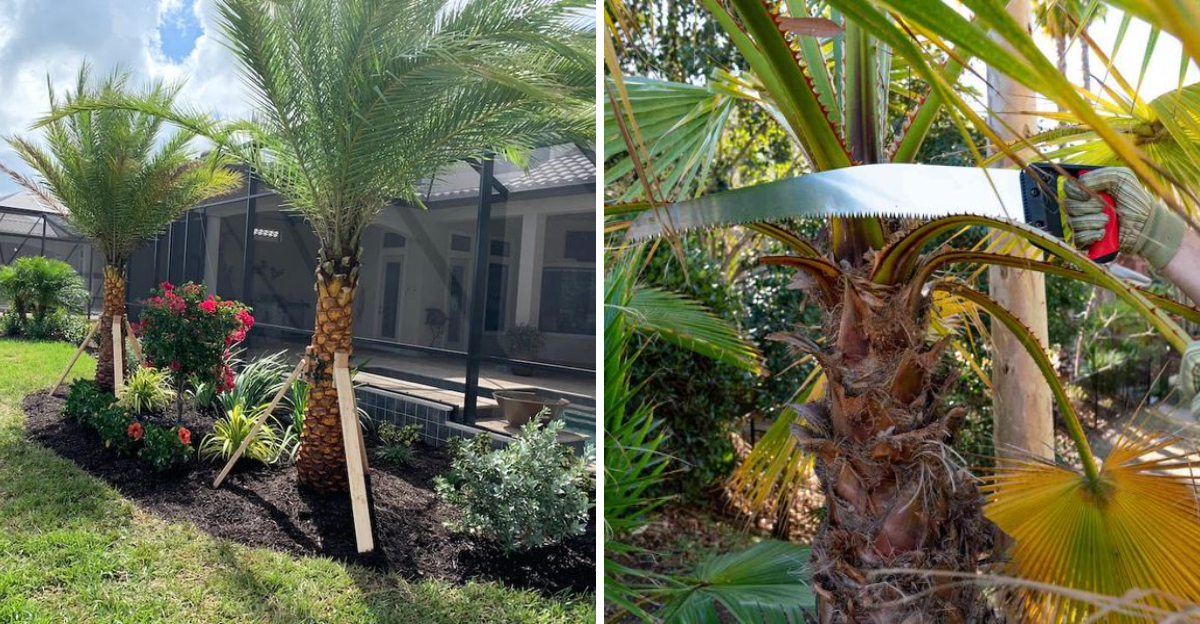
Use clean, sharp tools and cut close to the trunk without damaging the trunk itself. April is a fine time to clean up winter-damaged fronds, but keep the cuts minimal and purposeful.
Less is genuinely more when it comes to pruning healthy palms.
6. Mulch Helps Hold Moisture In Fast Draining Florida Soil
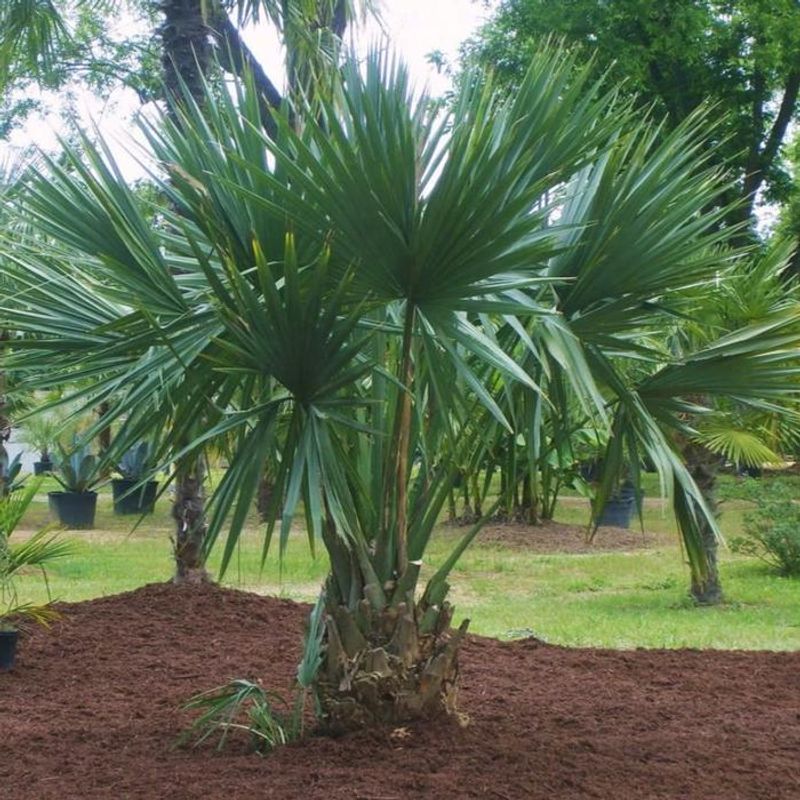
Sandy soil is one of the defining challenges of Florida gardening. Water moves through it fast, nutrients leach out quickly, and soil temperatures can spike dramatically in direct sun.
Mulch is one of the simplest and most effective tools for softening all three of those problems at once.
A 2 to 3 inch layer of organic mulch spread around the base of a palm helps the soil hold onto moisture between watering sessions and rain events. It also moderates soil temperature, keeping roots cooler during the hottest parts of the day.
As organic mulch breaks down over time, it adds small amounts of organic matter back into the soil, which helps improve its overall structure and nutrient-holding capacity.
One detail that matters a lot is placement. Mulch should extend outward from the trunk to cover the root zone, but it should never be piled up against the trunk itself.
A gap of a few inches between the mulch and the base of the palm prevents excess moisture from sitting against the trunk, which can lead to rot and fungal problems. Wood chips, pine bark, and similar organic materials all work well.
Refreshing the mulch layer in April sets up good moisture retention heading into the rainy season.
7. Inspect For Nutrient Deficiency Symptoms Before Growth Surges
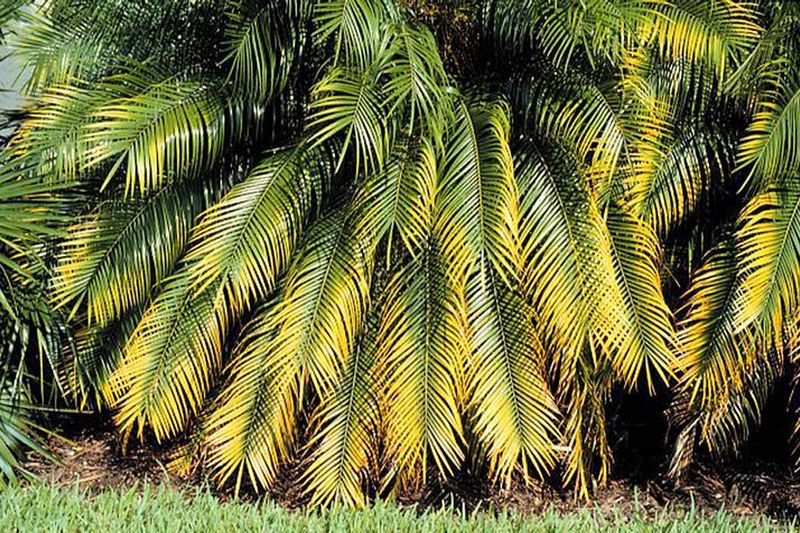
Catching a problem early is always easier than fixing one that has been building for months. Before the warm season kicks into high gear and new fronds start pushing out rapidly, take a few minutes to walk around each palm and look closely at the leaves, especially the older ones near the bottom of the canopy.
Older fronds show nutrient deficiency symptoms first because palms move certain nutrients from older tissue to newer growth when supplies run low. Yellowing, bronzing, or brown spotting on lower fronds can point to potassium or magnesium shortages.
A pale, washed-out look across the entire canopy may suggest nitrogen is running low. Each deficiency has a slightly different visual signature, and learning to recognize them helps you respond with the right corrective action.
April is the perfect time for this inspection because corrective fertilizer applied now has time to start working before the main flush of summer growth begins.
Deficiencies that go unaddressed during the growing season can set a palm back significantly, making it harder to recover before cooler weather returns.
A quick visual check costs nothing and can give you a clear picture of exactly what your palms need heading into the most active growth period of the year.
8. Early Care Sets Up Stronger Growth Through Florida’s Heat
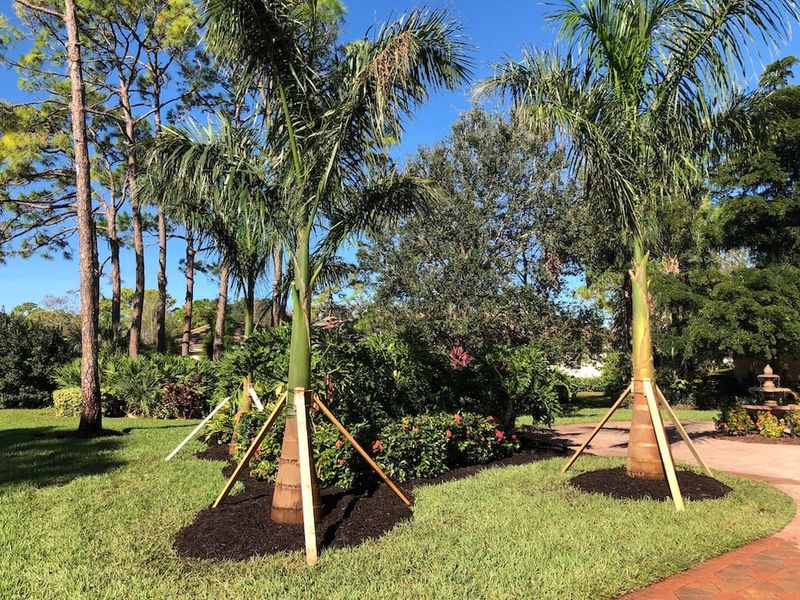
Everything you do for your palms in April pays dividends for months. It is a bit like getting your car serviced before a long road trip.
The small effort up front keeps things running smoothly when conditions get tough, and Florida summers are genuinely tough on landscape plants.
Palms that head into summer with a fresh application of slow-release fertilizer, a deep root system built by consistent watering, clean pruning, and a healthy layer of mulch are simply better equipped to handle heat, humidity, and the occasional stretch of dry weather between storms.
They push out new fronds more consistently, hold better color through the season, and bounce back faster when stress does occur.
Skipping April care does not mean disaster, but it does mean your palms are playing catch-up during the hardest months of the year.
Correcting nutrient deficiencies, adjusting watering habits, and patching up mulch coverage all become harder and less effective once temperatures are regularly above 90 degrees and summer rains are washing nutrients away as fast as you apply them.
A little focused attention now, in this sweet spot of warm but not brutal weather, is the most efficient way to keep Florida palms looking their best all the way through fall.