The Best Companion Flowers For California Vegetable Gardens
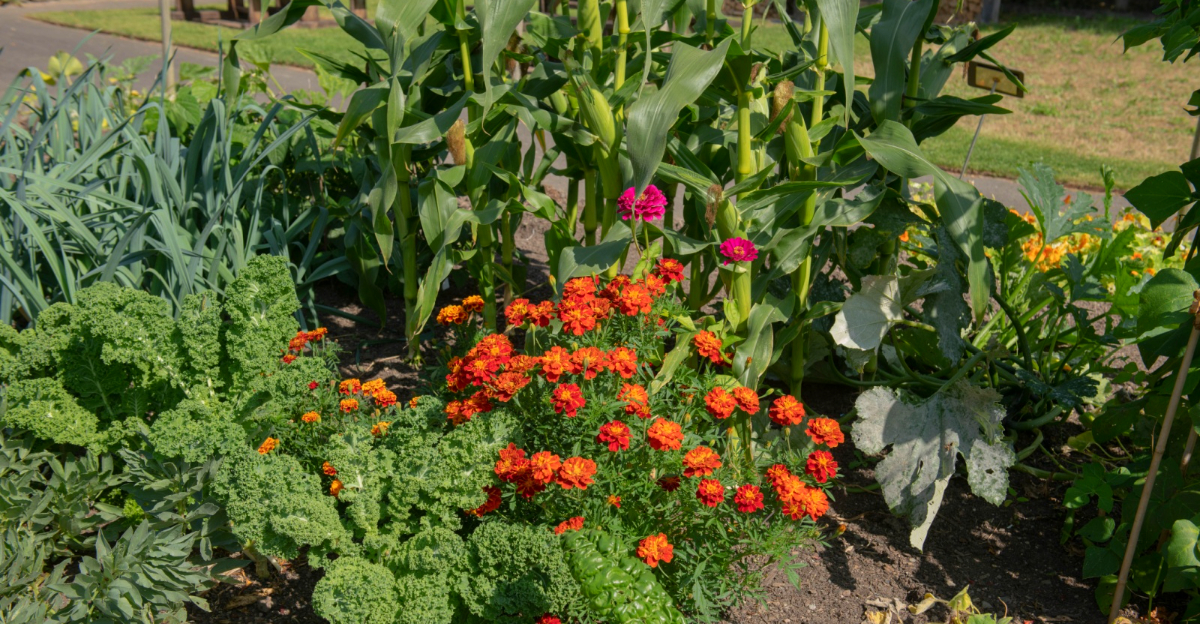
A vegetable garden can look healthy on the surface and still struggle behind the scenes. Across California, more gardeners are noticing that adding flowers changes how their beds perform, not just how they look.
In coastal areas, inland valleys, and everything in between, flowers can help bring in pollinators, support beneficial insects, and create a more balanced growing space.
It is a simple shift that often leads to stronger, more productive plants over time.
Whether you are growing in a small raised bed or a larger backyard plot, the right companion flowers can make a noticeable difference throughout the season.
1. Marigolds Help Manage Soil Pests And Add Color
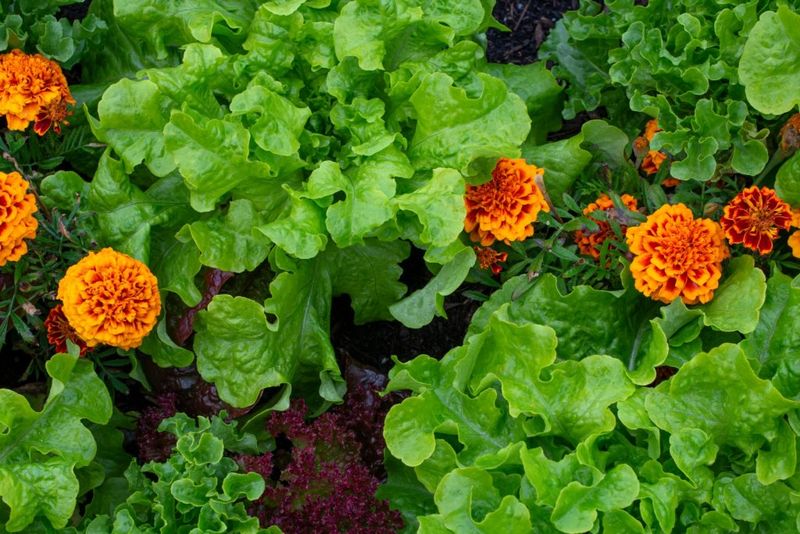
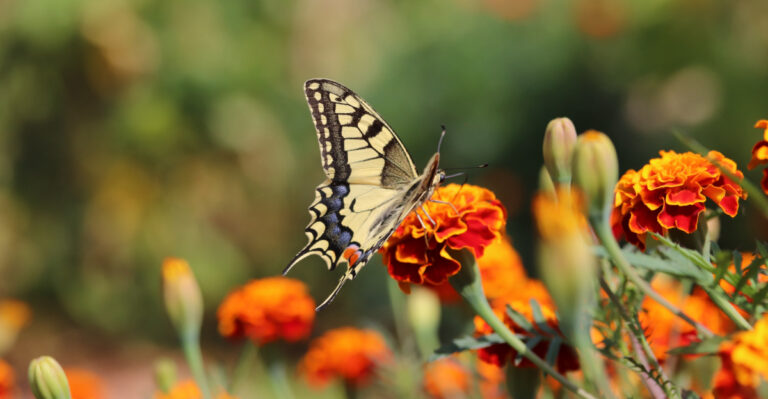
Few flowers have earned as loyal a following among California vegetable gardeners as marigolds. Their bold orange and yellow blooms bring cheerful color to any bed, but their real value runs deeper than looks.
Marigolds release compounds from their roots that can reduce populations of harmful soil nematodes, which are microscopic worms that damage the roots of tomatoes, peppers, and other warm-season crops common in California gardens.
French marigolds, especially the compact Tagetes patula varieties, are often recommended because they tend to produce the strongest root secretions.
Planting them as a border or weaving them between vegetable rows gives them room to work while also making the garden look well put together.
They thrive in full sun and handle the warm, dry summers that much of California brings with ease.
Marigolds also help deter aphids and whiteflies above ground, reducing pressure on nearby crops without any extra effort from the gardener. They need moderate watering and do well in most California soil types when given decent drainage.
Starting seeds indoors in late winter or transplanting seedlings after the last frost gives them a head start in cooler coastal zones. In warmer inland regions, direct sowing works well once temperatures stay consistently warm.
A gardener who plants marigolds generously throughout the vegetable bed is likely to notice fewer pest problems as the season progresses.
2. Nasturtiums Trap Common Garden Pests
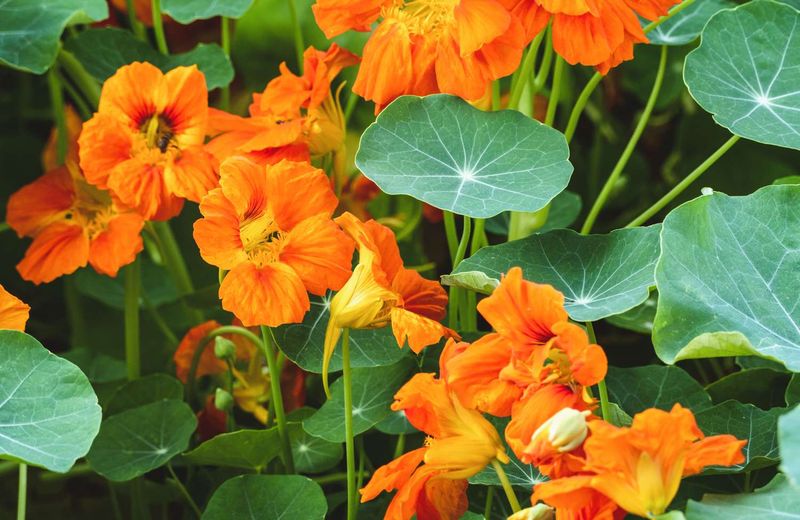
Walk through almost any thriving California kitchen garden in spring, and there’s a good chance nasturtiums are somewhere in the mix.
These fast-growing, easy-to-care-for flowers have a clever trick up their sleeve – they act as trap crops, drawing aphids, whiteflies, and other soft-bodied pests toward themselves and away from more valuable vegetable plants nearby.
Aphids are particularly fond of nasturtiums, which means a gardener can monitor one concentrated spot rather than searching the entire bed for pest activity.
Once aphid populations build up on nasturtium leaves, beneficial insects like ladybugs and parasitic wasps often move in to feed on them, creating a natural cycle of pest management.
This approach reduces the need for sprays or other interventions that can disrupt garden balance.
Nasturtiums are also wonderfully low maintenance. They grow quickly from seed, prefer lean soil rather than heavily fertilized ground, and tolerate dry conditions reasonably well – a useful quality during California’s warm, often dry summers.
Both climbing and bushy varieties are available, giving gardeners flexibility in how they use them. The edible flowers add a pleasant peppery note to salads, making them a practical and enjoyable addition.
Your California Garden Changes Every Week. Your Plan Should Too.
Gardening in California changes quickly throughout the season. Every Friday you’ll receive a simple weekly plan showing exactly what to plant, prune, fertilize, harvest, and protect so you never miss the right timing.
Plant them near squash, cucumbers, or beans in spring and let them sprawl freely at the edges of beds where they can intercept pests before those pests reach the main crops.
3. Calendula Attracts Helpful Beneficial Insects
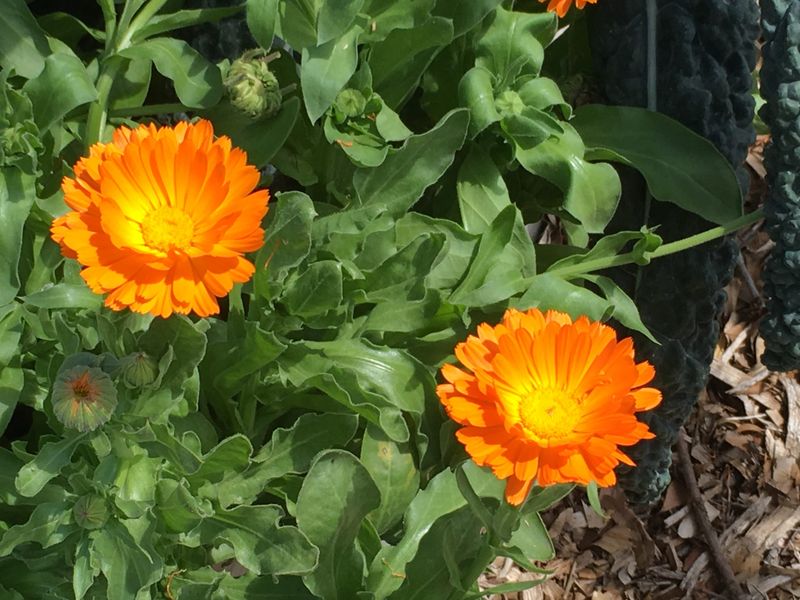
Calendula has been a staple in cottage gardens for centuries, but California vegetable gardeners have good reason to treat it as a serious working plant rather than just a pretty face.
The flowers produce nectar and pollen that draw in hoverflies and parasitic wasps – two groups of insects that feed on or lay their eggs inside common garden pests like aphids, caterpillars, and whiteflies.
Hoverflies, in particular, are underappreciated garden allies. Adult hoverflies feed on flower nectar, but their larvae prey on aphids with impressive efficiency.
By planting calendula near vegetable crops that are prone to aphid pressure, such as lettuce, kale, and brassicas, gardeners can encourage these helpful insects to set up residence in the bed throughout the season.
One of calendula’s best qualities for California gardeners is its long blooming window.
In coastal areas with mild temperatures, it can bloom from late fall through spring, providing a nectar source during seasons when few other flowers are open.
In warmer inland zones, it performs best during cooler months and may slow down in peak summer heat. Calendula prefers full sun to partial shade and needs consistent but moderate watering.
It self-sows readily, which means a single planting can return year after year with minimal effort.
Removing spent blooms encourages continued flower production, keeping the nectar supply fresh and reliable for beneficial insects working your vegetable beds.
4. Borage Brings Pollinators To Vegetable Beds
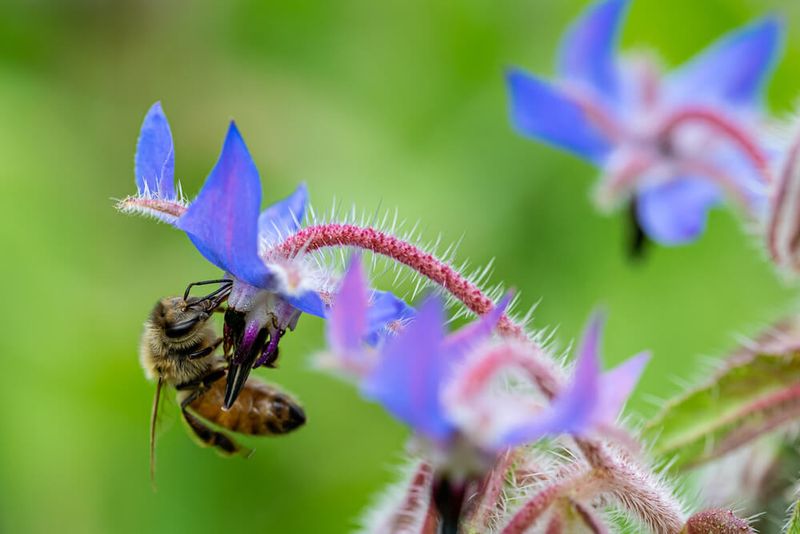
Tomato growers across California have a strong reason to get acquainted with borage.
This sturdy annual produces clusters of striking blue star-shaped flowers that bees find nearly irresistible, making it one of the more effective pollinator magnets available for the home vegetable garden.
Better pollination in tomato beds generally leads to improved fruit set, which is something most California gardeners are happy to encourage.
Borage has a reputation for repelling certain problematic insects as well. Some gardeners report that it helps deter cabbage worms and tomato hornworms when planted nearby, though results can vary depending on garden conditions.
Its large, hairy leaves are also sometimes used as a mulch layer after they fall, adding organic matter back into the soil over time.
Growing borage in California is straightforward. It prefers full sun and well-drained soil, and once established it handles dry spells reasonably well – a practical quality in regions where summer water use needs to be managed carefully.
Direct sowing in the garden tends to work better than transplanting, as borage develops a taproot that doesn’t always respond well to being moved.
It can grow quite large, often reaching two to three feet tall and wide, so giving it enough space in the bed matters.
Borage self-sows generously, meaning that after the first planting, seedlings are likely to appear on their own in subsequent seasons without any extra effort.
5. Sweet Alyssum Draws Aphid Eating Hoverflies
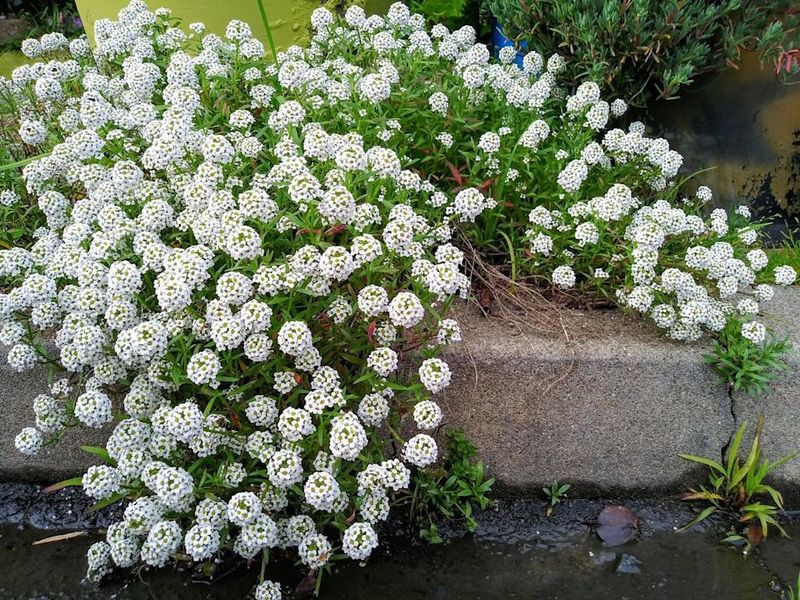
Tucked between rows of lettuce or trailing along the edges of raised beds, sweet alyssum is easy to overlook at first glance. But this small, low-growing flower is one of the hardest-working companions a California vegetable gardener can add to the mix.
Its clusters of tiny blooms release a faint honey-like fragrance and produce nectar that is especially attractive to hoverflies – insects whose larvae feed actively on aphids.
Aphid pressure can build quickly in California gardens, particularly in spring and fall when temperatures are mild and vegetable crops like brassicas, lettuce, and peppers are in full production.
Having a steady population of hoverflies nearby provides a layer of natural pest management that works around the clock without any input from the gardener.
Sweet alyssum supports that population by offering a consistent food source for adult hoverflies throughout its blooming period.
Sweet alyssum is also genuinely easy to grow. It thrives in full sun to partial shade, tolerates a range of soil types, and needs only moderate watering once established.
In many California coastal zones, it blooms from fall through spring and may go dormant during the hottest summer months, then revive when temperatures cool again. It self-sows freely, often filling in gaps around vegetable plants on its own.
Scattering seeds between rows or around the base of taller crops like broccoli or kale is a simple and low-effort way to bring this beneficial flower into the garden.
6. Sunflowers Add Height And Attract Pollinators
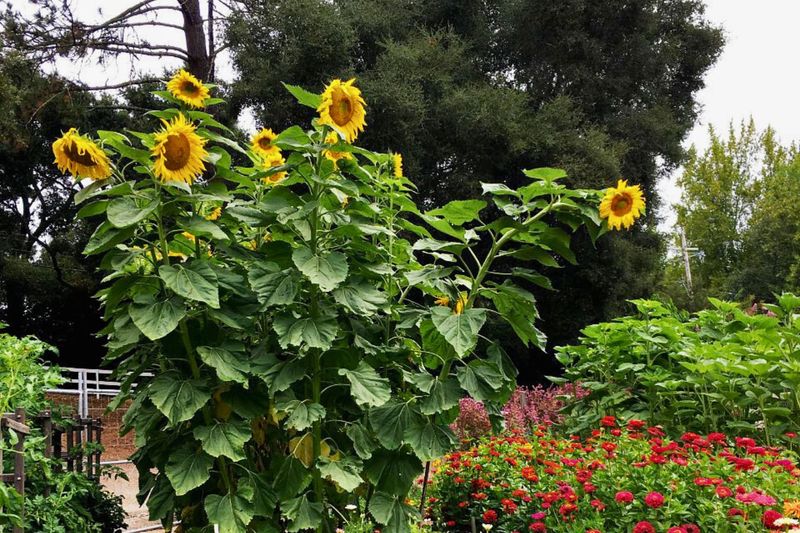
There’s something quietly satisfying about watching a sunflower grow from a small seed into a towering plant that anchors the entire garden.
In California, where long warm seasons give sunflowers plenty of time to develop, they can serve as much more than a visual statement.
Their large, pollen-rich blooms attract bees, butterflies, and other pollinators in significant numbers, and that increased pollinator activity benefits the surrounding vegetable plants as well.
Sunflowers work particularly well planted at the north end or back edge of a vegetable bed so their height doesn’t shade out smaller crops.
Squash, cucumbers, and melons – all crops that rely heavily on bee pollination – can benefit from having sunflowers nearby.
Some gardeners also use sunflower stalks as informal supports for climbing beans, creating a practical and productive pairing within the same bed space.
California’s warm inland valleys are especially well suited to sunflower production. Varieties range from single-stemmed giants reaching eight feet or more, to branching types that produce multiple smaller blooms over a longer period.
Multi-stem varieties tend to be more useful as pollinator magnets because they flower for a longer stretch of time rather than putting out one large bloom and finishing.
Sunflowers prefer full sun and deep, infrequent watering once established, which aligns well with water-conscious gardening practices common across much of California.
Direct sowing after the last frost date works reliably in most parts of the state.
7. Cosmos Support Pollinators All Season
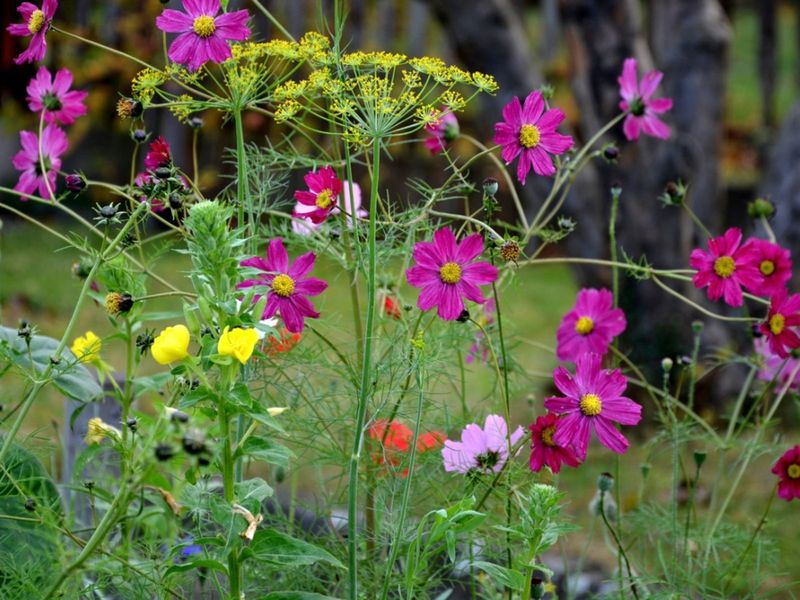
Feathery and light, cosmos flowers bring an airy elegance to vegetable gardens that few other plants can match.
Beyond their visual appeal, they provide consistent pollinator support across a long blooming window – a quality that matters a great deal in California gardens where warm seasons stretch well into fall and crops like squash, beans, and peppers need active pollination for months at a time.
Bees, butterflies, and even beneficial wasps visit cosmos regularly for nectar and pollen.
Because cosmos bloom continuously from early summer through the first cool nights of autumn in most California regions, they serve as a reliable food source for pollinators during the long productive stretch between spring planting and fall harvest.
That sustained support can translate into better fruit set and higher yields from neighboring vegetable plants.
Cosmos are remarkably unfussy. They actually prefer lean, somewhat poor soil and tend to produce fewer flowers if given too much fertilizer or overly rich compost – a useful quality in beds where the soil has been heavily amended for vegetable production.
They grow quickly from seed, tolerate heat and dry conditions with minimal supplemental watering, and reach a mature height of two to four feet depending on the variety.
In California’s warmer inland regions, direct sowing in spring gives them a strong start.
Removing spent flowers regularly encourages the plant to keep producing new blooms, extending pollinator support well into the harvest season without any complicated care routines.
8. Zinnias Bring Butterflies And Beneficial Insects
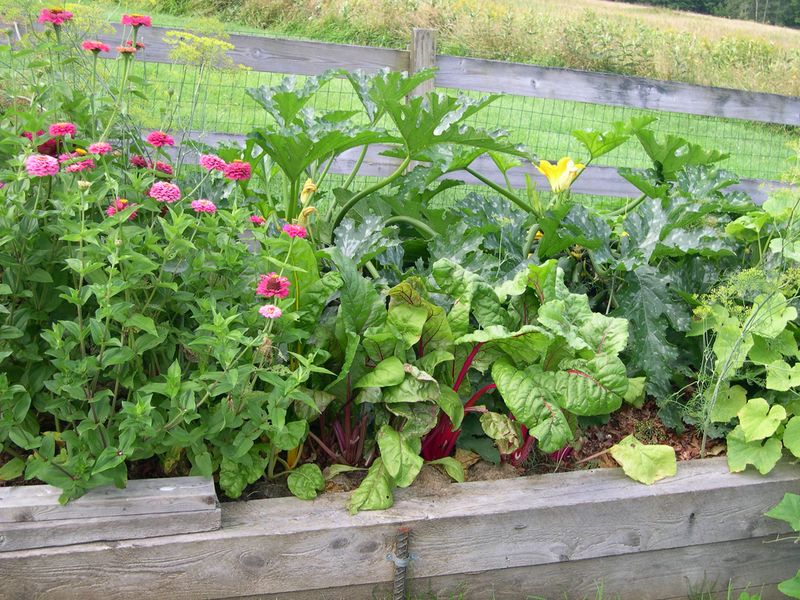
Hot California summers that slow down other flowering plants are when zinnias truly come into their own.
These heat-loving flowers thrive in the kind of warm, sunny conditions that many California inland and valley gardens experience from June through September, producing a steady stream of blooms that attract butterflies, bees, and beneficial insects throughout the season.
Butterflies that visit zinnias for nectar also help with pollination of nearby vegetable crops.
Beneficial insects such as parasitic wasps and predatory beetles are drawn to zinnia-rich garden beds as well, and these insects help keep populations of caterpillars, beetles, and aphids in check.
Planting zinnias near tomatoes, peppers, and eggplant – crops that are often targeted by multiple pest species – can help support a more balanced and resilient garden environment.
Zinnias are also straightforward to grow. They prefer full sun, warm soil, and moderate watering with good drainage.
Overhead watering is worth avoiding when possible, as wet foliage can encourage powdery mildew, which is a common issue in some California growing regions during late summer.
Direct sowing after soil temperatures warm in spring is the most reliable approach in most parts of the state.
Choosing multi-bloom varieties rather than large single-headed types tends to produce more flowers over a longer period, keeping the garden interesting and the beneficial insect population well fed from midsummer through the final weeks of the growing season.
9. Yarrow Attracts Insects That Help Control Pests
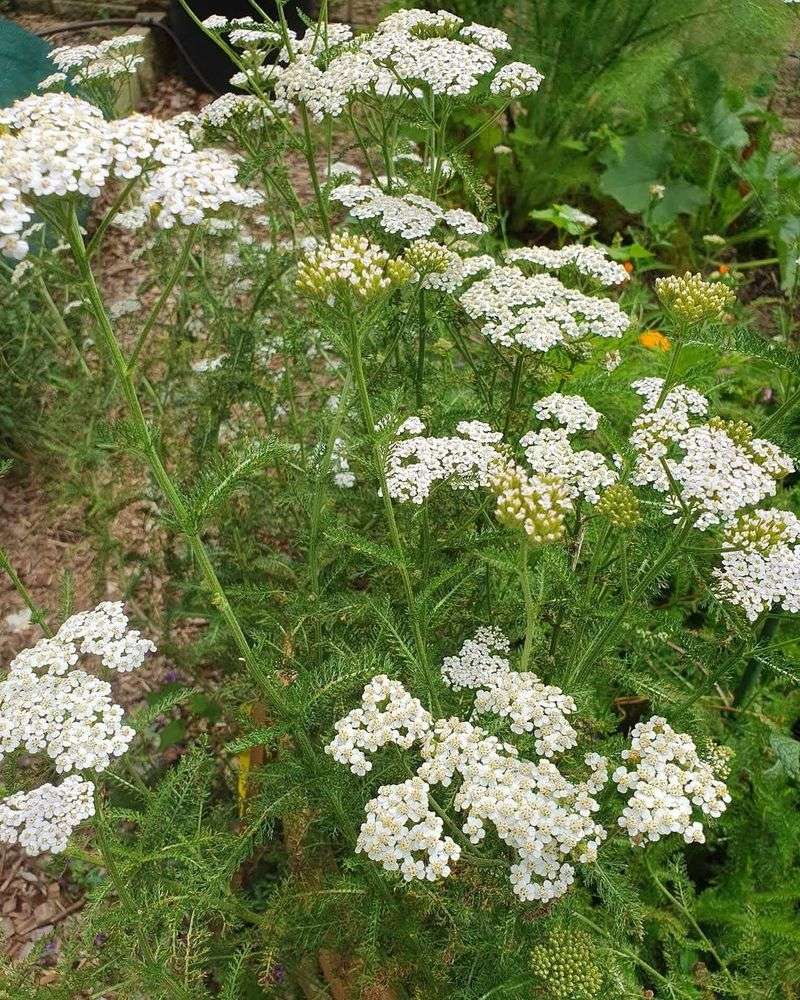
Yarrow has a reputation as a tough, drought-tolerant perennial, and in water-conscious California gardens, that quality alone makes it worth considering.
But what earns yarrow a genuine place in the vegetable garden is the remarkable variety of beneficial insects its flat-topped flower clusters attract.
Parasitic wasps, predatory beetles, lacewings, and hoverflies all visit yarrow regularly, and many of these insects are active predators or parasites of common vegetable garden pests.
The flowers are structured in a way that makes nectar and pollen accessible to small insects that can’t reach into deeper blooms.
This means yarrow supports a broader range of beneficial insect species than many other garden flowers, giving it an outsized impact on the overall ecological balance of the vegetable bed.
Planting it at the borders of garden beds or in dedicated pollinator strips alongside vegetable rows creates a stable habitat for these helpful insects throughout the growing season.
In California’s Mediterranean-style climate, yarrow performs reliably with minimal care. It tolerates poor soils, handles drought conditions once established, and thrives in full sun across most of the state’s growing regions.
It spreads gradually over time, so dividing clumps every few years keeps it tidy and productive. Common yarrow varieties in white, yellow, and soft pink are widely available at California nurseries.
As a perennial, yarrow returns each season, meaning a single planting can provide years of ongoing support for the beneficial insect community in and around the vegetable garden.