The Best Red Flowers To Plant In Texas For Long-Lasting Color
Red flowers know how to get attention, especially in a Texas garden. They bring energy, warmth, and that bold pop of color that can make a flower bed feel alive from a distance.
The challenge is finding ones that can keep that show going when the weather turns intense.
Texas gardens deal with long stretches of heat, strong sun, dry conditions, and the occasional surprise cold snap, so short-lived beauty is rarely enough. The best red blooms need to look great and hold their own.
That is why choosing the right varieties makes such a difference. Some red flowers keep blooming through the hottest part of the season, while others stay strong with very little extra care.
They can brighten borders, wake up containers, and add a lively punch to front yards or backyard beds without fading too fast.
For gardeners who want color that lasts and plants that can handle real Texas conditions, these red flowers are more than just pretty. They are dependable performers that earn their place.
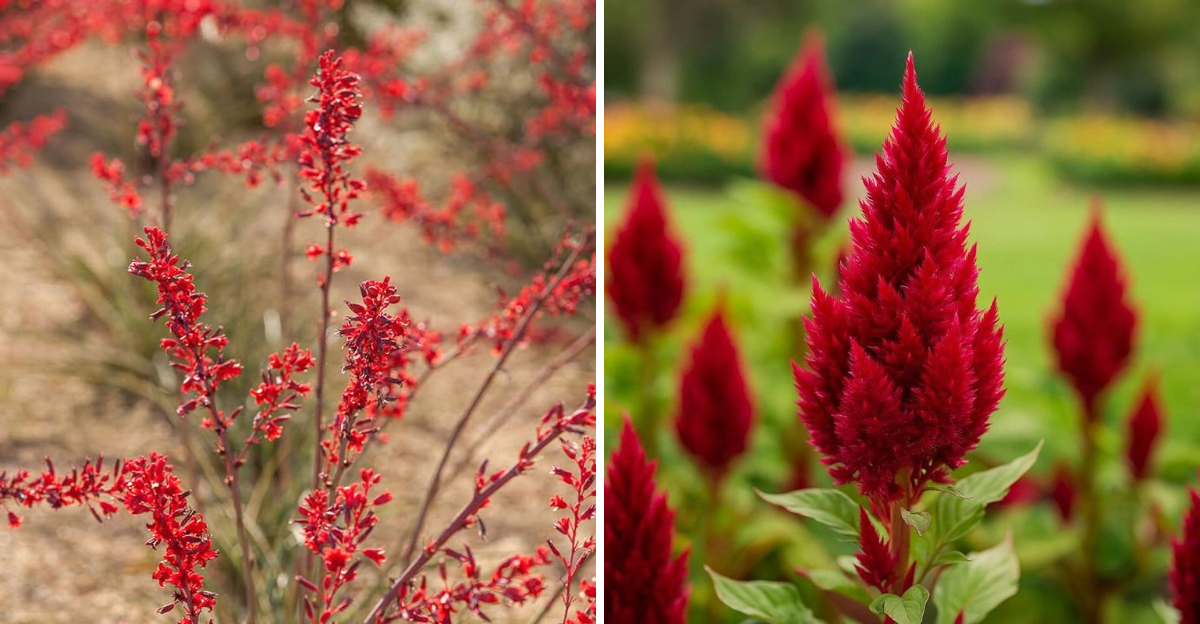
1. Red Yucca (Hesperaloe Parviflora)
If there is one plant that was practically made for Texas, it is Red Yucca. Despite its name, this tough beauty is actually part of the agave family, not a true yucca.
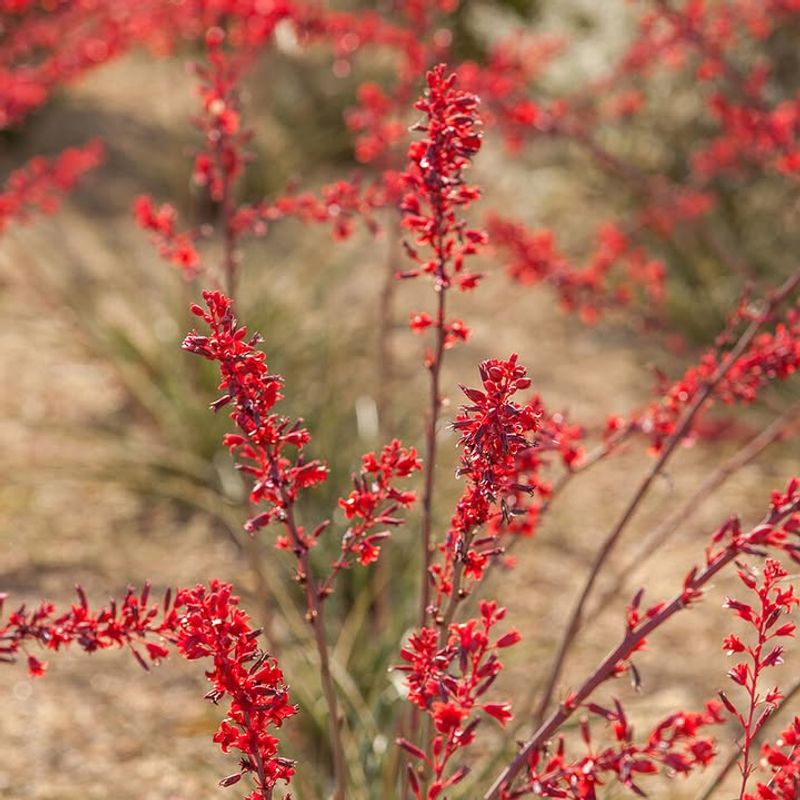
It sends up tall, arching flower spikes loaded with coral-red to soft red blooms that hummingbirds cannot resist.
Red Yucca thrives in full sun and handles reflected heat from sidewalks and driveways without missing a beat. It blooms from late spring all the way through October, giving Texas gardeners an incredibly long season of color.
Once established, it needs almost no supplemental watering, which makes it a dream plant for anyone tired of dragging out the hose.
The spiky, grass-like foliage looks attractive even when the plant is not blooming, so it earns its spot in the garden year-round. Plant it along a sunny border, in a rock garden, or near a driveway where heat and drought are constant challenges.
Across Texas, from El Paso to Dallas, this plant proves that you do not need a lot of water to have a stunning, colorful landscape all season long.
2. Turk’s Cap (Malvaviscus Arboreus Var. Drummondii)
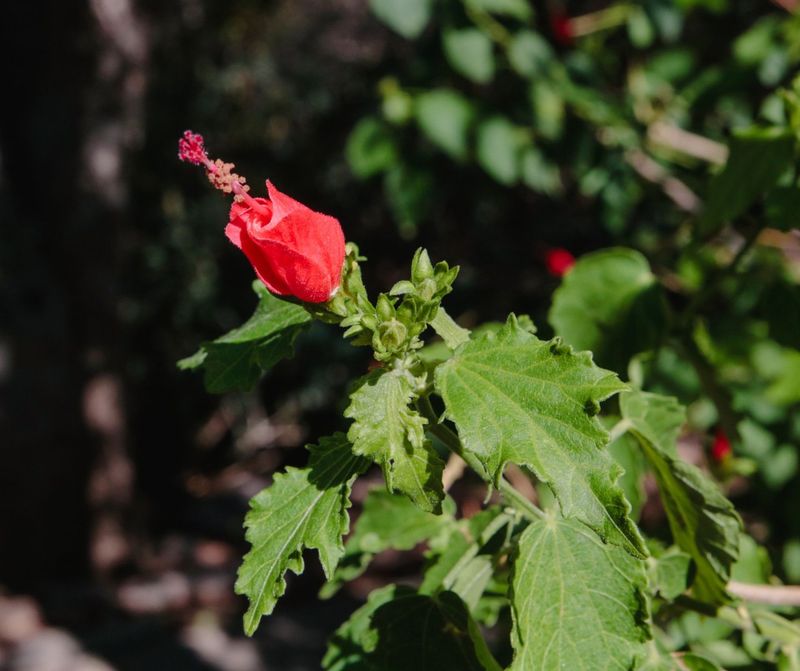
Gardeners who battle shady spots often feel left out when it comes to colorful flowers. Turk’s Cap changes that completely.
This native Texas shrub produces bright red, twisted flowers that look like little red turbans, blooming cheerfully from spring all the way through fall without much fuss at all.
What makes Turk’s Cap especially valuable is its ability to thrive where most flowering plants give up. Partial shade, full shade, poor soil, and summer humidity are no problem for this tough native.
Hummingbirds, butterflies, and even some birds are drawn to its bright blooms, turning your shady corner into a wildlife hotspot.
Once established in your Texas landscape, Turk’s Cap is incredibly low-maintenance. It handles drought reasonably well and bounces back strongly each spring even after hard freezes.
It can grow quite large if left unpruned, reaching six feet tall or more, so give it space to spread.
Your Texas Garden Changes Every Week. Your Plan Should Too.
Gardening in Texas changes quickly throughout the season. Every Friday you’ll receive a simple weekly plan showing exactly what to plant, prune, fertilize, harvest, and protect so you never miss the right timing.
Plant it under trees, along a fence line, or in a naturalized area where you want months of reliable red color without constant attention. From the Hill Country to East Texas, this plant earns its place in every garden.
3. Autumn Sage (Salvia Greggii)
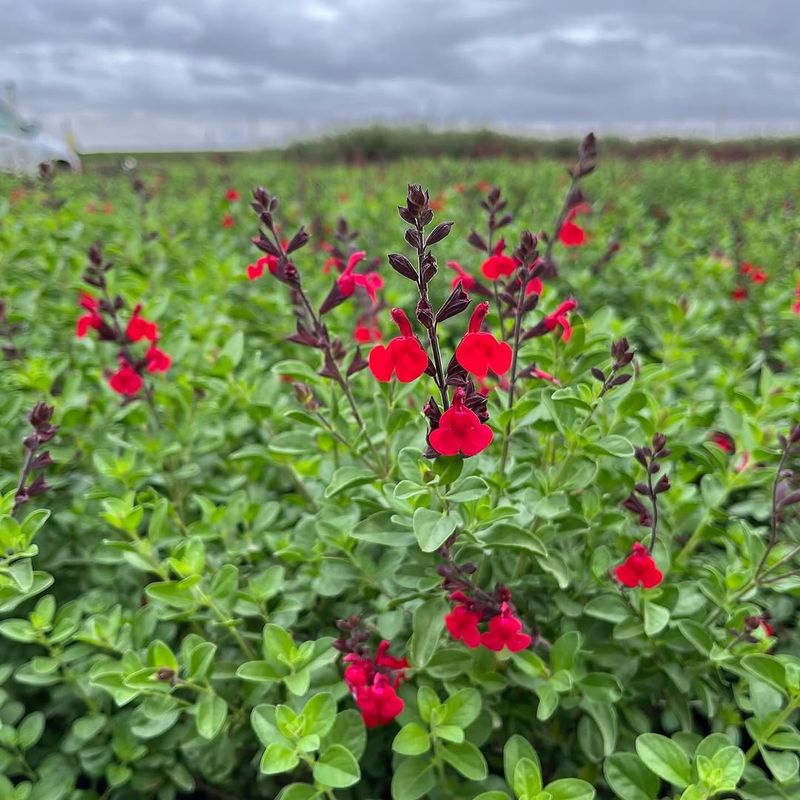
Few plants earn as much loyalty from Texas gardeners as Autumn Sage. Walk through almost any neighborhood in Austin or San Antonio during spring or fall, and you are almost guaranteed to spot its cheerful red blooms spilling over garden borders.
It flowers from early spring and keeps going strong right up until the first frost arrives. Red forms of Salvia greggii are the most popular, and for good reason. The color is rich, vibrant, and holds up beautifully even under the intense Texas sun.
Hummingbirds treat it like a favorite restaurant, returning again and again throughout the season. Butterflies love it too, making it a fantastic choice for pollinator gardens.
Autumn Sage is wonderfully adaptable. It handles drought once established, tolerates rocky or sandy soils, and fits neatly into both formal flower beds and casual cottage-style borders.
Prune it back lightly after each big flush of blooms to encourage fresh new growth and more flowers. It stays semi-evergreen in milder Texas winters, which means you get color and greenery almost year-round.
For any Texas gardener wanting a reliable, low-effort red bloomer, Autumn Sage belongs at the top of the planting list.
4. Flame Acanthus (Anisacanthus Quadrifidus Var. Wrightii)
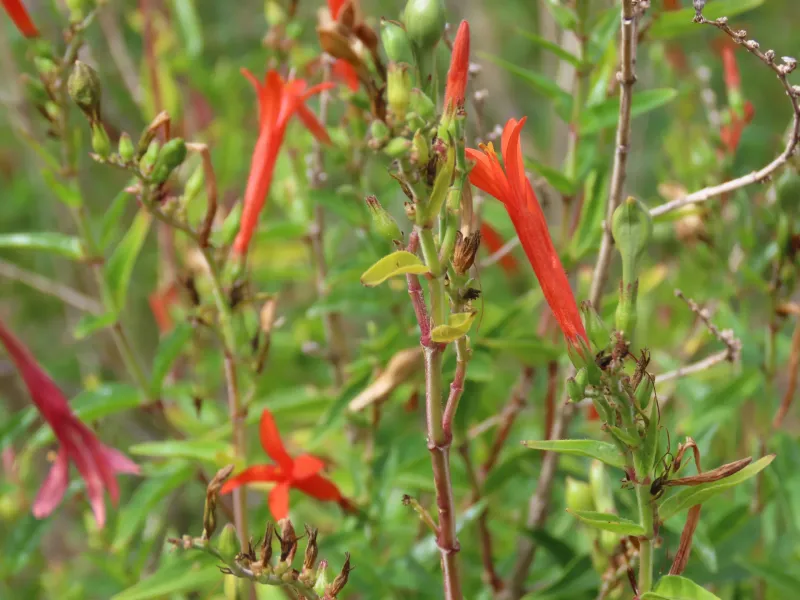
When the Texas summer hits its peak and most plants are struggling to survive, Flame Acanthus is just getting started.
This native shrub produces clusters of narrow, tubular red-orange flowers that seem to glow against the summer sky. Hummingbirds flock to it constantly, and it is easy to see why they find it so irresistible.
Flame Acanthus blooms through the hottest months of the year, typically from midsummer into fall, which fills a color gap that many other flowering plants simply cannot cover. It is extremely drought tolerant once established and thrives in full sun with well-drained soil.
Rocky slopes, dry hillsides, and spots with reflected heat from walls or pavement are perfect locations for this tough plant.
In the Texas Hill Country and across Central Texas, Flame Acanthus grows naturally in rocky terrain, which tells you everything about how tough it really is. It can be cut back hard in late winter to keep it tidy and encourage vigorous new growth.
The plant typically reaches four to five feet tall and wide, making it a solid mid-border shrub. If you want a long-blooming, low-maintenance red-orange bloomer that thrives through brutal Texas summers, this one delivers season after season.
5. Firebush (Hamelia Patens)
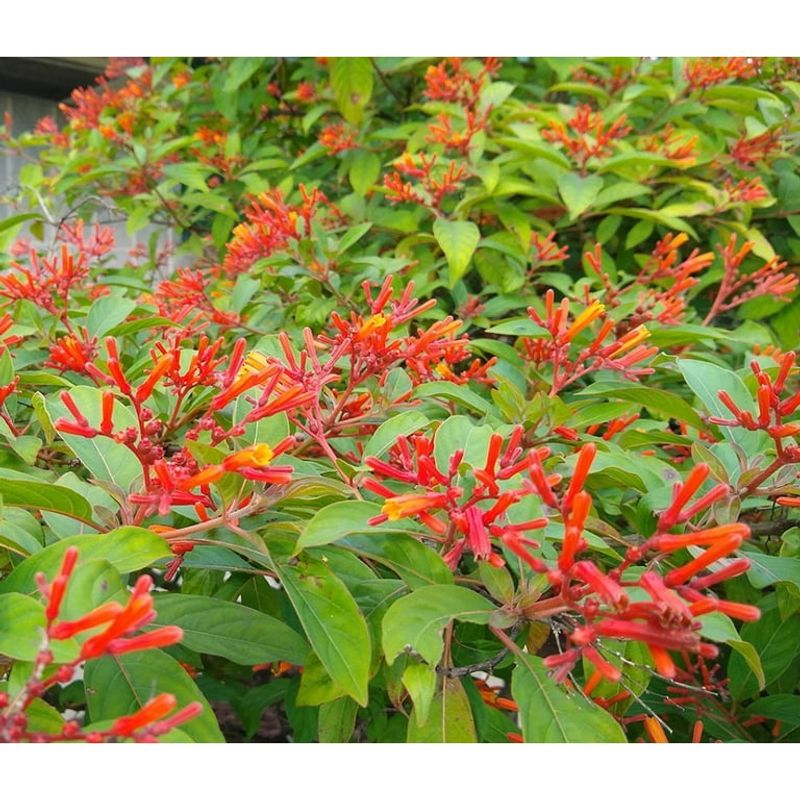
There is something almost tropical about the way Firebush lights up a Texas landscape. Its clusters of small, tubular red-orange flowers cover the plant from summer straight through to frost, creating a long, reliable show of warm color.
The foliage itself often takes on reddish and orange tones, adding even more visual interest beyond just the blooms.
Texas Superstar has recognized Firebush for its outstanding heat tolerance and impressive resistance to common garden pests. That kind of endorsement means a lot in a state where summer temperatures regularly top 100 degrees.
It performs best in full sun to light shade and grows quickly, often reaching six feet or more in a single season in warmer parts of Texas.
Hummingbirds and butterflies visit Firebush constantly, making it a top pick for anyone who wants to attract pollinators to their yard. In South Texas and the Gulf Coast region, it may behave as a perennial shrub.
In colder areas of the state, it typically grows as an annual but reseeds readily. Either way, it delivers nonstop warm-season color that few other plants can match. Plant it in a mixed border or use it as a bold focal point in your Texas garden.
6. Pride Of Barbados (Caesalpinia Pulcherrima)
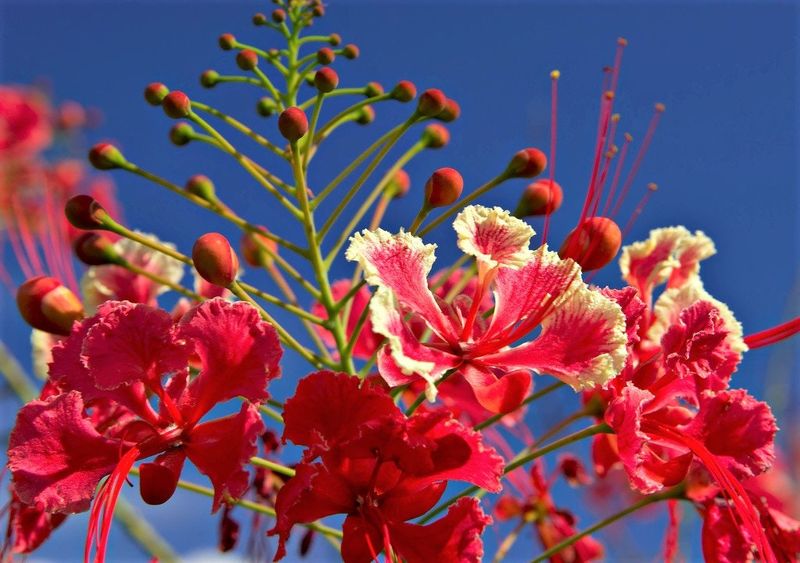
Bold, dramatic, and completely unfazed by scorching heat, Pride of Barbados earns its Texas Superstar status every single summer.
The flowers are truly showstoppers, featuring ruffled orange-red petals edged in bright yellow with long, showy stamens that give each bloom an almost exotic appearance. It is one of those plants that makes people stop their cars to ask what it is.
Pride of Barbados loves full sun and truly thrives in the hottest, driest conditions Texas can throw at it. It blooms from midsummer through fall, right when many other plants are looking tired and faded.
Butterflies and hummingbirds are frequent visitors, drawn in by the abundant, nectar-rich flowers that keep appearing week after week.
In South and Central Texas, this plant can grow into a large, multi-stemmed shrub reaching eight feet tall or more. In North Texas, it may freeze back in winter but returns reliably from the roots each spring.
Give it well-drained soil, full sun, and a little room to stretch out, and it will reward you with months of spectacular color. For anyone wanting a truly bold and long-lasting red-orange flower display in a dry Texas landscape, Pride of Barbados is hard to beat.
7. ‘New Look’ Celosia
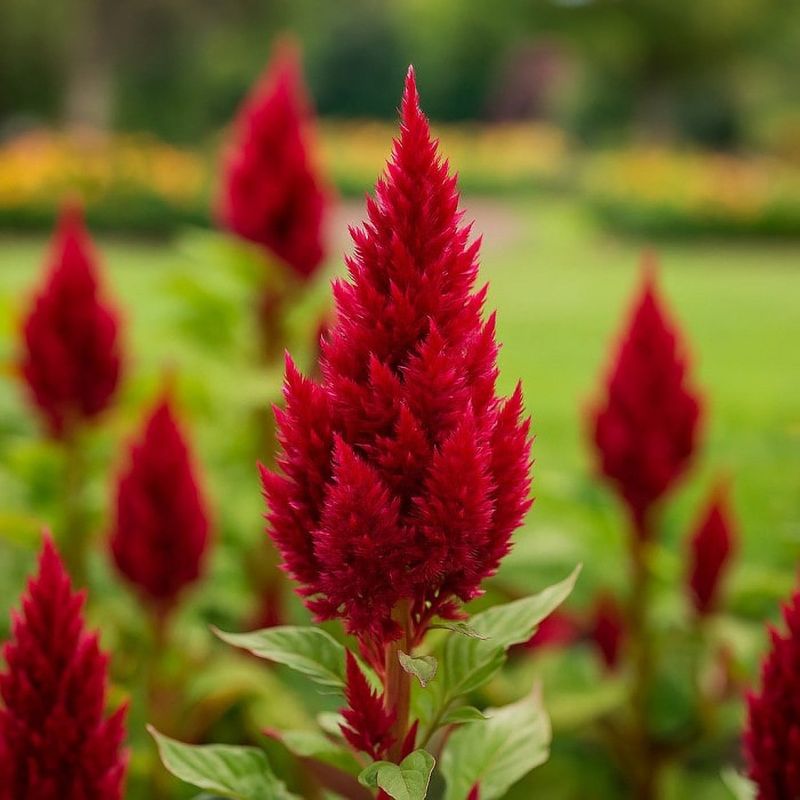
Celosia is one of those annuals that looks almost too vibrant to be real. The ‘New Look’ variety takes that boldness up a notch with deep, velvety red plumes that hold their color beautifully even through the intense heat of a Texas summer.
It earned its Texas Superstar designation by outperforming many similar celosias under tough conditions.
What sets ‘New Look’ apart from ordinary celosia is its staying power. The plumes keep coming all summer long without fading out or looking ragged, which is a genuine challenge for most annuals in Texas heat.
Plants stay compact and tidy, typically reaching around twelve inches tall, which makes them ideal for the front of flower beds, container gardens, and window boxes where you want neat, eye-catching color.
Plant ‘New Look’ Celosia in full sun with well-drained soil, and water it regularly until it gets established. After that, it is fairly forgiving during short dry spells.
Deadheading spent plumes encourages fresh new growth and keeps the display looking its best all season. From Houston to Lubbock, this cheerful annual brings reliable, high-impact red color that lasts from late spring right through the heat of summer and into early fall.
8. Whopper Begonias
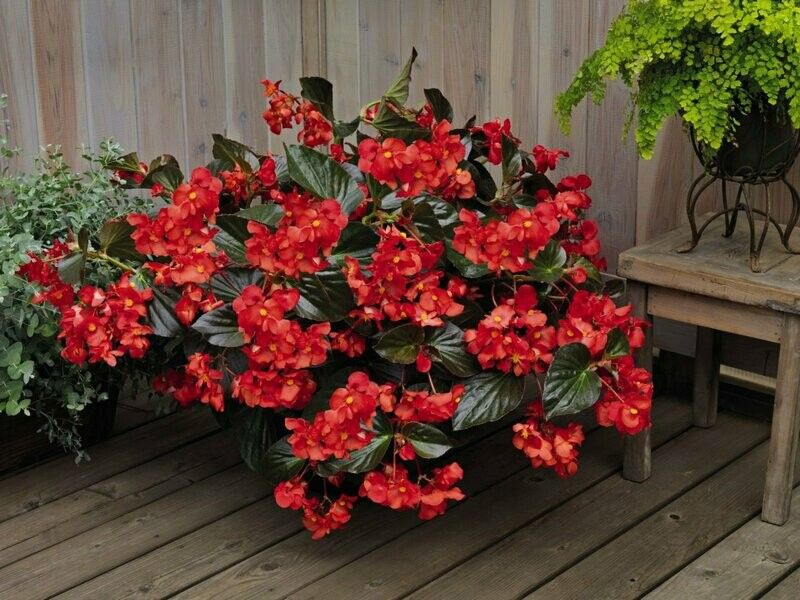
Most gardeners think of begonias as small, delicate plants. Whopper Begonias completely shatter that idea.
These oversized plants produce large, showy red flowers on plants that can grow two to three feet tall and wide, creating a bold, lush display that looks more like a tropical shrub than a typical bedding plant.
Texas Superstar recognized Whopper Begonias for their outstanding landscape performance and ability to handle conditions that would stress ordinary begonias.
They perform best in partial shade or morning sun with afternoon shade, which makes them a fantastic solution for those tricky spots under trees or on the east side of a building where other red-flowering plants struggle to bloom.
The combination of oversized red blooms and rich, dark bronze-green foliage makes Whopper Begonias genuinely attractive even on days when clouds cut the light. They thrive in the humidity of East Texas and along the Gulf Coast, where afternoon shade is easy to find.
Keep the soil consistently moist and feed them regularly for the best results. For gardeners in shaded spots across Texas who want long-lasting, impressive red color from summer through fall, Whopper Begonias are one of the strongest options available.
9. ‘Lord Baltimore’ Rose Mallow Hibiscus
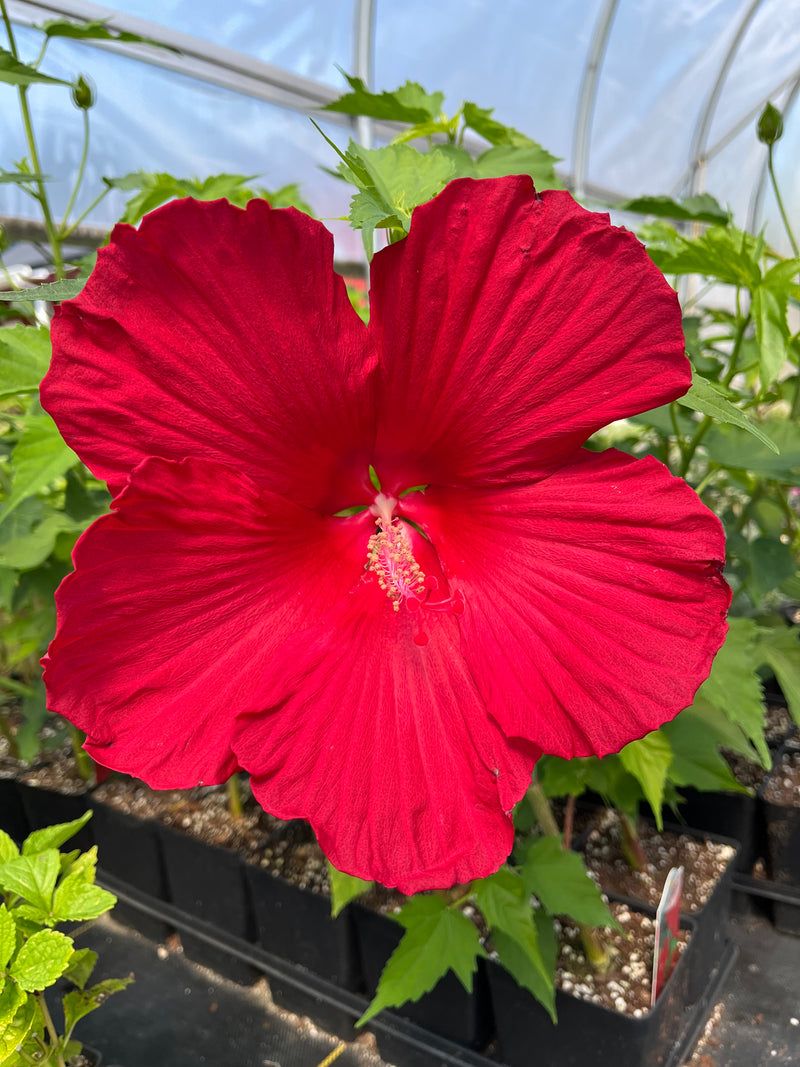
Few flowers in the Texas garden create the kind of jaw-dropping impact that ‘Lord Baltimore’ Rose Mallow Hibiscus delivers.
The blooms are enormous, reaching ten to twelve inches across, with true deep red petals that have a rich, almost velvety texture. One single plant in full bloom looks like something straight out of a tropical paradise.
Texas Superstar highlighted ‘Lord Baltimore’ for its ability to bloom from summer all the way through frost, giving gardeners months of these spectacular oversized flowers.
Unlike tropical hibiscus that struggles through Texas winters, Rose Mallow Hibiscus is a hardy perennial that comes back reliably each year from its roots.
It grows best in full sun with consistently moist, fertile soil and can reach six feet tall in a single season.
Because the individual flowers last only one day, the plant compensates by producing a continuous parade of fresh blooms throughout the warm season.
It works beautifully as a bold background plant in mixed borders or as a dramatic specimen near a water feature or rain garden.
Across the state, from the humid Houston area to the milder climate around San Antonio, ‘Lord Baltimore’ delivers the biggest red flower power you can find in a Texas garden.