8 Texas Plants That Attract Night Pollinators To Your Garden
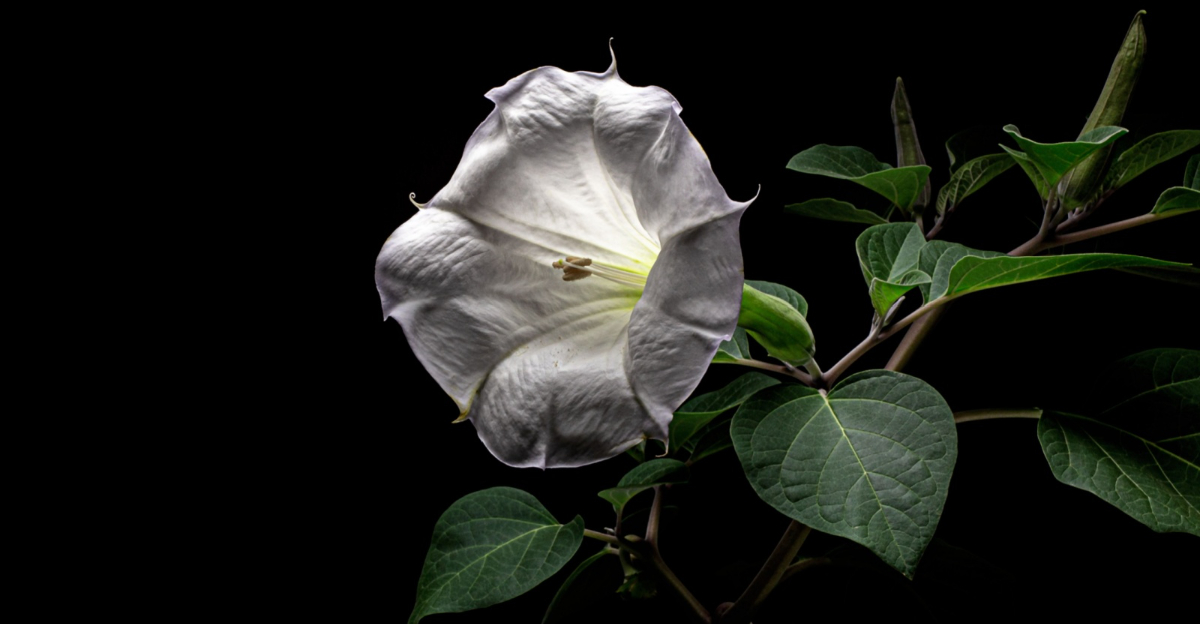
Step outside on a warm Texas evening and the garden feels completely different. Just as daylight fades, certain flowers begin to open and release their strongest fragrance into the night air.
More Texas gardeners are starting to notice that the garden does not slow down after sunset. Moths, beetles, and other night pollinators stay active, moving pollen in ways that often go unseen.
With the right plant choices, it becomes possible to support these nighttime visitors while adding scent, movement, and life to your space. A Texas garden can feel just as vibrant after dark as it does during the day.
1. Evening Primrose Welcomes Pollinators At Dusk
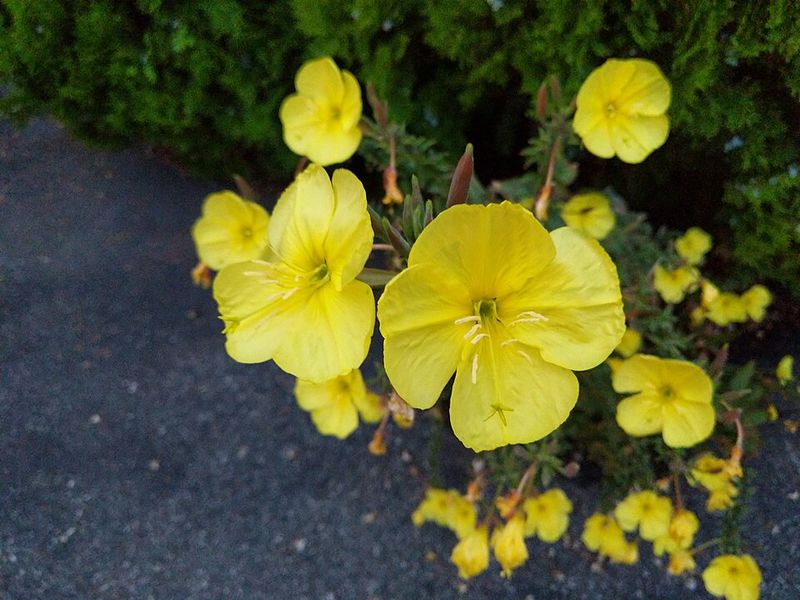
Watch a patch of evening primrose closely around dusk and you might catch something remarkable – the petals unfurl in real time, almost like watching a slow-motion video.
Oenothera species native to Texas open their pale yellow or soft white flowers in the fading light of late afternoon, releasing a light, sweet fragrance that carries well in the evening breeze.
Sphinx moths and other night-flying insects are drawn to these blooms, using both the scent and the pale color as guides in low light. Evening primrose is well adapted to Texas conditions, tolerating heat, drought, and poor soils without much complaint.
It tends to grow in open areas, roadsides, and garden borders across the state.
Growing evening primrose is fairly straightforward. It does best in well-drained soil and full to partial sun.
As a biennial, it spends its first year growing leaves and its second year producing flowers and seeds. Once established in your garden, it often reseeds on its own, creating a low-maintenance patch that returns year after year.
Water young plants regularly until they settle in, then cut back to occasional watering during dry spells.
In Central and North Texas, evening primrose can be a long-lived presence in wildflower gardens, providing a dependable source of nectar for pollinators from spring through early summer.
2. Moonflower Opens Large White Blooms After Sunset
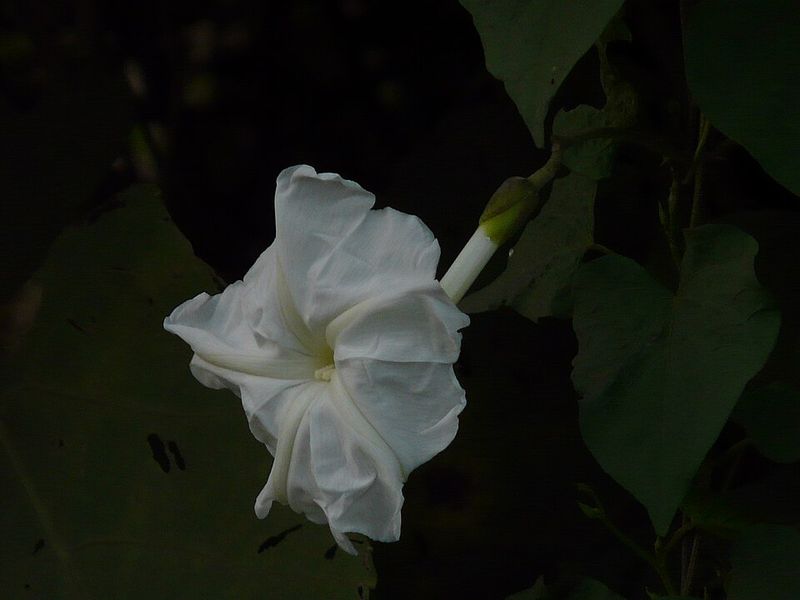
On warm Texas evenings when the last traces of daylight fade, moonflower puts on a quiet but stunning show. The large, saucer-shaped white blooms of Ipomoea alba spiral open after sunset, sometimes reaching five to six inches across.
Their bright white color reflects moonlight beautifully, making them easy for night pollinators to find.
Sphinx moths are among the most regular visitors, hovering near the flowers to reach the sweet nectar hidden inside long floral tubes. The fragrance moonflower releases at night is light and pleasant, drifting through a backyard on a still Texas evening.
This combination of color, scent, and timing makes it a reliable choice for attracting nocturnal pollinators.
Moonflower is a fast-growing vine that thrives in Texas heat and does well in full sun. It grows well on fences, trellises, or arbors and can reach impressive heights in a single growing season.
Plant seeds directly in the ground after the last frost, and water regularly while the vine gets established. In South Texas, it may behave like a perennial, while gardeners further north should treat it as an annual.
Your Texas Garden Changes Every Week. Your Plan Should Too.
Gardening in Texas changes quickly throughout the season. Every Friday you’ll receive a simple weekly plan showing exactly what to plant, prune, fertilize, harvest, and protect so you never miss the right timing.
Soil with good drainage helps prevent root issues. Once settled in, moonflower needs little attention and rewards you with fresh blooms nearly every evening throughout the warm months.
3. Four O’Clocks Release Fragrance In The Evening Air
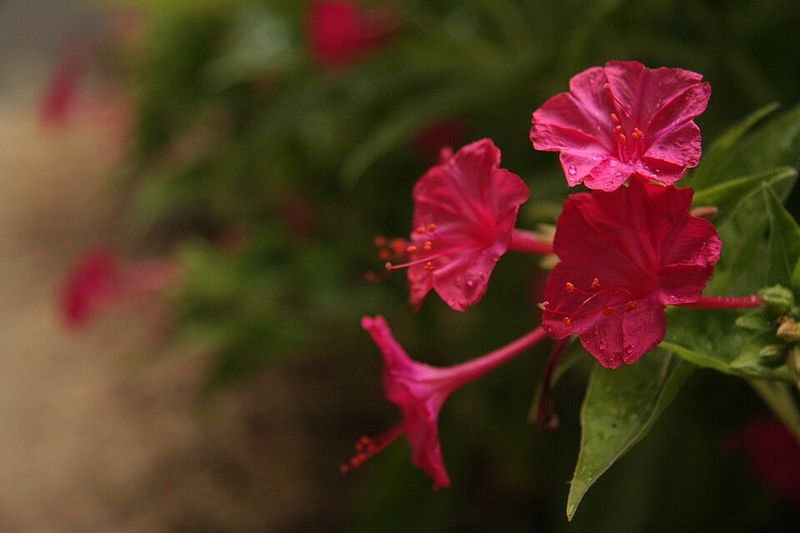
Named for the hour they tend to open, four o’clocks bring a burst of color and fragrance to the garden right when most other flowers are closing up for the day.
Mirabilis jalapa produces tubular blooms in shades of pink, red, yellow, white, and even multicolored combinations that open reliably in the late afternoon and stay open through the night.
Sphinx moths, particularly the white-lined sphinx moth common across Texas, are frequent visitors. These fast-flying moths hover over the flowers much like hummingbirds, probing the long floral tubes for nectar while inadvertently carrying pollen between plants.
The fragrance four o’clocks release is one of their most appealing qualities, sweet and noticeable on warm Texas evenings without being overpowering.
Four o’clocks grow from tuberous roots that store energy and help the plant bounce back after mild winters in central and southern parts of Texas.
In colder northern regions, gardeners often dig up the tubers and store them indoors through winter.
They prefer full sun and well-drained soil, and once established, they handle Texas heat and occasional dry periods reasonably well. Scatter seeds in a sunny spot after the last frost date for your area, and expect blooms by midsummer.
They spread enthusiastically, so give them some room or plan to thin seedlings as the season progresses.
4. Night Blooming Jasmine Fills The Garden With Scent
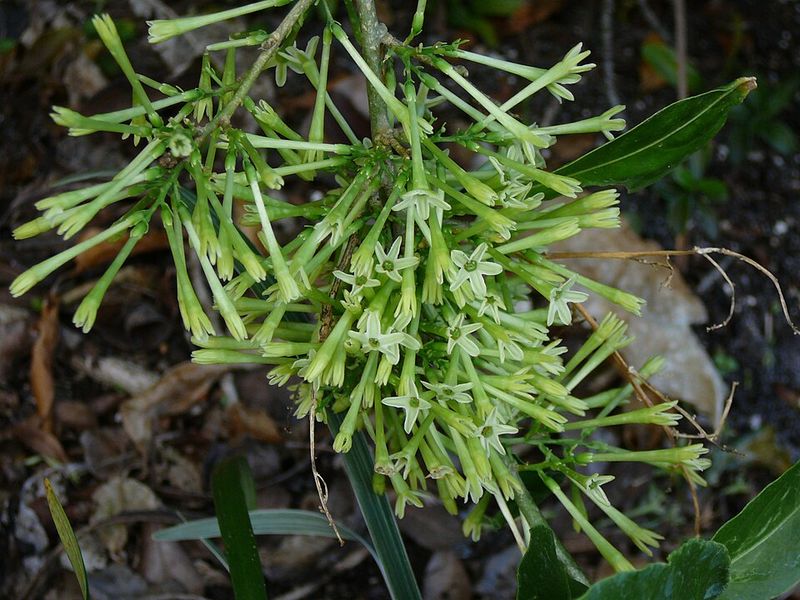
Few plants announce themselves the way night blooming jasmine does. Step outside on a warm Texas evening when Cestrum nocturnum is in bloom, and you will likely smell it before you see it.
The fragrance is intense, sometimes described as sweet and almost intoxicating, and it can carry surprisingly far on a light breeze.
Small, tubular greenish-white flowers cluster along the stems and release their scent primarily after dark, making this shrub a strong magnet for moths and other nighttime pollinators.
Despite its common name, night blooming jasmine is not a true jasmine but belongs to the nightshade family.
It is a fast-growing shrub that can reach six feet or more under favorable conditions.
In South Texas and the Gulf Coast region, Cestrum nocturnum can grow as a semi-evergreen shrub year-round.
Further north in Texas, cold winters may cut it back to the roots, but it often regrows from the base in spring.
Plant it in a spot with full sun to partial shade and well-drained soil. Regular watering during the growing season encourages lush growth and more frequent blooming.
It tends to bloom in cycles throughout the warmer months, so you may enjoy several bursts of fragrance from late spring through fall. Place it near a patio or seating area to fully appreciate the evening scent.
5. Angel’s Trumpet Draws Attention With Large Hanging Blooms
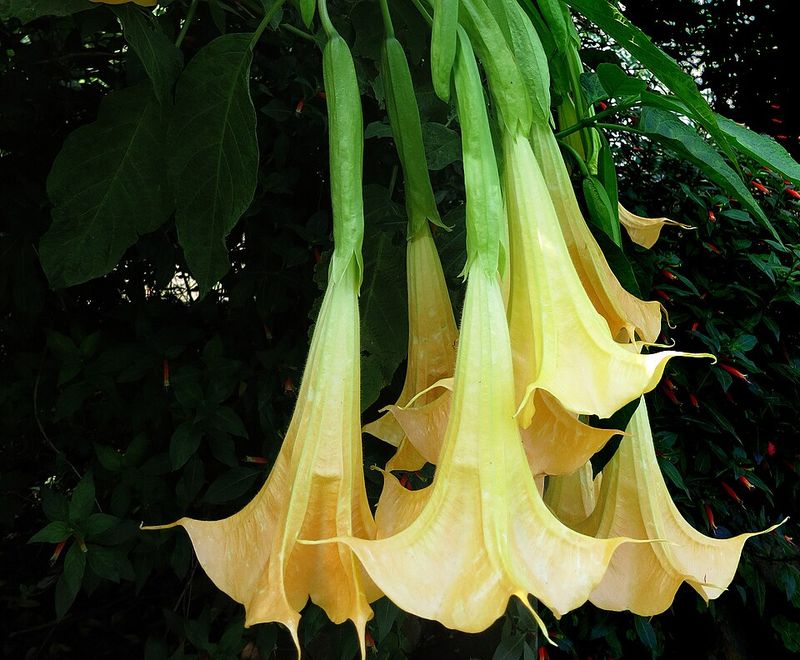
There is something almost theatrical about angel’s trumpet in full bloom.
The enormous, pendant flowers of Brugmansia hang downward like ornate bells, sometimes reaching twelve inches in length, and they release a rich, heady fragrance that peaks in the evening hours.
Gardeners who grow this plant often say the nighttime scent alone makes it worth the effort.
Sphinx moths are the primary pollinators drawn to angel’s trumpet, well-suited to reach nectar at the base of those long floral tubes.
The pale white, yellow, or peach-colored blooms are highly visible in low light, helping moths locate them after sunset.
In Texas, the warm climate suits this plant well, especially in the southern and coastal parts of the state.
Angel’s trumpet grows as a large shrub or small tree and prefers rich, moist, well-drained soil with regular watering.
It does best in full sun to partial shade and benefits from consistent fertilizing during the growing season to support its heavy blooms.
In frost-prone parts of Texas, protect the plant during cold snaps or bring potted specimens indoors. Container growing is a practical option for North Texas gardeners who want to move the plant to a sheltered spot in winter.
Prune after blooming to keep the shape tidy and encourage new flowering growth. Handle the plant with care, as all parts contain compounds that can be harmful if ingested.
6. Texas Yucca Supports Unique Night Pollinator Activity
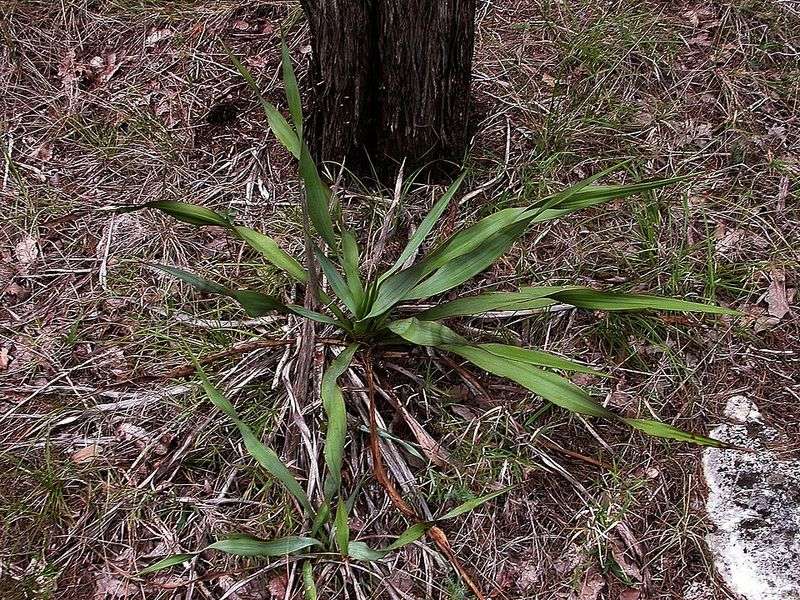
Few pollination stories in the plant world are as fascinating as the one involving yucca and the yucca moth.
Native yuccas found across Texas have developed a relationship with Tegeticula moths that is one of the most specialized examples of mutualism in North American ecology.
The moth actively collects pollen and deposits it on the yucca flower, ensuring pollination, while also laying eggs inside the flower so its larvae can feed on a portion of the developing seeds.
Yucca plants bloom at night, sending up tall flower spikes covered in creamy white, bell-shaped blossoms. The blooms are most fragrant after dark, which is when yucca moths are active.
Without this moth, most native yuccas would not produce seeds, making this nighttime pollinator relationship critical for the plant’s survival.
Several yucca species grow naturally across Texas, from the Trans-Pecos region to the Hill Country and the coastal plains. They are extremely drought-tolerant and well-suited to the state’s varied climates.
Plant yuccas in full sun and fast-draining soil – they strongly dislike sitting in wet conditions.
Once established, they need very little supplemental water, making them a low-maintenance choice for Texas gardeners dealing with dry summers.
Their bold, sculptural form adds visual interest to the landscape year-round, and their spring or early summer bloom period draws nighttime pollinator activity that is genuinely worth watching.
7. White Nicotiana Releases Sweet Fragrance At Night
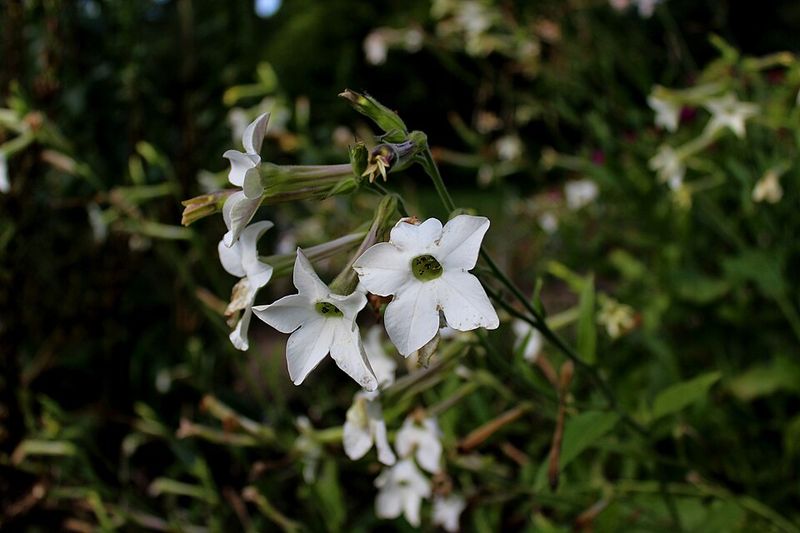
Flowering tobacco has a quiet charm that gardeners tend to appreciate more once they discover how it behaves after dark.
Nicotiana alata, particularly white-flowered varieties, keeps its blooms partially closed during the heat of the day but opens fully and releases a rich, sweet fragrance as evening temperatures drop.
On a humid Texas summer night, the scent can be genuinely lovely.
Moths are the main pollinators attracted to white nicotiana, with sphinx moths being especially common visitors in Texas gardens.
The long, tubular flowers are shaped to accommodate these hovering insects, and the pale white color stands out well against dark foliage in low light.
This combination of traits makes white nicotiana a thoughtful addition to any night garden.
Nicotiana grows as an annual in most parts of Texas, though it may self-seed and return in subsequent seasons. It prefers fertile, well-drained soil and does well in full sun to partial shade.
In the intense heat of West Texas summers, afternoon shade can help extend the blooming period. Water regularly to keep the soil evenly moist, especially during dry stretches.
Start seeds indoors several weeks before the last frost date, or look for transplants at local garden centers in spring. Plant white nicotiana near outdoor seating areas or along pathways where the evening fragrance can be enjoyed up close.
It pairs nicely with other night-blooming plants to create a layered sensory experience after sunset.
8. Jimsonweed Opens Bold Blooms After Dark
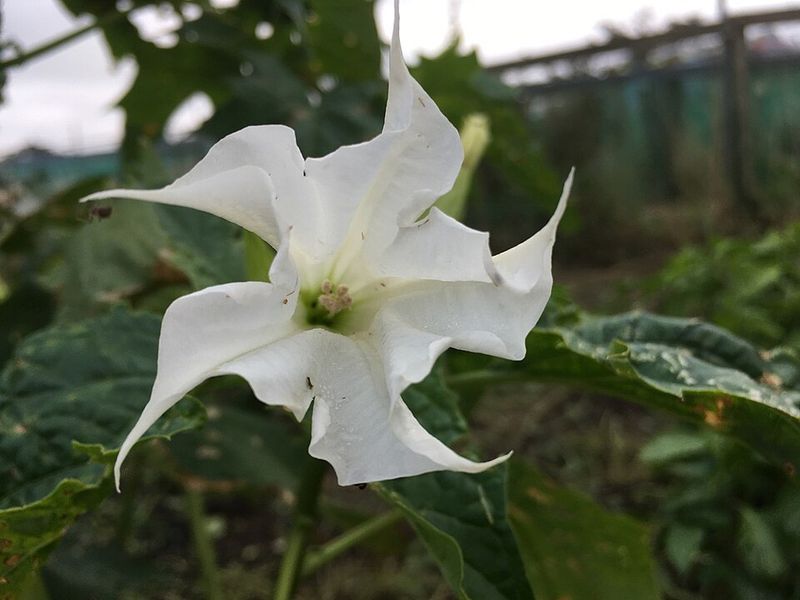
Bold, wild, and a little mysterious, jimsonweed is not your typical garden plant, but it earns its place in a night pollinator garden with impressive results.
Datura stramoniumDatura wrightii and its close relative , sometimes called sacred datura, produce some of the largest trumpet-shaped flowers of any plant native to or naturalized in Texas.
The white blooms can reach four to five inches across and open in the evening, remaining accessible through the night.
Sphinx moths are strongly attracted to these flowers, which offer both nectar and a landing platform of sorts with their wide, flared openings. The fragrance is noticeable but not overpowering, adding to the plant’s appeal for nighttime visitors.
Datura wrightii in particular is native to dry, open areas of Texas and is well adapted to the state’s hot summers and periodic droughts.
Jimsonweed and sacred datura grow readily in disturbed soils, roadsides, and open sunny spots. In garden settings, they do best with good drainage and full sun.
They spread through self-seeding and can become quite large by midsummer, so give them space. Water young plants to help them establish, then reduce watering as they mature.
Handle the plant carefully – all parts contain alkaloids that are toxic if ingested, so keep it away from areas where children or pets spend unsupervised time.
Despite this caution, it remains a genuinely effective plant for drawing night pollinators into a Texas garden.