8 Heat-Tolerant Plants That Create A Private Outdoor Space In Texas
A backyard should feel like a place where you can actually breathe. In Texas, that can be a little tricky when the sun is relentless, the temperatures stay high for weeks, and nearby houses seem just a bit too close for comfort.
A private outdoor space sounds great in theory, but not every plant can handle the kind of heat Texas throws at it. Some dry out fast, some struggle in full sun, and some never grow thick enough to give you the coverage you wanted in the first place.
That is why the best choices do more than just survive. They earn their spot by holding up through scorching afternoons while also helping shape a yard that feels calmer, greener, and more tucked away from the outside world.
The right heat-tolerant plants can soften fence lines, screen off patios, and turn an open area into a space that feels more comfortable and personal.
Whether you want a leafy backdrop for weekend grilling or a quiet corner for coffee in the morning, certain Texas-friendly plants can make a big difference without turning your yard into a full-time project.
1. Yaupon Holly
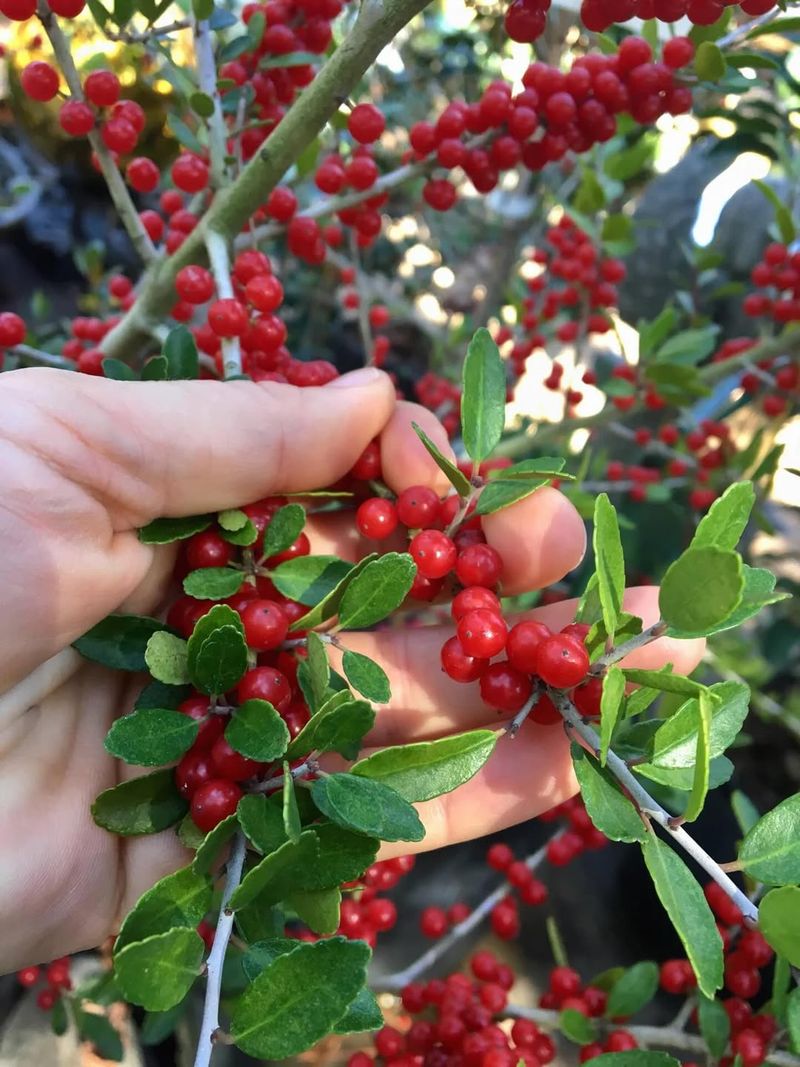
Tough, adaptable, and surprisingly low-maintenance, Yaupon Holly is one of Texas’s most reliable native shrubs. It can handle scorching heat, long dry spells, and heavy pruning without skipping a beat.
Whether you want a tidy, clipped hedge or a more natural, flowing screen, this plant gives you plenty of options to work with.
One fun fact: Yaupon Holly is the only plant native to North America that contains caffeine. Indigenous peoples brewed it into a ceremonial tea for centuries.
That bit of history makes it even cooler to have growing right in your backyard.
Across Texas, from Dallas to San Antonio, Yaupon Holly thrives in a wide range of soil types, from sandy to clay-heavy. It tolerates both sun and partial shade, so it works in spots where other plants might struggle.
In fall, it produces bright red berries that attract birds and add color to your yard. You can shape it into a tall, formal hedge for maximum privacy or let it grow more loosely for a casual, natural look.
It is also deer-resistant, which is a big bonus in areas where deer are common. For Texas homeowners who want a plant that handles everything the climate throws at it, Yaupon Holly is a top-tier choice.
2. Wax Myrtle
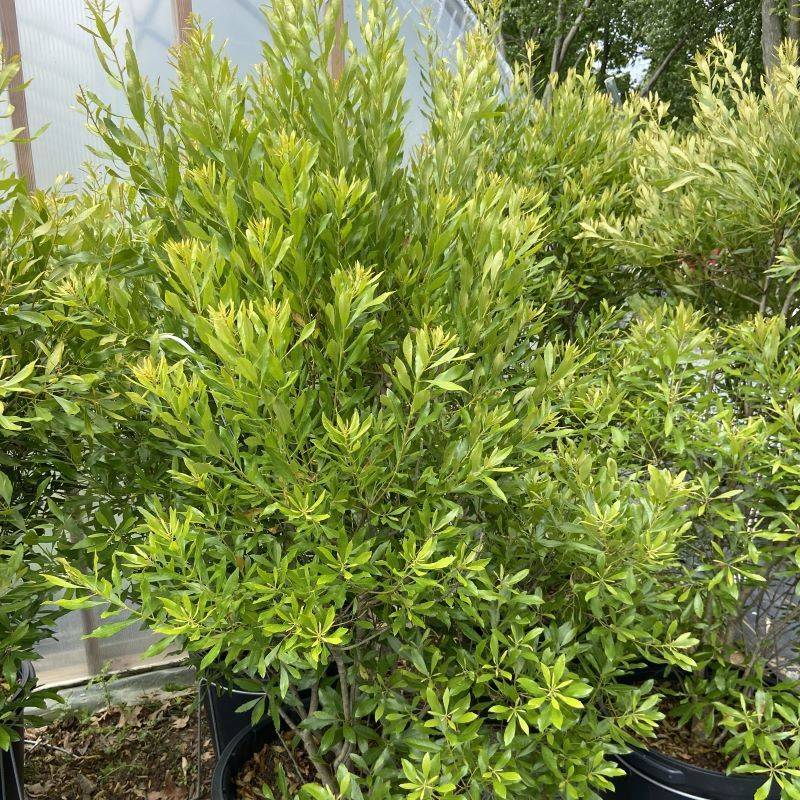
If you want fast results in your Texas yard, Wax Myrtle might be your new best friend. This evergreen grows quickly and fills in thick, giving you a natural green wall that blocks nosy neighbors and street noise.
It can shoot up several feet in just a couple of growing seasons, which is great news if you want privacy fast.
Wax Myrtle loves the humid parts of Texas, making it a great fit for areas like Houston and the Gulf Coast region. It handles heat, wet soil, and even occasional flooding without much fuss.
The leaves have a pleasant, spicy scent when brushed against, which adds a nice sensory bonus to your outdoor space.
Your Texas Garden Changes Every Week. Your Plan Should Too.
Gardening in Texas changes quickly throughout the season. Every Friday you’ll receive a simple weekly plan showing exactly what to plant, prune, fertilize, harvest, and protect so you never miss the right timing.
Planting a row of Wax Myrtles along a fence or property line creates a dense, natural screen that looks polished but requires little upkeep. You can trim it into a neat hedge or let it grow more freely for a wild, woodland feel.
It grows best in full sun to partial shade. Once established, it is surprisingly drought-tolerant for a plant that also handles wet conditions.
For larger Texas yards that need serious coverage, Wax Myrtle delivers both speed and substance in one reliable package.
3. Eastern Redcedar
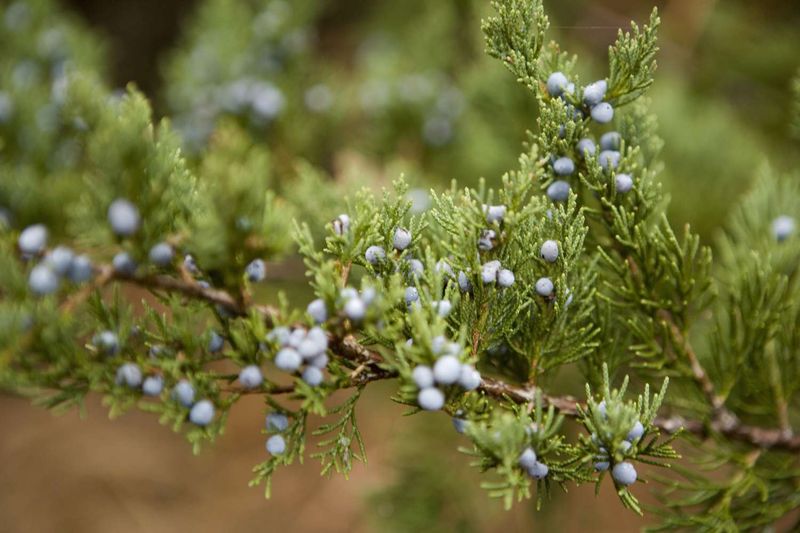
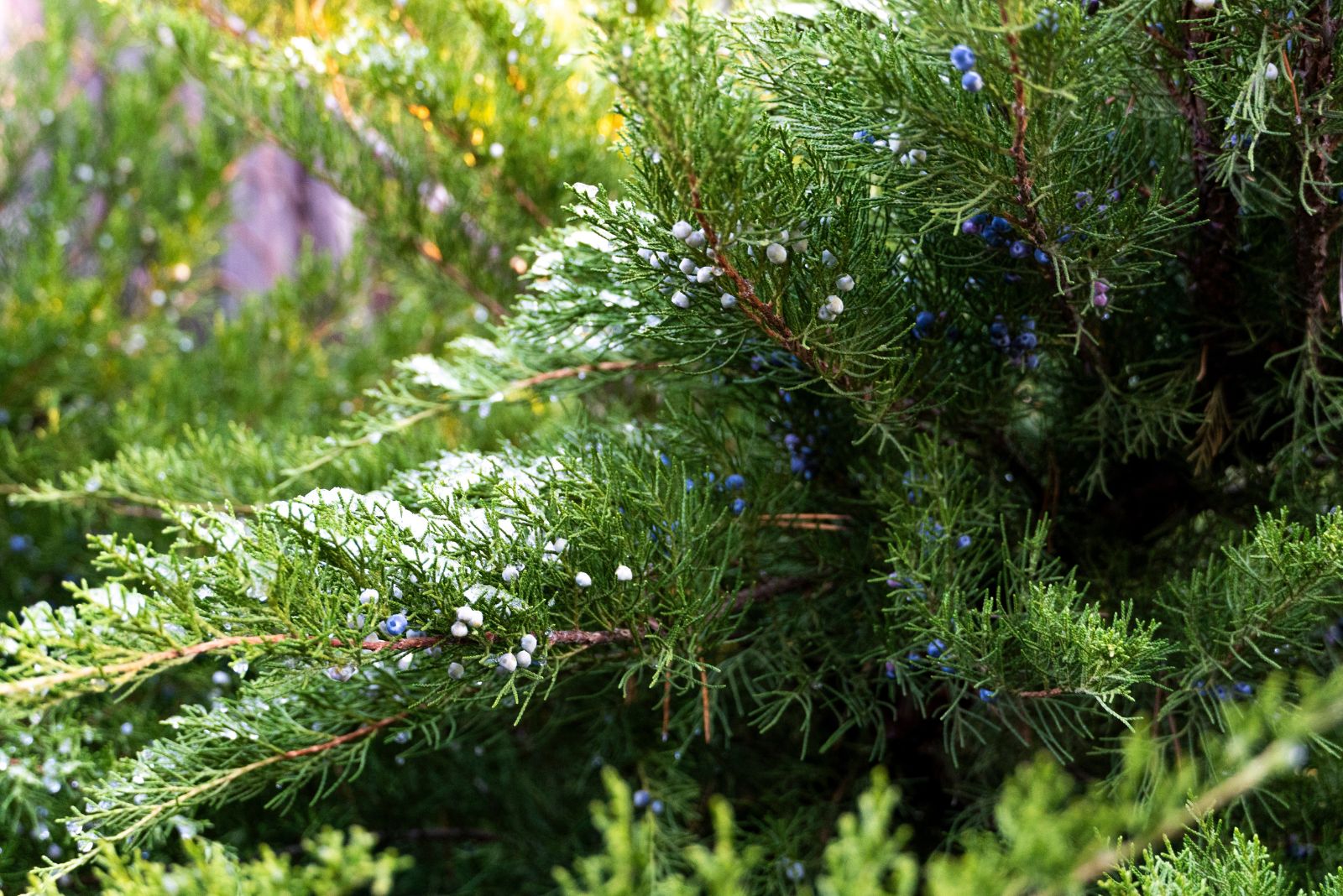
Few trees can match the toughness of Eastern Redcedar when it comes to surviving in harsh Texas conditions. This evergreen thrives in hot, dry weather and rocky soil, making it a standout choice for privacy screens that need to hold up year-round.
Its dense, dark green foliage stays thick from top to bottom, blocking views and buffering wind at the same time.
Eastern Redcedar is especially popular in North and Central Texas, where summers are brutal and rainfall is unpredictable. Once established, it needs very little water and almost no fertilizing.
It is one of those plants you can basically plant and forget, which is perfect for busy homeowners.
The tree can grow quite tall over time, sometimes reaching 40 feet or more, so it works well as a long-term privacy investment for larger properties.
Planting several in a row creates a solid green wall that offers year-round screening, even in winter when other plants lose their leaves.
Cedar waxwings and other birds love the blue-gray berries it produces, adding a wildlife bonus to your yard.
If you are looking for a plant that doubles as both a privacy screen and a windbreak in Texas, Eastern Redcedar is hard to beat. It is rugged, dependable, and built for the Texas climate.
4. Carolina Cherry Laurel
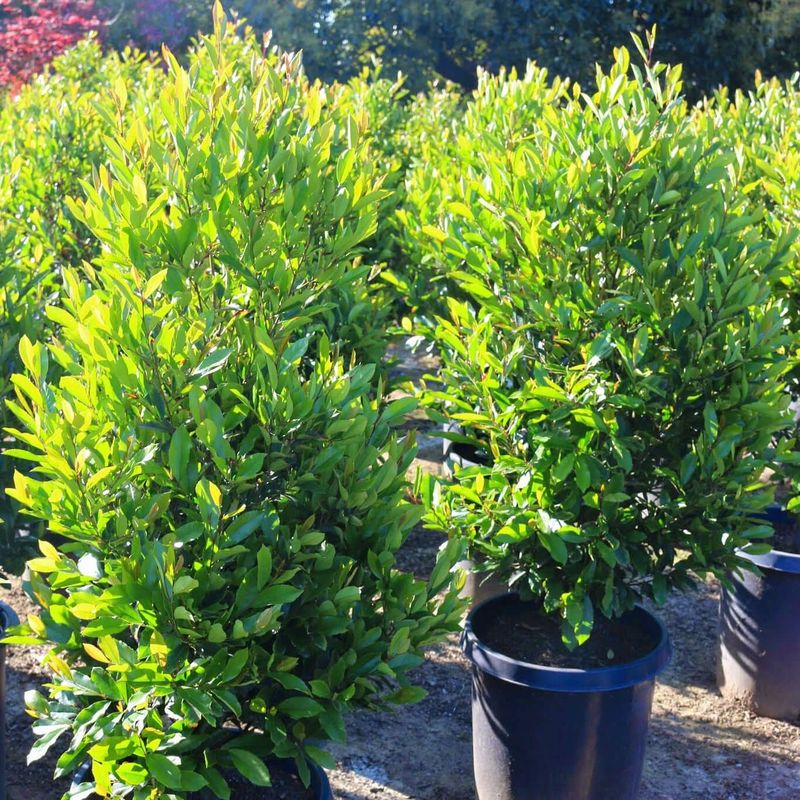
Walk past a well-grown Carolina Cherry Laurel hedge and you will immediately notice how thick and lush it looks. The glossy, dark green leaves grow close together, creating a full, formal-looking screen that feels almost like a living wall.
For Texas homeowners who want their yard to look polished and private at the same time, this shrub is a solid go-to.
Carolina Cherry Laurel grows quickly, especially in the warmer regions of Texas like the Hill Country, East Texas, and the Gulf Coast. It handles heat well and adapts to different soil types, though it prefers good drainage.
Regular watering when young helps it establish fast, and after that it becomes much more self-sufficient.
You can keep it neatly trimmed into a tall, clean hedge or allow it to grow more naturally into a wide, rounded form. Either way, it provides reliable coverage throughout the year since it is evergreen.
The white flower clusters that bloom in spring add a decorative touch, and the dark berries that follow attract birds to your garden. One thing to keep in mind is that the leaves and berries are toxic to pets and livestock, so placement matters if you have animals.
For creating a thick, formal-looking privacy screen in Texas, Carolina Cherry Laurel is one of the best options available.
5. Evergreen Sumac
Out in Central and West Texas, water is precious and the sun shows no mercy. Evergreen Sumac was practically made for those conditions.
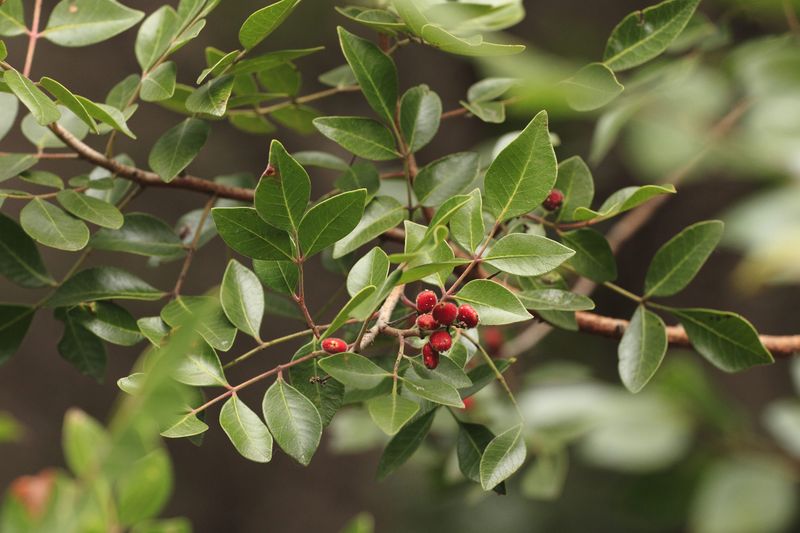
This tough native shrub keeps its leaves year-round, forms a dense canopy of glossy foliage, and asks for almost nothing in return once it gets settled in the ground.
Compared to many other privacy plants, Evergreen Sumac is remarkably drought-tolerant. It thrives in rocky, well-drained soil and full sun, which describes a huge portion of the Texas landscape perfectly.
During dry spells that would stress other plants, Evergreen Sumac just keeps growing. That kind of reliability is hard to find in a screening plant.
It typically grows 8 to 12 feet tall and spreads out nicely, so a few plants placed in a row can cover a good stretch of fence line or property boundary. In fall, it produces small red berries that birds enjoy, adding a seasonal wildlife element to your yard.
The leaves sometimes take on reddish tones in cooler months, giving your garden a pop of color even in winter.
For homeowners in drier parts of Texas who want privacy without a high water bill, Evergreen Sumac is an incredibly smart and sustainable choice. It is native, resilient, and genuinely beautiful in a rugged, natural way.
6. Desert Willow
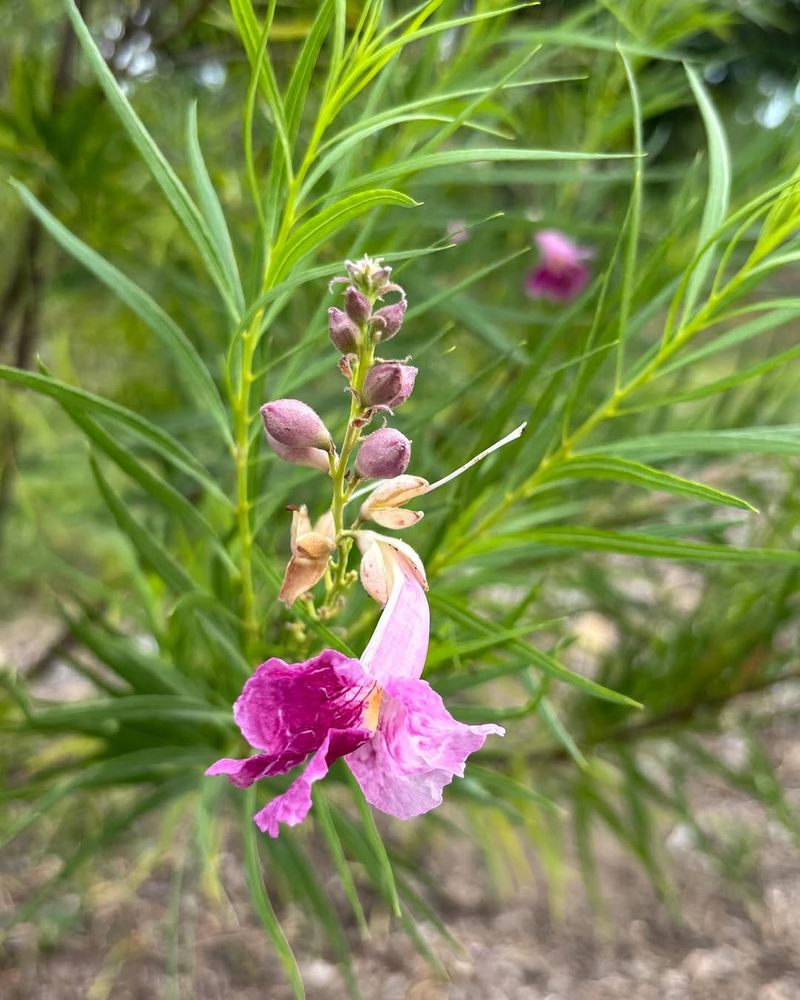
Not every privacy plant needs to be a solid wall of green. Sometimes a softer, more artistic approach works just as well, and Desert Willow delivers exactly that.
With its slender, arching branches and stunning orchid-like flowers in shades of pink, purple, and white, this small tree adds serious beauty to any Texas outdoor space.
Desert Willow is built for intense heat and dry soil, thriving naturally in West and Central Texas where summer temperatures regularly soar. It is deeply drought-tolerant once established and actually prefers to be on the drier side.
Overwatering is one of the few things that can cause problems for this otherwise easygoing tree.
While it may not create the same solid, wall-like screen as a dense hedge, its airy canopy still provides a natural sense of enclosure. Planted in a row or grouped together, Desert Willows create a flowing, layered boundary that feels relaxed and inviting rather than stiff and formal.
Hummingbirds absolutely love the blooms, so expect regular winged visitors throughout the warmer months. The tree stays relatively compact, usually reaching 15 to 25 feet at most, making it manageable for most yard sizes.
For Texas homeowners who want privacy with a splash of color and a touch of the wild, Desert Willow is a genuinely special choice that stands out from the usual hedge options.
7. Texas Sage (Cenizo)
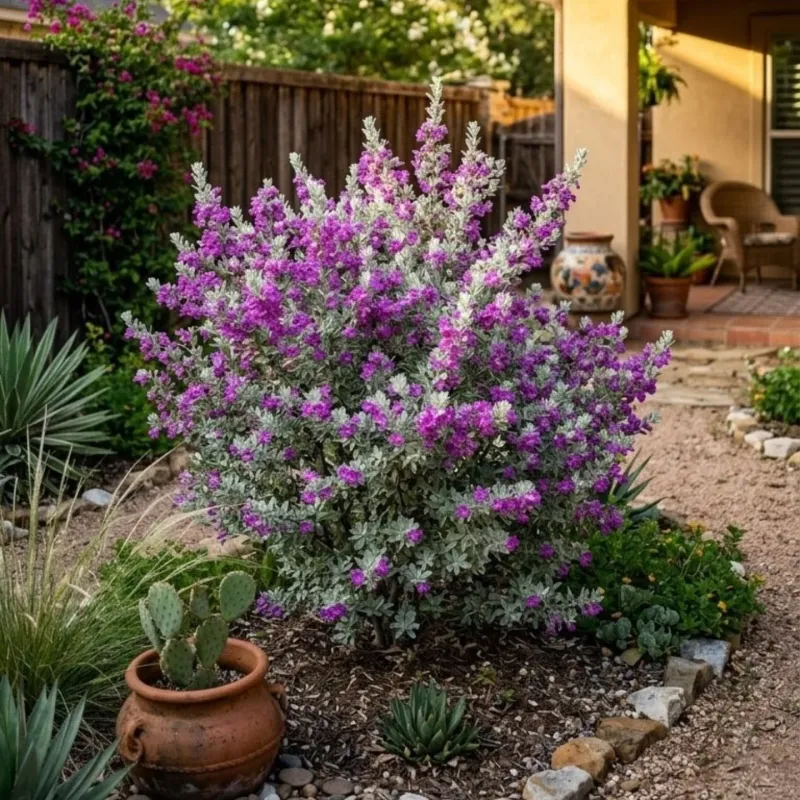
There is something almost magical about watching Texas Sage burst into bloom after a summer rain. The silvery-gray leaves suddenly fill with bright purple or pink flowers, creating a show-stopping display that looks almost too good to be real.
Locals in Texas know it as Cenizo, and it has been a beloved part of the landscape for generations.
Beyond its good looks, Texas Sage is one of the most low-maintenance shrubs you can plant in the state. It thrives in full sun, poor soil, and extreme heat without needing much water or fertilizer.
In fact, too much care can actually work against it. Plant it in well-draining soil, give it some space, and let the Texas sun do the rest.
Growing 4 to 8 feet tall and equally wide, Texas Sage forms a rounded, bushy shape that creates a thick, natural screen along fences, walls, or property lines. It works especially well in South and West Texas, where the dry, alkaline soil suits it perfectly.
The silvery foliage also reflects heat, which can help keep nearby areas a bit cooler on hot days.
For homeowners who want a beautiful, fragrant, and practically carefree privacy screen that truly belongs in Texas, Cenizo is a classic choice that never goes out of style. It is rugged, gorgeous, and deeply rooted in the Texas landscape.
8. Red-Tipped Photinia
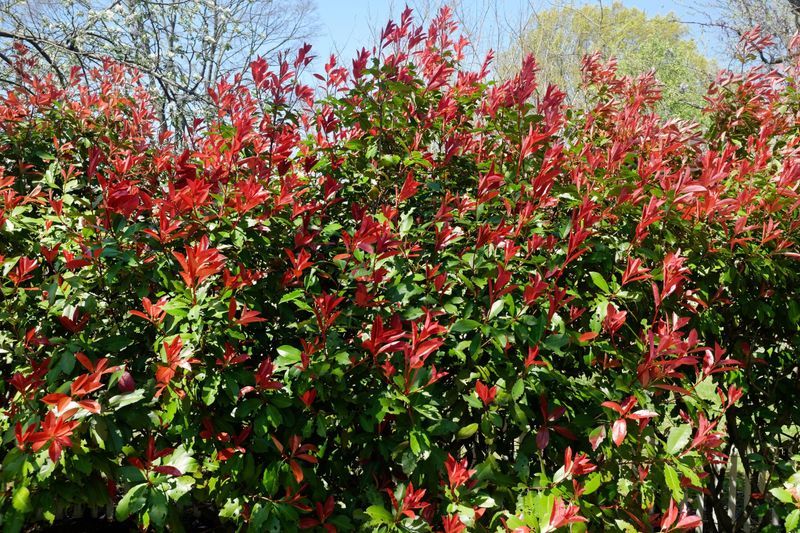
Few shrubs make as bold a first impression as Red-Tipped Photinia. Every time new growth flushes out, the tips of the branches turn a vivid, eye-catching red before gradually maturing to deep green.
It is like getting a two-for-one deal: a colorful ornamental plant and a dense privacy screen all in one package.
Red-Tipped Photinia grows fast, which is one of the biggest reasons Texas homeowners love it for hedges. In East Texas especially, where the climate is a bit more humid and rainfall is more consistent, this shrub really hits its stride.
It can grow several feet in a single season under the right conditions, making it one of the quickest ways to get meaningful privacy coverage along a fence or property line.
Regular trimming actually encourages more of those signature red tips to appear, so the more you prune, the more colorful it stays. It prefers full sun and well-draining soil, and once established, it handles Texas heat without much struggle.
Spacing plants about 3 to 5 feet apart creates a solid, continuous hedge that blocks views effectively. One thing to watch for is fungal leaf spot, which can be managed with proper air circulation and avoiding overhead watering.
For a privacy hedge that brings both structure and color to a Texas yard, Red-Tipped Photinia is a fan favorite that earns its reputation every single season.