Texas Native Flowers That Naturalize Without Taking Over
There is something especially satisfying about planting flowers once and watching them come back looking right at home. In Texas, that kind of easygoing beauty can feel like the ultimate garden win.
You get color, texture, and a more relaxed, natural look without constantly replanting or worrying that one overly enthusiastic flower will start taking over the whole yard. That balance matters more than people think.
A flower that naturalizes well can make a space feel fuller and more alive, but nobody wants a plant that turns into the garden equivalent of an uninvited houseguest.
That is why Texas native flowers are such a smart choice. They already know how to handle the heat, the soil, the dry spells, and the weather swings that make gardening in Texas a little unpredictable.
Even better, many of them spread in a gentle, manageable way that helps beds and borders look established without becoming a mess. They settle in, return with confidence, and bring that effortless charm gardeners love, all while playing nicely with the rest of the landscape.
1. Blackfoot Daisy
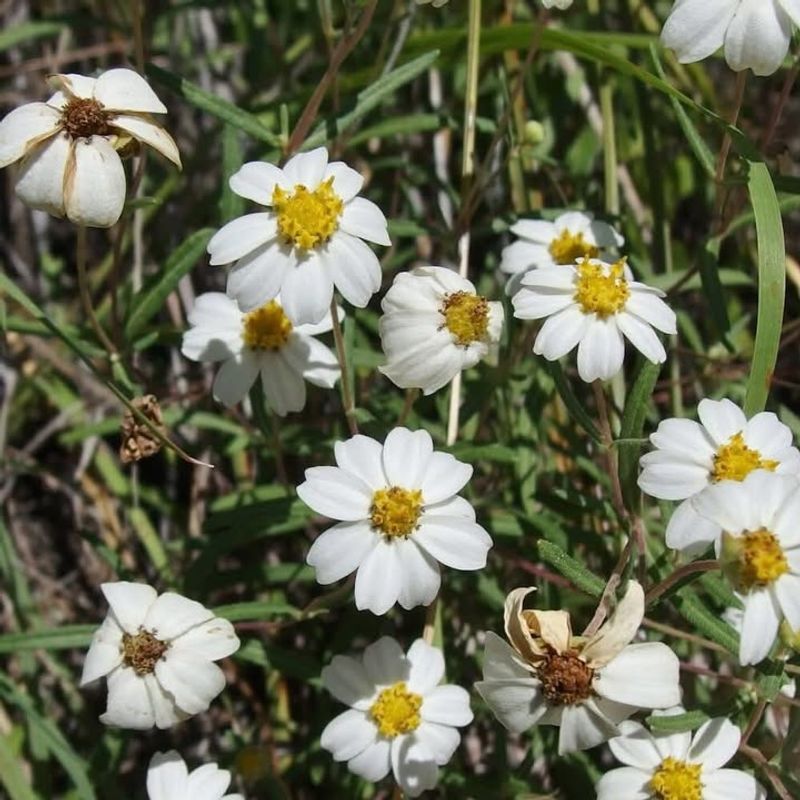
Small but mighty, the Blackfoot Daisy packs a whole lot of charm into a tidy little package. Native to Texas and the Southwest, this cheerful perennial forms neat, rounded mounds that rarely grow taller than 12 inches.
It blooms almost year-round in warmer parts of Texas, offering white petals with sunny yellow centers that attract butterflies and bees.
One of the best things about Blackfoot Daisy is how slowly and politely it spreads. It fills in gaps along borders and rocky pathways without crowding its neighbors.
Gardeners in Texas love it because it thrives in poor, dry soil where other flowers struggle. You barely need to water it once it gets settled in.
Plant it along a sunny border or tuck it between rocks for a natural, carefree look. It pairs beautifully with other drought-tolerant natives like Autumn Sage and Mealy Blue Sage.
Deadheading is not required, but a light trim after heavy blooming keeps the mounds looking fresh.
If you want a flower that minds its manners and still delivers big visual impact, Blackfoot Daisy is your answer. It is one of the most reliable and easygoing native plants you can grow in Texas gardens.
2. Winecup (Purple Poppy Mallow)
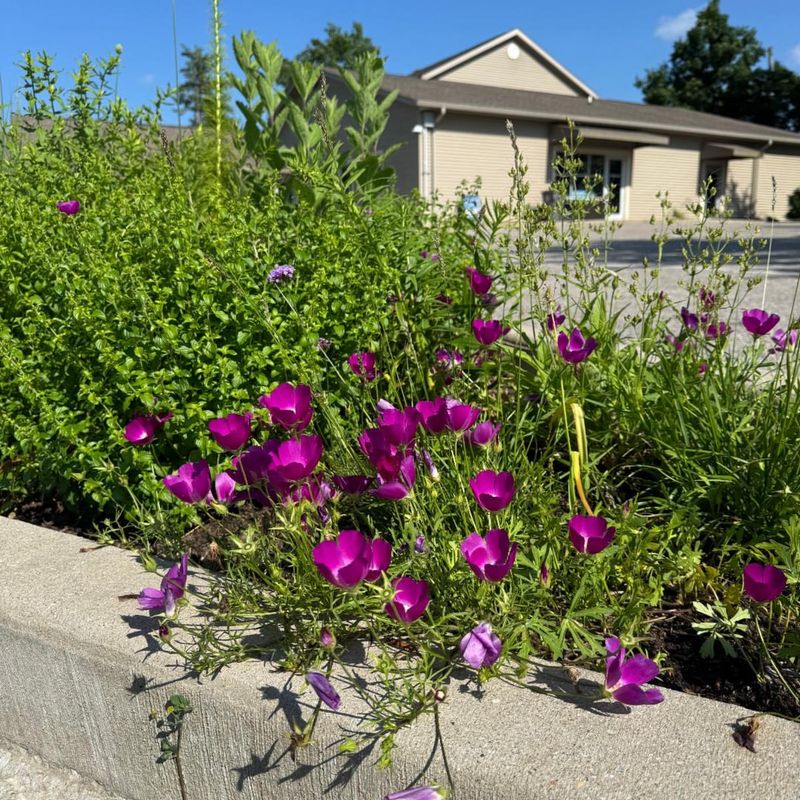
There is something almost magical about the way Winecup drapes itself across the ground in soft waves of deep magenta.
Also called Purple Poppy Mallow, this trailing perennial is native to Texas and produces stunning cup-shaped blooms from spring all the way through early summer. The color is rich and bold, almost like spilled wine across the landscape.
Winecup spreads gradually by sending out trailing stems that root as they go. It never rushes, and it never takes over.
That slow, steady spread makes it a fantastic ground cover for sunny spots where you want color without constant maintenance. It also grows a deep taproot, which means it handles Texas drought conditions like a pro.
You can plant it along slopes, in rock gardens, or at the front of a border where it can trail naturally. It looks especially lovely spilling over low garden walls or edges.
Your Texas Garden Changes Every Week. Your Plan Should Too.
Gardening in Texas changes quickly throughout the season. Every Friday you’ll receive a simple weekly plan showing exactly what to plant, prune, fertilize, harvest, and protect so you never miss the right timing.
Did you know Winecup can go weeks without water once established? That makes it perfect for water-wise gardens across Texas.
It reseeds lightly, so you may get a few new plants each season, but never enough to feel overwhelming. Managing it is as simple as pulling a stray seedling here and there. Winecup brings effortless beauty to any Texas garden space.
3. Autumn Sage (Salvia Greggii)
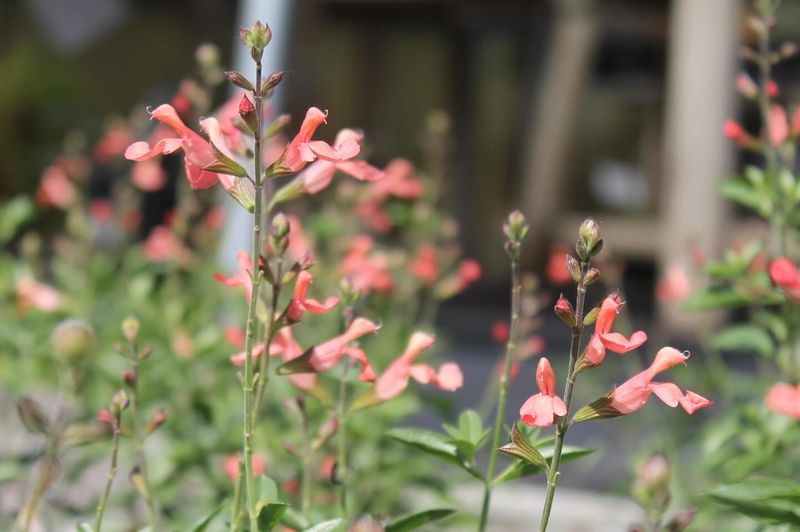
Walk past a blooming Autumn Sage in a Texas garden and you will immediately understand why hummingbirds are obsessed with it.
Salvia greggii is a compact, shrub-like perennial that produces clusters of tubular flowers in shades of red, pink, coral, and white. It blooms in spring and again heavily in fall, which is exactly how it got its name.
Autumn Sage is one of the most well-behaved natives you can plant in Texas. It lightly reseeds itself, meaning you might find a few baby plants popping up nearby each season.
But these seedlings are easy to spot and simple to move or remove if needed. The parent plant stays compact and tidy, rarely spreading beyond its original footprint without some encouragement.
It grows best in full sun with well-drained soil, making it a natural fit for the rocky, dry conditions found across central and west Texas. Prune it back by about one-third in late winter to keep it looking full and bushy.
Autumn Sage also attracts butterflies and bees, making it a fantastic choice for pollinator gardens. Pair it with ornamental grasses or Blackfoot Daisy for a low-water, high-impact Texas garden combo.
Once settled in, it asks for almost nothing and gives back so much color season after season.
4. Mealy Blue Sage
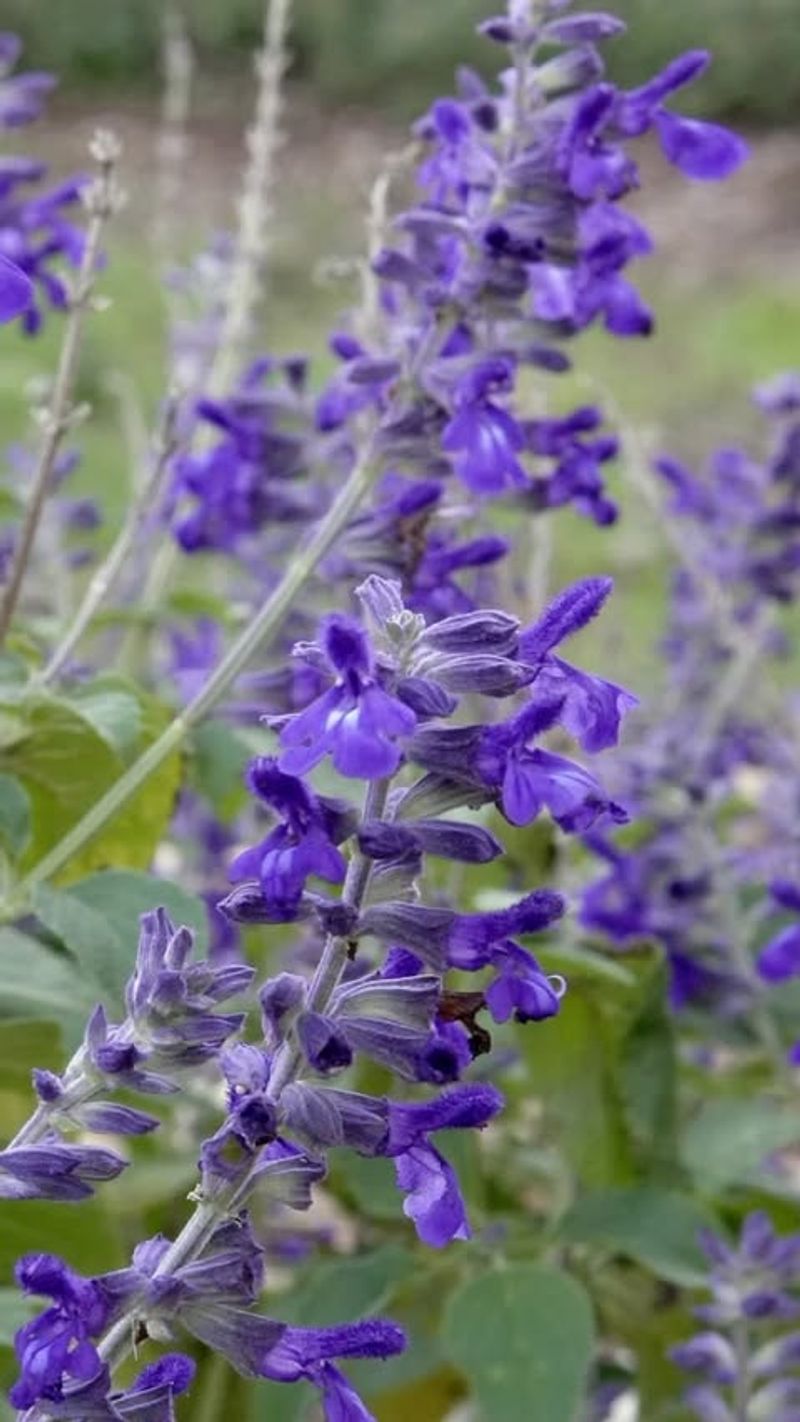
Cool blue spikes rising above silvery-green foliage make Mealy Blue Sage one of the most eye-catching natives in any Texas garden. Salvia farinacea is a Texas original, found naturally growing across the state in open fields and roadsides.
It blooms from spring through fall, offering long-lasting color that pollinators absolutely love.
Mealy Blue Sage grows in clumps that slowly expand over time. It may also reseed gently around the garden, creating a soft, naturalized look that feels intentional rather than chaotic.
The reseeding is mild enough that you stay in control. A few new plants here and there actually help fill in bare spots without any extra effort on your part.
Full sun and well-drained soil are all this plant really needs. It handles Texas heat and drought without complaint, making it a go-to choice for low-maintenance landscapes.
Butterflies flock to its blooms, and it also attracts hummingbirds during migration season. Plant it in masses for a bold blue statement, or mix it with yellow-flowered natives like Damianita for a striking contrast.
Cutting it back after the first big flush of bloom encourages a fresh round of flowers. Mealy Blue Sage is the kind of plant that rewards you generously for doing very little. It is a true Texas garden workhorse that never overstays its welcome.
5. Coreopsis (Plains Coreopsis)
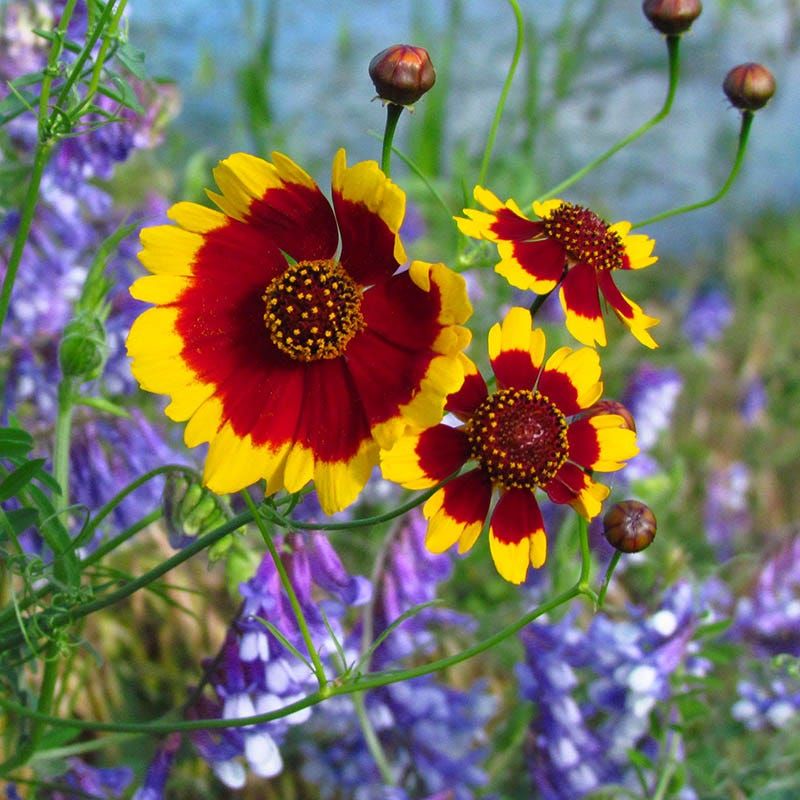
If cheerful had a flower, it would look exactly like Plains Coreopsis. Also known as tickseed, this annual wildflower bursts into bloom with bright yellow petals marked with deep red centers.
It is one of the most common wildflowers spotted along Texas roadsides in spring, and for good reason. It is tough, colorful, and completely unpretentious.
Plains Coreopsis reseeds itself lightly each season, returning year after year without forming thick, invasive clumps. It tends to scatter seeds in a loose, natural way that looks like it belongs in a wildflower meadow.
Because of this, it blends well with grasses and other native plants without crowding them out. You get that lovely, naturalized look without any of the headaches.
It thrives in full sun and tolerates poor, dry soil with ease. In Texas, that combination makes it practically unstoppable in the best way possible.
Start it from seed directly in the ground in fall or early spring for best results. Once it blooms, butterflies and bees will visit constantly.
Deadheading is not necessary since letting the seeds fall is actually the whole strategy for keeping it coming back.
Plains Coreopsis is a fantastic filler for sunny Texas gardens, adding waves of warm color from late spring into early summer without demanding a single thing from you in return.
6. Damianita
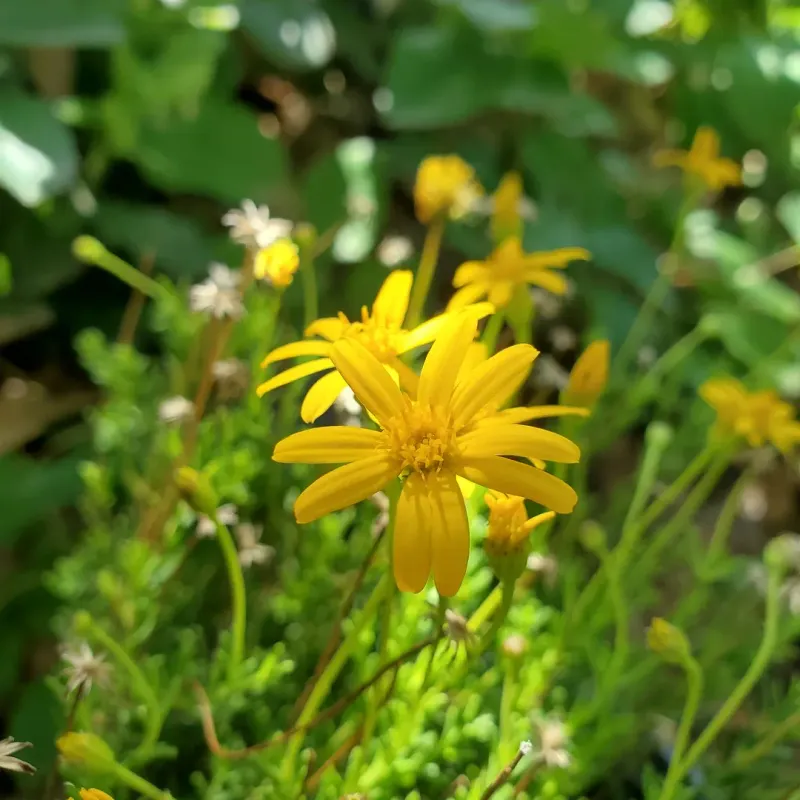
Tiny in size but full of personality, Damianita is a small woody perennial that deserves a lot more attention in Texas gardens. Chrysactinia mexicana is native to the Trans-Pecos region of Texas and northern Mexico, where it grows naturally in rocky limestone soils under blazing sun.
Its bright yellow daisy-like flowers bloom in spring and again in fall, creating cheerful bursts of color on a compact, rounded shrub.
Damianita spreads very slowly and stays neatly compact, rarely exceeding 18 inches in height or width. That makes it perfect for controlled spaces like raised beds, rock gardens, or tidy borders where you want plants that stay put.
It never sprawls aggressively or sends runners into neighboring areas. What you plant is essentially what you get, just a little fuller and more floriferous each year.
This plant is extremely drought-tolerant and actually prefers poor, rocky soil over rich, amended garden beds. Overwatering or heavy fertilizing can harm it more than drought ever would.
Once established in a Texas garden, Damianita practically takes care of itself. Its aromatic foliage also deters deer, which is a huge bonus in many parts of the state.
The fragrance is strong and herbal, almost like chamomile. If you have a dry, sunny corner that needs something reliable and low-growing, Damianita is the answer you have been looking for all along.
7. Texas Lantana (Lantana Urticoides)
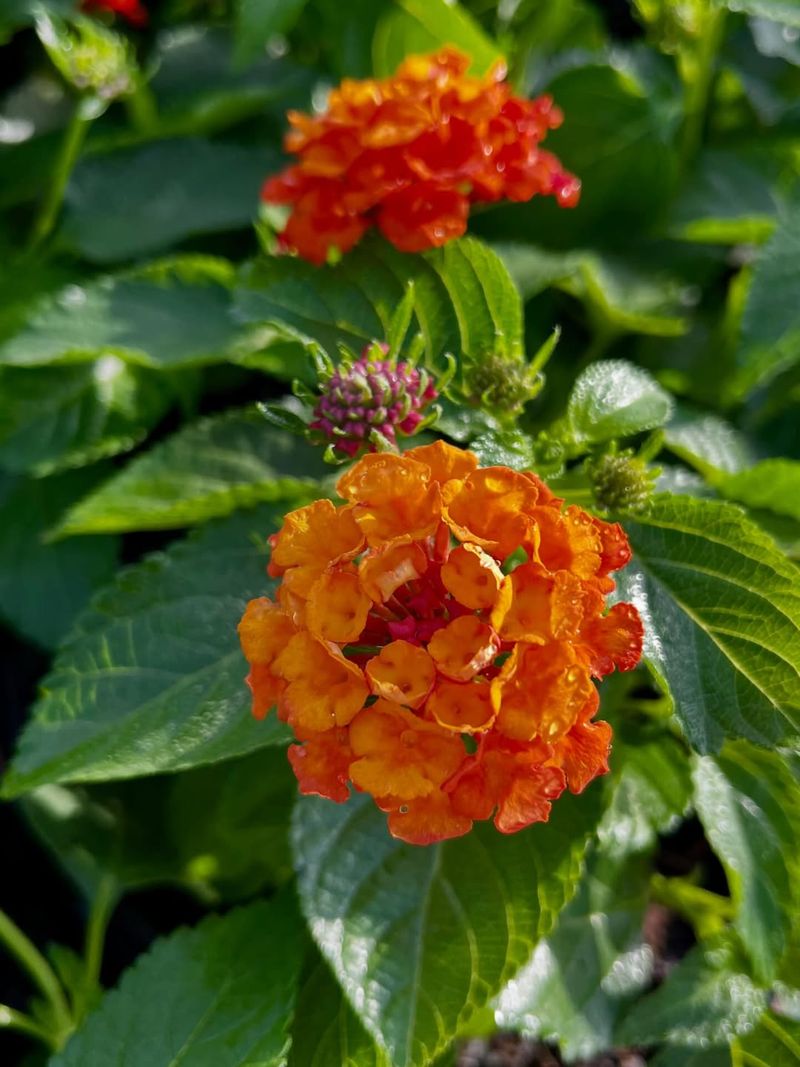
Not all lantanas are created equal, and Texas Lantana proves that the native version is in a class of its own. Lantana urticoides is the true Texas native, and it behaves very differently from the non-native varieties sold at big box stores.
While introduced lantanas can become invasive in parts of the South, Texas Lantana spreads modestly and stays manageable with just occasional pruning.
This tough native produces clusters of orange and yellow flowers that butterflies simply cannot resist. It blooms heavily from late spring through fall, providing months of reliable color in Texas landscapes.
It grows into a rounded shrub that can reach three to four feet tall and wide, but it responds well to pruning if you want to keep it smaller. You are always in charge of its size and shape.
Texas Lantana thrives in full sun and handles drought, heat, and poor soil without missing a beat. It is especially well-suited to central and south Texas, where summers are long and brutal.
Birds also enjoy the small dark berries that follow the flowers, making it a great choice for wildlife gardens. Just note that those berries are not safe for people or pets to eat.
Plant Texas Lantana where it has room to breathe and you will be rewarded with a pollinator magnet that fills space beautifully without ever becoming a problem.
8. Engelmann Daisy
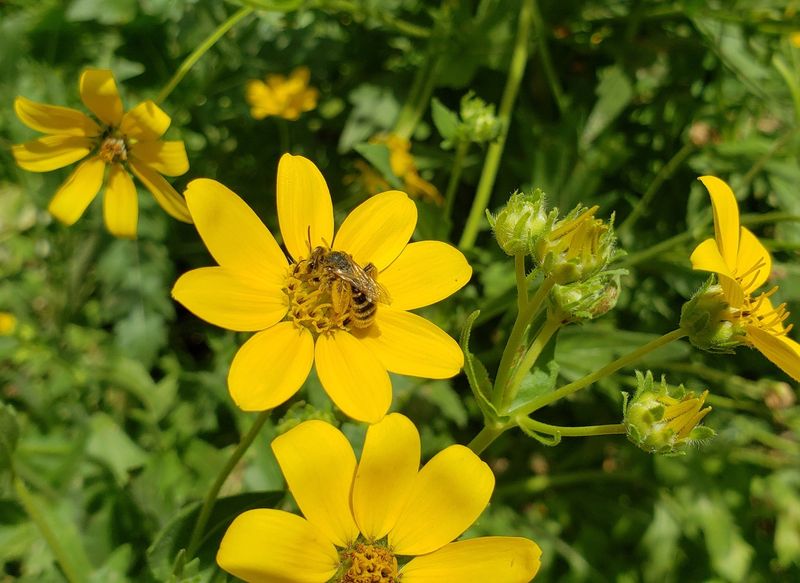
Picture a soft, golden wildflower nodding gently in a warm Texas breeze, and you are probably imagining Engelmann Daisy.
Engelmannia peristenia is a native perennial that grows in loose clumps and produces cheerful yellow flowers with slightly drooping petals from spring through summer.
It has a relaxed, natural look that fits beautifully into informal garden designs and meadow-style landscapes.
Engelmann Daisy naturalizes at a very gentle pace. It may reseed lightly over time, slowly expanding its presence in a way that looks organic rather than aggressive.
It blends wonderfully with grasses, wildflowers, and other Texas natives without ever pushing them out. The overall effect is soft and layered, like a scene straight out of the Texas Hill Country.
It grows best in full sun and is highly tolerant of drought and heat once established. The deeply lobed, rough-textured leaves form a rosette close to the ground before sending up flowering stalks that reach about two feet tall.
Pollinators love the blooms, and the plant requires almost no maintenance beyond an occasional cleanup of spent stalks.
Engelmann Daisy is a wonderful choice for gardeners in Texas who want a wildflower that feels native and natural without requiring constant management.
It brings a quiet, unhurried beauty to the garden that feels completely at home under a wide Texas sky.