These Are The Best Texas Perennials For A Firefly-Friendly Yard
Have you noticed fewer fireflies lighting up Texas nights lately? Many gardeners are starting to ask the same question.
Across Texas, changes like heavier mowing, brighter outdoor lighting, and more disturbed soil have made backyards less welcoming for these glowing visitors.
The good news is that Texas still offers the right conditions in many areas, from warm evenings to seasonal moisture and pockets of humidity.
What matters most is how the space is set up.
Fireflies rely on habitat more than any single plant, but the right Texas perennials can help create the shade, moisture, leaf litter, and insect activity they need to return.
1. Frogfruit Forms A Cool Living Carpet Near The Soil
On warm Texas evenings, the conditions closest to the ground matter most for fireflies.
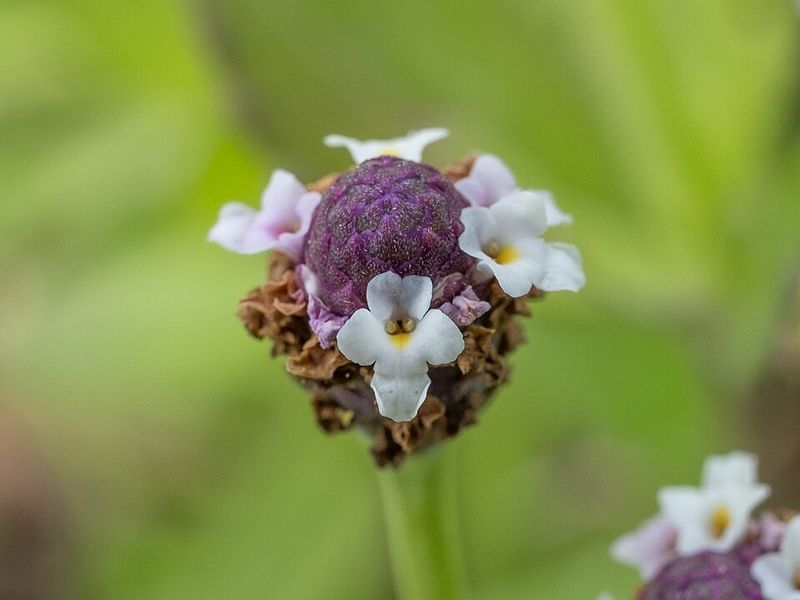
Frogfruit, known botanically as Phyla nodiflora, spreads low and wide, forming a dense living mat that keeps soil shaded and cool even during hot Texas summers.
That low canopy slows moisture evaporation, which is one of the most important factors for supporting firefly larvae in the soil below.
Frogfruit is native to Texas and grows well across a wide range of conditions, from Central Texas into the eastern parts of the state where humidity is higher.
It handles foot traffic reasonably well and works nicely as a lawn alternative in areas where you want to reduce mowing.
Less mowing means less soil disturbance – and less disturbance means a better chance that firefly larvae can develop undisturbed.
Small white and pink flowers bloom across the mat throughout the growing season, drawing in tiny beneficial insects that contribute to the local food web firefly larvae depend on.
Allowing leaf litter to collect along the edges of a Frogfruit patch adds even more shelter.
In low-light corners of a Texas yard, this plant quietly builds the kind of ground-level habitat where fireflies tend to show up on summer nights.
2. Gregg’s Mistflower Builds A Soft, Lively Ground Layer
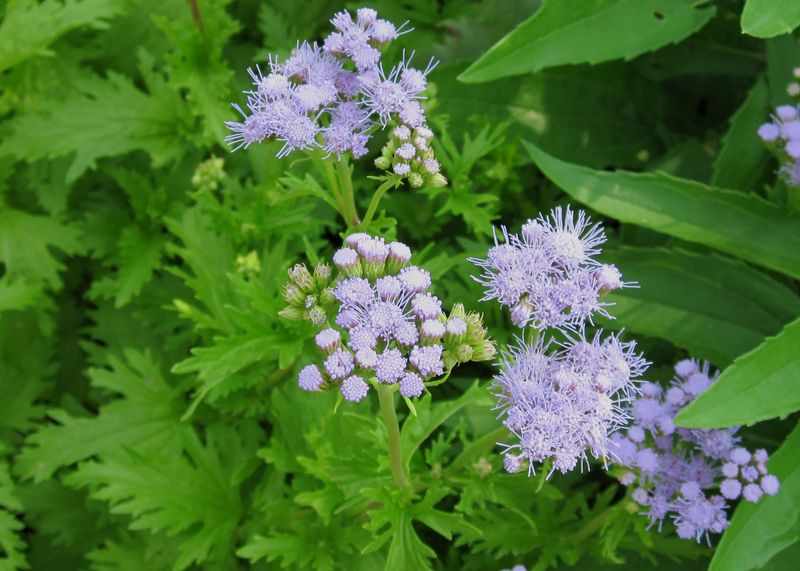
Shaded garden beds in Texas often stay moister than open areas, and that extra moisture is exactly what firefly larvae need to survive through dry spells.
Gregg’s Mistflower, or Conoclinium greggii, is a native perennial that thrives in those partially shaded spots, spreading gently to fill in gaps and create a soft, layered ground cover beneath taller plants.
The plant produces clusters of fuzzy, blue-purple flowers in late summer and fall that pull in a wide range of pollinators and small insects.
That insect activity feeds the broader food web, which in turn supports the small invertebrates that firefly larvae consume as they develop in the soil.
More insect diversity generally means better conditions for fireflies across the yard.
Gregg’s Mistflower does especially well in East Texas and other areas with reliable seasonal moisture, though it can adapt to Central Texas with some supplemental watering during dry stretches.
It tends to spread naturally through rhizomes, gradually building a fuller ground layer over time.
Your Texas Garden Changes Every Week. Your Plan Should Too.
Gardening in Texas changes quickly throughout the season. Every Friday you’ll receive a simple weekly plan showing exactly what to plant, prune, fertilize, harvest, and protect so you never miss the right timing.
Leaving the base of the plant undisturbed and allowing some leaf litter to accumulate around it helps keep soil moisture levels steady – a simple habit that noticeably improves firefly habitat quality throughout the growing season.
3. Turk’s Cap Creates Shady, Protected Garden Corners
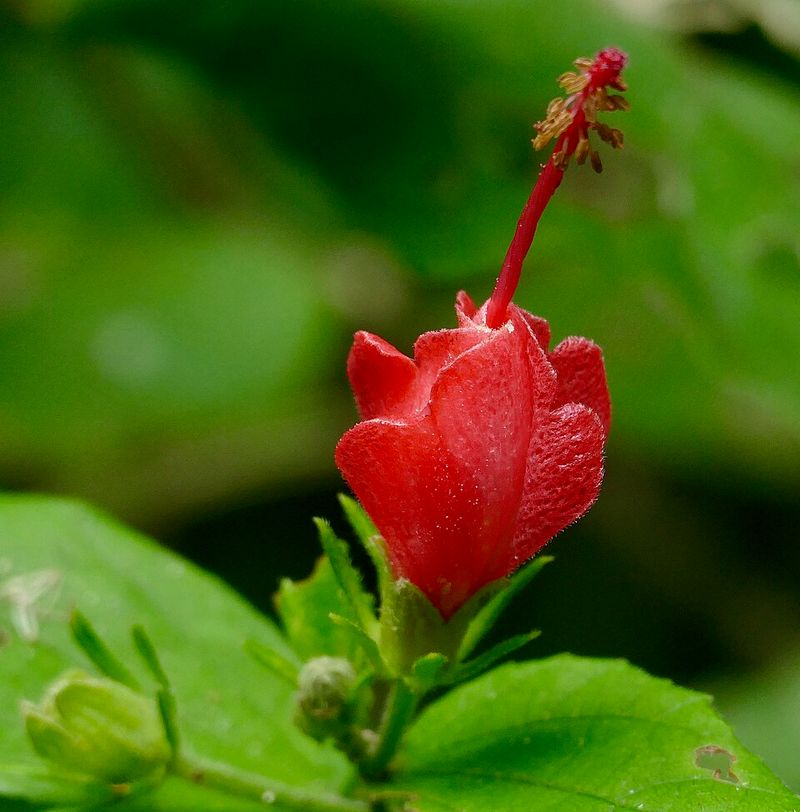
Some of the best firefly activity in Texas yards happens in corners where shade is deep and the air stays a little cooler after sunset.
Turk’s Cap, or Malvaviscus arboreus, is a native perennial shrub that builds exactly that kind of protected microclimate.
Its broad leaves create dense canopy coverage, blocking sunlight and slowing soil moisture loss in ways that benefit the ground-level creatures living below.
The plant grows vigorously in shaded and semi-shaded spots across much of Texas, from the Hill Country into East Texas. It handles clay soils reasonably well and comes back reliably each spring even after hard winters knock it back.
That dependable regrowth means the shaded corner it occupies stays consistently sheltered year after year, which matters for firefly larvae that spend months developing in the same patch of soil.
Turk’s Cap produces bright red, twisted flowers that hummingbirds and butterflies visit regularly, adding to the overall insect and wildlife activity in the garden.
That biological richness supports a more complex food web, which benefits firefly development.
Avoiding pesticides near Turk’s Cap plantings is worth the effort – chemical treatments in shaded, moist areas can disrupt the very invertebrate community that makes those corners valuable firefly habitat in the first place.
4. Inland Sea Oats Adds Shelter In Low Light Areas
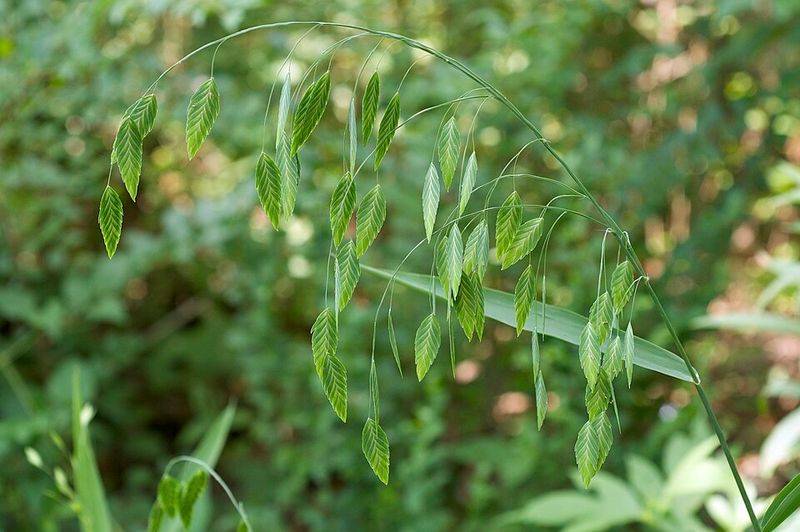
Deep shade under large trees is one of the more challenging spots to plant in a Texas yard, but it also happens to be the kind of low-light, moisture-retaining environment where fireflies tend to feel most at home.
Inland Sea Oats, or Chasmanthium latifolium, is one of the few native grasses that genuinely thrives in those dim, sheltered spaces, making it a practical choice for gardeners hoping to support firefly habitat.
The grass forms graceful clumps with broad, flat leaves that catch falling debris and help build up a natural layer of organic material at the soil surface.
That leaf litter layer is critical – firefly larvae move through moist, decomposing organic matter as they develop, and Inland Sea Oats essentially helps create and maintain that layer on its own over time.
Inland Sea Oats grows well across East Texas and into Central Texas wherever tree canopy provides consistent shade and some seasonal moisture reaches the roots.
The dangling seed heads that appear in late summer add visual interest while also feeding small birds and insects that contribute to yard biodiversity.
Keeping the clumps intact rather than cutting them back aggressively in fall helps preserve the base layer of shelter that ground-level insects, including developing firefly larvae, rely on through winter.
5. Goldenrod Supports A Strong Backyard Food Web
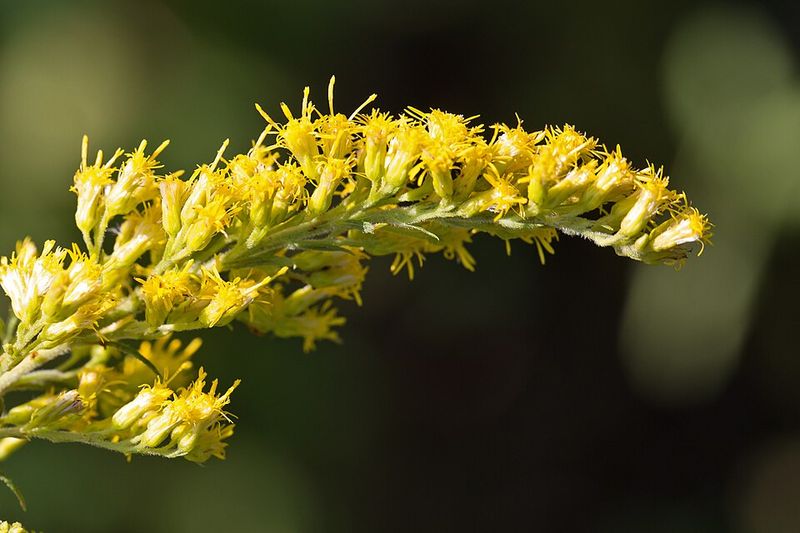
Late summer and early fall in Texas bring a burst of insect activity that gardeners sometimes overlook, and Goldenrod is one of the main drivers of that seasonal energy.
Solidago altissima, a native Texas species, erupts into dense plumes of small yellow flowers during this window, drawing in an impressive variety of pollinators, beetles, flies, and other small insects that form the base of a rich backyard food web.
That food web is exactly what firefly larvae need. Firefly larvae are predatory, feeding on small invertebrates like snails, slugs, and soft-bodied insects in the soil and leaf litter.
A yard that supports high insect diversity generally supports better firefly larval survival, and Goldenrod is one of the most effective native plants in Texas for building that kind of biological richness.
Goldenrod grows well across a wide range of Texas conditions and tolerates both clay and sandy soils with reasonable drainage. It spreads gradually through rhizomes, filling in open garden areas over time.
Resisting the urge to cut it back too early in fall preserves the insect habitat and seed sources that extend food web activity well into cooler months.
Pairing Goldenrod with other native perennials amplifies its impact on overall yard biodiversity and firefly-friendly conditions.
6. Blue Mistflower Helps Hold Moisture Close To The Ground
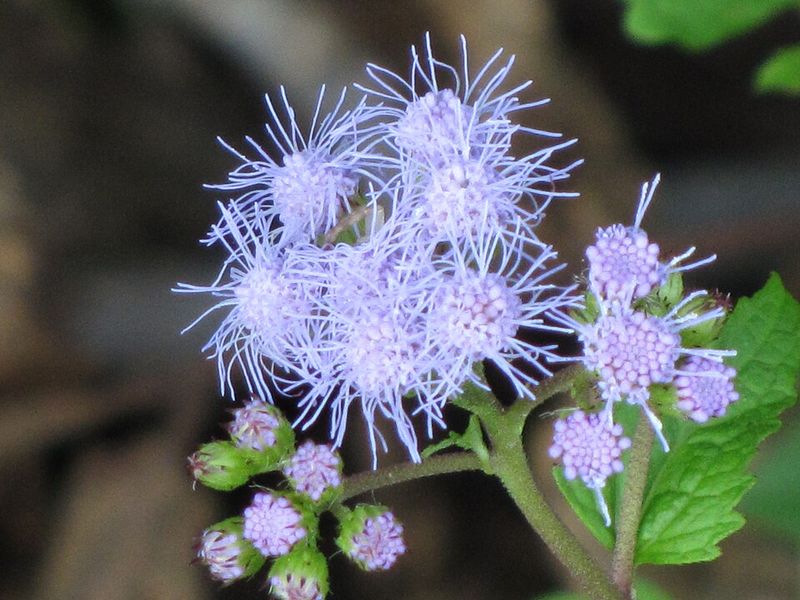
Moisture retention at the soil surface is one of the quieter but more important factors in whether a Texas yard supports fireflies.
Blue Mistflower, or Conoclinium coelestinum, is a native perennial that spreads into tidy colonies in moist, partially shaded areas, keeping the ground beneath its foliage noticeably cooler and more humid than surrounding open soil.
The plant blooms in late summer and fall with soft clusters of blue-violet flowers that attract butterflies, bees, and small beneficial insects in numbers that can be genuinely impressive on a warm Texas afternoon.
All of that insect activity enriches the local food web and contributes to the organic material that eventually works its way into the soil, improving the moisture-holding capacity of the ground over time.
Blue Mistflower performs well in East Texas and in low-lying areas of Central Texas where seasonal moisture lingers after rainfall. It spreads through rhizomes, so it fills in gaps gradually without requiring much attention from the gardener.
Leaving the spent stems and foliage in place through winter rather than cutting everything back helps build up the leaf litter layer at the soil surface.
That accumulated organic material keeps moisture levels steadier during dry stretches and gives firefly larvae better conditions for development beneath the canopy of the plant.
7. Obedient Plant Fills In Moist, Protected Spaces
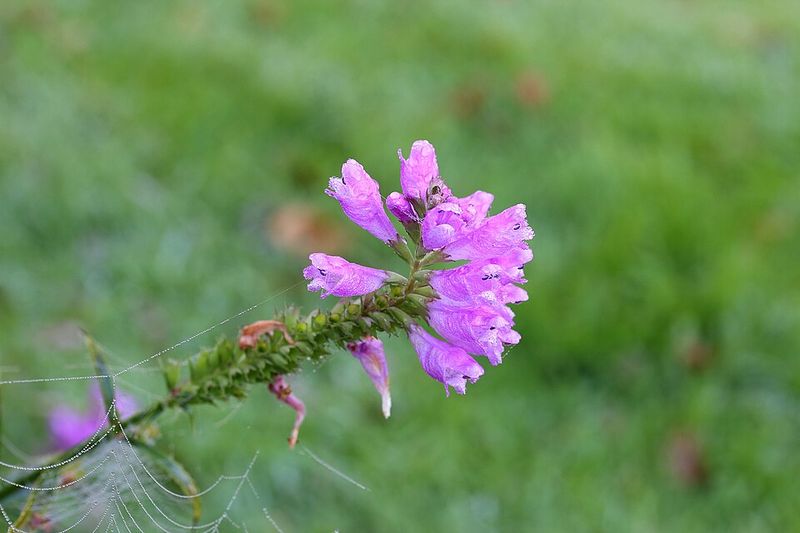
Moist, low-lying spots in a Texas yard that collect water after rain are often seen as problem areas, but for firefly habitat they can be genuinely valuable.
Obedient Plant, or Physostegia virginiana, is a native perennial that actually prefers those wetter conditions, settling into moist garden pockets and filling them with upright stems and showy pink flower spikes that bloom in late summer.
The plant gets its common name from the way individual flowers can be repositioned on the stem and stay put – a quirky trait that makes it fun to show kids in the garden. Beyond that novelty, Obedient Plant provides real ecological value.
Its dense upright growth offers shelter for adult fireflies resting during daylight hours, and the moist soil it occupies stays hospitable for larvae longer into dry periods than surrounding drier areas.
Obedient Plant spreads through underground runners and can fill in a moist garden bed fairly quickly, which is useful for covering ground that might otherwise be left bare and prone to drying out.
Bare soil dries faster and offers little protection for soil-dwelling insects.
Reducing artificial lighting near plantings of Obedient Plant is a practical step – fireflies use their bioluminescent signals for mating, and even modest outdoor lighting can interfere with that process on summer nights in Texas.
8. Black Eyed Susan Brings Life To Sunny Garden Edges
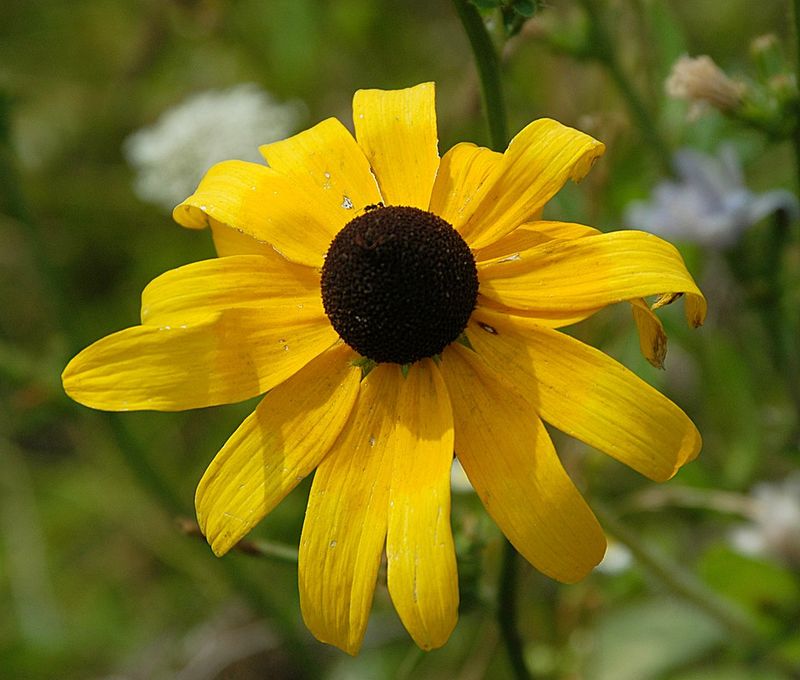
Sunny garden edges in Texas can feel almost buzzing with life when Black-Eyed Susan is in bloom.
Rudbeckia hirta is a native Texas wildflower that produces cheerful yellow flowers with dark centers from late spring through early fall, pulling in bees, butterflies, beetles, and a wide range of smaller insects that collectively make a yard much more biologically active.
That insect activity matters for fireflies in indirect but meaningful ways. Firefly larvae feed on soft-bodied invertebrates in the soil, and a yard with high insect diversity tends to support a richer soil community overall.
Black-Eyed Susan essentially helps set the table for that broader food web by attracting so many visitors during its long bloom period.
The plant grows well across most of Texas, tolerating heat, clay soils, and periods of drought once established.
It works well planted along garden borders where lawn meets a more naturalistic planting area – those transitional edges tend to accumulate leaf litter and support more diverse insect communities than tidy, heavily maintained zones.
Leaving seed heads intact after blooming provides food for birds and extends the ecological value of the planting well past the flowering season.
Pairing Black-Eyed Susan with shade-tolerant perennials nearby creates a gradient from sun to shelter that benefits multiple life stages of fireflies.
9. Spiderwort Helps Shade Soil And Hold Moisture
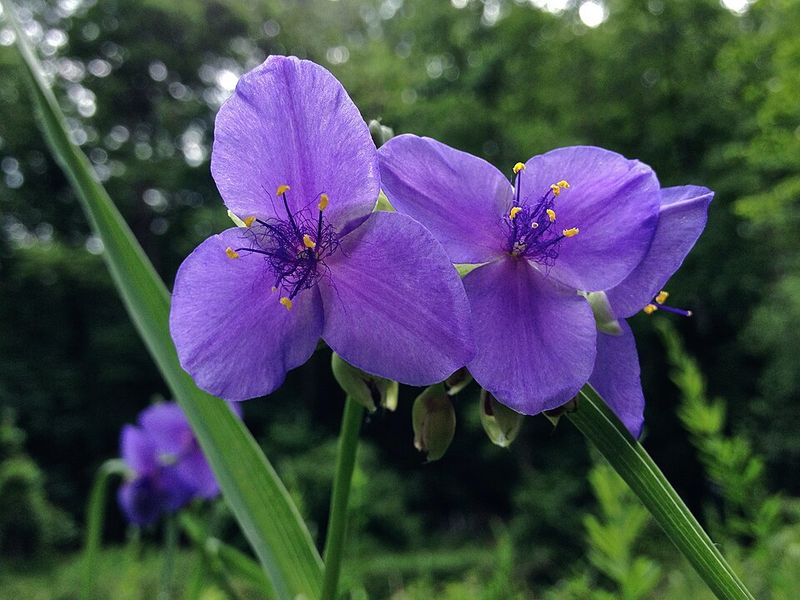
Early morning in a Texas spring garden often reveals Spiderwort in full bloom before the heat of the day sets in.
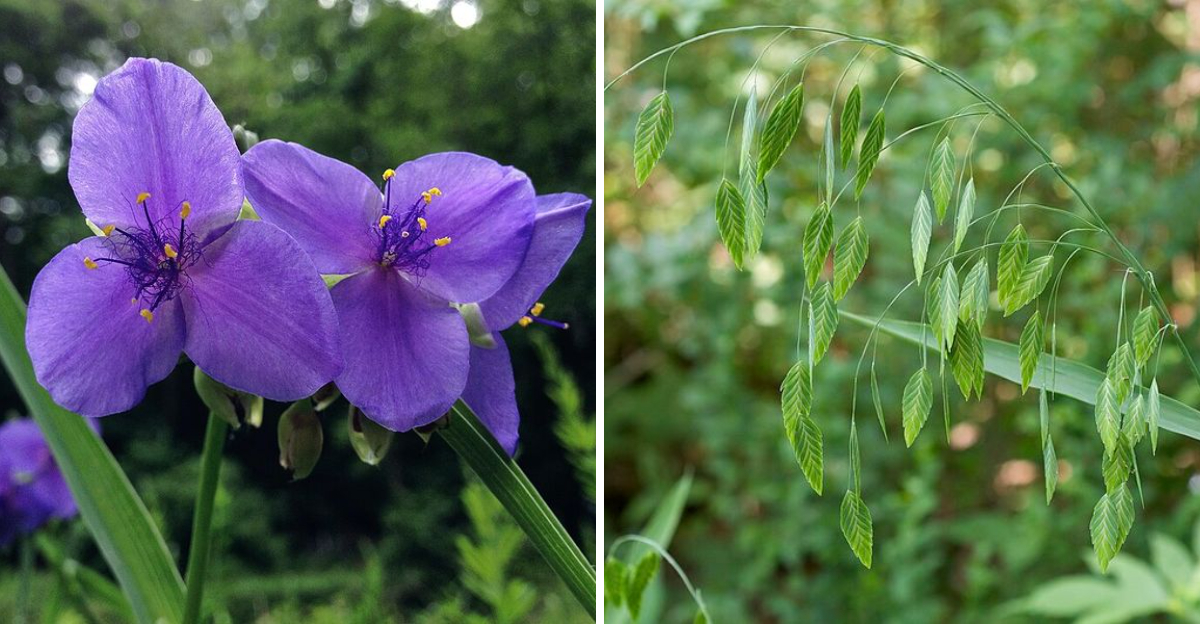
Tradescantia ohiensis is a native perennial that opens its three-petaled purple-blue flowers in the morning and closes them by midday, a rhythm that feels almost like the plant is keeping its own schedule.
Below those blooms, the long strap-like leaves arch outward and press close to the soil, creating a shaded, slightly cooler microclimate at ground level.
That shading effect is meaningful for firefly habitat. Soil that stays shaded dries out more slowly, and slower drying means better conditions for the moisture-dependent larvae developing in the organic layer just below the surface.
Spiderwort spreads readily in Texas gardens, especially in areas with some seasonal moisture, and it can form a fairly dense clump over a few growing seasons.
The plant is well adapted to a range of Texas conditions, from East Texas woodlands to the edges of Central Texas gardens with supplemental irrigation.
It tends to go dormant in summer heat, which is normal – the foliage that breaks down in place adds to the organic material in the soil.
Avoiding herbicide use near Spiderwort patches protects both the plant and the invertebrate community living in the moist soil beneath it, which is where the real firefly habitat value lies.