These Shrubs Instantly Make Texas Homes Look Better
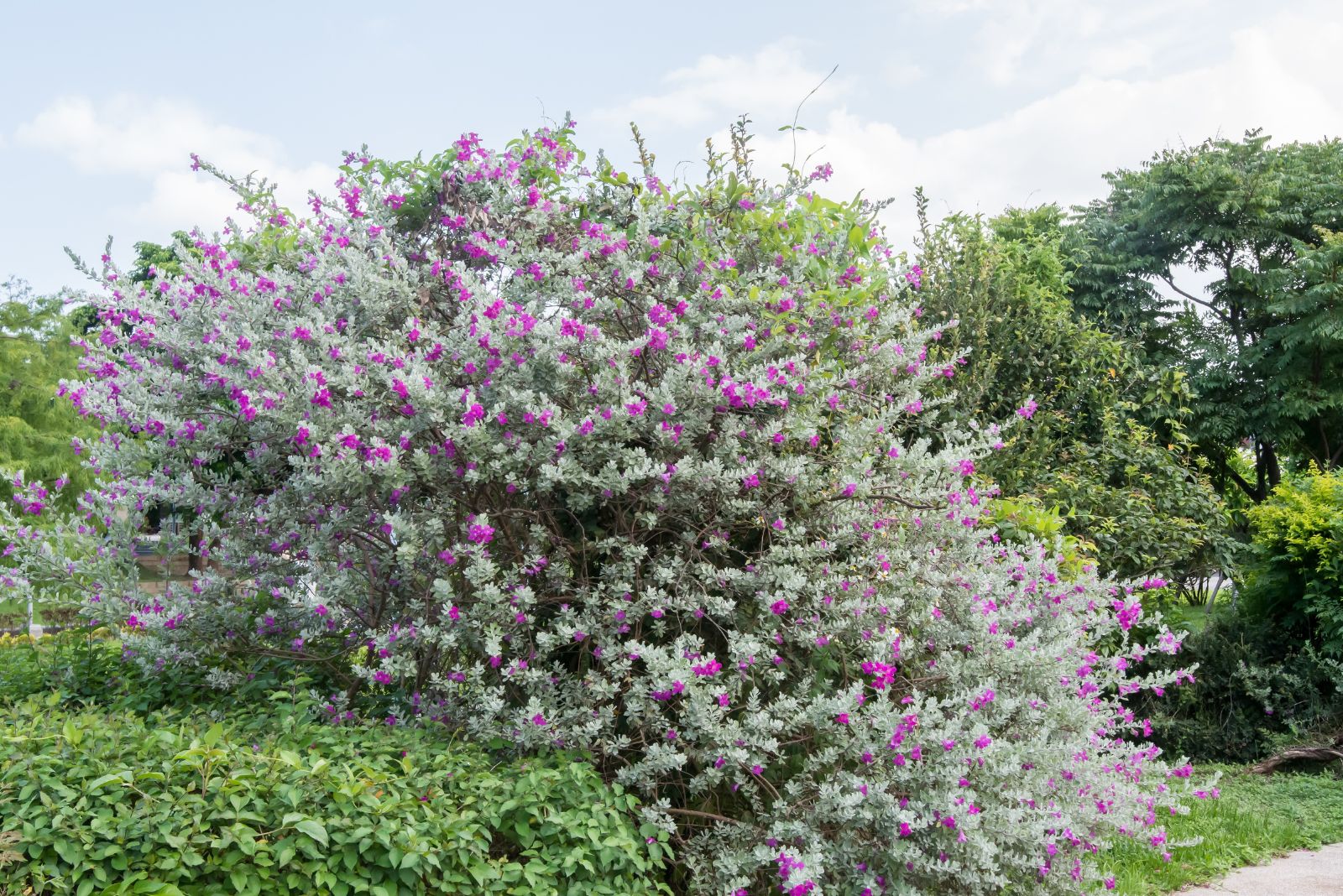
Some plants do more than fill space. They change the whole feel of a home. The right shrubs can make a front yard look polished, frame a walkway in a way that feels inviting, and give a house that finished look people notice right away, even if they cannot quite explain why.
In Texas, that kind of upgrade matters even more because landscapes have to work hard in heat, bright sun, and sometimes unpredictable weather.
That is why shrubs are such a smart choice. They bring structure, color, and texture without asking for the constant attention that high-maintenance plants usually need.
A well-placed shrub can soften harsh corners, make flower beds look fuller, and boost curb appeal in a surprisingly short amount of time. For homeowners who want their property to look more attractive without a total yard makeover, this is often the easiest place to start.
The best options do not just survive Texas conditions. They help your home look warmer, neater, and more put together from the moment people pull up.
1. Texas Sage
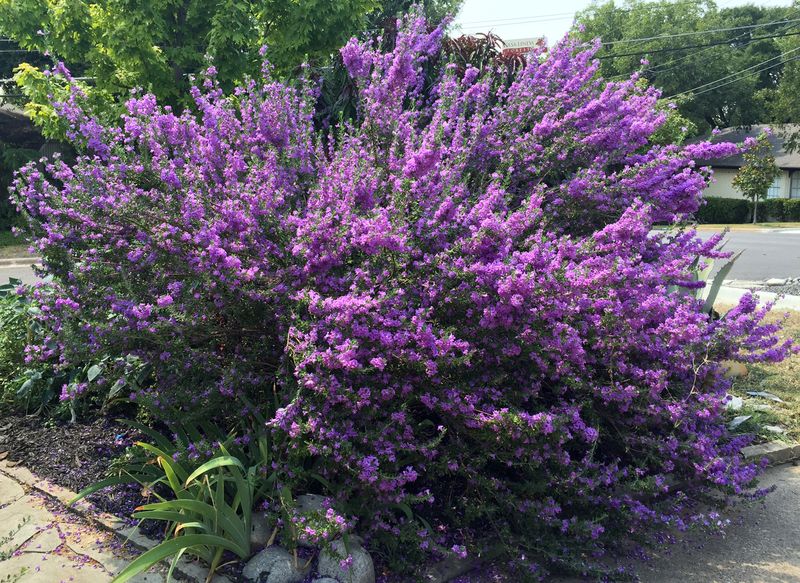
Few plants say “Texas” quite like the sage shrub, also called Cenizo. Walk through almost any neighborhood in San Antonio or El Paso and you will spot its silvery-gray leaves catching the afternoon sun.
After a summer rain, it bursts into purple, pink, or white blooms that make even the simplest yard look like it was professionally landscaped.
Texas sage is a native plant, which means it already knows how to handle the state’s brutal heat and dry spells. It does not need much water once it gets settled in the ground.
Full sun is where it truly shines, and it actually blooms more when the conditions get tough. That is the kind of plant a busy homeowner can really appreciate.
Planting Texas sage along a driveway or front walkway creates a stunning visual path that guides visitors toward your front door. It pairs beautifully with rock mulch or gravel, which is a popular landscaping style across Texas.
Trimming it occasionally keeps the shape tidy, but it looks naturally good even without much fussing. The silvery foliage acts almost like a soft spotlight, making neighboring plants and flowers look more vivid by contrast.
For anyone looking to boost curb appeal without spending a lot of time on upkeep, Texas sage is a top-tier choice that delivers real, lasting results in the Texas landscape.
2. Yaupon Holly
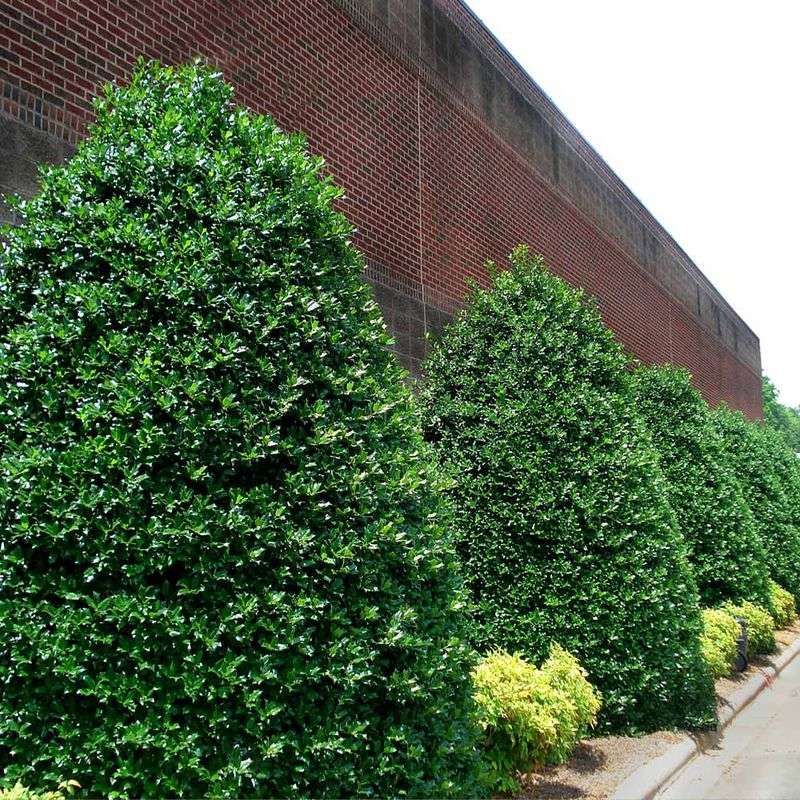
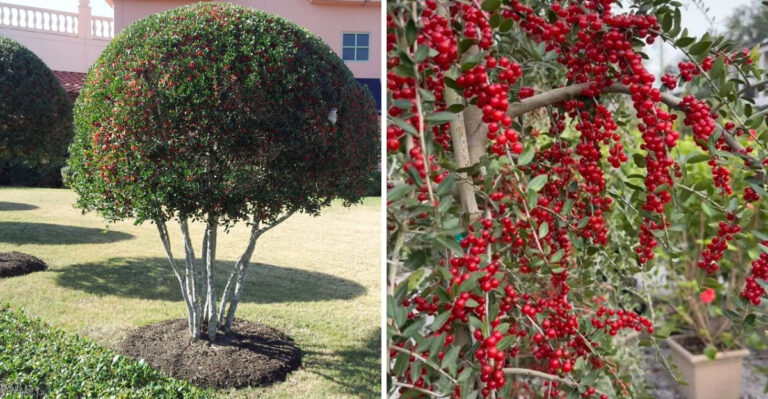
Reliability is the best word to describe Yaupon Holly. It is one of the few shrubs in Texas that looks good every single month of the year without requiring a lot of attention.
Whether you want a formal, clipped hedge or a looser, more relaxed shape, this shrub handles both styles with ease. That kind of flexibility is rare and incredibly useful when designing a front yard.
Yaupon Holly is also one of the toughest plants in the state. It handles drought, flooding, poor soil, and even salt spray near coastal areas like Galveston.
Your Texas Garden Changes Every Week. Your Plan Should Too.
Gardening in Texas changes quickly throughout the season. Every Friday you’ll receive a simple weekly plan showing exactly what to plant, prune, fertilize, harvest, and protect so you never miss the right timing.
Its glossy, dark green leaves stay rich and full even during hot Texas summers when other plants start looking worn out. Female plants produce small red berries in fall and winter, adding another layer of seasonal interest to your landscape.
For homeowners who want a neat, structured look around the foundation of a house, Yaupon Holly is a natural fit. It grows at a moderate pace, so it will not get out of hand quickly.
Planting a row of them along a fence line or property border gives a home a polished, finished appearance. In cities like Austin and Dallas, this shrub is a go-to choice for landscape designers who want dependable greenery that always looks intentional.
If your yard needs a plant that works hard and looks great without constant care, Yaupon Holly deserves a top spot on your planting list.
3. Wax Myrtle
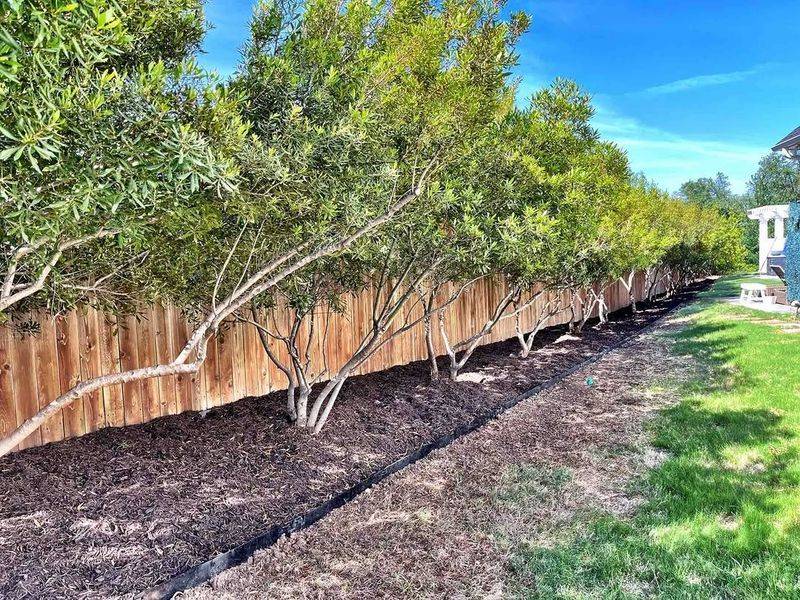
Some yards just feel a little bare, like something important is missing. Wax myrtle is the shrub that fixes that feeling fast.
It grows quickly and fills in spaces with dense, fragrant, olive-green foliage that makes a yard look more established and lived-in almost right away. If your Texas home is newly built or your landscape just looks thin, wax myrtle can change that within a single growing season.
One of the best things about this shrub is how naturally elegant it looks without any special shaping. Its branches have a soft, flowing quality that breaks up hard edges like concrete walls, fences, or angular rooflines.
It works especially well in corners of a yard where you want to add fullness without making the space feel crowded. The aromatic leaves are a bonus that many homeowners love, especially on breezy Texas evenings.
Wax myrtle is also tough enough to handle the Texas climate across the state, from Houston’s humidity to the drier conditions in West Texas. It can be grown as a large shrub or even trained into a small multi-trunk tree, giving you a lot of options for how to use it.
Birds are drawn to the small waxy berries it produces, which adds a lively, natural energy to the yard. Planting it near a patio or along a side yard creates a lush green backdrop that makes every other part of your landscape look more intentional and complete.
4. Autumn Sage
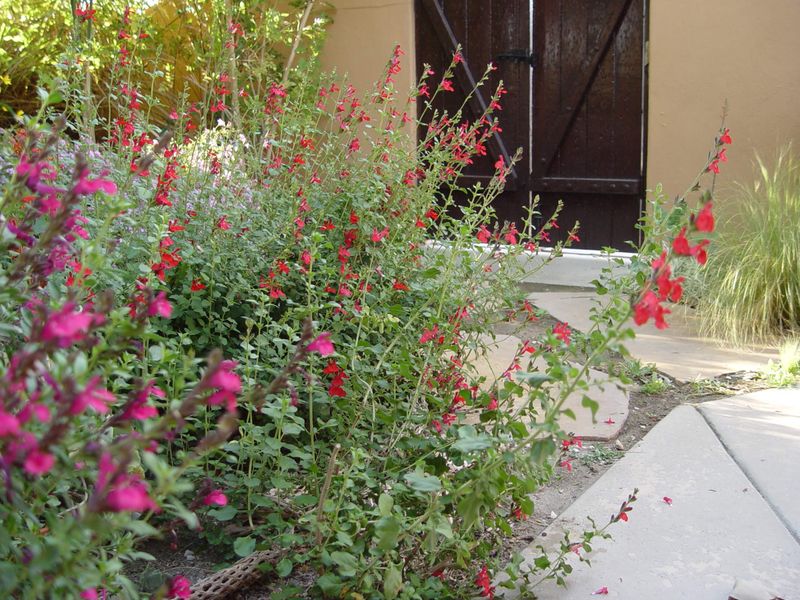
Color is one of the fastest ways to make a home look more inviting, and autumn sage delivers it in abundance.
Unlike some flowering plants that only bloom for a few weeks, autumn sage keeps producing bright red, coral, or pink blooms from spring all the way through fall.
That is months of color that keeps your yard looking fresh and lively long after other plants have faded.
What makes it even better is its compact size. Autumn sage typically stays between two and four feet tall and wide, which makes it easy to tuck into flower beds, line along walkways, or plant in front of larger shrubs.
It never overwhelms a space the way bigger plants can. In Texas landscapes, where managing scale and proportion is important, that moderate size is a real advantage. It fills in gaps beautifully without taking over.
Hummingbirds absolutely love autumn sage, so planting it near a window or porch means you get the bonus of watching wildlife visit your yard regularly. It is drought-tolerant once established, which is a must for Texas gardens that deal with long dry stretches.
The plant also handles the heat in cities like Lubbock and San Angelo without skipping a bloom. Pruning it back lightly in late winter encourages an even fuller flush of flowers in spring.
For anyone who wants their front yard to feel warm, welcoming, and colorful with minimal effort, autumn sage is a smart and beautiful pick.
5. Carolina Cherry Laurel
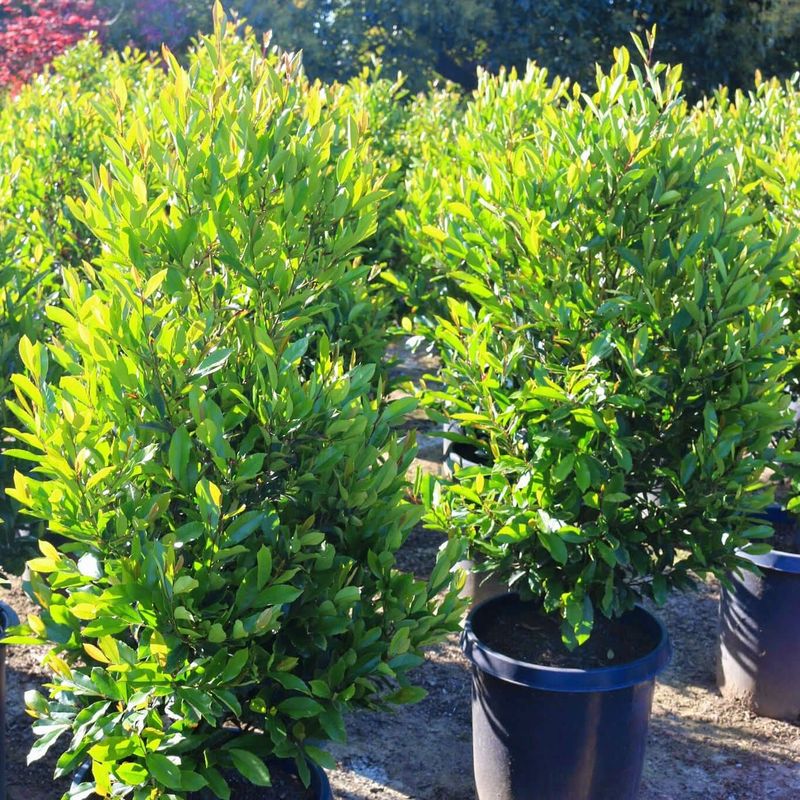
Walk past a yard with a row of Carolina cherry laurels and you immediately notice how polished and complete the landscape looks. The glossy, deep green leaves catch the light in a way that feels almost luxurious.
This evergreen shrub has a naturally full, upright shape that gives any yard a sense of structure and permanence. It looks like it belongs in a well-designed landscape, even if you just planted it last season.
Privacy is one of the biggest reasons Texas homeowners reach for this shrub. It grows tall and dense enough to block views from the street or from neighboring properties.
In suburban neighborhoods around Houston, Fort Worth, and beyond, it is a popular choice for creating natural screens that look far more attractive than wooden fences.
Planting a row of them along a property line or behind a patio transforms an exposed area into a private, comfortable outdoor space.
Carolina cherry laurel is also surprisingly easy to care for once it gets established. It tolerates a range of soil types and does well in both full sun and partial shade.
Occasional trimming keeps it looking neat and encourages a denser growth habit. In spring, it produces small white flowers that carry a light, pleasant fragrance, adding another sensory layer to the landscape.
The combination of beauty, function, and low maintenance makes it one of the most practical shrubs available for Texas homeowners who want results they can actually see and enjoy every single day.
6. American Beautyberry
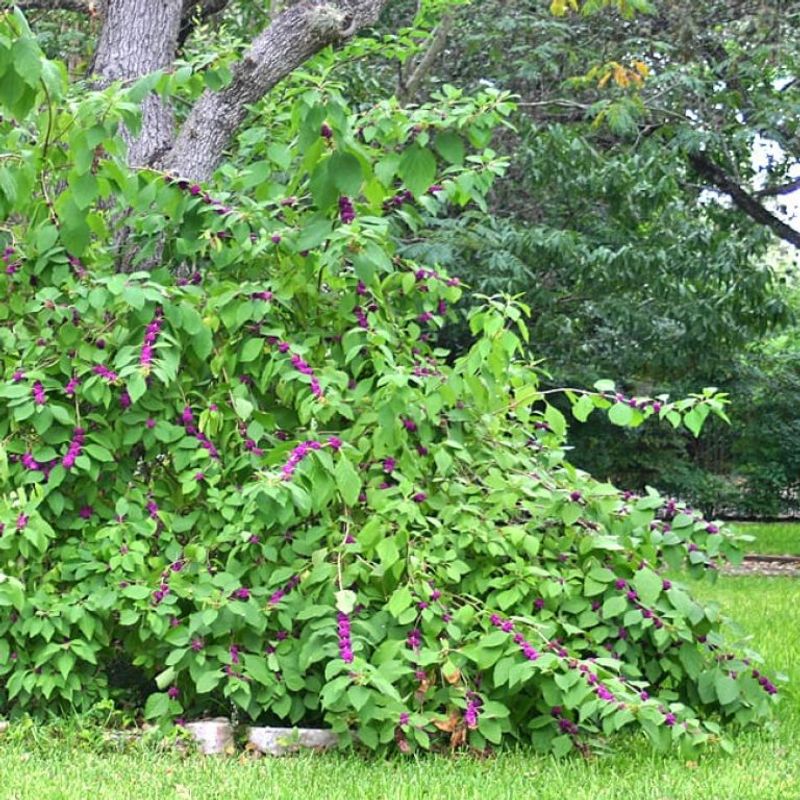
Not every yard needs to look formal or perfectly manicured. Sometimes the most beautiful landscapes are the ones that feel a little wild and natural, and that is exactly where American beautyberry shines.
Its arching branches sweep outward in a graceful, relaxed way that softens hard edges and gives a yard a sense of organic charm. It is the kind of shrub that makes people slow down and take a second look.
The real showstopper comes in late summer and fall, when clusters of vivid, metallic purple berries appear along the branches. There is truly nothing else in the Texas landscape that produces that exact shade of purple.
The berries are bold, bright, and completely unexpected, which makes them a fantastic conversation starter. Even after the leaves drop, the berry clusters remain on the branches, continuing to add color and interest well into the cooler months.
American beautyberry is a native Texas plant, so it is perfectly adapted to the local soil and weather patterns. It grows best in partial shade, making it ideal for spots under trees or along the shadier side of a house where other shrubs might struggle.
Birds are big fans of the berries, which means planting one brings extra life and movement to your yard. It typically grows four to six feet tall and wide, giving it a generous, full presence without becoming overwhelming.
For a yard that feels naturally beautiful and distinctly Texan, beautyberry is an inspired and rewarding choice.
7. Dwarf Yaupon Holly
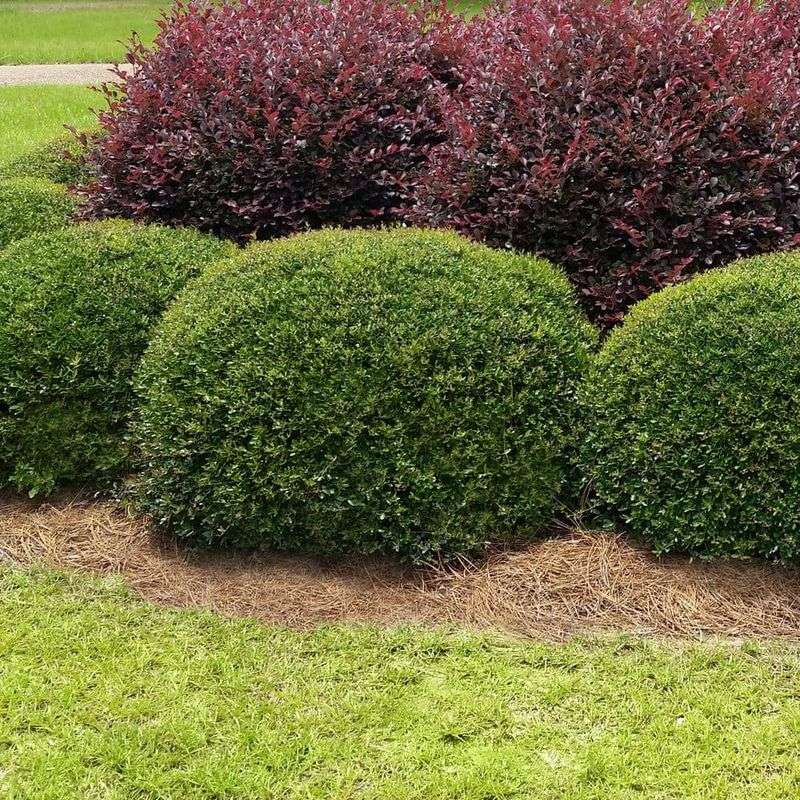
Small spaces deserve great plants too, and dwarf yaupon holly was practically made for the tight spots around a Texas home. Its naturally rounded, compact form looks clean and intentional right from the start, even before you do any shaping.
Plant a few along a front walkway or at the base of your house and the entire exterior instantly looks more put-together and well-cared-for. It is the kind of small change that makes a big visual difference.
One of the standout qualities of this shrub is how little it asks of you. It adapts to almost any soil, tolerates both sun and shade, and handles the heat of a Texas summer without flinching.
Unlike some compact shrubs that look scraggly after a few years, dwarf yaupon holly stays dense and tidy with only occasional trimming.
That low-maintenance quality makes it especially popular with homeowners in busy cities like Plano, Round Rock, and Sugar Land who want great curb appeal without a lot of weekend yard work.
Because it stays small, usually under three feet tall, it works perfectly as a foundation planting that frames a home without blocking windows or overwhelming the architecture.
It pairs well with taller accent plants or ornamental grasses, creating a layered look that landscape designers love.
The fine-textured foliage has a soft, delicate appearance that contrasts nicely with bold-leaved plants nearby. For anyone designing a front yard that needs structure, neatness, and year-round good looks in a compact package, dwarf yaupon holly is the clear and confident answer.