7 Beautiful Heart-Shaped Plants North Carolina Gardeners Will Love
There’s something quietly satisfying about walking past a flower bed and spotting a shape that makes you smile without thinking. Maybe it reminds you of a grandchild’s doodle or a heart drawn in the sand on a family vacation.
For many of us in North Carolina, our gardens aren’t just patches of greenery – they’re small corners of joy that grow alongside the rhythm of daily life.
Heart-shaped plants bring that kind of simple delight into your yard. From perennials that peek up through spring soil to vines and trees that add a touch of whimsy, these plants feel personal, like little nods from nature to the life happening around you.
They work with your routines, shading a favorite bench, softening a walkway, or brightening a front porch where you sip morning coffee.
And some of the options waiting for your garden might surprise you – they’re not the usual suspects.
Keep reading to discover which heart-shaped plants North Carolina gardeners are loving this season and how they can transform familiar corners of your yard into something unexpectedly charming.
1. Carolina Sweetheart Redbud Bursting With Charm
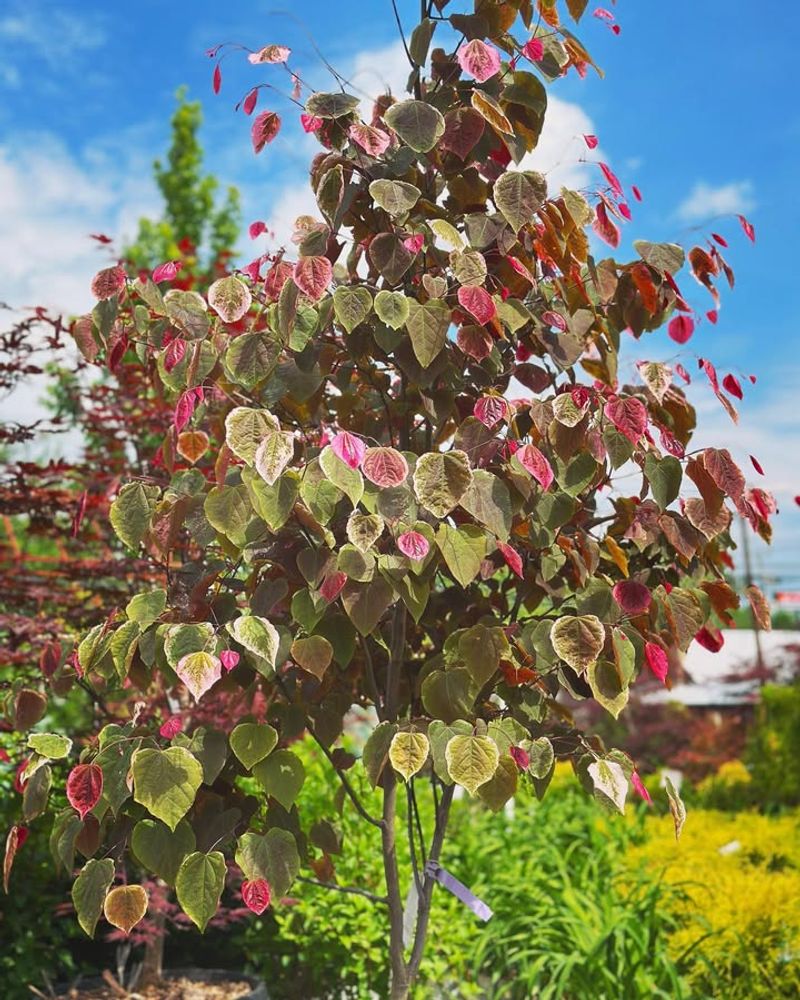
Imagine a tree that practically glows with color from the moment spring arrives. The Carolina Sweetheart Redbud does exactly that, bursting into clusters of vivid magenta-pink blossoms before a single leaf even opens.
Once the flowers fade, the show is far from over because the heart-shaped leaves that follow are a stunning blend of pink, white, and green that shift and change throughout the growing season.
This variety of Eastern Redbud was actually developed right here in the American Southeast, making it a natural fit for North Carolina landscapes. It grows best in full sun to partial shade and does well in the well-drained soils found across much of the state.
Whether you plant it in the Piedmont, the mountains, or the coastal plain, it adapts beautifully to a range of conditions.
Reaching about 12 to 15 feet tall at maturity, the Carolina Sweetheart is small enough for most residential yards but bold enough to serve as a true focal point.
It looks spectacular planted near a patio or along a garden path where you can really appreciate those colorful leaves up close.
Pollinators absolutely love this tree, and you will notice bees buzzing around the blossoms every spring.
Carolina Sweetheart Redbud can be a beautiful addition to many North Carolina gardens, offering seasonal interest and supporting pollinators, though its performance depends on site conditions and care.It delivers four seasons of interest and requires very little maintenance once it gets established in your yard.
2. Bleeding Heart That Steals Every Glance
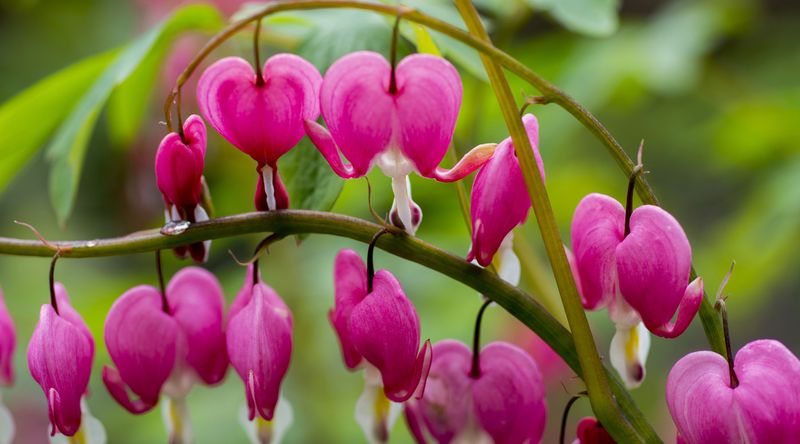
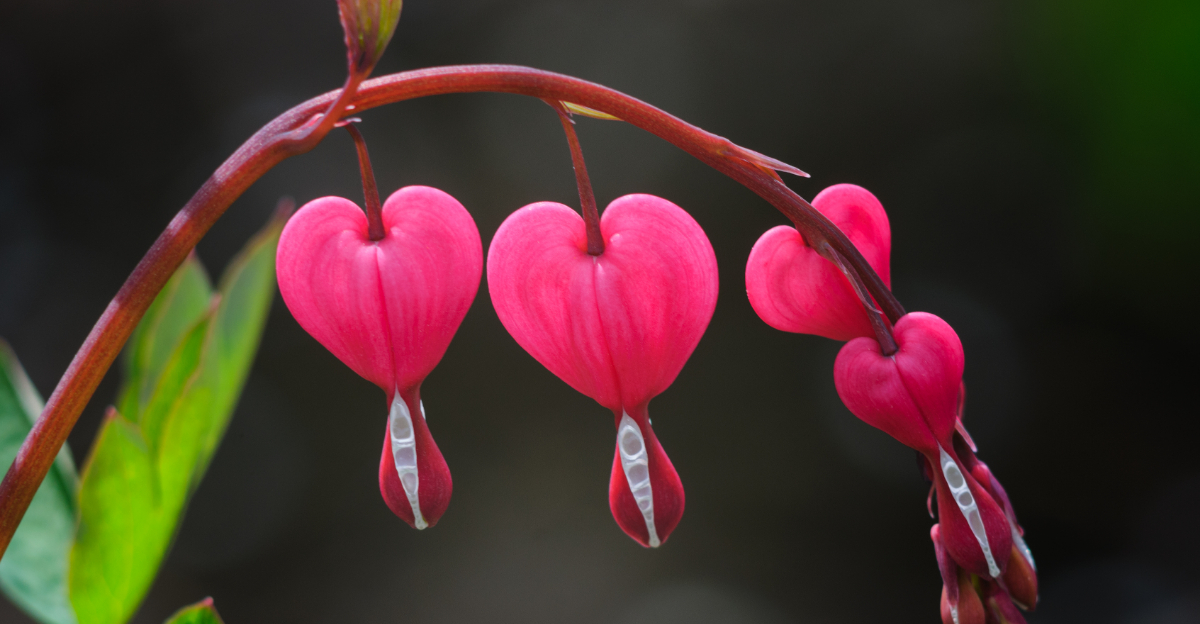
Bleeding Heart is known for its distinctive heart-shaped flowers and delicate foliage, which often attract attention in shaded garden spaces.
With its graceful arching stems lined with rows of dangling, perfectly shaped pink or white heart flowers, this perennial looks like something straight out of a fairy tale.
While Bleeding Heart has become a popular garden plant in North Carolina, it is not native, and gardeners have been cultivating it here more recently after its introduction from Asia.
Your North Carolina Garden Changes Every Week. Your Plan Should Too.
Gardening in North Carolina changes quickly throughout the season. Every Friday you’ll receive a simple weekly plan showing exactly what to plant, prune, fertilize, harvest, and protect so you never miss the right timing.
Bleeding Heart thrives in partial to full shade, which makes it an excellent choice for those tricky shaded spots under trees or along the north side of a house. It prefers moist, well-drained soil that is rich in organic matter.
Adding a layer of compost each spring goes a long way toward keeping this plant happy and healthy.
One fun fact worth knowing: Bleeding Heart is native to Asia and was brought to Western gardens in the 1800s. It became an instant favorite and has never really gone out of style.
In North Carolina, it tends to bloom in early to mid-spring, putting on a show just when the garden needs it most.
Because it prefers cooler temperatures, Bleeding Heart will naturally go dormant in the summer heat. Planting it alongside hostas or ferns is a smart move because those plants will fill in the space once the Bleeding Heart fades.
With just a little planning, this romantic plant can anchor a beautiful woodland-style garden bed that looks amazing every single spring.
3. Heart-Leaved Foamflower That Dances In The Breeze
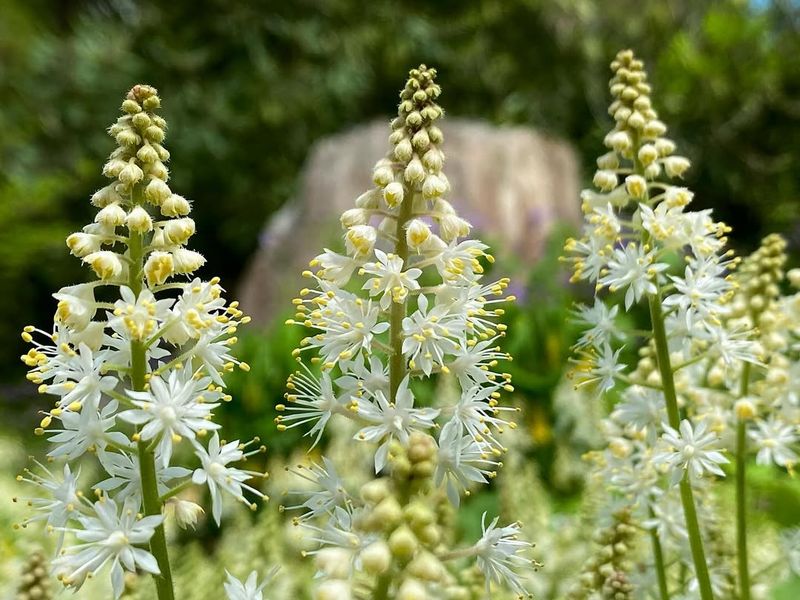
Walk through any shaded woodland trail in North Carolina in spring and you might spot a low-growing plant with airy white flower spikes rising above a carpet of deeply lobed, heart-shaped leaves.
That is the Heart-Leaved Foamflower, a native wildflower that is as charming as it is useful for the home garden.
Its delicate blooms bring a soft, almost whimsical touch to shaded corners, making it a favorite among gardeners looking for subtle beauty without high maintenance.
Foamflower earns its name from those frothy-looking clusters of tiny white or pale pink flowers that bloom in April and May. After the flowers fade, the foliage takes center stage.
Many varieties develop rich burgundy or bronze markings along the leaf veins as the season progresses, giving the plant a striking two-toned look that keeps things interesting well into fall.
The combination of flowers and foliage adds seasonal texture and variety to woodland-inspired plantings, helping create depth and visual appeal throughout the growing season.
Because it is a true North Carolina native, this plant has evolved to handle the region’s climate with ease. It loves moist, humus-rich soil and performs best in partial to full shade.
It also spreads slowly by runners, gradually forming a lush ground cover that chokes out weeds and protects the soil naturally. Gardeners who struggle with those difficult shaded areas beneath mature trees will find Foamflower to be a real problem-solver.
Pair it with wild ginger, ferns, or trilliums for a layered woodland garden that feels completely natural. It is also a great plant for supporting native pollinators, especially bees that visit the flowers for early spring nectar.
For low-maintenance beauty in a shaded North Carolina garden, Foamflower is tough to beat. Its quiet charm and adaptability make it a reliable choice for adding texture, color, and ecological value to almost any woodland planting.
4. Heart-Leaf Ginger Lighting Up Shady Corners
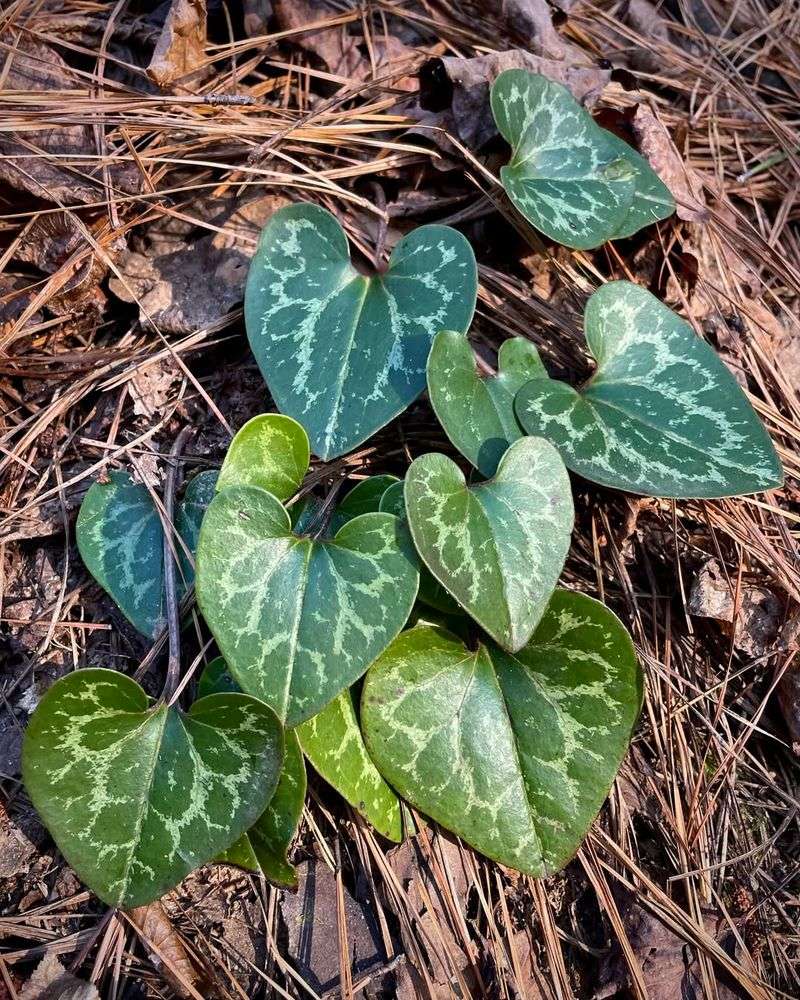
There is something wonderfully mysterious about Heart-Leaf Ginger. While most plants show off with showy flowers, this native evergreen keeps things understated and cool.
Its deep, glossy, heart-shaped leaves form a thick carpet that stays green all year long, even through North Carolina winters, which makes it a standout in the shade garden during the colder months.
Asarum virginicum, the species native to the Southeast, is perfectly suited to the woodland gardens found across the North Carolina Piedmont and mountain regions. It prefers moist, well-drained soil with plenty of organic matter and grows happily in partial to deep shade.
Once established, it is remarkably tough and requires almost no attention from the gardener.
The flowers of Heart-Leaf Ginger are easy to miss because they hide beneath the leaves close to the ground. They are small, jug-shaped, and brownish-purple, blooming in early spring.
While not flashy, they have a quiet charm that rewards curious gardeners who take a closer look.
Did you know that the roots of wild ginger have historically been used as a spice substitute? While the garden variety is not commonly harvested for cooking today, it is a fun piece of plant history to share with visitors.
As a ground cover, Heart-Leaf Ginger pairs beautifully with ferns, foamflower, and trilliums. It is one of those reliable, hardworking plants that makes every shaded North Carolina garden feel lush, layered, and alive throughout every season of the year.
5. Carolina Milkvine Climbing With Wild Elegance
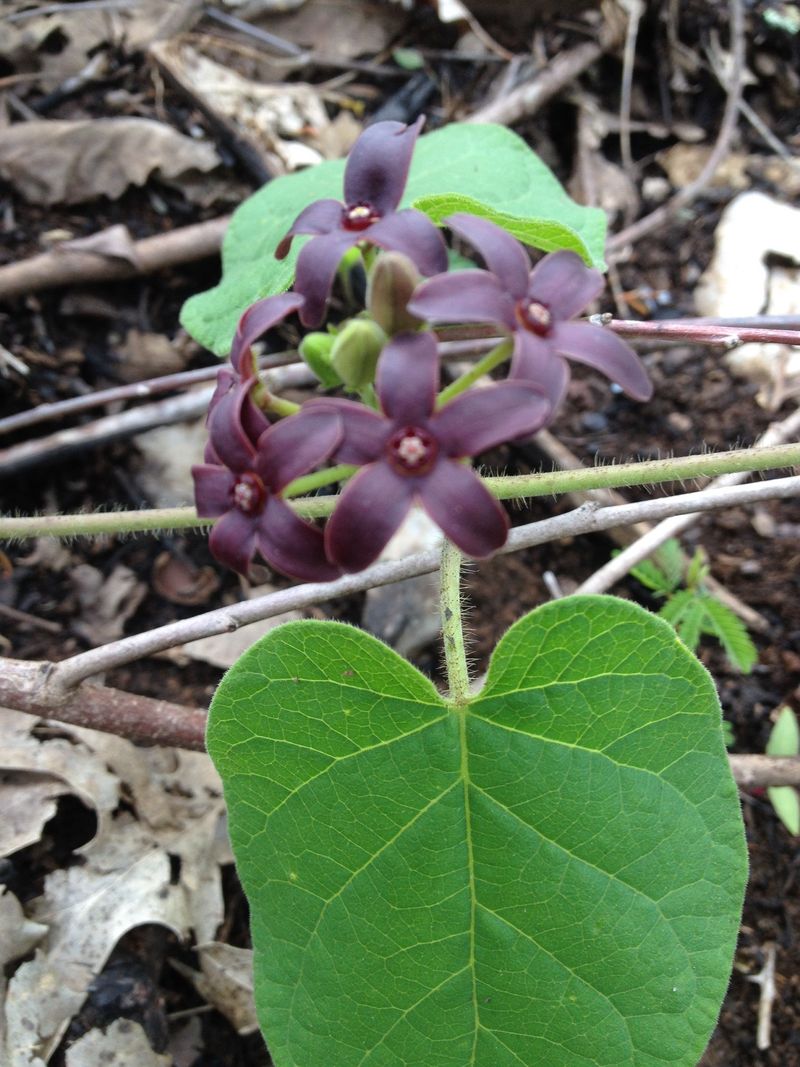
Not many gardeners know about Carolina Milkvine, but those who discover it tend to become instant fans.
This native climbing vine is one of North Carolina’s hidden gems, offering large, velvety, heart-shaped leaves and small but fascinating maroon star-shaped flowers that bloom in late spring and early summer.
It is the kind of plant that sparks conversations when visitors spot it in your yard.
Carolina Milkvine belongs to the milkweed family, which means it plays a valuable role in supporting local wildlife. The flowers attract a variety of native pollinators, and the plant serves as a host for certain native moth species.
For gardeners who want to support the local ecosystem while also growing something beautiful, this vine checks every box.
Growing naturally in woodland edges and along roadsides across the Carolinas, this vine does best in partial shade with moist, well-drained soil. It can climb fences, trellises, or shrubs using twining stems, reaching anywhere from 3 to 6 feet in length.
It is not an aggressive grower, so you won’t have to worry about it taking over your garden.
Finding Carolina Milkvine at a regular garden center can be tricky, so your best bet is to check native plant nurseries or plant swaps in your area. Organizations like the North Carolina Native Plant Society sometimes offer rare natives like this one at their sales.
Adding this vine to your garden is a meaningful way to celebrate and preserve the natural heritage of the Carolinas.
6. Blue Wood Aster Bringing Sky To The Forest
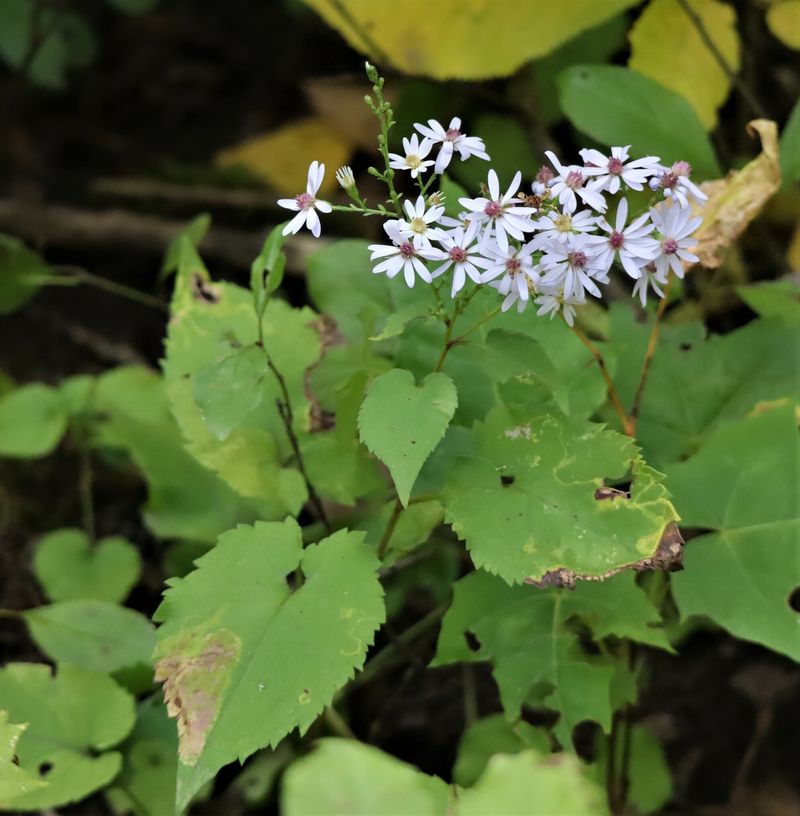
As summer winds down and the garden starts to settle into fall, Blue Wood Aster often begins to shine with soft clouds of blue-violet flowers tipped with yellow centers.
This native perennial brings a late-season touch of color to North Carolina gardens, offering both visual interest and a welcome source of nectar for native bees and butterflies preparing for cooler months.
Its presence can help maintain a lively, pollinator-friendly garden even as other blooms fade.
One of the standout features of this plant is its foliage. The basal leaves often take on a heart-shaped form with gently toothed edges, providing structure and texture in the garden long before the flowers appear.
Plants typically reach heights of one to three feet, forming open, airy clumps that blend naturally into woodland-inspired or meadow-style designs.
This habit allows Blue Wood Aster to complement taller plants or softer groundcovers, creating a layered effect that keeps beds looking full and dynamic throughout the season.
Blue Wood Aster adapts to a range of light conditions, from partial shade to full sun, and it tolerates different soil types commonly found across North Carolina, including clay and loam.
Over time, it can spread gradually through seeds and rhizomes, helping to fill gaps in mixed perennial borders or naturalized areas.
Planting it alongside late-season companions like goldenrod or ironweed can create a rich tapestry of color and texture that carries the garden well into autumn while supporting local wildlife in a gentle, ongoing way.
7. Common Blue Violet Stealing Every Eye
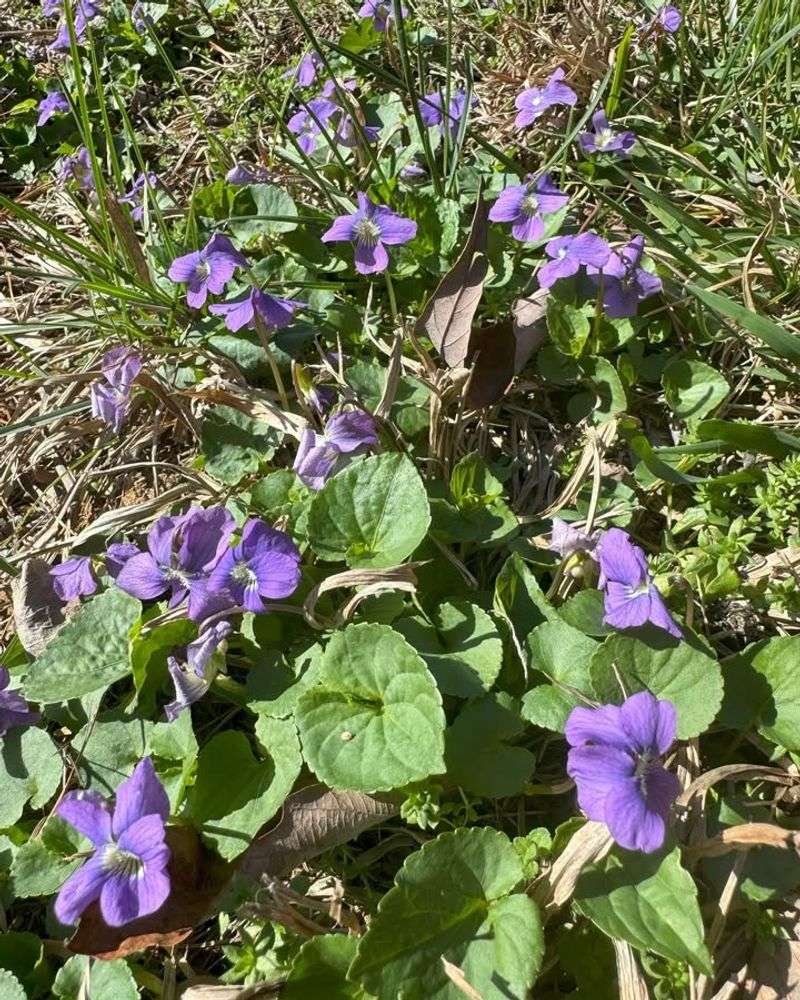
Chances are, Common Blue Violet is already growing somewhere in your North Carolina yard and you might not have given it much thought.
This cheerful little wildflower pops up in lawns, garden edges, and shaded spots every spring, covering the ground with clusters of rich purple-blue blooms that sit just above a rosette of perfectly heart-shaped leaves.
Once you start noticing it, it is hard not to appreciate how lovely it really is.
Common Blue Violet is a native perennial in North Carolina and provides ecological benefits, though exact historical timelines for its presence in the landscape are not precisely documented.
It plays a crucial role in the local ecosystem as the only host plant for several species of fritillary butterflies, whose caterpillars feed exclusively on violet leaves.
Letting violets grow freely in a corner of your yard is one of the simplest things you can do to support butterfly populations in your neighborhood.
The plant thrives in partial shade to full sun and is incredibly adaptable, growing in clay, loam, or sandy soils. It spreads by both seeds and underground rhizomes, which means it will gradually fill in bare spots on its own.
In a more formal garden, you can keep it contained by pulling up extra plants in early spring before they go to seed.
Beyond its ecological value, Common Blue Violet is genuinely beautiful. The flowers are edible and have long been used to decorate salads and desserts.
Whether you treat it as a wildflower, a ground cover, or a charming garden accent, this violet brings a touch of wild North Carolina beauty to any outdoor space you love.