Arizona Citrus Tree Care Checklist For April Before Summer Heat
April marks a critical moment for citrus trees in Arizona, and getting care right now can pay off all season long.
With soils warming, longer days, low spring rainfall, and temperatures steadily climbing, trees in Phoenix, Tucson, and Yuma are already pushing new growth, setting flowers, and starting to form fruit.
This is the perfect window to give your citrus trees a head start before the intense summer heat arrives.
Simple steps taken in April such as checking water, pruning, fertilizing, and monitoring for pests can help trees establish strong growth, produce larger, flavorful fruit, and stay resilient through the scorching desert months ahead.
1. Check Soil Moisture And Adjust Watering Schedules For Warmer Days
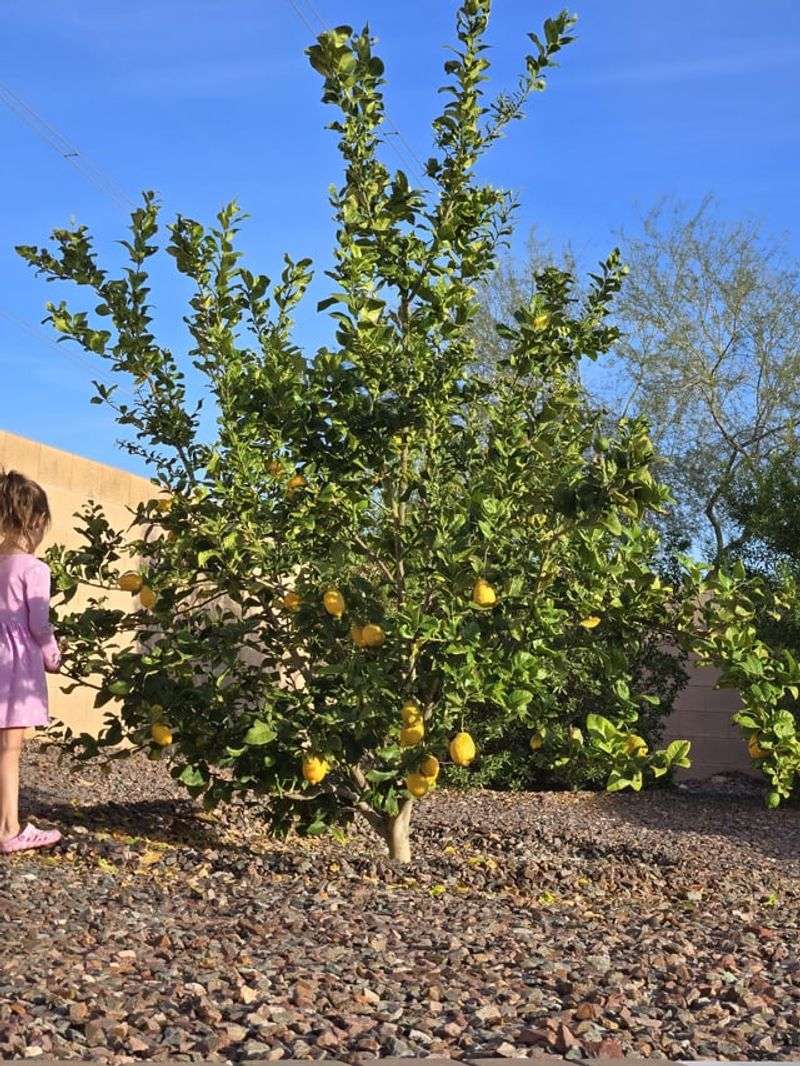
Warming spring temperatures in Arizona’s low desert mean citrus trees are pulling water from the soil much faster than they did in winter.
What worked as a watering schedule in February likely won’t be enough by mid-April, especially in Phoenix and Tucson where daytime highs can already push past 90 degrees Fahrenheit.
The goal is deep, infrequent watering that encourages roots to grow downward rather than staying shallow near the surface. Aim to wet the soil at least 2 to 3 feet deep each time you water.
You can check depth by pushing a long screwdriver or soil probe into the ground – it moves easily through moist soil and resists in dry soil.
Drip irrigation systems work well for Arizona citrus, but emitter placement matters. Position emitters under the outer edge of the canopy, near the drip line, rather than close to the trunk.
Watering too close to the trunk can encourage rot in the crown area.
During April, most established citrus trees in the Phoenix area benefit from watering every 7 to 10 days, though sandier soils may need more frequent attention.
Trees in higher elevation areas like Prescott may still be on a winter-adjusted schedule and should be monitored closely as temperatures begin rising.
2. Inspect Trees For Pests Like Aphids, Citrus Leafminer, And Scale
Spring pest activity picks up quickly once Arizona temperatures start climbing, and citrus trees become a target for several common insects during April.
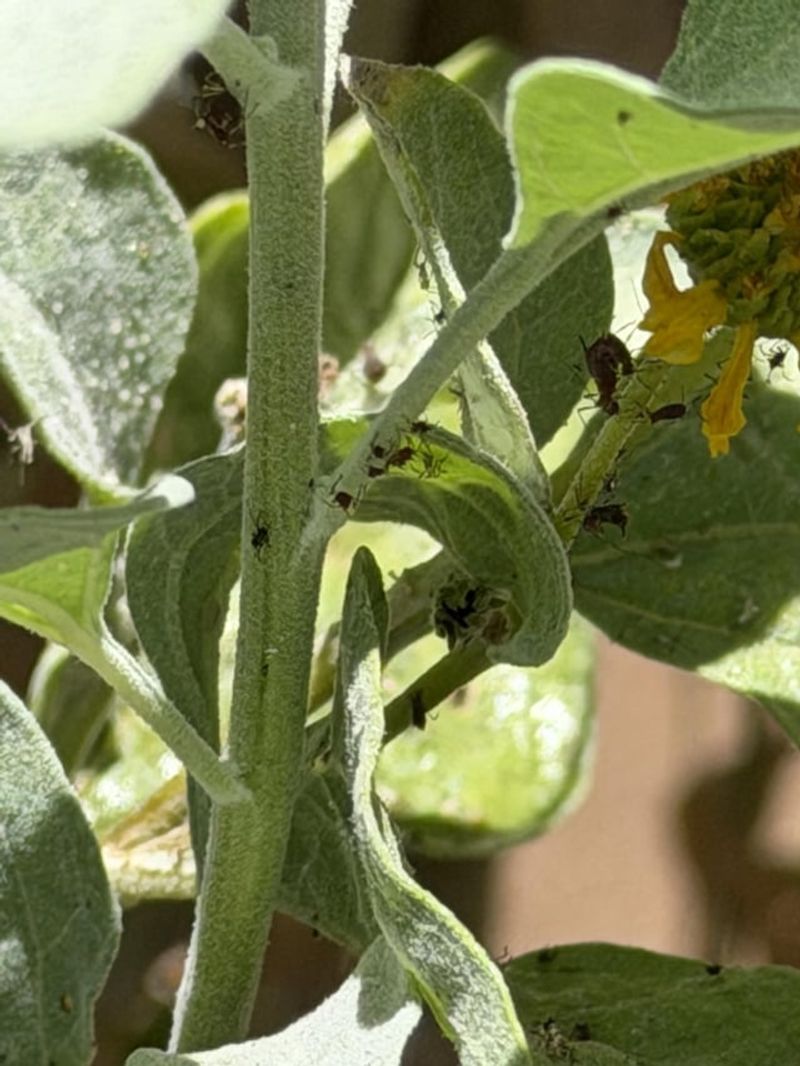
Aphids tend to cluster on tender new growth, curling young leaves and leaving behind a sticky residue called honeydew that can attract ants and encourage sooty mold fungus to develop on the foliage.
Citrus leafminer is another pest to watch closely in April. The adult moth lays eggs on new leaves, and the larvae tunnel through the leaf tissue, leaving distinctive winding trails.
While leafminer damage looks alarming, it rarely causes serious harm to established trees. Young trees or newly planted ones are more vulnerable and may need treatment if infestations are heavy.
Scale insects, which look like small bumps on stems and leaf undersides, can also become active during spring.
A strong spray of water from a garden hose can knock aphids off branches, and horticultural oils approved for citrus use can help manage scale populations.
One pest that requires immediate action is the Asian Citrus Psyllid, which can spread a serious bacterial disease known as citrus greening.
Your Arizona Garden Changes Every Week. Your Plan Should Too.
Gardening in Arizona changes quickly throughout the season. Every Friday you’ll receive a simple weekly plan showing exactly what to plant, prune, fertilize, harvest, and protect so you never miss the right timing.
If you spot insects that look like small, waxy-tailed nymphs on new growth, contact the Arizona Department of Agriculture right away rather than attempting home treatment.
3. Apply Balanced Fertilizer To Support Spring Growth And Flowering
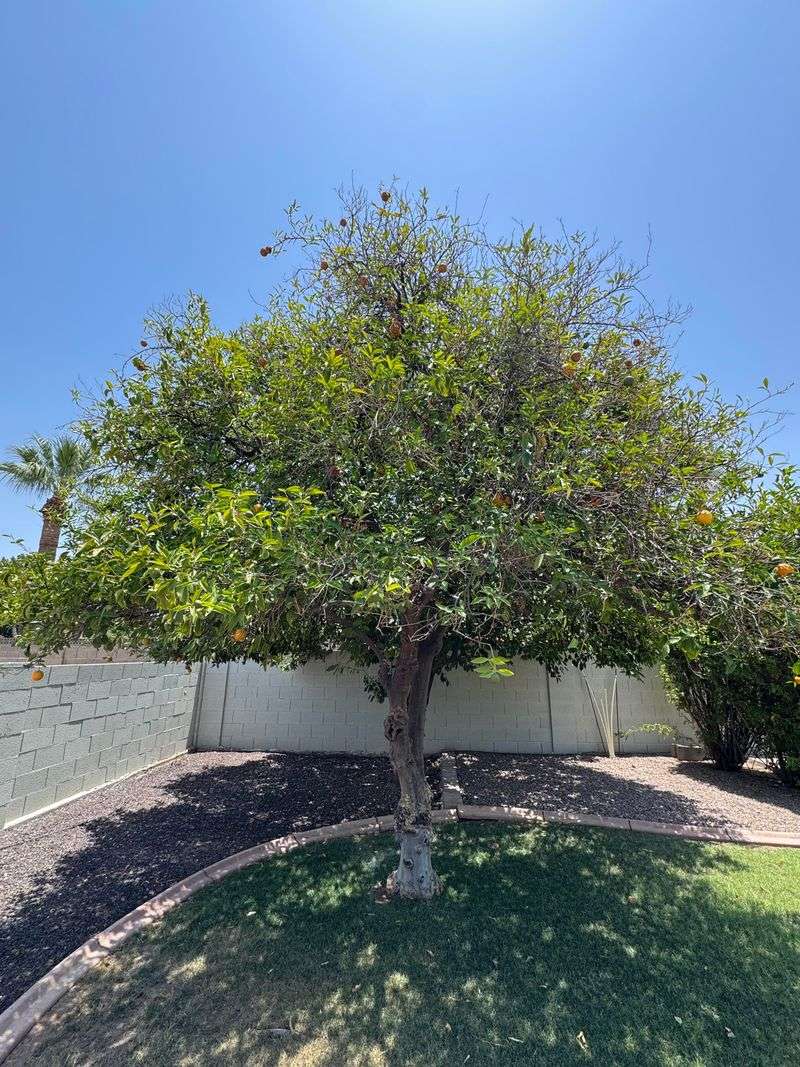
April marks the second of three recommended fertilizer applications for most Arizona citrus varieties.
Oranges, tangerines, and grapefruit benefit from fertilizer applied in three equal portions throughout the year, with the second application falling in March through April.
Lemons and limes follow a similar spring schedule before shifting to a late summer feeding in August or September.
A slow-release, balanced fertilizer formulated specifically for citrus trees tends to work well in Arizona’s alkaline soils.
Look for a product that includes nitrogen, phosphorus, and potassium, along with trace micronutrients like iron, zinc, and manganese, which citrus trees in the desert Southwest frequently need.
Broadcast the fertilizer evenly across the soil under the entire canopy, reaching all the way out to the drip line.
Avoid piling fertilizer directly against the trunk, as this can lead to bark damage and stress the root crown area. After applying, water the area thoroughly to help move nutrients into the soil where feeder roots can absorb them.
Over-fertilizing is a real concern – too much nitrogen at once can push excessive leafy growth at the expense of flowering and fruit set.
Following label directions for the size and age of your tree helps avoid that imbalance and keeps growth steady and productive through the spring season.
4. Prune Damaged Or Crossing Branches To Improve Airflow
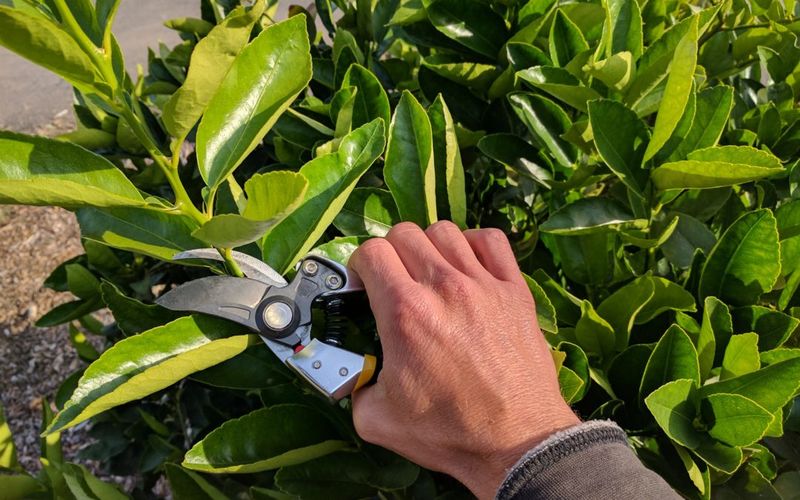
Early spring is the recommended window for pruning citrus trees in Arizona, ideally wrapping up by April before the trees shift fully into flowering and fruit-setting mode.
Pruning between February and April allows trees to recover and redirect energy toward new growth without disrupting the upcoming production cycle.
Focus on removing branches that are clearly no longer healthy, ones that have broken under the weight of previous fruit loads, or branches that cross and rub against each other. Rubbing branches create wounds that can invite fungal issues and insect entry.
Opening up the interior canopy also allows better airflow, which helps foliage dry faster after irrigation and reduces conditions that favor disease.
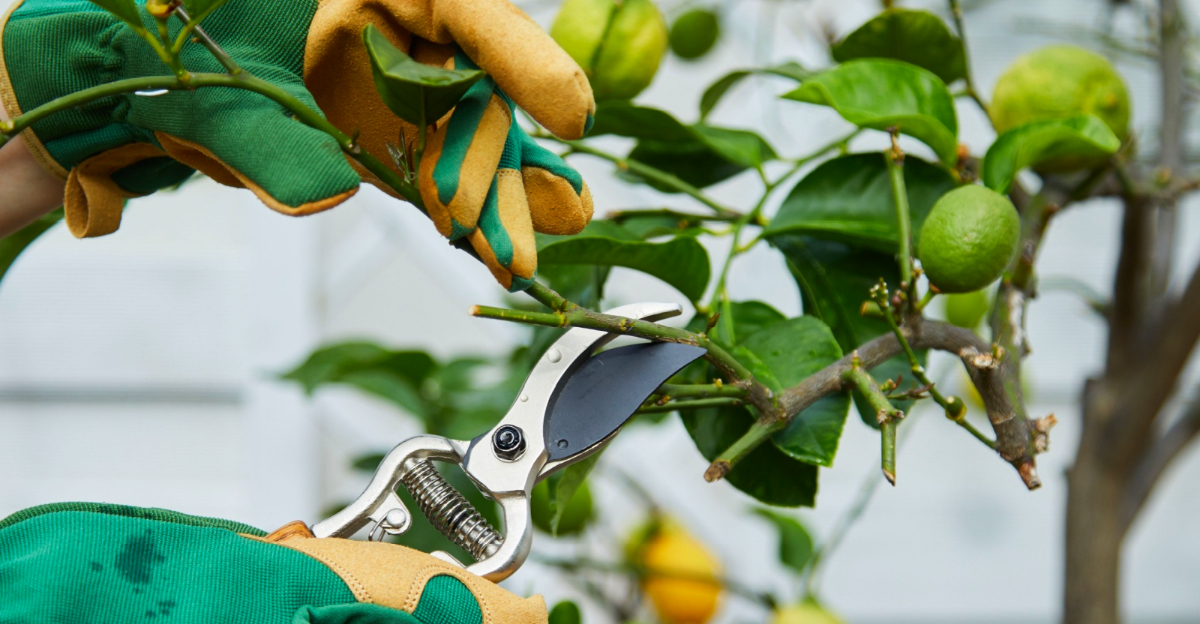
Sharp, clean tools make a real difference when pruning citrus. Dull blades tear tissue rather than cutting cleanly, leaving ragged wounds that take longer to seal over.
Wipe blades with rubbing alcohol between cuts if you are moving from a visibly unhealthy branch to a healthy one.
Avoid heavy pruning that removes large sections of the canopy, since this can expose the trunk and main branches to direct Arizona sun, which may lead to sunscald.
Light, targeted pruning that improves the tree’s shape and air circulation is the practical approach most Arizona gardeners rely on each spring.
5. Mulch Around The Base To Conserve Moisture And Regulate Soil Temperature
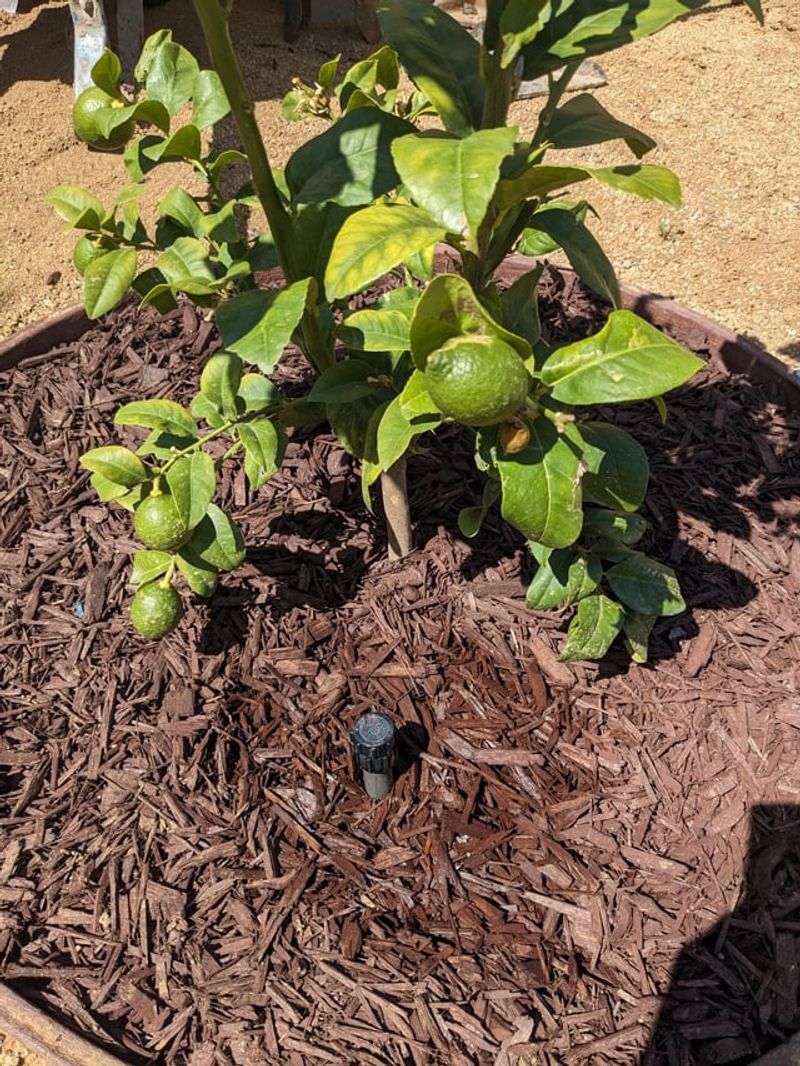
One of the most underrated steps in Arizona citrus care is laying down a fresh layer of mulch each spring before temperatures spike.
Organic mulch, such as wood chips or shredded bark, acts like an insulating blanket over the soil, slowing down moisture evaporation and keeping root-zone temperatures more stable during the intense heat that follows April in the low desert.
Apply mulch in a layer about 3 to 4 inches deep, spreading it out to the drip line of the tree. The drip line is roughly where the outer edge of the canopy sits, and that zone is where most of the active feeder roots are located.
Keeping mulch pulled back 4 to 6 inches from the trunk is important – moisture sitting against the bark can encourage rot and create habitat for insects that damage the root crown.
Mulching citrus trees is often recommended as part of April garden preparation. Beyond moisture retention, mulch also gradually breaks down and contributes organic matter to Arizona’s typically lean desert soils.
Refreshing the mulch layer each spring gives you a head start before summer arrives.
In areas with caliche layers beneath the soil, mulching helps compensate for the reduced drainage and water retention challenges that many Arizona gardeners face in their landscapes.
6. Monitor For Signs Of Nutrient Deficiencies And Adjust Fertilization
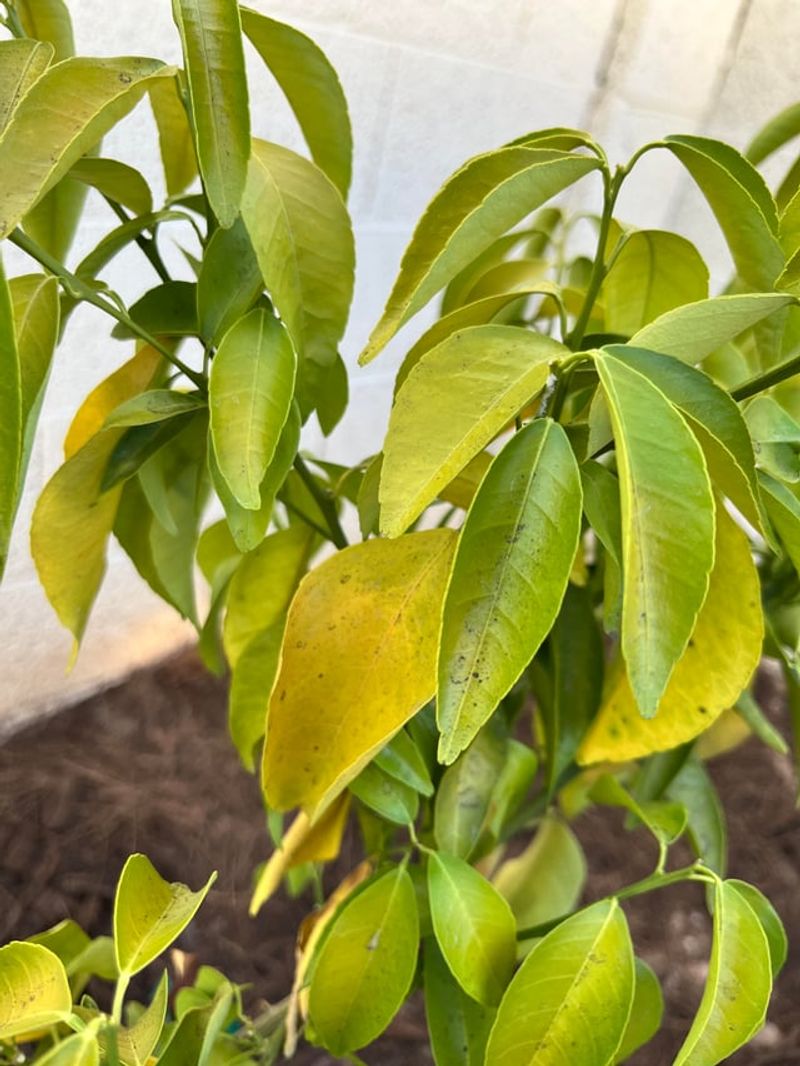
Yellowing leaves on a citrus tree can mean several different things, and April is a good time to take a close look at your tree’s foliage before heat stress adds another layer of complexity.
Arizona’s alkaline soils, with a pH often above 7.5, make it harder for citrus trees to absorb certain nutrients even when those nutrients are technically present in the soil.
Iron chlorosis shows up as yellowing between the leaf veins while the veins themselves stay green, and it is one of the most common nutrient issues Arizona citrus growers encounter.
Zinc and manganese deficiencies can produce similar patterns and are also linked to high soil pH.
Foliar sprays containing chelated iron, zinc, or manganese can provide faster relief than soil applications in alkaline conditions, since chelated forms remain available to the plant even at higher pH levels.
Before adjusting your fertilization program, it helps to observe which leaves are showing symptoms.
Deficiencies in mobile nutrients like nitrogen tend to appear on older leaves first, while deficiencies in less mobile nutrients like iron and zinc usually show up on newer growth at the tips of branches.
If symptoms persist despite fertilization adjustments, a soil test or leaf tissue analysis can provide a clearer picture of what your tree actually needs rather than relying on guesswork.
7. Thin Fruit Clusters To Prevent Overloading Branches And Improve Fruit Size
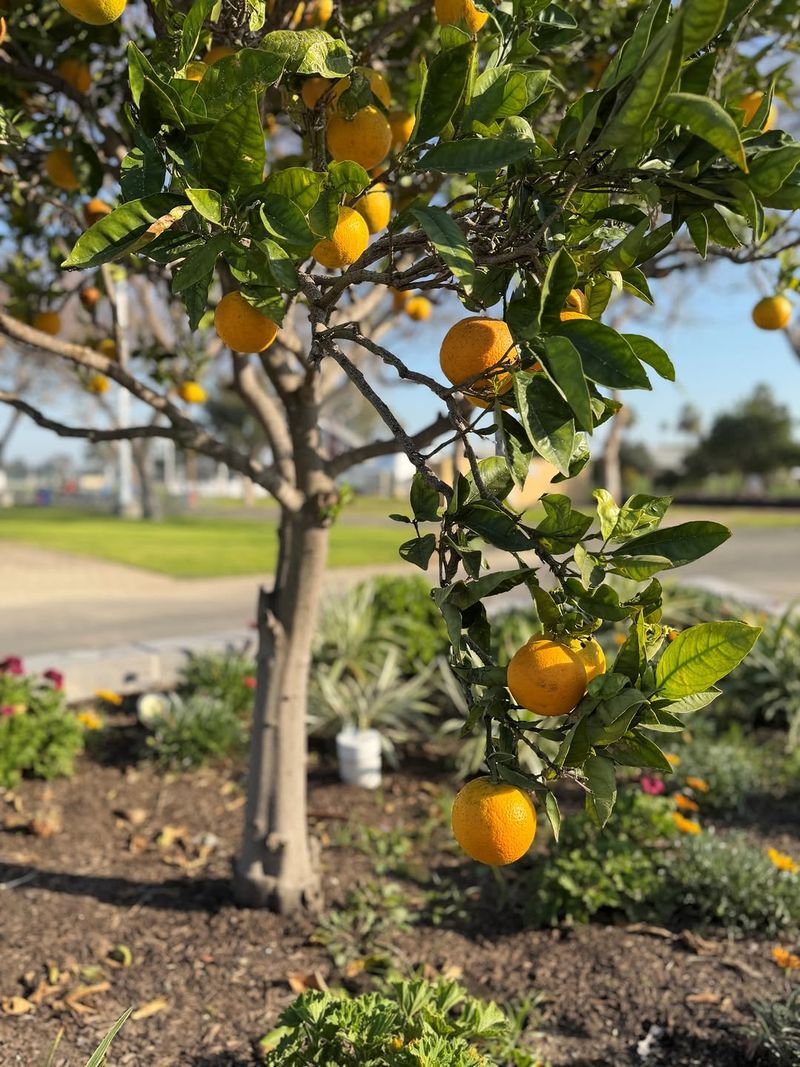
After a strong spring bloom, some Arizona citrus trees set more fruit than their branches can comfortably support. This is especially common with grapefruit and navel orange varieties that tend to cluster heavily.
Leaving every single fruit on the tree might seem like a good idea, but it often results in smaller fruit overall and can put enough physical stress on branches to cause them to crack or sag under the weight by summer.
Fruit thinning is the practice of removing some of the developing fruitlets by hand early in the season so the remaining fruit has more room and more resources to grow.
A general guideline is to leave 6 to 8 inches of spacing between individual fruit on a given branch, though this can vary depending on the variety and the overall size and health of the tree.
April is a practical time to thin because fruit is still small and easy to remove by hand without tools. Gently twist and pull fruitlets off, or use small pruning snips if clusters are particularly dense.
Thinning also reduces the chance of branch breakage later in summer when fruit is heavier and Arizona heat puts additional stress on the tree’s structure.
Some fruit drop will happen naturally on its own, a process called June drop, but supplementing that with intentional thinning in April gives you more control over the final harvest quality.
8. Protect Trees From Sunburn With Shade Or Trunk Wraps As Temperatures Rise
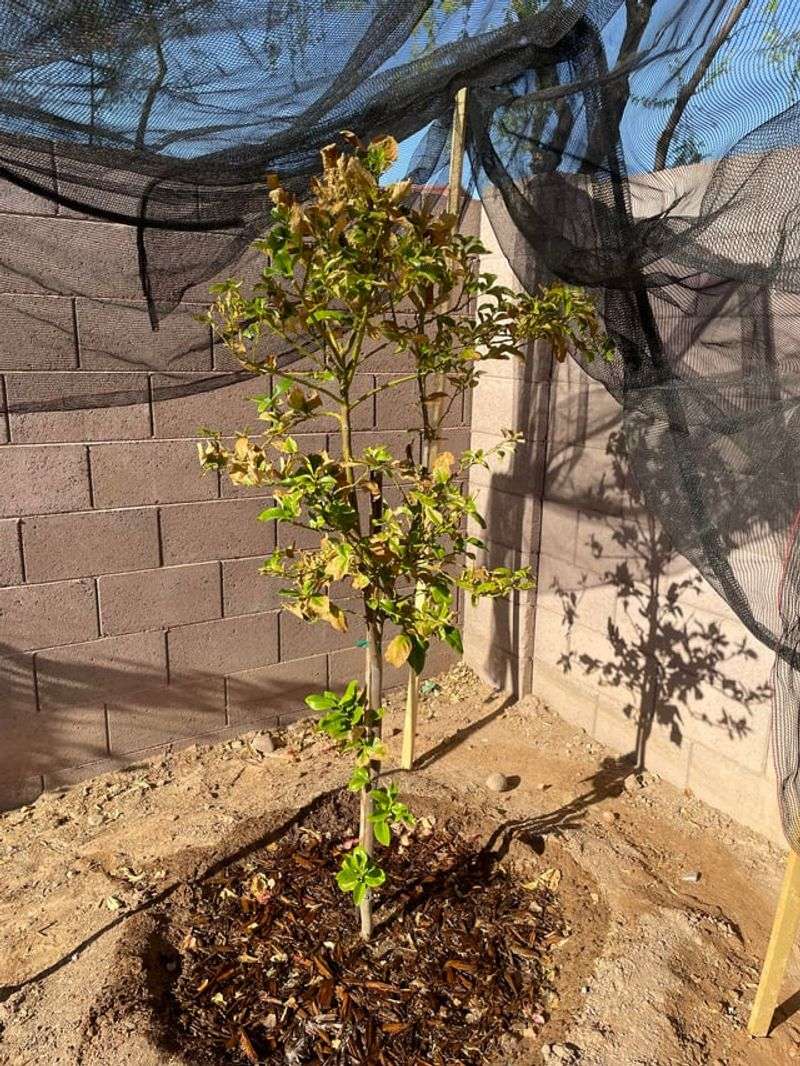
Arizona’s spring sunshine is intense, and by late April the UV index in the Phoenix metro area can reach levels that would surprise gardeners transplanted from cooler climates.
Citrus bark, especially on younger trees or on sections of trunk exposed by recent pruning, is surprisingly vulnerable to sunscald when temperatures rise and direct sun hits the same area for hours each day.
Protecting the trunk with a diluted white latex paint mixture or a commercial tree wrap is a practical step that Arizona horticulturists often recommend.
A mixture of one part white interior latex paint to one part water, brushed onto the trunk and main scaffold branches, reflects some of the sun’s energy and helps keep bark temperatures lower.
This is not a cosmetic choice – it is a genuine protective measure in a desert environment where bark temperatures can climb far above air temperature.
For newly planted trees or those with a thin canopy that does not provide much self-shading, a shade cloth positioned on the west and southwest sides of the tree can reduce afternoon heat stress during the transition from spring to summer.
Remove or adjust shade structures as the canopy fills in and provides its own coverage.
Trees at lower desert elevations like Phoenix or Yuma face more intense sun exposure than those in Prescott, so trunk protection is especially worthwhile in those hotter zones where summer arrives earlier and more forcefully.