7 Tough Plants That Handle Concrete Heat Around Arizona Entryways
Concrete heat builds up fast around Arizona entryways, and plants placed there often start strong but fade sooner than expected. Everything looks fine at first, then leaves dull out, growth slows, and the whole setup loses that fresh look.
Many common choices simply cannot handle the reflection and dry conditions that come with those spots.
There is a clear difference between plants that survive and plants that actually stay attractive through that kind of exposure. Once that difference becomes obvious, it is easier to avoid the cycle of replacing plants every few weeks.
Stronger options hold their shape, keep color longer, and deal with heat without constant attention.
A few smart changes can turn a harsh entryway into something that still feels alive and put together, even when temperatures stay high.
1. Vinca Keeps Blooming Through Extreme Heat Conditions
Walk down almost any neighborhood in Phoenix during July, and you will likely spot vinca holding its own while everything else looks exhausted.
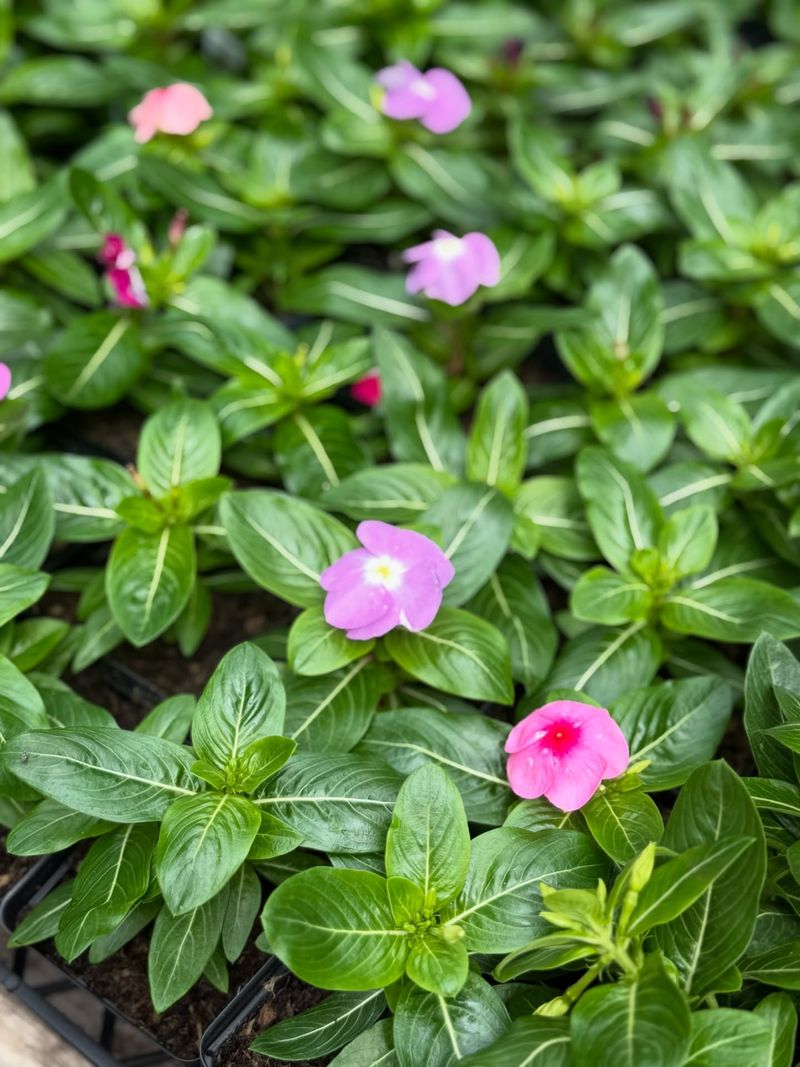
Also called periwinkle or Madagascar periwinkle, this plant has built a reputation across Arizona as one of the toughest flowering annuals available.
It was practically made for hot pavement edges and sun-baked entryways.
What makes vinca so impressive is how it handles both heat and humidity, which is saying something in a place like Tucson during monsoon season. The thick, waxy leaves help it hold moisture and resist scorching even when concrete surfaces nearby are radiating serious heat.
Colors range from bright white to deep magenta, with many shades of pink, red, and lavender in between.
Planting vinca near the base of steps or along concrete borders gives your entryway a polished, colorful look all season long. It stays relatively compact, usually reaching about 12 to 18 inches tall, making it easy to manage in tight spaces.
The plants fill in quickly and create a solid mass of color that looks intentional and put-together.
Watering is simple since vinca prefers to dry out slightly between drinks. Overwatering is actually the most common mistake people make with this plant in Arizona.
Good drainage and full sun are the two things it needs most.
Did you know vinca originally comes from Madagascar, which explains why it handles tropical-level heat so easily?
For Arizona homeowners who want reliable color near hot concrete without a lot of maintenance, vinca is an outstanding choice.
2. Lantana Handles Intense Heat And Reflective Surfaces Well
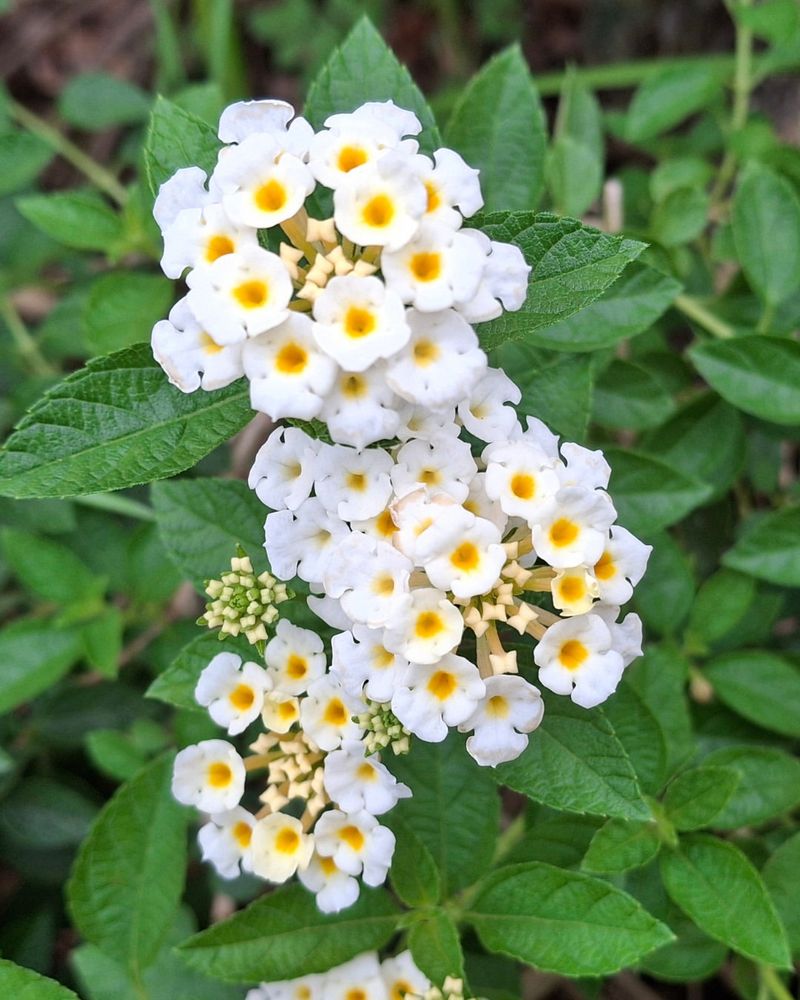
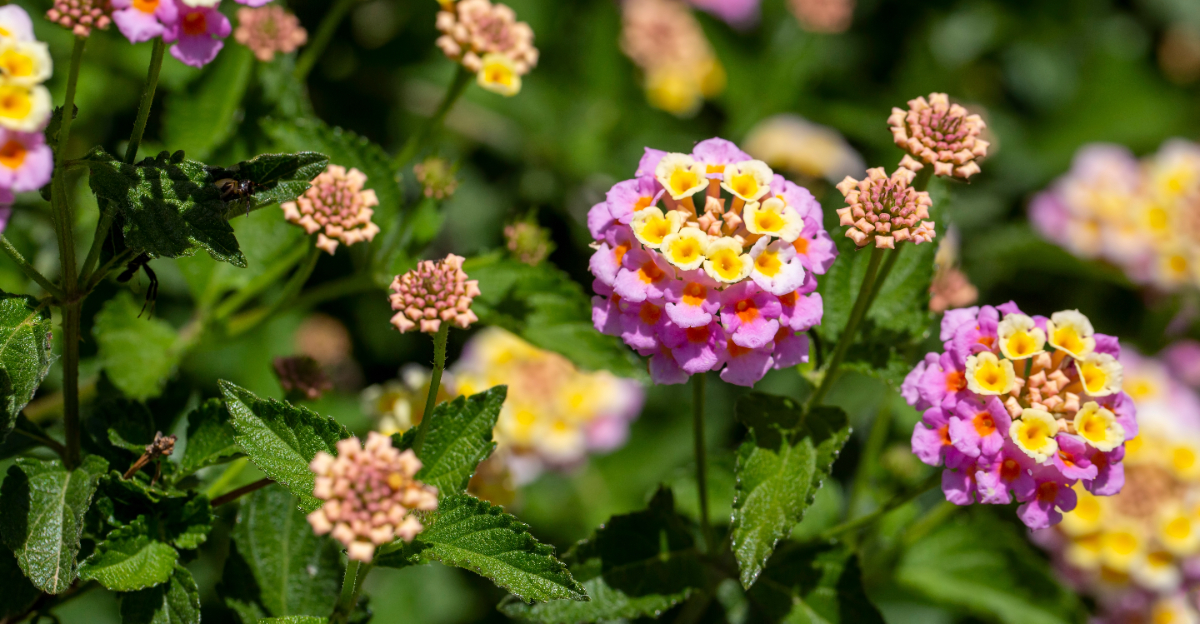
Few plants put on a show quite like lantana does in the Arizona heat.
This flowering powerhouse loves the kind of intense sun and reflected warmth that bounces off concrete driveways and front walkways.
In places like Phoenix and Tucson, where summer temperatures regularly push past 110 degrees, lantana just keeps on blooming.
The flowers come in a wild mix of colors including orange, yellow, pink, red, and purple, often all on the same plant at the same time.
That color combination makes it a real eye-catcher near front doors and entryways. Bees and butterflies absolutely love it, so you get a little wildlife action at your front entrance as a bonus.
Your Arizona Garden Changes Every Week. Your Plan Should Too.
Gardening in Arizona changes quickly throughout the season. Every Friday you’ll receive a simple weekly plan showing exactly what to plant, prune, fertilize, harvest, and protect so you never miss the right timing.
Lantana grows fast and spreads wide, which makes it excellent for covering large areas of hot, dry ground near concrete.
You can find it in both trailing and upright varieties, giving you options depending on your space. Trailing types work especially well cascading over walls or along walkways.
Watering needs are low once lantana gets established in Arizona soil.
Give it a deep drink every week or two during summer, and even less once temperatures cool down.
It handles rocky, sandy, or clay-heavy soil without much fuss. Pruning once or twice a year keeps it tidy and encourages fresh blooms.
Avoid cutting it back too hard in winter since a light frost can sometimes catch it off guard in higher-elevation Arizona areas.
Overall, lantana is one of the most reliable and rewarding plants you can put near your Arizona entryway.
It is also highly resistant to drought once established, making it a practical choice for low-water landscapes common across Arizona.
3. Red Yucca Thrives In Dry Heat With Minimal Water
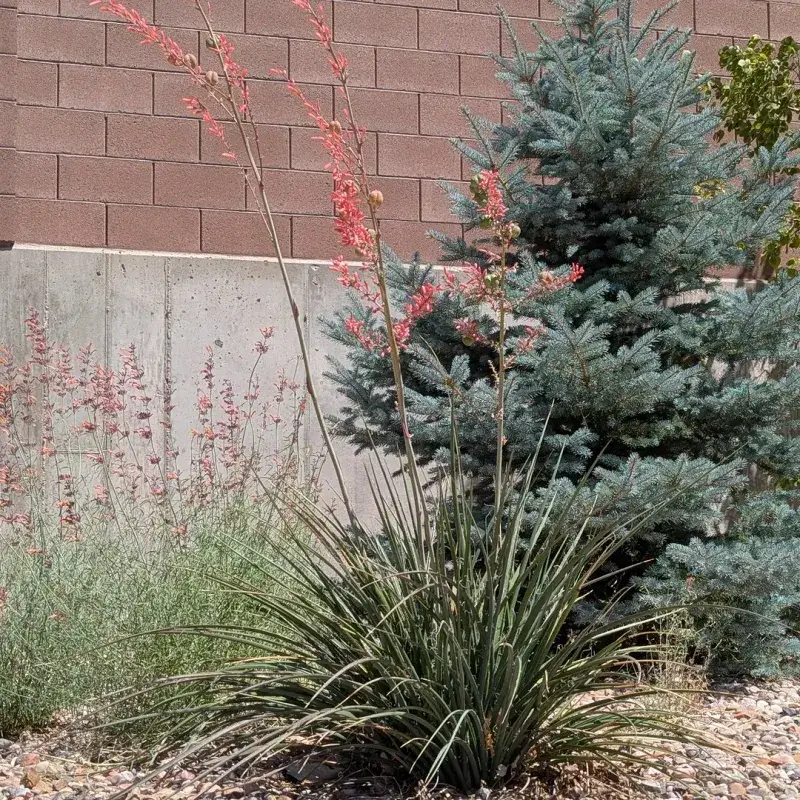
Red yucca is one of those plants that makes people stop and stare, mostly because it looks almost too beautiful to be real.
Tall, arching spikes of coral-red tubular flowers shoot up from a base of grassy, dark green leaves, creating a dramatic vertical accent near entryways.
Despite its stunning appearance, red yucca is remarkably low-maintenance and perfectly suited to Arizona conditions.
Unlike true yuccas, red yucca has softer, more flexible leaves with no sharp tips, making it a safer choice near walkways where kids and pets pass by.
The plant forms a tidy clump that rarely spreads aggressively, so you do not have to worry about it taking over your entryway landscape. Hummingbirds are drawn to those tubular flowers like magnets, which adds a lively, natural energy to your front entrance.
Red yucca thrives in full sun and reflected heat, which is exactly the environment that concrete entryways in Phoenix and Scottsdale create.
Once established, it survives on rainfall alone in many parts of Arizona, needing supplemental water only during the driest stretches of summer.
Rocky, well-drained soil is ideal, though it adapts to most Arizona soil types without complaint. The flower spikes can reach four to five feet tall, giving the plant a bold presence without taking up much ground space.
After blooming, the spikes can be cut back to keep things tidy. New growth emerges reliably each spring, so you get that spectacular floral display year after year with very little effort on your part.
Red yucca also shows strong resistance to pests and disease, which helps it stay clean and reliable in Arizona landscapes with very little intervention.
4. Agave Stays Strong In Containers And Harsh Sun
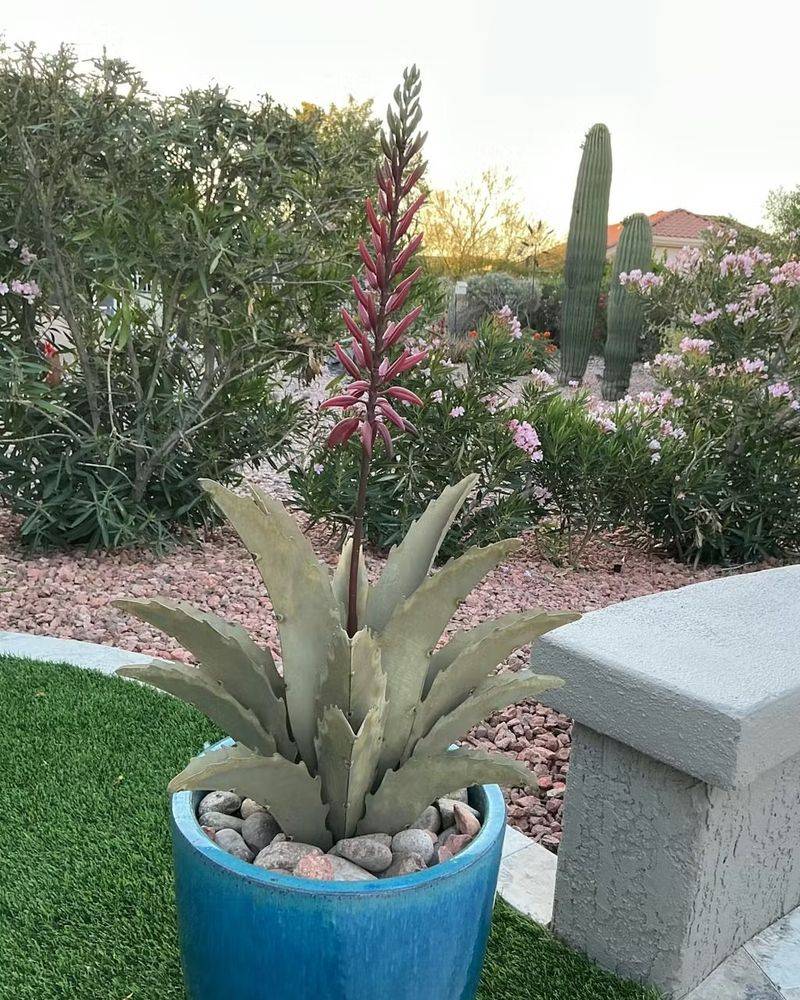
There is something undeniably bold about placing a well-chosen agave at your front entrance. With its thick, sculptural leaves and architectural presence, agave commands attention without asking for much in return.
Across Arizona, from Flagstaff to Yuma, agave has proven itself as one of the most dependable plants for dealing with harsh sun and concrete-reflected heat.
Growing agave in containers near entryways is a popular approach for Arizona homeowners who want flexibility. Containers allow you to move the plant if needed and give you control over soil quality and drainage.
Just make sure the pot has good drainage holes, because sitting in wet soil is the one thing agave genuinely cannot tolerate.
There are dozens of agave species to choose from, ranging from small, compact types perfect for tight entryway spaces to large statement plants that anchor the whole front of a home.
Popular choices in Arizona include Agave americana, Agave parryi, and the smaller Agave victoriae-reginae, which has a striking geometric appearance.
Each one brings a different personality to the space.
Agave needs almost no water once established, making it a dream plant for busy homeowners or anyone who travels frequently. Full sun and rocky, fast-draining soil are the conditions it loves most.
Reflected heat from concrete driveways and walkways does not slow it down one bit.
One fun fact worth knowing: each agave plant blooms only once in its lifetime, sending up a spectacular flower spike before completing its life cycle. Offsets, or pups, grow at the base and carry on the plant’s legacy.
5. Texas Sage Handles Heat And Reflective Surfaces Easily
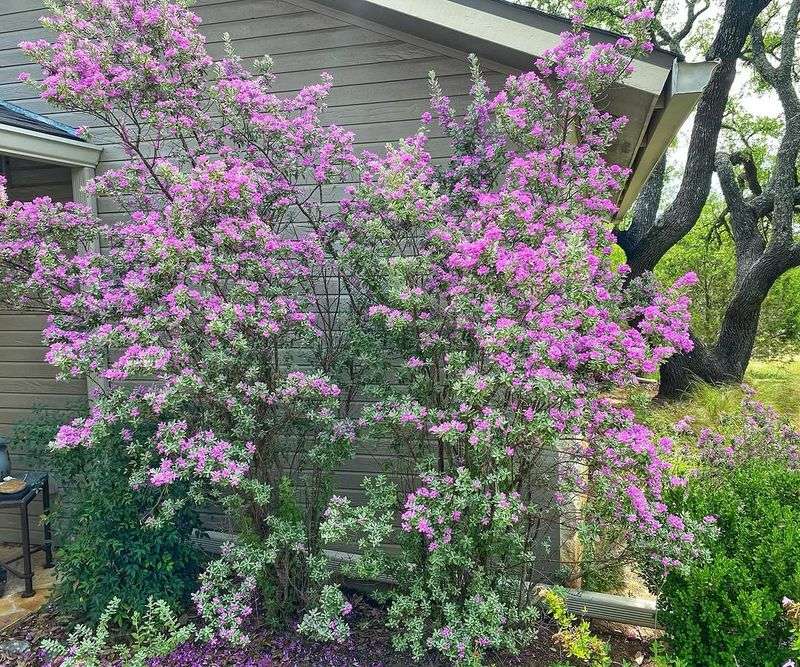
Texas sage, also called cenizo or purple sage, has a special trick that Arizona gardeners absolutely love: it blooms right after rain.
Walking up to a front entryway lined with Texas sage just after a monsoon shower, with purple flowers suddenly covering the silvery foliage, is one of those genuinely satisfying experiences.
It earns the nickname “barometer bush” because it seems to know when rain is coming before it even arrives.
The silvery-gray leaves are not just beautiful, they are also highly functional.
That light-colored foliage reflects sunlight and heat rather than absorbing it, which is exactly why Texas sage handles the intense reflected heat from concrete entryways in Arizona so well.
The plant essentially has its own built-in cooling system.
Texas sage grows into a neat, rounded shrub that typically reaches three to five feet tall and wide. It works beautifully as a foundation planting near front doors, as a low hedge along walkways, or as a standalone accent near steps.
The silvery-purple color combination looks especially striking against red brick, tan stucco, or dark stone, which are all common home finishes across Arizona.
Water needs are very low once established, and Texas sage actually performs better when you do not overwater it. Full sun and excellent drainage are the keys to keeping it healthy and blooming regularly.
Trimming once a year after the main bloom cycle helps maintain a tidy shape.
For anyone landscaping in the Phoenix or Tucson metro areas, Texas sage deserves a serious spot near the front entrance of your home.
6. Desert Marigold Thrives In Hot, Dry Conditions
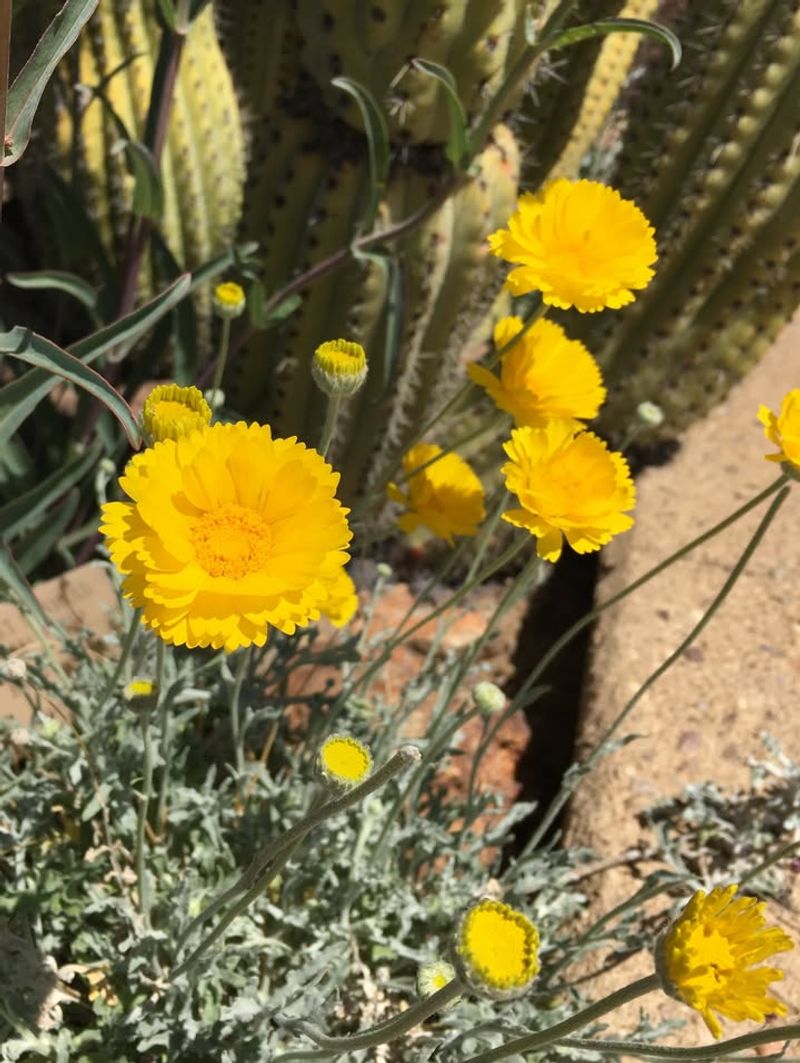
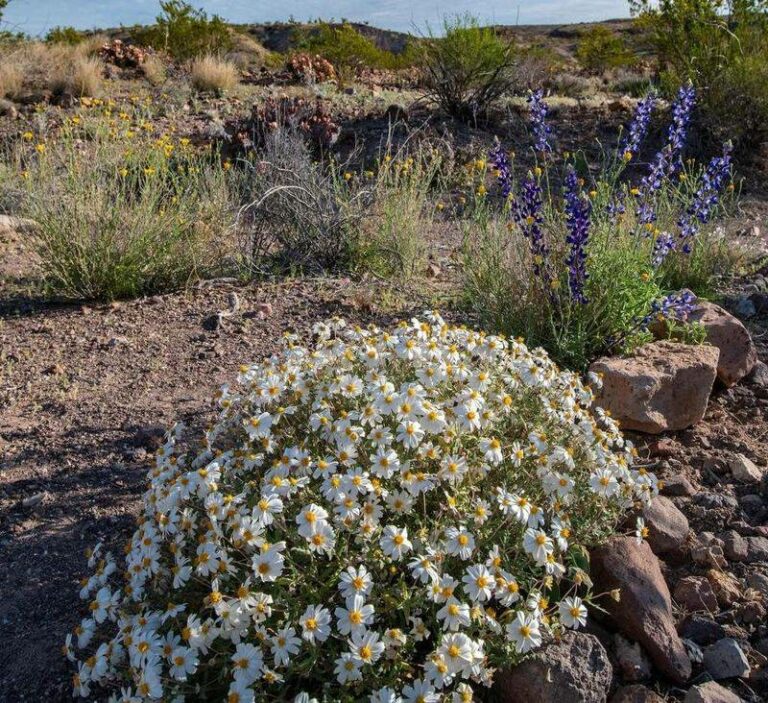
Cheerful, golden, and almost embarrassingly easy to grow, desert marigold is one of Arizona’s most beloved native wildflowers.
Baileya multiradiata, its scientific name, produces waves of bright yellow blooms from spring all the way through fall, often with barely any help from the gardener.
Near concrete entryways where heat builds up fast, desert marigold thrives rather than struggles.
The woolly, silver-green leaves are adapted to reflect intense sunlight and conserve moisture, which is exactly what a plant needs when it is growing next to sun-baked concrete in places like Scottsdale or Mesa.
Those fuzzy leaves also give the plant a soft, silvery texture that contrasts beautifully with the bold yellow flowers.
Up close, the whole plant has a kind of wild, cheerful energy that makes entryways feel welcoming and alive.
Desert marigold reseeds itself generously, meaning a small planting can naturally expand over time to cover more ground along walkways and driveways.
This self-sufficient quality makes it a smart choice for Arizona homeowners who want a low-effort landscape that still looks full and intentional. Just give it room to spread and let it do its thing.
Water requirements are minimal, especially once the plant is established in Arizona’s rocky or sandy soils. Too much water or heavy clay soil can actually work against it, so good drainage is essential.
Full sun is non-negotiable for this plant since it was born for wide-open desert spaces.
Planting desert marigold near your entryway is essentially letting Arizona’s natural landscape come right to your front door.
7. Angelonia Performs Well Even With Heat From Concrete
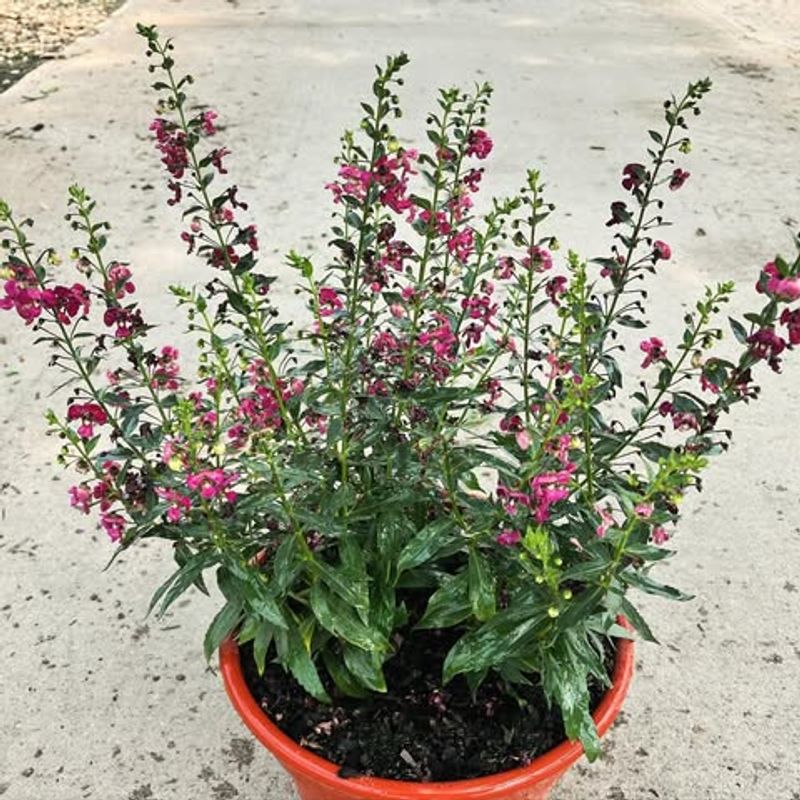
Angelonia often gets called the summer snapdragon, and once you see it blooming confidently in 105-degree Arizona heat next to a concrete walkway, you understand why it has earned that kind of respect.
The tall, slender flower spikes covered in small orchid-like blooms come in shades of purple, pink, white, and bicolor combinations.
It brings a refined, almost tropical elegance to entryways without needing the fussy care that tropical plants usually demand.
One of the most interesting things about angelonia is its subtle fragrance, which some people describe as a light, grape-like scent.
Having a plant near your front door that smells pleasant every time a breeze moves through makes your entryway a much more inviting place to arrive. Visitors and neighbors in Tempe or Chandler who spot angelonia near your door will likely ask what it is.
Angelonia grows 12 to 24 inches tall and stays upright without staking, which makes it easy to maintain a clean, tidy appearance near entryways.
It works well in garden beds, borders along walkways, or even in containers placed near front steps.
Planting it in groups of three or five creates a bold, full look that photographs beautifully. Full sun and well-drained soil are the main things angelonia needs to perform at its best in Arizona.
It handles both dry heat and the humidity that comes with monsoon season, which is a real advantage in the desert Southwest.
Deadheading spent blooms occasionally encourages fresh flower production throughout the long Arizona growing season.
It also attracts pollinators like bees and butterflies, which adds even more life and movement around Arizona entryways during the summer.