Blue Perennials For Florida Gardens
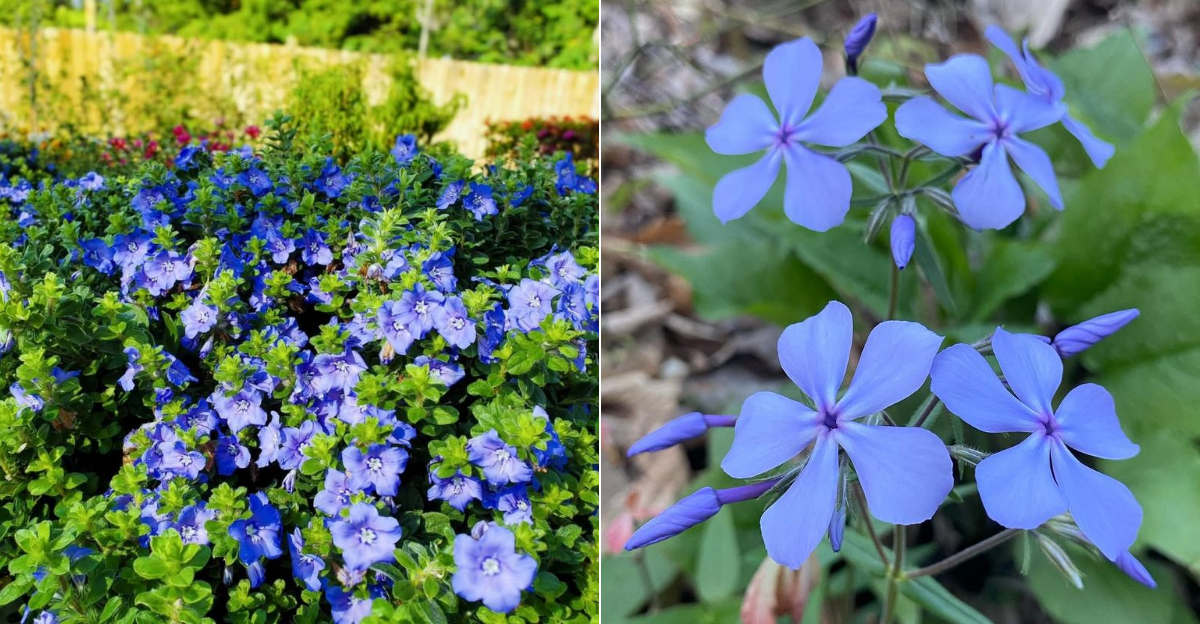
Walk through a Florida garden in full color, and it is often the blues that catch your eye first. Surrounded by warmer shades, those cooler tones feel almost refreshing, especially on bright, sunny days when everything else seems to glow.
The challenge is finding blue perennials that can actually keep up with Florida conditions. Heat, humidity, and long growing seasons can be tough on plants that are not well suited to the climate, leaving gardeners disappointed after an early show fades away.
It is a familiar situation for many gardeners who want lasting color but end up replanting more often than expected.
Fortunately, there are a few reliable options that hold their color and return year after year without demanding constant attention. These choices can bring steady beauty and help balance out the brighter tones in your garden space.
1. Blue Porterweed And Its Butterfly Magnet Blooms
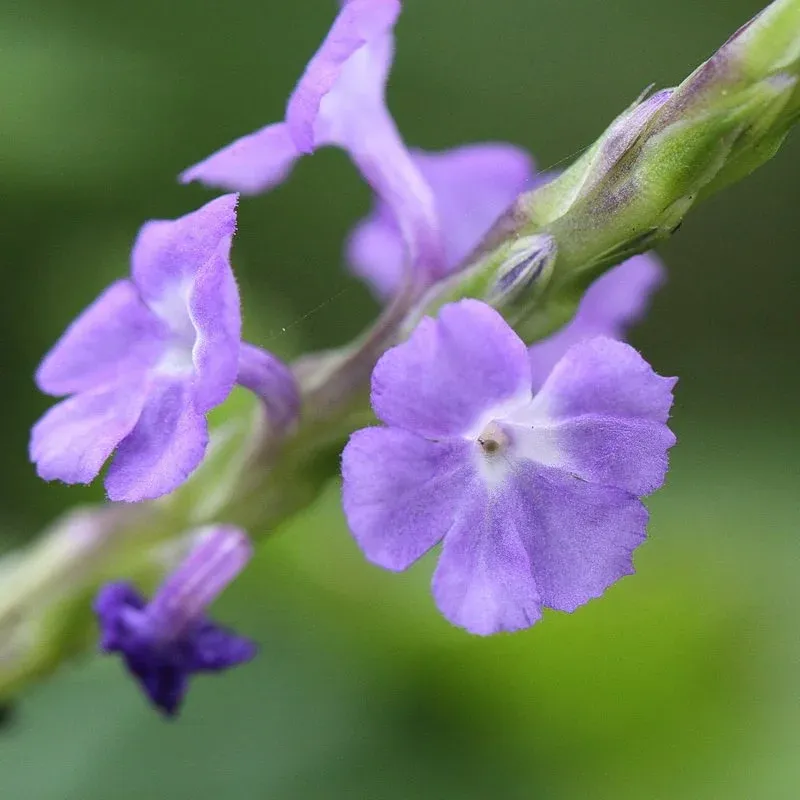
Cobalt-blue flower spikes rising above bright green leaves make Blue Porterweed one of the most eye-catching plants you can grow in a Florida garden. Known botanically as Stachytarpheta jamaicensis, this plant can bloom for long periods from spring through the cooler months in Florida, giving your yard a steady splash of color through much of the season.
Butterflies absolutely love this plant. Swallowtails, skippers, and other native pollinators flock to the slender flower spikes, making Blue Porterweed a fantastic choice if you want to turn your Florida yard into a pollinator-friendly haven.
Hummingbirds have also been spotted visiting the blooms regularly.
Growing Blue Porterweed is surprisingly simple. It thrives in full sun and prefers well-drained soil, though it handles Florida’s occasional heavy rains without much fuss.
Once established, it is fairly drought-tolerant, which makes it a low-maintenance gem for busy gardeners. Plant it along walkways, borders, or garden beds for a dramatic pop of blue that draws attention from every angle.
It stays compact enough for smaller Florida landscapes but bold enough to make a real statement wherever it grows.
2. Plumbago Dominating With Soft Blue Color
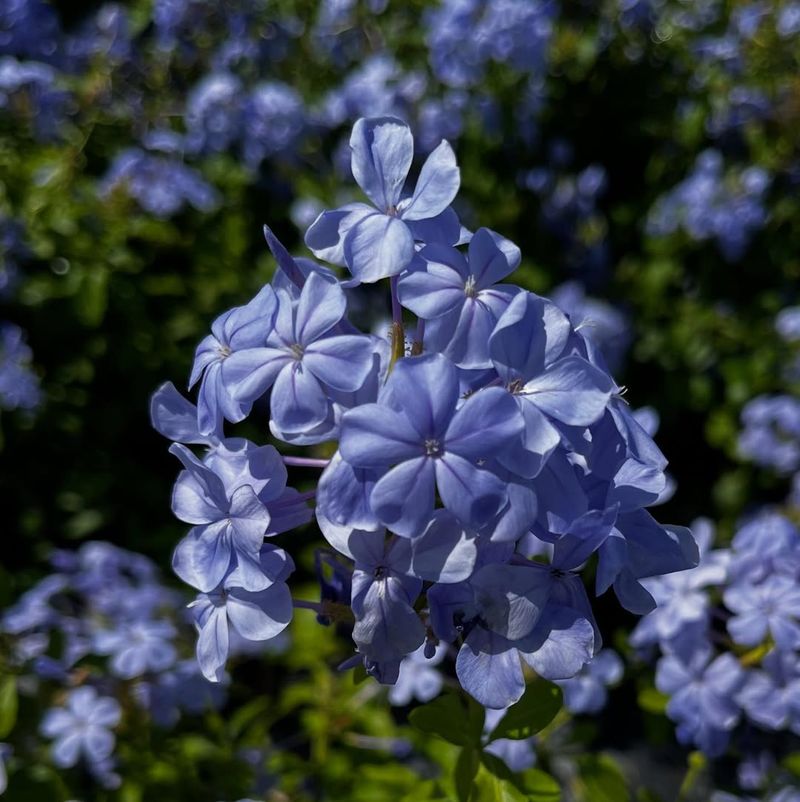
Few plants in Florida deliver the kind of cheerful, sky-blue color that Plumbago auriculata brings to the landscape. Commonly called Cape Plumbago or Blue Plumbago, this woody-stemmed shrub produces loose clusters of delicate, tubular flowers that bloom reliably from April through November, giving Florida gardeners months of beautiful color to enjoy.
Plumbago is a true Florida favorite for good reason. It thrives in full sun, handles brief flooding without complaint, and attracts butterflies and hummingbirds with impressive consistency.
The plant can spread generously if given room, making it an excellent choice for filling large garden beds, lining fences, or creating a flowing, informal hedge along a property border.
One thing that makes Plumbago stand out is its toughness. Once established in Florida’s warm climate, it handles heat and humidity like a champion, rarely needing much extra attention beyond occasional trimming to keep its shape.
It prefers well-drained soil and regular watering during dry spells, but it is not overly demanding. Gardeners in Central and South Florida especially love Plumbago because it can perform well for much of the year in warmer zones, though flowering may slow during cooler periods.
Your Florida Garden Changes Every Week. Your Plan Should Too.
Gardening in Florida changes quickly throughout the season. Every Friday you’ll receive a simple weekly plan showing exactly what to plant, prune, fertilize, harvest, and protect so you never miss the right timing.
Plant it in a sunny spot and watch it reward you with waves of sky-blue blooms that brighten the landscape season after season.
3. Azure Blue Sage The Heat Loving Pollinator Favorite
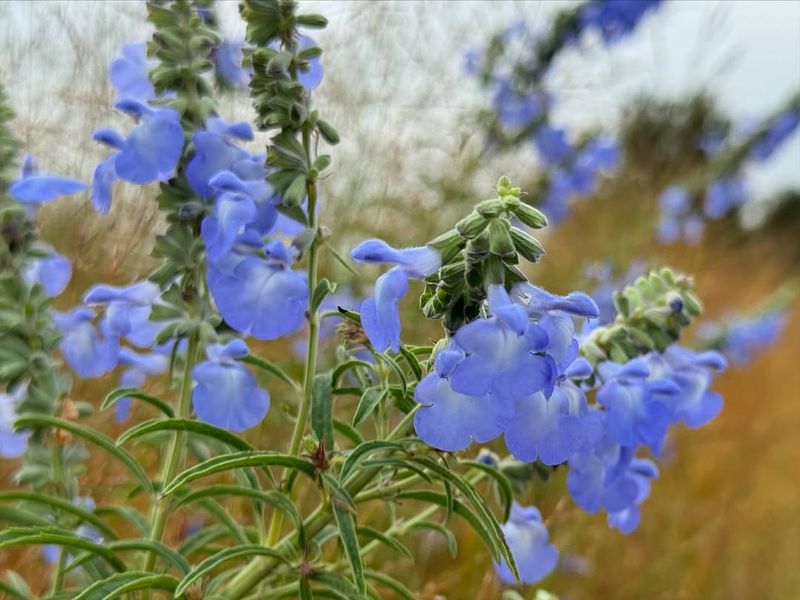
Salvia farinacea, commonly known as Azure Blue Sage or Mealy Cup Sage, is a Florida garden superstar that brings tall, elegant spikes of powder-blue to violet-blue flowers to the landscape. Blooming from April through November, this perennial sage puts on a long, reliable show that few other plants can match in terms of sheer staying power throughout Florida’s growing season.
Hummingbirds and butterflies cannot resist it. The vertical flower spikes act like landing pads for pollinators, making Azure Blue Sage an excellent choice for wildlife-friendly gardens across Florida.
It is also deer-resistant, which is a bonus for gardeners in areas where deer tend to snack on garden plants.
Growing Azure Blue Sage successfully comes down to giving it the right conditions. Full sun is ideal, and well-drained soil helps it thrive without issues.
It tolerates brief periods of flooding, which is helpful given Florida’s intense summer rainstorms. The plants grow upright and reach about two to three feet tall, making them a great mid-border choice.
Pair Azure Blue Sage with white or yellow flowering plants to create a striking color contrast that really pops in the Florida sunshine. Regular deadheading encourages continuous blooming, keeping those beautiful blue spikes coming all season long without much extra effort from the gardener.
4. Mistflower Bringing Late Season Buzz
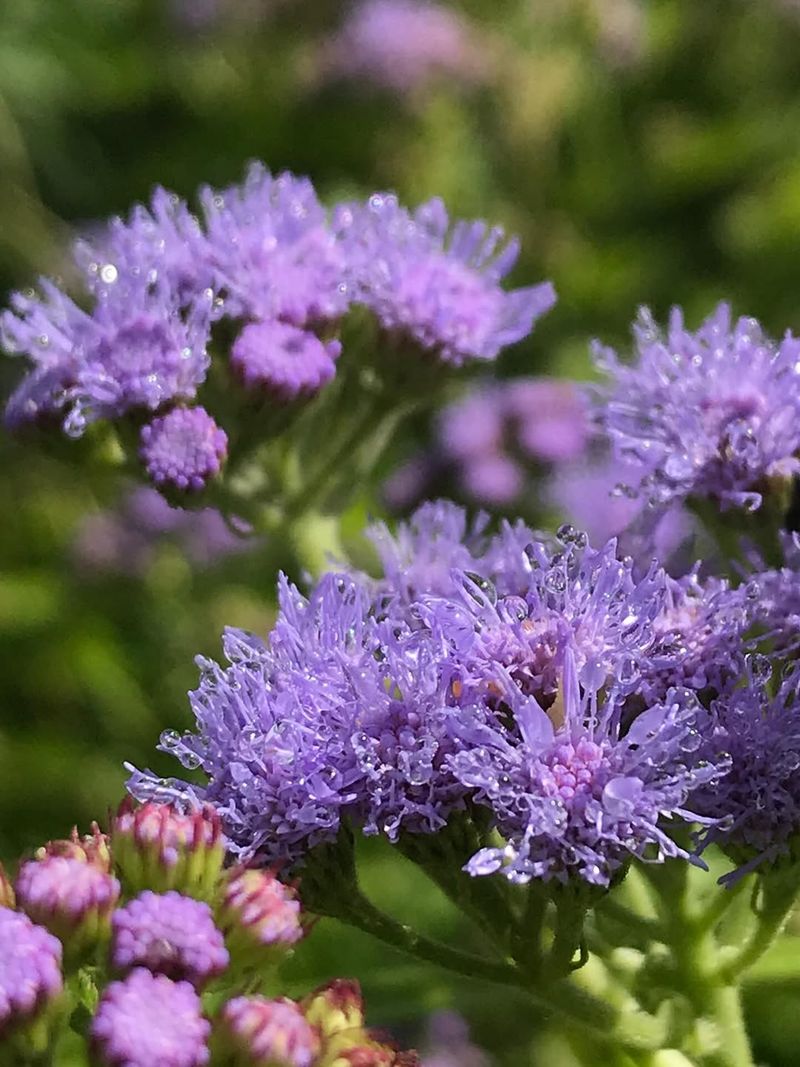
There is something almost magical about Mistflower in full bloom. Conoclinium coelestinum, a Florida-native perennial, earns its poetic name from the soft, airy clusters of vivid blue-lavender flowers that seem to float above its heart-shaped leaves like a fine mist.
It blooms from late summer into fall, arriving right when many other garden plants start winding down.
Being a true Florida native gives Mistflower a big advantage. It is naturally adapted to the state’s heat, humidity, and rainfall patterns, which means less work for the gardener.
Native bees, butterflies, and other beneficial insects flock to its blooms in impressive numbers, making it one of the best pollinator plants you can add to a Florida garden during the fall season.
Mistflower spreads by underground runners and can form attractive clumps over time, filling garden spaces with color and texture. It performs well in both full sun and partial shade, giving it more flexibility than many other blue-flowering perennials.
Moist soil suits it best, so it works wonderfully near rain gardens, pond edges, or low-lying areas in the Florida landscape. If you want a plant that rewards you with little maintenance, thrives in the local environment, and supports native wildlife, Mistflower checks every box beautifully.
5. Blue Eyed Grass With Its Delicate Spring Charm
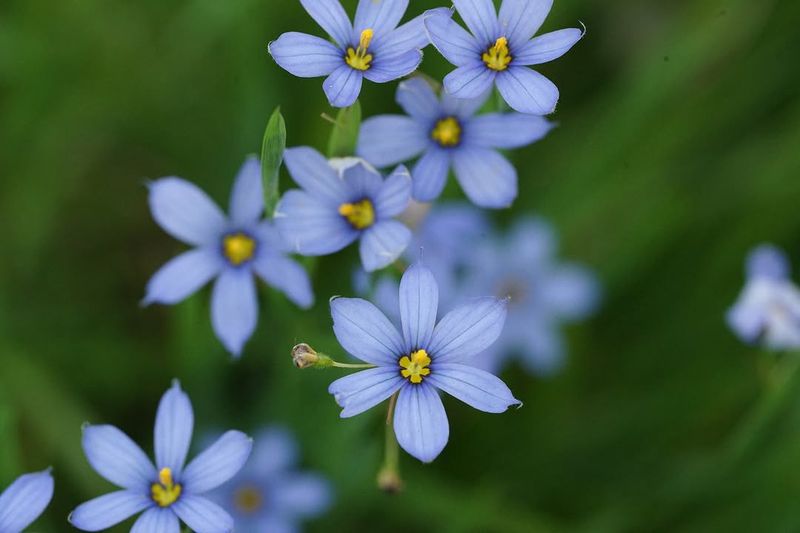
Do not let the name fool you. Blue-Eyed Grass is not actually a grass at all.
Sisyrinchium angustifolium is a member of the iris family, and up close, its tiny star-shaped blue flowers with bright yellow centers are absolutely charming. This Florida-native perennial forms tidy, grass-like clumps that fit beautifully into naturalistic garden designs and wildflower plantings throughout the state.
Spring is when Blue-Eyed Grass truly shines. The small but cheerful blooms open on sunny days, creating a sparkling effect across garden beds and meadow-style plantings.
It grows to about six to twelve inches tall, making it a perfect front-of-border plant that adds subtle, delicate color without overwhelming neighboring plants.
One of the best things about Blue-Eyed Grass is how well it fits into low-maintenance Florida landscapes. It tolerates a range of soil types, including moist and moderately dry conditions, and it does well in both full sun and light shade.
Because it is native to Florida, it supports local insects and generally requires less maintenance, though occasional care may still be needed depending on conditions. Scatter it among other native wildflowers for a relaxed, cottage-garden feel, or use it to edge a pathway for a soft, natural look that complements the unique beauty of Florida’s natural landscapes all season long.
6. Wild Blue Phlox Lighting Up Shady Spots
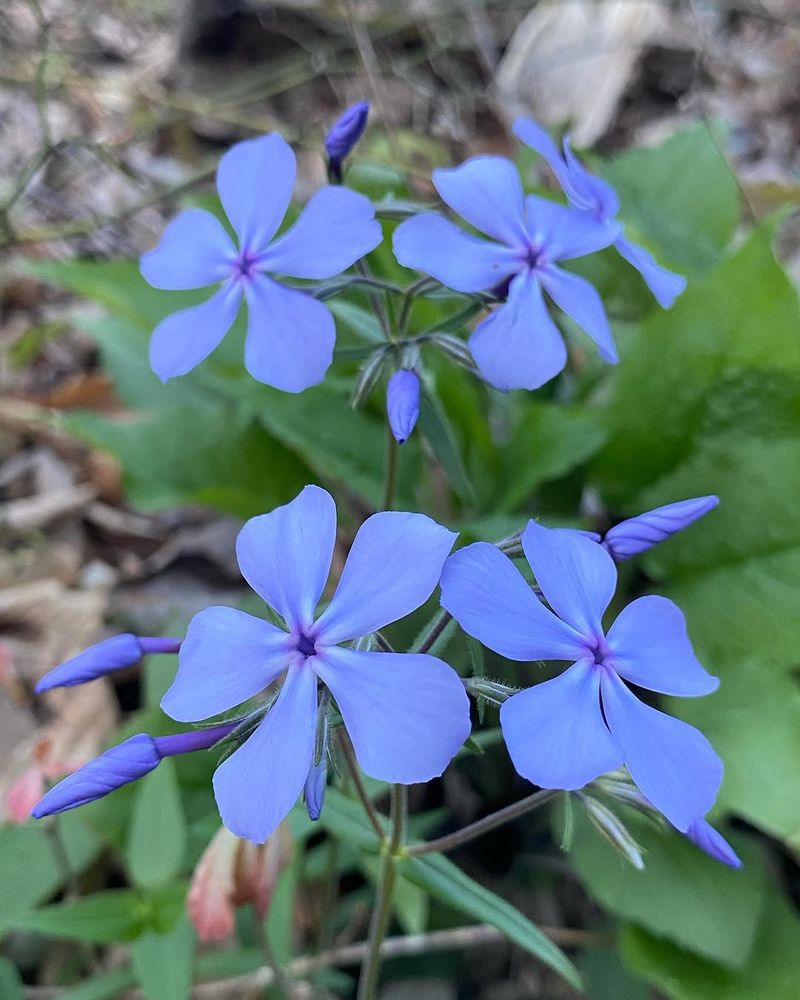
Walking through a Florida woodland in spring and spotting Wild Blue Phlox in bloom is genuinely one of the small joys of living in this state. Phlox divaricata produces loose clusters of soft, lavender-blue, five-petaled flowers with a light, sweet fragrance that carries gently on the breeze.
It is one of the most romantic-looking wildflowers you can grow in a Florida shade garden.
Unlike many blue perennials that demand full sun, Wild Blue Phlox actually prefers partial to full shade, making it an outstanding option for gardeners working with tree canopy or shaded beds. It blooms in spring, typically from March through May, providing early-season color when the rest of the garden is just waking up from winter’s cooler temperatures.
Wild Blue Phlox pairs beautifully with ferns, native wildflowers, and other woodland plants common to Florida’s natural areas. It spreads slowly over time, forming soft, low-growing mats that cover the ground with attractive foliage even when not in bloom.
Moist, well-drained soil rich in organic matter gives it the best environment to flourish. Gardeners in North and Central Florida tend to have the most success with Wild Blue Phlox, as it generally performs better in regions with slightly cooler conditions.
It is a truly enchanting plant that rewards patient gardeners with reliable spring beauty year after year.
7. Common Blue Violet Quietly Taking Over
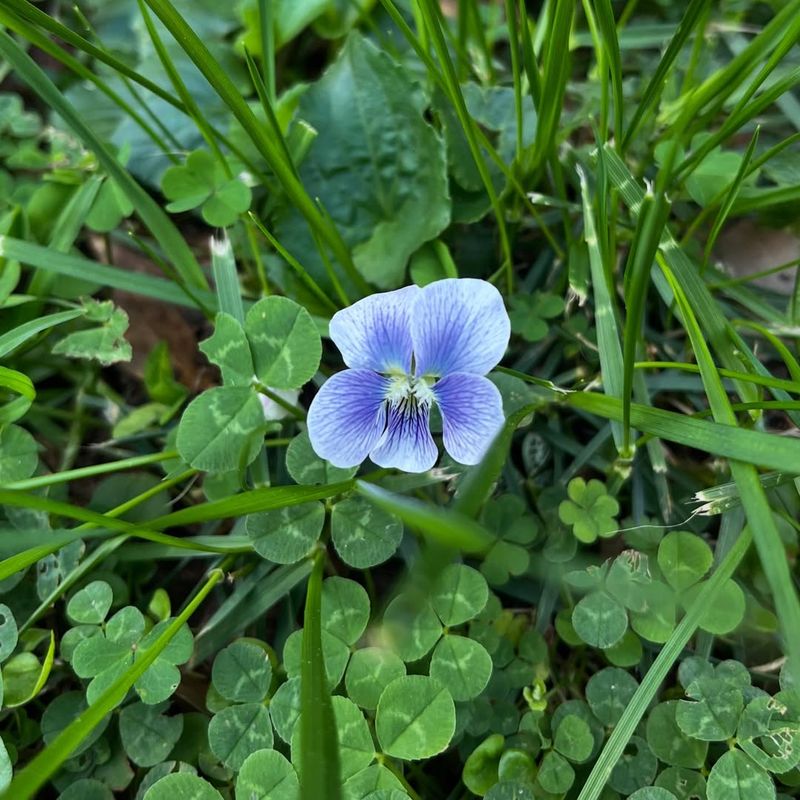
There’s something timeless about this little wildflower that keeps it showing up in gardens year after year. Viola sororia sends up rich violet-blue blooms above neat clusters of heart-shaped leaves, usually putting on its best display from late winter into early spring across Florida.
Those early flowers are more than just pretty, too – they offer an important nectar source for pollinators just beginning to stir as the season shifts.
Beyond its beauty, Common Blue Violet plays an important ecological role. It is the host plant for several species of fritillary butterflies, whose caterpillars feed on the leaves.
Planting it in your Florida garden helps support the full life cycle of these gorgeous butterflies, turning your yard into a true wildlife sanctuary without any extra effort.
Common Blue Violet thrives in partial shade and moist, slightly acidic soil, which makes it a natural fit for woodland-style gardens and shaded beds under large trees. It spreads readily by seed, so over time it can naturalize into a charming ground cover that carpets the soil with color each spring.
While some gardeners consider it a wildflower that pops up unexpectedly, others deliberately cultivate it for its old-fashioned appeal. Either way, finding these cheerful little violet-blue blooms scattered across a Florida garden bed in late winter is always a welcome and heartwarming sight worth celebrating.
8. American Bluehearts Thriving In Wet Spaces
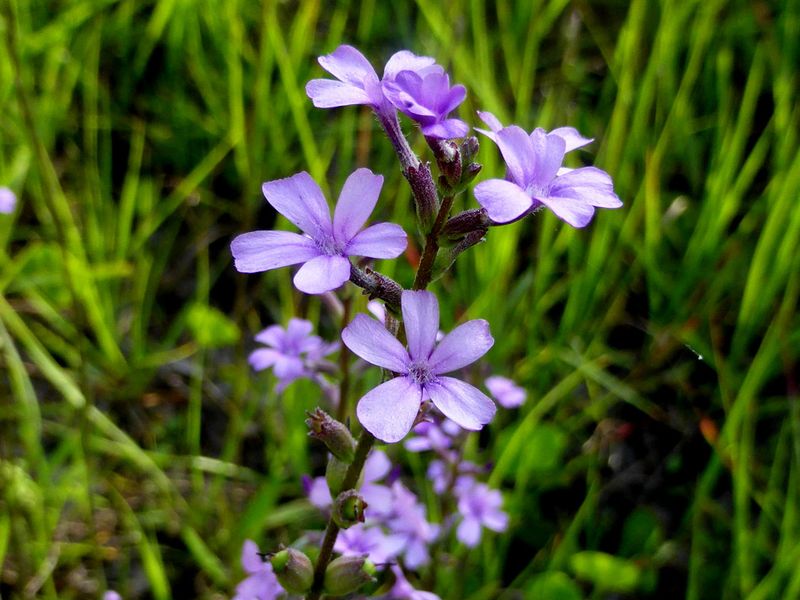
American Bluehearts is one of Florida’s most fascinating and underappreciated native wildflowers. Buchnera americana produces slender, upright stems topped with small but vivid tubular flowers in a rich purple-blue shade that stands out beautifully against Florida’s bright summer sky.
It blooms from late spring through fall, offering a long season of color for gardeners who give it the right conditions.
What makes American Bluehearts particularly interesting is its semi-parasitic nature. The plant draws some of its nutrients from the roots of nearby grasses, which means it actually grows best when planted alongside native grasses rather than in a traditional garden bed on its own.
This quirky characteristic makes it a unique addition to Florida wildflower meadows and naturalistic plantings.
American Bluehearts thrives in full sun and prefers dry to moderately moist, sandy soils, which are common throughout much of Florida’s natural landscape. It tends to do especially well in the sandhill and flatwoods habitats found across North and Central Florida.
Because it is a true Florida native, it supports native bees and other pollinators that depend on local wildflowers for food. Growing American Bluehearts alongside wiregrass or other native grasses creates a natural meadow effect that looks stunning and helps preserve the ecological character of Florida’s unique and irreplaceable native plant communities.
9. Blue Daze And Its Low Growing Coastal Color
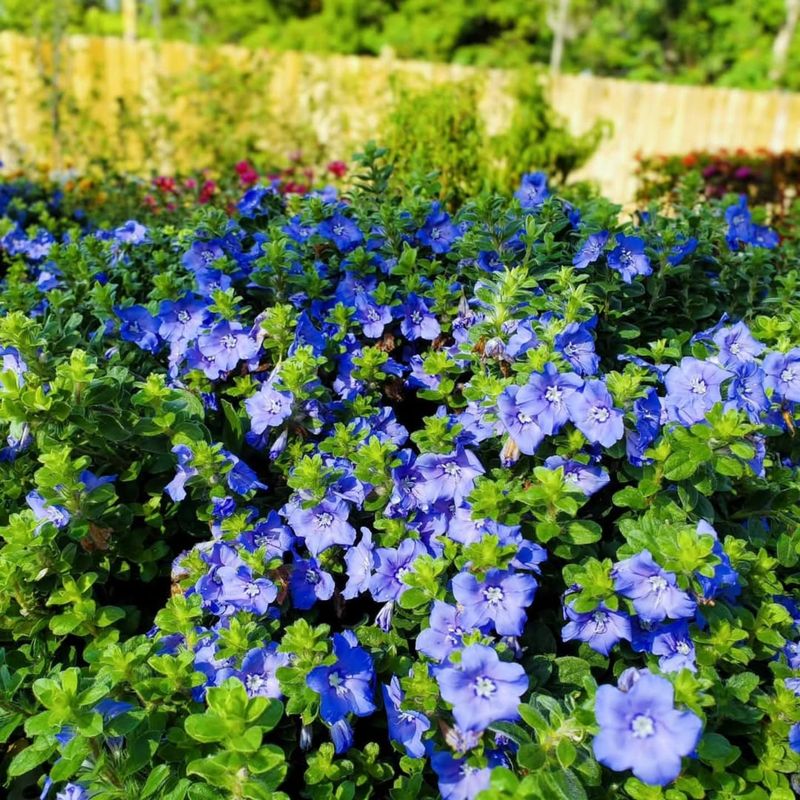
That bright, almost electric blue is hard to miss once it starts showing up in a Florida garden. Tucked low to the ground, those delicate blooms seem to glow against green foliage, especially on sunny afternoons when they open their widest.
It’s the kind of plant that quietly steals attention without taking over the entire space.
What makes it especially appealing is how well it handles Florida’s heat and humidity. This low-growing perennial forms a soft, spreading mat that works beautifully along borders, in containers, or even spilling gently over edges.
The flowers tend to close in the evening or on cloudy days, which adds a fun, ever-changing rhythm to the garden that many gardeners end up loving.
You’ll often see it thriving in sandy soils where other plants struggle a bit, as long as it gets plenty of sun and decent drainage. Once established, it can handle dry spells fairly well, making it a smart choice for low-maintenance landscapes that still need a pop of color.
Many Florida gardeners use Blue Daze to soften hard edges, fill in gaps, or create that relaxed, coastal feel that works so well in the state’s climate. It pairs easily with bolder plants, adding contrast without competing, and brings in pollinators looking for an easy nectar stop throughout the warmer months.