11 Types Of Invasive Vines In Florida And How To ID Them
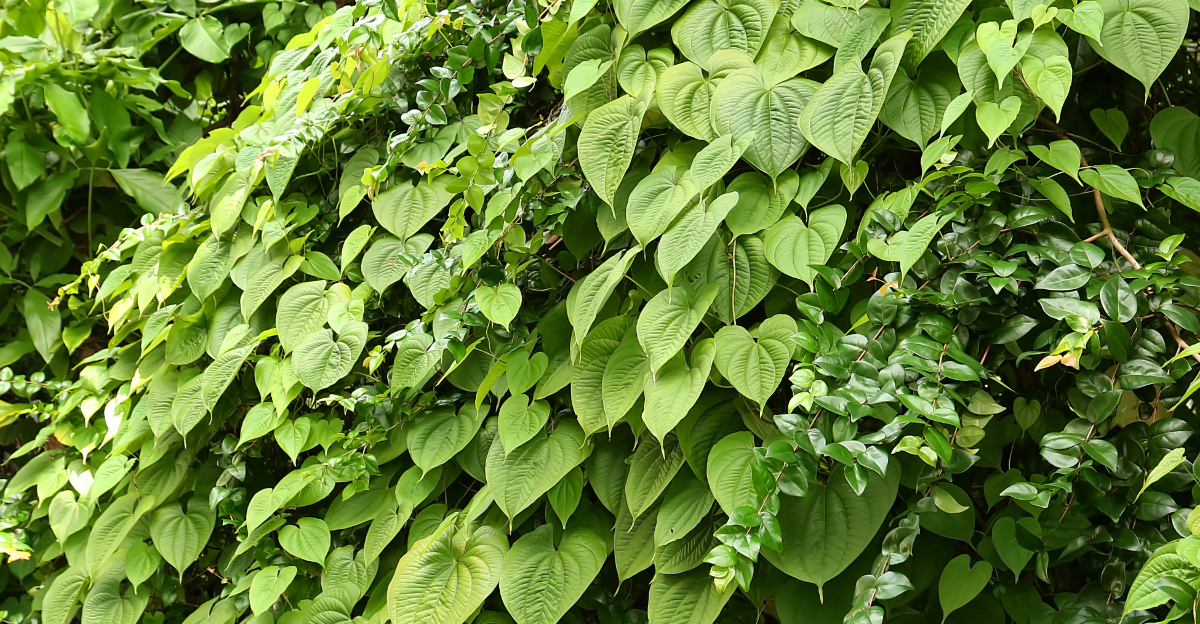
It starts with a vine that looks harmless, maybe even a little charming, and before you know it, it is running the show. In Florida, some vines grow like they have something to prove, climbing, smothering, and taking over faster than you can blink.
What begins as a pretty green accent can turn into a full-blown garden headache that crowds out native plants and reshapes entire spaces.
Many of these aggressive growers slip under the radar at first, which makes knowing how to spot them early a real game changer.
A few key details can tip you off before things get out of hand. Once you learn the telltale signs, it becomes much easier to keep your yard in check and protect the plants you actually want sticking around.
1. Spot Air Potato By Its Fast Growing Aerial Tubers
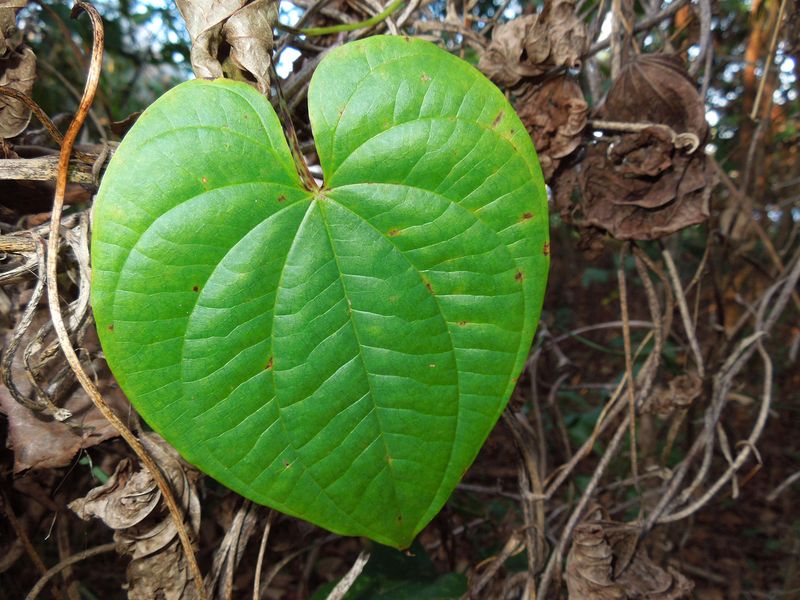
Walk through almost any Florida neighborhood in summer and you will likely spot a vine racing up a fence or tree with remarkable speed, draped in broad, glossy, heart-shaped leaves.
That vine is almost certainly air potato, and it is one of the most aggressively invasive plants listed by the University of Florida IFAS Extension.
The clearest way to identify it is by its aerial bulbils, which are small, potato-like tubers that form right on the vine itself. These bulbils range from marble-sized to baseball-sized, and they drop to the ground and sprout new plants almost immediately.
One single vine can produce dozens of these tubers in a single growing season.
Air potato, known scientifically as Dioscorea bulbifera, was introduced from Asia and Africa and has no natural predators in Florida to slow it down. It twines clockwise around host plants and can grow up to eight inches per day under ideal conditions.
FLEPPC lists it as a Category I invasive species, meaning it is actively disrupting native plant communities. Left unchecked, it can smother understory shrubs and small trees entirely, blocking sunlight and eventually destroying the plants it climbs.
2. Identify Skunkvine By Its Strong Unpleasant Odor
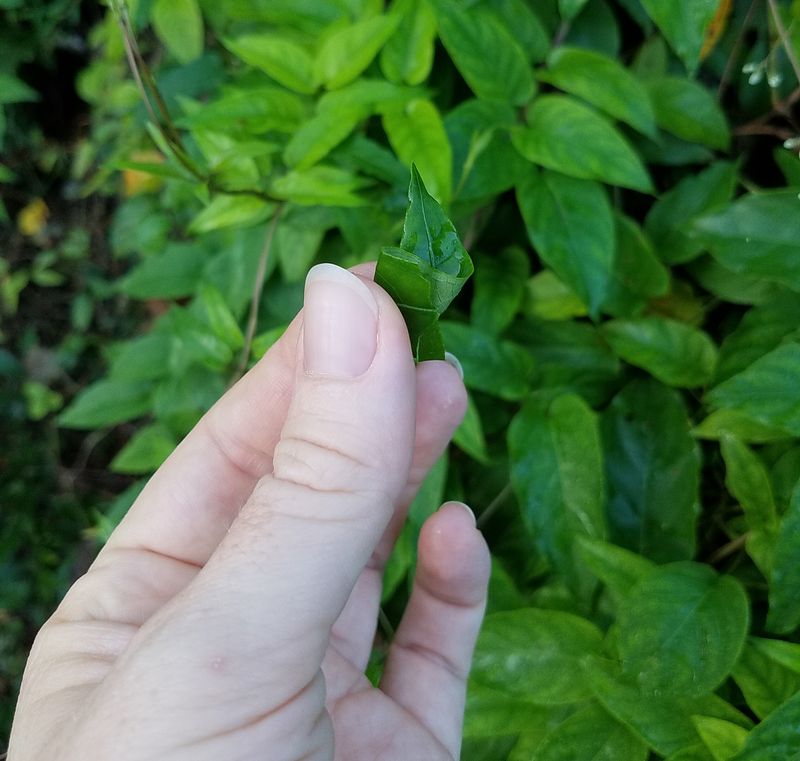
Crush a single leaf between your fingers and the smell will hit you immediately, sharp, sour, and unmistakably foul.
That odor is the most reliable way to identify skunkvine, a twining vine that has spread aggressively through Florida’s natural areas and residential landscapes alike.
Scientifically known as Paederia foetida, skunkvine originally came from Asia and was first recorded in Florida in the late 1800s. It produces opposite, oval to heart-shaped leaves and small tubular flowers that are pale lavender with a dark purple center.
The vine twines tightly around host plants, growing over shrubs, fences, and tree trunks with impressive persistence.
FLEPPC lists skunkvine as a Category I invasive, which means it is documented as altering native plant communities and disrupting natural processes.
It thrives in disturbed areas, roadsides, forest edges, and even in the middle of intact natural habitats across north and central Florida.
Dense infestations shade out native ground cover and shrubs, reducing biodiversity significantly.
Your Florida Garden Changes Every Week. Your Plan Should Too.
Gardening in Florida changes quickly throughout the season. Every Friday you’ll receive a simple weekly plan showing exactly what to plant, prune, fertilize, harvest, and protect so you never miss the right timing.
Because it spreads by both seeds and stem fragments, even small pieces left behind during removal can regrow quickly, making complete control genuinely difficult without repeated follow-up efforts.
3. Watch For Old World Climbing Fern Smothering Trees
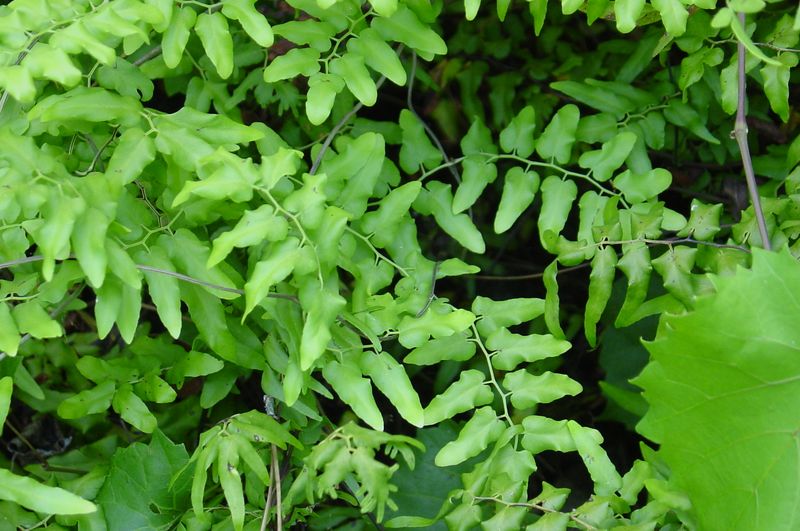
Few invasive plants in Florida inspire as much alarm among conservationists as old world climbing fern.
Drive through the Everglades or visit any south Florida natural area and you may see entire cypress domes wrapped in a thick, unbroken blanket of lacy green fronds reaching all the way to the treetops.
Lygodium microphyllum is a true fern, but it climbs like a vine, sending fronds upward along any available support. The leaflets are small, delicate, and distinctly fern-like, arranged along a wiry, twining stem that can stretch dozens of feet into the forest canopy.
Unlike most ferns, this one keeps climbing and never stops.
FLEPPC classifies it as a Category I invasive species, and IFAS considers it one of the most serious threats to Florida’s natural ecosystems.
The dense mats it creates act as a fire ladder, carrying flames from the ground all the way up into tree canopies that would normally survive a low ground fire.
This dramatically increases fire intensity and can destroy trees that have stood for decades. It spreads by releasing millions of tiny airborne spores, making containment extremely challenging once an infestation is established in a wetland or upland forest.
4. Recognize Kudzu By Its Rapid Blanket Like Growth
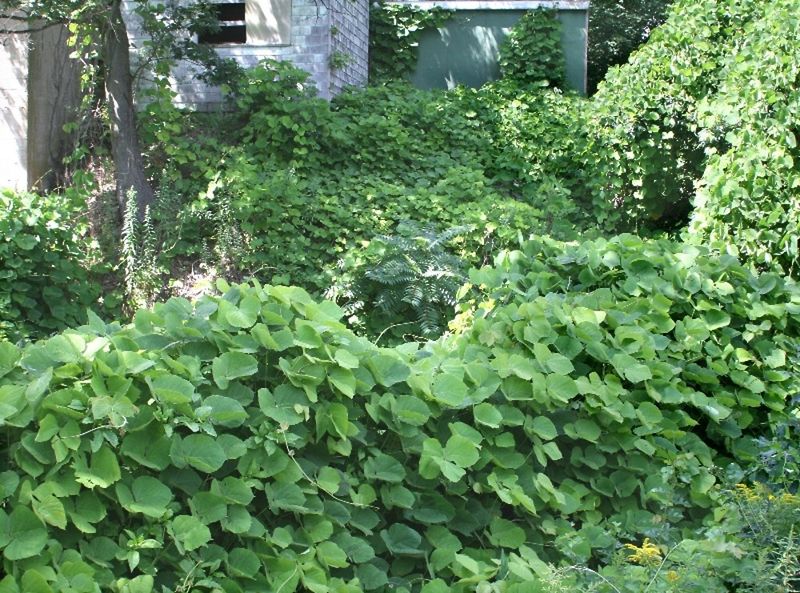
There is an old joke in the South that you should never leave your car parked outside too long or kudzu will swallow it whole. While that is obviously an exaggeration, anyone who has seen a kudzu infestation knows the joke is not entirely off base.
Kudzu, or Pueraria montana var. lobata, is native to Asia and was introduced across the southeastern United States decades ago for erosion control and livestock forage. Florida got the memo too late.
The vine produces enormous trifoliate leaves, sometimes reaching a foot across, along with clusters of purple, grape-scented flowers that bloom in late summer. The stems are thick, hairy, and woody at the base.
What makes kudzu genuinely alarming is its growth rate, which can reach one foot per day under warm, humid Florida conditions.
It smothers everything in its path, including mature trees, power lines, and abandoned structures, by blocking all available sunlight from reaching the plants below.
FLEPPC lists kudzu as a Category I invasive species.
It spreads through seeds, stolons, and underground rhizomes, making removal a long-term commitment that often requires repeated herbicide treatments combined with consistent physical removal over several growing seasons.
5. Catch Japanese Honeysuckle Before It Takes Over
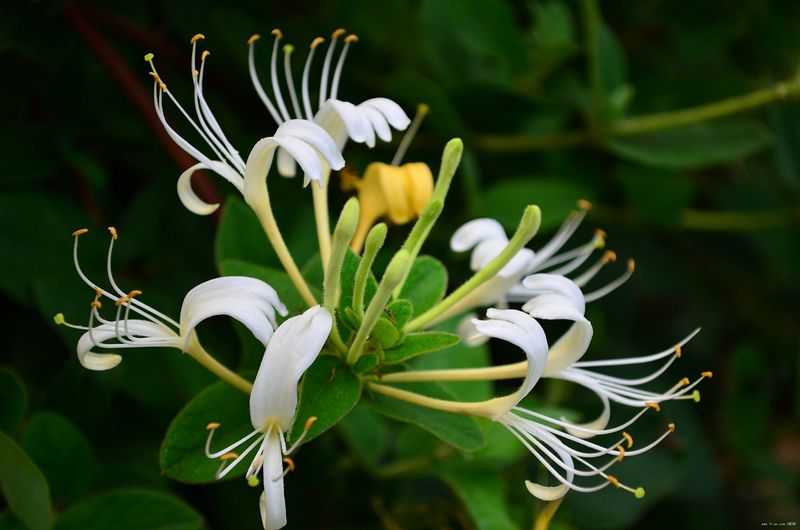
The sweet, familiar scent drifting through a Florida evening might actually be a warning sign. Japanese honeysuckle smells wonderful, and that is a big part of why it was planted so widely across the country for so many decades before people realized how problematic it truly is.
Lonicera japonica is identifiable by its paired, tubular flowers that open white and gradually turn yellow as they age.
The leaves are opposite, oval, and semi-evergreen in Florida’s mild winters, which gives this vine a significant advantage over native deciduous plants that lose their leaves seasonally.
It twines aggressively around shrubs, small trees, and fences.
FLEPPC lists Japanese honeysuckle as a Category I invasive species. It spreads both by seeds, which birds distribute widely after eating the small black berries, and by rooting where stems touch the ground.
In north and central Florida especially, it can form dense mats that smother native ground cover and prevent seedling establishment of native trees and shrubs.
Early identification is genuinely valuable here because a small infestation is far easier to manage than an established one.
Pulling young vines by hand and following up with targeted herbicide on regrowth is the most effective management approach available.
6. Look For Coral Vine Covering Fences And Shrubs
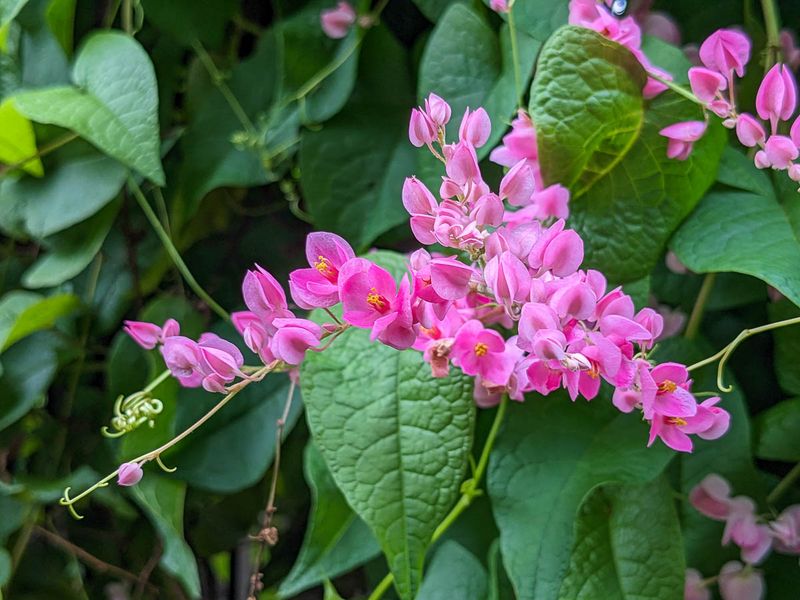
Stroll through a South Florida neighborhood in late summer and you might spot a fence completely buried under cascading clusters of bright pink flowers so cheerful they almost look fake.
That is coral vine, and while it is undeniably beautiful, it has earned a cautious reputation among Florida horticulturalists.
Antigonon leptopus, native to Mexico, is recognized by its vivid pink, occasionally white, flowers that grow in elongated clusters and its heart-shaped to arrowhead-shaped leaves with wavy edges.
The vine climbs using coiled tendrils and can blanket a fence, trellis, or shrub remarkably fast during warm months.
The stems wither somewhat in frost but regrow vigorously from tuberous roots.
Coral vine is not currently listed as a Category I invasive by FLEPPC, but it appears on caution lists and is documented escaping cultivation in south Florida’s warmer counties.
It can spread into natural areas near disturbed sites and is difficult to eradicate once the deep tuberous root system becomes established.
Gardeners in frost-free areas of Florida should be aware that planting coral vine near natural areas or conservation land carries real risk.
Monitoring established plants and removing seed heads before they mature is a sensible precaution for responsible Florida gardeners.
7. Notice Caesarweed Spreading Through Open Areas
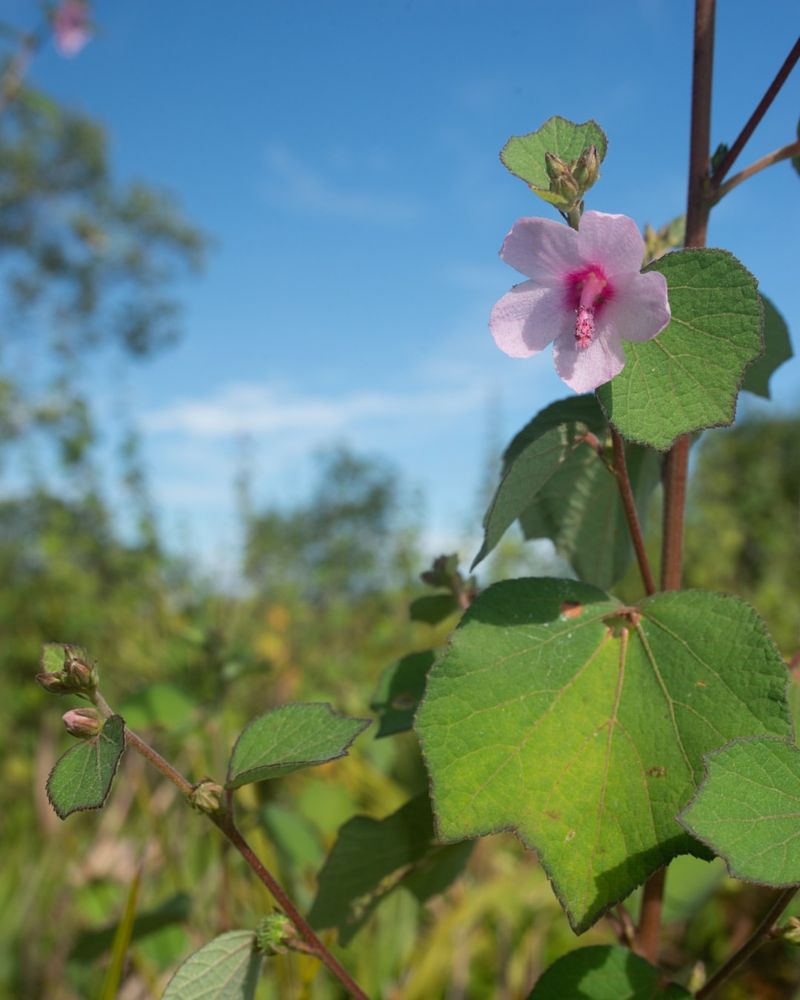
Vacant lots, roadsides, and recently cleared land in Florida often fill in fast with a sprawling, somewhat shrubby plant that most people walk right past without a second look. Caesarweed blends in easily, but once you know what to look for, it becomes surprisingly easy to spot.
Urena lobata is native to tropical Asia and Africa and has naturalized widely across Florida’s disturbed habitats. It produces lobed, maple-like leaves that are soft and slightly hairy to the touch, along with small, five-petaled pink flowers that resemble miniature hibiscus blooms.
The plant grows in a sprawling, semi-vining manner and can reach several feet tall and wide.
What makes caesarweed especially persistent is its seed dispersal strategy. The small, round seed pods are covered in hooked bristles that latch onto clothing, fur, and feathers with impressive tenacity, earning it the nickname bur mallow.
FLEPPC lists caesarweed as a Category I invasive species, and it is documented disrupting native ground cover communities in open and disturbed areas throughout the state.
It thrives in full sun and poor soils, moving quickly into any area that has been cleared or disturbed by construction, fire, or flooding, making it a persistent challenge for land managers and homeowners dealing with neglected open ground.
8. Identify Rosary Pea By Its Bright Red Seeds
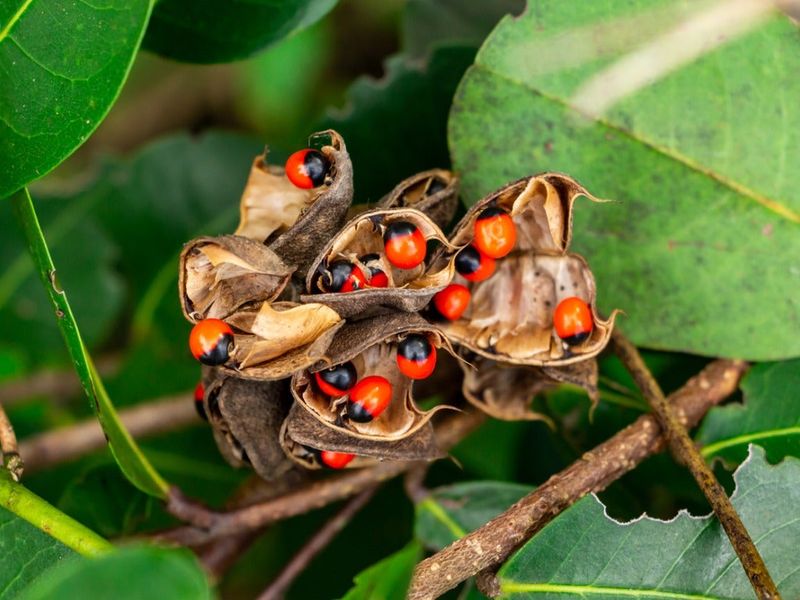
Few plants in Florida combine such striking beauty with such serious danger as rosary pea.
The seeds look almost like tiny pieces of jewelry, glossy red with a single black dot, and that visual appeal is precisely what makes this plant so hazardous in places where children or pets spend time outdoors.
Abrus precatorius is a twining vine with small, pinnate leaves made up of many paired leaflets arranged along a central stem.
It produces clusters of small lavender to pink flowers followed by seed pods that split open dramatically to reveal those unmistakable red and black seeds.
The vine climbs over shrubs and into tree canopies along forest edges and disturbed areas throughout central and south Florida.
The seeds contain abrin, one of the most toxic naturally occurring substances known, and even a single seed can cause serious harm if the hard coat is broken and the contents are ingested. FLEPPC lists rosary pea as a Category I invasive species.
It spreads readily by seeds that birds carry into natural areas, and it has naturalized broadly across Florida’s pinelands, hammocks, and disturbed roadsides.
Any plant encountered in a yard or garden should be removed carefully with gloves, and seed pods should be disposed of before they open and scatter further.
9. Watch For Arrowhead Vine Escaping Into The Wild

Most Florida homeowners know arrowhead vine as a cheerful, low-maintenance houseplant sitting on a windowsill or hanging basket.
What fewer people realize is that in Florida’s warm, humid outdoor environment, that same friendly houseplant can quietly slip out of cultivation and establish itself in natural areas nearby.
Syngonium podophyllum is easily recognized by its distinctly arrow-shaped leaves, which are bright green and sometimes variegated when young but become larger and more lobed as the plant matures.
Outdoors, it grows as a ground-covering or climbing vine, sending out roots wherever stems contact moist soil, and gradually spreading outward from the original planting.
While arrowhead vine is not currently a FLEPPC Category I invasive, it is documented as naturalizing in Florida, particularly in shaded, moist areas of central and south Florida such as hammock edges, stream banks, and disturbed forest floors.
Its ability to root from stem fragments makes it difficult to fully eradicate once established.
Gardeners should avoid planting it near natural areas, drainage ditches, or any location where it might access adjacent wild land.
Potted plants left outdoors should be monitored to ensure runners are not rooting into surrounding soil and creating a pathway for this plant to escape your garden entirely.
10. Spot Balsam Apple Climbing With Bright Orange Fruit
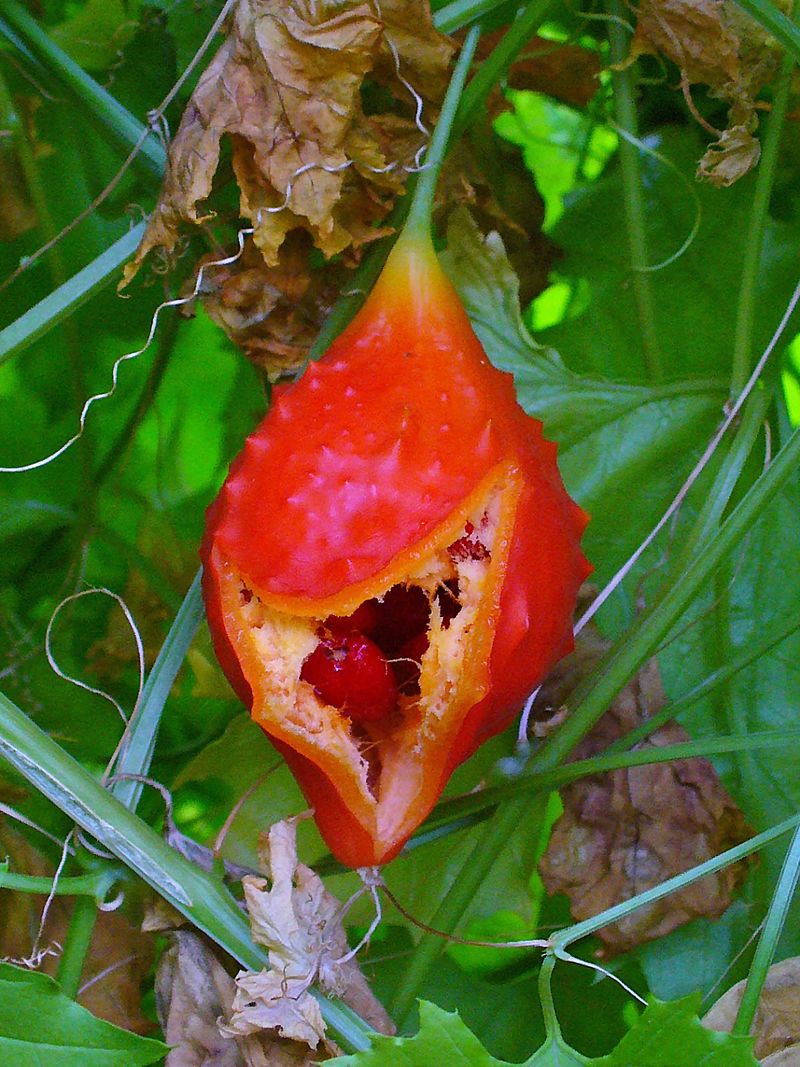
Bright orange fruits splitting open along a roadside fence to reveal vivid red seeds inside are a sight that stops most people in their tracks.
Balsam apple puts on quite a show in fall, but that colorful display is actually how it distributes seeds so effectively across Florida’s warm landscapes.
Momordica charantia is a fast-climbing vine with deeply lobed, palm-shaped leaves that are bright green and somewhat delicate in appearance. The small yellow flowers are easily overlooked, but the warty, oblong orange fruits that follow are impossible to miss.
When ripe, the fruit splits apart in three sections, curling back to expose seeds coated in a brilliant red, sticky aril.
Balsam apple is native to tropical Africa and Asia and is considered a weed and invasive plant in Florida, particularly in disturbed areas, roadsides, fence lines, and edges of natural areas throughout the central and southern parts of the state. Birds and other wildlife eat the arils and spread seeds widely.
The vine grows quickly during warm months, climbing over low shrubs and fences and occasionally reaching into tree canopies.
While its invasive status is sometimes listed as a Category II concern, its weedy behavior in disturbed sites makes it a plant worth removing promptly from any landscape where it appears uninvited.
11. Recognize Cat’s Claw Vine By Its Hooked Tendrils
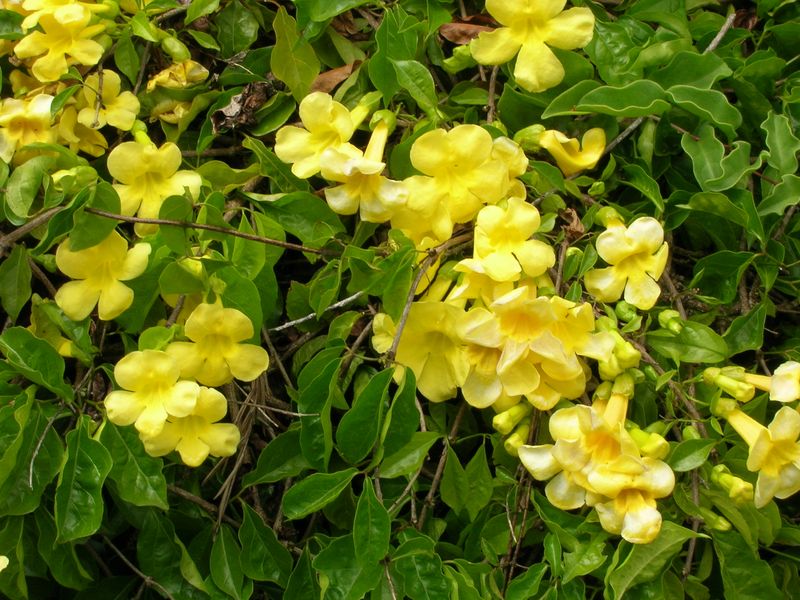
Press your hand against what looks like a harmless vine on a brick wall and you might feel the tiny, firm hooks gripping the surface with surprising strength. Those three-pronged, claw-shaped tendrils are the defining feature of cat’s claw vine and the reason it can scale walls, fences, and tree trunks so effectively.
Dolichandra unguis-cati produces showy, bright yellow, trumpet-shaped flowers that make it look almost ornamental in spring.
The leaves are compound, made up of two glossy leaflets, and the tendrils that emerge between them look remarkably like small cat claws, which is exactly where the common name comes from.
The vine is woody and persistent, with a root system that includes large, fleshy tubers underground.
FLEPPC classifies cat’s claw vine as a Category I invasive species in Florida. It spreads by seeds and by those deep tubers, which resprout aggressively even after the aboveground vine is removed.
In south and central Florida, it climbs into tree canopies, pulls down branches with its weight, and creates dense infestations along fence lines and forest edges. Mechanical removal alone is rarely sufficient because the tubers must also be dug out completely.
Herbicide treatment combined with physical removal offers the best chance of long-term control for established infestations on residential or conservation properties.