How To Grow Blackberries In Containers In Arizona For Better Harvests
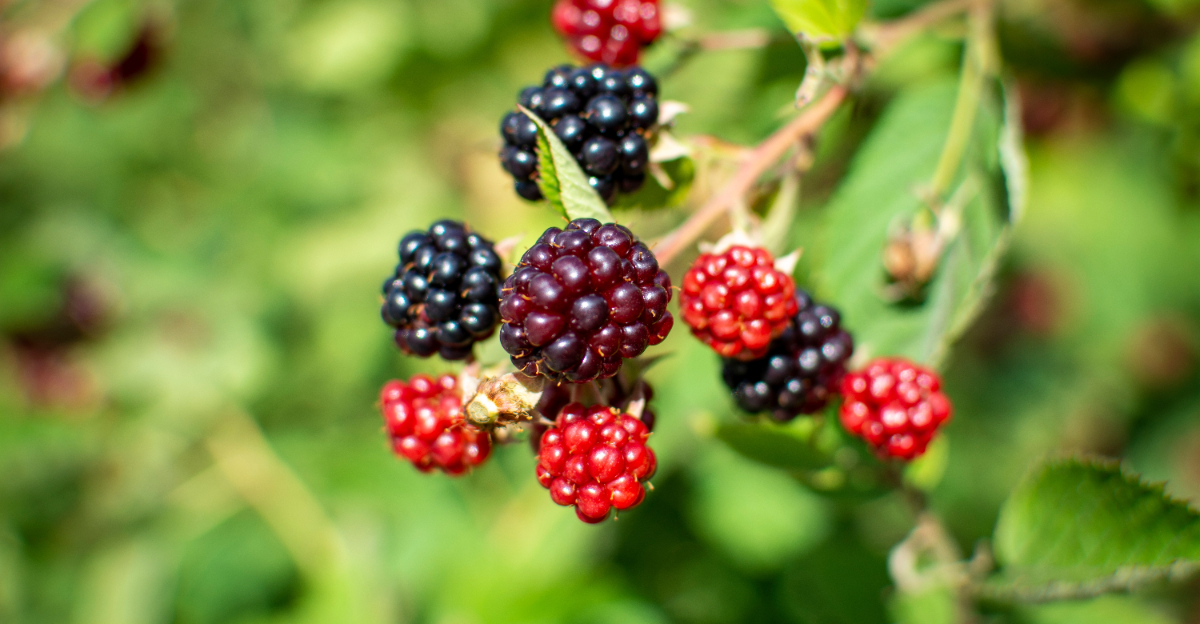
Blackberries can grow in Arizona containers better than many expect, yet the results often depend on a few details that get missed early on.
Plants may look fine at first, then slow down or produce very little once heat builds and roots feel the limits of the pot.
You might see strong growth in the beginning, but fruiting does not always follow if conditions are not set up the right way. Sun exposure, soil choice, and how the plant is managed all play a role in how well it performs over time.
When those pieces come together, the difference shows up quickly. Plants stay more balanced, fruit production improves, and the harvest feels far more consistent instead of hit or miss.
Getting it right turns a simple container into something that produces far more than expected in Arizona conditions.
1. Choose Heat-Tolerant Blackberry Varieties That Handle Desert Conditions
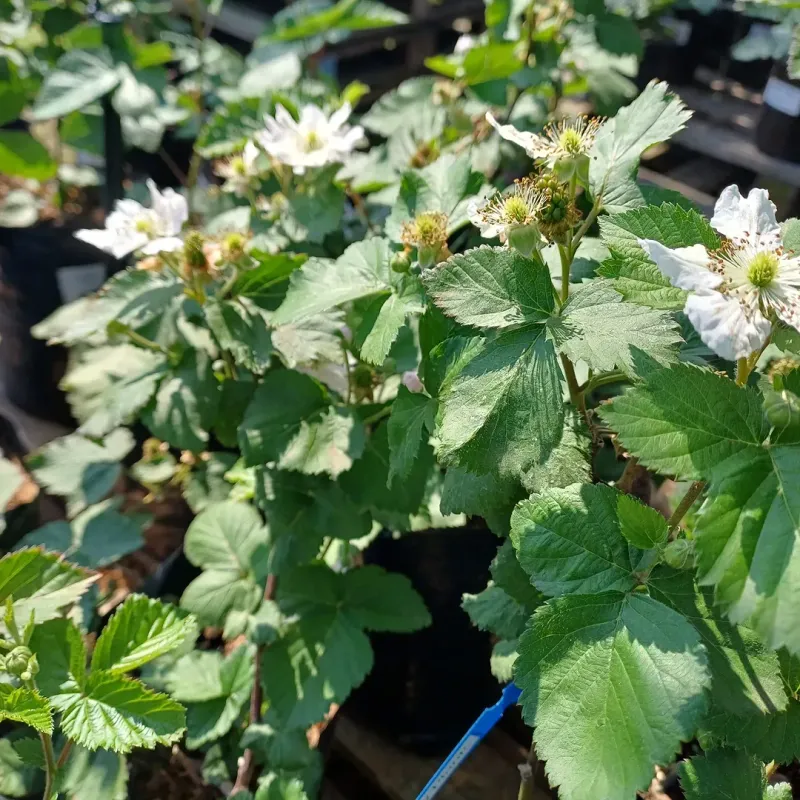
Not every blackberry variety is built for Arizona summers, and picking the wrong one will leave you frustrated before the season even gets going. Varieties like Arapaho, Ouachita, and Prime-Ark Freedom have shown real promise in hot, dry climates.
They are compact enough for containers and do not need a long cold winter to produce fruit.
Prime-Ark Freedom is especially useful in Arizona because it is a primocane-fruiting type, meaning it can produce berries in its first growing season without requiring significant winter chill hours. That matters a lot in the low desert where winters stay mild.
Ouachita tends to be a strong producer with an upright growth habit that keeps things manageable in a pot.
Thornless varieties are worth the preference for container growers because you will be working close to these plants regularly, watering, checking soil, and harvesting. Sharp thorns in a tight patio space get old fast.
Beyond convenience, thornless types like Arapaho tend to have sturdy canes that hold up reasonably well under Arizona wind and heat.
2. Use Large Containers To Support Deep Roots And Moisture Retention
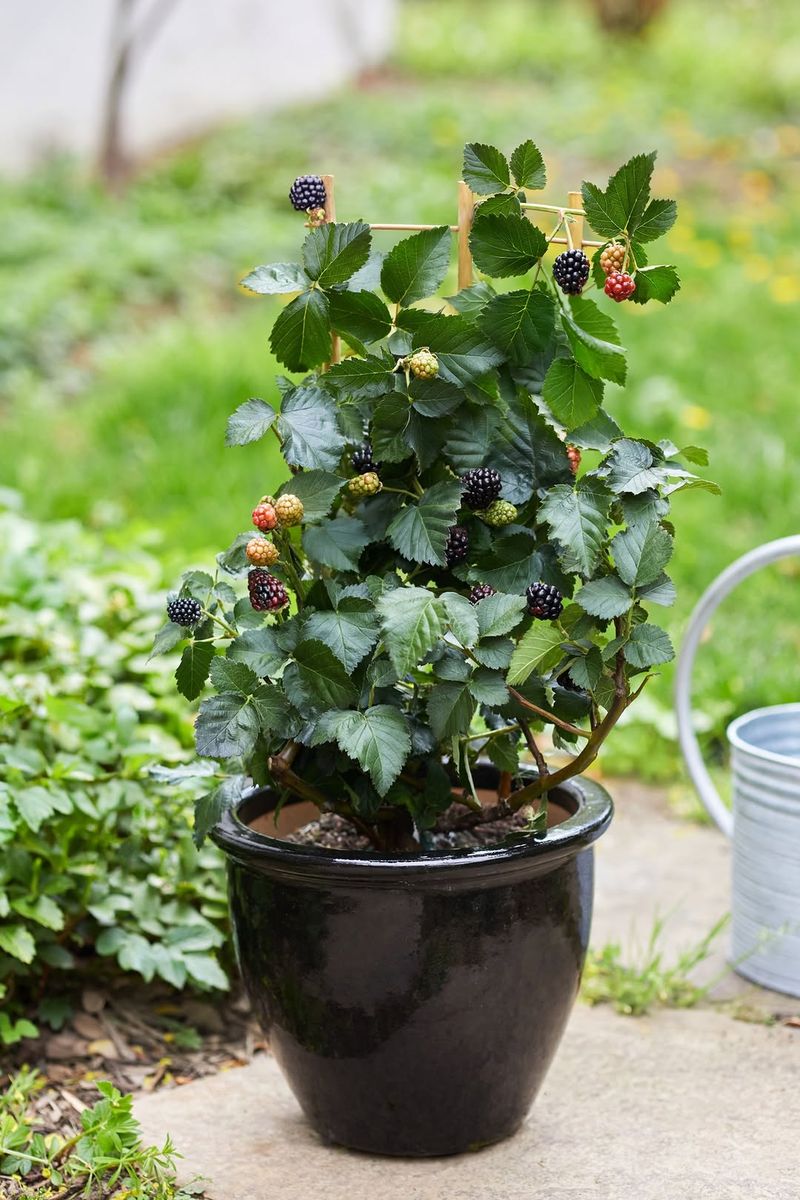
Container size matters more than most people expect when growing blackberries in Arizona. A pot that is too small will dry out within hours during a Phoenix summer, and roots cramped into tight space will struggle to support strong cane growth.
Aim for containers that hold at least 15 to 20 gallons, with a diameter of no less than 18 inches.
Depth is just as important as width. Blackberry roots need room to push downward, and a shallow container limits how much moisture the soil can hold between waterings.
A depth of at least 12 to 14 inches gives roots enough space to anchor the plant and access stored water during the hottest parts of the day.
Material choice plays a role in how quickly your containers heat up. Dark-colored plastic pots absorb a lot of solar radiation and can raise soil temperatures significantly on triple-digit days.
If dark pots are what you have, consider wrapping them in burlap or setting them inside a slightly larger decorative pot to create an insulating air gap.
Make sure every container has drainage holes at the bottom. Waterlogged soil invites root problems that can set your plant back weeks.
Your Arizona Garden Changes Every Week. Your Plan Should Too.
Gardening in Arizona changes quickly throughout the season. Every Friday you’ll receive a simple weekly plan showing exactly what to plant, prune, fertilize, harvest, and protect so you never miss the right timing.
Elevating pots slightly on pot feet or bricks improves drainage and airflow underneath.
3. Fill Pots With Well-Draining Soil That Still Holds Some Moisture
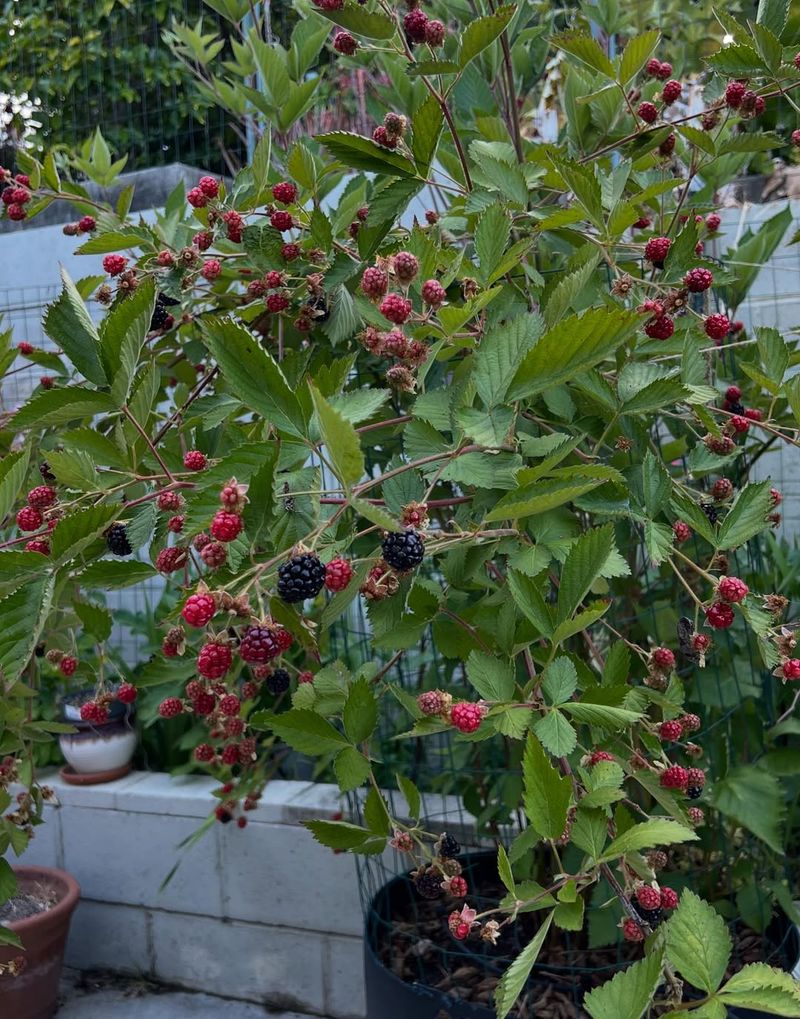
Straight garden soil pulled from the ground is almost never a good idea for container blackberries, especially in Arizona where native soil tends to be heavy clay or sandy with little organic matter.
You need a mix that drains fast enough to avoid soggy roots but still holds enough moisture to keep plants hydrated between waterings.
A reliable starting point is two parts quality potting mix, one part perlite or pumice, and one part finely ground bark or compost. That ratio keeps the mix loose and airy while adding enough organic material to hold water without staying waterlogged.
Perlite is easy to find at most Arizona garden centers and does a solid job of improving drainage without adding weight.
Blackberries prefer slightly acidic soil, somewhere in the range of pH 5.5 to 6.5. If you are unsure about your mix, a simple soil pH test kit from a hardware store can give you a quick reading.
Adjusting pH with a small amount of sulfur can help if your mix reads too alkaline, which is common with some commercial potting soils.
Refreshing the top layer of soil each season helps maintain fertility and soil structure. Over time, potting mix breaks down and compacts, which reduces drainage and air circulation around roots.
4. Place Containers Where Plants Get Morning Sun And Afternoon Protection
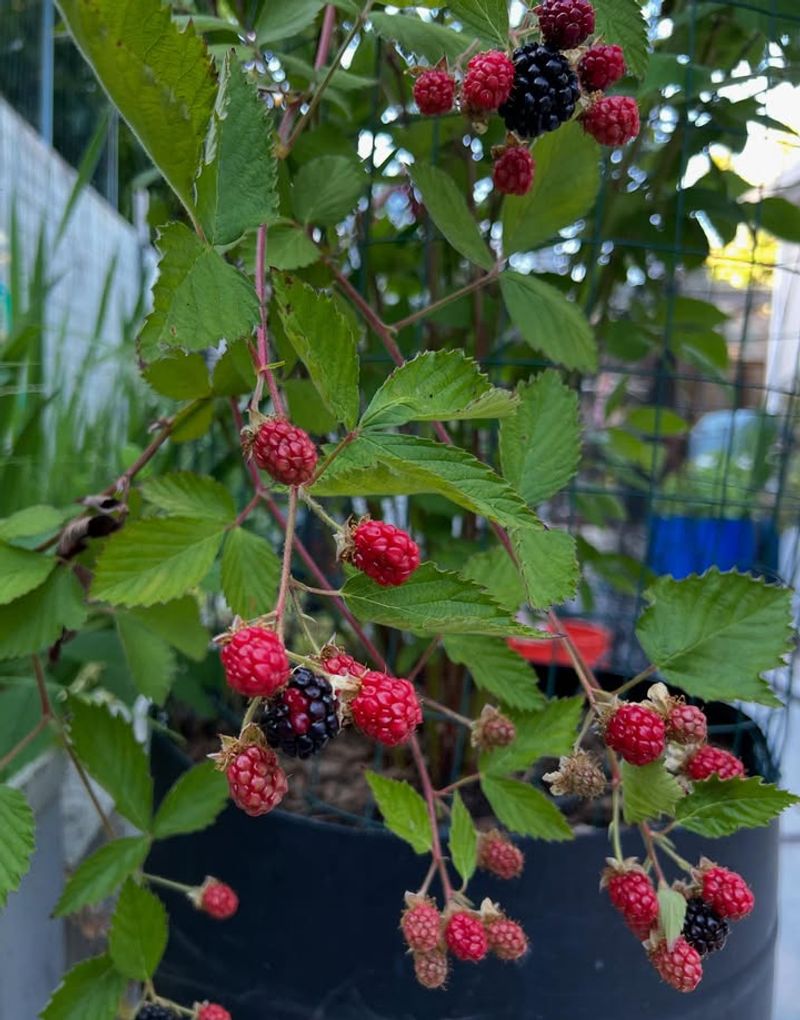
Sun placement in Arizona is a completely different conversation than it is in most other states.
Blackberries need sunlight to fruit well, but Arizona’s afternoon sun from June through September can push air temperatures past 110 degrees Fahrenheit in many parts of the state.
Full afternoon exposure under those conditions stresses plants in ways that are hard to recover from quickly.
Morning sun is where you want your containers. East-facing spots or locations that get good light from sunrise until around noon give blackberries the energy they need for fruiting without the brutal heat load of the western afternoon sun.
A wall, fence, shade cloth, or even a large patio umbrella can provide enough afternoon cover to make a real difference in plant health.
Shade cloth rated at 30 to 40 percent is a practical tool many Arizona gardeners use during peak summer. It cuts heat and light intensity without blocking the photosynthesis your plants need.
You can find it at most local garden and hardware stores, and it is easy to rig up over a container setup without major construction.
Concrete patios and block walls radiate stored heat well into the evening in Arizona summers.
5. Water Deeply And Consistently As Temperatures Start Climbing
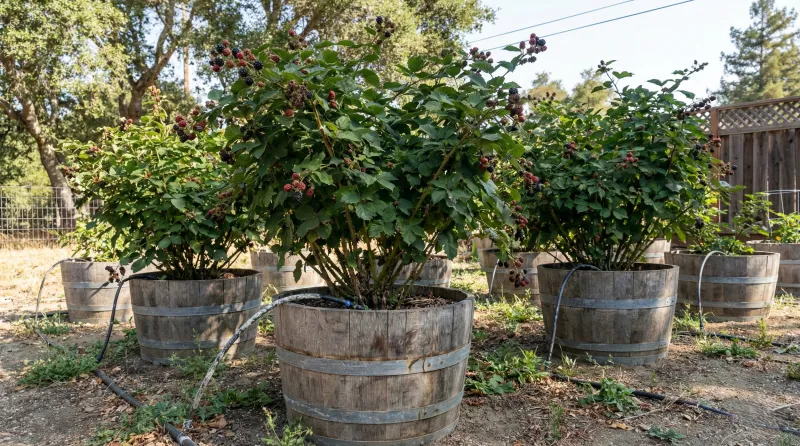
Watering container blackberries in Arizona is not something you can put on autopilot and forget. Containers lose moisture far faster than in-ground plantings, and when daytime highs are pushing past 100 degrees, a pot can go from moist to bone dry within 24 hours.
Getting watering right is genuinely one of the most critical parts of growing blackberries successfully here.
Deep watering is the goal every time. Running water slowly until it drains freely from the bottom ensures the entire root zone gets moisture, not just the top few inches.
Shallow, quick watering encourages roots to stay near the surface where heat is most intense, which is the opposite of what you want in Arizona’s desert climate.
During spring when temperatures are moderate, watering every two to three days may be enough. As summer approaches and heat builds, daily watering often becomes necessary.
Checking the soil by pressing a finger an inch or two below the surface is a reliable way to judge whether the plant actually needs water or whether the top just looks dry.
Drip irrigation set on a timer is worth considering if you have multiple containers or a busy schedule. A simple drip system can deliver consistent moisture at the root level while reducing evaporation from the soil surface.
6. Use Mulch To Keep Roots Cooler And Reduce Fast Drying
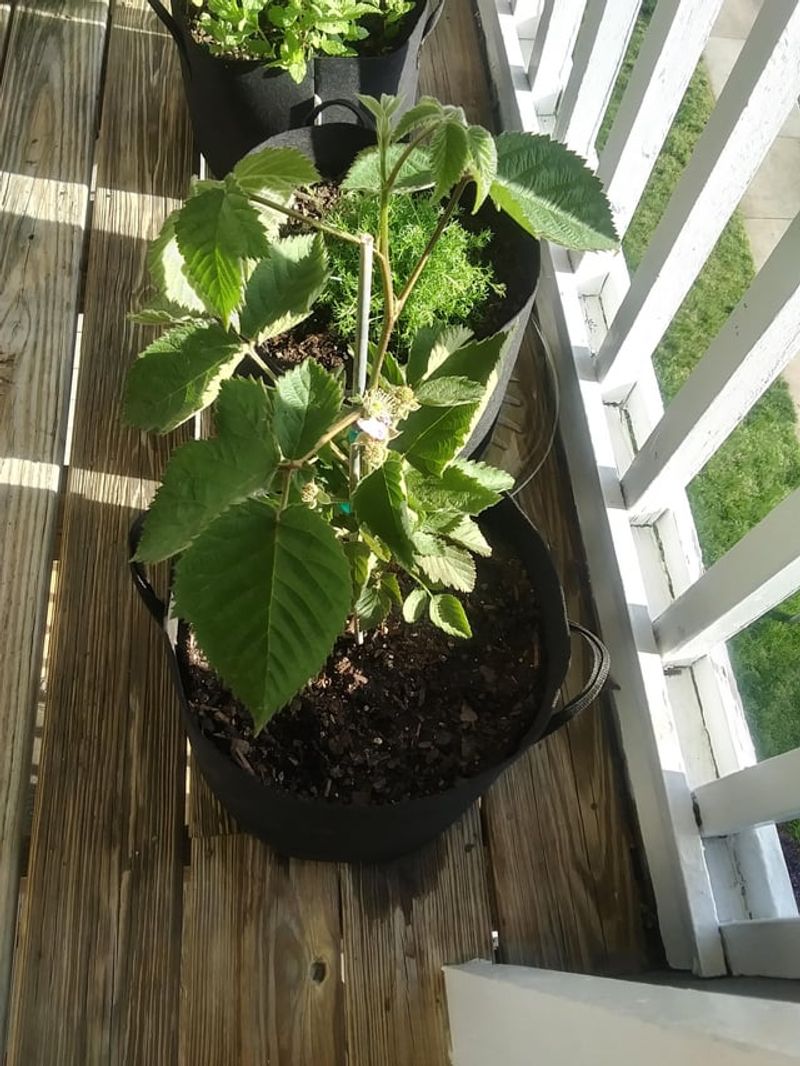
Bare soil in a container sitting in Arizona sun gets hot faster than most people realize. Soil surface temperatures in uncovered pots can climb high enough to damage shallow feeder roots and speed up moisture loss significantly.
A two-inch layer of mulch on top of the soil is one of the simplest and most effective tools available to Arizona container gardeners.
Wood chips, straw, and shredded bark all work well as mulch for blackberry containers. Wood chips tend to last longer before breaking down, which means less frequent replacement.
Straw is lightweight and easy to apply but may need topping off more often during a long Arizona growing season. Whatever you choose, keep mulch pulled slightly away from the base of the canes to allow airflow at the plant’s crown.
Beyond temperature control, mulch slows evaporation from the soil surface noticeably. In a desert climate where every bit of retained moisture counts, that reduction in evaporation can translate to less frequent watering without letting the plant dry out.
It also keeps the top layer of your potting mix from crusting over and repelling water, which is a common issue with containers in hot, dry conditions.
Mulch breaks down gradually and adds a small amount of organic material back into the soil as it decomposes. Refreshing the mulch layer every few months keeps it effective.
It is one of those low-effort habits that quietly supports plant health throughout the season without demanding much from the gardener.
7. Prune After Fruiting To Maintain Shape And Encourage New Growth
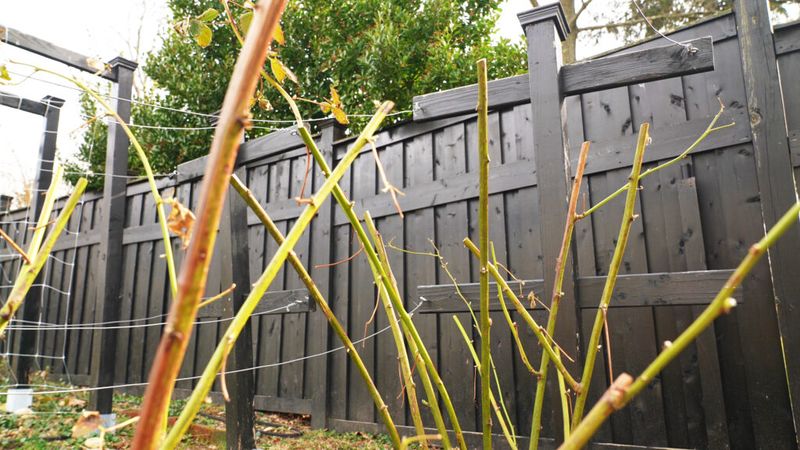
Blackberry canes have a two-year cycle, and understanding that rhythm makes pruning much less confusing. First-year canes, called primocanes, grow vegetatively.
Second-year canes, called floricanes, are the ones that actually produce fruit. Once a floricane has fruited, it is done and will not produce again, so removing it is the right move, not a mistake.
After your Arizona blackberry harvest wraps up in late spring or early summer, go through the container and cut out all the canes that fruited. They will look spent and may be starting to brown at the tips.
Removing them frees up space, improves airflow, and lets the plant redirect energy toward the new primocanes already pushing up from the base.
Thinning the remaining canes is worth doing at the same time. Keeping three to five healthy, strong canes per plant is a reasonable target for a container-grown blackberry.
Crowded canes compete for light and airflow, and in Arizona’s humid monsoon season, poor airflow can contribute to fungal spotting on leaves and canes.
A light cleanup prune in late winter, before new growth starts pushing hard, helps shape the plant and removes any canes that took cold damage or look weak heading into the season. Pruning cuts should be clean and made just above a bud or lateral branch.