Why Tomato Hornworms Are Such A Problem In Texas Gardens
Texas gardeners know the feeling. You head outside expecting to admire your tomato plants, and instead you find stripped stems, chewed leaves, and fruit that looks like somebody took a bite and walked off.
The culprit is usually not hard to spot once you know what you are looking for, but by then, the damage can feel downright rude.
Tomato hornworms are one of those garden pests that seem to appear out of nowhere right when plants start looking strong and full of promise.
They blend in beautifully, eat fast, and can turn a healthy tomato patch into a sorry sight before a busy week is over.
That is exactly why they cause so much trouble in Texas gardens, where long growing seasons and warm weather give them plenty of chances to thrive. The first signs are easy to miss, but the pattern they leave behind tells the story fast.
1. They Can Strip Tomato Plants Fast
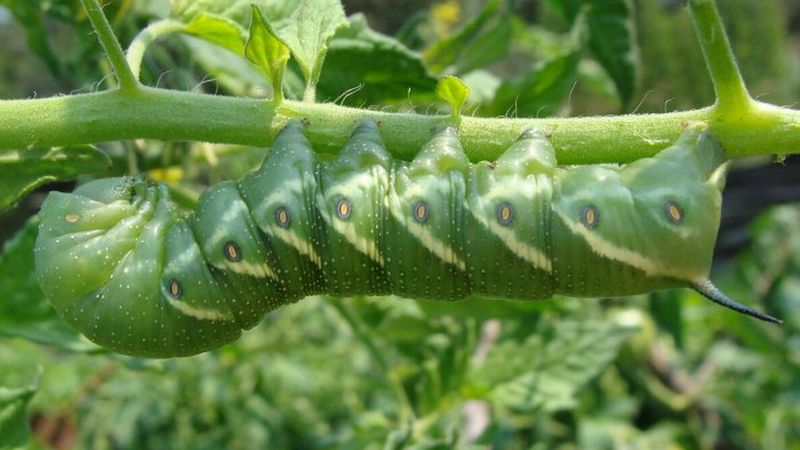
One of the most alarming things about tomato hornworms is just how quickly they can wipe out a healthy tomato plant. These caterpillars are not picky eaters, and they are not slow about it either.
A single hornworm can eat up to four times its own body weight in a single day, which means your plant does not stand much of a chance once one moves in.
In Texas, where the warm climate allows these pests to grow large and fast, the damage can feel like it happened overnight. You might check on your garden in the morning and everything looks fine, then come back in the evening to find entire branches stripped bare.
That kind of rapid destruction is what makes hornworms so frustrating for home gardeners across the state.
The caterpillars start small but grow quickly, and as they get bigger, their appetite grows right along with them. By the time they reach their full size of around four inches, they are eating machines that can clear a plant in just a few days.
Gardeners in Texas are often caught off guard because the damage escalates so fast. Checking your plants every day during peak season is one of the best ways to catch them early before they cause serious harm to your garden.
2. The Damage Often Shows Up Before You Spot The Caterpillars
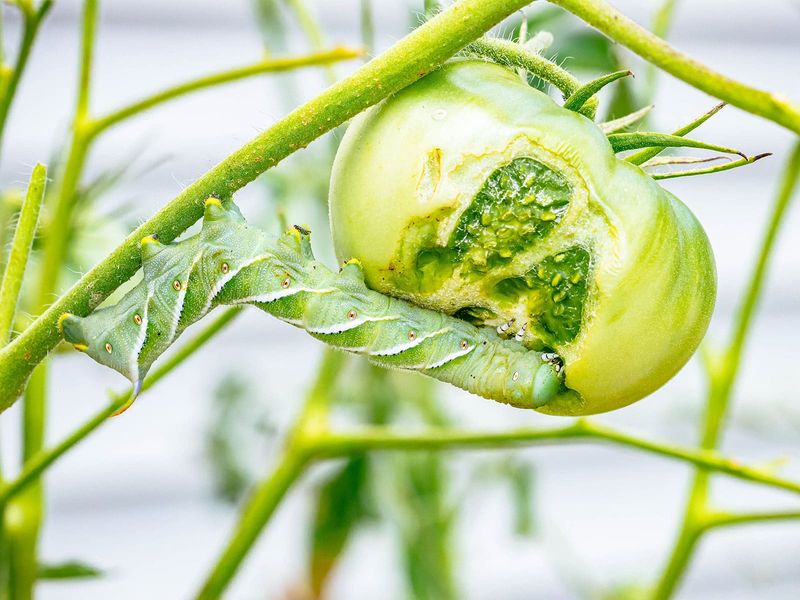
Spotting the actual caterpillar is harder than you might think, but the signs they leave behind are usually pretty obvious once you know what to look for. Chewed leaf edges, missing chunks of foliage, and bare stems are all early warning signs that a hornworm has made itself at home in your garden.
Many Texas gardeners notice the damage long before they ever find the caterpillar responsible.
The reason for this is simple: hornworms are excellent at staying hidden. They press their bodies close to stems and blend in so well with the green foliage that even experienced gardeners can scan a plant multiple times and miss them completely.
By the time the damage becomes obvious, the caterpillar may have already been feeding for several days.
Your Texas Garden Changes Every Week. Your Plan Should Too.
Gardening in Texas changes quickly throughout the season. Every Friday you’ll receive a simple weekly plan showing exactly what to plant, prune, fertilize, harvest, and protect so you never miss the right timing.
Learning to read the signs of hornworm activity is a real skill that pays off big in Texas gardens. Look for ragged leaf edges, stems that have been chewed down to nothing, and dark droppings scattered across the leaves below.
If you see any of these clues, start searching carefully along the main stems and underneath leaves. Run your fingers along the stem from the soil upward, since hornworms often rest right along the main stalk.
Catching them early, before the damage spreads, gives your tomato plants a much better chance of bouncing back strong for the rest of the growing season.
3. They Feed On Leaves, New Stems, And Sometimes Fruit
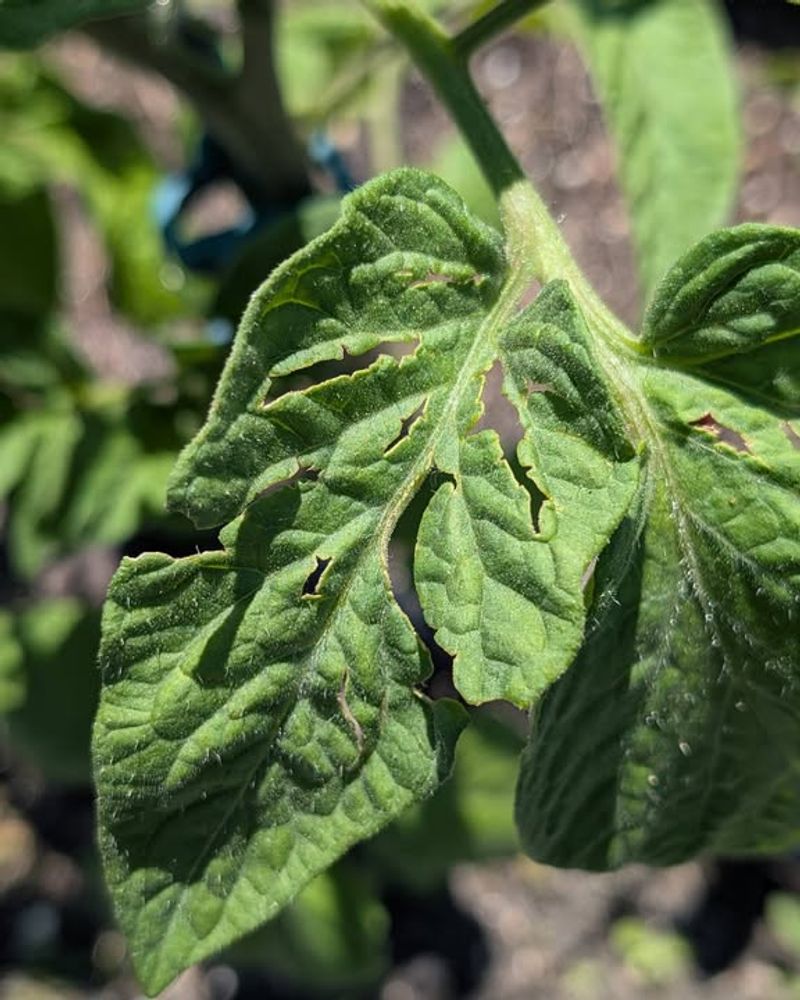
Most people know that hornworms go after leaves, but the damage does not stop there. Young, tender stems are also a favorite target, especially on new growth that has not yet toughened up.
When a hornworm works its way through a stem, it can cut off the flow of water and nutrients to an entire branch, causing it to wilt and weaken fast.
Fruit damage is another issue that Texas gardeners run into more often than they expect. Hornworms will chew into green tomatoes, leaving behind large, irregular holes and scarred surfaces.
Once a tomato has been damaged like that, it can become more vulnerable to decay or develop dry feeding scars that make the fruit less usable. Losing even a few tomatoes to hornworm feeding can be really discouraging, especially when you have been working hard all season to grow them.
The feeding behavior of hornworms is not random. They tend to work from the top of the plant downward, starting with the most tender growth first.
That is why checking the upper portions of your tomato plants is so important during summer in Texas. New stems and young leaves at the top are the first things to disappear.
Keeping a close eye on the top third of your plants during early summer can help you catch hornworm activity before it works its way down and causes more widespread damage throughout your garden.
4. They Blend In Easily With Tomato Foliage
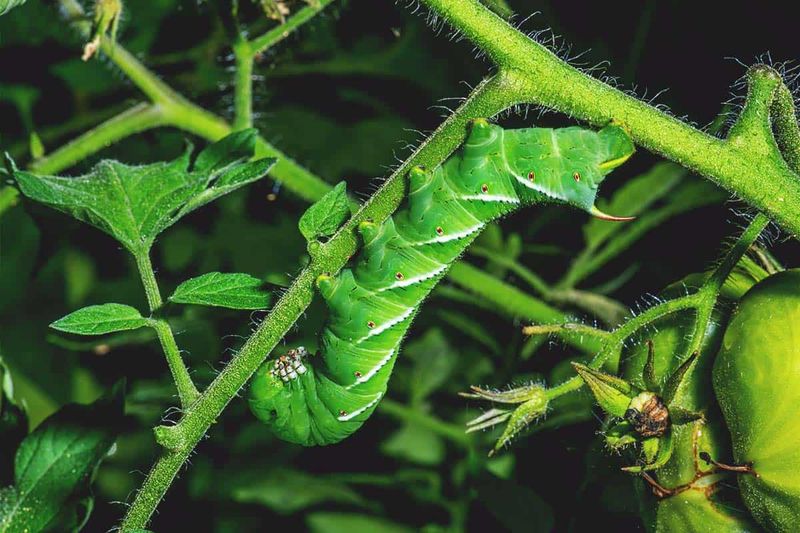
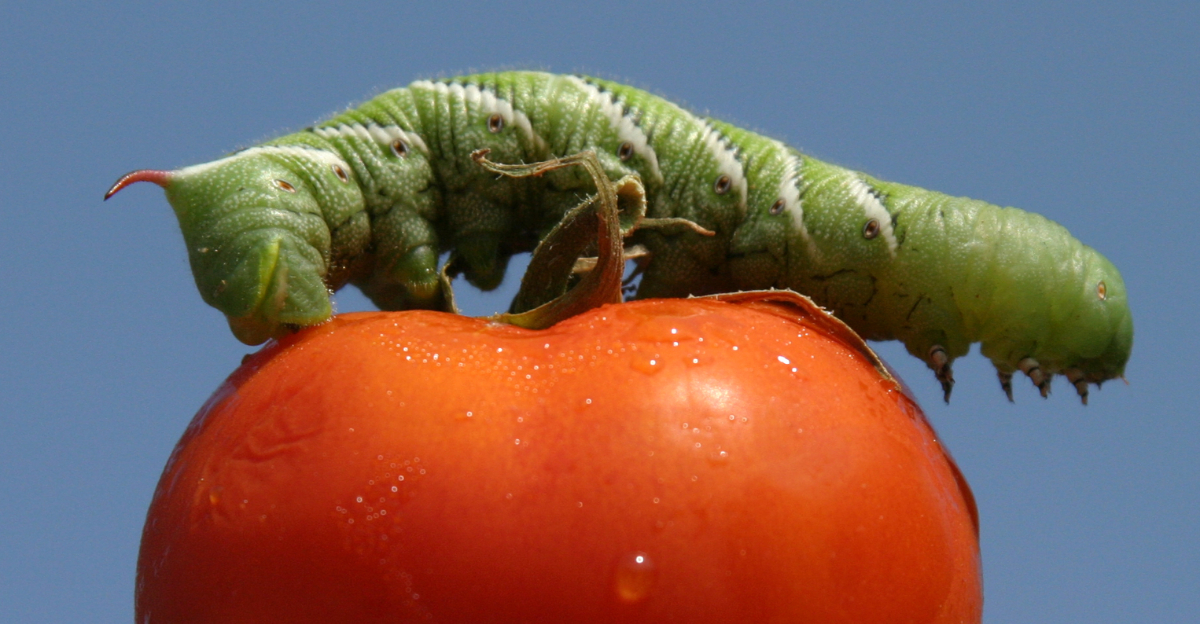
Camouflage is one of the hornworm’s biggest advantages, and it makes them incredibly difficult to manage in Texas gardens. Their bright green bodies match tomato leaves almost perfectly, and the white diagonal stripes along their sides mimic the patterns of light and shadow you normally see on a healthy plant.
Even up close, they can be surprisingly easy to overlook.
Experienced gardeners sometimes use a trick to find them: go out at night with a black light flashlight. Hornworms glow under ultraviolet light, making them much easier to spot in the dark than during the day.
This method works really well for Texas gardeners who struggle to find the caterpillars during regular daytime inspections, especially when plants have grown full and bushy.
Another helpful approach is to look for movement rather than the caterpillar itself. Gently shake a branch and watch for any shifting along the stems.
You can also look for the areas where leaves are missing and work backward from there, since the caterpillar is usually still nearby. Their grip on the plant is strong, so they do not tend to wander far from where they are feeding.
Patience and a slow, careful inspection are your best tools when searching for hornworms in a dense Texas garden. Once you find one, always check the surrounding plants too, because where there is one hornworm, there are often more hiding nearby.
5. They Leave Dark Droppings All Over The Plant
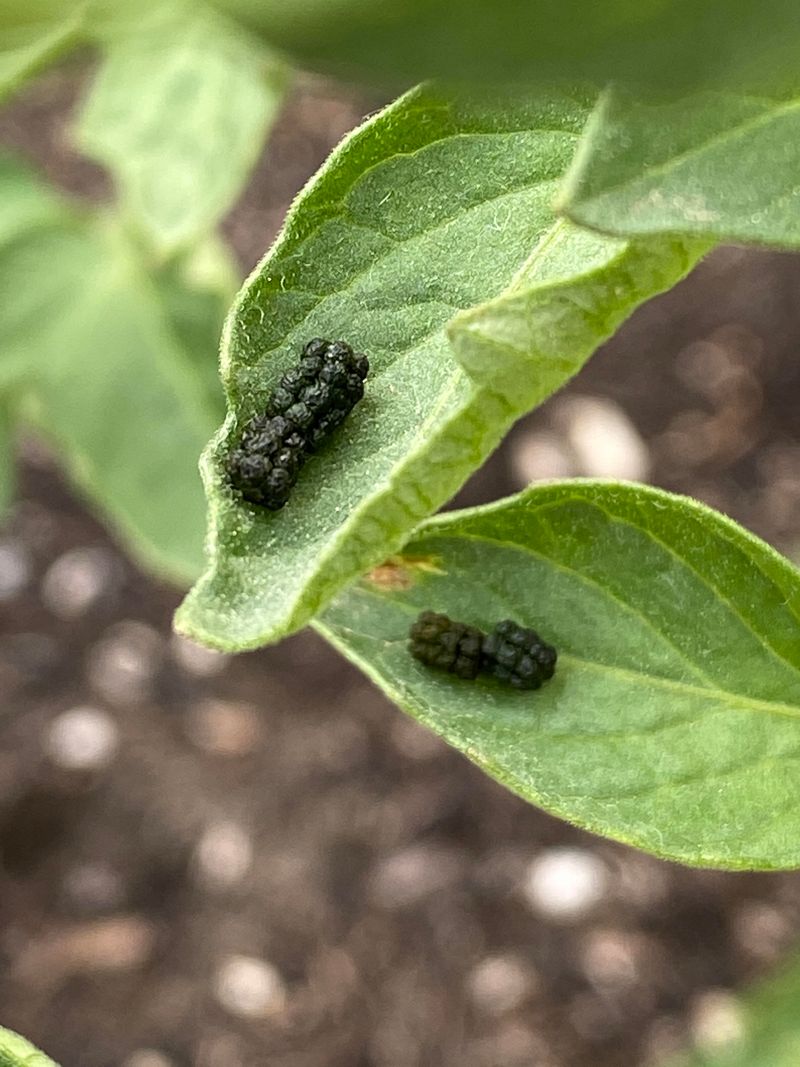
One of the most reliable ways to know a hornworm is active in your Texas garden is to look for their droppings, which gardeners often call frass. These are small, dark green or black pellets that the caterpillar leaves behind as it feeds.
They can show up on leaves, stems, and on the soil directly beneath the plant.
Finding frass is often the first real clue that something is going on, even before you notice any visible leaf damage. The droppings are surprisingly large for an insect, which actually makes them easier to spot than the hornworm itself.
If you see a cluster of dark pellets on a leaf or a pile building up at the base of your plant, start searching the branches above that spot immediately.
The amount of frass present can also give you a rough idea of how long the caterpillar has been feeding. A small amount suggests recent activity, while a large accumulation means the hornworm has likely been there for several days and has probably already done quite a bit of damage.
In Texas, where the warm weather keeps hornworms active and hungry for extended periods, frass is something every gardener should learn to recognize. Making it a habit to check the undersides of leaves and the soil around your tomato plants a few times each week during summer will help you catch hornworm activity early and respond quickly to protect your garden.
6. More Than One Hornworm Species Shows Up In Texas Gardens
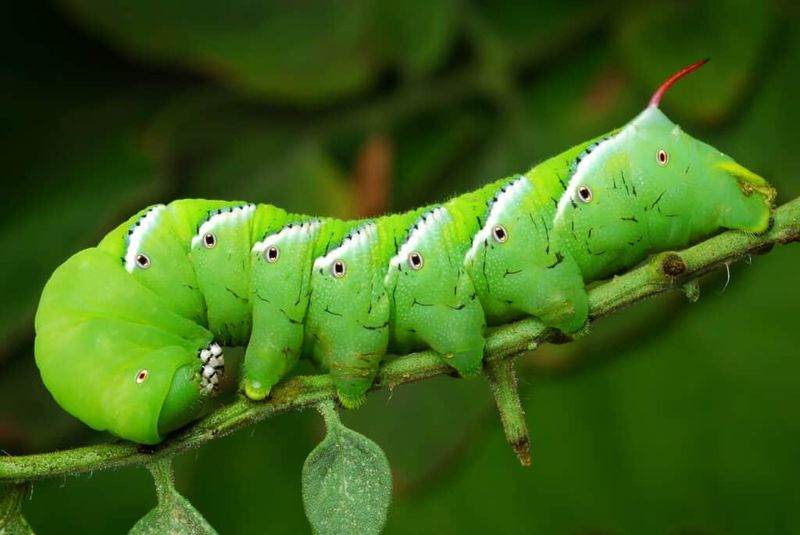
Not all hornworms are the same, and Texas gardeners actually have to deal with two different species that look very similar but have small differences. The tomato hornworm (Manduca quinquemaculata) has white V-shaped markings along its sides and a black horn at the tail end.
The tobacco hornworm (Manduca sexta) has white diagonal stripes and a red or orange horn instead.
Both species feed on tomato plants and other plants in the nightshade family, including peppers, eggplants, and potatoes. Having two species present means that Texas gardeners are dealing with a wider population of these pests throughout the growing season.
In some years, one species may be more common than the other, but it is not unusual to find both in the same garden at the same time.
Knowing the difference between the two species matters a little when it comes to identifying which one is causing problems, but the management approach for both is largely the same. Handpicking, encouraging natural predators, and keeping a close eye on your plants all work for either species.
What is worth remembering is that both hornworm types thrive in Texas because of the long, warm growing season that the state provides. The combination of heat, humidity in some regions, and extended summer conditions creates an ideal environment for both species to grow, feed, and reproduce at higher rates than in cooler parts of the country.
7. They Keep Coming Back Because They Pupate In The Soil
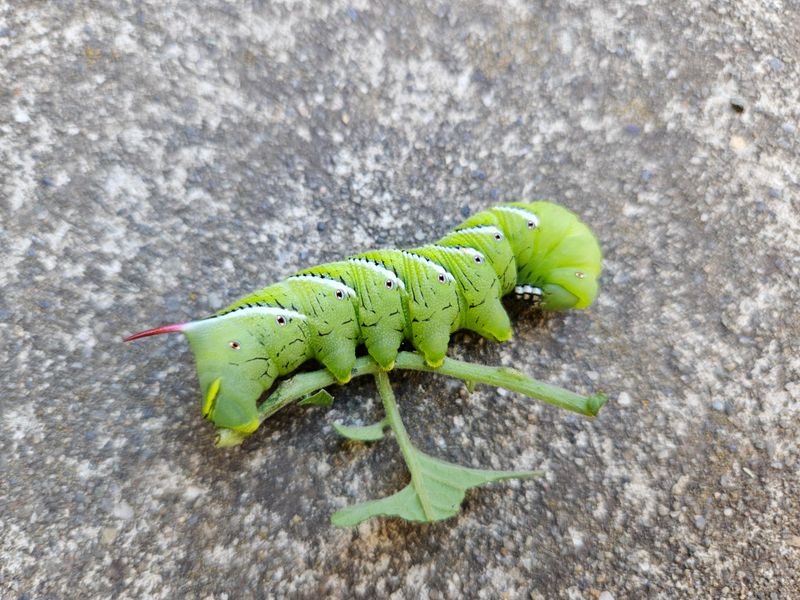
One of the main reasons hornworms keep showing up year after year in Texas gardens is their underground life stage. When a hornworm is done feeding, it drops to the soil and burrows several inches down to pupate.
The pupa, which looks like a brown torpedo-shaped capsule, can survive in the soil through the cooler months and emerge as an adult moth the following season.
In Texas, where winters are relatively mild compared to northern states, pupae have a higher survival rate. The soil does not freeze deeply enough in most parts of the state to affect them, which means a healthy population can overwinter successfully and produce a new generation of caterpillars the following year.
This is a big part of why Texas gardeners often see hornworms return during the summer growing season.
Tilling the soil after the growing season is one of the most effective ways to reduce the number of pupae that survive to the next year. When you turn the soil over, pupae get exposed to the surface where birds and other predators can find them.
Rotating your crops each season also helps break the cycle, since hornworm moths tend to lay their eggs on the same types of plants where they emerged. Combining soil tilling, crop rotation, and regular garden cleanup at the end of the season gives Texas gardeners a real advantage in reducing hornworm populations before the next growing season even begins.
8. Texas Gardeners Often Start Seeing Them In Early Summer
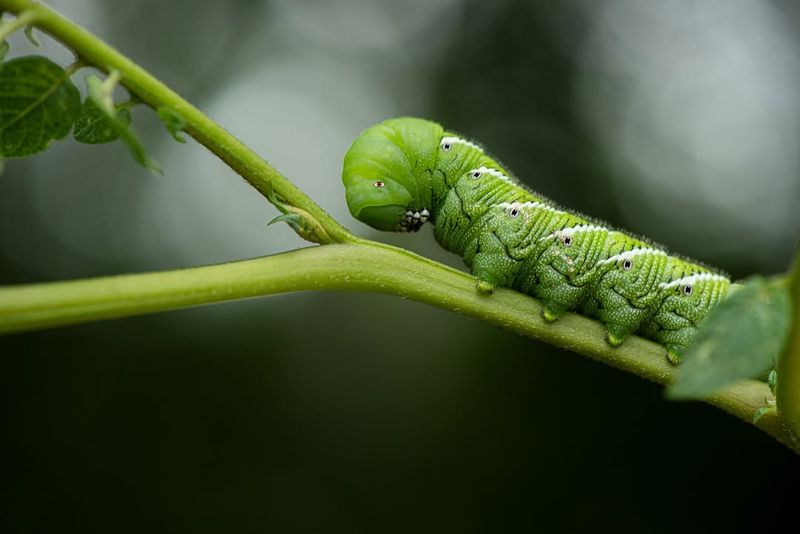
Timing matters a lot when it comes to managing hornworms in Texas, and knowing when to start watching for them can save your plants a lot of stress. Most Texas gardeners begin noticing hornworm activity in late May or early June, right around the time temperatures settle into that consistently warm range that these caterpillars love.
The adult moths that lay the hornworm eggs become most active during warm evenings, and egg hatching follows quickly after that.
Because Texas has such a long growing season, hornworms can produce two full generations per year in many parts of the state. The first generation typically shows up in early summer, while a second wave can arrive in late summer or early fall.
That means gardeners do not just have to deal with one round of damage. They need to stay alert throughout most of the growing season to keep hornworm populations from getting out of hand.
Starting your inspections early, before the caterpillars have a chance to grow large and cause serious damage, is the smartest strategy for Texas gardeners. Set a reminder to check your tomato plants every two or three days starting in late May.
Look for eggs, which are small, round, and pale green, on the undersides of leaves. Catching hornworms at the egg or early caterpillar stage makes removal much easier and keeps your garden healthier all the way through the long Texas summer growing season.