Unique Cactus Plants That Grow Well In Georgia Gardens And Containers
Cactus in Georgia? It sounds like a stretch until you see how well the right varieties can adapt.
While the state’s humid summers, steady rainfall, and occasional cold snaps are far from desert conditions, many cacti can still do well with a little planning.
Across Georgia, gardeners are finding success by choosing varieties that tolerate moisture and growing them in containers or fast-draining soil.
Even a small patio or sunny corner can become a space for something unexpected. With the right setup, these cactus plants bring texture, interest, and a fresh look to Georgia gardens.
1. Eastern Prickly Pear Thrives Outdoors In Georgia Conditions
Few plants feel more at home in Georgia’s unpredictable weather than the Eastern Prickly Pear, a native species that has been quietly growing across the state’s sandy soils and woodland edges for centuries.
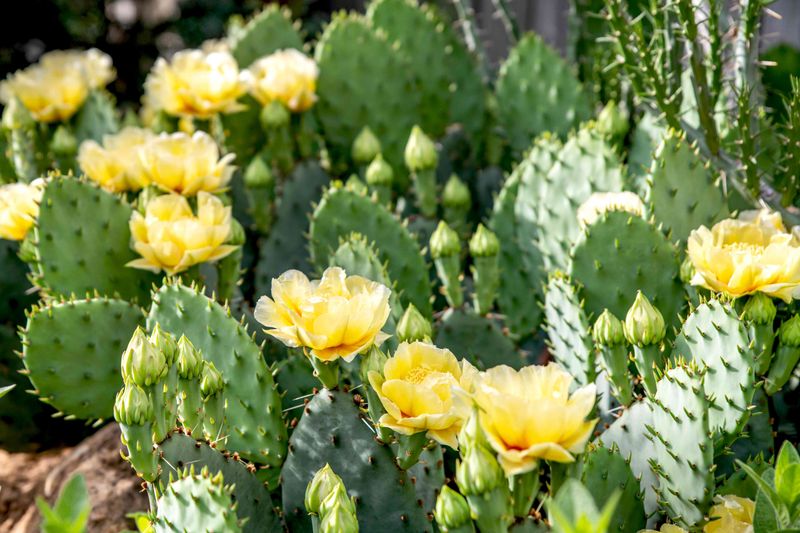
Known botanically as Opuntia humifusa, this low-growing cactus forms spreading clumps of flat, fleshy green pads that look striking against Georgia’s red clay landscape.
What makes it especially appealing is its cold hardiness. It can handle temperatures well below freezing, which means Georgia’s occasional winter cold snaps are no real threat.
The plant produces large, waxy yellow to gold flowers in early summer that attract pollinators and add a cheerful burst of color to garden beds.
In Georgia’s heavy clay soils, it is worth amending the planting area with coarse sand or perlite to improve drainage and reduce moisture retention around the roots.
Full sun exposure of at least six hours daily encourages healthy pad development and reliable blooming.
Watering is minimal once established, and the plant handles Georgia’s summer humidity better than most non-native cacti.
For gardeners seeking a low-maintenance, native option that genuinely belongs in a Georgia landscape, this prickly pear is a strong starting point.
2. Opuntia Pusilla Adds A Compact Native Cactus Option For Georgia Gardens
In Georgia landscapes, finding a cactus that stays small while still handling local conditions can feel like a win, and Opuntia pusilla fits that role nicely.
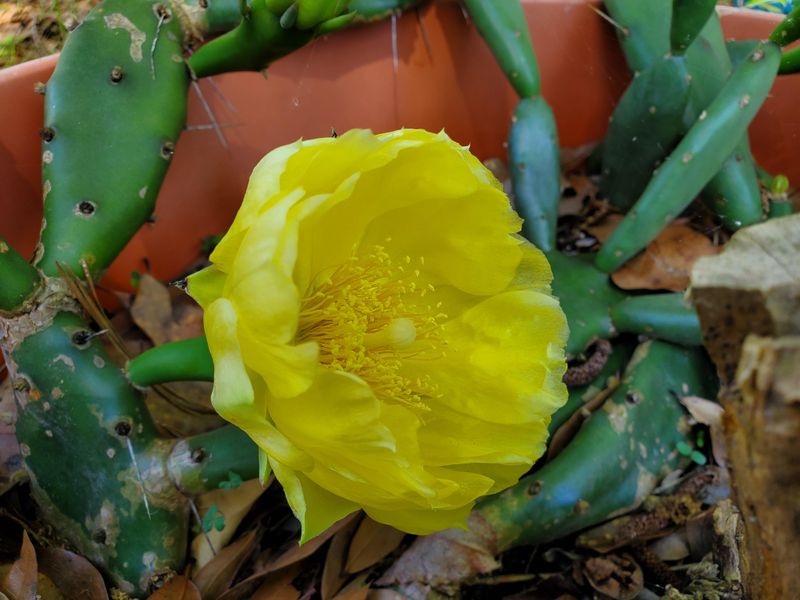
Often called a beach prickly pear, this native species forms low-growing clusters of rounded pads that spread gently without taking over a space.
It is well adapted to sandy soils and coastal areas in Georgia, but it can also perform well in containers with excellent drainage. Bright yellow flowers appear in warm weather, followed by small reddish fruits that add extra interest.
Full sun helps it maintain a compact shape and steady growth, while overly rich or wet soil can slow it down. For container growing, a gritty mix with added sand or perlite supports healthy roots.
Watering can stay light once established, especially during humid stretches. In the ground, it works well along borders, rock gardens, or dry slopes where drainage is strong.
Its smaller size makes it easier to place than larger prickly pears, and it brings a subtle, natural look that fits well into Georgia gardens.
3. Beavertail Prickly Pear Stands Out With Soft Blue Pads
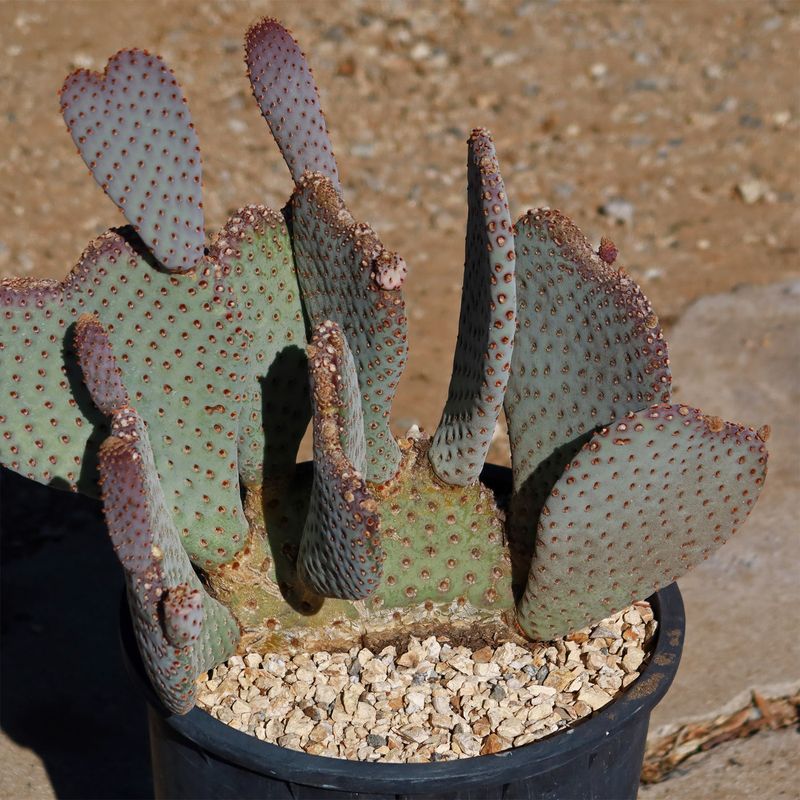
Walk through any well-curated succulent garden and the Beavertail Prickly Pear, Opuntia basilaris, tends to stop people in their tracks.
Your Georgia Garden Changes Every Week. Your Plan Should Too.
Gardening in Georgia changes quickly throughout the season. Every Friday you’ll receive a simple weekly plan showing exactly what to plant, prune, fertilize, harvest, and protect so you never miss the right timing.
Its pads carry a distinctive blue-gray to dusty lavender color that looks almost painted, and when deep magenta-pink flowers appear in spring, the contrast is genuinely striking.
Originally from the Mojave and Sonoran deserts, this cactus requires some extra attention in Georgia’s humid climate.
Container growing is often the smarter choice here, because it gives gardeners direct control over soil drainage and moisture levels throughout Georgia’s rainy summer months.
A well-draining cactus mix combined with a terracotta pot helps pull excess moisture away from the roots efficiently.
Full sun is essential for this variety, and positioning containers on a south-facing patio or deck works well in most Georgia locations. Watering should be infrequent, roughly every two to three weeks during the growing season, and even less during winter.
During Georgia’s coldest nights, moving containers indoors or to a covered area provides reliable protection.
The Beavertail rarely grows taller than about one foot, making it a manageable and visually compelling addition to patios, steps, or sunny windowsills across Georgia.
4. Bunny Ear Cactus Brings Playful Texture To Containers
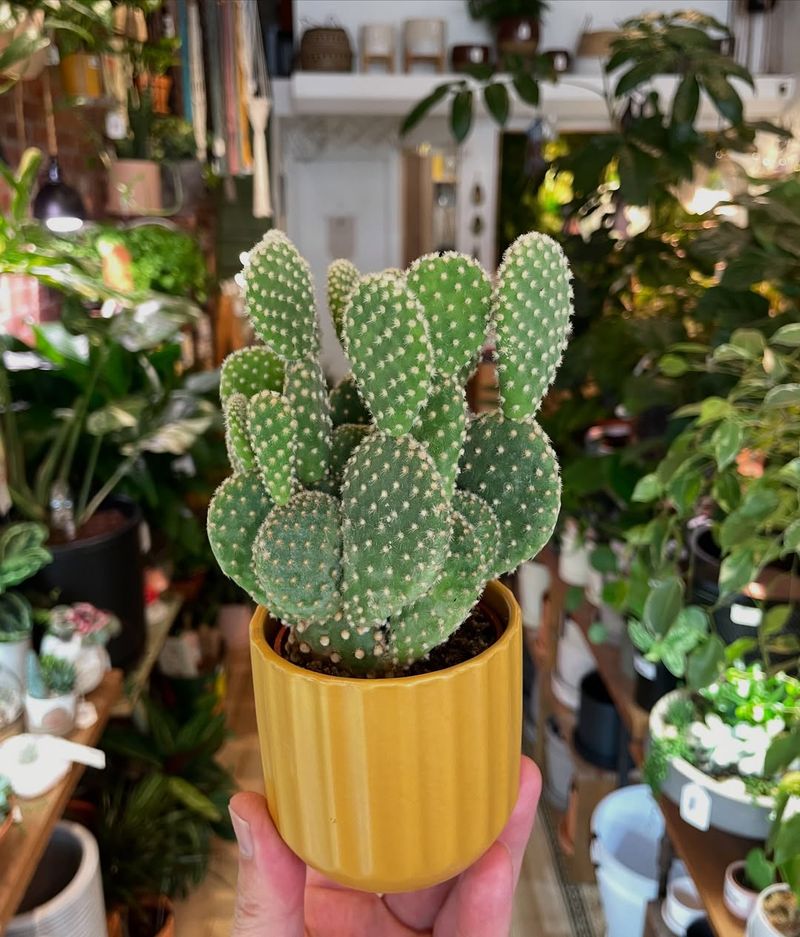
Named for its unmistakable shape, the Bunny Ear Cactus, Opuntia microdasys, produces pairs of rounded pads that genuinely do look like rabbit ears, which makes it a favorite conversation starter on patios and in sunrooms across Georgia.
Originally from central Mexico, it brings a whimsical energy to container gardens without demanding complicated care.
Georgia’s humidity is the main factor to manage with this variety. While it can tolerate brief periods of moisture, prolonged dampness around the root zone leads to trouble.
Growing it in containers filled with a sandy cactus mix and ensuring the pot has solid drainage holes gives it the best chance of staying healthy through Georgia’s wet summer stretches.
Place containers in a location that receives six or more hours of direct sunlight each day. South-facing patios and bright, unobstructed windowsills both work well in Georgia homes.
Watering every two to three weeks during warmer months is generally sufficient, and cutting back to once a month or less during fall and winter keeps the roots in good condition.
One thing worth knowing is that the tiny glochids on the pads, though soft-looking, can irritate skin, so handling with gloves is a sensible habit for Georgia gardeners of all experience levels.
5. Rat Tail Cactus Trails Beautifully In Hanging Baskets
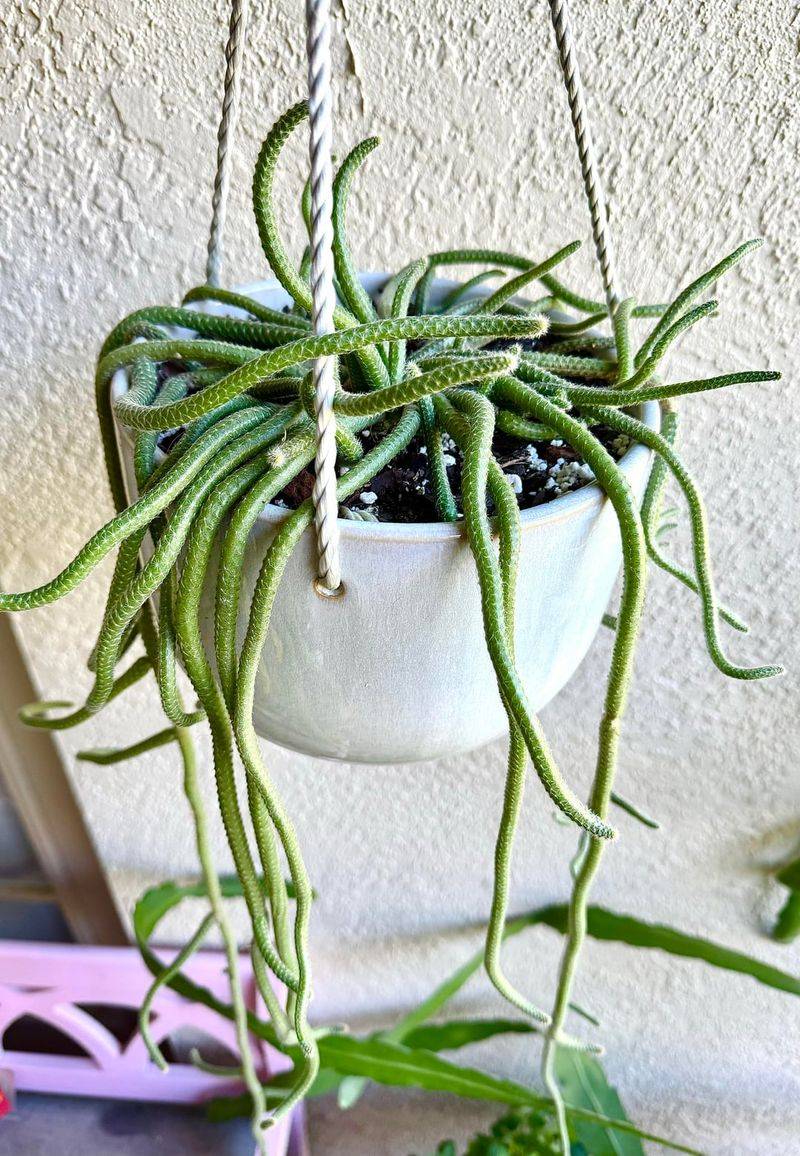
Covered porches and bright indoor spaces in Georgia have found an unexpectedly charming tenant in the Rat Tail Cactus, Aporocactus flagelliformis.
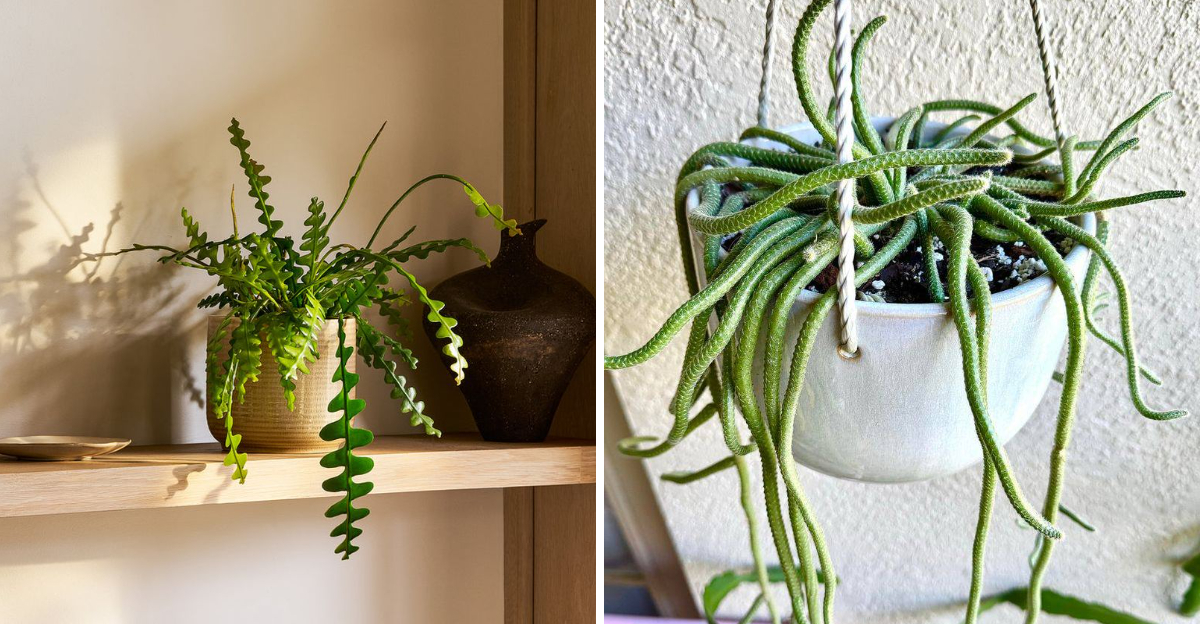
Its long, slender stems can reach several feet in length and cascade dramatically over the edges of hanging baskets, creating a waterfall effect that looks especially good against brick or painted porch walls.
Come spring, the stems produce vivid red to pink tubular flowers that bloom for several weeks and attract hummingbirds when hung outdoors.
Georgia’s spring temperatures are generally well-suited to encouraging this blooming cycle, though the plant appreciates being brought inside or under cover when nighttime temperatures drop below 40 degrees Fahrenheit.
Bright indirect light works better for this species than harsh afternoon sun, which can scorch the thin stems during Georgia’s intense summer heat.
A hanging basket with a well-draining cactus mix and good airflow around the roots keeps moisture from building up in the growing medium.
Watering every ten to fourteen days during the growing season and reducing frequency during winter maintains healthy stem growth.
For Georgia gardeners with limited horizontal space, this trailing cactus offers a vertical gardening solution that is both practical and visually dynamic.
6. Peanut Cactus Produces Bright Blooms On Small Stems
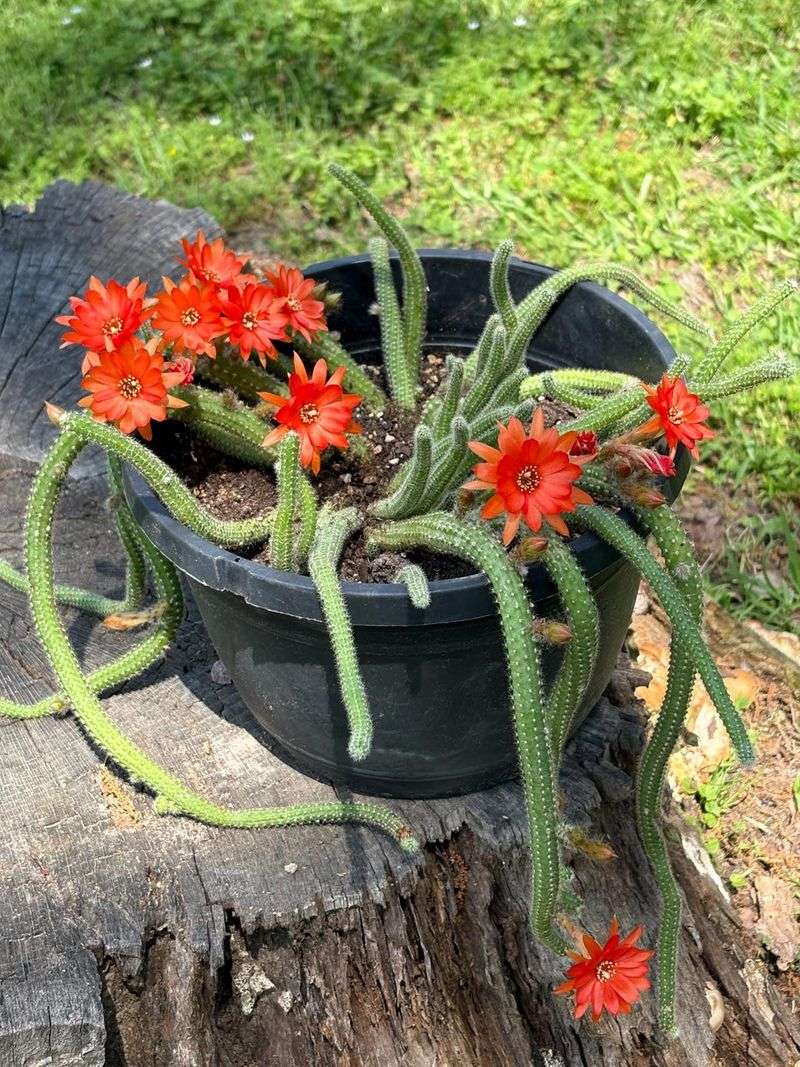
Gardeners who have limited space but still want a cactus that puts on a real floral show will appreciate the Peanut Cactus, Echinopsis chamaecereus.
The plant forms clusters of small, finger-like stems that resemble peanut shells, and each spring it produces flowers that seem almost too large and vivid for such a compact plant.
The blooms range from orange-red to scarlet and can measure up to two inches across, which is impressive given the plant’s modest size.
Georgia gardeners growing this cactus in containers often find that the dramatic bloom cycle makes it a standout piece on a sunny deck or windowsill from late spring into early summer.
Cold tolerance is a notable strength of this species, as it can handle light frost, making Georgia winters manageable when the container is placed in a sheltered spot or brought inside during hard freezes.
Full sun to bright partial shade suits it well, and a gritty, fast-draining soil mix helps prevent moisture buildup during Georgia’s humid months.
Watering sparingly during the growing season and cutting back significantly in winter encourages a strong bloom cycle the following spring. Repotting every couple of years keeps the clusters from becoming too crowded.
7. Star Cactus Adds A Rare And Eye-Catching Form
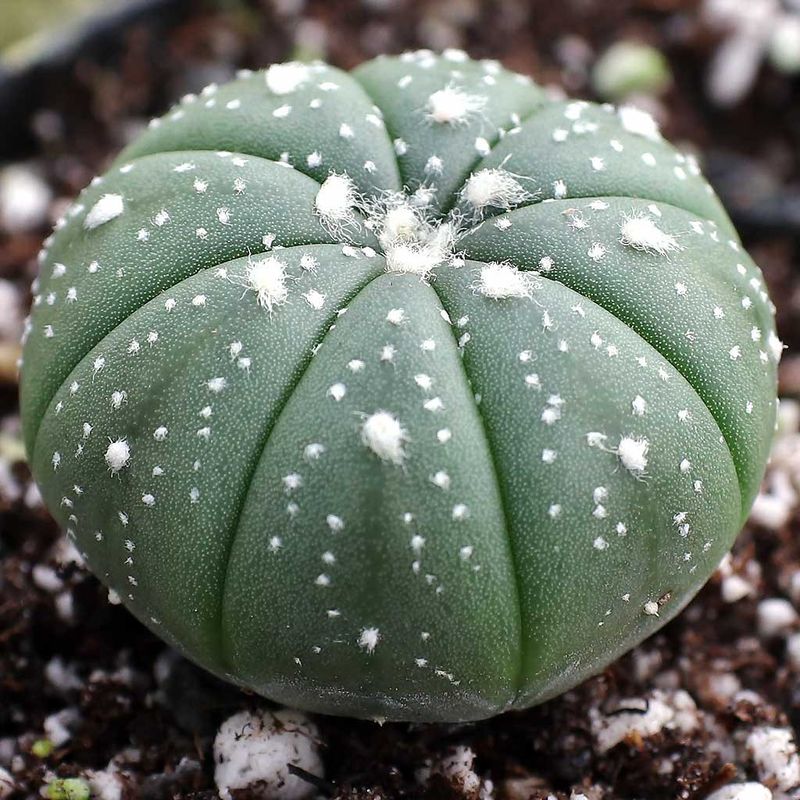
Compact, geometric, and quietly fascinating, the Star Cactus, Astrophytum asterias, looks less like a typical spiny cactus and more like a small, living sculpture.
Its flattened, circular body is divided into eight symmetrical ribs dotted with soft white tufts, giving it an almost otherworldly appearance that draws attention on any shelf or sunny windowsill in Georgia.
Because it originates from Texas and northeastern Mexico, this species is adapted to warm, dry conditions and can struggle with Georgia’s high summer humidity if not managed carefully.
Container growing in a very well-draining mix of coarse sand, perlite, and a small amount of cactus soil is strongly recommended.
Keeping the pot elevated slightly to encourage airflow beneath the container can also reduce moisture retention.
Bright, direct sunlight for at least five to six hours supports healthy growth and brings out the plant’s natural coloring. Watering should be sparing, roughly every two weeks during summer and barely at all during winter months in Georgia.
Yellow flowers with orange centers appear in spring and summer, adding seasonal color to its already striking form.
Because it grows slowly and stays small, the Star Cactus is well-suited to indoor growing in Georgia during winter months.
8. Fishbone Cactus Grows With Unusual Zigzag Stems
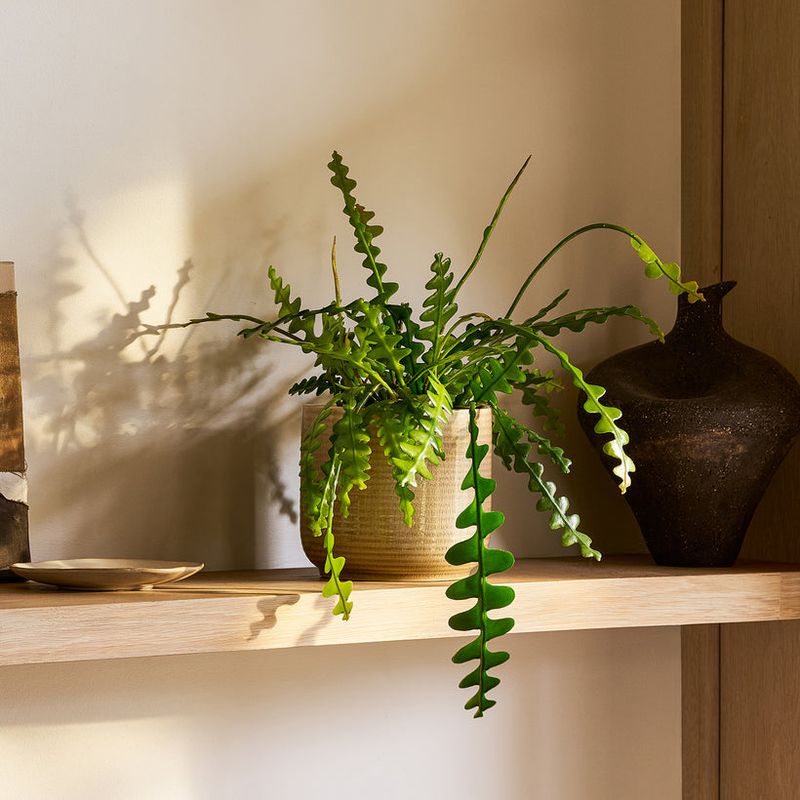
Georgia plant lovers who enjoy the unexpected will find the Fishbone Cactus, Epiphyllum anguliger, genuinely refreshing.
Its flat, leaf-like stems grow in a distinct zigzag pattern that resembles the bones of a fish, making it one of the most visually unusual cacti available to home gardeners.
Unlike desert cacti, this species is actually an epiphytic cactus native to Mexican rainforests.
That tropical origin means it handles humidity better than most cacti, which gives it an interesting advantage in Georgia’s climate.
It prefers bright indirect light rather than harsh direct sun, making it a strong candidate for east-facing windows, covered porches, or shaded patios where Georgia’s afternoon sun is filtered.
A well-draining orchid mix or a blend of cactus soil and perlite works well as a growing medium.
Watering is slightly more frequent than for desert cacti, roughly every one to two weeks during the growing season, but the soil should still be allowed to dry between waterings.
In fall, the plant produces fragrant white to pale yellow flowers that open at night, creating a memorable display.
Keeping it in a container makes winter management easy in Georgia, since it can simply be moved indoors when temperatures begin to drop.
9. Christmas Cactus Thrives In Shaded Outdoor Spaces
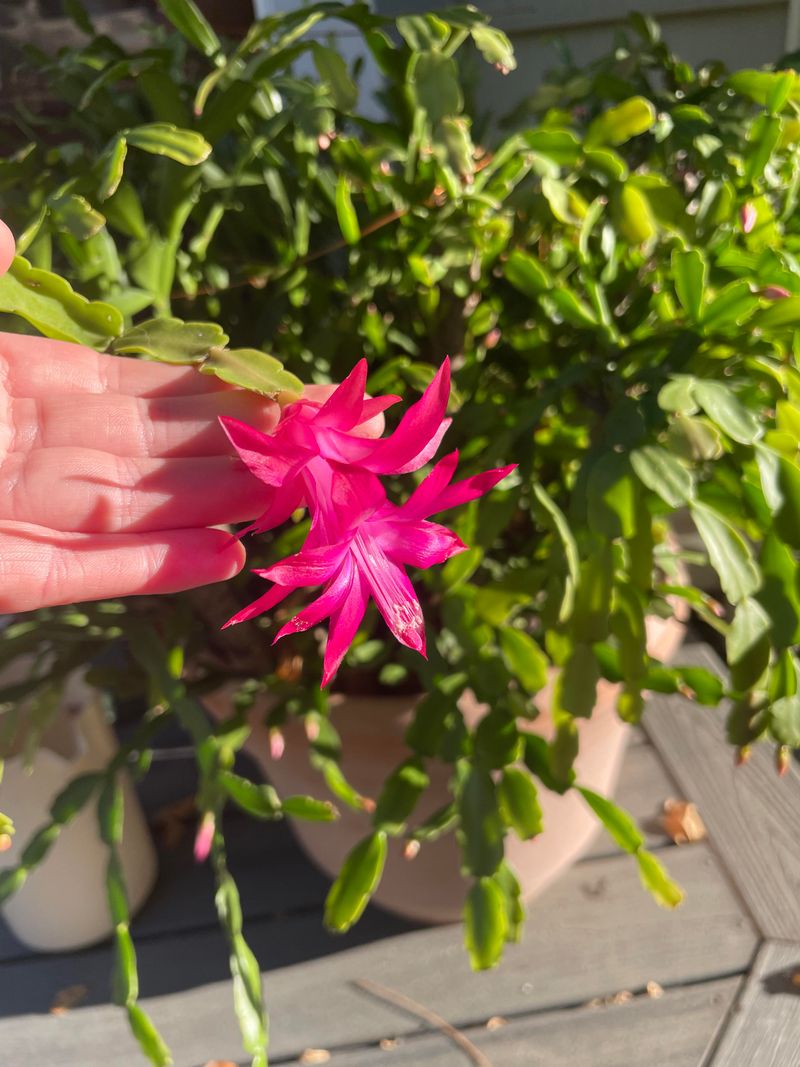
Shaded porches and bright indoor rooms across Georgia have long been home to the Christmas Cactus, Schlumbergera bridgesii, a plant that brings reliable late-season color when most gardens are winding down for the year.
Its arching, segmented stems and tubular flowers in shades of pink, red, white, and lavender are a familiar and welcome sight from late fall into winter.
Like the Fishbone Cactus, this is another epiphytic species with tropical roots, meaning it actually appreciates some humidity rather than fighting it.
That quality makes Georgia’s climate a reasonably comfortable fit, especially in shaded outdoor spots or well-lit indoor spaces where temperatures stay moderate.
Direct afternoon sun in Georgia’s summer can bleach the stems, so filtered light or morning sun is the better choice.
Watering more consistently than desert cacti, roughly every seven to ten days during the growing season, supports lush stem growth and a strong bloom cycle.
Reducing watering in early fall encourages the plant to set flower buds for its signature holiday display.
Container growing is standard for this species, and using a peat-based or well-draining mix keeps roots healthy. Bringing containers indoors before Georgia’s first hard frost protects the plant and extends its lifespan considerably.