Use This Bright Flower To Pull More Hummingbirds To Your Florida Feeder
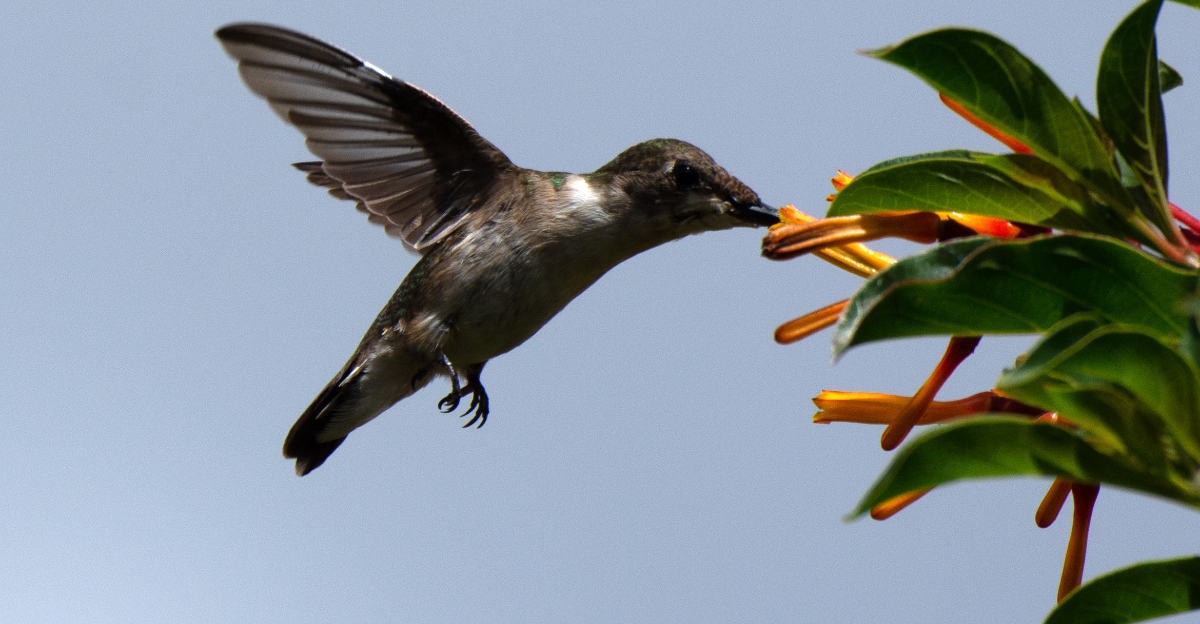
You can fill a feeder, clean it like clockwork, and still wonder why hummingbirds seem to stop by for a sip and vanish just as fast. In Florida, a sugar water setup alone does not always seal the deal.
These tiny birds are drawn to yards that feel alive, colorful, and easy to return to, which is why the right flower can change the whole picture. A bright bloomer near the feeder gives them a reason to linger, scout around, and treat your yard like more than a pit stop.
It adds color for you and a reliable nectar source for them, which is a win-win any way you slice it. For Florida gardeners hoping to turn a quiet corner into a hummingbird hot spot, one standout plant keeps proving its worth.
That flower is firebush.
1. Firebush Is The Bright Flower Hummingbirds Cannot Resist
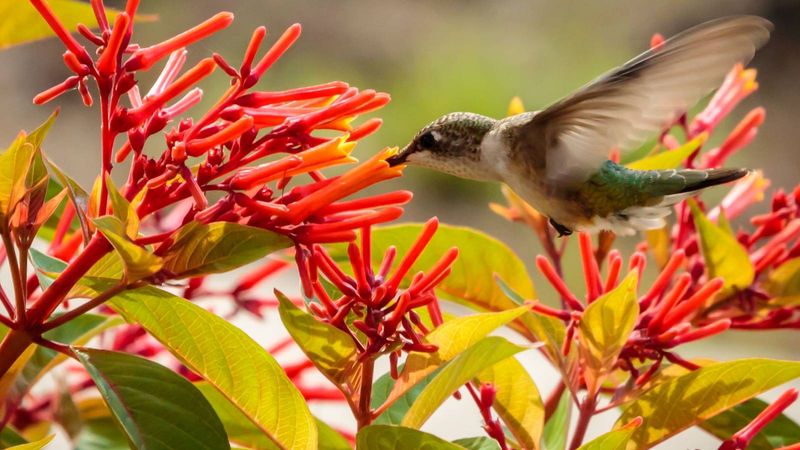
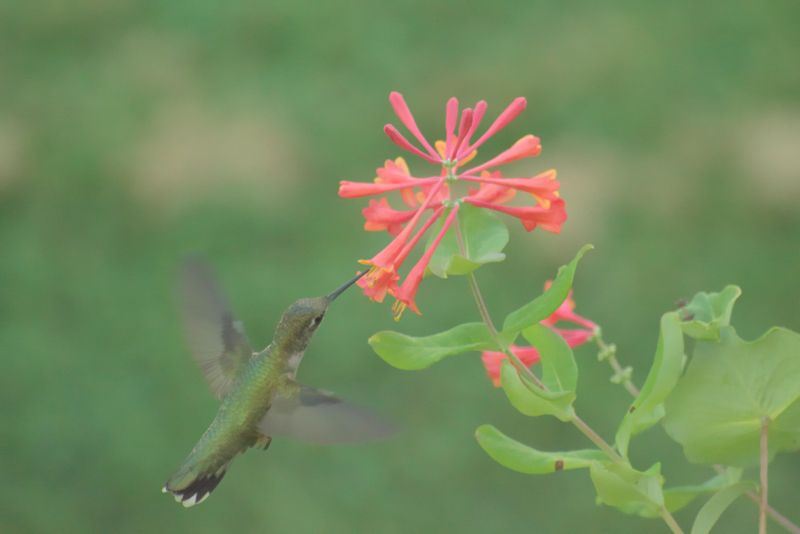
Walk past a firebush in full bloom on a warm Florida morning, and you will likely spot a hummingbird already working its way through the clusters.
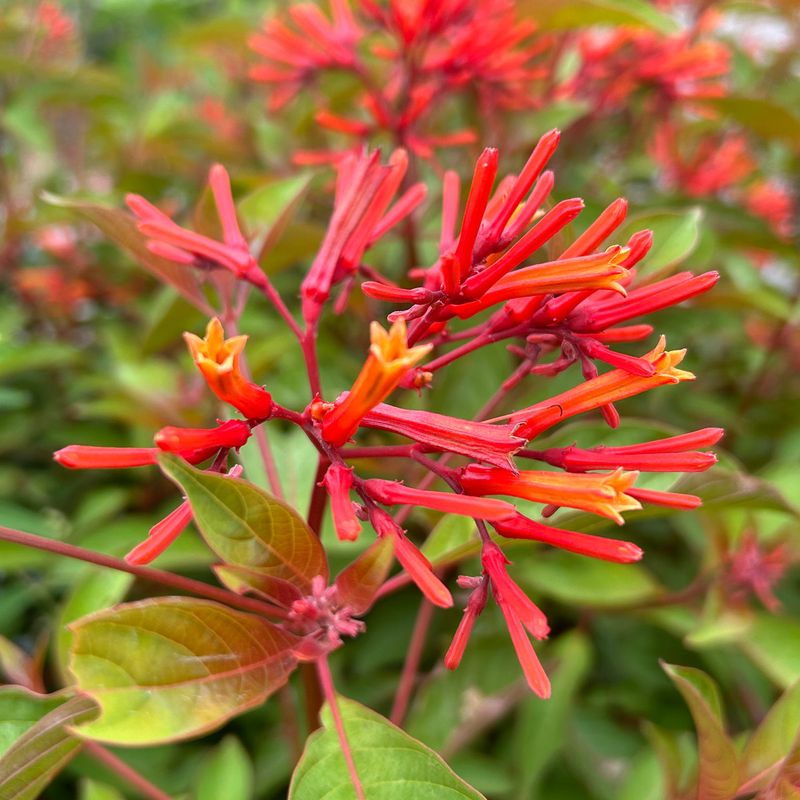
Hamelia patens, commonly called firebush, is a Florida native shrub that produces dense bunches of narrow, tubular flowers in shades of red and orange.
Those blooms are not just pretty to look at; they are packed with nectar that hummingbirds actively seek out.
According to UF/IFAS, firebush is one of the top native plants recommended for attracting hummingbirds in Florida.
The shrub can grow quite large in South Florida, reaching up to fifteen feet in some conditions, while North and Central Florida gardeners typically see it top out between four and eight feet.
In frost-free areas, it blooms nearly year-round, giving hummingbirds a dependable food source far longer than most ornamental plants can manage.
What makes firebush stand out in a Florida landscape is how well it fits the full picture of hummingbird attraction. The flower color hits the red-orange range that hummingbirds respond to strongly.
The tubular shape matches their long, slender bills perfectly. The plant itself handles Florida heat without skipping a beat.
That combination is exactly why firebush earns its place as the anchor plant in any serious Florida hummingbird garden setup.
2. Plant Tubular Blooms To Keep Hummingbirds Coming Back
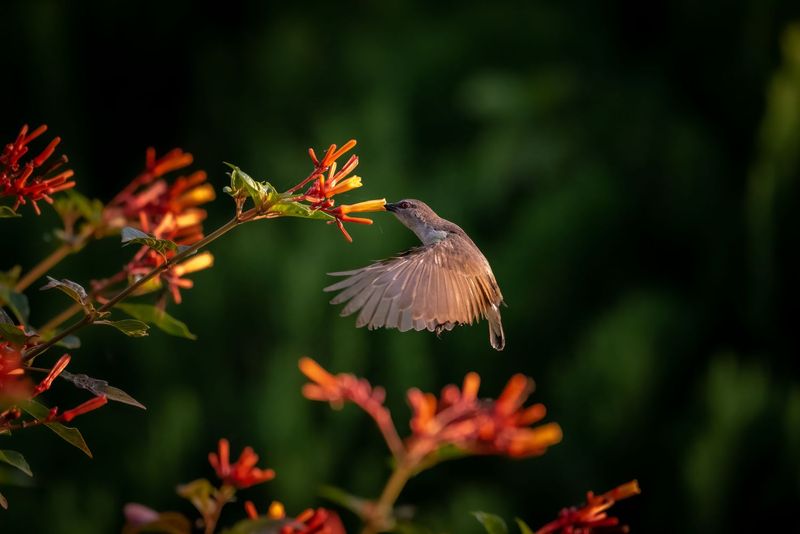
Hummingbirds are built for a very specific type of flower, and that shape is tubular. Their bills are long and slender, and their tongues can reach deep into narrow blooms to lap up nectar that other pollinators simply cannot access.
Flat, wide-open flowers do not offer the same feeding efficiency, which is why hummingbirds tend to skip over them in favor of something that actually fits.
Firebush delivers exactly that fit. Each individual flower in a firebush cluster is long and narrow, almost like a tiny curved tube.
When a hummingbird pushes its bill inside, it gets a reliable nectar reward. That reward is what drives repeated visits.
Once a hummingbird learns that a plant consistently delivers, it builds that spot into its feeding route and comes back again and again.
Heavily doubled flowers or blooms with thick petals packed tightly together often block access to the nectar, making them frustrating for hummingbirds even when the color looks appealing. Firebush avoids that problem entirely.
Your Florida Garden Changes Every Week. Your Plan Should Too.
Gardening in Florida changes quickly throughout the season. Every Friday you’ll receive a simple weekly plan showing exactly what to plant, prune, fertilize, harvest, and protect so you never miss the right timing.
The blooms stay open and accessible throughout their lifespan on the plant.
Pairing that accessibility with a nearby feeder creates a feeding zone that hummingbirds recognize as reliable, which is the real goal for any Florida gardener who wants steady hummingbird traffic all season long.
3. Place Firebush Close Enough To Feeders To Get Noticed
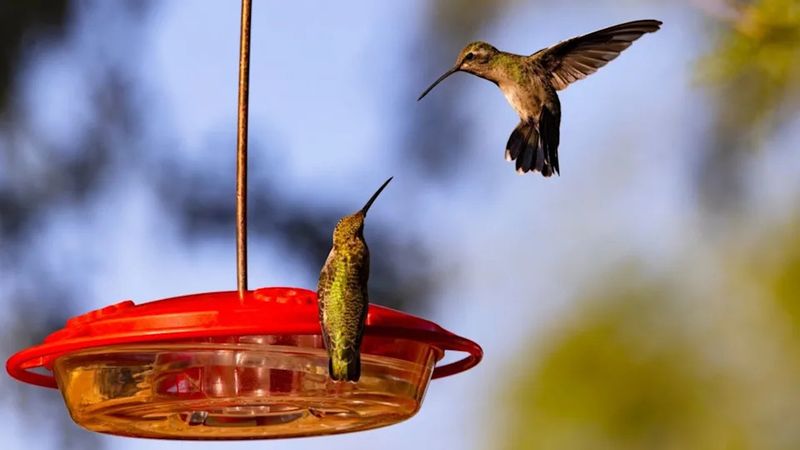
Placement matters more than most gardeners realize when it comes to combining plants and feeders for hummingbirds. A firebush tucked into a far corner of the yard may attract hummingbirds on its own, but it will not do much to boost traffic to a feeder that sits on the opposite side of the patio.
The goal is to create a zone where both the plant and the feeder are visible together from a hummingbird’s flight path.
A good starting point is positioning firebush within six to ten feet of your feeder. Close enough that a hummingbird visiting the plant will notice the feeder, and vice versa.
You do not want the shrub so close that it physically blocks access to the feeder or makes the bird feel crowded. Hummingbirds are territorial and like to have a clear view of their surroundings while feeding.
Hanging the feeder slightly above the firebush canopy or off to one side keeps both visible without competition.
If you have a fence, pergola, or shepherd’s hook nearby, those structures can help you position the feeder at a useful height while the firebush grows below or beside it.
Think of the two as partners in the same feeding station rather than separate attractions. That mindset will help you arrange them in a way that genuinely increases hummingbird visits.
4. Let Florida Heat Work In Firebush’s Favor
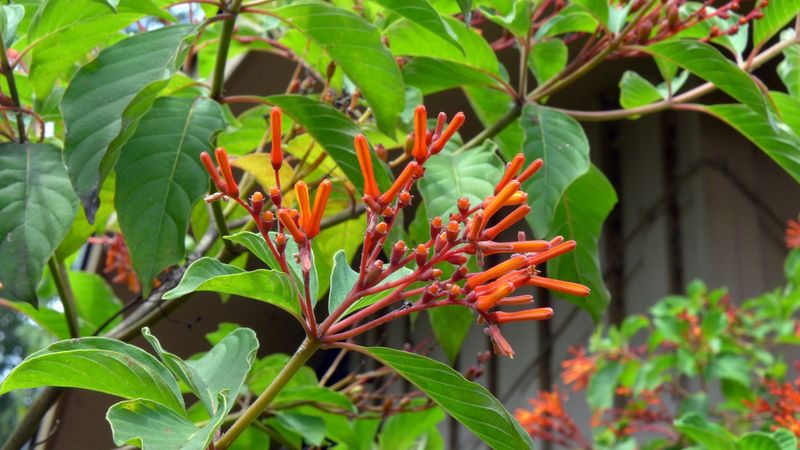
Summer in Florida is brutal for a lot of plants. The heat builds fast, afternoon rains come in sideways, and humidity hangs over everything.
Many flowering plants that look great in spring start to fade, drop blooms, or just look tired by July. Firebush does the opposite.
Native to Florida and tropical regions of the Americas, firebush is genuinely built for heat. UF/IFAS notes that it thrives in full sun to partial shade and handles Florida summers without wilting or slowing its bloom production.
While other garden plants are struggling to survive the warmest months, firebush is often at its most productive, pushing out new flower clusters on a regular cycle. That means hummingbirds have a fresh nectar source available right when the heat peaks.
This heat resilience is a major advantage for Florida gardeners who want to support hummingbirds during the late summer and early fall migration period.
Ruby-throated hummingbirds pass through Florida in larger numbers during fall migration, and having a firebush in peak bloom during that window can make a real difference in how many birds stop by.
The plant essentially syncs up with the season when hummingbird activity is highest, making it a natural fit for anyone trying to maximize feeder visits during the most active stretch of the year in Florida.
5. Use Red Orange Blooms To Catch More Hummingbird Attention
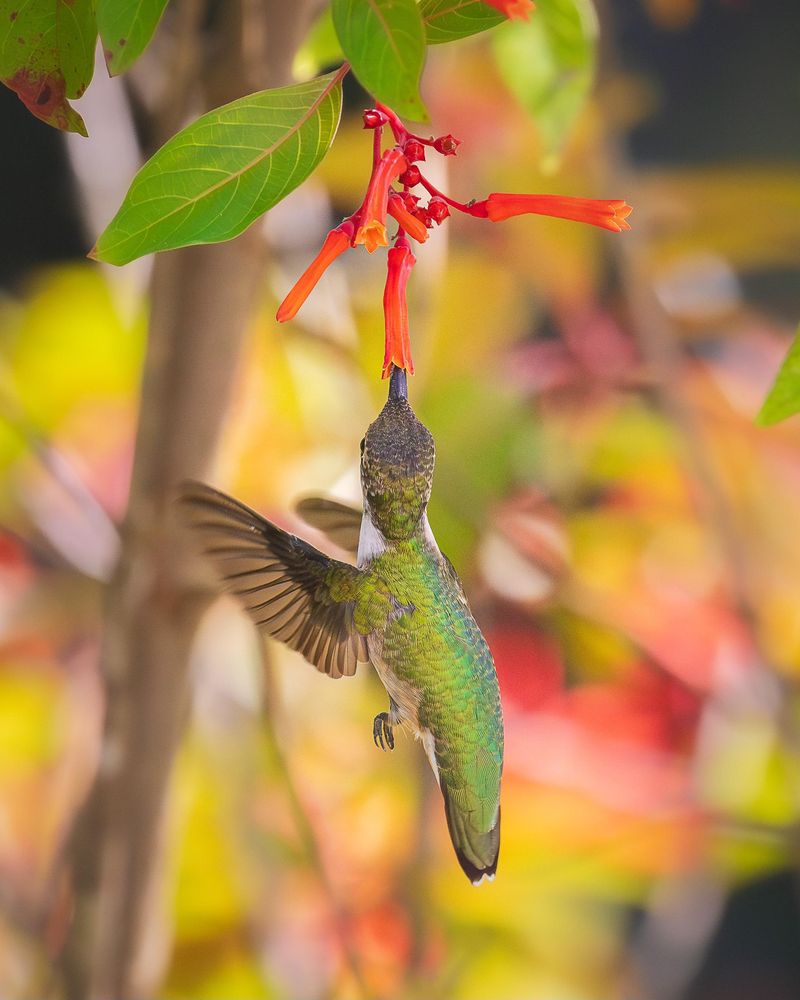
Color is one of the first things hummingbirds use to locate food sources from a distance.
Research has consistently shown that hummingbirds show a strong preference for red and orange tones, likely because those colors are associated with high-nectar flowers in their natural environment.
Firebush hits that sweet spot with its flame-colored blooms that read as a clear feeding signal even from across a yard.
Planting firebush near a feeder adds a layer of visual pull that a feeder alone cannot provide. A feeder hanging in open space may go unnoticed by a hummingbird passing through for the first time.
But a shrub covered in red-orange tubular flowers is hard to miss. Once a bird investigates the plant, it will almost certainly spot the feeder nearby, and that is when the pattern of regular visits can begin.
The color combination also works well in the garden as a whole. Firebush foliage often takes on reddish tones along the stems and leaf edges, especially in full sun.
That means even the leaves contribute to the warm, eye-catching palette that draws hummingbirds in.
Adding a few companion plants in pink or coral shades can extend the visual signal further, but firebush alone creates a strong enough color presence to make a real difference in hummingbird attention without any additional help.
6. Give Firebush What It Needs To Bloom Longer In Florida
Getting firebush to bloom over a long stretch is not complicated, but a few care decisions make a noticeable difference. Sun exposure is the biggest factor.
Firebush performs best in full sun, which UF/IFAS defines as six or more hours of direct sunlight per day. Plants grown in too much shade tend to produce fewer flowers and stretch toward the light rather than putting energy into blooming.
Watering is most important during the first few months after planting. Once firebush is established in Florida soil, it becomes quite drought-tolerant and does not need frequent irrigation.
During establishment, watering two to three times per week helps the root system settle in without stress.
After that, rainfall typically handles most of the plant’s needs during the wet season, and supplemental watering during dry spells is usually enough to keep it healthy.
Soil adaptability is another strength. Firebush handles sandy Florida soils well and does not require rich or heavily amended ground to thrive.
Light pruning after a flush of blooms can encourage new growth and fresh flower production, but heavy cutting should be avoided during the main growing season.
Removing old or crossing branches in late winter or early spring helps shape the plant without sacrificing the blooms that hummingbirds depend on through the warmer months ahead.
7. Pair Firebush With Feeders For A Stronger Hummingbird Pull
Feeders and flowers serve different purposes in a hummingbird setup, and using both together is more effective than relying on just one. A feeder offers a reliable, consistent nectar source that hummingbirds can count on.
Natural flowers like firebush offer something slightly different: fresh nectar produced by a living plant, along with the visual and sensory cues that hummingbirds respond to instinctively.
When firebush grows near a feeder, the two work together to create a feeding zone that feels worth visiting and worth returning to. A hummingbird that finds the firebush will often investigate the feeder as well.
One that finds the feeder first may then explore the nearby plant. Over time, the bird begins associating that corner of your yard with food, and that is when you start seeing the same individual returning on a regular schedule.
Natural nectar from firebush also provides trace nutrients and compounds that artificial sugar water does not fully replicate. Supporting hummingbirds with both options gives them a more complete food environment.
During migration periods, when hummingbirds need to fuel up quickly, having a high-nectar plant right next to a reliable feeder can make your yard a preferred stop over neighboring yards that offer only one or the other.
That combined setup is what turns occasional visitors into regulars throughout the Florida hummingbird season.
8. Avoid The Mistake That Makes Hummingbirds Pass By
Even the best feeder and a healthy firebush nearby will not deliver results if a few common mistakes are in play. One of the most frequent problems is placing firebush in too much shade.
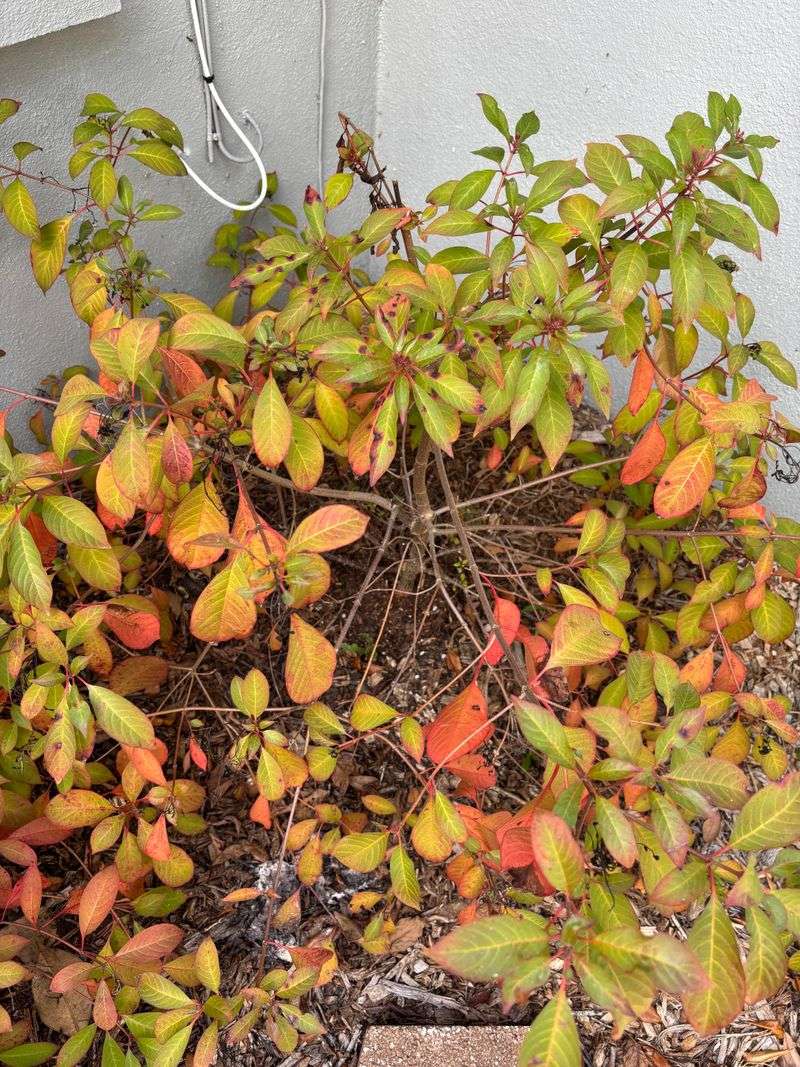
Gardeners sometimes tuck it under a tree canopy thinking the partial shade will protect it, but heavy shade cuts bloom production significantly. Fewer blooms mean less nectar, less color, and far less hummingbird interest.
Neglected feeders are another issue that quietly drives hummingbirds away. Sugar water left in a feeder too long ferments and grows mold, both of which are harmful to hummingbirds.
In Florida’s heat, nectar can spoil in as little as two to three days during summer. Cleaning the feeder and refreshing the nectar every two to three days during warm months keeps the offering safe and appealing.
Relying entirely on a feeder without any supportive planting nearby is also a missed opportunity. A feeder alone may attract hummingbirds that already know your yard, but it does less to pull in new birds passing through.
Firebush acts as a visible, natural signal that draws attention from a distance in a way a small feeder simply cannot.
Combining fresh nectar in a clean feeder with a well-placed, sun-grown firebush eliminates most of the common reasons hummingbirds pass a yard by without stopping.