These Unusual Cactus Plants Stand Out In Arizona Landscapes
Some cactus plants blend into the background, while others instantly pull your attention the second you notice them. It is not about size or how rare they are, it is the way their shape, texture, or color breaks away from what most people expect.
In Arizona landscapes, where cactus already feels familiar, standing out takes something different. Some varieties grow in unexpected forms, others carry bold patterns or unusual tones that shift how the entire yard looks without overpowering it.
That is why certain cactus choices never go unnoticed, even in a setting filled with desert plants.
Once you start paying attention to those details, it becomes clear how a few distinct plants can completely change the feel of a landscape and give it a more memorable look.
1. Totem Pole Cactus Grows Smooth And Columnar Without Spines
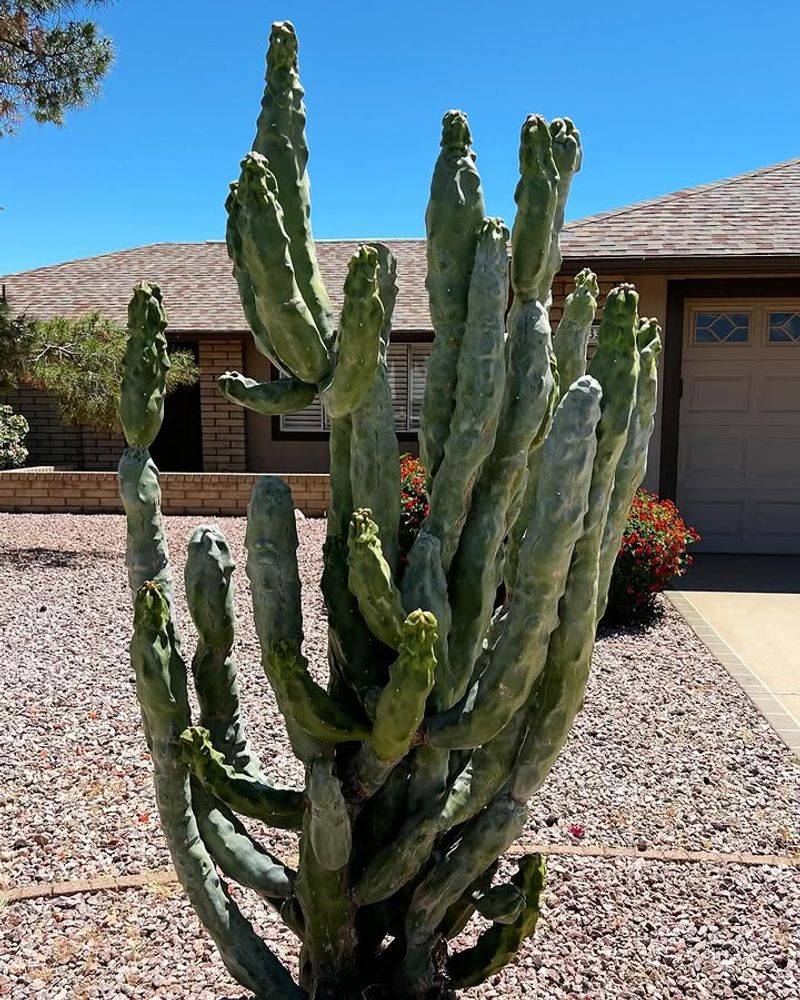
No spines, no sharp edges, just a tall twisting column that looks like something carved by hand. The Totem Pole Cactus gets its name from its bumpy, sculptural surface and its slow, upright growth that can eventually reach 10 to 12 feet in Arizona’s warm climate.
Unlike most cacti you have dealt with, this one will not catch on your clothes or scratch your arm when you walk past it.
Botanically known as Lophocereus schottii f. monstrosus, it is a monstrose form of the Senita cactus, meaning its growth pattern is irregular and lumpy rather than smooth. Those rounded bumps and ridges along the stem are what give it that totem pole look.
Skin tone ranges from pale green to a slightly blue-green depending on sunlight exposure and season.
In Arizona, it performs best in full sun with fast-draining soil. Sandy or gravelly ground is ideal since standing water around the base can cause rot over time.
Growth is slow, so patience is necessary. Planting it as a focal point near an entry or along a wall gives it the visual space it deserves.
It pairs well with low-growing succulents that will not compete with its vertical form. This is one cactus that earns attention without asking for much in return.
Its subtle branching over time makes each plant unique, turning it into a living sculpture that changes slowly year after year.
2. Blue Myrtle Cactus Adds A Cool Blue Tone To Desert Plantings
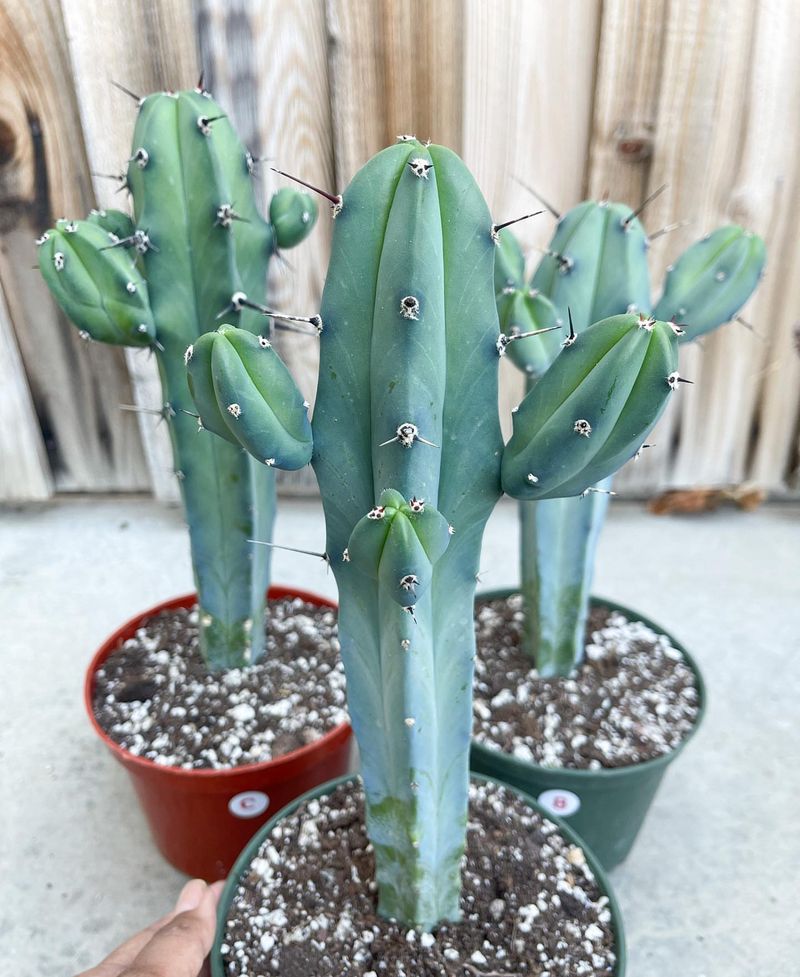
Walk past a Blue Myrtle Cactus on a bright Arizona afternoon and the color will actually stop you. The stems are a genuine blue-green, almost waxy in appearance, and they stand out sharply against tan gravel or rust-colored Arizona soil.
Most desert plants trend toward gray-green or olive, so this one reads as something completely different in a landscape setting.
Known scientifically as Myrtillocactus geometrizans, it originates from Mexico but adapts well to Arizona’s low desert conditions. It grows in a candelabra shape, with multiple upright branches extending from a central trunk.
Mature specimens can reach 15 feet or more, though in cultivated Arizona gardens, most stay closer to six to ten feet depending on water and soil quality.
Your Arizona Garden Changes Every Week. Your Plan Should Too.
Gardening in Arizona changes quickly throughout the season. Every Friday you’ll receive a simple weekly plan showing exactly what to plant, prune, fertilize, harvest, and protect so you never miss the right timing.
Full sun brings out the best color. Too much shade and the blue tone fades to a dull green that loses its visual impact.
Watering deeply but infrequently during the warmer months keeps it healthy without encouraging rot. In winter, very little water is needed since growth slows considerably.
Edible dark purple berries appear after small white flowers, which is an unexpected bonus for those who grow it. Planted against a light-colored wall or mixed with golden-toned rocks, the blue contrast is genuinely impressive.
Arizona gardeners looking for color variety without relying on flowering plants will find this cactus delivers year-round visual interest.
3. Golden Barrel Forms A Round Shape That Stays Compact
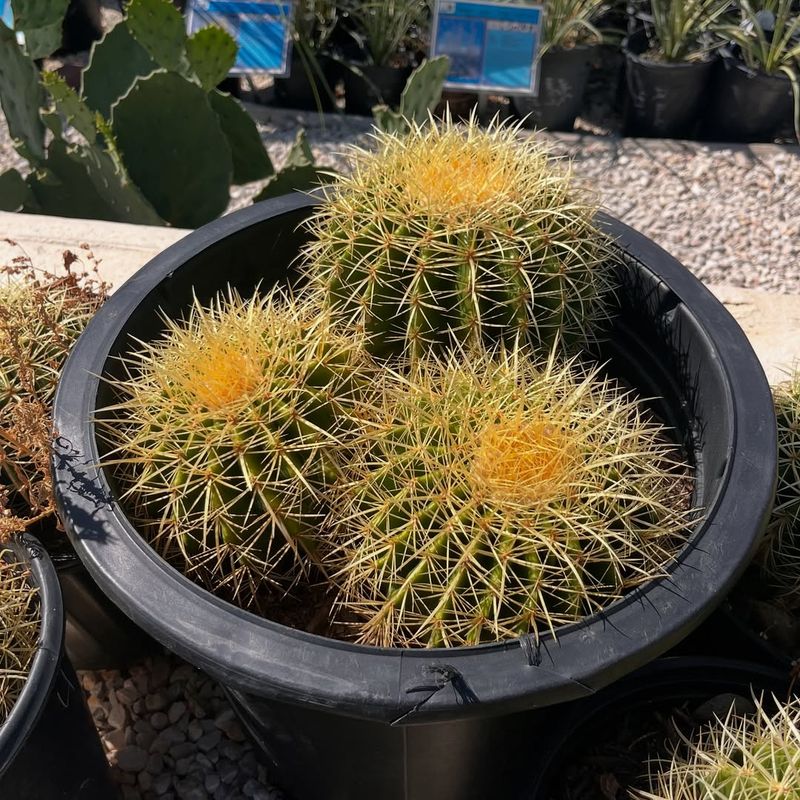
Round, golden, and almost perfectly symmetrical, the Golden Barrel cactus is one of the most recognizable shapes in Arizona landscaping.
It grows as a dense globe covered in bright yellow spines that catch afternoon light and glow warm against dark gravel or decomposed granite.
Young plants are small enough to fit in a container, while older ones can reach two feet wide and just as tall after many years.
Echinocactus grusonii is the scientific name, and it is native to central Mexico, though it has been widely planted across Arizona’s low desert communities for decades.
It tolerates heat extremely well and handles full sun without any issues during Arizona’s long, intense summers.
Reflected heat from walls or pavement does not seem to bother it much either.
Drainage matters more than most people realize with this plant. Soggy soil during Arizona’s monsoon season can cause internal rot that is not always visible on the outside until the damage is already done.
Planting it on a slight slope or in raised beds helps water move away from the base. Yellow flowers appear in a ring near the top during summer, though they are small and easy to miss unless you are looking for them.
Grouped in odd numbers, three or five barrels together create a natural, desert-appropriate arrangement that works well in both front yards and commercial Arizona landscapes.
4. Fishhook Barrel Cactus Shows Curved Spines And Seasonal Blooms
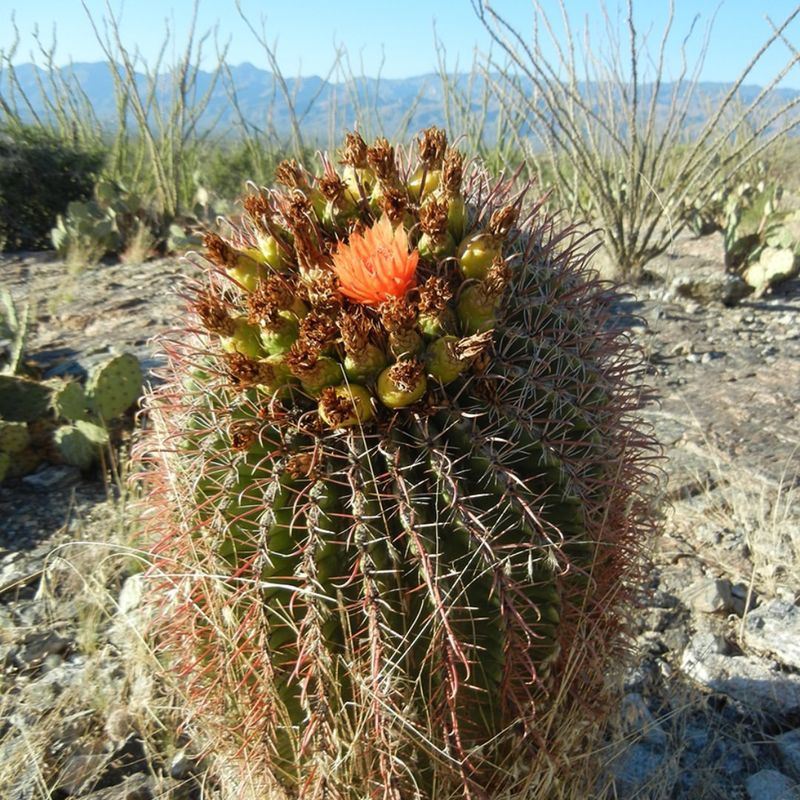
Those curved, hooked spines are not just for show. The Fishhook Barrel Cactus, Ferocactus wislizeni, uses them effectively to snag passing animals and, in the wild, even humans who brush too close on a trail.
In an Arizona yard, that same feature makes it a natural deterrent along borders or beneath windows. It is a plant that earns its space through function as much as appearance.
Native to the Sonoran Desert, it grows across much of southern and central Arizona at lower elevations. The body is ribbed and cylindrical, usually reaching two to four feet tall in cultivated settings.
Spines are red, yellow, or a combination of both, and the central hooked spine on each cluster is noticeably longer and more curved than the surrounding ones.
Blooms appear from late summer into fall, which is later than many Arizona cacti. The flowers are orange-yellow to red and cluster near the top of the plant.
After flowering, small yellow fruits form and often persist through winter, which attracts birds and adds another layer of interest. Full sun is non-negotiable for healthy growth.
Established plants handle Arizona’s dry spells without supplemental water, though a deep soak once or twice during the hottest months can support better flowering. Avoid planting it in foot traffic areas since those hooks catch fabric and skin with surprising ease.
5. Organ Pipe Cactus Forms Multiple Tall Stems From One Base
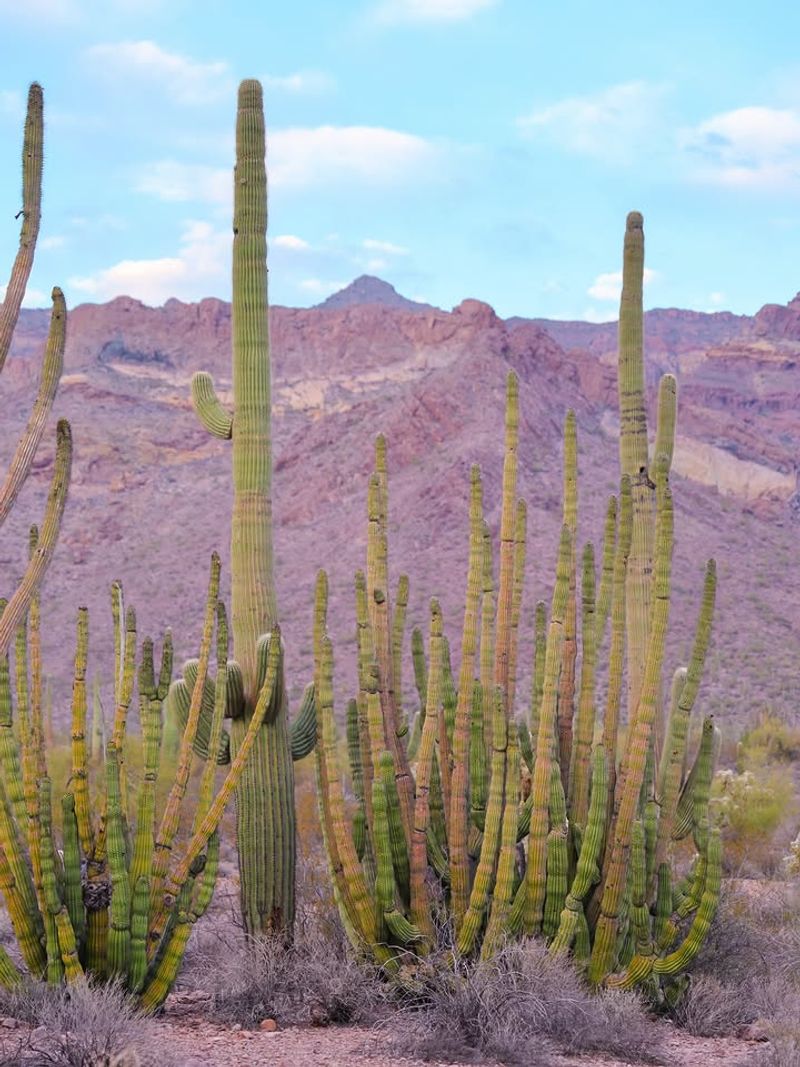
Picture a cluster of tall green columns rising from a single base like pipes on a church organ, and you have a pretty accurate image of this cactus.
Stenocereus thurberi is its scientific name, and in Arizona it grows primarily in the Sonoran Desert, especially in the southwestern corner of the state near the Mexican border.
Organ Pipe Cactus National Monument was literally named after it, which tells you how significant this plant is to the region.
Individual stems can reach 20 feet in the wild, though landscape specimens are typically shorter. Each stem is ribbed with small clusters of dark spines.
The overall silhouette is bold and vertical, which makes it useful as a background plant or natural screen in large Arizona properties. It grows slowly, so younger plants bought from nurseries will take years to develop the full multi-stemmed form.
Night-blooming white flowers appear in late spring and early summer. Bats are the primary pollinators, which is a detail most people find genuinely surprising.
The flowers close by midday, so catching them open requires an early morning check. Red fruits follow the blooms and were traditionally eaten by the Tohono O’odham people, who have deep cultural ties to this cactus.
In Arizona landscaping, it works best in large open spaces where its eventual size and spread will not create problems with structures or foot traffic.
6. Bunny Ear Cactus Produces Flat Pads With A Unique Shape
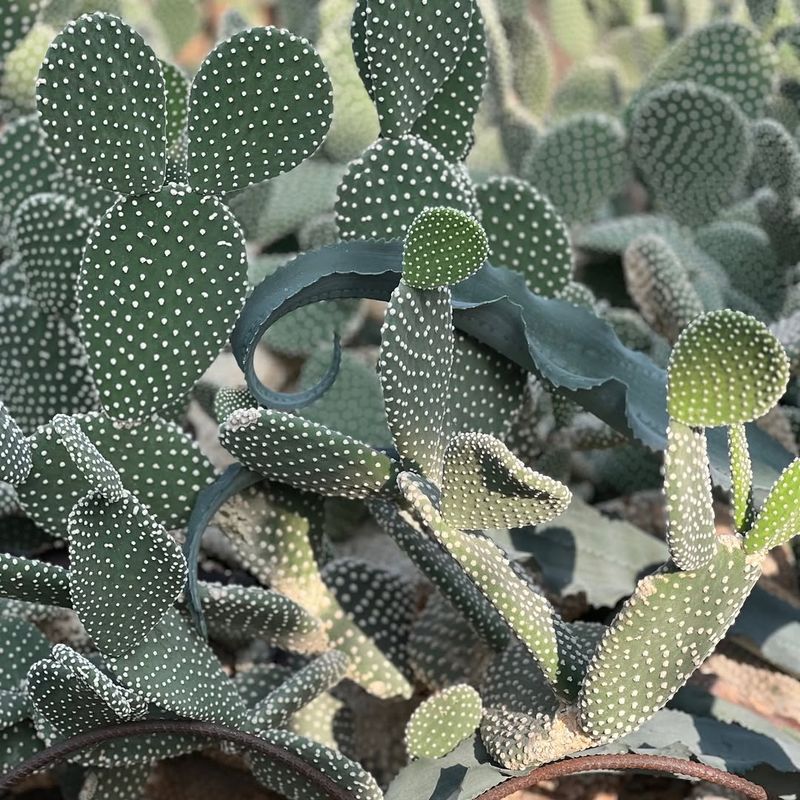
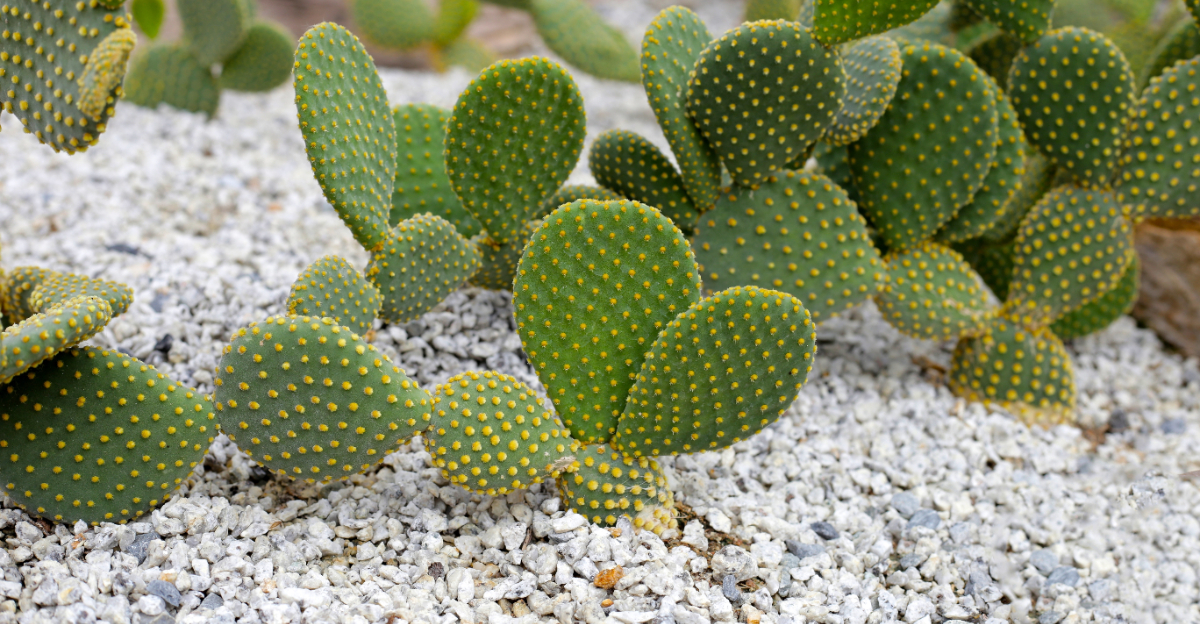
Cute name, sneaky spines. The Bunny Ear Cactus looks approachable with its rounded, ear-shaped pads and soft-looking white dots, but those dots are glochids, tiny barbed bristles that embed in skin almost instantly on contact.
Arizona parents with young children should position this one with that in mind, away from play areas and low-traffic zones where curious hands might reach.
Opuntia microdasys comes from northern Mexico and has naturalized well across Arizona’s warm desert zones. Pads grow in pairs that genuinely resemble rabbit ears, which is why the common name stuck.
Plants stay relatively compact, usually reaching two to three feet tall, making them a manageable size for most residential yards. The absence of long spines gives it a cleaner look than many other prickly pear relatives.
Yellow flowers bloom in spring, followed by small reddish-purple fruits. Both add seasonal color without requiring any extra attention.
Soil drainage is critical, especially during Arizona’s summer monsoon rains when moisture levels rise quickly. Pads that sit in wet soil for extended periods can soften and develop rot at the base.
Planting in raised beds or on sloped ground helps move water away efficiently. New pads root easily if they fall or are removed, which makes propagation straightforward for anyone interested in expanding their Arizona cactus collection with minimal effort.
7. Hedgehog Cactus Produces Bright Flowers In Spring
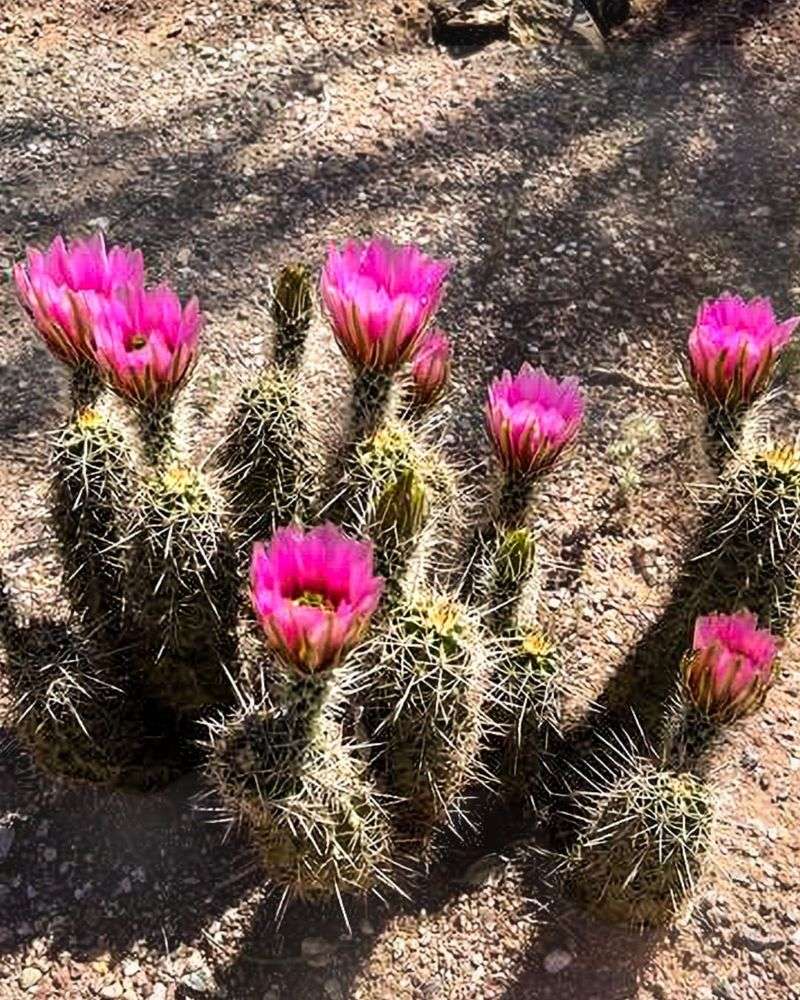
Spring in Arizona gets more interesting when Hedgehog Cacti start blooming. The flowers are a saturated magenta-pink that reads almost neon against the muted tones of desert rock and dry soil.
Few cacti produce blooms this vivid, and fewer still hold them open for as long as the Hedgehog does. Flowers can last several days, which is longer than many cactus blooms that fade within hours.
Echinocereus triglochidiatus and its close relatives are the plants most commonly grouped under the Hedgehog name in Arizona. They grow in low, rounded clusters with cylindrical stems covered in neat rows of spines.
Individual stems are not tall, usually staying under a foot, but clusters can spread outward over time into a substantial mound.
Rocky, well-drained ground suits them best, which is why they appear naturally on slopes and canyon edges across central and southern Arizona.
After the flowers fade, small edible red fruits form that taste mildly sweet. Wildlife, particularly birds, tend to find them before most gardeners do.
In a home landscape, Hedgehog Cacti work well along pathways or in rock gardens where their low, spreading form fills in naturally without crowding taller plants.
Supplemental watering during extreme dry spells in summer can help maintain healthy stem color, but overwatering is a more common problem than underwatering for these plants in Arizona’s variable monsoon climate.
8. Santa Rita Prickly Pear Shows Purple Pads In Sun Stress
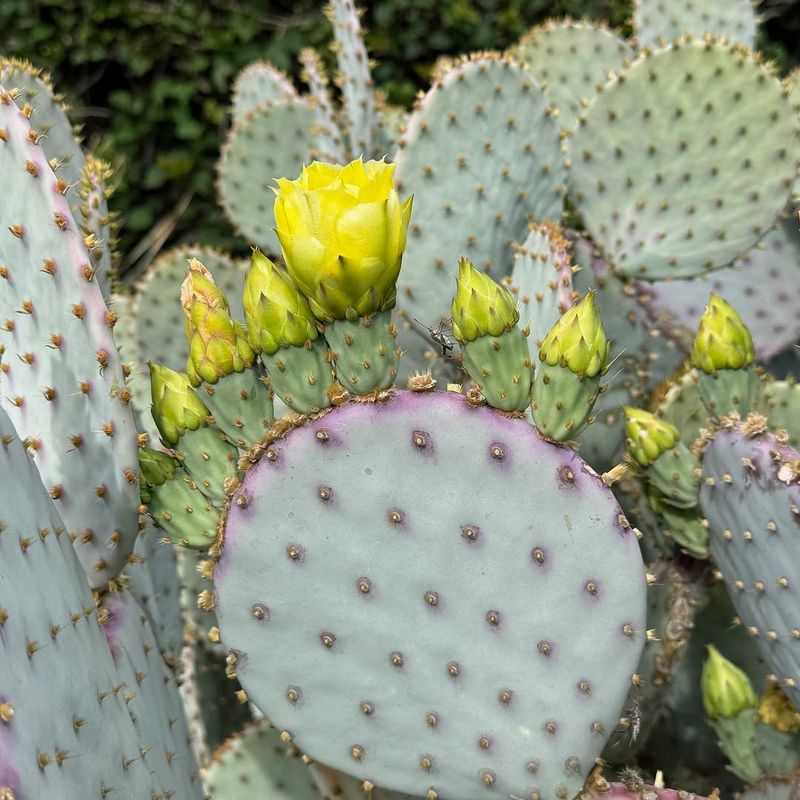
Purple pads on a cactus sounds like something you would see in a garden center display and assume was fake. Santa Rita Prickly Pear is completely real, and the color is a natural response to sun exposure and temperature stress.
Opuntia santa-rita turns from blue-green to deep violet or purple during cooler months and under intense Arizona sun, which makes it one of the most visually distinct plants available for desert landscaping.
Native to southern Arizona and northern Mexico, it grows as an upright shrub with large, round pads that can reach six inches or more across. Spines are sparse compared to other prickly pears, sometimes nearly absent, which makes it easier to work around during planting and maintenance.
Height typically reaches four to six feet at maturity, wide enough to serve as a soft visual barrier or background anchor in a planting bed.
Yellow flowers bloom in spring and contrast sharply with the purple pads in a way that feels almost designed. Deep red-purple fruits follow and attract birds throughout the summer.
In Arizona, the purple color intensifies during fall and winter when temperatures drop, then fades slightly as warm weather returns. That seasonal color shift is part of what makes it interesting year-round.
Sandy, well-drained soil and full sun are the two conditions that reliably bring out the best color. Too much shade and the pads stay green, losing the feature that sets this plant apart.