8 Potted Flowers That Keep Blooming Through Arizona’s Early Heat
Color can drop out of patio pots in Arizona faster than expected, even when everything looks fine at first. Blooms that seemed steady can start to disappear, and some containers lose their impact before the season really settles in.
You may notice certain plants hold up while others begin to fall off without a clear reason. The setup stays the same, yet results shift once temperatures begin to climb and roots feel that heat more directly.
Not every flower reacts the same way in a container, and that becomes clear as conditions intensify. Some keep producing and stay full, while others slow down and lose their presence.
Choosing plants that can handle this stage keeps your containers looking strong and colorful instead of watching them lose that early season look too soon.
1. Vinca Keeps Blooming Without Slowing In Dry Heat
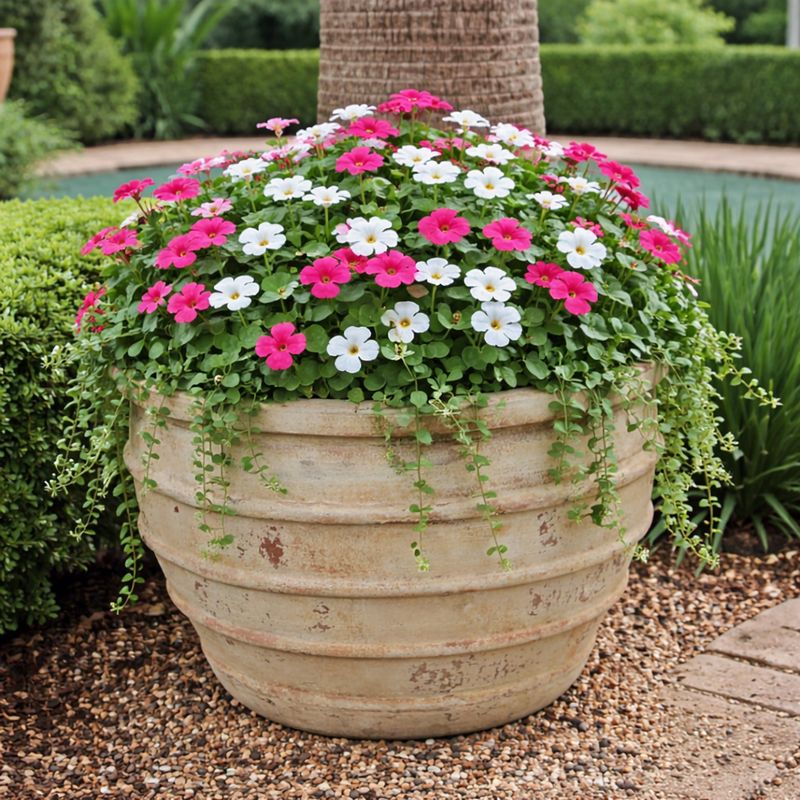
Vinca is one of those flowers that almost seems to enjoy Arizona’s relentless early heat. While other annuals start looking tired by May, vinca just keeps pushing out fresh blooms like the temperature means nothing to it.
Glossy green leaves stay clean and healthy even when the mercury climbs.
Planted in a well-draining pot, vinca handles dry spells better than most flowering annuals you’ll find at a nursery. It doesn’t need deadheading to keep producing flowers, which is a real bonus when you’re managing multiple containers across a patio or yard.
Water it deeply, let the soil dry slightly between sessions, and it responds well.
In Arizona, it’s common to see vinca thriving in full sun spots that would stress other plants within days. Colors range from white and soft pink to deep red and lavender, so there’s real variety to work with.
Pinwheel-shaped flowers open steadily through the season without taking breaks.
One thing to watch: containers heat up fast here, so using a light-colored pot helps keep root temperatures reasonable. Root health matters more than most people realize with container plants in this climate.
Give vinca good drainage, consistent watering, and full sun, and it will stay in bloom for months.
By late spring and well into summer, it becomes one of the most reliable container flowers for keeping patios in Arizona looking alive without constant replacement.
2. Moss Rose Opens Daily Flowers In Intense Sun
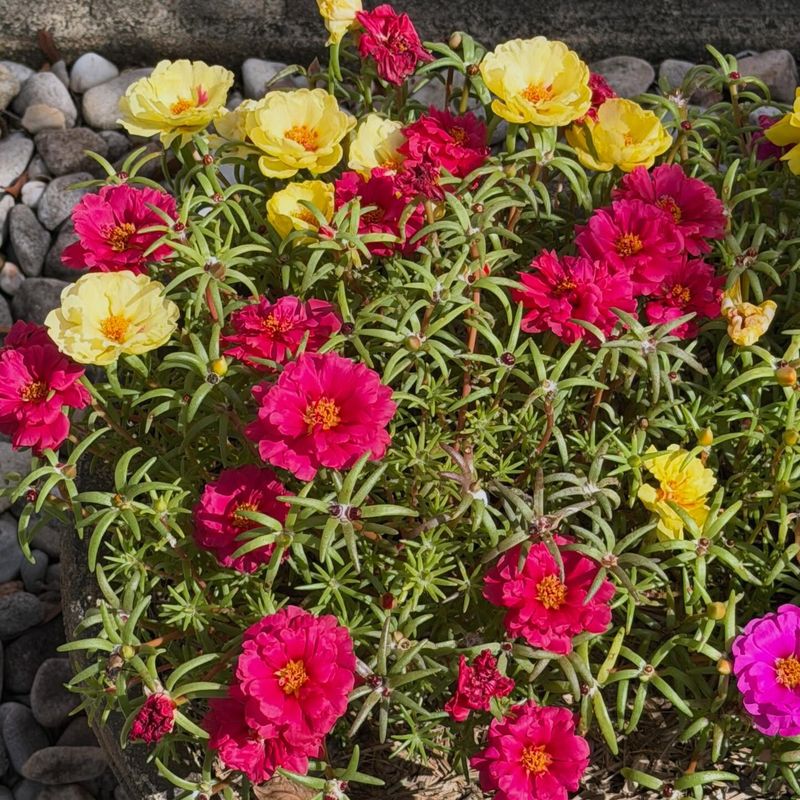
Portulaca, commonly called moss rose, was practically designed for the kind of punishing sun Arizona delivers in spring and early summer. Thick, succulent-like leaves store moisture, which means the plant isn’t as dependent on frequent watering as most flowers.
That trait alone makes it a smart pick for container gardening in the low desert.
Each flower opens fresh in the morning sunlight and closes by late afternoon, so you get a daily display that feels almost theatrical. Colors are bold and unapologetic — hot pink, blazing orange, sunny yellow, and creamy white often appear on a single plant.
It’s hard to find another annual that puts on this kind of show with so little water.
Your Arizona Garden Changes Every Week. Your Plan Should Too.
Gardening in Arizona changes quickly throughout the season. Every Friday you’ll receive a simple weekly plan showing exactly what to plant, prune, fertilize, harvest, and protect so you never miss the right timing.
In Arizona’s early heat, moss rose handles reflected heat from concrete patios and block walls without flinching. Shallow containers work fine because the root system doesn’t need much depth.
Just make sure drainage holes are clear, because standing water is the one thing that causes real problems for this plant.
Sow seeds directly into your container or pick up starts from a local nursery in early spring. Plants fill out quickly and start blooming before you know it.
Fertilizing lightly every few weeks keeps the flowers coming strong through the warmest part of the season.
By midsummer, it forms a low, spreading cushion of color that keeps patios looking bright even when everything around it starts to fade.
3. Lantana Produces Continuous Color As Heat Builds
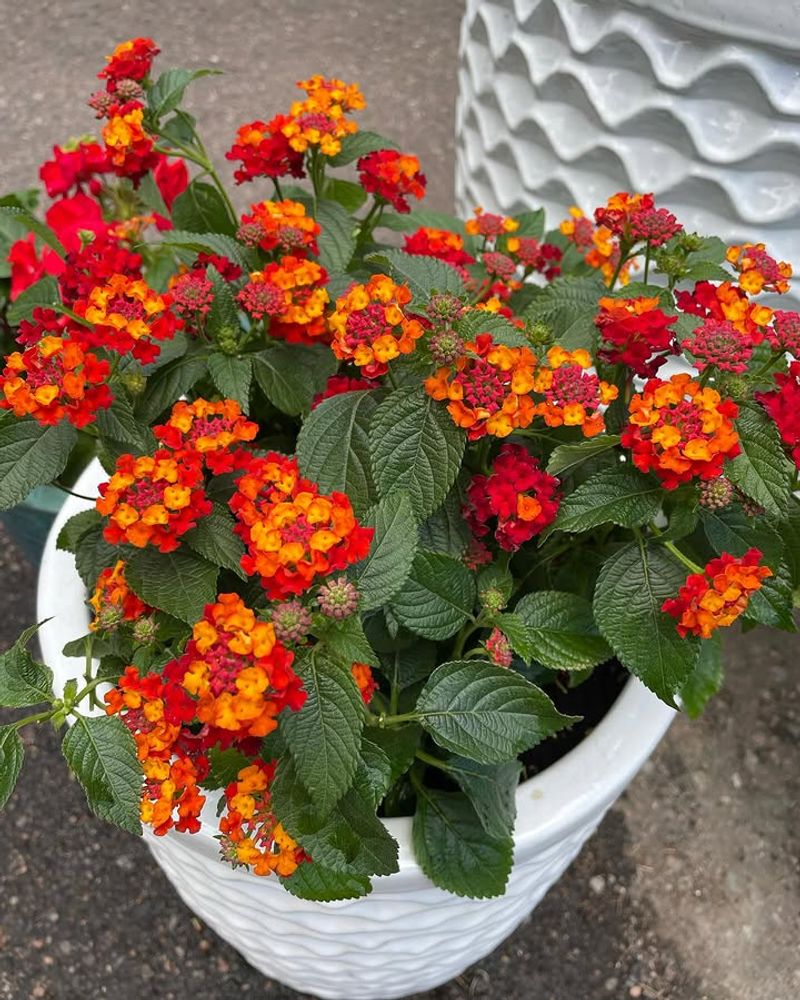
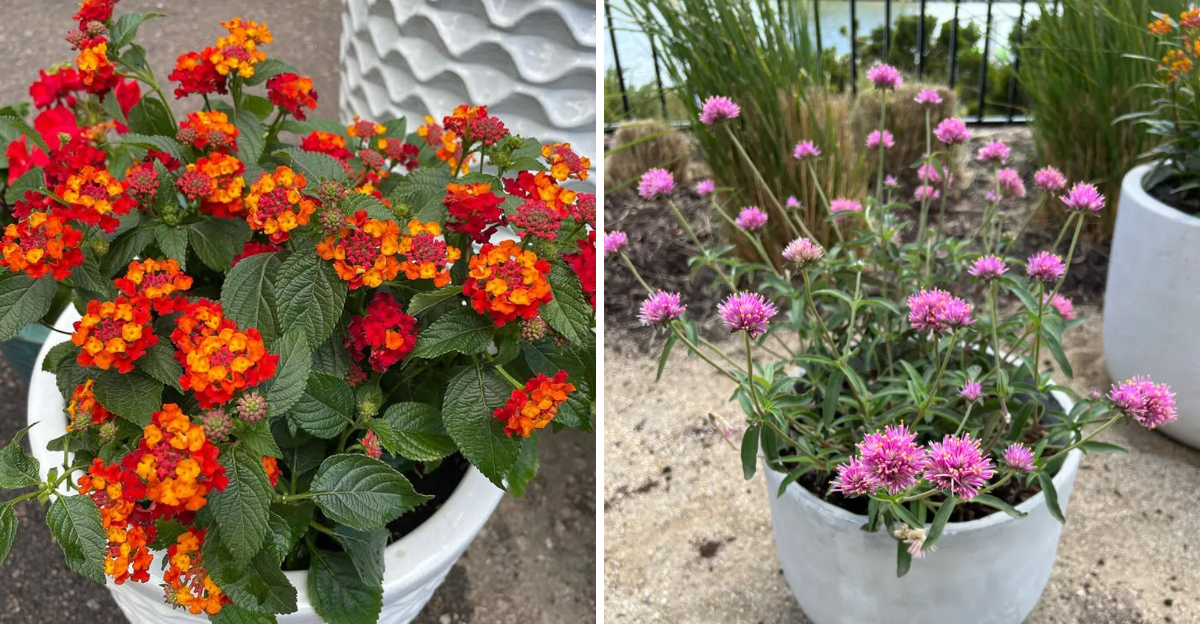
Ask anyone who gardens seriously in Arizona and lantana will come up fast. It’s the kind of plant that doesn’t just survive early heat — it responds to it.
As temperatures rise through April and May, lantana tends to bloom more aggressively, pushing out fresh clusters of tiny flowers in bold, multicolored combinations.
Orange and yellow blends are common, but you’ll also find pink, red, lavender, and white varieties at most Arizona nurseries. Butterflies and hummingbirds show up regularly once the plant is in bloom, which adds real life to a patio space.
Planting in a large container gives the roots room to spread and supports stronger flowering overall.
Watering needs are moderate — let the top inch or two of soil dry out before watering again. Overwatering is a more common mistake than underwatering with lantana, especially in containers where drainage can slow down over time.
Check the drainage holes every few weeks to keep water moving freely.
Regular deadheading isn’t strictly necessary, but removing spent flower clusters does encourage faster reblooming. Trimming back leggy stems occasionally keeps the plant bushy and full rather than stretched out.
In Arizona’s climate, lantana planted in spring can stay colorful well into fall if you keep up with basic care and give it plenty of direct sun.
4. Globe Amaranth Holds Bright Blooms In Dry Conditions
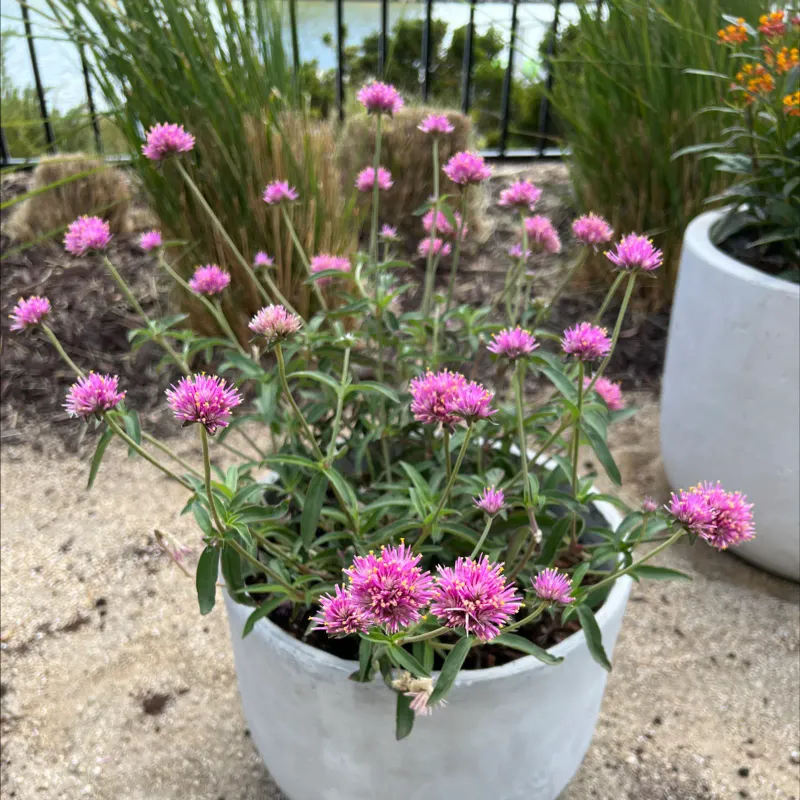
Globe amaranth doesn’t look like a typical summer flower, and that’s part of what makes it interesting. Round, clover-shaped blooms in magenta, purple, pink, orange, and white stay firm and colorful even when the air is hot and dry.
Unlike softer petals that wilt fast in Arizona’s early heat, globe amaranth holds its shape well through warm afternoons.
It’s a plant that rewards neglect in the best possible way. Forget to water it for a few days during a hot stretch, and it bounces back without much visible stress.
That resilience makes it genuinely useful for container gardening in a climate where temperatures can swing dramatically between morning and midday.
Full sun is where globe amaranth does its best work. Partial shade tends to reduce blooming and can make stems stretch out and flop.
In Arizona, placing the pot in a south or west-facing spot usually gives it the light intensity it needs to stay compact and covered in blooms.
Deadheading spent blooms helps keep new ones coming at a steady pace. Without it, the plant will still bloom, but production slows noticeably.
Blooms also dry beautifully on the stem, so some gardeners leave a few clusters to dry in place for texture and visual interest even after the flowers fade. It’s a versatile plant that earns its spot on any Arizona patio.
5. Zinnia Keeps Producing New Blooms In Full Sun
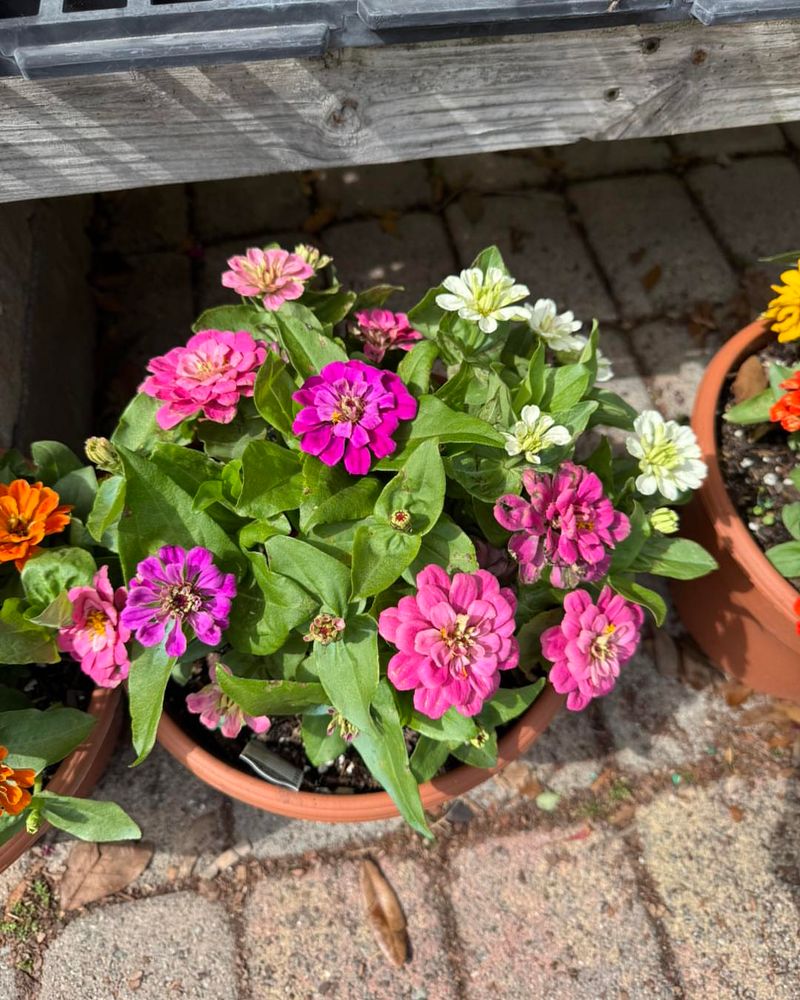
Few flowers match zinnia’s ability to pump out blooms consistently in Arizona’s full sun. Plant them in a deep container with good drainage, give them regular water, and they’ll produce layer after layer of flowers from late spring through summer.
Colors run the full spectrum — red, orange, yellow, coral, pink, white, and everything in between.
Zinnias grow fast from seed, which makes them one of the most cost-effective flowers you can add to a container garden. Direct sowing into pots works well if you start in early spring before temperatures climb past the mid-80s consistently.
Transplants from a nursery work too, but they can take a few days to adjust after being moved.
Cutting flowers regularly is actually the best thing you can do to keep production going. Every stem you cut encourages the plant to branch out and produce more buds.
If you let blooms go to seed without cutting, the plant shifts its energy away from new flower production and slows down noticeably.
Powdery mildew can appear on leaves during humid monsoon periods in Arizona, but it rarely stops flowering completely. Spacing plants with some airflow between them helps reduce the problem.
Zinnias grown in containers tend to have fewer issues than those in ground beds because you have more control over watering and soil conditions throughout the season.
6. Gaillardia Continues Blooming In Hot Dry Soil
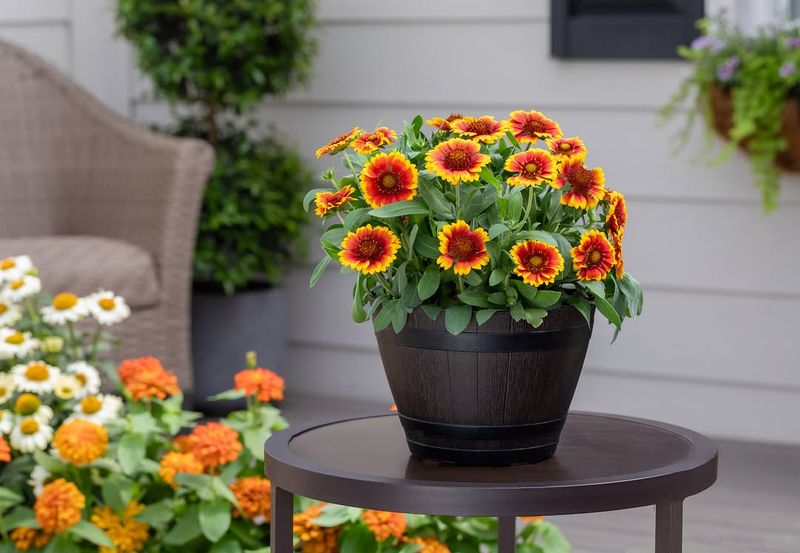
Gaillardia, often called blanket flower, is one of the tougher options for container gardening in Arizona. Bold red and yellow petals radiate out from a dark center, giving each bloom a striking, almost graphic look.
What sets it apart is the ability to keep flowering even when the soil in a container dries out more than it should between waterings.
It handles reflected heat from walls and pavement without looking beaten down, which matters a lot in Arizona yards where surfaces absorb and radiate intense heat. Placing the pot near a south-facing wall is usually fine for gaillardia, even when other plants in the same spot struggle through the afternoon hours.
Deadheading spent blooms regularly makes a clear difference in how long the plant stays productive. Skipping it for a week or two won’t ruin the plant, but you’ll notice fewer new buds forming.
Staying consistent with removing old flower heads keeps the energy directed toward fresh bloom production rather than seed development.
Use a well-draining potting mix and avoid containers without adequate drainage holes. Root rot is a real risk in Arizona’s monsoon season when heavy rains hit and containers can hold water longer than expected.
A gritty, fast-draining mix gives gaillardia the conditions it prefers naturally and helps the plant stay vigorous even through periods of irregular rainfall and intense heat.
7. Angelita Daisy Blooms Repeatedly In Strong Sun
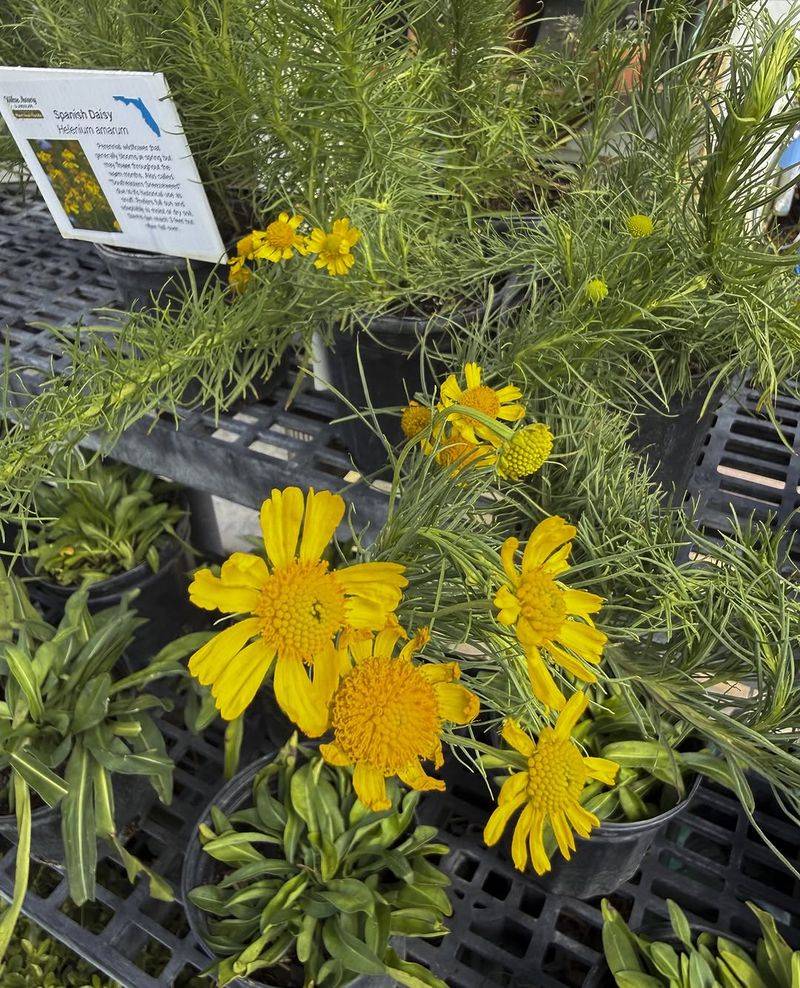
Bright yellow and cheerful without being fussy — that’s a fair description of angelita daisy in a container. Native to the southwestern region, it’s adapted to exactly the kind of conditions Arizona delivers: strong sun, dry air, and soil that drains fast.
Tiny daisy-like blooms cover the plant in waves throughout spring and often continue well into summer.
Fine, threadlike foliage gives it a soft texture that looks good even between bloom cycles. It doesn’t go bare or ragged when flowers fade, so the container stays presentable throughout the season.
That’s not something you can say about every flowering plant that handles heat well in Arizona.
Watering once the top layer of soil dries out works well for container-grown angelita daisy. It doesn’t need much, but completely ignoring it during a long dry stretch can reduce blooming.
A consistent, moderate watering schedule keeps the plant steady and productive without pushing it toward root problems from excess moisture.
Full sun is non-negotiable for strong blooming. In shadier spots, the plant tends to produce fewer flowers and can stretch out toward available light.
On an Arizona patio with good southern or western exposure, angelita daisy tends to perform reliably from early spring through the heat of summer. Occasional light trimming after a heavy bloom cycle encourages fresh growth and another round of flowers within a few weeks.
8. Yellow Bells Keep Blooming As Temperatures Rise
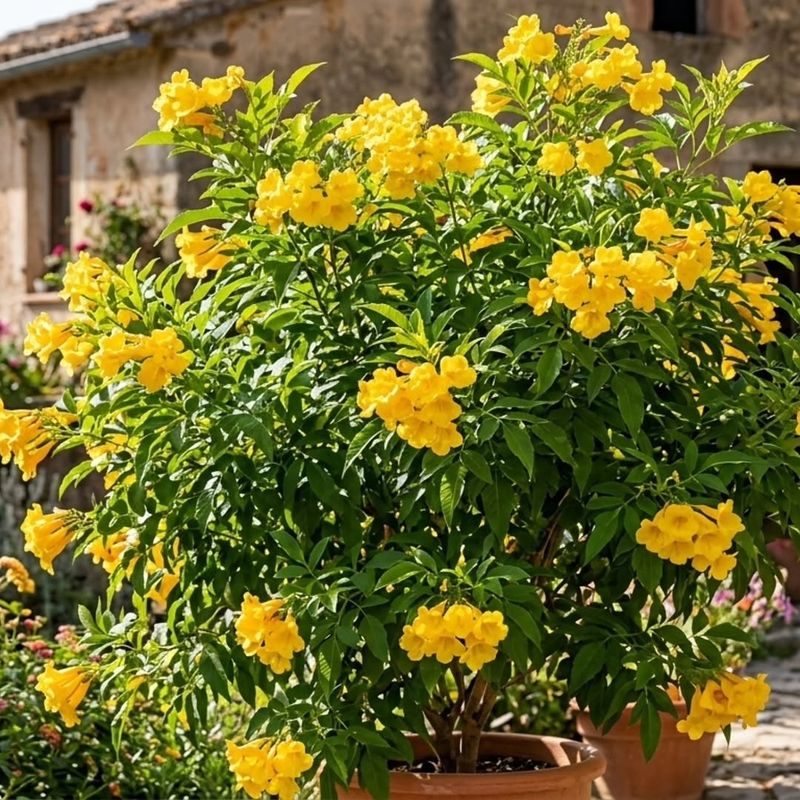
Yellow bells, known botanically as Tecoma stans, is a flowering shrub that actually picks up momentum as Arizona temperatures climb. Trumpet-shaped yellow flowers appear in clusters along the branches, and the warmer it gets, the more freely the plant tends to bloom.
Spring through summer is peak season, and a well-established container plant can look spectacular during that stretch.
Growing yellow bells in a large container works better than a small one. Root space matters with this plant — a cramped pot limits growth and reduces flowering noticeably.
A 15-gallon container or larger gives it room to develop properly and supports the kind of vigorous bloom production it’s capable of delivering.
Full sun placement is essential. Move the pot to the sunniest spot available on your patio or yard, and the plant responds with faster growth and more consistent blooming.
Afternoon shade might seem helpful during peak summer heat, but yellow bells generally handles full Arizona sun without needing that kind of protection.
Water deeply when the soil is dry a couple of inches below the surface. Consistent moisture during the growing season supports steady flowering, but the soil should never stay soggy.
In Arizona’s dry climate, containers tend to dry out faster than expected, especially in unglazed clay pots, so checking soil moisture every few days keeps things on track and prevents unnecessary stress to the plant.