Arizona-Friendly Flower Pairings For A Stunning Spring Garden
Spring in Arizona is one of the most exciting times to be a gardener.
The soils warm up quickly, the sun blazes with intensity, and rainfall stays low, which means choosing the right flower combinations can make a huge difference in how your garden looks and performs.
Arizona’s well-drained desert conditions are actually an advantage when you plant species that are built for those conditions.
With the right pairings, you can enjoy vibrant color, healthy blooms, and a garden that stays stunning well into the early summer heat.
1. Petunias And Marigolds For Colorful Sun Blooms
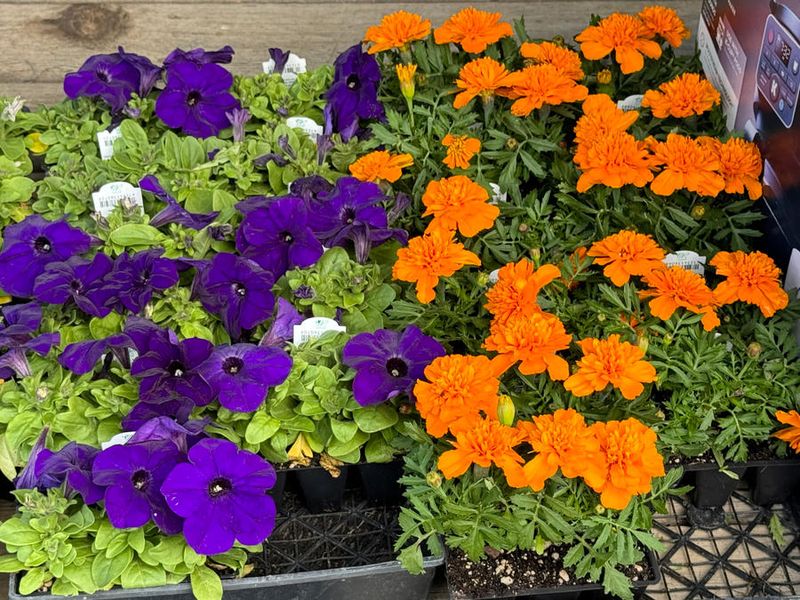
Few combinations bring as much cheerful energy to an Arizona spring garden as petunias and marigolds growing side by side in full sun.
Both flowers are heat-tolerant annuals that love the intense Arizona sunlight, making them a natural fit for low desert gardens in the Phoenix area and in mid-elevation spots like Prescott.
Petunias begin blooming in early spring and push out waves of color in purple, pink, red, and white, while marigolds add warm golden and orange tones that pop against desert soil.
Planting them together in raised beds or containers gives you control over soil drainage, which is especially useful in Arizona’s clay-heavy or sandy soils.
Use a well-draining potting mix and avoid overwatering, since both plants prefer soil that dries out slightly between waterings.
In Phoenix, plan to water every two to three days during warm spring weeks.
Marigolds also bring a practical bonus: their scent naturally discourages aphids and whiteflies, which can occasionally bother petunias in warm weather.
Deadhead spent blooms on both plants regularly to encourage continuous flowering through late spring.
In higher elevations like Prescott, these flowers may begin blooming a few weeks later but tend to last longer into the season because temperatures stay milder.
Together, petunias and marigolds create a bold, layered display that feels lively and full of color from the first warm days of spring.
2. Zinnias And Cosmos For Height And Airy Texture
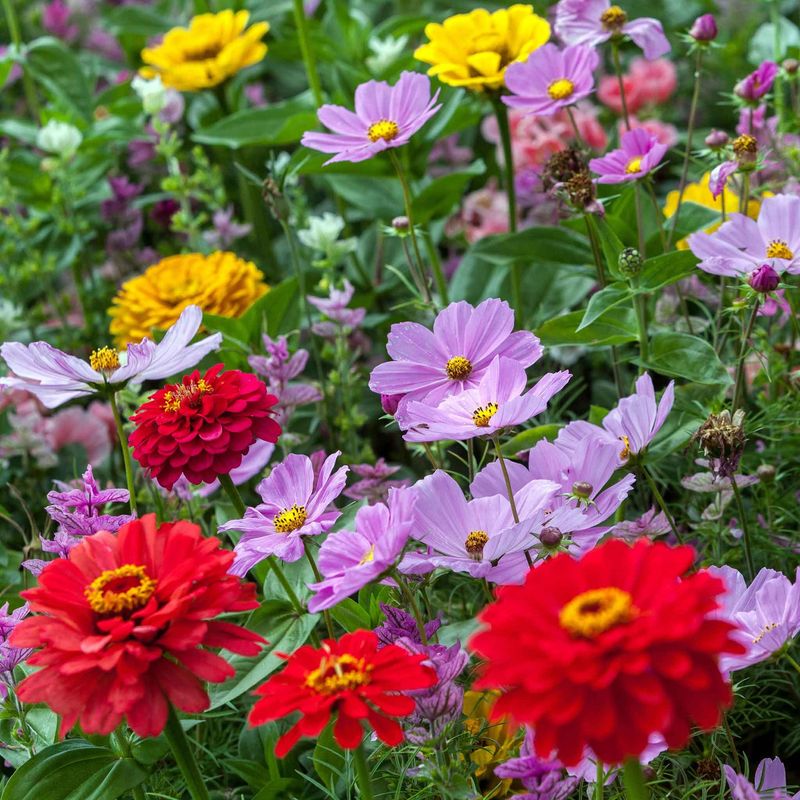
Arizona’s warming spring soils create ideal conditions for direct-sowing zinnias and cosmos, two flowers that bring very different but beautifully complementary textures to any garden bed.
Zinnias grow with sturdy, upright stems and produce bold, round blooms in nearly every color imaginable.
Cosmos, by contrast, have feathery foliage and daisy-like flowers that sway gently in the breeze, giving the garden a light, airy quality that balances zinnia’s bold presence.
In low desert areas like Phoenix and Tucson, sow seeds directly into the ground in late February or early March, once soil temperatures reach at least 60 degrees Fahrenheit.
Both flowers grow quickly from seed and tend to establish well in Arizona’s fast-draining soils.
Mixing compost into the planting area before sowing helps improve nutrient levels without sacrificing drainage.
Height variation is one of the strongest visual benefits of this pairing.
Tall zinnia varieties can reach two to four feet, while cosmos can stretch even higher under good conditions, creating a layered backdrop that works well along fences or at the rear of garden beds.
Your Arizona Garden Changes Every Week. Your Plan Should Too.
Gardening in Arizona changes quickly throughout the season. Every Friday you’ll receive a simple weekly plan showing exactly what to plant, prune, fertilize, harvest, and protect so you never miss the right timing.
Shorter zinnia varieties work well in the front rows for a tiered look. Both flowers attract butterflies and beneficial insects, adding movement and ecological value to your spring garden.
Regular watering during establishment, followed by gradual reduction as plants mature, helps both species thrive through Arizona’s long, sunny spring season.
3. Snapdragons And Alyssum For Vertical Interest And Fragrance
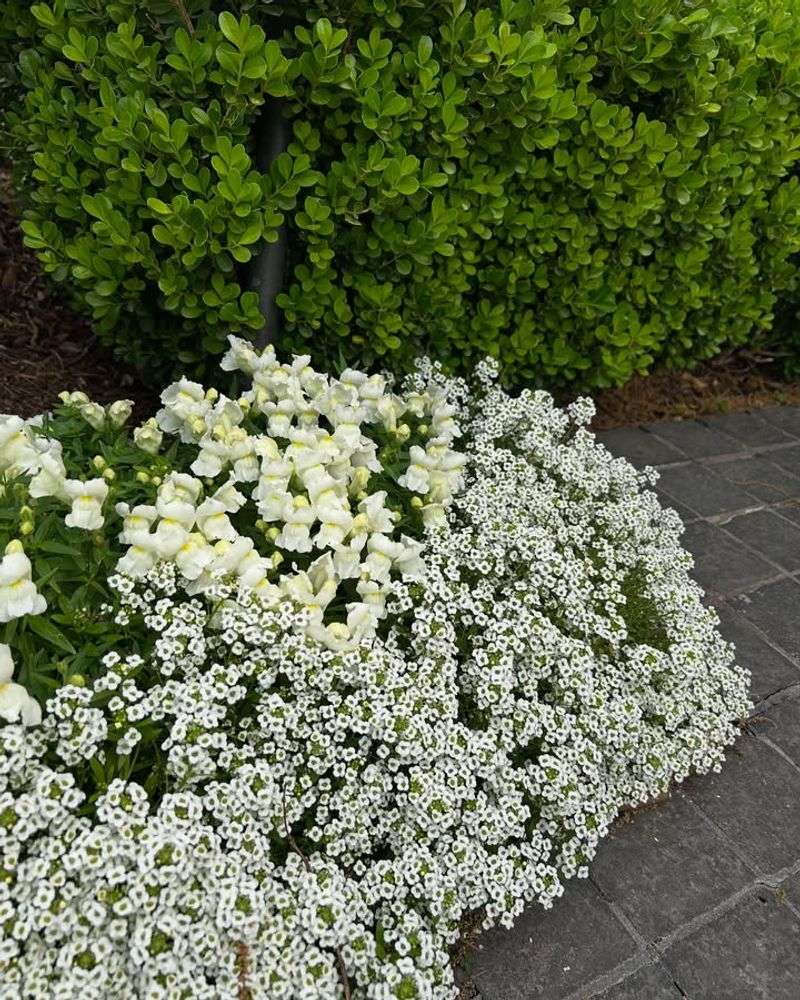
Cool mornings and mild afternoons in early Arizona spring create conditions that snapdragons genuinely love.
These vertical bloomers perform at their best when temperatures stay between 40 and 75 degrees Fahrenheit, which makes them one of the most rewarding cool-season choices for Arizona gardeners, especially in Phoenix where the planting window runs from roughly October through March.
Pairing them with sweet alyssum, a low-growing plant with tiny white or purple flowers, creates a striking contrast between height and ground-level texture.
Sweet alyssum releases a soft honey-like fragrance that becomes more noticeable in the warmth of the morning sun, making it a sensory treat in any garden space.
It spreads easily along the edges of beds and works well as a living border beneath taller snapdragons.
In containers, this pairing looks especially attractive when snapdragons anchor the center and alyssum spills over the edges.
Both plants prefer well-drained soil and moderate watering. Snapdragons benefit from light fertilizing every two to three weeks during active bloom periods.
Pinching the tips of young snapdragon plants encourages bushier growth and more flower spikes over time. In mid-elevation Arizona cities like Prescott or Sedona, snapdragons may continue blooming into late spring and even early summer.
Alyssum self-seeds readily and may return on its own in subsequent seasons, which is a pleasant surprise for gardeners who appreciate low-maintenance beauty with minimal replanting effort.
4. Salvia And Gaillardia To Attract Pollinators
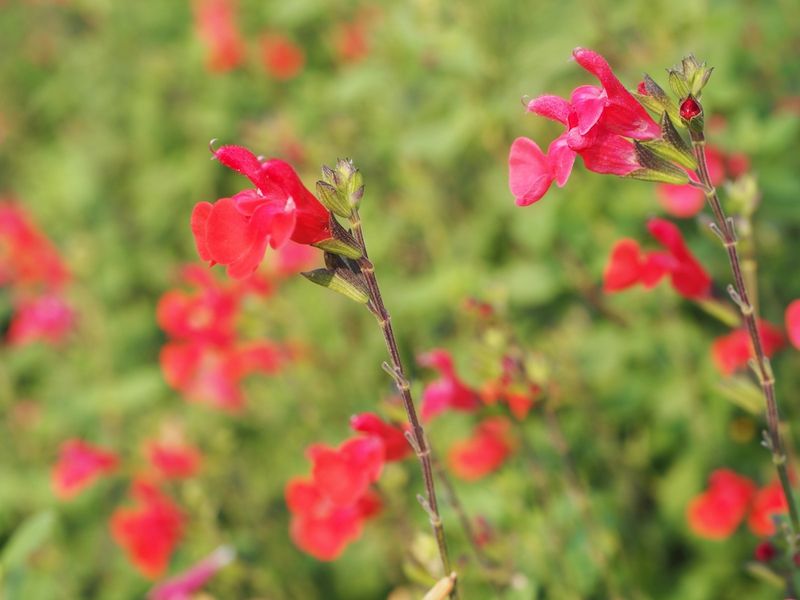
Walk through an Arizona garden planted with salvia and gaillardia on a warm spring morning, and you will likely hear it before you see it: the steady hum of bees moving between blooms.
Both flowers are exceptional pollinator magnets, and together they create a dynamic, wildlife-friendly planting that supports native bees, honeybees, butterflies, and hummingbirds throughout the spring and beyond.
Salvia, often called autumn sage or red salvia depending on the variety, produces tubular flowers that hummingbirds find especially appealing. It blooms reliably in Arizona’s full sun and handles heat with ease once established.
Gaillardia, also known as blanket flower, is a native Southwest species that thrives in poor, well-drained desert soils with minimal supplemental water after the first growing season. Its bold red and yellow blooms add a warm, sun-soaked character to any planting.
Planting these two together in a sunny border or xeriscape bed creates continuous color from early spring into summer.
Space salvia plants about 18 inches apart and gaillardia about 12 to 15 inches apart to allow good airflow in Arizona’s warm, dry climate.
Both plants are relatively low maintenance once established, requiring only occasional deep watering rather than frequent shallow irrigation.
In Phoenix and Tucson, this pairing works especially well along south-facing walls where reflected heat can be intense.
Deadheading gaillardia regularly encourages fresh blooms and keeps the planting looking tidy throughout the season.
5. Lantana And Angelonia For Continuous Heat-Resistant Blooms
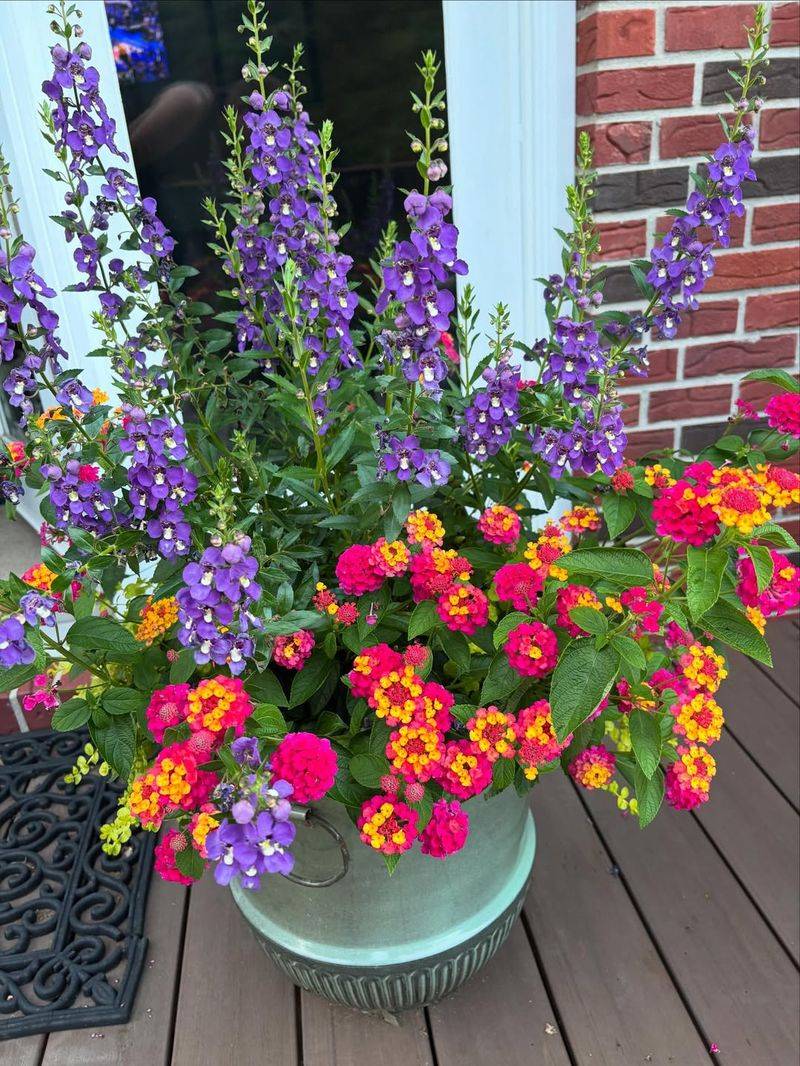
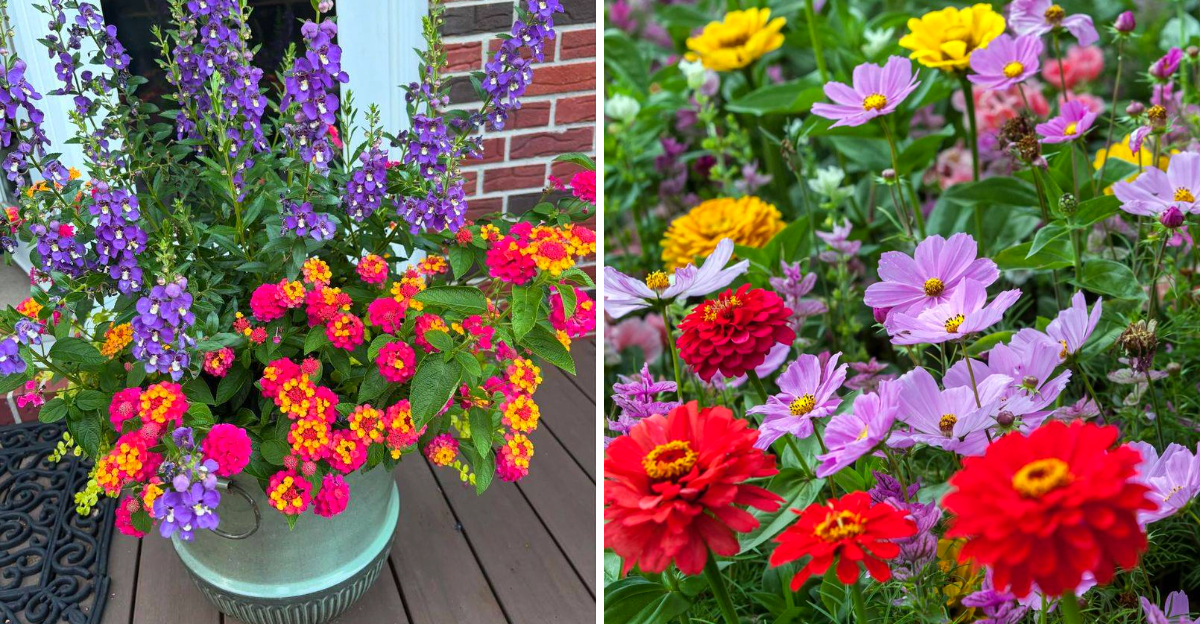
Lantana has earned a loyal following among Arizona gardeners for one simple reason: it blooms through conditions that slow down nearly every other flowering plant.
Paired with angelonia, sometimes called summer snapdragon, these two create a combination that delivers color from spring all the way through the intense heat of early summer without much fuss.
Angelonia produces slender spikes of orchid-like purple, pink, or white flowers that hold up remarkably well even when temperatures climb past 100 degrees Fahrenheit in the Phoenix area.
Lantana produces clusters of tiny flowers that shift color as they age, often showing two or three shades within a single cluster. Butterflies are strongly attracted to lantana, and the plant’s dense, mounding habit provides good visual structure in garden beds.
Angelonia’s upright form provides contrast to lantana’s spreading growth, creating an appealing layered composition when planted together in full sun.
Both plants are low-water options once established, though they appreciate regular irrigation during the first few weeks after transplanting.
In Arizona gardens, using drip irrigation rather than overhead watering helps prevent fungal issues in the warm, sometimes humid conditions that arrive with the summer monsoon season.
Lantana is available in trailing and mounding varieties, so selecting the right form for your space matters.
In higher elevations like Prescott, both plants may need to be treated as annuals since winter temperatures can be too cold for them to return reliably the following spring.
6. Portulaca And Verbena For Trailing Color And Drought Tolerance
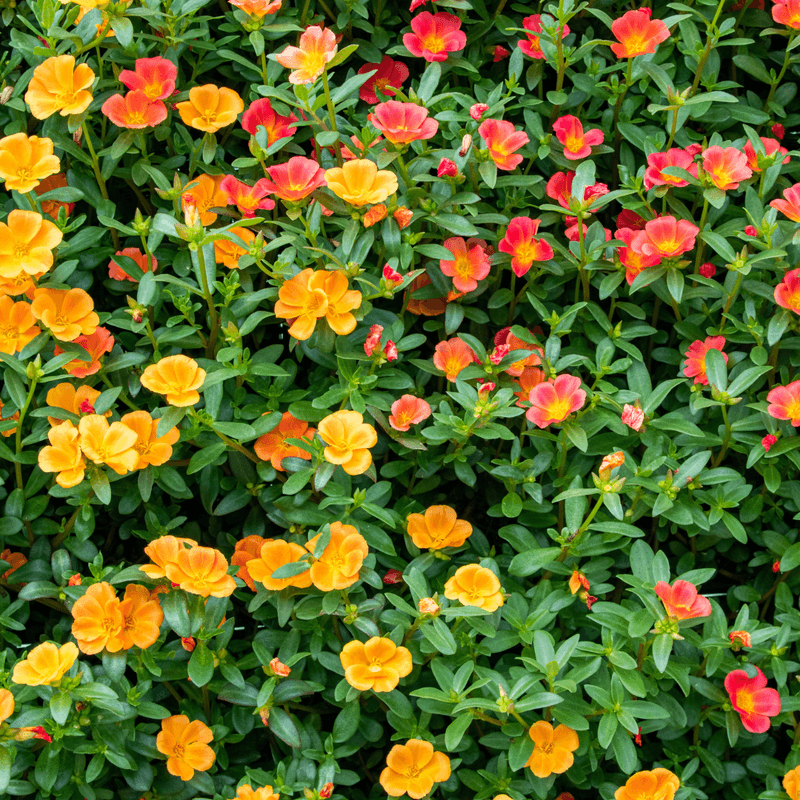
When the Arizona sun is at its most relentless in late spring, portulaca and verbena are two flowers that lean into the heat rather than shrinking from it.
Portulaca, sometimes called moss rose, produces jewel-toned flowers in orange, pink, red, yellow, and white that open fully in direct sunlight and close in the evening, giving the garden a natural rhythm that shifts throughout the day.
Verbena spreads in a low, trailing habit and covers garden edges and containers with clusters of small, vivid flowers.
Both plants are genuinely drought-tolerant once established, which makes them well-suited to Arizona’s low-water gardening philosophy.
In desert landscapes around Phoenix and Tucson, these two work beautifully together in rock gardens, along slopes, or cascading from raised planters.
Their trailing growth habits help suppress weeds while covering ground efficiently, reducing the need for frequent maintenance.
Portulaca prefers sandy or gravelly, fast-draining soil and actually blooms more prolifically in lean conditions, so avoid over-fertilizing.
Verbena appreciates similar drainage but benefits from light fertilization every three to four weeks during the bloom season to maintain flower production.
Both plants can be grown from transplants purchased in spring or started from seed indoors about six weeks before the last frost date.
In mid-elevation Arizona gardens, these flowers tend to thrive from April through June before summer monsoon humidity arrives and conditions shift.
7. Sunflowers And Nasturtiums For Dramatic Color And Edible Flowers
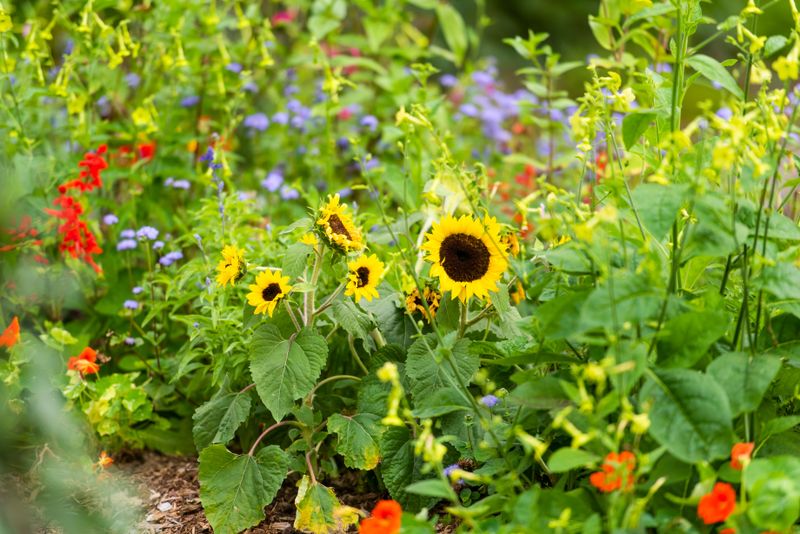
Sunflowers rising above a carpet of orange and yellow nasturtiums is one of the most visually dramatic sights an Arizona spring garden can offer.
Sunflowers bring instant height, bold golden blooms, and a cheerful energy that few other plants can match.
Nasturtiums, growing low and wide beneath them, fill in the ground level with round, lily-pad-like leaves and trumpet-shaped flowers in warm shades of red, orange, and yellow. Both flowers are edible, which adds a fun and practical dimension to this pairing.
Nasturtium flowers have a peppery flavor that works well in salads, while sunflower petals are mild and slightly nutty. Growing edible flowers is a great way to engage children in gardening, and this pairing makes the experience colorful and rewarding.
Both plants grow easily from seed sown directly into the garden in late February or early March in Arizona’s low desert regions.
Sunflowers prefer full sun and deep, occasional watering rather than frequent shallow irrigation, which encourages strong root development in Arizona’s loose desert soils.
Nasturtiums actually bloom more generously in poor soil with minimal fertilizer, so avoid adding too many nutrients to their planting area.
They grow quickly and can spread across a garden bed within weeks of germination. In cooler Arizona elevations like Flagstaff, direct sowing is best delayed until late April or early May after frost risk has passed.