The 8 Best Low-Growing Plants For Florida Walkways That Stay Tidy
A Florida walkway can make the whole front yard feel polished, or it can turn into a floppy, overgrown mess before summer even gets going. That is usually where the trouble starts.
Plants that look cute at the nursery can spill too far, lean into the path, or need far more trimming than anyone wants to deal with in the heat.
Low-growing plants earn their keep here. The right ones soften hard edges, handle Florida weather, and keep that neat, finished look without constant fuss.
They can frame a path beautifully, fill in awkward gaps, and make the space feel more inviting from the street all the way to the front door.
The sweet spot is finding plants that stay naturally compact, hold up in sun, humidity, and rain, and do not turn walkway borders into a weekly chore. A few dependable choices can make that whole area look cleaner, calmer, and much more pulled together.
1. Lyreleaf Sage Brings Color Without Losing Control
Most people overlook lyreleaf sage when shopping for walkway plants, but Florida gardeners who know it well tend to keep coming back to it.
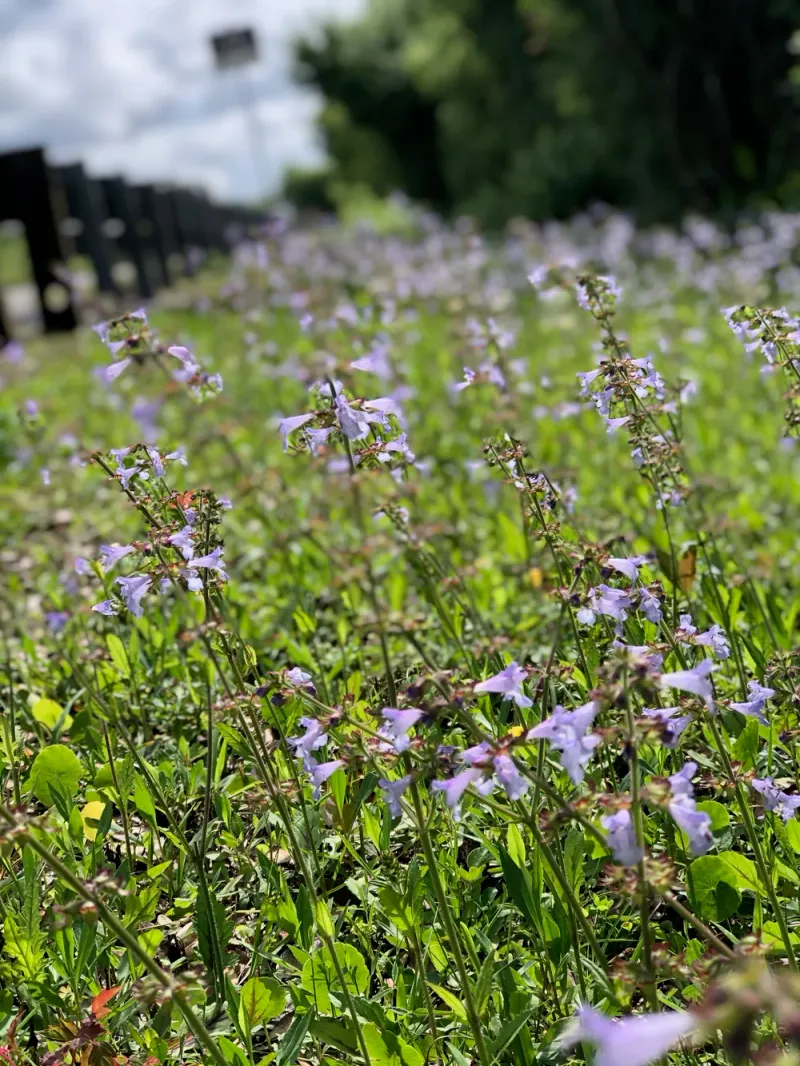
Salvia lyrata is a Florida native that grows in a low, ground-hugging rosette, making it a surprisingly controlled choice for path edges where height is not welcome.
The leaves are deeply lobed and often show attractive purple markings, especially in cooler months, giving the plant visual interest even when it is not in bloom.
When spring arrives, lyreleaf sage sends up slender flower spikes covered in soft lavender-blue blooms that attract bees and butterflies without creating a messy sprawl.
The plant typically stays under 12 inches tall during its blooming phase, and the rosette itself stays much lower the rest of the year.
UF/IFAS recognizes it as a native wildflower that thrives across much of Florida in average to dry soils.
Along a naturalistic walkway, stepping-stone path, or cottage-style front entry, lyreleaf sage adds color without demanding much in return. It handles partial shade well, which makes it useful along paths that receive filtered light under trees.
For more formal walkways, planting it in small groupings rather than loose drifts keeps the look intentional and polished rather than wild. Deadheading spent flower stalks after blooming helps maintain a cleaner appearance.
2. Blue Daze Softens A Walkway Without Taking Over
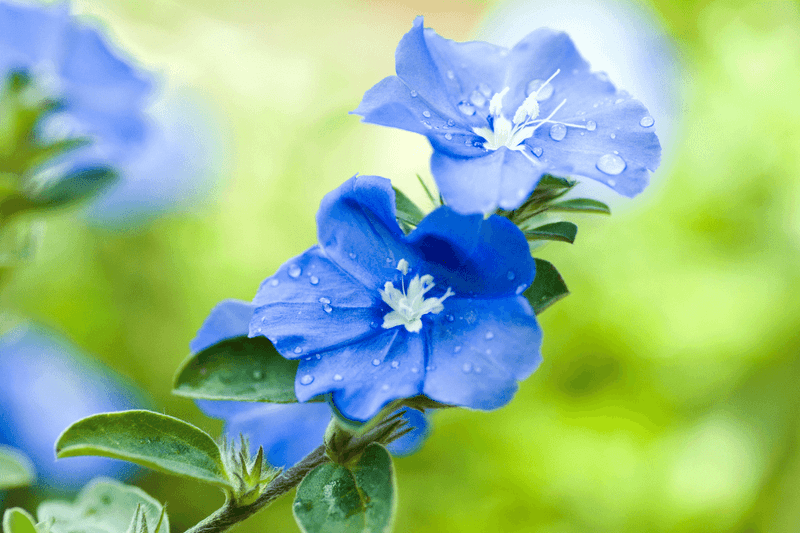
Few plants deliver the kind of soft, low color that blue daze brings to a sunny Florida walkway.
Evolvulus glomeratus is a compact, mounding perennial that rarely grows taller than 12 inches and spreads gently without the aggressive creeping habit that makes some groundcovers a problem near paths.
The small, silvery-green leaves have a slightly fuzzy texture that gives the plant a delicate look, and the cheerful sky-blue flowers open fresh each morning, giving the plant its common name.
Blue daze thrives in full sun and performs best in well-drained soil, which makes it a natural fit for Florida’s sandy landscapes and sun-drenched front walkways.
According to UF/IFAS, it handles Florida heat reliably and works well in containers, beds, and as a low border plant.
Your Florida Garden Changes Every Week. Your Plan Should Too.
Gardening in Florida changes quickly throughout the season. Every Friday you’ll receive a simple weekly plan showing exactly what to plant, prune, fertilize, harvest, and protect so you never miss the right timing.
The key to keeping it tidy near a walkway is giving it enough space to spread without crowding the path, typically leaving a gap between the plant’s edge and the paving surface.
Occasional light trimming after a flush of blooms helps maintain a rounded, compact shape and prevents any legginess from setting in. Blue daze is sensitive to frost, so in North Florida it may behave more like an annual during cold winters.
In Central and South Florida, it typically stays evergreen and blooms for most of the year, making it a reliable and low-effort walkway softener that earns its spot.
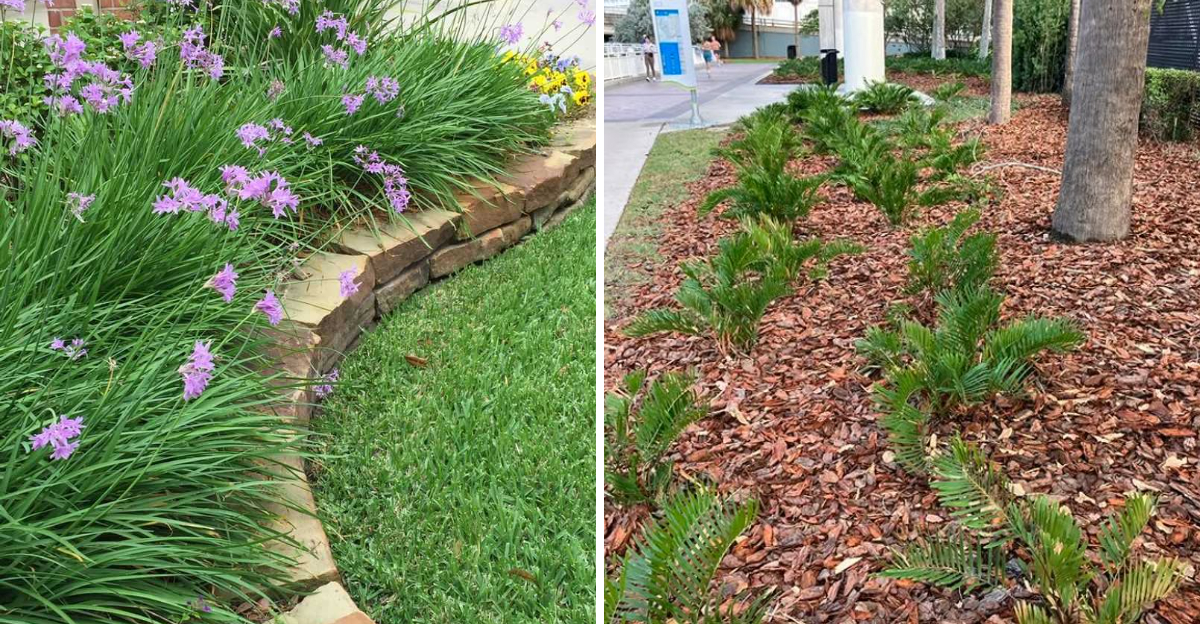
3. Society Garlic Stays Neat And Adds Color
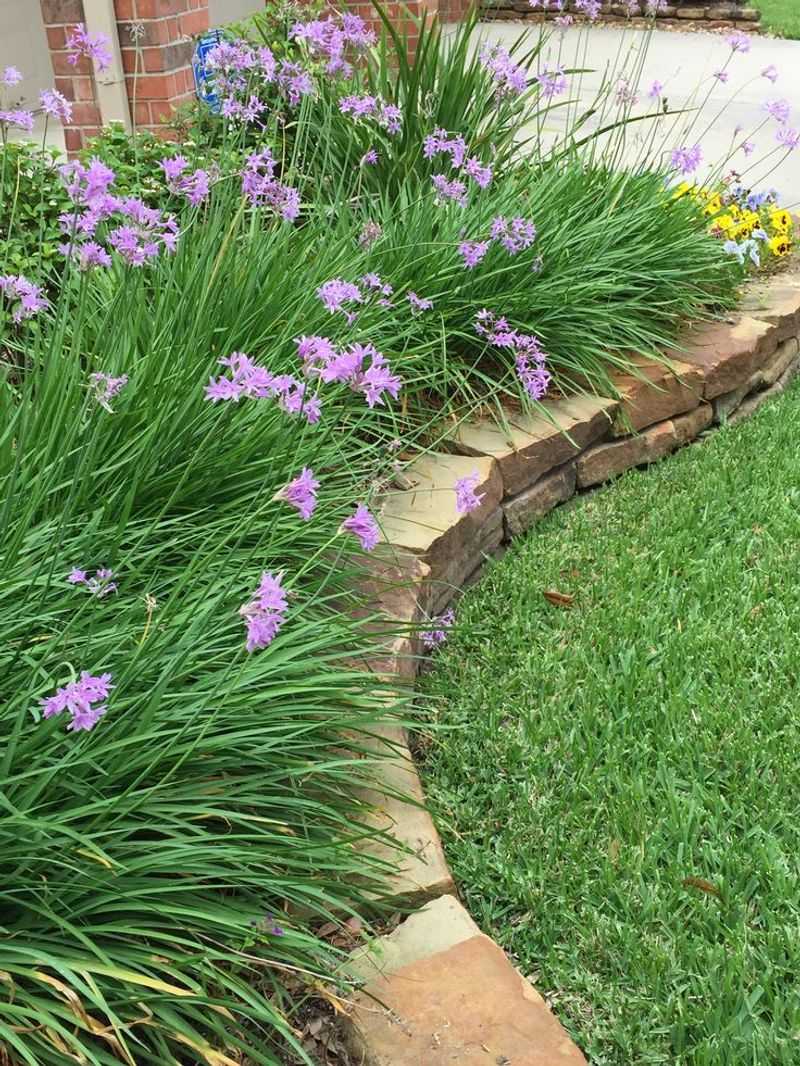
Society garlic has built a loyal following among Florida landscapers for good reason. Tulbaghia violacea grows in upright, well-behaved clumps of narrow, strappy, blue-green foliage that stays low and dense without flopping or spreading out of bounds.
Unlike many edging plants that blur into a soft mass, society garlic holds a clean, architectural silhouette that suits both formal and casual walkway designs.
The lavender-pink flowers appear on slender stems above the foliage and bloom reliably through warm months, sometimes extending into fall.
UF/IFAS notes that society garlic is well adapted to Florida’s heat, handles drought once established, and performs in full sun to light shade.
The mild garlic scent that the foliage releases when brushed is strong enough to deter some pests but not so overwhelming that it becomes unpleasant near an entry path.
Along a front walkway or side-yard path, society garlic works best when planted in small clusters or a continuous low border. Its clumping habit means it stays where you put it and does not sneak into neighboring plants or paving joints.
Dividing the clumps every few years keeps them vigorous and prevents overcrowding. Society garlic also pairs well with taller background plants, giving a walkway a layered look that feels finished without requiring constant maintenance.
The combination of tidy form, long bloom season, and heat tolerance makes it a strong all-around performer for Florida paths.
4. Bulbine Handles Heat Without Looking Ragged
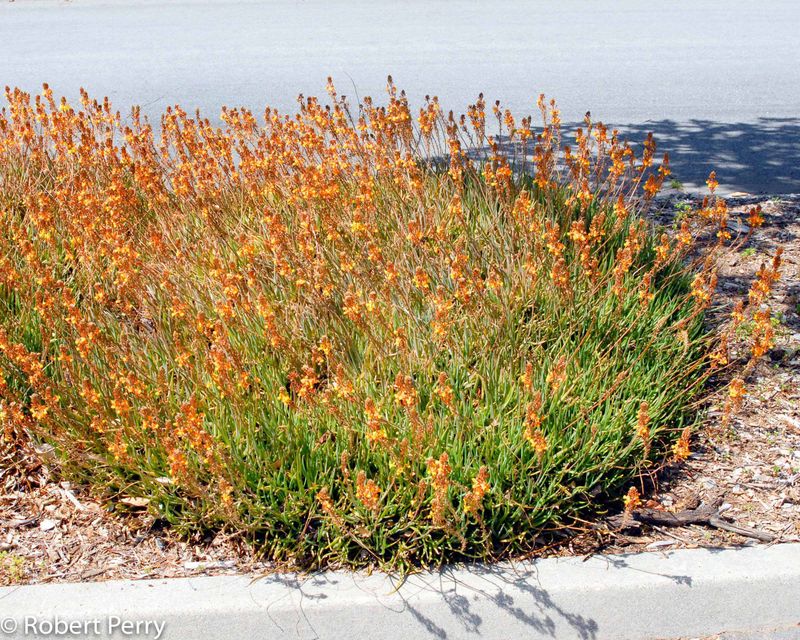
Walk past a bulbine planting on a scorching July afternoon in Florida and you will quickly understand why landscapers reach for it when other edging plants are struggling.
Bulbine frutescens is a low-growing, succulent-like perennial with narrow, fleshy, bright green leaves that form tidy mounds rarely exceeding 12 to 18 inches in height.
The plant shrugs off intense heat and dry spells that would leave fussier edging plants looking tired and stressed.
The flowers are a real bonus. Slender stems rise above the foliage and carry cheerful clusters of small star-shaped blooms in yellow or orange, depending on the variety.
Blooming can occur across much of the year in warmer parts of Florida, making bulbine one of the longer-performing color plants available for sunny walkway borders.
UF/IFAS extension resources support its use in Florida landscapes and highlight its drought tolerance and low maintenance needs once established.
Bulbine works especially well along walkways that receive full sun and have sandy or well-drained soil, conditions that are common throughout much of the state.
The compact mounding form holds its shape without pruning, which is a real advantage near a path where you want a clean edge without weekly trimming.
For best results, avoid overwatering, as the succulent foliage stores moisture and soggy roots can cause problems. Planting in raised beds or slightly elevated borders helps drainage and keeps the plants looking their healthiest all season long.
5. Perennial Peanut Fills In Fast And Stays Low
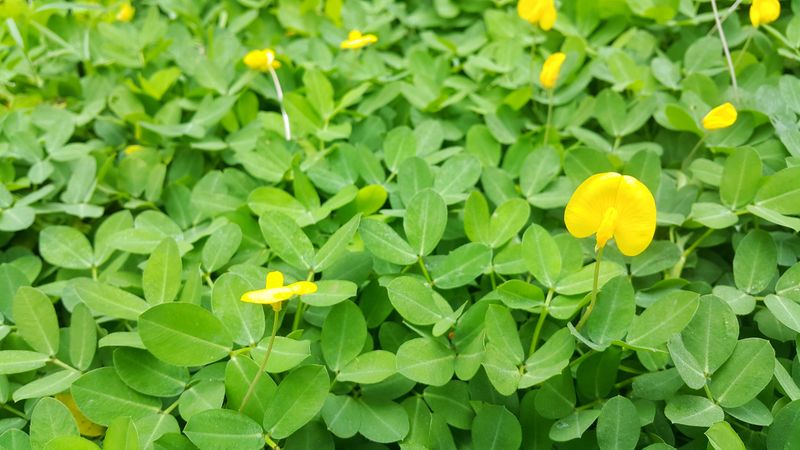
Bright yellow flowers scattered across a dense, low mat of green leaves is what most Florida gardeners picture when they think of perennial peanut.
Arachis glabrata is a tough, spreading groundcover that has earned a strong reputation in Florida landscapes for its ability to cover ground quickly, stay genuinely low, and offer cheerful blooms without turning into a maintenance burden.
UF/IFAS recommends it as a low-maintenance turfgrass alternative that works well in full sun to partial shade.
Near a walkway, perennial peanut shines when it is given a defined edge to work within.
The plant spreads by rhizomes and can move outward over time, so installing a simple edging border between the planting and the pavement keeps it from creeping onto the path surface.
Within those boundaries, it forms a dense, weed-suppressing mat that stays roughly four to six inches tall, giving the walkway a lush, tidy look without the need for regular mowing or trimming.
The small yellow blooms appear mostly in spring and summer and add a pleasant pop of color without overwhelming the planting. Perennial peanut is also nitrogen-fixing, which means it quietly improves the soil around it over time.
It handles Florida heat, humidity, and moderate drought well, and it recovers from foot traffic better than many groundcovers.
For walkways bordered by sunny beds or open lawn areas, it creates a clean, polished transition that holds up well through the long Florida growing season.
6. Coontie Gives Walkways A Polished Look
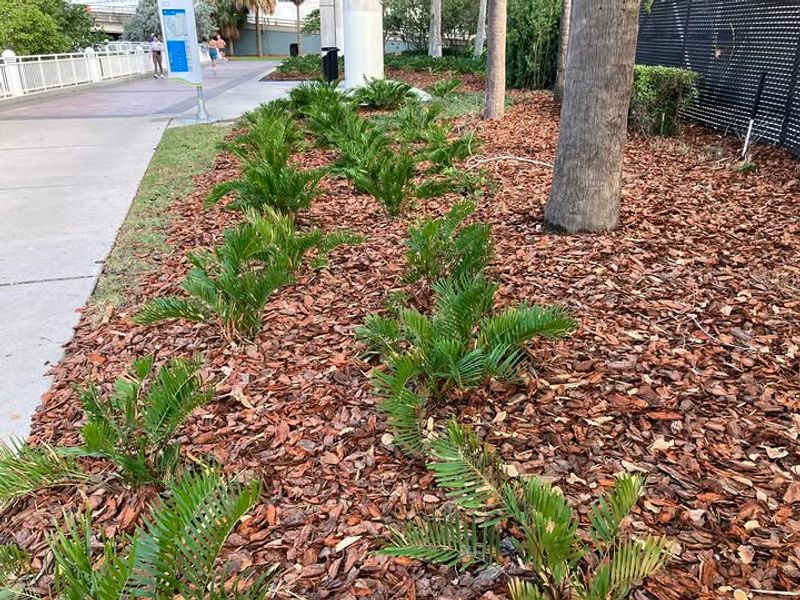
There is something quietly sophisticated about a coontie planting beside a walkway. Zamia integrifolia is Florida’s only native cycad, and its stiff, dark green, fern-like fronds grow in a low, symmetrical mound that naturally looks architectural and well-groomed.
Unlike soft groundcovers that shift and spread unpredictably, coontie holds its shape with almost no intervention, making it one of the most reliable structural plants available for Florida path edges.
According to UF/IFAS, coontie thrives in full sun to deep shade, handles drought once established, and resists most pests and diseases. It grows slowly to about two to three feet in height and spread, which keeps it proportionate beside a walkway without overwhelming the space.
The slow growth rate is actually an advantage here because the plant stays where you put it for years without requiring pruning or division.
One practical note worth mentioning: coontie produces orange-red seeds that are toxic if consumed, so households with young children or pets who explore garden beds should consider placement carefully and choose a spot where access to the seeds is limited.
That said, coontie is widely planted in Florida public and residential landscapes without issue when positioned thoughtfully.
The Atala butterfly, a Florida native species, depends on coontie as its larval host plant, adding an ecological benefit to what is already a visually striking and low-maintenance walkway choice.
7. Twinflower Keeps Color Close To The Ground
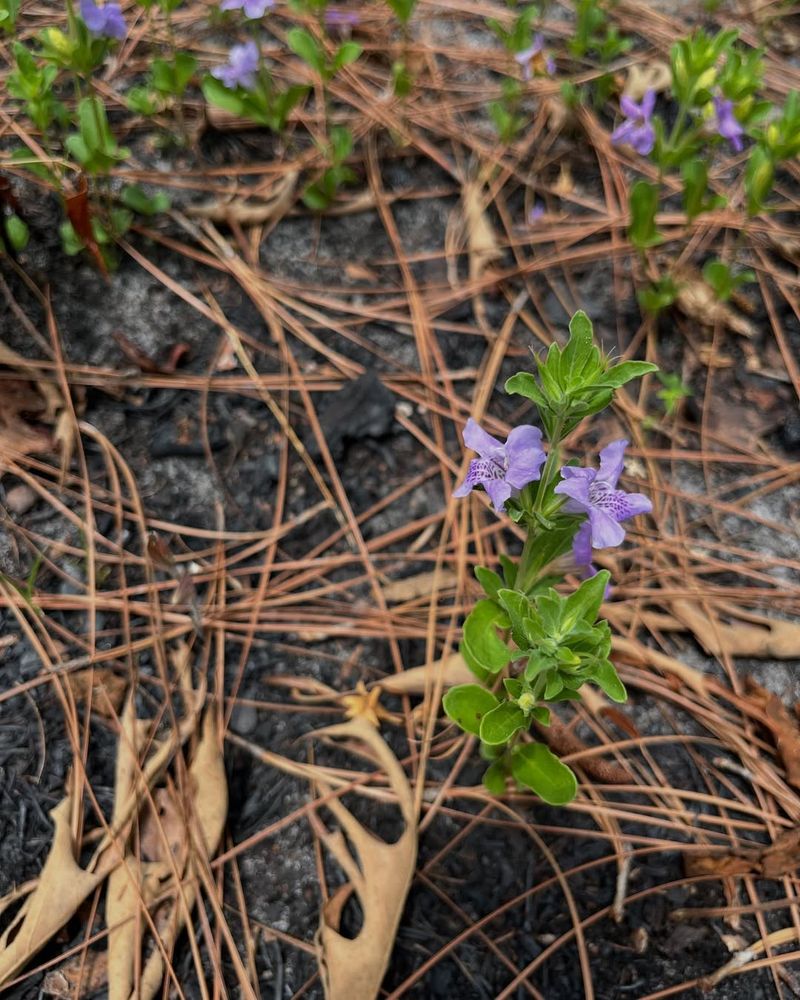
Not every walkway sits in full blazing sun, and for the shadier paths that wind under oaks or run along the north side of a house, twinflower is one of the best low-growing options Florida has to offer. Dyschoriste oblongifolia is a Florida native perennial that spreads as a soft, low mat of small oval leaves, rarely rising more than six to eight inches above the ground.
Its compact, spreading form makes it a natural edge softener for shaded or partially shaded paths.
The blooms are small but genuinely pretty, tubular purple flowers that appear close to the foliage and bloom across a long season in warmer months.
UF/IFAS highlights twinflower as a useful native groundcover that performs well in moist to moderately dry soils and adapts to a range of light conditions from full shade to partial sun.
The plant spreads steadily but not aggressively, filling in gaps along a path edge without overtaking the walkway surface.
Along stepping-stone paths, shaded entry walks, or the edges of woodland garden paths, twinflower creates a soft, naturalistic look that still reads as intentional and tidy.
It works especially well when planted in drifts rather than single plants, allowing the spreading habit to create a fuller, more finished appearance over time.
Because it is a Florida native, it supports local pollinators and requires very little supplemental care once it has settled into its spot beside the path.
8. Dwarf Fakahatchee Grass Adds Texture Without The Bulk
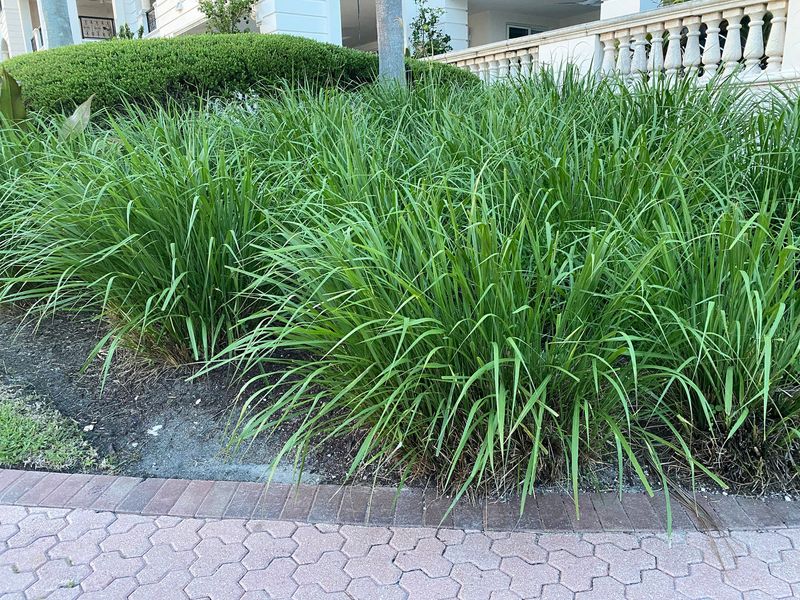
Ornamental grasses can feel risky near a walkway because so many of them grow tall, flop outward, or gradually swallow the path edge over a few seasons. Dwarf Fakahatchee grass sidesteps all of those problems.
Tripsacum floridanum is a compact, clumping grass native to South Florida that stays low, arches gracefully, and brings a soft textural quality to walkway borders without the aggressive spread or bulky size of its larger relatives.
The narrow, bright green blades grow in tidy clumps that typically reach about one to two feet in height and width, making them well-proportioned for path edges, paver borders, and front entry plantings.
UF/IFAS recommends dwarf Fakahatchee grass as a low-maintenance Florida native that handles full sun to partial shade, tolerates moderate drought once established, and adapts well to the sandy soils common throughout the state.
What makes this grass especially useful near a walkway is its clean, upright-to-arching habit that softens the hard edge of pavers or concrete without leaning across the path.
The foliage stays attractive through most of the year and does not require frequent trimming to maintain a presentable look.
Cutting the clumps back in late winter or early spring encourages fresh new growth and keeps the plant looking vigorous heading into the warm season.
For Florida gardeners who want texture and movement near a walkway without sacrificing neatness, dwarf Fakahatchee grass is a genuinely smart and underused choice.