9 Plants That Will Attract Dragonflies To Your Ohio Garden This Spring
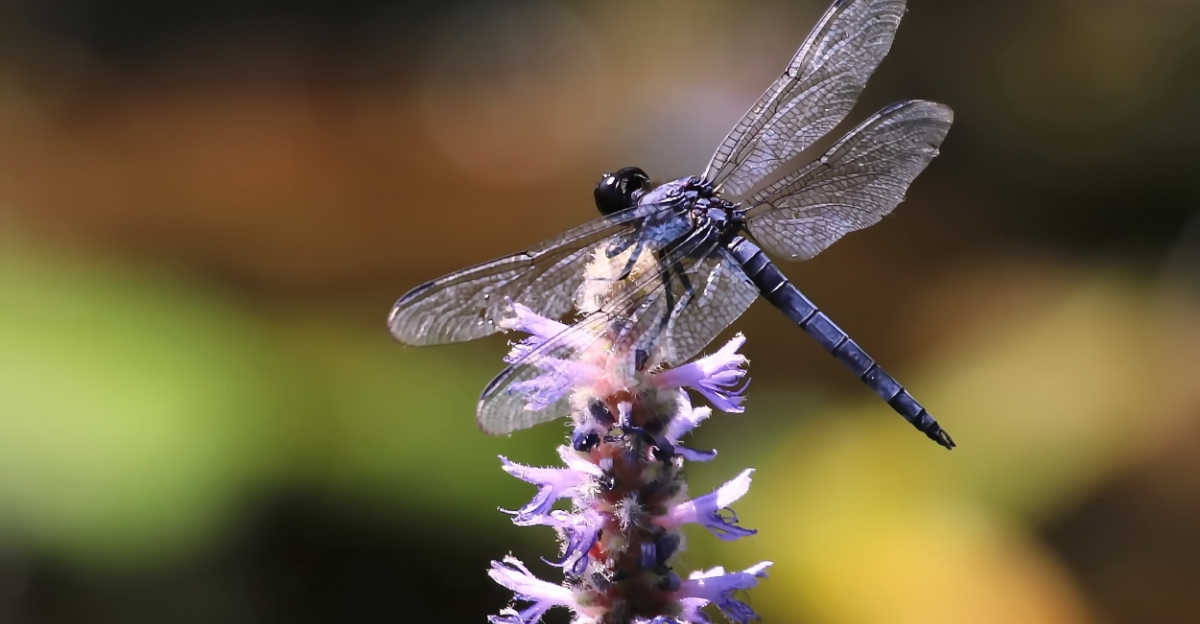
There is something almost electric about the first dragonfly of spring. One minute the garden feels quiet, and the next it is alive with quick flashes of wings, sudden movement, and that unmistakable sense that the season has truly arrived.
In an Ohio yard, dragonflies bring more than charm. They make the whole space feel wilder, richer, and full of motion in the best possible way.
Most people think they just appear out of nowhere. Not quite.
Dragonflies are drawn to gardens that give them the right kind of welcome, and plants play a much bigger role in that than many gardeners realize.
The right mix can help create shelter, resting spots, and the kind of lively insect activity that makes your yard worth visiting.
That is where things get fun. A few smart plant choices can shift the whole mood of an Ohio garden in spring and turn it into the kind of place dragonflies seem to find again and again.
1. Swamp Milkweed Brings More Insect Life To The Garden
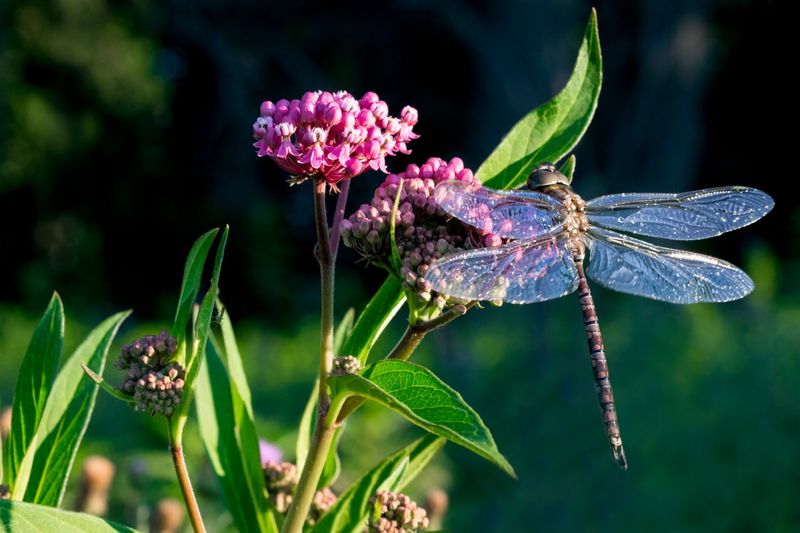
Walk past a patch of swamp milkweed on a warm June morning in Ohio and you will quickly notice it is never quiet.
Asclepias incarnata is a native Ohio perennial that thrives in moist to wet soils, making it a natural fit for rain gardens, pond edges, or low spots in the yard that stay damp after a good rain.
The clusters of rosy-pink flowers that appear in midsummer become a gathering point for an impressive variety of insects including bees, wasps, beetles, and butterflies.
That insect traffic is exactly what matters for dragonflies. Since dragonflies hunt other flying insects, a plant that reliably draws a crowd of smaller bugs is genuinely useful habitat support.
Swamp milkweed does not attract dragonflies the way a light attracts moths. Rather, it builds the kind of lively, insect-rich environment where a hunting dragonfly is much more likely to cruise through and find a meal.
For Ohio gardeners, swamp milkweed also supports monarch butterflies, which adds another layer of ecological value. It grows three to four feet tall, handles clay soils reasonably well, and spreads slowly from the roots over time.
Plant it in full sun for the best bloom and the most insect activity.
2. Blue Flag Iris Adds Strong Pondside Appeal For Dragonflies
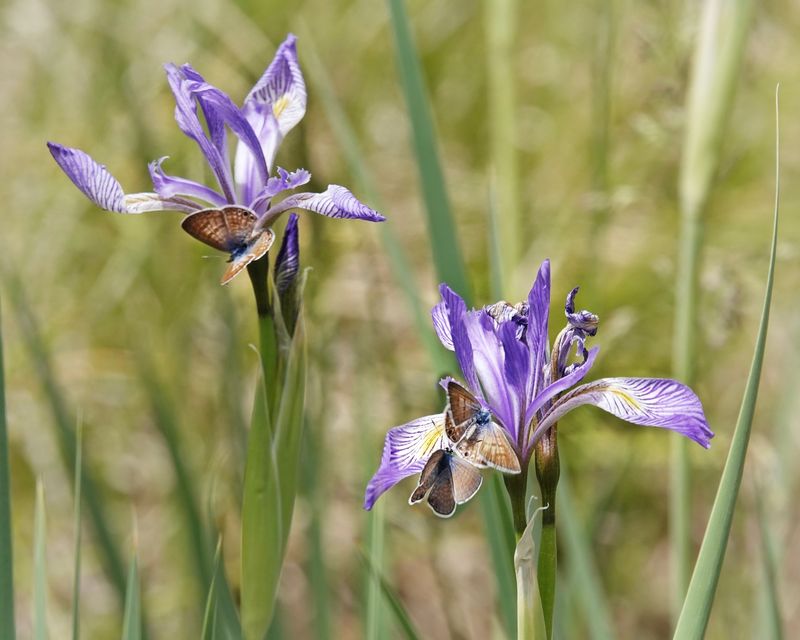
Few sights in an Ohio native garden are as striking as blue flag iris in full bloom at the edge of a water feature. Iris virginica, the native blue flag, is a genuine Ohio native that grows naturally along pond margins, stream banks, and wet meadows across the state.
It produces tall, elegant violet-blue flowers in late spring and holds its upright, sword-shaped foliage through much of the growing season.
The reason this plant earns a spot in a dragonfly-friendly garden has everything to do with location and structure. Dragonflies are closely tied to water because their larvae, called nymphs, develop underwater for months or even years before emerging as adults.
Plants like blue flag iris that anchor themselves right at the water’s edge provide the vertical structure adult dragonflies use for perching, resting between hunts, and even emerging from the water as they complete metamorphosis.
Your Ohio Garden Changes Every Week. Your Plan Should Too.
Gardening in Ohio changes quickly throughout the season. Every Friday you’ll receive a simple weekly plan showing exactly what to plant, prune, fertilize, harvest, and protect so you never miss the right timing.
When shopping for this plant, ask specifically for Iris virginica or Iris shrevei, which is sometimes called southern blue flag. Many garden centers sell non-native iris species under loose common names, so being precise matters.
Planted in shallow water or consistently wet soil in full to partial sun, native blue flag iris becomes a reliable, long-lived feature of any Ohio water garden.
3. Joe Pye Weed Builds The Kind Of Busy Habitat They Like
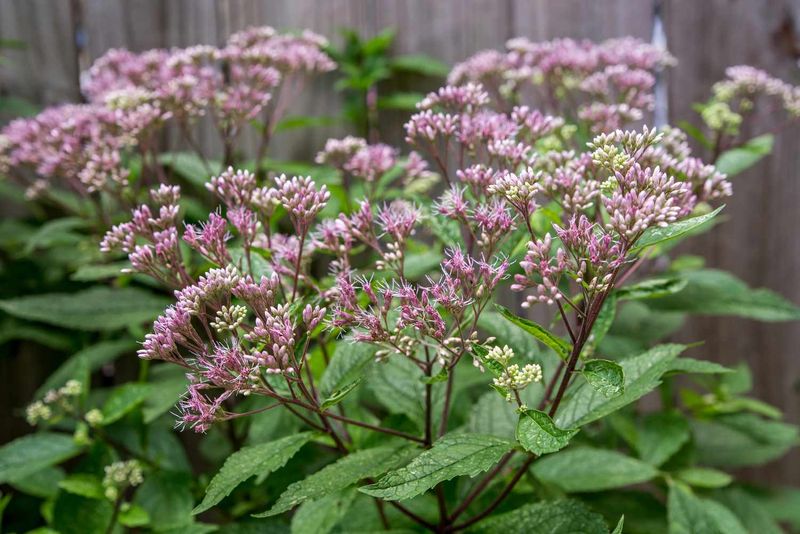
There is something almost theatrical about Joe Pye weed in full summer growth.
Eutrochium purpureum can reach six feet or more in the right Ohio conditions, and its large, domed clusters of dusty pink-purple flowers become one of the busiest spots in any native garden from mid-July through September.
The sheer volume of insect visitors it draws, particularly bees, wasps, and small flies, is remarkable.
For dragonfly habitat purposes, the value here is in the layering and activity Joe Pye weed creates. Dragonflies are aerial hunters, and they tend to patrol open spaces where flying insects are concentrated.
A tall, blooming Joe Pye weed surrounded by other native plants creates a kind of active zone that fits well into a dragonfly’s hunting territory. The plant also provides strong vertical stems that can serve as perching points on sunnier days.
Ohio State University Extension recognizes Joe Pye weed as a high-value native plant for wildlife gardens across the state. It does best in moist, well-drained soil in full sun to light shade and is a solid performer in Ohio’s variable climate.
Unlike some tall natives, it tends to stay upright without staking. Give it room to spread and let it mature into a substantial clump for the strongest habitat effect.
4. Buttonbush Turns Damp Corners Into Wildlife Magnets
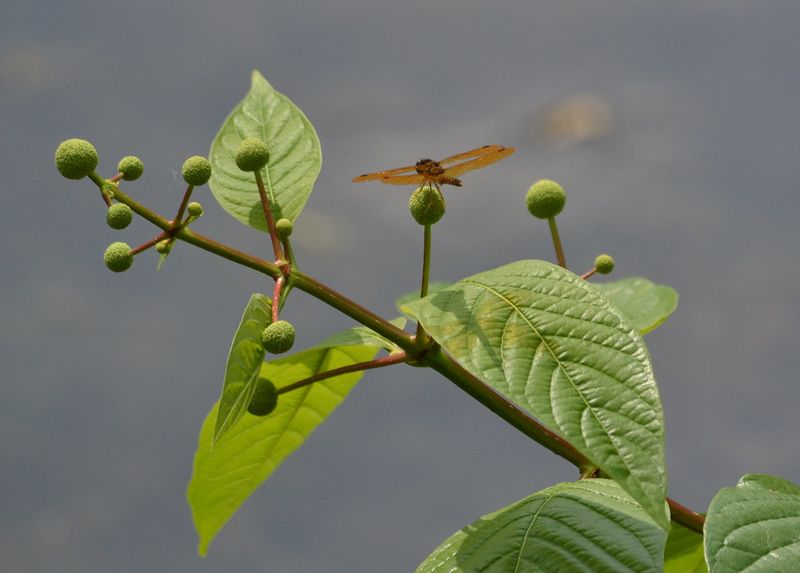
That soggy corner of the yard where nothing seems to grow well might be the perfect spot for something surprisingly useful.
Buttonbush, known botanically as Cephalanthus occidentalis, is a native Ohio shrub that genuinely thrives in wet and periodically flooded soils.
It grows along stream banks, pond edges, and low-lying areas across Ohio and can handle standing water for extended periods without complaint.
What makes buttonbush such a strong choice for wildlife-friendly gardening is the amount of activity it generates.
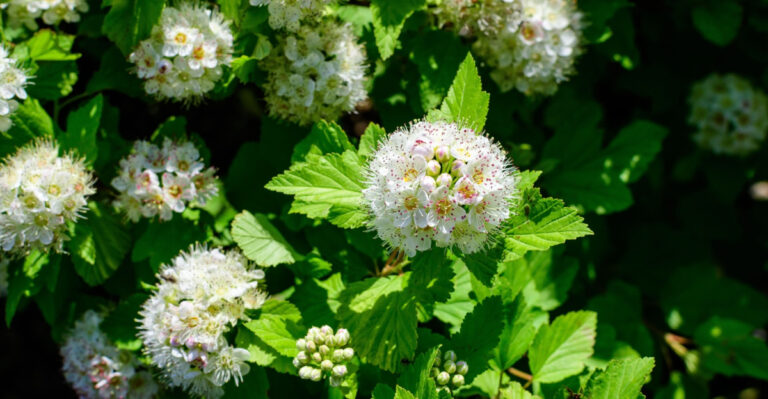
The round, spiky white flower balls that appear in midsummer are powerfully fragrant and draw in an extraordinary range of insects including native bees, wasps, beetles, and flies.
All of that buzzing, hovering activity creates a feeding opportunity zone that benefits any dragonfly patrolling nearby.
Buttonbush also has documented value for waterfowl and songbirds, making it a genuinely multi-layered wildlife plant. It can grow eight to twelve feet tall over time, so it adds real structure to a wet garden area rather than just filling space.
For Ohio gardeners dealing with drainage challenges, it offers a native solution that works with the landscape instead of against it. Plant it in full sun near a water feature or wet low spot and let it establish over a few seasons for the fullest effect.
5. Pickerelweed Helps Create A More Dragonfly Friendly Water Edge
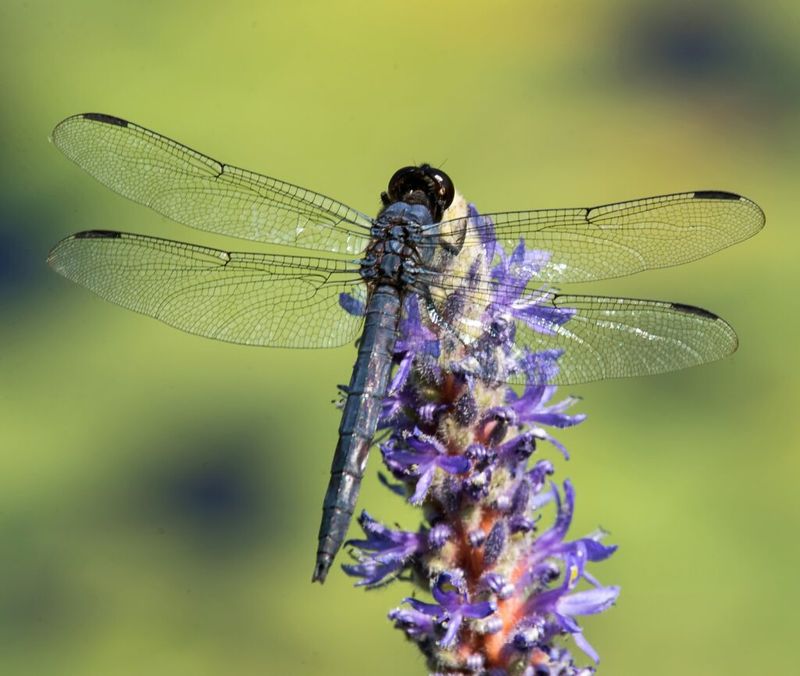
Stand quietly at the edge of almost any healthy Ohio pond in July and you will likely spot dragonflies patrolling the margins, dipping toward the water, and landing on emergent vegetation.
Pickerelweed, Pontederia cordata, is one of the plants most commonly found in those same zones.
It is a native Ohio aquatic perennial that grows in shallow water or very wet soil, producing glossy heart-shaped leaves and tall spikes of violet-blue flowers from early summer into fall.
The connection between pickerelweed and dragonflies is rooted in habitat rather than any direct feeding relationship.
Dragonfly nymphs need submerged and emergent aquatic plants for shelter and as surfaces to cling to during the dramatic process of emergence into adulthood.
The upright stems of pickerelweed are well-suited to that purpose. Adult dragonflies also use tall emergent plants as perching and hunting platforms near water.
For a backyard pond or water garden in Ohio, pickerelweed is one of the most practical native choices available. It grows in water up to about twelve inches deep and spreads gradually to form colonies, which is actually desirable in a naturalistic pond planting.
It performs best in full sun and is winter-hardy throughout Ohio. Pair it with blue flag iris or soft rush for a layered, natural-looking water edge.
6. Soft Rush Gives Resting And Hunting Spots Near Moist Areas
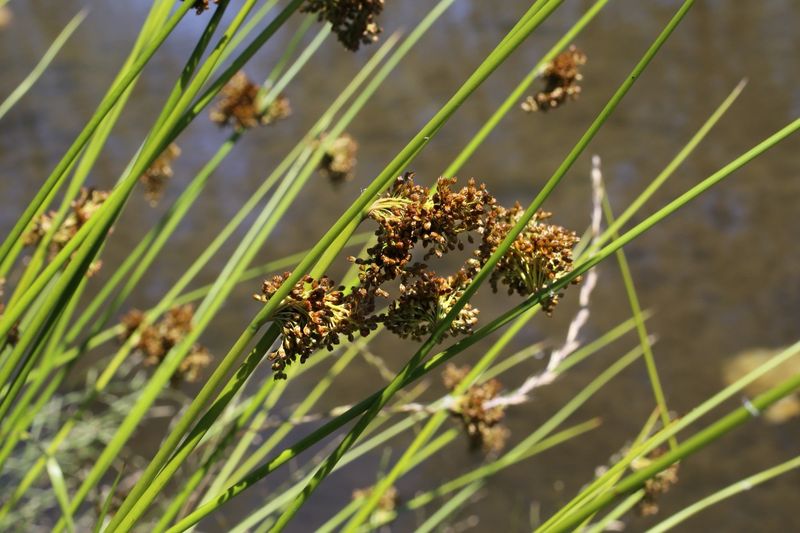
Not every plant that supports dragonfly habitat needs to produce showy flowers. Soft rush, Juncus effusus, is a good example of a plant that earns its place through structure and function rather than visual drama.
It is a native Ohio rush that forms upright, deep-green cylindrical stems that stay attractive from spring through most of winter. It grows naturally in wet meadows, pond edges, and along slow-moving streams across the state.
For dragonflies, the appeal is practical. The tall, slender stems offer excellent perching spots in open, sunny locations near water, which is exactly where dragonflies spend much of their time.
A perching dragonfly is usually scanning for prey or warming itself in the sun, and soft rush provides the kind of elevated, exposed position that works well for both. The plant also provides structure at the water’s edge that supports a broader community of wetland insects.
Soft rush spreads by rhizomes and can form substantial colonies in consistently wet conditions, which is actually an asset in a naturalistic planting where you want continuous ground coverage along a wet margin.
In a more controlled garden setting, occasional thinning keeps it manageable.
Plant it in full sun to partial shade in moist to wet soil, and it will establish reliably across most of Ohio’s growing zones.
7. Blue Vervain Adds Height And Activity Around Sunny Beds
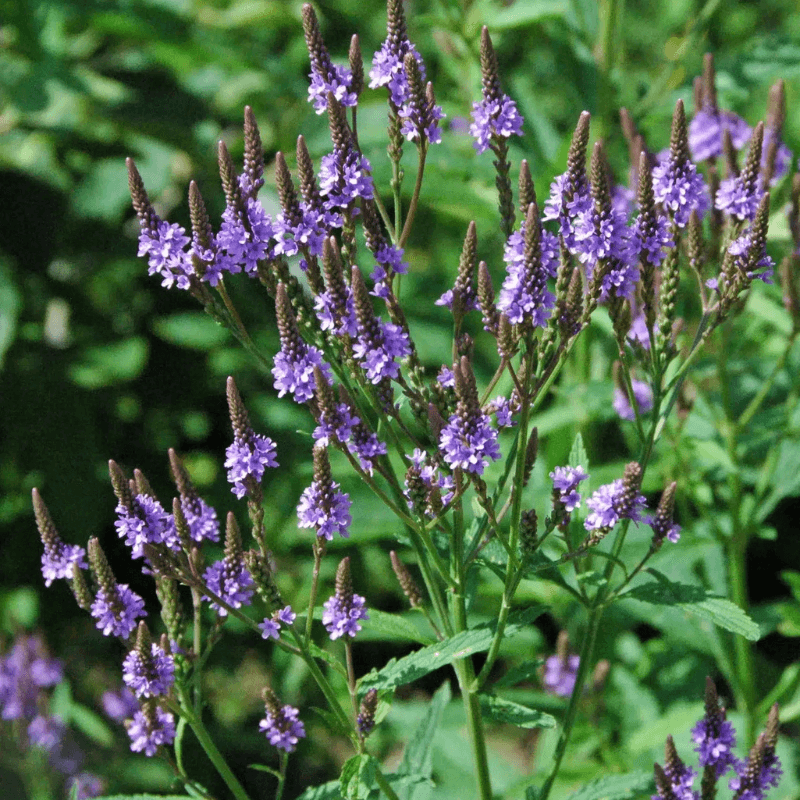
Somewhere between a wildflower and a garden statement plant, blue vervain occupies a useful and often underappreciated role in Ohio native plantings.
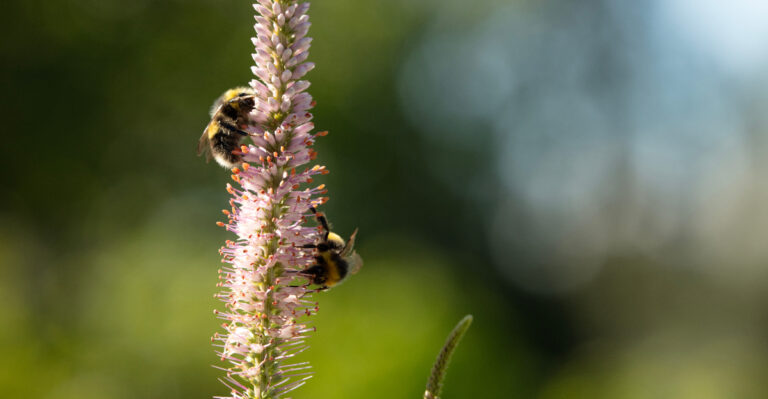
Verbena hastata is a native Ohio perennial that grows three to five feet tall and produces candelabra-like branching stems topped with slender spikes of small violet-blue flowers from July through September.
It favors moist to wet soils and thrives in full sun, making it a natural companion to other moisture-loving natives.
What sets blue vervain apart from Joe Pye weed in a habitat context is its form and placement.
Where Joe Pye weed creates bold, large-scale structure, blue vervain works in a more open, airy way, threading upright stems through a planting bed and drawing in smaller pollinators like native bees, small wasps, and various flies.
That concentrated insect activity in a sunny, open location is exactly the kind of environment dragonflies tend to patrol.
Blue vervain also self-seeds reliably, which means a small initial planting can gradually expand into a more naturalistic sweep over several seasons.
For Ohio gardeners working with rain garden edges, wet meadow plantings, or moist sunny borders, it fills a height and activity niche that few other natives match at the same scale.
It is a genuinely useful plant for building a layered, insect-rich habitat garden.
8. Cardinal Flower Brightens Wet Spots While Supporting More Prey
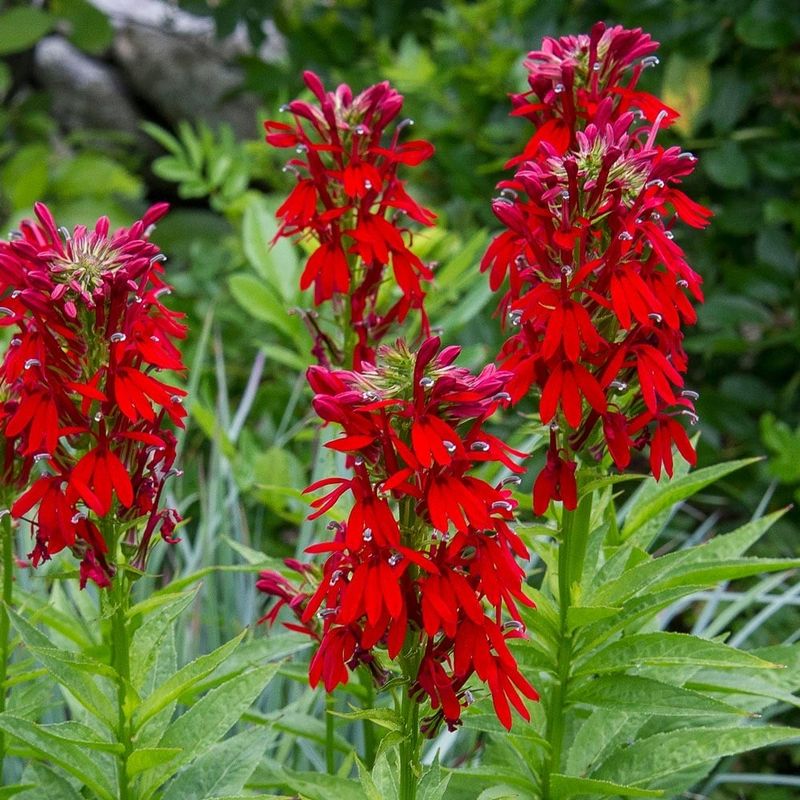
Few native plants stop people in their tracks quite like cardinal flower in full bloom.
Lobelia cardinalis produces tall spikes of intense scarlet-red flowers from midsummer into early fall, and it does so best in the moist to wet conditions found along stream edges, pond margins, and shaded low spots.
It is a true Ohio native with a long history in the state’s natural landscapes and is fully hardy across all Ohio growing zones.
Cardinal flower earns its place in a dragonfly-friendly garden by supporting a lively cast of garden visitors. Hummingbirds are famously drawn to it, and where hummingbirds feed, there is also a concentration of small flying insects.
Native bees and various small pollinators also visit the blooms. All of that activity, particularly in a moist, sheltered garden spot, contributes to the kind of rich insect environment that a hunting dragonfly finds worth patrolling.
It is worth noting that cardinal flower is short-lived as an individual plant, typically lasting two to three years. However, it self-seeds generously in moist soil, so a well-placed colony tends to renew itself naturally season after season.
Plant it in partial shade to full sun with consistently moist soil, and group several plants together so the splash of red is bold enough to anchor the wet zone of your garden visually and ecologically.
9. Native Sedge Plantings Help Tie Moist Garden Zones Together
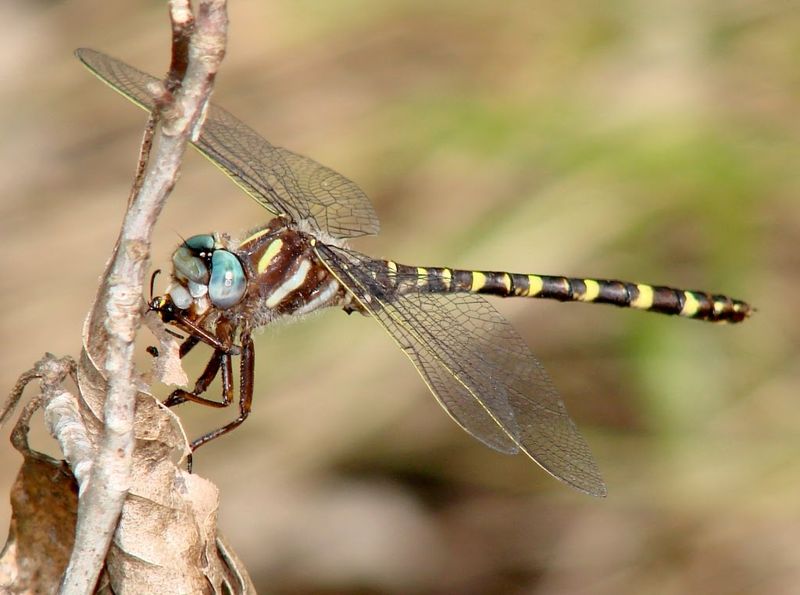
Sometimes the plant that holds a garden together is not the one with the showiest flowers. Native sedges, particularly Ohio-appropriate Carex species like Carex stricta, Carex vulpinoidea, or Carex lupulina, do quiet but essential work in moist garden areas.
These are true native sedges with deep roots in Ohio’s wetland and riparian plant communities, and they should not be confused with ornamental non-native sedges sold under similar common names at general garden centers.
In a dragonfly-friendly garden, native sedges serve as connective tissue between wetter planting zones. They stabilize soil at pond edges and wet margins, reduce erosion, and provide dense low-level cover that supports a range of ground-dwelling and aquatic insects.
That underlying layer of insect life feeds up through the food chain and helps sustain the prey base that dragonflies depend on.
Native Carex species also provide structure and texture that makes a moist garden planting feel complete and naturalistic rather than sparse or patchy.
Many Ohio Carex species are shade-tolerant, which makes them useful for moist spots under trees where other plants struggle.
Sourcing from native plant nurseries or Ohio-based plant sales ensures you are getting genuinely local-ecotype plants rather than cultivated varieties with reduced ecological function.
Let them spread gradually and they will knit a moist planting zone into a cohesive, living habitat.