11 Perennials That Practically Multiply Themselves When You Divide And Replant In North Carolina
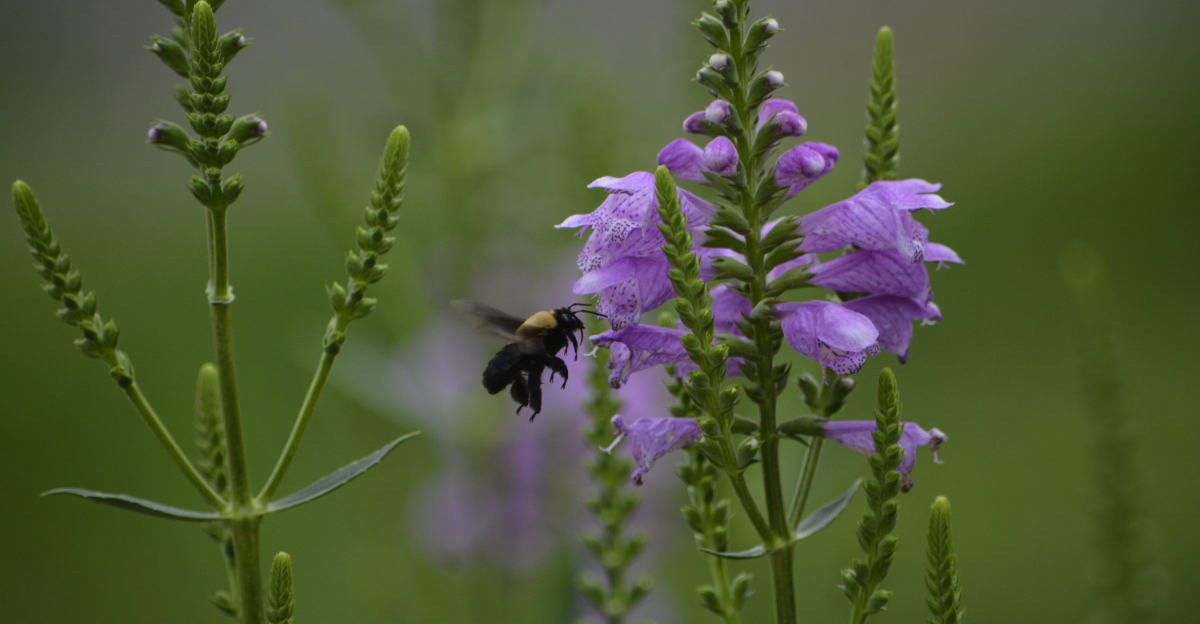
Some perennials do more than just return each year. They grow bigger, spread out, and give you the chance to create even more plants without spending extra money.
In North Carolina, where the growing season is long and conditions can support steady growth, these plants really shine. Over time, many of them form thick clumps that can be divided and replanted to fill new spaces in your yard.
It is a simple way to expand your garden while keeping plants healthy and strong. Dividing also helps improve airflow and encourages better blooms in the seasons ahead.
Whether you want to fill in bare spots or share plants with friends, these perennials make it easy. With just a little effort, one plant can turn into many and keep your garden looking full, vibrant, and alive year after year.
1. Foamflower (Tiarella Cordifolia)
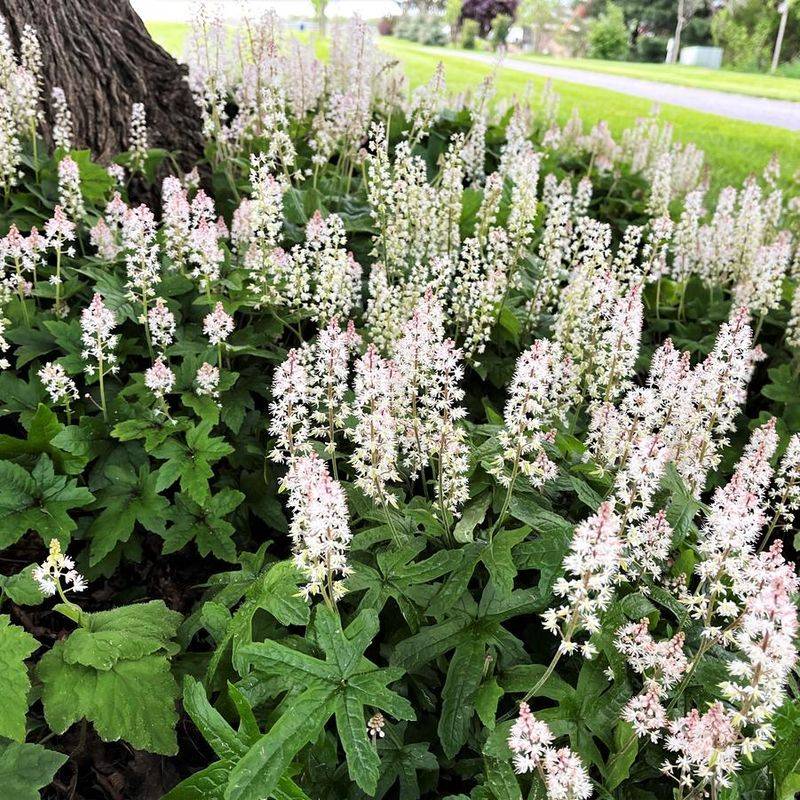
Few plants feel as magical as foamflower blooming in a shady North Carolina garden. Those soft, white bottlebrush flowers seem to float above a carpet of heart-shaped leaves, creating a dreamy spring scene that stops visitors in their tracks.
Native to the Eastern Seaboard, including North Carolina, this plant has been quietly thriving in woodland gardens for centuries.
What makes foamflower so rewarding for gardeners is how easily it spreads. Short stolons, which are creeping stems that run along the soil surface, produce tiny plantlets that root themselves nearby.
You can separate those plantlets and replant them anywhere you want more coverage, making multiplication almost effortless.
NC State recommends division as a reliable propagation method, and springtime is the ideal moment to act. Simply dig up a clump after flowering, gently pull the plantlets apart, and tuck them into moist, shady spots with rich soil.
Foamflower loves dappled light and stays low to the ground, making it a perfect groundcover under trees. In North Carolina’s humid climate, it establishes quickly and rewards your patience with a fresh flush of foamy blooms the very next spring.
2. Christmas Fern (Polystichum Acrostichoides)
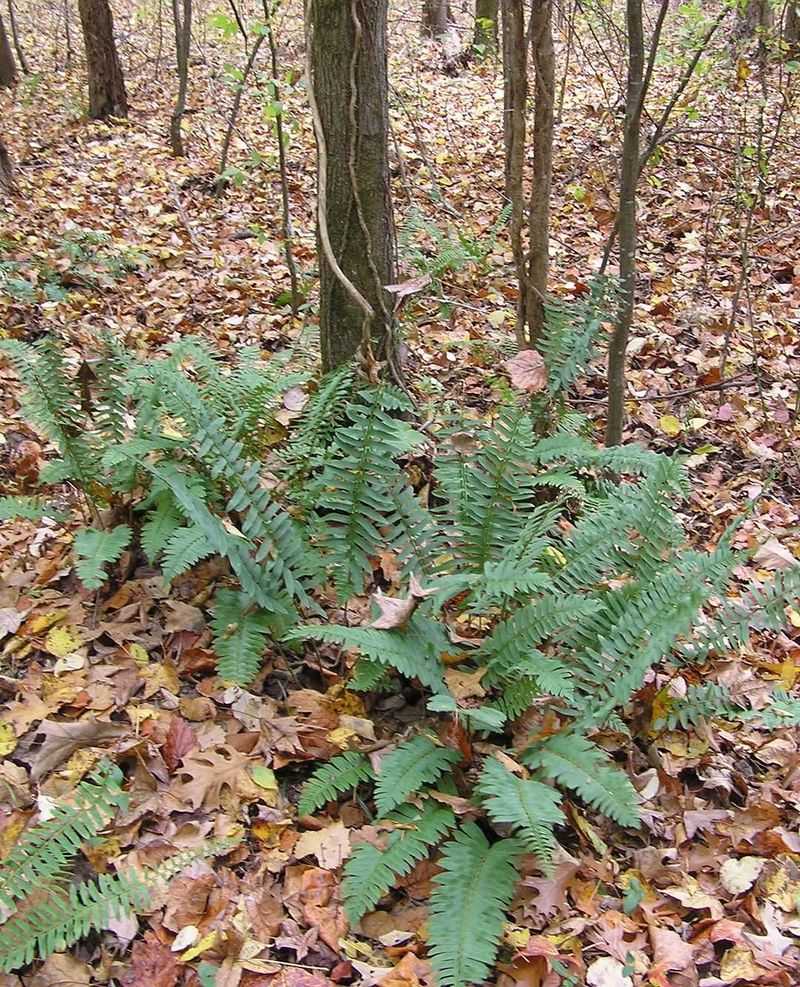
Christmas fern earned its name because its deep green fronds stay fresh and glossy all the way through the holiday season, long after most plants have faded. Spotting it in a North Carolina woodland in December feels like finding a small, evergreen gift.
It is one of the toughest native ferns you can grow, thriving in dense shade where other plants simply refuse to cooperate.
Gardeners love Christmas fern for more than just its good looks. Over time, a single plant builds into a robust, full clump that practically begs to be divided.
The North Carolina Native Plant Propagation Handbook specifically lists it among perennial clumps that respond beautifully to division, bouncing back with fresh, vigorous growth after being split.
Early spring, just before new fronds unfurl, is the best window for dividing Christmas fern. Dig up the entire clump, shake away excess soil, and use a sharp spade to separate it into sections, each with healthy roots attached.
Replant the divisions in shaded, moist spots with well-draining, humus-rich soil. Across North Carolina’s Piedmont, mountains, and coastal plain, this fern adapts remarkably well.
Your North Carolina Garden Changes Every Week. Your Plan Should Too.
Gardening in North Carolina changes quickly throughout the season. Every Friday you’ll receive a simple weekly plan showing exactly what to plant, prune, fertilize, harvest, and protect so you never miss the right timing.
Within one growing season, your new divisions will settle in and begin producing that signature, glossy foliage all over again.
3. Crested Iris (Iris Cristata)
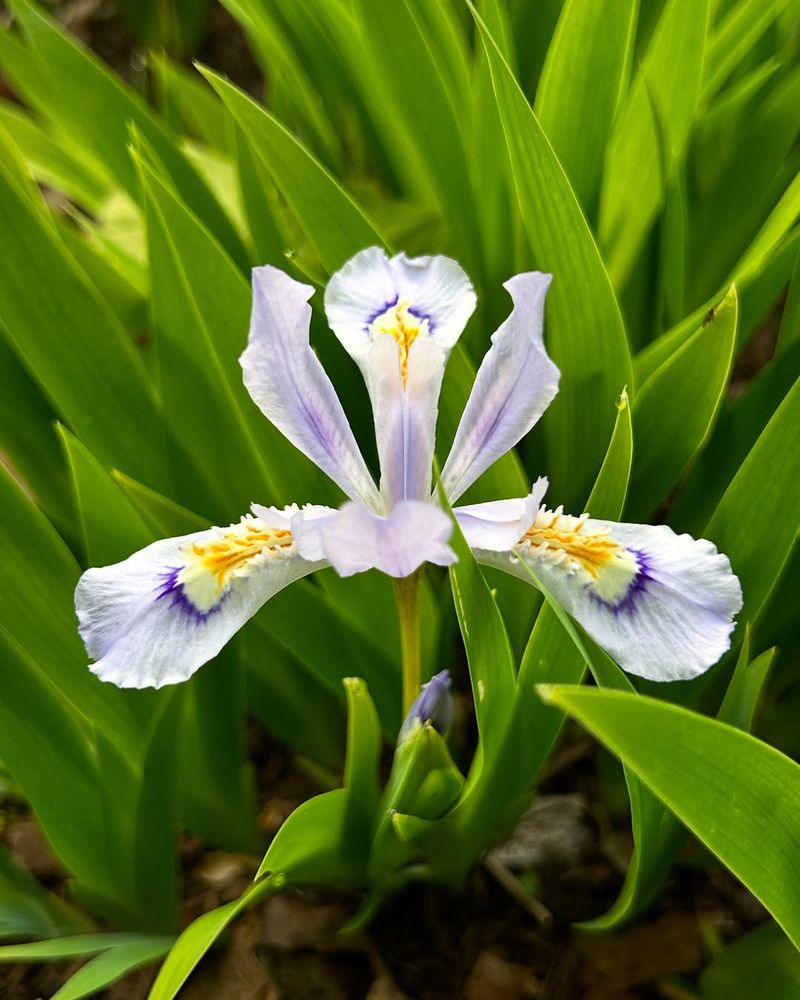
Crested iris is one of those plants that makes you stop and stare every single spring. Those pale lavender-blue flowers, each one decorated with a tiny golden crest, look almost too pretty to be real.
Native to North Carolina, this low-growing iris thrives along woodland edges and shaded slopes where the soil stays cool and slightly moist.
One of the best things about crested iris is how fast it spreads on its own. Shallow rhizomes creep along the soil surface, sending up new fans of foliage in every direction.
Over just a few seasons, a small starter plant can cover a surprisingly wide patch of ground. NC State recommends division as the go-to propagation strategy, and it could not be simpler to do.
After blooming wraps up in spring, carefully dig up the spreading rhizomes and pull them apart into sections, each with a few leaf fans attached.
Replant the divisions at the same shallow depth, just barely covered with soil, in a spot with partial shade and decent drainage.
Across North Carolina, crested iris naturalizes beautifully under deciduous trees, creating a carpet of color that returns reliably year after year. Divide every three or four years to keep your colony vigorous and blooming at full strength.
4. Scarlet Beebalm (Monarda Didyma)
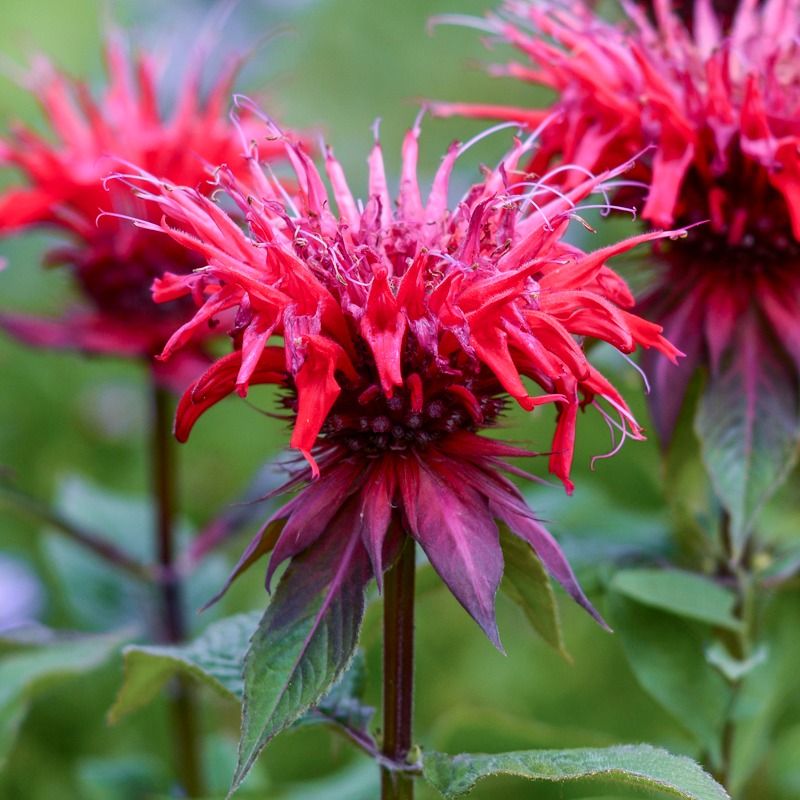
Scarlet beebalm is the kind of plant that turns a garden into a wildlife party. Vivid red, shaggy flowers bloom all summer long, and the moment they open, hummingbirds and native bees show up like clockwork.
Native to North Carolina and much of the Eastern United States, beebalm brings bold color and serious pollinator power to any sunny or partly shaded border.
Beyond its beauty, beebalm is a champion multiplier. Clumps spread outward each year, and without regular division, the center of the plant can become crowded and less productive over time.
The USDA NRCS plant guide recommends dividing clumps every two to three years in early spring while the plant is still dormant, and NC State echoes that advice.
Dividing beebalm is straightforward and satisfying. Dig up the outer edges of a mature clump, where the growth is freshest and most vigorous, and replant those sections in prepared soil with good sunlight and consistent moisture.
Beebalm thrives in North Carolina’s warm summers but appreciates some afternoon shade during the hottest months. Spacing divisions about eighteen inches apart gives each plant enough room to fill in without crowding.
Within a single growing season, your new transplants will be blooming and buzzing with activity, ready to impress all over again.
5. Obedient Plant (Physostegia Virginiana)
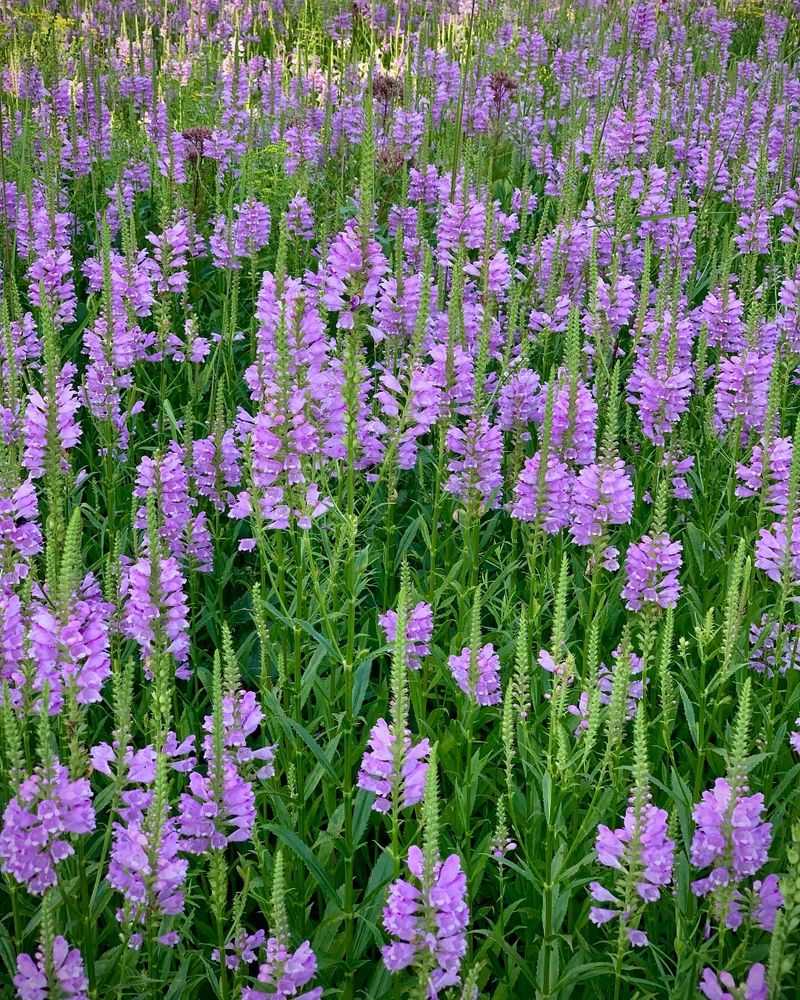
Obedient plant gets its quirky name from a fascinating trick: push one of its tubular flowers to the side, and it stays exactly where you put it. That small detail alone makes it a conversation starter in any North Carolina garden.
Tall spikes of soft pink blooms rise up in late summer, bringing fresh color right when many other perennials are winding down for the season.
Here is the honest truth about obedient plant: it is enthusiastic to a fault. Without regular division, it spreads aggressively through underground runners and can quickly take over more garden space than you planned for.
NC State recommends dividing clumps every one to two years in spring or fall, both to propagate new plants and to keep the colony from spreading beyond its boundaries.
Dividing obedient plant is quick and easy work. Dig up sections of the spreading root mass in early spring, pull apart the rooted stems, and replant them where you want new coverage.
Obedient plant loves full sun and performs especially well near rain gardens or low spots where moisture collects in North Carolina’s clay-heavy soils. Each division establishes fast and sends up fresh flowering spikes by midsummer.
Plant generously along fence lines or borders where that bold late-season color will make the biggest visual impact.
6. Hollow Joe-Pye Weed (Eutrochium Fistulosum)
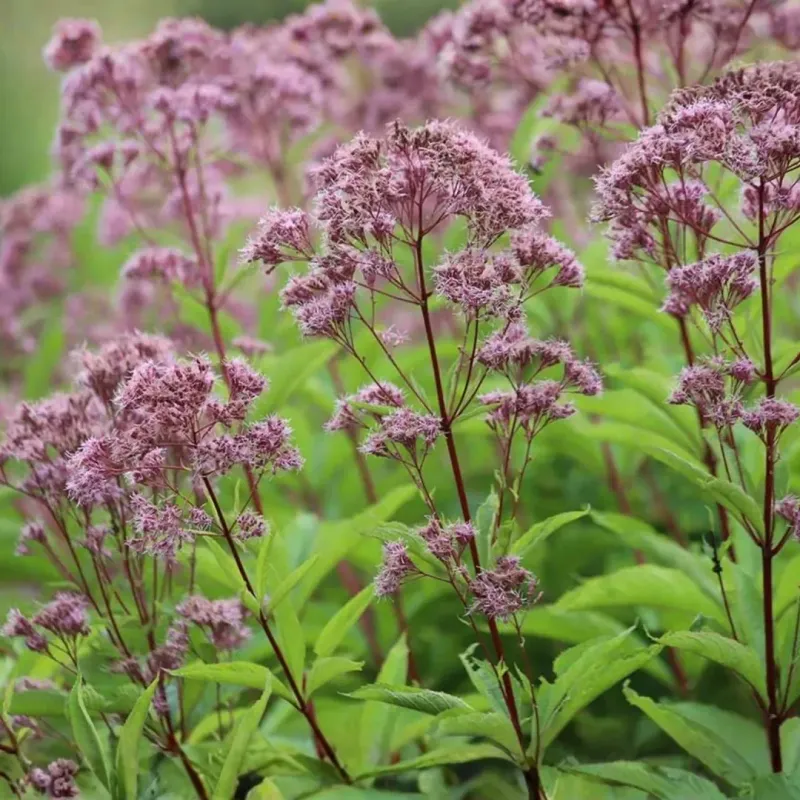
Hollow Joe-Pye weed is a showstopper by every measure. Growing six to twelve feet tall in ideal conditions, it produces enormous domes of dusty-pink flowers that butterflies absolutely cannot resist.
In a moist North Carolina meadow or rain garden, this native giant creates a late-summer spectacle that rivals anything you could plant from a nursery catalog.
Despite its imposing size, hollow Joe-Pye weed is surprisingly easy to manage through regular division. NC State recommends dividing plants in fall as they enter dormancy or in early spring when fresh shoots begin pushing through the soil.
Both timing options work well, and dividing every few years prevents clumps from becoming too large and woody at the center.
To divide, cut back the tall stems after flowering, then dig up the root crown and use a sharp spade to split it into sections. Each division needs a healthy chunk of root and at least a few growing points to thrive.
Replant in moist, fertile soil with full sun to light shade, and water thoroughly for the first few weeks. Across North Carolina’s Piedmont and coastal regions, hollow Joe-Pye weed naturalizes beautifully along stream banks, pond edges, and wet meadow borders.
Once established, your new divisions will reward you with that breathtaking, butterfly-covered canopy every August and September.
7. Sweet Joe-Pye Weed (Eutrochium Purpureum)
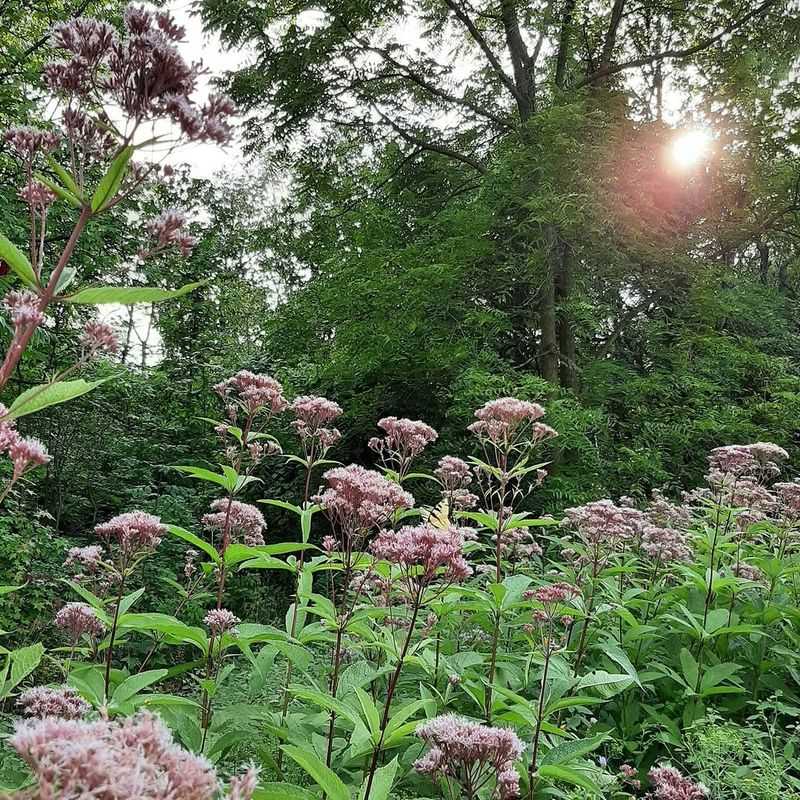
Sweet Joe-Pye weed brings a softer, more woodland-friendly version of the Joe-Pye magic to North Carolina gardens.
The mauve-pink flower clusters are slightly smaller than its hollow-stemmed cousin, but they carry a light, sweet vanilla fragrance that drifts pleasantly through the garden on warm evenings.
Partly shaded borders, woodland edges, and naturalized areas are where this plant truly shines.
Like its relative, sweet Joe-Pye weed forms expanding clumps over time that benefit greatly from division. NC State lists division as a recommended propagation method and notes that fall, as the plant enters dormancy, is the optimal time to act.
Dividing every three to four years keeps clumps healthy and encourages stronger flowering on each new division.
Fall division is straightforward: cut the stems down to about six inches, dig up the root crown carefully, and split it into sections using a sharp spade or garden fork. Each piece should have several healthy roots and a few visible growth buds.
Replant at the same depth in moist, humus-rich soil with dappled light. North Carolina’s mountain and Piedmont regions are especially well-suited to sweet Joe-Pye weed, though it adapts across most of the state with adequate moisture.
Water new divisions regularly through their first autumn, and expect full, fragrant blooms by the following summer.
8. Early Goldenrod (Solidago Juncea)
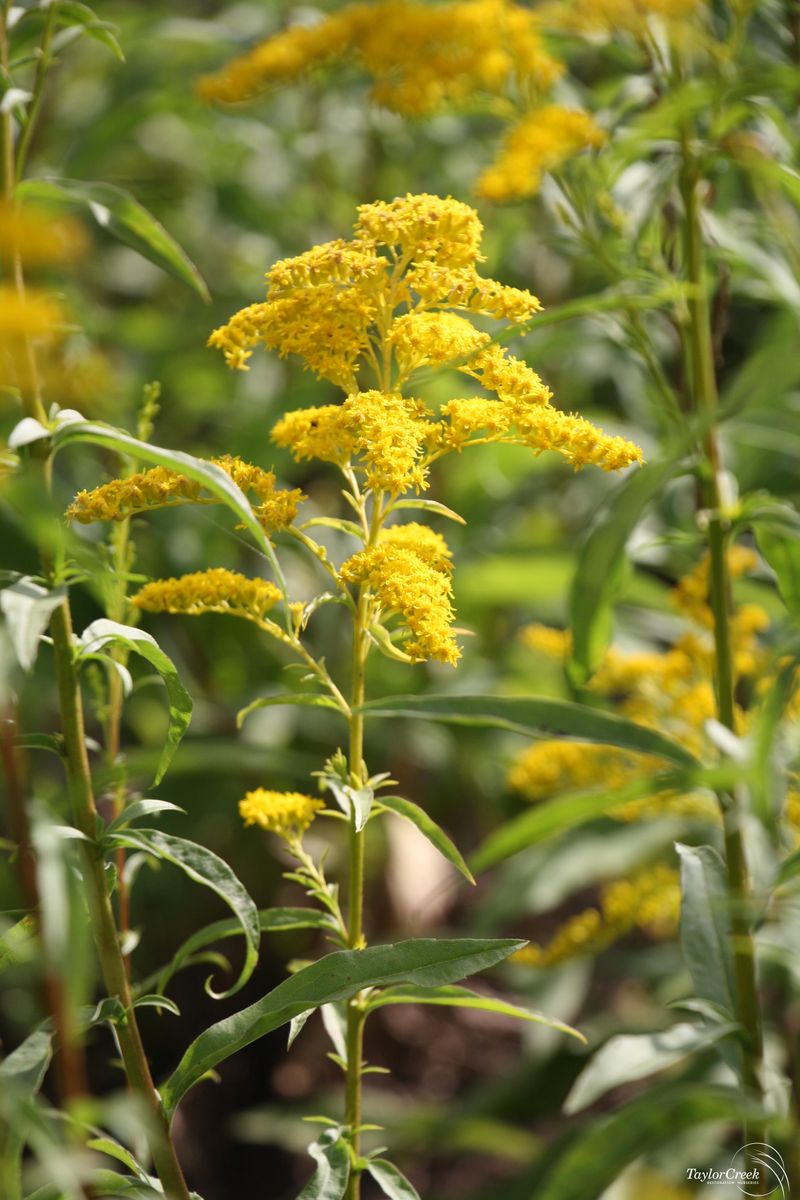
Early goldenrod is one of the first perennials to light up a North Carolina meadow with brilliant gold, often blooming weeks ahead of other goldenrod species.
Those arching sprays of tiny yellow flowers are a magnet for native bees, wasps, and small butterflies, making it one of the most ecologically valuable plants you can grow in a sunny, dry garden space.
One thing to know going in: early goldenrod is a vigorous spreader. NC State notes that it can quickly take over a small garden space, and recommends dividing clumps every two years to keep growth manageable.
Regular division is not a chore with this plant, it is an opportunity to multiply your golden display across a wider area of your yard.
Spring is the best time to divide early goldenrod, just as new growth emerges from the soil. Dig up a mature clump, pull it apart into smaller sections, and replant each piece in a sunny spot with well-drained soil.
Early goldenrod tolerates dry conditions remarkably well, making it a smart choice for North Carolina’s hot, dry summer stretches. Space divisions about eighteen inches apart to allow room for spreading.
Within a single season, each new plant will fill in nicely and produce that signature cascade of golden blooms that pollinators celebrate every late summer.
9. Cutleaf Coneflower (Rudbeckia Laciniata)
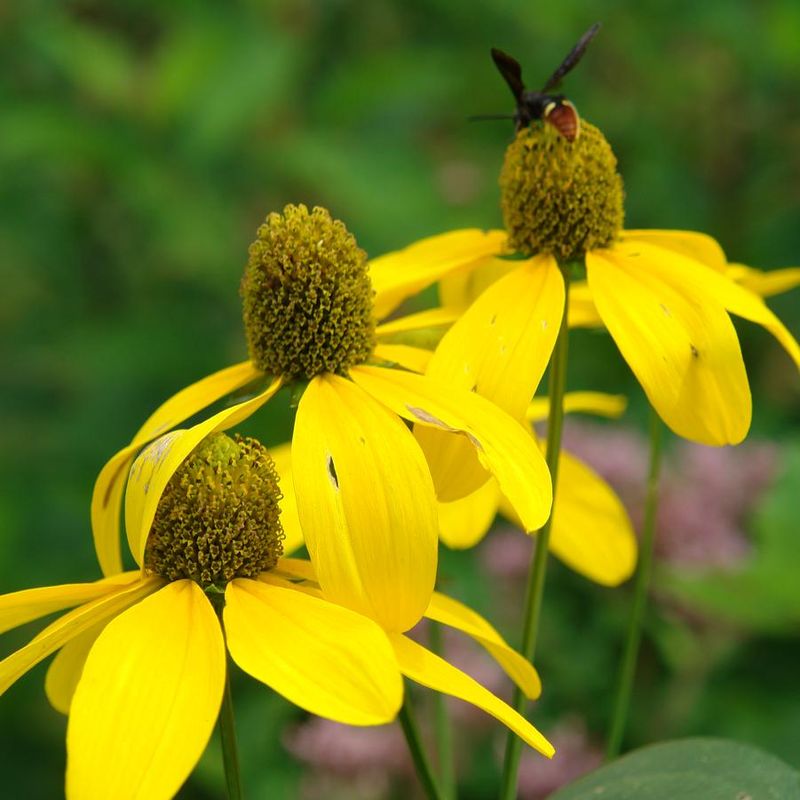
Cutleaf coneflower has a wild, airy elegance that sets it apart from its more familiar coneflower cousins.
Growing four to nine feet tall, it produces cheerful yellow daisy-like flowers with drooping petals and prominent green centers that sway gracefully in the late-summer breeze.
In a North Carolina cottage garden or naturalized meadow planting, it creates a sense of abundance that feels both wild and intentional.
Managing cutleaf coneflower is mostly about staying ahead of its enthusiasm. Without regular division, clumps expand steadily and can crowd neighboring plants.
NC State lists division as a recommended propagation strategy and notes that splitting clumps helps keep the plant under control while producing vigorous new starts ready to fill fresh garden spaces.
Early spring, before new stems push up, is the ideal time to divide cutleaf coneflower. Dig up the root crown, use a sharp spade to slice through the dense root mass, and replant sections in moist, fertile soil with full to partial sun.
Cutleaf coneflower performs especially well near stream banks and low areas in North Carolina where moisture is more consistent through summer. Give each division plenty of vertical space, as these plants grow tall fast.
By midsummer, your new transplants will be reaching skyward and filling the garden with that bright, late-season yellow that pollinators and gardeners both adore.
10. Waxy-Leaf Meadow-Rue (Thalictrum Amphibolum)
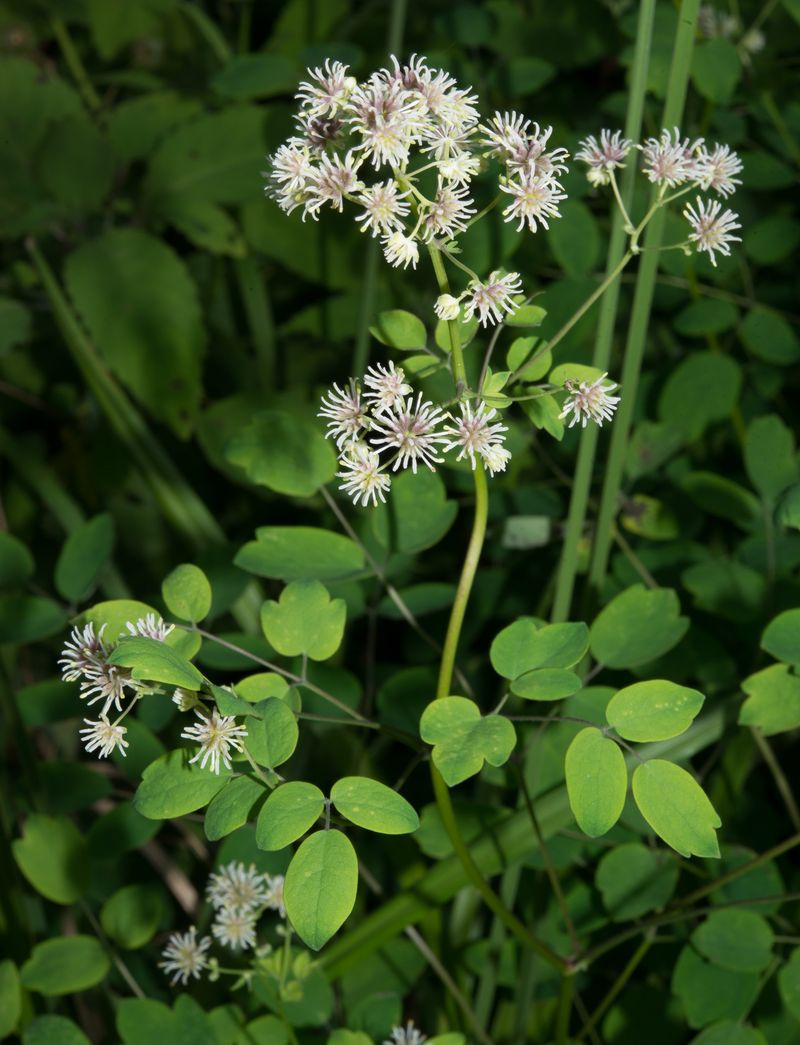
Waxy-leaf meadow-rue is one of those quietly stunning plants that experienced North Carolina gardeners love to talk about.
The blue-green foliage is beautiful on its own, resembling delicate columbine leaves, but when the airy clusters of tiny lavender flowers appear, the whole plant takes on an almost cloud-like quality.
Filtered woodland light shows off its soft color palette perfectly.
What makes this plant especially interesting is its rhizomatous root system, which slowly creeps through the soil and forms expanding colonies over time.
NC State identifies waxy-leaf meadow-rue as a North Carolina native and notes that the rhizomatous plant can be divided when dormant in spring, making multiplication both practical and rewarding for patient gardeners.
Spring division is the key to success with this plant. As new growth just begins to emerge, dig up the root mass and use a garden fork to gently tease apart the rhizomes into sections, each with visible buds or shoots.
Replant in moist, well-drained soil with partial to full shade, ideally on a gentle slope or near a water feature where moisture is consistent.
Across North Carolina’s mountain and upper Piedmont regions, waxy-leaf meadow-rue thrives with minimal fuss once established.
Water new divisions regularly through their first growing season, and by the following spring, each plant will reward you with that signature lavender haze floating above gorgeous foliage.
11. Creeping Phlox (Phlox Stolonifera)
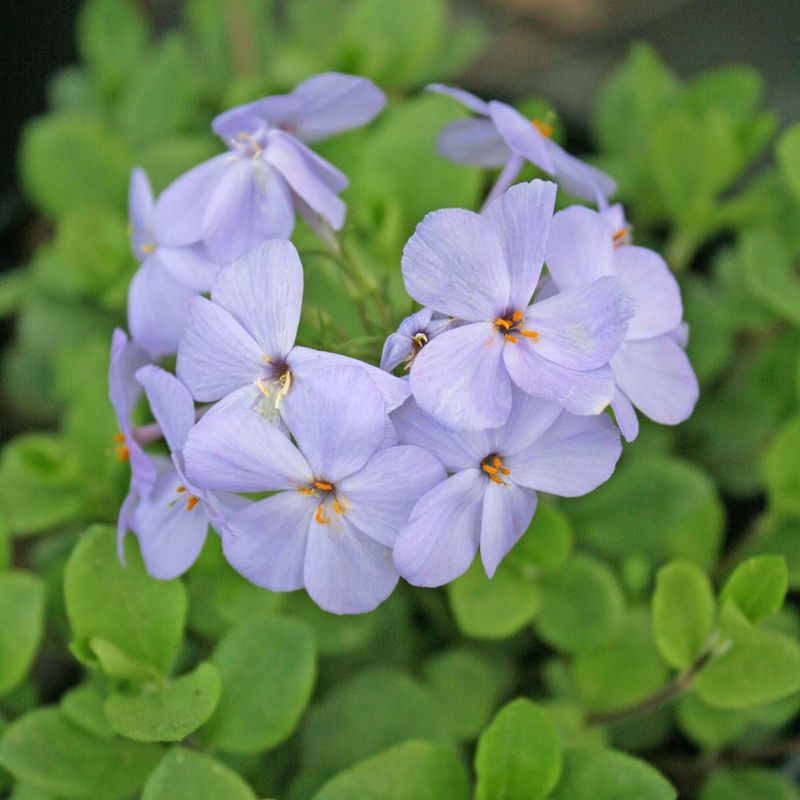
Creeping phlox is the kind of groundcover that makes a shaded North Carolina garden look professionally designed with almost no effort at all. Each spring, a thick mat of foliage erupts with lavender-purple flowers that cover the ground in a vivid, cheerful carpet.
Woodland edges, shaded slopes, and the bases of large trees are where creeping phlox feels completely at home.
What makes this plant so generous is how naturally it spreads. Infertile stems creep outward across the soil surface, rooting as they go and forming a dense, ever-expanding mat.
NC State lists division as a recommended propagation strategy and notes that those spreading stems resume strong growth the following season after being separated and replanted elsewhere in the garden.
Dividing creeping phlox is one of the most satisfying garden tasks you can do in late spring, right after flowering finishes.
Simply pull apart rooted stem sections from the edges of the mat, making sure each piece has roots attached, and replant them in prepared soil with dappled or full shade.
Amend heavy clay soils with compost before planting to give each division the best possible start. In North Carolina, creeping phlox establishes quickly and fills in beautifully within one season.
Over time, a single original plant can multiply into dozens of new starts, giving you an endless supply of that gorgeous spring color to spread throughout your entire landscape.