California Native Plants That Handle Neglect Better Than Most
California’s landscape is famous for its rugged beauty, but trying to maintain a lush, thirsty yard in the face of water restrictions and dry summers can feel like a full-time job.
What if you stopped fighting the climate and started working with it?
Our state is home to a powerhouse lineup of native plants that actually thrive on a bit of neglect once they’re settled in.
By switching to California natives, you’re not just saving on your water bill; you’re creating a resilient sanctuary that draws in local wildlife and stays vibrant through every heatwave.
Here is how to pick the right “set it and forget it” plants for a stunning, low-maintenance landscape.
1. California Lilac Thrives With Little Water
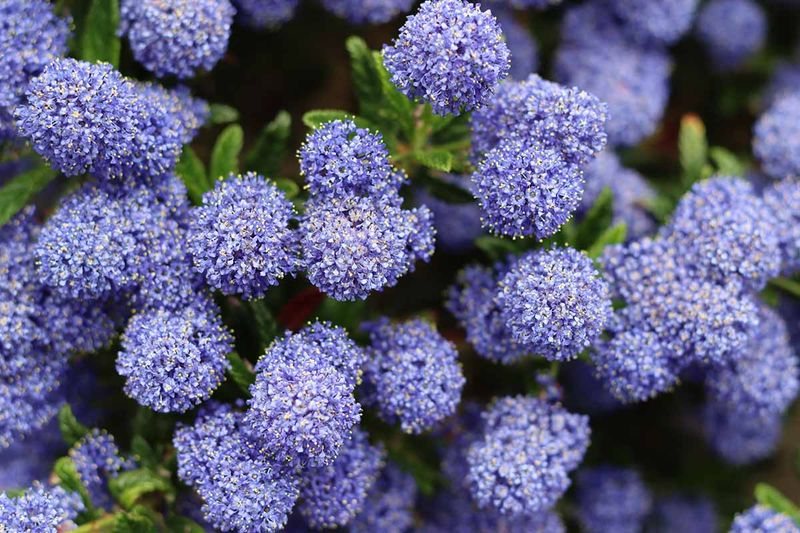
Few flowering shrubs in California can match the visual punch of ceanothus during a spring bloom. Commonly called California Lilac, this evergreen shrub produces dense clusters of blue to purple flowers that practically stop foot traffic.
Pollinators love it, and once established, the plant largely takes care of itself.
Ceanothus thrives in well-drained soils and full sun, which makes it a natural fit for slopes, hillsides, and dry garden beds across California. It handles poor soil conditions with ease and rarely needs fertilizing.
Overwatering is actually more of a concern than underwatering once the plant is settled in.
During establishment, which typically takes one to two growing seasons, occasional deep watering helps roots develop. After that, most ceanothus varieties rely almost entirely on California’s natural rainfall.
Sizes range from low-growing groundcovers to large shrubs reaching ten feet or more, giving gardeners flexibility in how they use it.
Inland California gardens tend to benefit most from the tougher, more heat-tolerant varieties, while coastal selections may handle slightly more moisture.
Pruning is rarely necessary beyond light shaping after bloom.
2. Manzanita Handles Dry Low Care Conditions
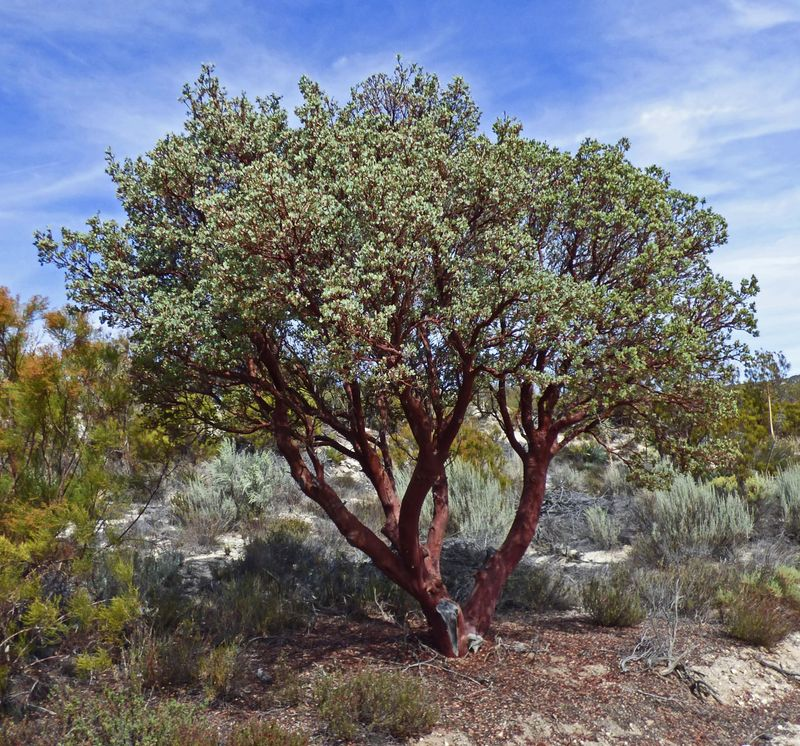
Walk through almost any dry California foothill or coastal scrubland and you will likely spot the distinctive smooth, reddish-brown bark of a manzanita.
That sculptural bark is one of its most recognizable features, and it adds year-round visual interest even when the plant is not in flower.
Small, urn-shaped pink or white blossoms appear in late winter and early spring, drawing in early-season pollinators.
Manzanita belongs to the genus Arctostaphylos, which includes dozens of species native to California. Some grow as low groundcovers, while others develop into large multi-stemmed shrubs.
Most varieties do best in sandy or rocky, well-drained soils where other plants struggle to survive. Soggy soil is one of the few conditions that can stress manzanita, so good drainage is worth prioritizing at planting time.
Once established, manzanita needs very little supplemental water. Most mature plants get by on seasonal rainfall alone in many parts of California.
Avoid heavy pruning, as manzanita does not always recover quickly from aggressive cuts. Light shaping to remove damaged wood is usually enough.
For low-maintenance California landscapes, especially on slopes prone to erosion, manzanita is a reliable and long-lived choice that rewards patience during its first year.
Your California Garden Changes Every Week. Your Plan Should Too.
Gardening in California changes quickly throughout the season. Every Friday you’ll receive a simple weekly plan showing exactly what to plant, prune, fertilize, harvest, and protect so you never miss the right timing.
3. Toyon Grows Well In Heat And Tough Soil
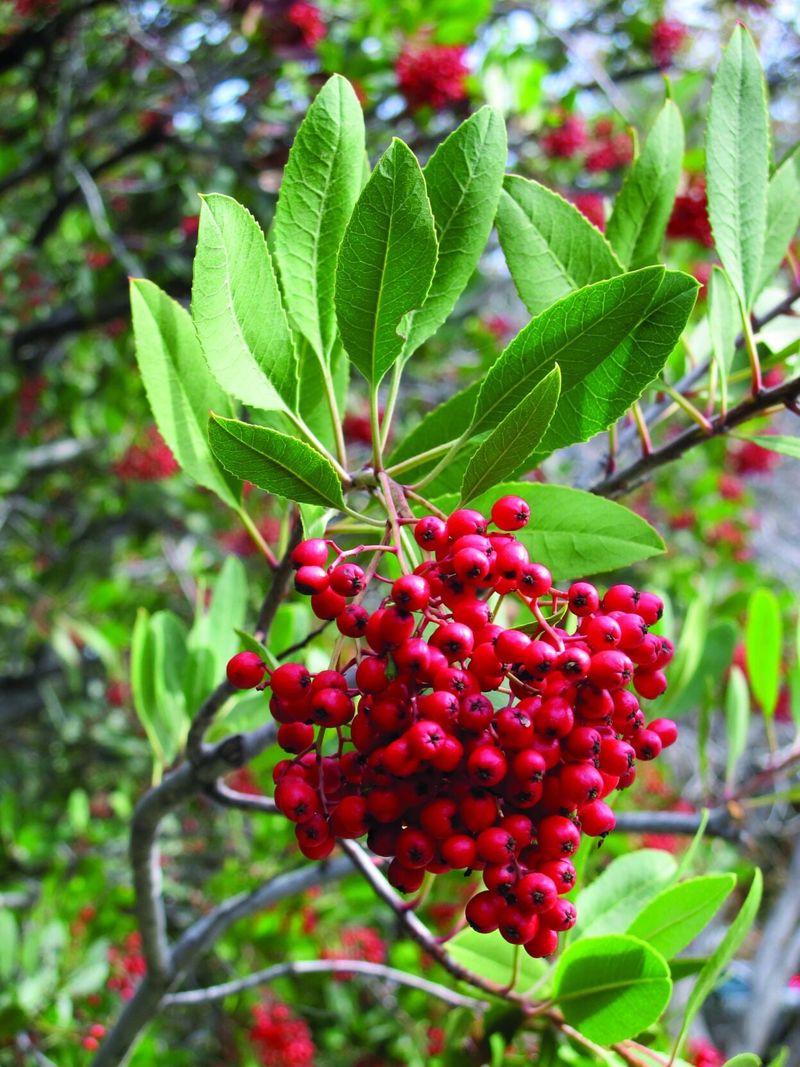
Hollywood, California actually gets its name from toyon, the native shrub that once covered the region’s hills with clusters of bright red berries each winter.
Also called California Holly or Christmas Berry, toyon is a tough, resilient plant that handles heat, drought, and poor soil conditions without much fuss.
Its glossy dark green leaves stay on the plant year-round, providing consistent color and texture.
White flower clusters appear in summer, followed by the signature red berries that ripen through fall and into winter. Birds flock to the berries, making toyon a strong choice for California gardeners who want to support local wildlife.
It grows naturally along slopes, canyon edges, and chaparral zones across much of California, which tells you a lot about its tolerance for difficult conditions.
Toyon can reach heights of six to fifteen feet depending on conditions, and it handles clay or rocky soils reasonably well. Full sun to partial shade both work, though full sun tends to produce the most berries.
Once established, it needs very little supplemental irrigation in most California climates.
Occasional deep watering during extended dry spells in the first couple of seasons helps roots establish, but mature plants are impressively self-sufficient and rarely need fertilizing or heavy pruning.
4. Coyote Brush Fills Space With Minimal Effort
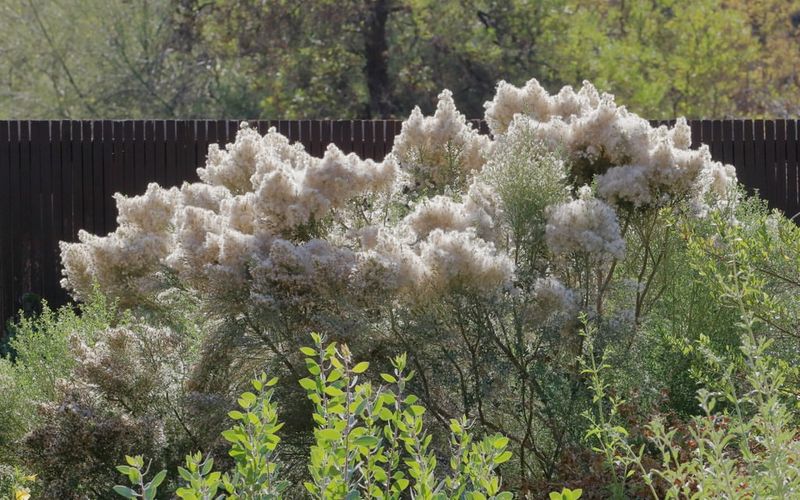
If you have a large open area in your California yard that feels impossible to fill without constant maintenance, coyote brush might be the answer you have been looking for.
Baccharis pilularis is one of the most adaptable native shrubs in California, growing naturally from the coast all the way to inland foothills.
It spreads readily and fills in bare ground with minimal encouragement.
Coyote brush is not a showy plant in the traditional sense. Its small white flowers are modest, and the fluffy seed heads that follow are more interesting than glamorous.
But its real value lies in its toughness. It handles coastal wind, salt air, dry inland heat, poor soils, and extended dry periods without skipping a beat.
Few California natives cover ground as efficiently with so little care.
Dwarf varieties like Pigeon Point work especially well as low-growing groundcovers on slopes or in areas where erosion control matters. Taller forms can serve as informal hedges or background shrubs.
Once established, coyote brush rarely needs watering beyond California’s natural rainfall patterns. It does benefit from occasional shearing to keep it tidy and prevent it from becoming too woody at the base.
Wildlife, particularly native bees and beneficial insects, use it heavily throughout the year.
5. California Sagebrush Thrives In Dry Areas
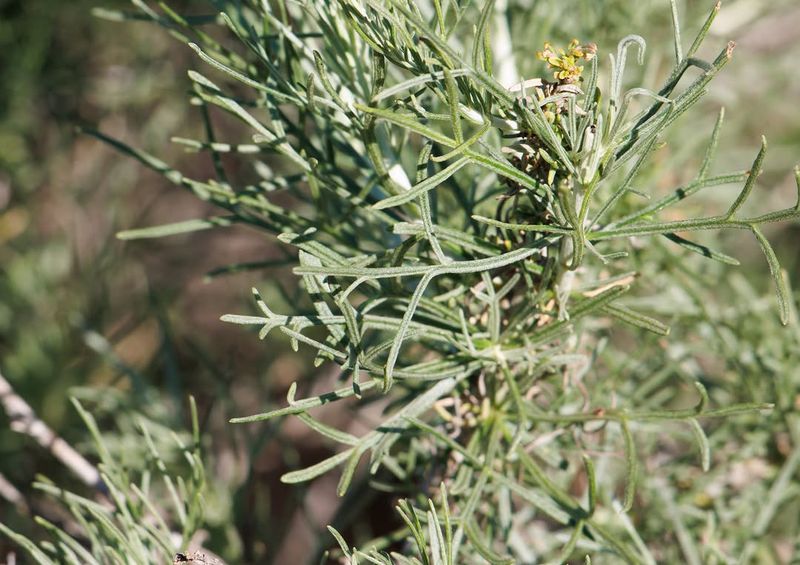
There is something deeply familiar about the scent of California sagebrush after a light rain. Artemisia californica releases a soft, herbal fragrance that many people associate with California’s wild coastal and foothill landscapes.
That aromatic quality comes from the plant’s fine, silvery-gray foliage, which stays on the plant year-round and gives it a soft, wispy texture that contrasts well with darker-leaved shrubs.
California sagebrush grows naturally along the coast and in dry interior slopes throughout much of the state. It handles sandy soils, rocky ground, and full sun exposure with ease.
Summer drought is not a problem for established plants, which is why it fits so naturally into low-water California gardens. Overwatering or poorly drained soil causes more problems than dry conditions ever would.
In the garden, California sagebrush works well as a mid-border plant, a slope stabilizer, or as part of a native habitat planting. It typically grows three to five feet tall and wide, though some plants stretch larger in favorable spots.
Light pruning after the growing season helps maintain a compact, tidy shape. Wildlife value is notable too, as several California butterfly and moth species rely on it as a host plant.
For low-effort, regionally appropriate planting, it earns its place easily.
6. Cleveland Sage Performs Well In Hot Sun
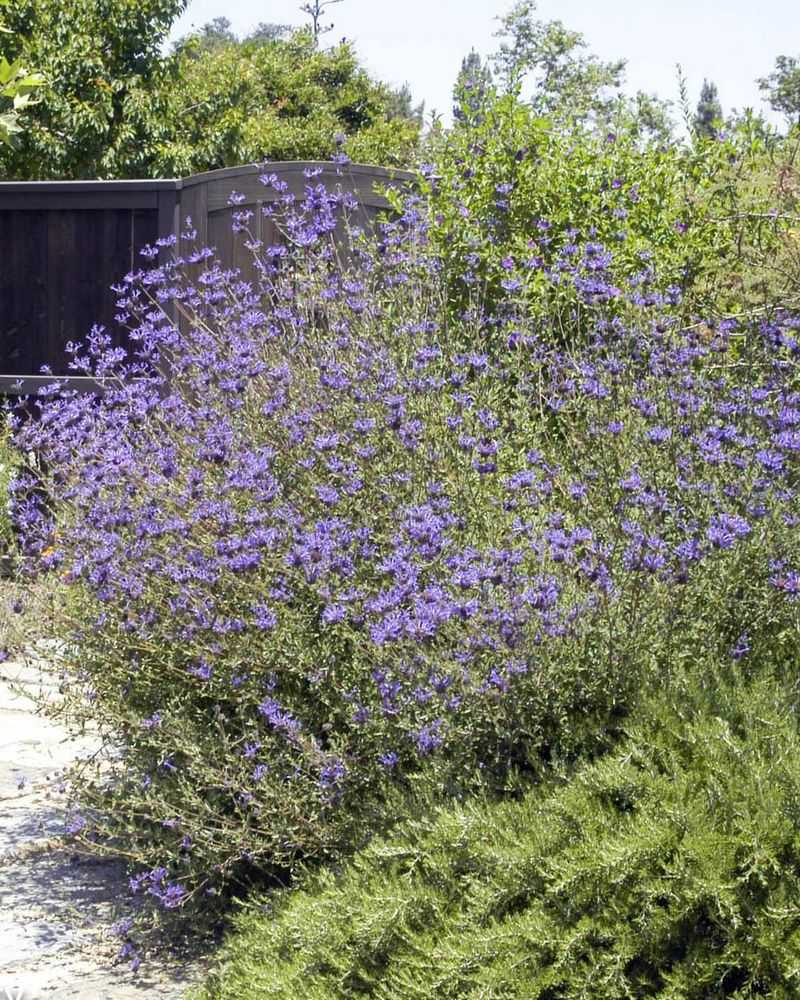
On a warm California afternoon, brushing against a Cleveland Sage plant releases one of the most pleasant scents in the native plant world.
Salvia clevelandii is an aromatic shrub native to Southern California and Baja California, and it has earned a devoted following among gardeners who want something that looks great, smells amazing, and demands very little in return.
Deep blue to violet flower spikes appear in late spring and early summer, rising above gray-green, textured leaves. Hummingbirds and native bees are drawn to the flowers reliably, making it a strong choice for California gardens focused on supporting pollinators.
The blooms are striking enough that Cleveland Sage works as a focal point in dry garden designs, not just as filler.
Full sun and well-drained soil are the two main requirements for keeping this plant healthy. It handles clay soil poorly, so raised beds or amended planting areas can help in heavier soils.
Once established, Cleveland Sage gets by with very little supplemental water, relying mostly on seasonal rainfall in most California regions. Light pruning after flowering keeps the plant from becoming too leggy and encourages fresh growth.
Avoid heavy watering in summer, as the plant naturally goes semi-dormant and prefers dry conditions during that period.
7. Yarrow Spreads Easily In Low Care Gardens
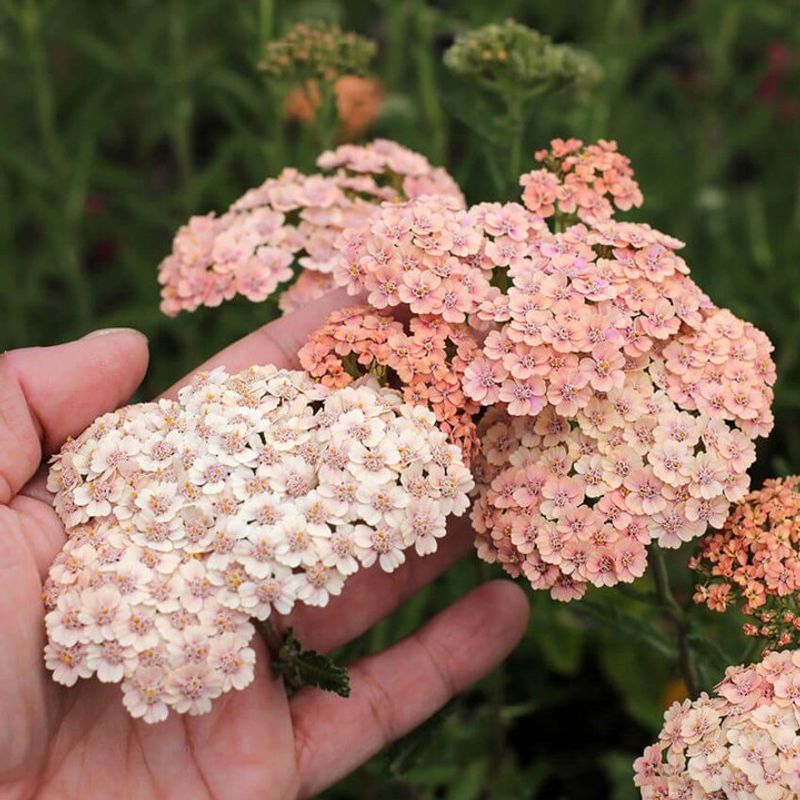
Yarrow has been growing across California’s meadows, roadsides, and hillsides long before anyone thought to plant it intentionally in a garden.
Achillea millefolium is a tough, spreading perennial with flat-topped flower clusters that come in white, yellow, and shades of pink depending on the variety.
The ferny, aromatic foliage stays attractive even when the plant is not in bloom.
One of yarrow’s most useful traits is its willingness to spread and fill in gaps without much encouragement. In low-maintenance California landscapes, that quality is a genuine asset.
It handles poor soils, slopes, and full sun exposure without complaint, and established clumps get by on very little supplemental water. Occasional deep watering during extreme heat can help plants look their best, but it is rarely a strict necessity.
Yarrow attracts a wide range of beneficial insects, including native bees and predatory wasps that help manage garden pests naturally. Deadheading spent flowers encourages repeat blooming through summer.
Over time, clumps can be divided every few years to keep them vigorous and prevent overcrowding. Both native and cultivated varieties of yarrow perform well in California gardens.
It is one of those plants that rewards you more the less you fuss over it, which makes it genuinely well suited for busy or low-care gardening situations.
8. California Fuchsia Blooms With Limited Water
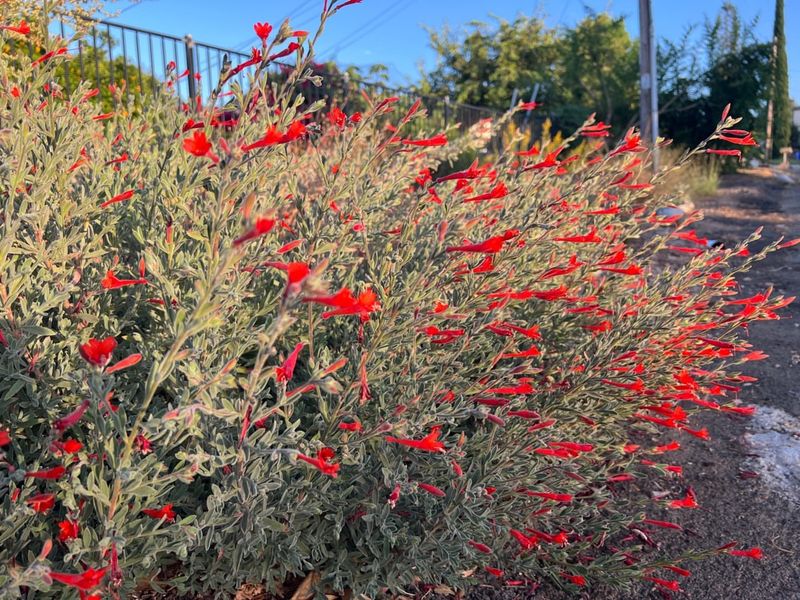
Late summer in California can feel like a long stretch of brown and beige in many gardens, which is exactly why California Fuchsia earns so much appreciation from native plant enthusiasts.
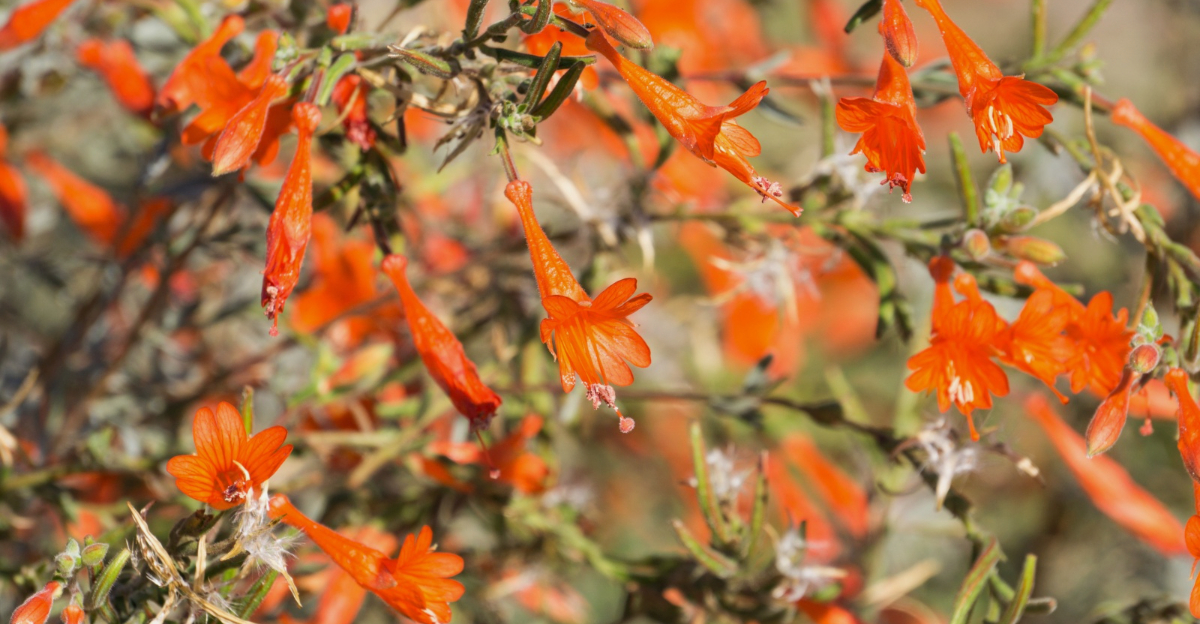
Epilobium canum bursts into vivid red-orange bloom just as most other plants are winding down, typically from August through October.
That late-season color is genuinely hard to find in drought-tolerant plantings.
Hummingbirds are particularly fond of California Fuchsia, and a well-established plant in full bloom can attract multiple birds throughout the day.
The tubular flowers are well-suited to hummingbird feeding, and the plant’s late bloom period makes it especially valuable when other nectar sources are scarce.
Gray-green foliage provides a soft backdrop that makes the bright flowers pop even more.
California Fuchsia grows naturally on dry rocky slopes, coastal bluffs, and open hillsides across much of the state. It tolerates a wide range of soils as long as drainage is reasonable, and it handles full sun and summer heat without stress.
Established plants need very little supplemental irrigation in most California climates. Cutting the plant back hard in late winter or early spring encourages fresh, vigorous growth and a fuller bloom display the following season.
It spreads gradually by underground runners, slowly filling in open areas over time.
9. Deer Grass Handles Heat And Dry Conditions
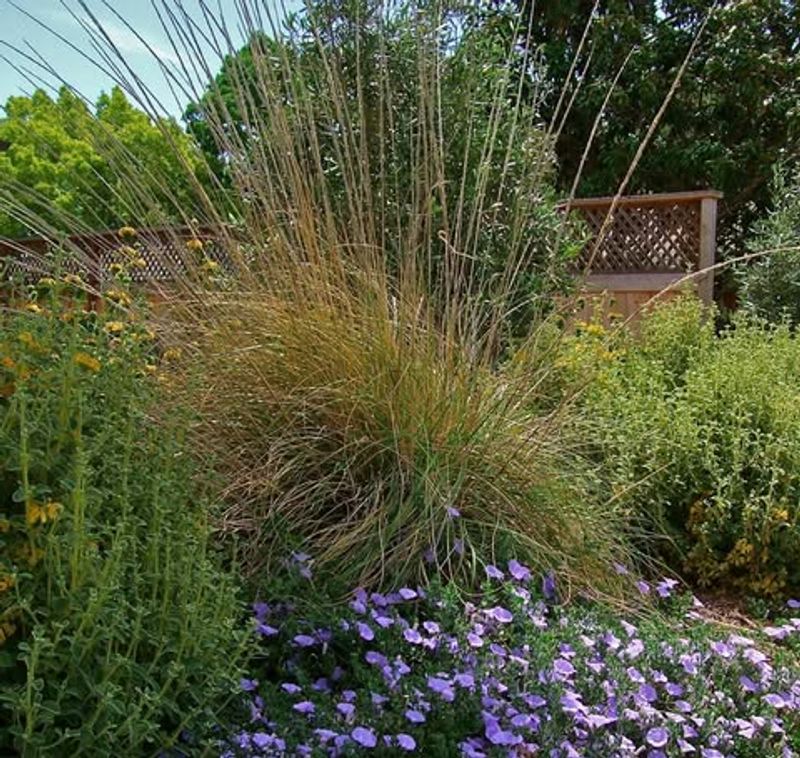
Ornamental grasses do not always get the credit they deserve in California native gardens, but deer grass is one that consistently impresses even skeptical gardeners. Muhlenbergia rigens is a large, clumping grass native to California, Arizona, and northern Mexico.
It forms graceful, arching mounds of fine-textured foliage that sway gently in the breeze, adding movement and softness to dry landscapes.
Tall, slender seed stalks rise above the foliage in late summer and fall, reaching heights of three to five feet. The overall effect is elegant without requiring any real effort to maintain.
Deer grass handles full sun, reflected heat, dry rocky soils, and extended drought once established, making it one of the more versatile native plants for California gardens facing water restrictions or challenging site conditions.
It works well as a border plant, a slope stabilizer, or massed in large groupings for a naturalistic meadow effect. In coastal California, deer grass tends to stay greener through summer.
Inland, it may go partially dormant during the hottest months but recovers quickly with cooler fall temperatures. Cutting the plant back by about half in late winter encourages fresh growth and keeps the clump looking tidy.
Fertilizing is rarely necessary, and overwatering can actually reduce the plant’s natural resilience over time.
10. California Buckwheat Thrives In Poor Soil
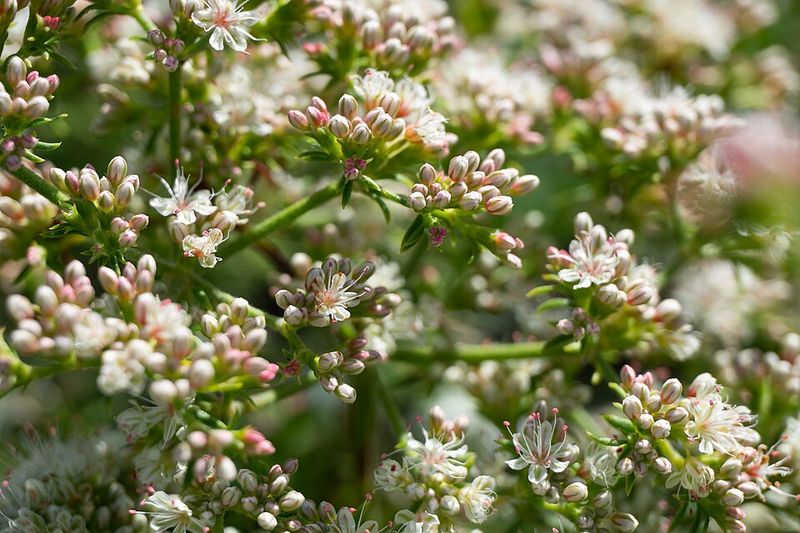
Rocky slopes, sandy washes, and sun-baked hillsides across California are where you will most often find Eriogonum fasciculatum doing exactly what it does best – growing steadily with almost no help at all.
California Buckwheat is a low to mid-size shrub with tiny, needle-like leaves and flat-topped clusters of small white to pink flowers that age to a rusty reddish-brown as the season progresses.
That color shift gives the plant a warm, textured look through fall and winter.
Pollinators absolutely love California Buckwheat. It supports an impressive number of native bee species, butterflies, and other beneficial insects throughout the growing season.
Few California native plants offer as much ecological value for as little maintenance effort. The dried flower heads also provide seeds that birds forage through the colder months.
Poor, rocky, or sandy soils are actually where this plant performs best. Rich amended soils can cause overly lush growth that becomes floppy and short-lived.
Full sun and excellent drainage are the two conditions worth prioritizing at planting time. Once established, California Buckwheat handles extended dry periods without supplemental watering in most parts of the state.
Light trimming of spent flower stalks in late winter helps encourage fresh growth, but the plant manages reasonably well even without that attention. It is genuinely one of California’s most forgiving native shrubs.