8 Easy DIY Cucumber Trellis Ideas For Georgia Gardeners To Save Space And Boost Harvests
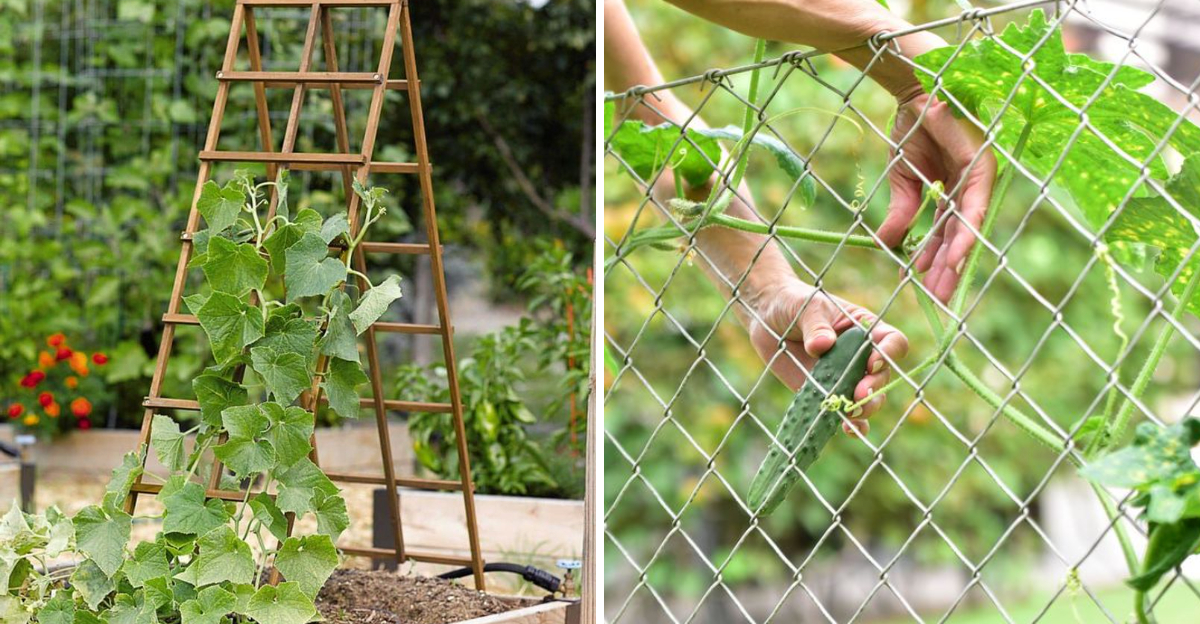
Growing cucumbers in Georgia comes with some fantastic perks, from our long, warm seasons to that famous southern sunshine.
However, Georgia’s signature heat and humidity can quickly turn a sprawling cucumber patch into a breeding ground for mildew and disease if vines stay trapped on the ground.
The simple solution? Training your cucumbers to grow vertically on a trellis.
Not only does this save precious garden space, but it also dramatically improves airflow and keeps your fruit off the dirt.
Whether you have a small backyard plot in Atlanta or a larger garden in rural Georgia, these eight DIY trellis ideas will help you grow healthier plants and enjoy a more rewarding harvest.
1. A-Frame Wooden Trellis Supports Strong Vertical Growth
Building upward is one of the smartest moves a Georgia gardener can make when space is limited and summer heat is relentless.
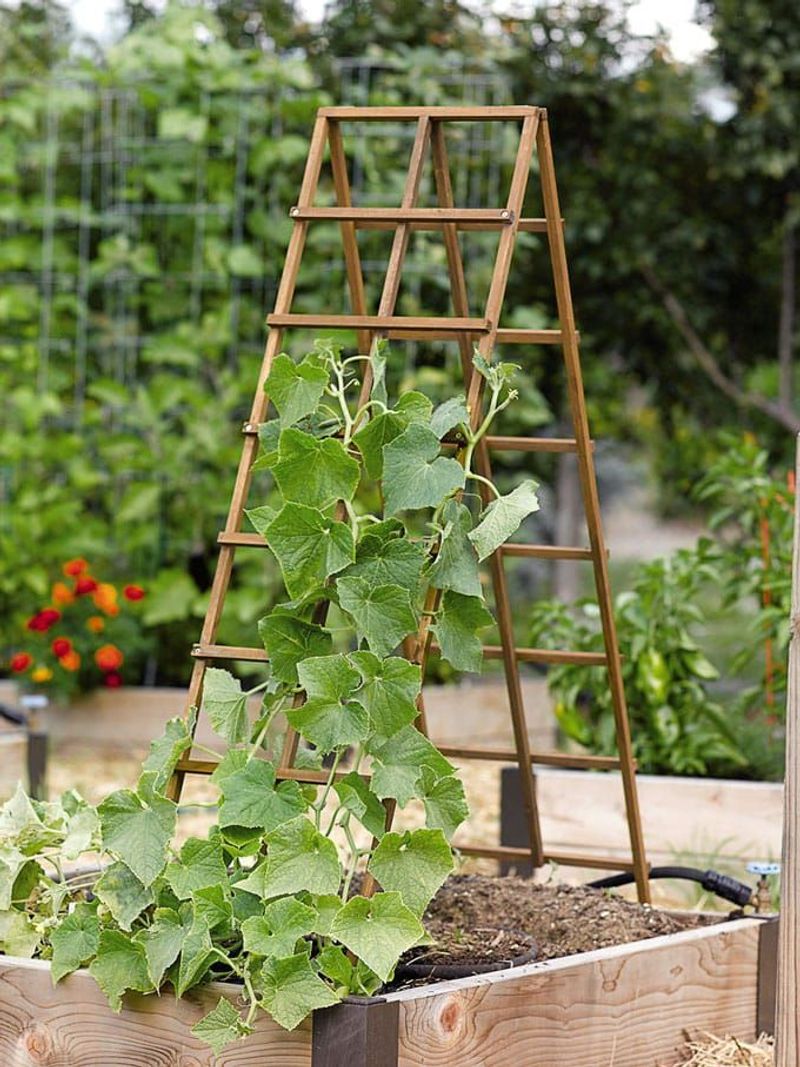
An A-frame wooden trellis gives cucumber vines a strong, stable structure to climb while keeping the fruit hanging freely in the air, which makes harvesting much easier and keeps cucumbers straighter and cleaner.
To build one, you need two rectangular wooden frames made from 2×4 lumber, connected at the top with a sturdy hinge or rope. Stretch wire mesh, chicken wire, or garden netting across each frame to give vines something to grip.
The finished structure stands on its own without needing posts driven into the ground, which is especially helpful if you rotate crops each season.
Set each side of the frame about 18 to 24 inches apart at the base for good stability. Plant cucumbers along both sides so vines climb each panel evenly.
The open A-shape allows airflow to move through the center, which helps reduce fungal issues that are especially common in Georgia’s humid summers. At the end of the season, the frame folds flat for easy storage.
Cedar or pressure-treated pine works well in Georgia’s wet conditions and tends to hold up better through multiple growing seasons than untreated softwoods.
2. Cattle Panel Arch Trellis Creates A Durable Garden Feature
Cattle panels are heavy-duty wire grids originally designed for livestock fencing, but Georgia gardeners have discovered they make outstanding garden trellises that can handle years of use without bending or breaking down.
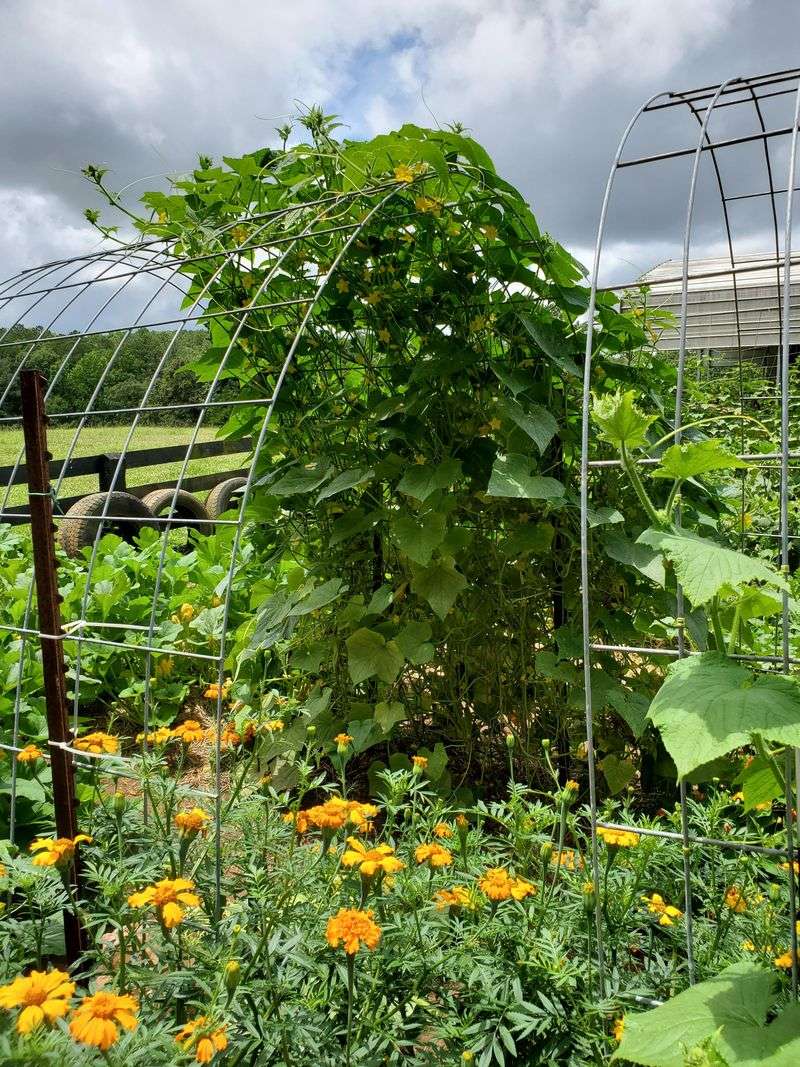
Bending a single 16-foot cattle panel into an arch over a raised bed or in-ground row creates a tunnel-like structure that is both functional and visually impressive.
To set one up, drive two metal T-posts into the ground on each side of your planting row, spacing them about 4 to 5 feet apart. Bend the cattle panel into an arch and attach each end to the T-posts using zip ties or wire clips.
The grid openings are large enough for hands to reach through during harvest, and the metal construction handles Georgia’s summer storms without collapsing under wind or rain.
Cucumber vines naturally latch onto the wire with their tendrils, and the arch shape means fruit hangs down inside the tunnel where it stays shaded and protected from direct afternoon sun.
Your Georgia Garden Changes Every Week. Your Plan Should Too.
Gardening in Georgia changes quickly throughout the season. Every Friday you’ll receive a simple weekly plan showing exactly what to plant, prune, fertilize, harvest, and protect so you never miss the right timing.
That shade can actually be helpful in Georgia during the hottest weeks of July and August.
Cattle panels are available at most farm supply stores across the state and typically cost between $20 and $30 each. With proper storage or year-round use, a single panel can support cucumbers for many seasons.
3. String Trellis With Overhead Support Saves Space In Small Areas
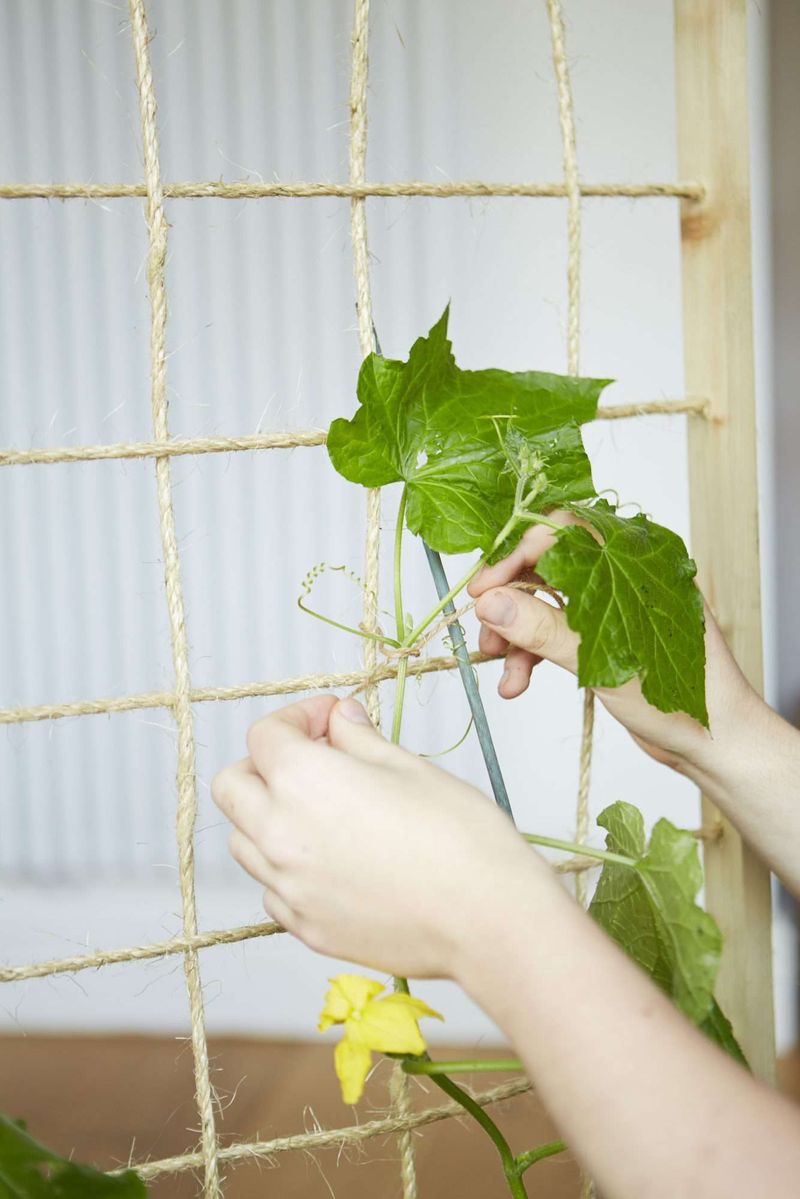
Not every Georgia gardener has a sprawling yard to work with, and a string trellis with overhead support is one of the most space-efficient options available for tight spots.
The basic idea involves two sturdy posts driven into the ground at each end of a planting row, connected at the top by a horizontal wooden beam or metal pipe.
Vertical strings hang down from the overhead support to the soil, giving vines a natural path to climb.
Hemp twine, jute, or soft garden string works well for the vertical lines. Space the strings about 6 to 8 inches apart along the overhead beam so each plant has its own climbing lane.
As cucumbers grow, gently guide the main stem around the string or use soft plant clips to keep things tidy.
Vertical growing improves airflow around plants, which is especially important in Georgia where high humidity can encourage powdery mildew and downy mildew on cucumber foliage.
One practical advantage of this design is that strings are cheap and easy to replace between seasons. After harvest, simply cut and compost the old twine along with any remaining plant material.
The posts and beam can stay in place from year to year, making setup faster each spring. For small raised beds or narrow side-yard gardens in Georgia neighborhoods, this trellis style keeps cucumbers tidy without overwhelming the space.
4. PVC Pipe Trellis Frame Offers A Lightweight, Flexible Option
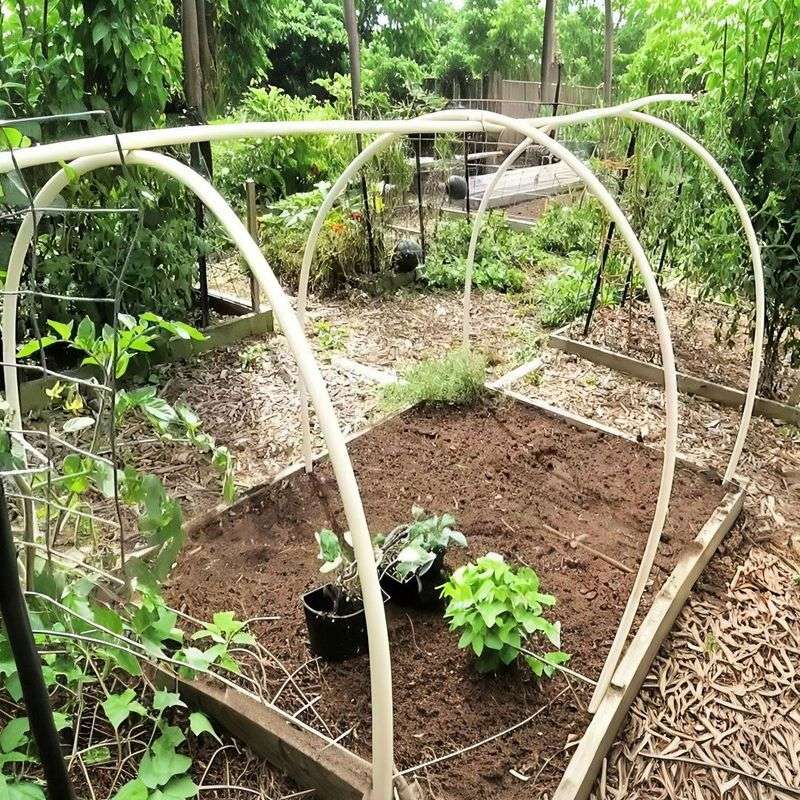
PVC pipe is affordable, widely available at hardware stores across Georgia, and surprisingly easy to work with even for first-time builders.
A trellis made from PVC pipe and fittings can be shaped into a flat panel, a ladder structure, or even a freestanding A-frame depending on what your garden needs.
Because PVC is lightweight, the finished trellis is easy to move around the garden without heavy lifting.
For a basic flat panel design, cut lengths of 3/4-inch or 1-inch PVC pipe to create vertical and horizontal sections, then connect them using elbow joints and T-fittings. String garden netting or wire through the openings to give vines something to grip.
Drive the bottom vertical pipes several inches into the soil for stability, or attach the frame to wooden stakes for extra support during Georgia’s summer thunderstorms.
White PVC can get quite hot in direct Georgia sun, so consider painting the pipes with exterior paint in a light color or wrapping them in burlap to reduce heat buildup near plant stems.
PVC trellises do not rot or rust, which gives them a clear advantage over untreated wood in Georgia’s humid environment.
The modular design also means you can adjust the height or width each season by swapping out pipe sections as your garden layout changes. For gardeners who like flexibility without a big investment, PVC offers a practical and cost-effective solution.
5. Fence Panel Trellis Makes Use Of Existing Garden Structures
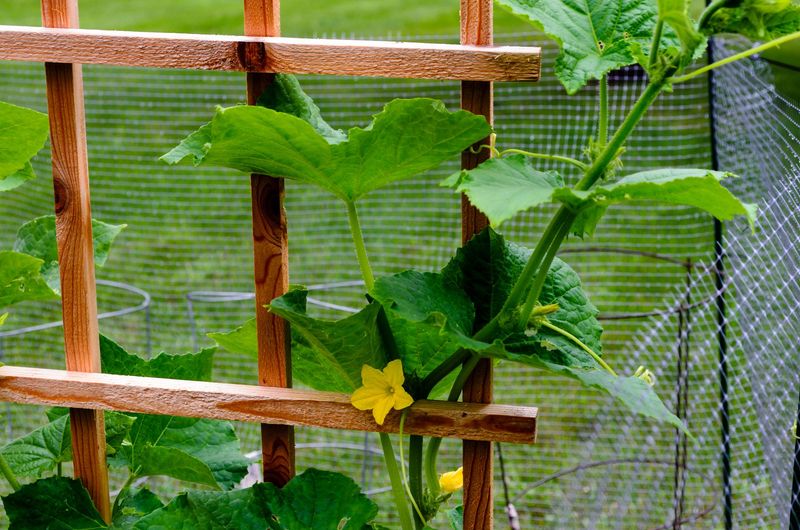
Many Georgia gardeners already have a fence running along their property line, and that structure can do double duty as a cucumber trellis with very little extra work.
A wooden privacy fence, chain-link fence, or wire garden fence all give cucumber vines a ready-made surface to climb, saving the cost and effort of building something new from scratch.
To use an existing fence effectively, plant cucumbers about 6 to 12 inches away from the fence base rather than directly against it.
This small gap allows air to circulate between the vines and the fence boards, reducing moisture buildup that can lead to fungal problems in Georgia’s warm, humid summers.
If the fence has large gaps or widely spaced rails, weave garden twine or netting across the surface to give young tendrils more contact points as they reach upward.
South-facing or east-facing fence sections tend to work best in Georgia because they receive strong morning sun without the harsh late-afternoon heat that can stress plants during peak summer.
If your fence runs along a north-facing boundary, cucumbers may not get enough light for strong production.
Adding a few vertical wooden stakes tied to the fence can extend its height if your cucumber variety grows taller than the existing structure.
Repurposing what you already have is both budget-friendly and reduces the amount of new materials needed for your garden setup.
6. Tomato Cage Trellis Works Well For Compact Cucumber Varieties
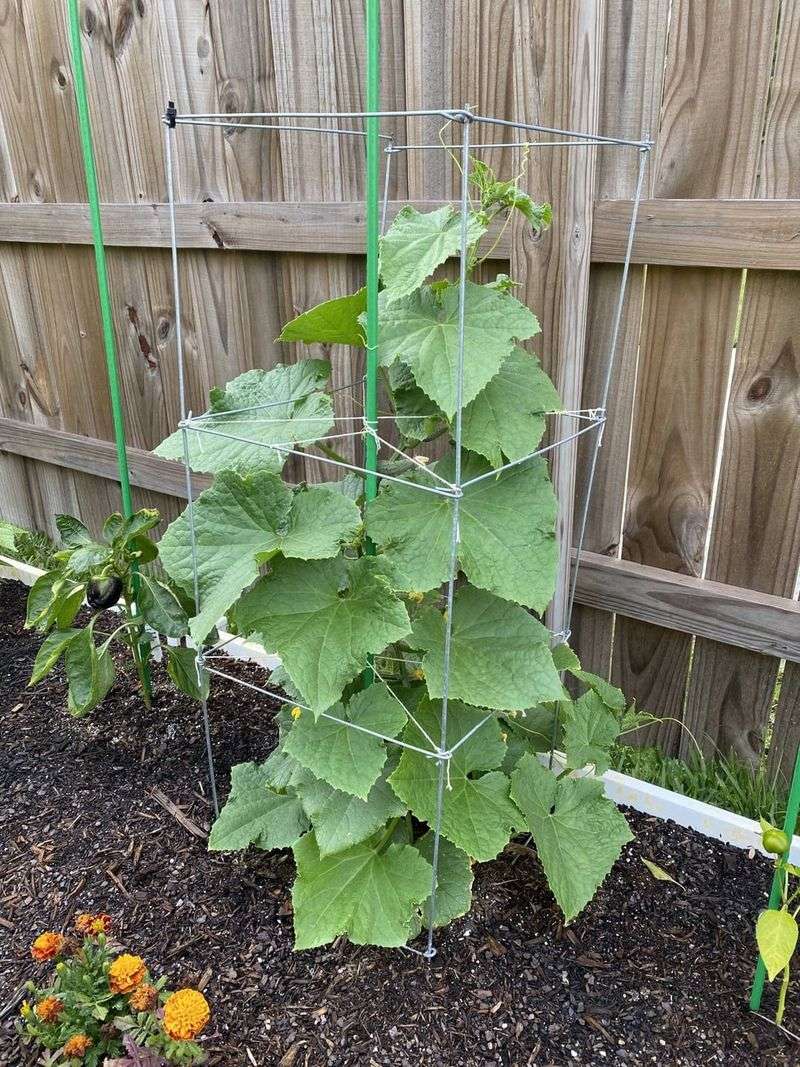
Most Georgia gardeners already own a few tomato cages sitting in the shed, and those wire frames can pull double duty in the cucumber patch when you are growing compact or bush-type varieties.
Compact cucumbers such as Spacemaster or Bush Pickle do not produce the long sprawling vines of standard slicing types, making them a solid match for the limited height and width of a typical tomato cage.
Place the cage directly over a transplanted seedling or young plant, pressing the legs firmly into the soil. As the plant grows, guide the main stem upward through the center rings and encourage side shoots to weave through the outer wire.
The circular shape of the cage gives the plant support from multiple angles, which helps it stay upright during Georgia’s frequent afternoon thunderstorms in June and July.
One honest note: standard tomato cages are only about 3 to 4 feet tall, so they work best with shorter varieties rather than vigorous climbing types that can reach 6 feet or more.
For a budget-friendly upgrade, heavy-duty tomato cages or large wire rings sold at farm supply stores offer extra height and sturdiness.
Grouping three or four caged plants together in a raised bed can create a surprisingly productive small-space setup.
For Georgia gardeners with container gardens on patios or small urban plots, this approach keeps cucumbers manageable and easy to tend throughout the season.
7. Bamboo Teepee Trellis Adds A Natural Look To Garden Beds
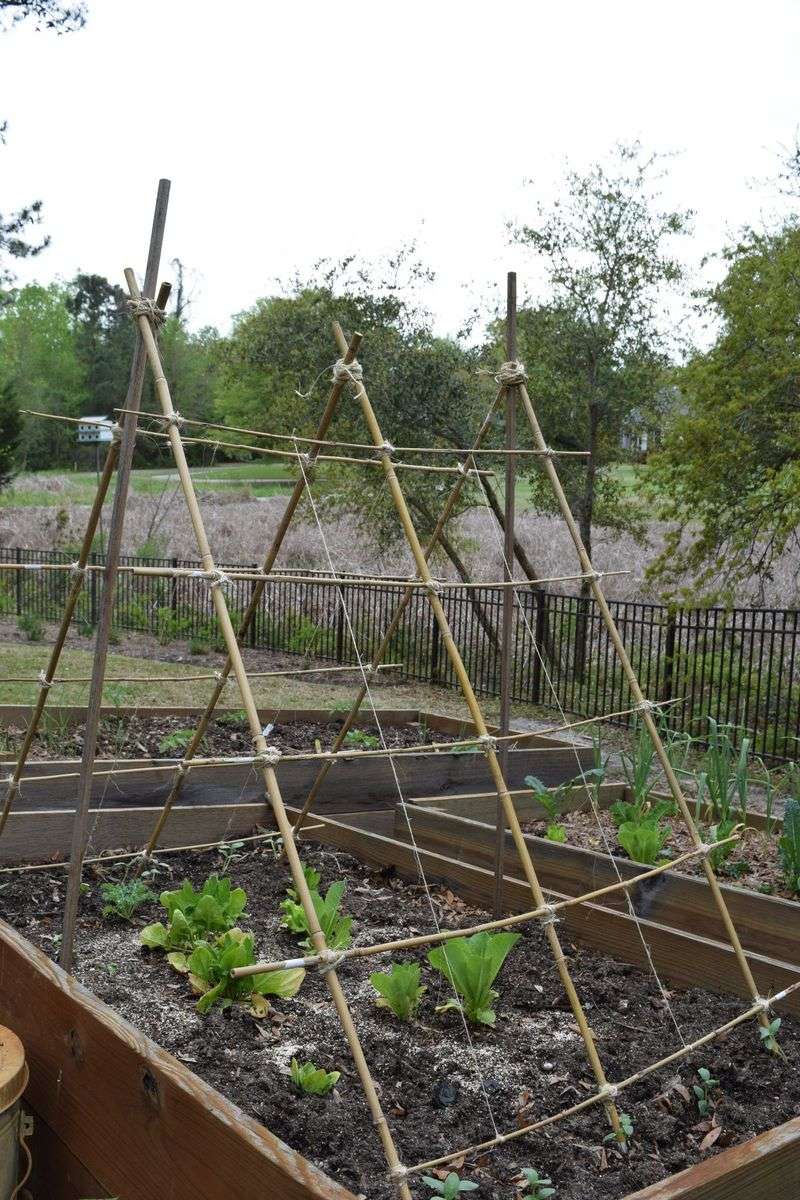
There is something genuinely satisfying about building a garden structure from natural materials, and a bamboo teepee trellis brings a relaxed, organic feel to any Georgia garden bed.
Bamboo poles are inexpensive, lightweight, and widely available at garden centers and discount stores throughout the state.
Building a teepee takes less than 30 minutes and requires no special tools or hardware.
Gather five to eight bamboo poles that are at least 6 feet long and push the bottom of each pole into the soil in a circle roughly 18 to 24 inches in diameter.
Lean all the poles inward so they meet at the top, then tie them tightly together with natural jute twine or garden wire.
For extra climbing surface, wind additional twine in a spiral pattern around the outside of the teepee from bottom to top, giving vines more contact points as they grow.
Plant one cucumber seedling at the base of each pole so vines climb upward evenly from all sides. The teepee shape allows airflow from every direction, which helps keep foliage dry and reduces the risk of mildew in Georgia’s muggy summer months.
Bamboo does break down over time in wet soil, so check the base of each pole at the start of each season and replace any that have softened.
Using thicker-diameter poles, around 3/4 inch or larger, helps the structure stay firm through an entire Georgia growing season.
8. Wire Grid Trellis Provides Strong Support For Heavy Vines
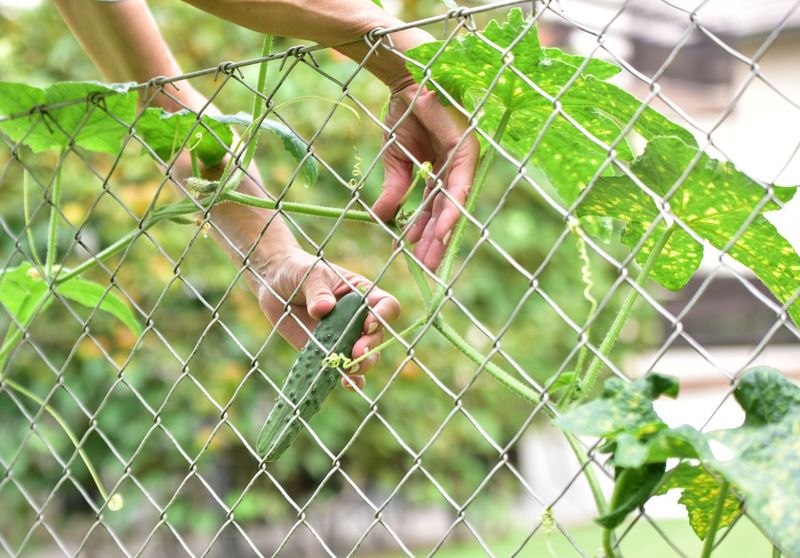
When cucumber vines get large and loaded with fruit, not every trellis can handle the weight, but a wire grid trellis built from welded wire fencing or hardware cloth is one of the toughest options available to Georgia gardeners.
The rigid grid structure distributes weight evenly across the entire panel rather than concentrating stress on a single point, which helps it hold up through a full season of heavy cropping.
To build one, drive two 4×4 wooden posts or metal T-posts into the ground about 4 to 6 feet apart. Stretch a section of welded wire fencing, with openings around 4 to 6 inches square, between the posts and secure it with staples or wire ties.
The finished panel stands upright like a wall that vines climb freely. Posts should be driven at least 18 inches into the soil to resist the pulling force of heavy vines during Georgia’s summer wind events.
Wire grid trellises work especially well for vigorous slicing cucumber varieties like Marketmore or Straight Eight, which produce large vines that need firm anchoring throughout the season.
The open grid design promotes excellent airflow, a real benefit in Georgia where stagnant humid air around foliage encourages foliar diseases.
Galvanized welded wire resists rust well in Georgia’s rainy climate, and a well-built wire grid trellis can serve the garden reliably for many years with minimal upkeep beyond occasional post checks.