Hard To Find Native Pennsylvania Perennials That Are Worth The Hunt
Scouring local nurseries for the same three varieties of coneflower can feel a bit like living on repeat. While those garden staples are lovely, Pennsylvania holds a hidden vault of botanical treasures that most homeowners completely overlook.
Tracking down the state’s rarer native perennials requires a bit of a scavenger hunt, but the payoff is a landscape that looks like a curated slice of a wild Appalachian meadow.
These elusive plants offer unique textures and specialized support for local pollinators that standard big-box store options simply cannot match.
Investing time into finding these botanical gems transforms a basic backyard into a high-functioning sanctuary. You might have to drive to a specialized native plant sale or join a local seed swap to get your hands on them.
The reward is a resilient, stunning garden that stands out from every other lawn on the block while honoring the true heritage of the Keystone State.
1. Twinleaf (Jeffersonia Diphylla)
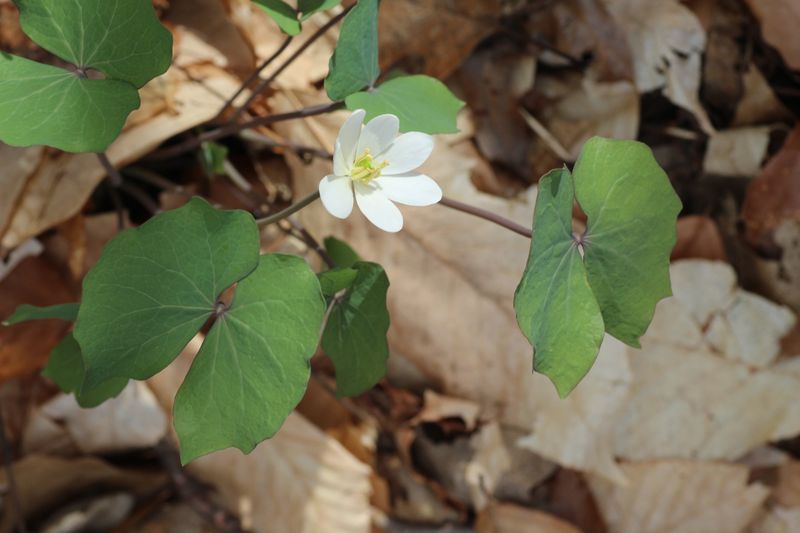
Few plants stop you in your tracks quite like Twinleaf. Named after President Thomas Jefferson, this rare woodland perennial has leaves that are split almost perfectly down the middle, giving it a look unlike anything else growing in Pennsylvania forests.
The soft white flowers appear in early spring, often before the leaves have fully opened, and each bloom lasts only a few days. That brief window makes spotting it feel like a real treat.
Growing Twinleaf in your garden takes some patience. It prefers rich, moist, well-drained soil with plenty of organic matter, and it does best in dappled shade under deciduous trees.
Once established, it slowly spreads to form a beautiful clump. Do not expect fast results, but the payoff over the years is genuinely special.
Finding Twinleaf for sale in Pennsylvania can be a challenge. Most big-box stores will never carry it.
Your best bet is to check native plant nurseries, botanic garden sales, or plant swaps in the region. The Pennsylvania Native Plant Society sometimes lists sources, which is a great starting point.
Twinleaf pairs beautifully with other spring woodland plants like trillium, wild ginger, and Virginia bluebells. Together, these plants create a layered woodland floor that looks completely natural.
If you love plants with a story and a look that stands out, Twinleaf is absolutely worth the hunt in Pennsylvania.
2. Closed Bottle Gentian (Gentiana Andrewsii)
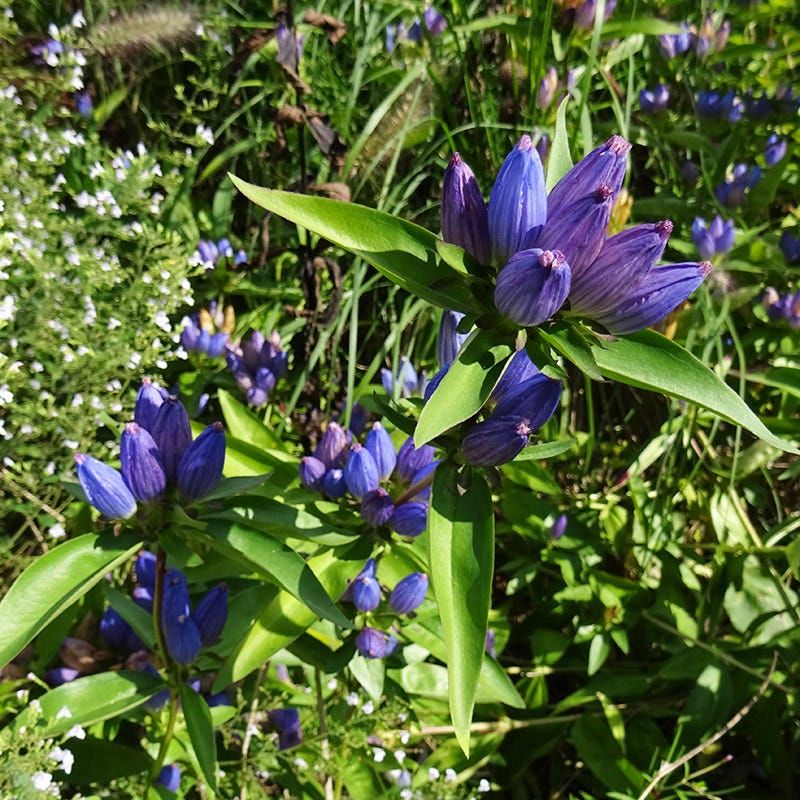
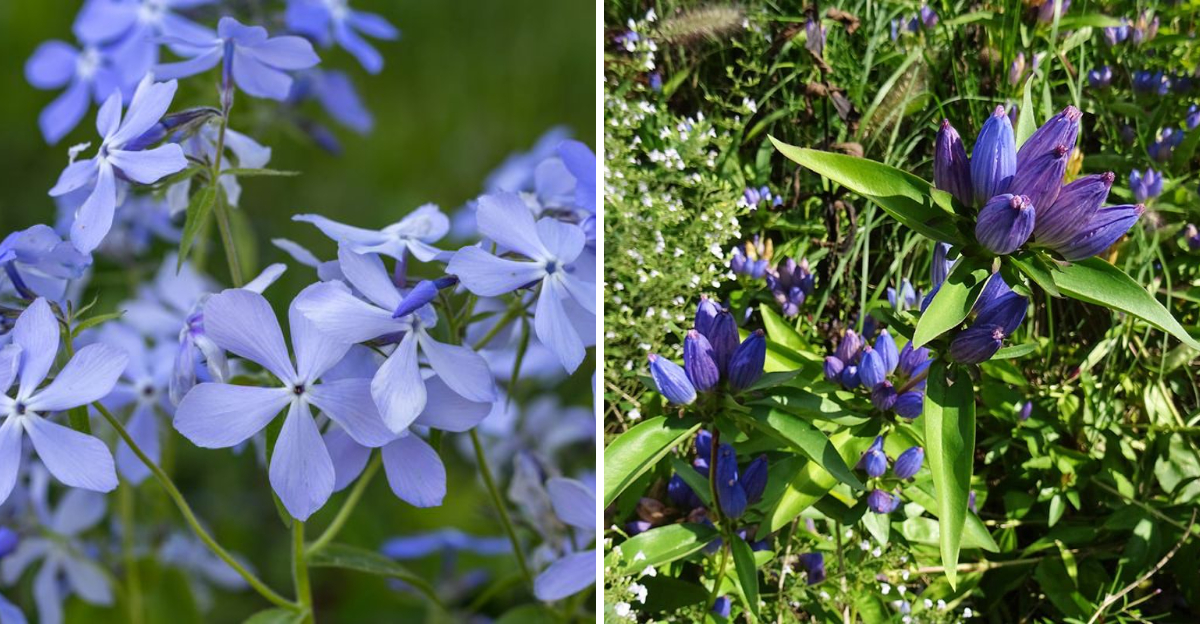
Most flowers open wide to greet the sun, but Closed Bottle Gentian plays by its own rules. The blooms stay completely shut, shaped like deep blue bottles clustered at the top of each stem.
Only bumblebees are strong enough to force their way inside for pollination, making this plant one of the most fascinating native perennials you can grow in Pennsylvania.
Blooming from late August into October, this plant brings rich color to the garden exactly when most other perennials are winding down. The deep blue-violet shades are almost impossible to describe without seeing them in person.
Planted in groups, Closed Bottle Gentian creates a bold, eye-catching display that will have visitors asking questions every single time.
Your Pennsylvania Garden Changes Every Week. Your Plan Should Too.
Gardening in Pennsylvania changes quickly throughout the season. Every Friday you’ll receive a simple weekly plan showing exactly what to plant, prune, fertilize, harvest, and protect so you never miss the right timing.
In Pennsylvania, this native perennial grows naturally in moist meadows, stream edges, and open woodlands. In the garden, it performs best in consistently moist soil with full sun to light shade.
It does not tolerate drought well, so keeping the soil evenly moist through summer is important for good blooming.
Tracking down Closed Bottle Gentian at a nursery takes effort. It is rarely stocked at mainstream garden centers across Pennsylvania.
Specialty native plant nurseries and regional plant sales are your best options. Some gardeners have also found success growing it from fresh seed, though germination requires a cold stratification period.
Either way, adding this one to your Pennsylvania garden is a decision you will never regret.
3. Culver’s Root (Veronicastrum Virginicum)
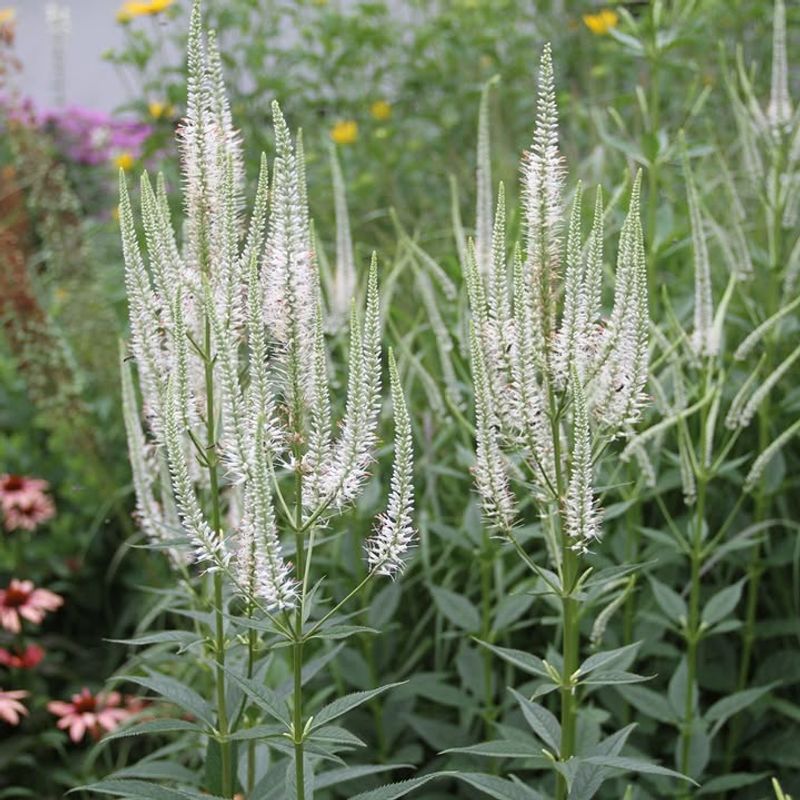
Tall, elegant, and quietly impressive, Culver’s Root is the kind of plant that makes a garden look professionally designed without much effort. Growing anywhere from four to six feet tall, it produces long, slender white flower spikes in midsummer that look almost architectural.
The whorled leaves arranged in neat rings around the stem add to its refined, structured appearance.
This native Pennsylvania perennial thrives in full sun with average to moist soil. It works beautifully in meadow-style plantings, sunny borders, and rain garden edges.
Butterflies, bees, and other pollinators absolutely love the flowers, making it a powerhouse plant for supporting local wildlife across Pennsylvania.
One of the best things about Culver’s Root is how low-maintenance it is once established. It does not need staking despite its height, and it is rarely bothered by deer or pests.
It spreads slowly over time, forming an impressive clump that gets better with every passing year. Dividing it every few years helps keep it vigorous and gives you extra plants to share.
Finding Culver’s Root at a standard garden center in Pennsylvania is genuinely difficult. Most nurseries simply do not stock it.
Your best luck will come from native plant sales, online native plant retailers, or seed sources that specialize in Pennsylvania and mid-Atlantic flora.
It is worth every bit of effort to track down because few native perennials offer this combination of height, elegance, and wildlife value in one package.
4. Bowman’s Root (Gillenia Trifoliata)
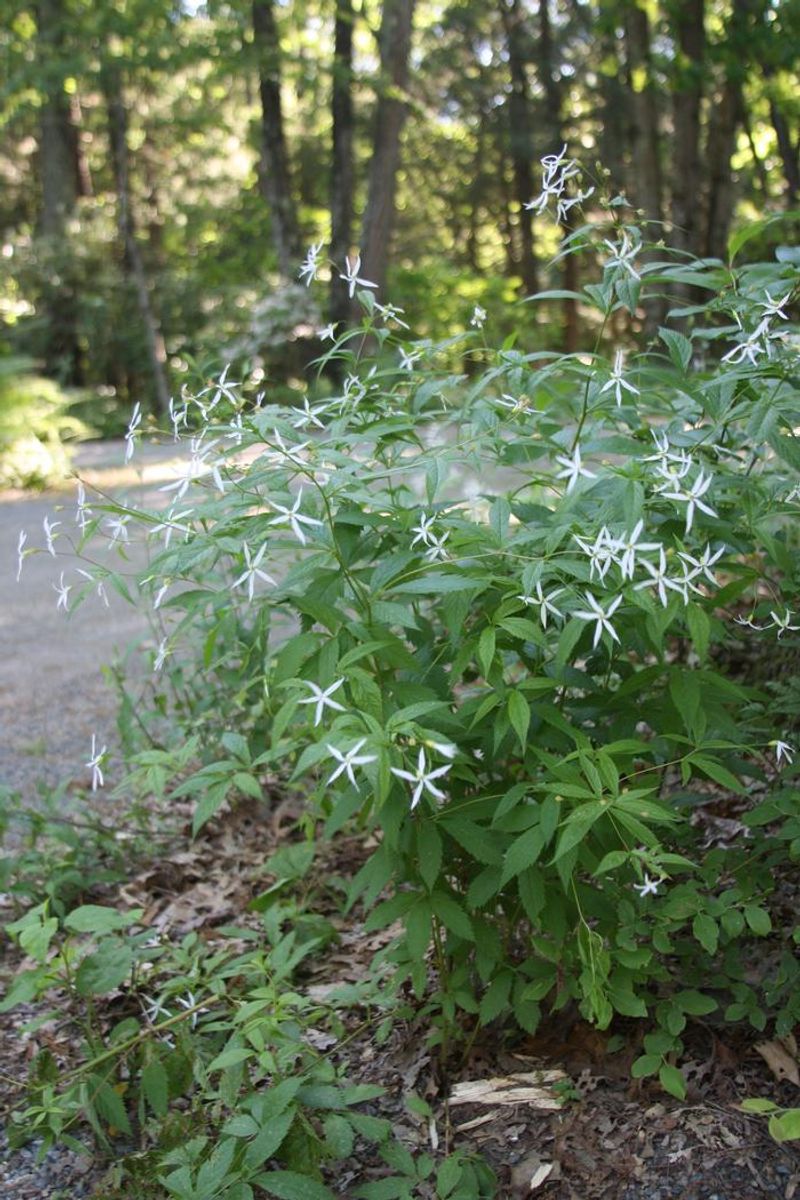
If your garden needs a plant with movement, Bowman’s Root is the answer. This graceful native perennial produces clouds of small, starry white flowers on wiry, reddish stems that sway gently in the breeze.
The effect is airy and romantic, almost like baby’s breath but with far more personality. Blooming in late spring to early summer, it bridges the gap between spring ephemerals and summer perennials beautifully.
Bowman’s Root is native to Pennsylvania’s woodland edges and open forests, which tells you a lot about what it needs in the garden. Part shade is ideal, though it can handle more sun if the soil stays consistently moist.
Rich, well-drained soil with good organic content gives it the best start. Once settled in, it is surprisingly drought-tolerant for a shade plant.
Beyond its flowers, the plant offers excellent fall interest. The leaves turn shades of orange and red in autumn, adding another layer of seasonal appeal.
Few native perennials give you this much across three different seasons. Bowman’s Root also rarely needs dividing and is largely ignored by deer, which is a huge bonus for Pennsylvania gardeners dealing with heavy deer pressure.
Specialty native nurseries and online plant retailers are your most reliable sources for Bowman’s Root in Pennsylvania. It occasionally pops up at native plant society sales and botanic garden events.
Once you find it, buy more than one. Planted in groups of three or more, the billowing effect of those white flowers is absolutely breathtaking in a shaded garden setting.
5. Wild Blue Phlox (Phlox Divaricata)
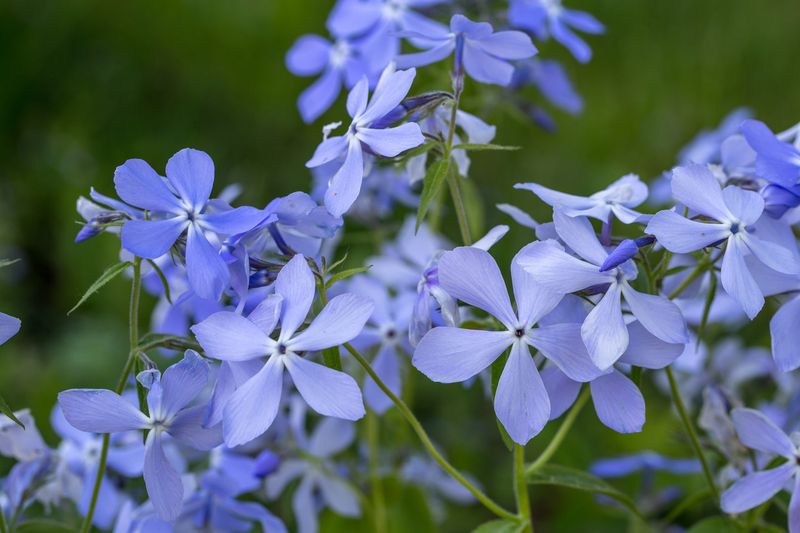
Spring in Pennsylvania would not feel complete without the soft lavender-blue haze of Wild Blue Phlox drifting through a woodland edge. This native perennial blooms in April and May, filling shaded areas with a gentle, sweet fragrance that draws in early butterflies and sphinx moths.
The flowers range from pale lavender to a soft blue-violet, and the color is simply stunning in low spring light filtering through the trees.
Wild Blue Phlox grows best in light to moderate shade with moist, humus-rich soil. It spreads slowly by short runners to form a low, semi-evergreen mat, making it an excellent groundcover for areas under trees or along shaded garden paths.
It plays especially well with ferns, trilliums, and Virginia bluebells, creating a classic Pennsylvania woodland scene that looks completely natural.
Unlike garden phlox, Wild Blue Phlox has very few pest or disease problems. Powdery mildew, which plagues many cultivated phlox varieties, is rarely an issue.
It is also a host plant for several native moth species, adding ecological value well beyond its obvious good looks. Hummingbirds occasionally visit the tubular flowers as well, which is always a fun surprise in the garden.
You might spot Wild Blue Phlox at some well-stocked native nurseries in Pennsylvania, but it still gets overlooked far too often. Plant sales hosted by native plant organizations across the state are a reliable source.
Growing it from seed is also possible with patience and proper cold stratification. Either way, this is one native Pennsylvania perennial that earns its place every single spring.
6. Blue Wild Indigo (Baptisia Australis)
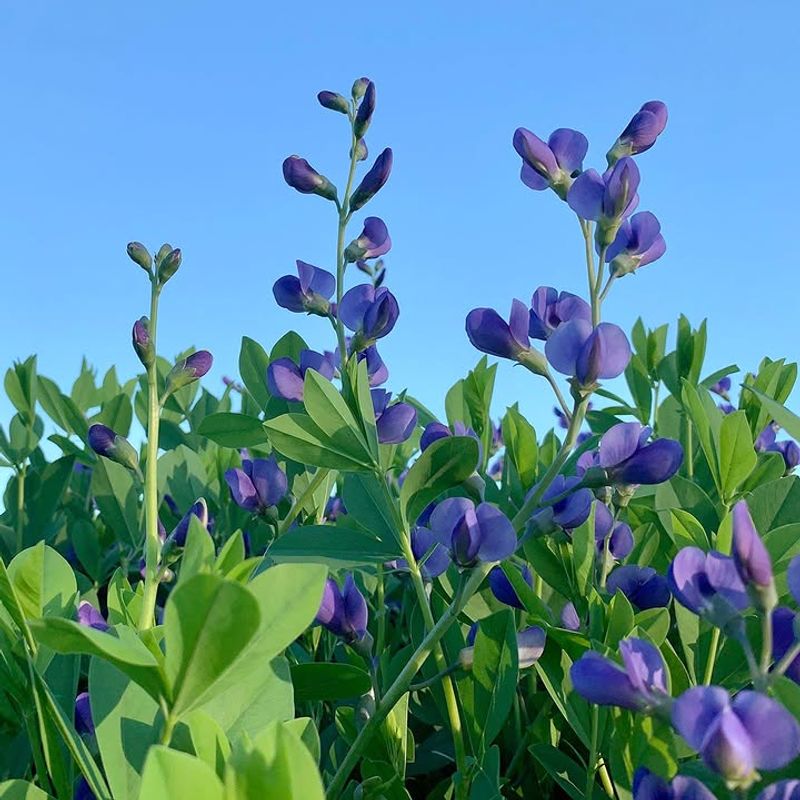
Some plants are built to last a lifetime, and Blue Wild Indigo is one of them. This long-lived native perennial can survive in the same spot for decades, slowly growing into an impressive, shrub-like clump that commands attention in the garden.
The blue-green foliage looks attractive from the moment it emerges in spring, and the tall spikes of deep blue-purple flowers that appear in May and June are simply gorgeous.
Blue Wild Indigo is native to open woodlands, meadows, and prairies across Pennsylvania and much of the eastern United States. In the garden, it thrives in full sun with well-drained soil.
Once established, it is remarkably drought-tolerant, making it a smart choice for Pennsylvania gardens facing summer dry spells. The deep taproot also means it does not like being moved, so choose its permanent spot carefully from the start.
After flowering, the plant develops inflated black seed pods that rattle in the wind and look fantastic in dried flower arrangements. The foliage stays attractive and full all the way through fall.
Bumblebees are especially fond of the flowers, and several native butterfly species use Baptisia as a host plant, which adds real ecological depth to its garden value.
Blue Wild Indigo is becoming easier to find at native nurseries across Pennsylvania, though it is still absent from most mainstream garden centers. Specialty growers and native plant sales are your most reliable options.
Do not be discouraged by its slow start in the first year or two. By year three, it becomes one of the most impressive plants in any Pennsylvania garden.
7. Plantain-Leaved Sedge (Carex Plantaginea)
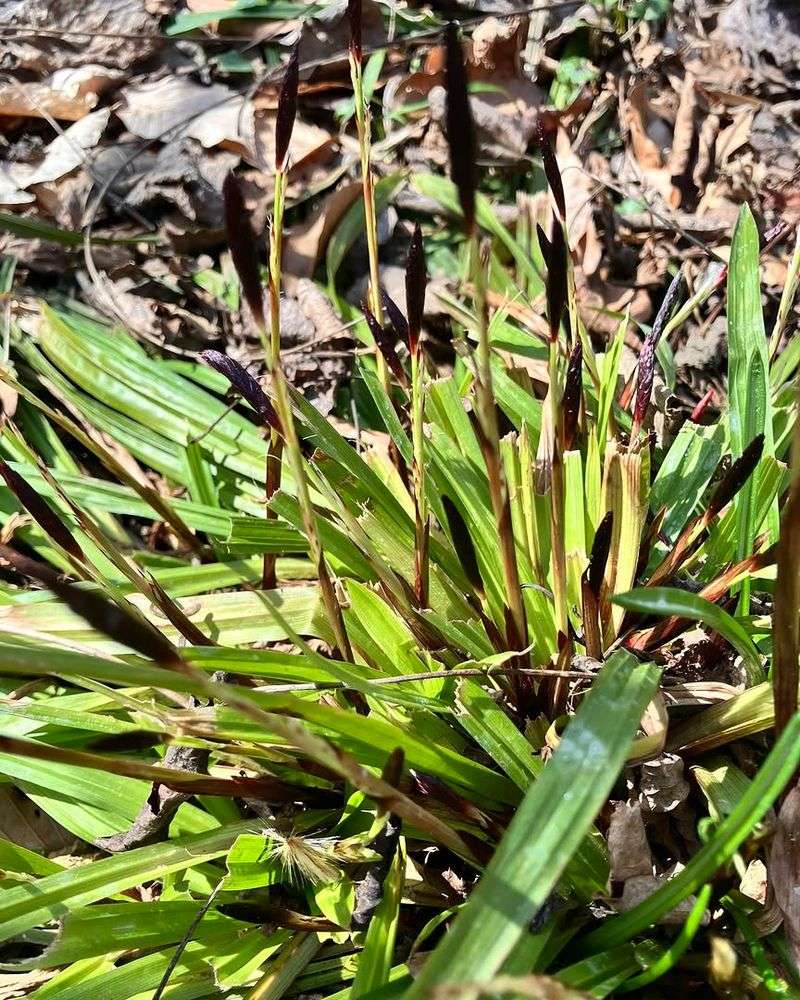
Not every standout plant in a Pennsylvania garden needs a showy flower. Plantain-Leaved Sedge proves that foliage alone can be genuinely spectacular.
This native sedge produces broad, pleated, strap-like leaves that are unlike any other sedge you have probably seen. The texture is bold and tropical-looking, yet it is completely at home growing under the canopy of a Pennsylvania woodland garden.
Carex plantaginea thrives in deep to moderate shade with moist, rich soil. It is one of the best native plants you can use to solve the age-old problem of what to grow under dense shade trees where little else survives.
It stays evergreen through much of the Pennsylvania winter, providing year-round structure and visual interest even when the rest of the garden is bare and quiet.
In spring, Plantain-Leaved Sedge sends up small, subtle flower spikes that are interesting up close even if they are not flashy from a distance. The real star is always the foliage.
Planted in groups, the overlapping clumps of broad leaves create a lush, layered look that pairs beautifully with spring ephemerals like bloodroot, wild ginger, and trout lily.
Here is the surprising part: despite being such a useful and attractive native plant, Plantain-Leaved Sedge is genuinely hard to find in Pennsylvania garden centers. Most mainstream nurseries simply do not carry sedges beyond a few popular ornamental varieties.
Native plant nurseries, specialty growers, and regional plant sales are your best sources. Once you find it and get it growing, you will wonder how you ever designed a shady Pennsylvania garden without it.