Why Ohio Gardeners Are Replacing Invasive Barberry With These Natives
You ever plant something because it looks sharp at the garden center, then a few years later you’re wondering how it ended up everywhere? That’s been the story for a lot of Ohio yards with barberry.
It starts as a clean, colorful accent, then slowly turns into a plant that doesn’t quite stay where it’s put.
Lately, more Ohio gardeners are taking a second look and deciding it’s not worth the hassle. Not because it can’t look good, but because there are better options that behave the way you expect them to.
So what are they planting instead? Native shrubs that bring just as much color and structure, without the spread, the constant cleanup, or the uneasy feeling that it’s getting out of hand.
It’s a quieter shift, but it’s picking up fast. And once you see the alternatives, the switch starts to make a lot more sense.
1. Ninebark Brings Colorful Foliage Without The Invasive Spread
Walk through any well-designed Ohio garden center in spring and you will almost certainly spot ninebark front and center. That is no accident.
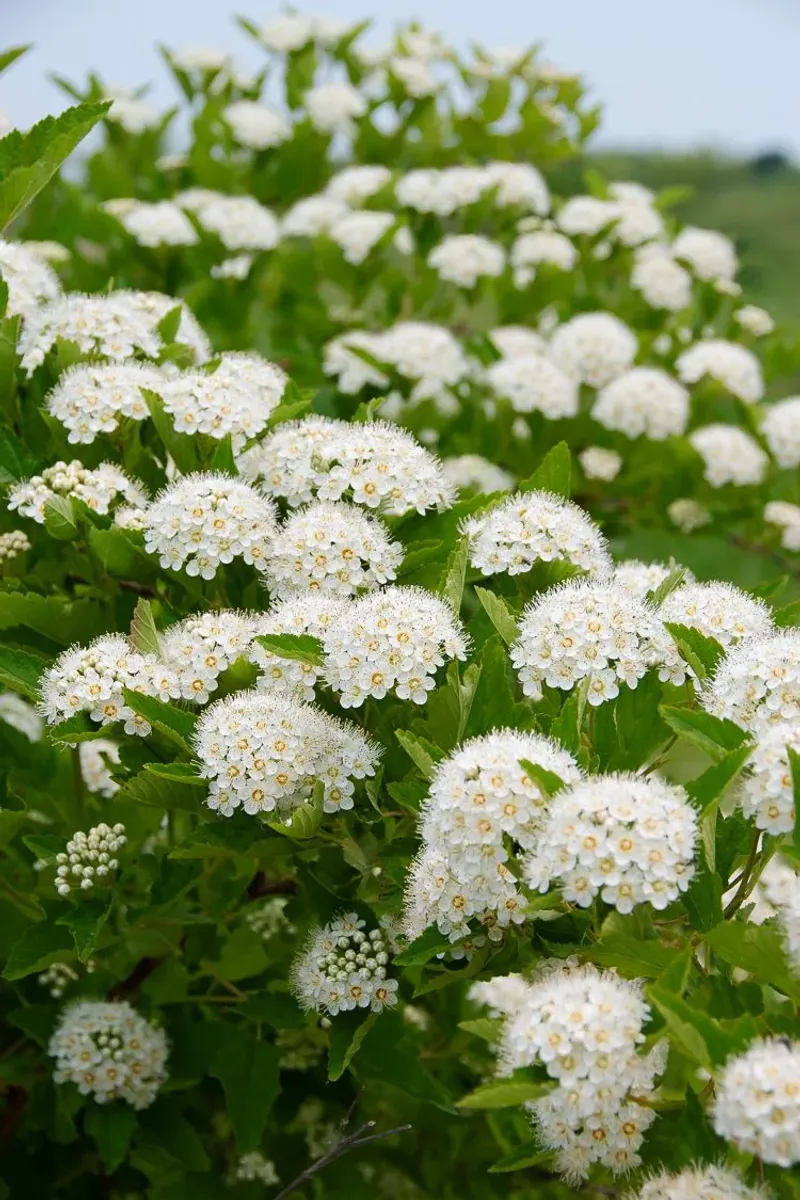
Physocarpus opulifolius is a native Ohio shrub that delivers the same punchy foliage color that made Japanese barberry so popular, but without any of the aggressive spreading that has made barberry a problem across the Midwest.
Ninebark earns its place in the landscape through sheer versatility. Cultivars like ‘Diabolo’ and ‘Summer Wine’ offer deep burgundy-purple leaves that hold their color through summer heat, while ‘Dart’s Gold’ brings bright chartreuse tones that pop against darker backgrounds.
‘Little Devil’ is a compact option that tops out around three to four feet, making it ideal for smaller Ohio yards where space is limited.
Unlike barberry, ninebark does not produce seeds that birds scatter into wild areas.
This shrub adapts well to Ohio’s variable soils, tolerating clay-heavy ground that would stress many other plants. It performs best in full sun, where foliage color is most intense, but handles partial shade without much complaint.
Clusters of small white to pale pink flowers appear in late spring and attract native bees and butterflies before the seed heads develop, which add winter texture to the garden.
For planting, space standard varieties six to eight feet apart to allow for mature spread. Compact cultivars can be placed three to four feet apart along foundation beds or borders.
Ninebark works well as a hedge replacement, a specimen plant, or massed along property lines where barberry was once used.
It tolerates occasional wet periods and bounces back from dry summers once established, which typically takes one to two growing seasons in Ohio conditions.
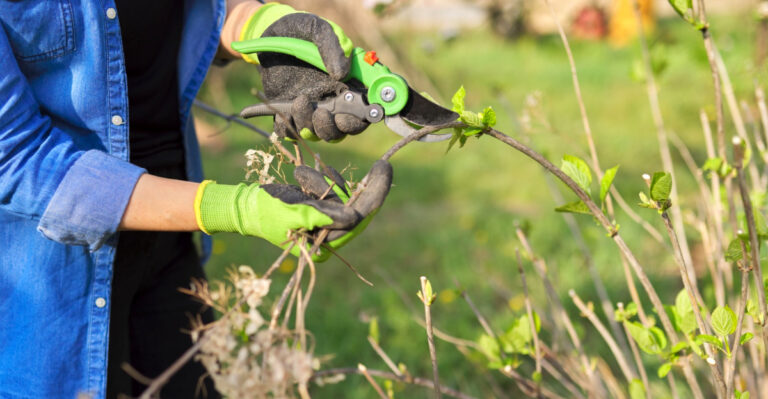
Pruning once a year right after flowering keeps the shape tidy and encourages fresh colorful growth for the following season.
2. New Jersey Tea Handles Dry Soil With Almost No Fuss
Most gardeners have at least one spot in the yard where almost nothing wants to grow. Maybe it is a sunny slope with thin soil, a stretch along the driveway where rain barely reaches, or a south-facing bed that bakes all summer.
Your Ohio Garden Changes Every Week. Your Plan Should Too.
Gardening in Ohio changes quickly throughout the season. Every Friday you’ll receive a simple weekly plan showing exactly what to plant, prune, fertilize, harvest, and protect so you never miss the right timing.
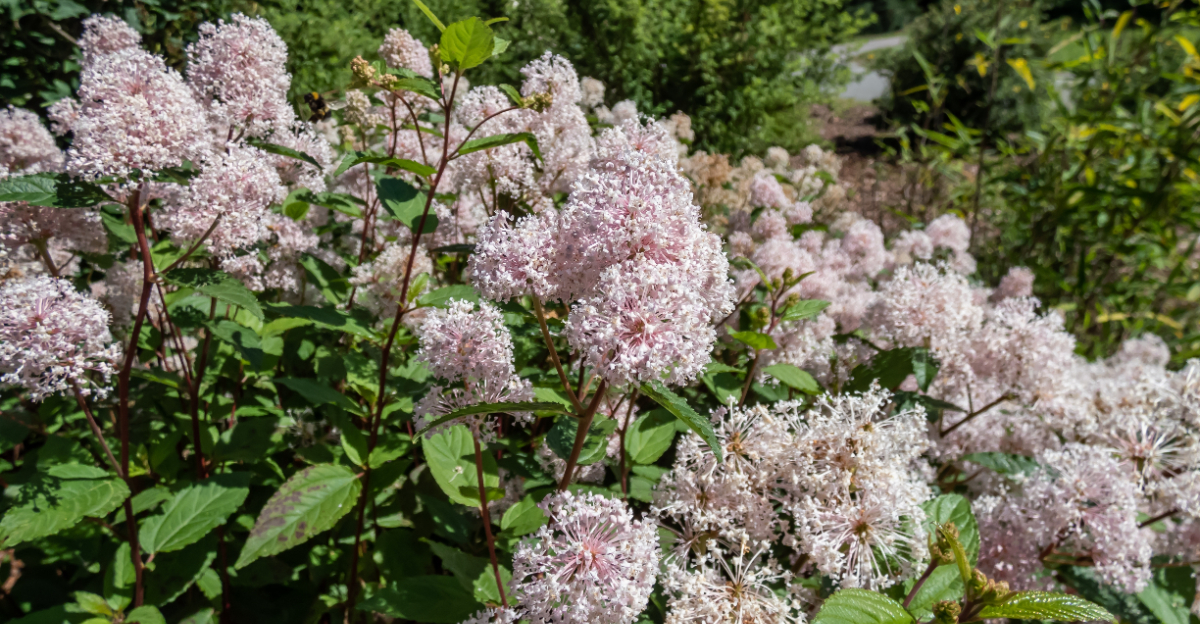
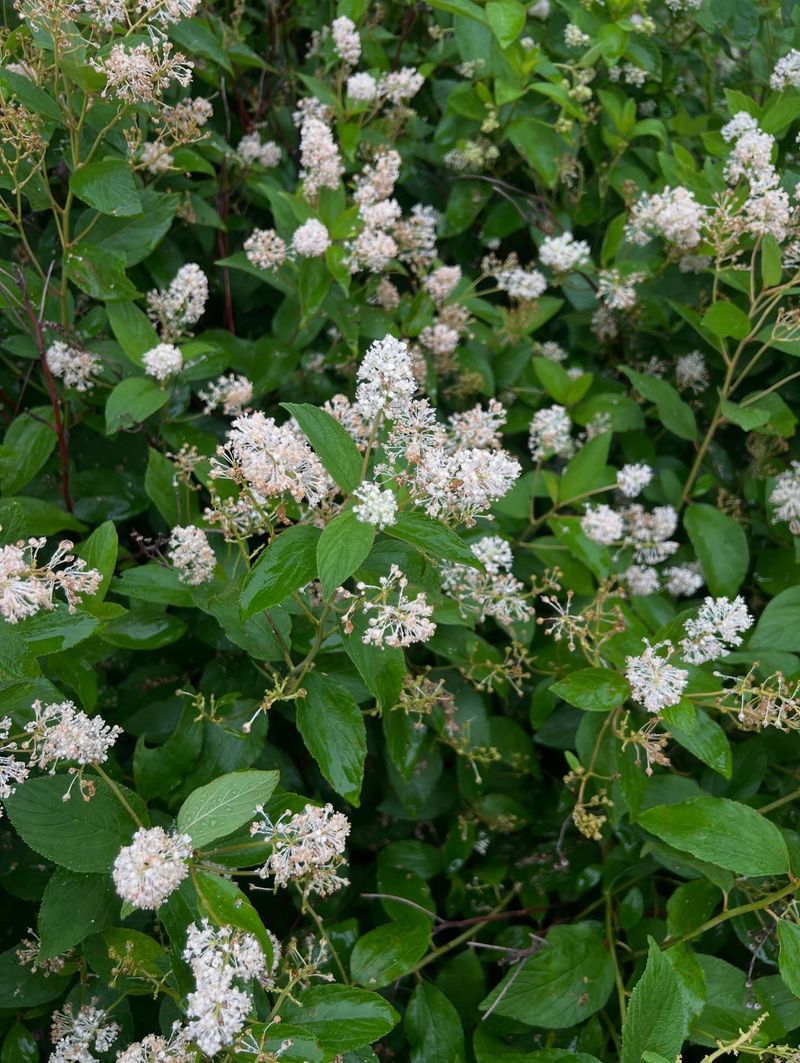
New Jersey Tea, known botanically as Ceanothus americanus, was practically built for those spots.
This compact native shrub grows naturally across Ohio’s dry prairies, open woodlands, and rocky hillsides, so it is already adapted to the kind of tough conditions that challenge most landscape plants.
It typically reaches three to four feet tall and wide, which gives it a size profile similar to compact barberry cultivars.
That makes it a practical swap in many of the same planting spots where homeowners once used invasive barberry as a low-maintenance filler shrub.
In late spring to early summer, New Jersey Tea produces frothy clusters of tiny white flowers that absolutely hum with pollinators.
Native bees, butterflies, and beneficial insects are drawn to the blooms, making this plant a genuine ecological contributor rather than just a placeholder in the landscape.
The flowers are fragrant and add visual interest during a season when many shrubs are simply sitting green.
Once established, this shrub requires almost no supplemental watering in most Ohio locations. It develops a deep root system that taps into soil moisture well below the surface, which is part of why it handles drought so well.
It does best in full sun and well-drained soil, and it actually struggles in consistently wet or heavy clay conditions, so avoid low spots in the yard.
Plant New Jersey Tea three to four feet apart for a low informal hedge, or use it as a single specimen in a mixed border. Minimal pruning is needed.
It is a genuinely low-effort plant that rewards patient gardeners with reliable seasonal interest year after year across Ohio landscapes.
3. Bush Honeysuckle Stays Tidy Without Taking Over Your Yard
Before anything else, let’s clear up the confusion that trips up a lot of Ohio gardeners.
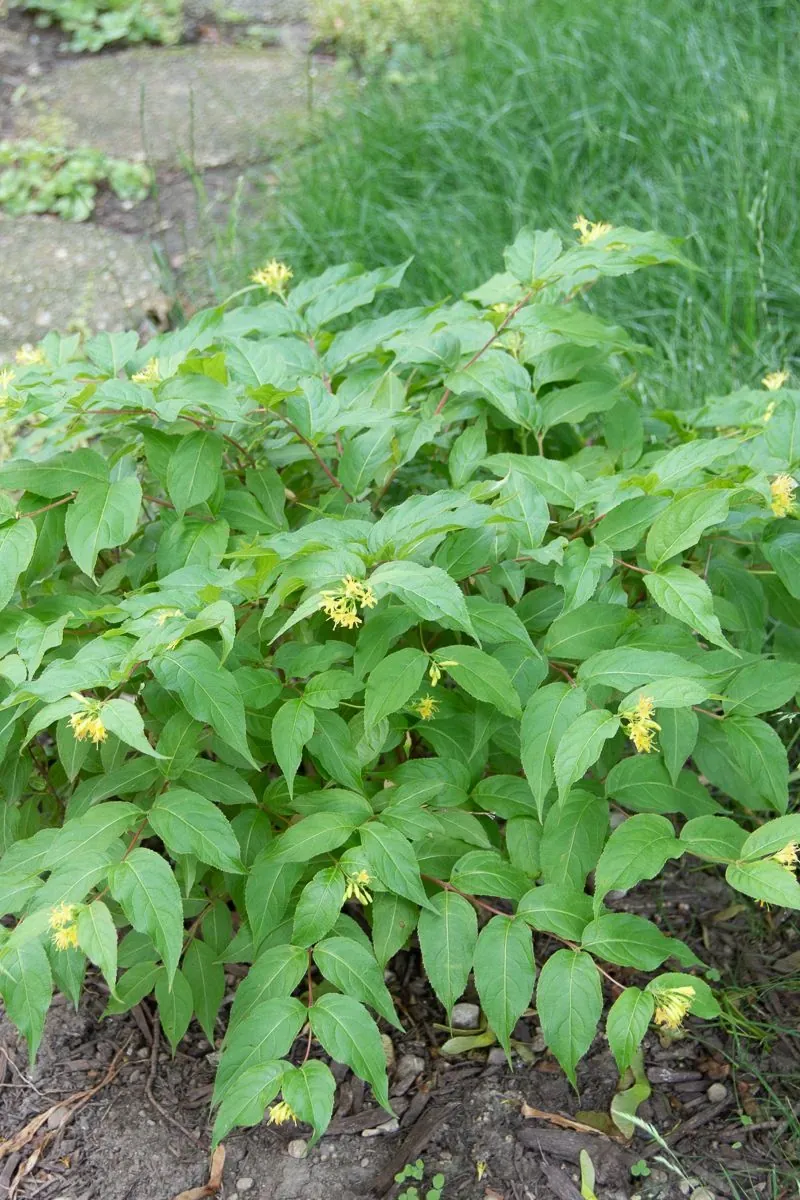
When native plant experts recommend bush honeysuckle as a barberry alternative, they are talking about Diervilla lonicera, a true Ohio native, and not the invasive Asian honeysuckles like Lonicera maackii that have already overtaken so many roadsides and forest edges across the state.
These are completely different plants, and knowing that distinction matters a great deal before you head to the nursery.
Diervilla lonicera is a well-behaved, low-growing shrub that typically reaches two to four feet tall and spreads gradually through root suckers, which is actually a benefit in many landscape situations.
It forms a dense, tidy mass of foliage that holds its shape without aggressive runners or self-seeding into natural areas.
That controlled spread is exactly what makes it useful as a barberry replacement along borders, slopes, and foundation beds.
The foliage is attractive on its own, emerging with reddish tones in spring before maturing to deep green through summer. Small yellow tubular flowers appear in early to midsummer and attract native bumblebees and hummingbirds.
In fall, the leaves shift to shades of burgundy and orange, giving the plant three-season interest that earns its space in any Ohio yard.
One of Diervilla’s biggest strengths is its shade tolerance. It performs well in partial to full shade, which opens up planting options under tree canopies where barberry was sometimes used as a low-light filler.
It also tolerates dry shade once established, a notoriously difficult condition for most shrubs.
Plant individual shrubs three feet apart where you want a solid mass, or space them four to five feet apart in mixed beds. Full sun to part shade both work, and this plant handles Ohio clay soils without drama.
It is a reliable, undemanding shrub that earns its keep every single season.
4. Black Chokeberry Adds Bold Fall Color And Wildlife Value
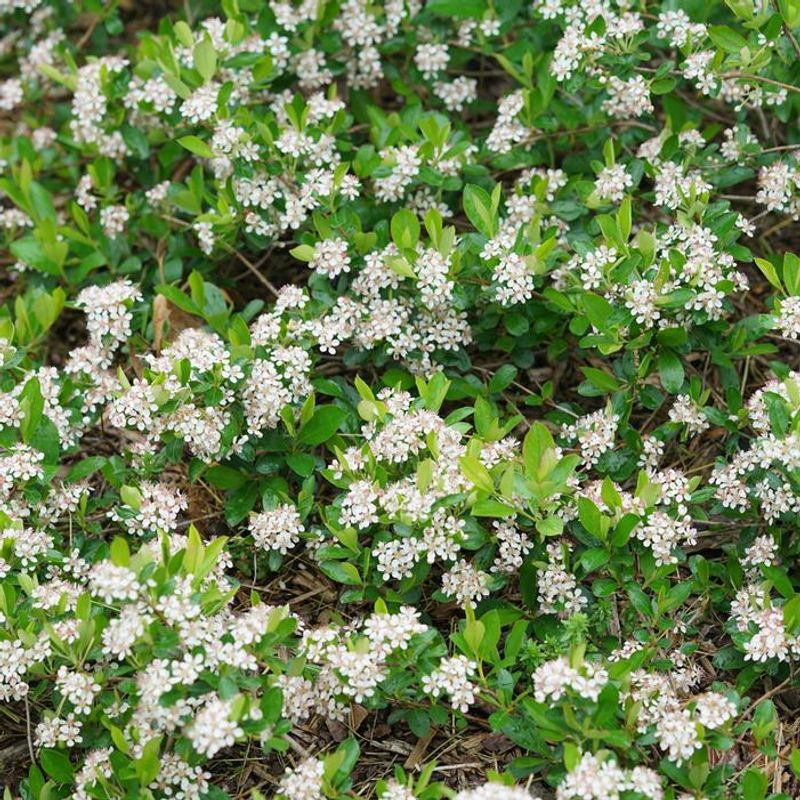
Some plants earn their place in the garden one season at a time. Black chokeberry, or Aronia melanocarpa, is the kind of shrub that surprises you every few months with something new to admire.
Spring brings clusters of white flowers. Summer delivers glossy green foliage.
Then fall arrives, and suddenly this plant becomes one of the most striking things in the entire yard.
The fall foliage on black chokeberry turns a saturated, fire-engine red that stops people in their tracks. It is one of the most reliable and intense fall color displays you can get from any native Ohio shrub, and it happens consistently year after year without any special care.
At the same time, clusters of small dark purple-black berries ripen on the stems, providing a high-value food source for birds heading into winter migration.
Beyond the visual appeal, black chokeberry is an ecological powerhouse. Over 30 species of birds consume the berries, including cedar waxwings, robins, and bluebirds.
The flowers support native bees in spring, and the dense branching structure provides nesting cover for songbirds. Replacing a block of invasive barberry with a grouping of black chokeberry is a genuine upgrade for local wildlife, not just a cosmetic change.
This shrub is native to Ohio and grows naturally in wet to moist habitats, which makes it an excellent choice for low spots, rain gardens, and areas near downspouts where drainage can be tricky.
It also tolerates clay soil well, which is a major practical advantage for many Ohio homeowners.
Plant black chokeberry in full sun to part shade, spacing plants four to five feet apart. Cultivars like ‘Autumn Magic’ and ‘Viking’ are compact and widely available at Ohio native plant nurseries.
It spreads slowly by suckers, forming a manageable colony that can be easily controlled with occasional pruning each spring.
5. Red Chokeberry Brightens The Yard With Long-Lasting Berries
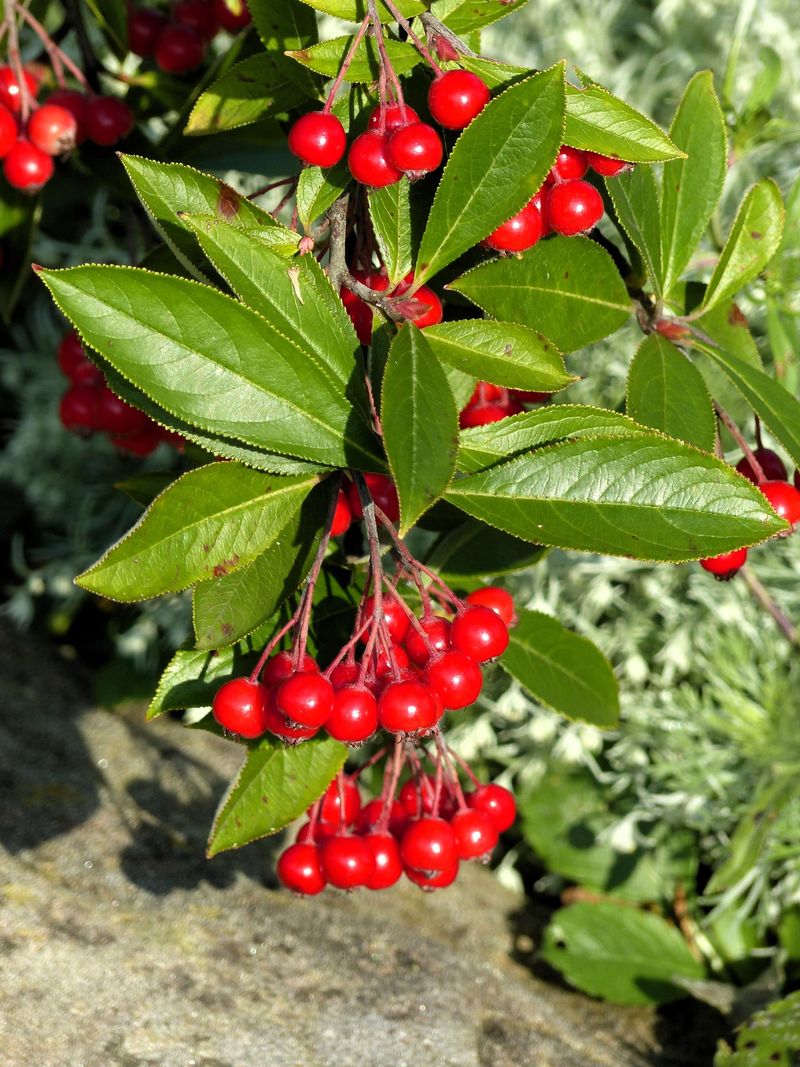
If you have ever driven through rural Ohio in late October and noticed a shrub blazing with red berries along a wetland edge, there is a good chance you were looking at red chokeberry.
Aronia arbutifolia is a close relative of black chokeberry, but it brings a distinctly different ornamental character to the landscape, one that leans more toward the dramatic end of the spectrum.
The berries on red chokeberry are bright red and persistent, meaning they cling to the branches well into winter rather than dropping quickly after ripening.
That extended display gives the plant months of visual interest after the growing season ends, which is something barberry can partially claim with its own red berries, but without the ecological benefits that come with a native plant.
Songbirds, including American robins and cedar waxwings, work through the berry clusters gradually, making the plant a reliable winter feeding station in your backyard.
Fall foliage is another strong suit. The leaves turn vivid shades of orange, red, and scarlet, creating a warm, layered display when combined with the berry clusters.
Few native shrubs can match the combination of berry color and leaf color that red chokeberry delivers in a single plant during autumn.
Red chokeberry grows six to ten feet tall at maturity, making it better suited to the back of a border or as a naturalistic screen than as a low hedge.
It handles wet soils exceptionally well and is frequently used in rain gardens and bioswales across Ohio where standing water can be a recurring issue.
Full sun brings out the best berry production and fall color, though part shade is tolerated.
Space plants five to six feet apart for a naturalistic grouping. The cultivar ‘Brilliantissima’ is widely praised for especially vivid color and is commonly available at Ohio native plant sales and specialty nurseries throughout the state.
6. Fragrant Sumac Forms A Low Dense Hedge That’s Easy To Manage
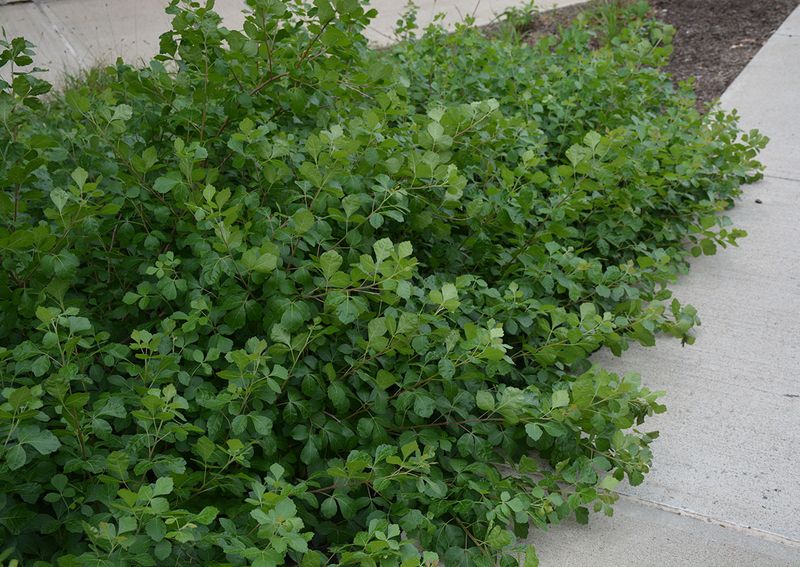
Not every barberry replacement needs to stand upright like a traditional shrub. Sometimes what a landscape really needs is a tough, spreading plant that hugs the ground, covers bare soil, and holds a slope without constant attention.
Fragrant sumac, Rhus aromatica, fills that role better than almost any other native Ohio plant at its size.
Growing two to six feet tall depending on the cultivar, fragrant sumac spreads outward through a suckering habit that creates a dense, weed-suppressing mass of foliage.
The cultivar ‘Gro-Low’ is especially popular in Ohio landscapes because it stays under three feet tall while spreading six to eight feet wide, making it an outstanding groundcover-style alternative to low barberry hedges along driveways, slopes, and front yard borders.
The plant earns its common name honestly. Crush a leaf between your fingers and you get a pleasant, lemony-spicy fragrance that is surprisingly enjoyable.
Small yellow flowers appear very early in spring, often before the leaves fully open, and provide an early nectar source for native bees emerging from winter. The fruit clusters, which are small and fuzzy, attract birds later in the season.
Fall color is genuinely spectacular. Fragrant sumac turns shades of orange, red, and burgundy in autumn, often rivaling burning bush in intensity, which makes it a popular recommendation for homeowners who want that fiery fall look without planting an invasive species.
It delivers the visual impact without the ecological cost.
This shrub thrives in full sun and well-drained to dry soils, making it particularly well suited to challenging Ohio sites with thin or rocky ground. It tolerates clay and adapts to a wide pH range.
For erosion control on slopes, plant ‘Gro-Low’ three to four feet apart and let it fill in naturally. Once established, it needs very little intervention to look good season after season.
7. American Hazelnut Creates A Thick Natural Screen With Edible Nuts
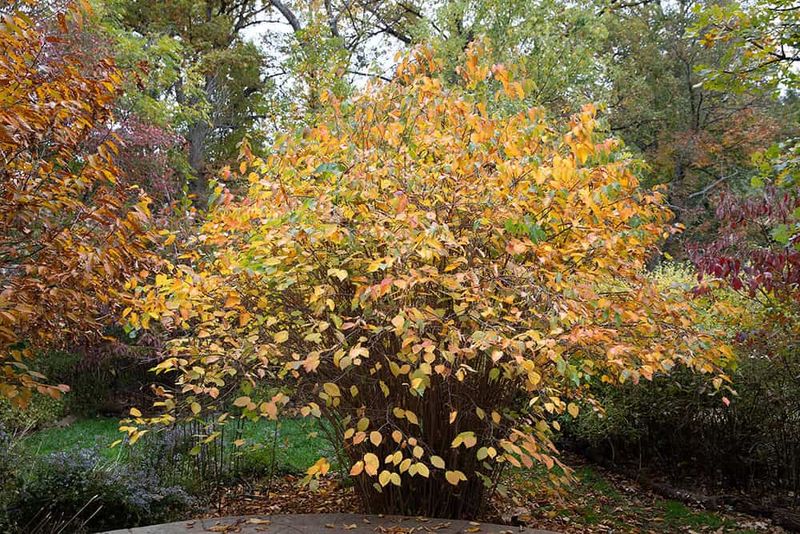
There is something genuinely satisfying about planting a shrub that pulls double duty in the landscape. American hazelnut, Corylus americana, is exactly that kind of plant.
It grows into a dense, multi-stemmed thicket that blocks views, muffles noise, and creates real privacy along property lines, and then it goes ahead and produces edible hazelnuts that wildlife absolutely love.
Native throughout Ohio, American hazelnut grows naturally along forest edges, roadsides, and stream banks, which tells you a lot about its adaptability.
In a home landscape it typically reaches six to twelve feet tall and spreads nearly as wide, forming the kind of thick, layered screen that takes barberry rows years to approximate but never quite achieves.
The stems are densely branched from the base, so there are no gaps to worry about at ground level.
In late winter, long dangling catkins emerge before the leaves, adding a delicate ornamental quality during an otherwise bare season in Ohio gardens.
The catkins are actually the male flowers, and they provide early pollen for native bees on warm late-winter days when few other plants are offering anything.
Rounded female flowers develop into clusters of small nuts surrounded by leafy husks, which ripen in late summer and are eagerly collected by squirrels, jays, and turkeys.
American hazelnut handles a range of light conditions, from full sun to partial shade, and adapts to most Ohio soil types including clay and loam. It tolerates occasional wet periods and is generally unfussy once established after the first growing season.
For a privacy screen or wildlife hedge, plant hazelnuts six to eight feet apart in a single or staggered double row. They sucker gradually to fill in gaps, creating a natural-looking thicket over time.
Occasional pruning of the oldest stems every few years keeps the planting vigorous and encourages fresh productive growth from the base.
8. Gray Dogwood Fills In Fast And Stabilizes Slopes Naturally
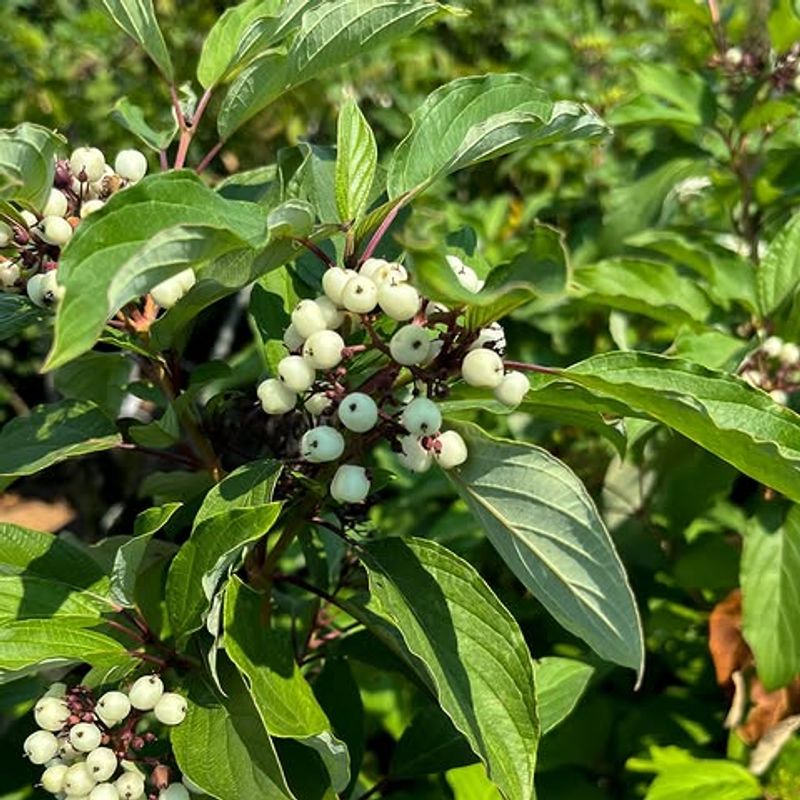
Speed matters when you are trying to replace a large patch of invasive barberry. You want something that gets established quickly, fills in without constant coaxing, and starts delivering real ecological value within the first few seasons.
Gray dogwood, Cornus racemosa, checks every one of those boxes and then keeps going.
Gray dogwood is one of the most adaptable native shrubs in Ohio’s plant palette. It grows in wet ditches, dry roadsides, sunny meadow edges, and shaded forest margins with equal ease, which is a level of flexibility that very few shrubs can match.
In a home landscape it typically reaches six to ten feet tall and spreads aggressively through root suckers, forming a dense colony that outcompetes weeds and holds soil on challenging slopes and banks.
That suckering habit, which might sound like a downside, is actually one of gray dogwood’s most valuable landscape traits.
On erosion-prone slopes, along stream banks, or in naturalized areas where barberry once ran rampant, gray dogwood moves in and stabilizes the ground quickly.
It is one of the shrubs that restoration ecologists frequently use when repairing disturbed land in Ohio, precisely because it establishes so reliably and spreads without intervention.
Clusters of small white flowers in late spring attract a wide range of native pollinators. By late summer, the flowers give way to small white berries held on bright red stems, creating a striking two-tone display that birds find irresistible.
Over 40 bird species consume gray dogwood berries, making it one of the most wildlife-productive native shrubs available to Ohio gardeners.
Fall foliage transitions through shades of purple, orange, and burgundy before the leaves drop, leaving the colorful red stems as a winter feature. Plant gray dogwood in full sun to full shade, spacing plants five to six feet apart.
For naturalized areas or slopes, wider spacing is fine since the shrub will expand on its own to fill available space over two to three growing seasons.