7 Native Ohio Ground Covers That Help Suppress Weeds With Less Upkeep
Bare soil never stays bare for long, does it? Give it a little space, a bit of sun, and suddenly you’re pulling unwanted growth every other day.
It can feel like a losing battle, especially in Ohio where spring and summer seem to push everything into overdrive.
So what’s the smarter move? More gardeners are skipping the constant cycle of pulling and replacing, and instead covering the ground with plants that do the hard work for them.
The right ground covers spread out, fill gaps, and make it much harder for unwanted growth to take hold in the first place.
It’s not about creating a perfect, spotless bed. It’s about tipping the balance so your garden works with you, not against you.
And when those plants are native to Ohio, they settle in faster, handle the weather swings better, and keep things looking full without demanding much in return.
1. Wild Ginger Forms A Dense Shade Mat
Shaded spots under big trees are often the hardest areas to manage in an Ohio yard. Grass struggles to grow there, mulch blows around, and weeds somehow find a way to take over anyway.
Wild ginger, known scientifically as Asarum canadense, is a native perennial that actually thrives in those deep shade conditions where most plants give up.
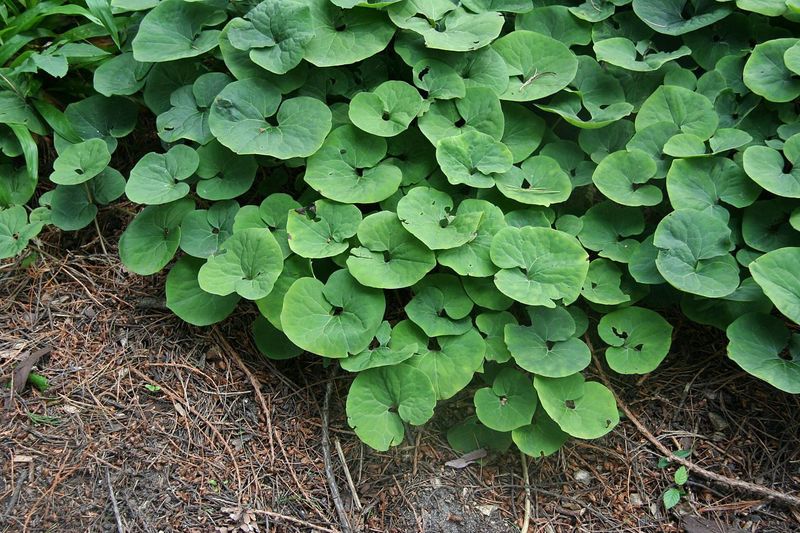
The broad, heart-shaped leaves of wild ginger are what make it so useful as a ground cover. They grow thick and close together, forming a continuous layer that covers the soil surface and blocks sunlight from reaching weed seeds below.
According to Ohio State University Extension, wild ginger is well-suited to moist, shaded woodland edges, making it a natural fit for the shaded beds found in many Ohio backyards.
One thing to know upfront is that wild ginger spreads slowly. It expands through underground rhizomes, typically spreading just a few inches per year.
That means you will need some patience in the first year or two while it gets established. Planting plugs about 12 inches apart gives each plant enough room to fill in without crowding each other out too quickly.
Once wild ginger has settled in, though, it forms a remarkably dense mat that holds its own against weeds. The foliage stays low, usually reaching only about 6 to 8 inches tall, which keeps the look tidy and manageable.
It pairs well with ferns and native hostas in a shaded bed design.
Wild ginger also supports local wildlife. Native bees and ants are attracted to its small, hidden flowers that bloom near the soil in early spring.
For a shaded Ohio corner that has been a weed magnet for years, this plant is a reliable long-term solution worth trying.
2. Foamflower Gently Fills In Open Gaps
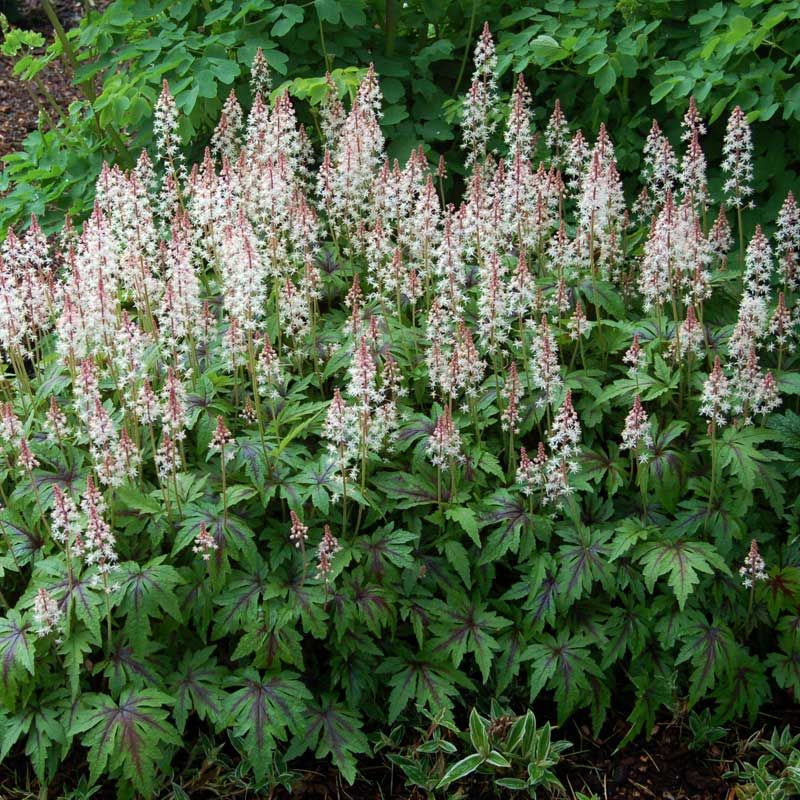
Walk through any moist Ohio woodland in late spring and you might notice a low-growing plant with soft, lobed leaves and delicate white flower spikes rising just above the foliage.
That is foamflower, or Tiarella cordifolia, and it is one of the more graceful native ground covers you can bring into a shaded garden bed.
Your Ohio Garden Changes Every Week. Your Plan Should Too.
Gardening in Ohio changes quickly throughout the season. Every Friday you’ll receive a simple weekly plan showing exactly what to plant, prune, fertilize, harvest, and protect so you never miss the right timing.
What makes foamflower especially useful for weed suppression is its runner-forming habit. It spreads by sending out horizontal stolons, which are above-ground stems that root where they touch the soil.
Over time, this creates a gradually expanding colony that fills in open gaps in a bed and reduces the bare soil where weeds love to sprout. It is not the fastest spreader, but it is steady and reliable once established.
Foamflower does best in moist, well-drained soil with plenty of organic matter, which describes a lot of Ohio woodland edge environments. It prefers partial to full shade, making it a strong candidate for spots under deciduous trees or along the north side of a house.
Plant plugs or small divisions about 12 to 18 inches apart to allow natural spreading without overcrowding in the first season.
The foliage is attractive year-round, often taking on reddish or bronze tones in fall. The spring blooms, which typically appear in April and May in Ohio, attract native bees and other early pollinators, adding ecological value beyond just weed control.
Foamflower is also low-maintenance in a very practical sense. Once established, it rarely needs watering except during dry spells, and it does not require fertilizing in typical Ohio woodland soil.
For shaded beds that keep filling up with unwanted plants, foamflower is a quiet but effective long-term solution.
3. Golden Ragwort Spreads Fast And Covers Soil
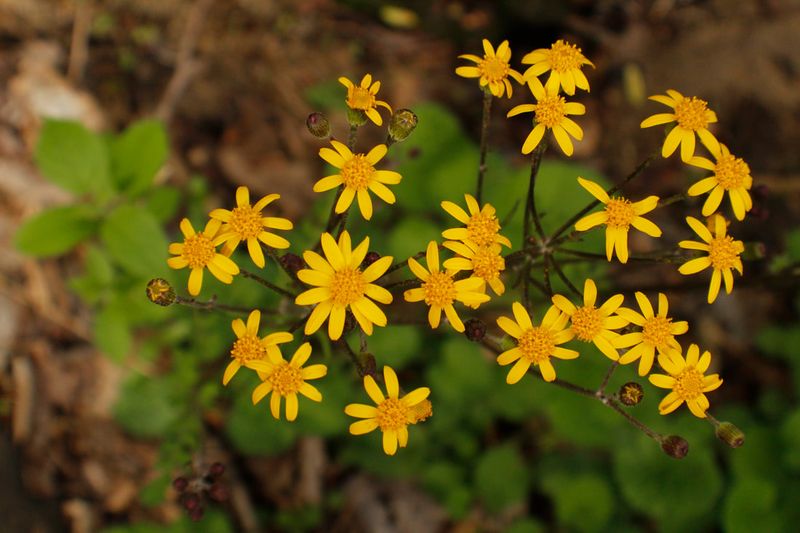
Not every native ground cover asks for your patience. Golden ragwort, or Packera aurea, is one of the faster-spreading natives you can plant in an Ohio yard, and that speed is exactly what makes it so effective at keeping weeds from taking hold in open areas.
Golden ragwort spreads through both rhizomes underground and by seed, which allows it to form colonies relatively quickly compared to slower-spreading options like wild ginger.
In a good growing season, a small planting can expand noticeably, filling in bare soil and crowding out unwanted plants by shading the ground with its dense basal rosettes of dark green leaves.
Ohio State University Extension recognizes it as a reliable native for moist to average soils in sun or shade.
The plant grows to about 12 to 18 inches tall when in bloom, but the basal foliage stays much lower throughout the rest of the season. That low, mat-like leaf layer is what does most of the weed-suppression work.
Spacing plants about 12 inches apart at planting gives them a head start on filling in, and within two to three growing seasons, a dense colony is very achievable.
Golden ragwort also brings a burst of bright yellow flowers in spring, usually in April and May in Ohio. Those blooms attract early pollinators, including native bees that are active before many other flowers have opened.
That ecological bonus makes it even more appealing for homeowners who want a yard that works with nature.
It tolerates wet soil conditions better than most ground covers, which makes it a solid pick for low spots or areas near downspouts that stay damp after rain. For Ohio gardeners who want faster coverage and less waiting, golden ragwort is hard to beat.
4. Creeping Phlox Creates A Thick Living Carpet
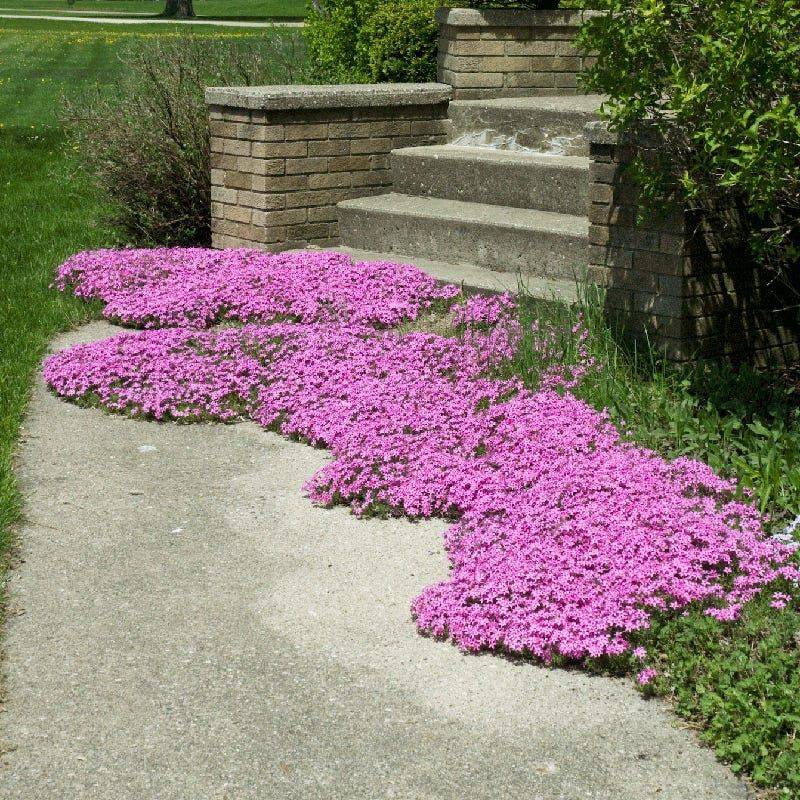
Few sights in an Ohio spring garden are as eye-catching as a slope or border edge covered in creeping phlox in full bloom.
The plant practically disappears under a blanket of pink, purple, or white flowers from April into May, and even after blooming ends, the dense mat of needle-like foliage keeps doing useful work all season long.
Creeping phlox, or Phlox subulata, is a mat-forming perennial that hugs the ground and spreads outward from its center over time. That low, dense growth habit is what makes it so effective at limiting space for unwanted plants.
When the foliage fills in tightly, there is simply less open soil for weed seeds to land and germinate. The plant typically stays between 4 and 6 inches tall, forming a thick living carpet that holds its structure through the growing season.
Creeping phlox prefers full sun and well-drained soil, which makes it a great fit for sunny slopes, rock gardens, or the edges of raised beds in Ohio yards.
It handles average to dry soil conditions well and becomes quite drought-tolerant once established, meaning it does not need much extra watering after the first season.
Space plants about 12 to 18 inches apart and expect them to fill in steadily over two to three years.
One practical tip for Ohio gardeners is to give creeping phlox a light trim after blooming ends. A quick shearing encourages fresh, compact growth and keeps the mat dense rather than woody and open in the center.
Beyond its weed-suppressing qualities, creeping phlox is a favorite early-season nectar source for native bees and butterflies. It earns its place in the yard on looks, function, and ecological value all at once.
5. Green And Gold Stays Low And Closes Space
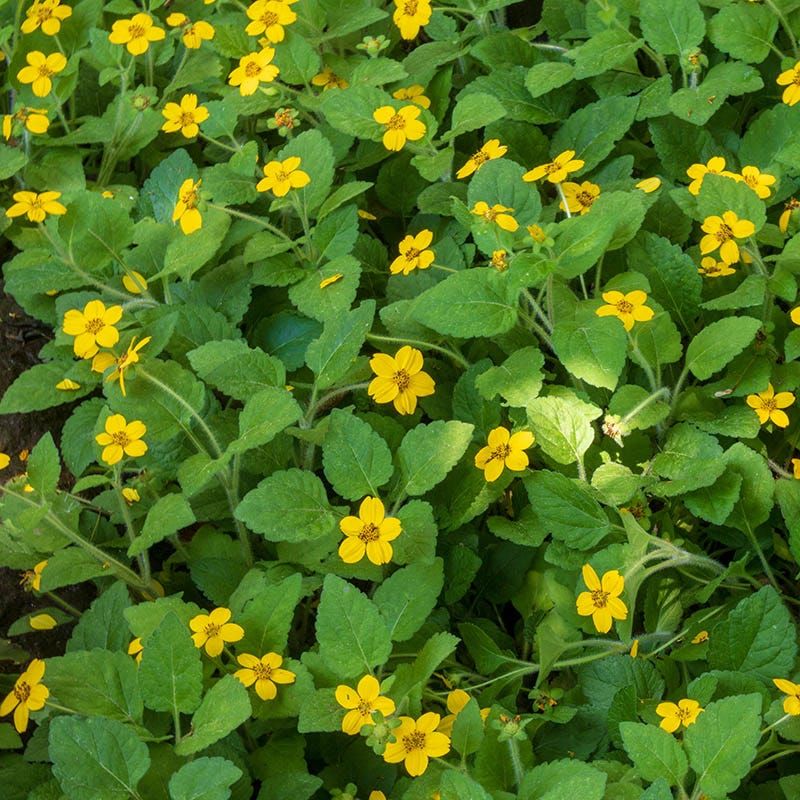
Partially shaded spots in Ohio yards can be genuinely frustrating to plant. They get too much shade for most flowering plants and too much sun for deep-shade lovers.
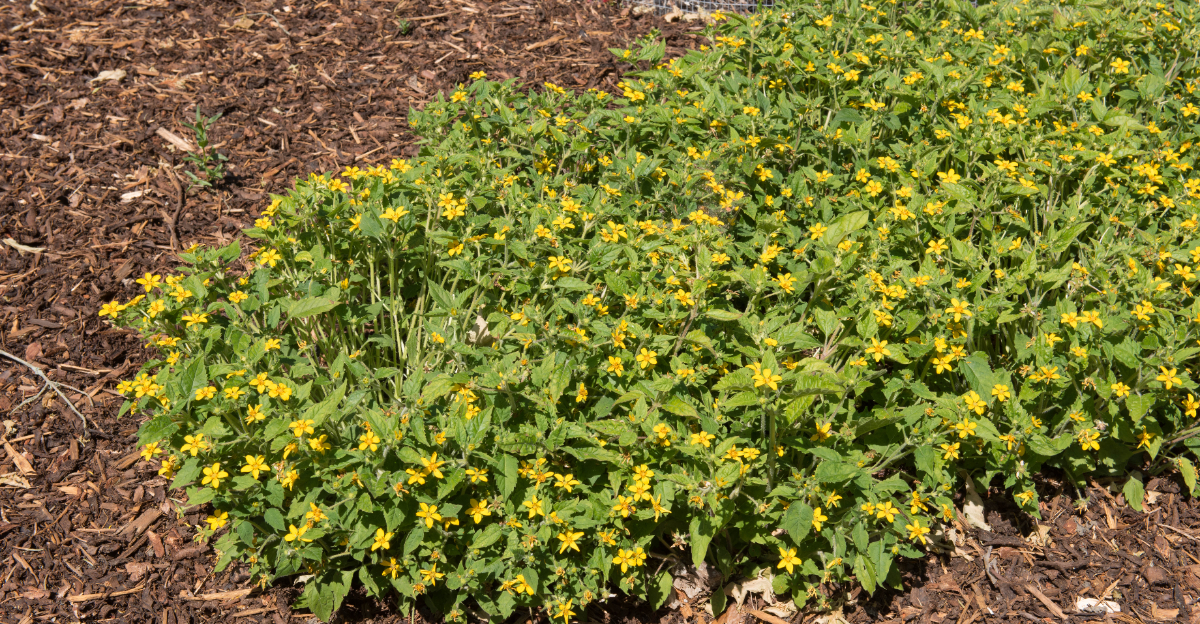
Green and gold, or Chrysogonum virginianum, fits right into that in-between zone and does it with cheerful yellow blooms that show up from spring well into fall.
The plant stays low, usually reaching only 6 to 9 inches in height, which gives it a tidy, unobtrusive look in a mixed bed. It spreads slowly by stolons and offsets, gradually closing in the gaps between other plants and reducing the open soil where weeds tend to pop up.
Because it does not spread aggressively, it works well as a filler alongside taller native perennials rather than as a standalone mass planting.
Green and gold performs best in partial shade with average to slightly dry soil, a combination that describes a lot of Ohio garden beds under mature trees.
It handles clay soil reasonably well when amended with compost at planting time, and it becomes drought-tolerant once its root system is established after the first season.
Plant plugs about 12 to 15 inches apart for gradual coverage over two to three seasons.
The bright yellow flowers are not just decorative. They provide nectar for small native bees and other beneficial insects throughout a long blooming season, which is longer than most native ground covers can claim.
That extended bloom time also means the plant stays visually interesting from April through October in most Ohio locations.
For homeowners who want something low-effort and low-growing to fill in the awkward middle ground of a partially shaded bed, green and gold is a practical and pretty option that earns its spot without demanding much attention.
6. Common Blue Violet Fills In Quickly
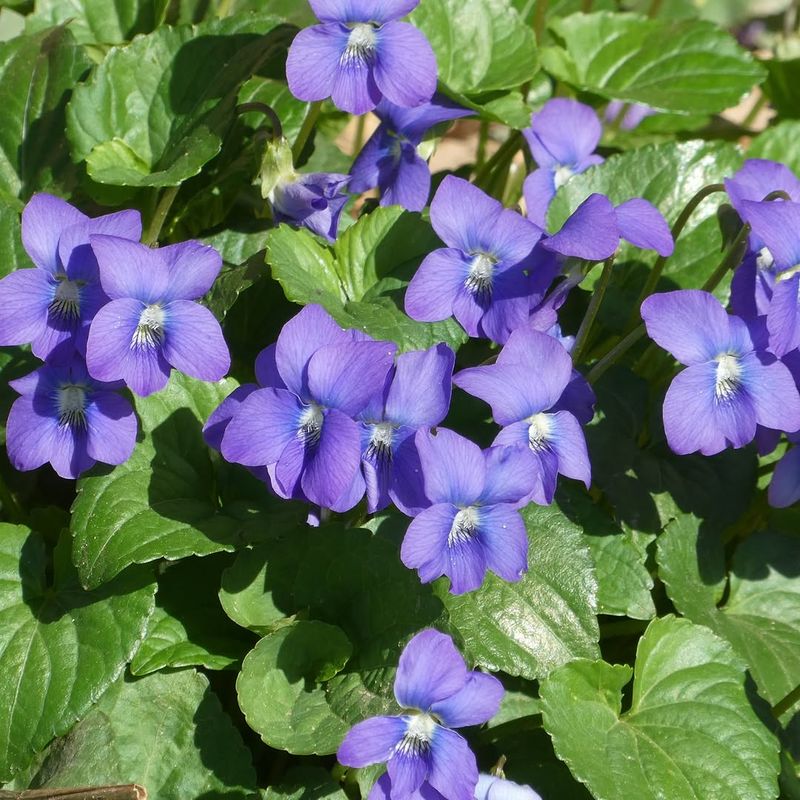
Some plants walk a fine line between being wildly useful and slightly too enthusiastic, and common blue violet, or Viola sororia, is a perfect example.
Many Ohio homeowners have spent years trying to remove it from their lawns without realizing it could be doing real work for them in the right spot.
Common blue violet spreads by both rhizomes underground and by seeds that are launched from seed pods in summer, a process called ballistic dispersal.
That combination of spreading methods allows it to fill in bare soil relatively quickly, which is exactly what you want in a problem area that keeps sprouting weeds every spring.
The heart-shaped leaves form a dense, overlapping layer that shades the soil and limits germination space for unwanted plants.
The key with common blue violet is placement. It works best in naturalistic areas, woodland edges, rain gardens, or informal beds where some spreading is welcome rather than a problem.
In a tightly controlled formal garden, it can become more than you bargained for.
Used intentionally in the right spot, though, it is one of the more effective native fillers available in Ohio without any extra cost, since it often establishes itself on its own in shaded or semi-shaded areas.
The purple-blue spring flowers, which bloom in April and May, are an important early food source for several native bee species, including specialist bees that depend on violet flowers specifically.
The plant also serves as a host plant for several native fritillary butterfly caterpillars, which adds meaningful wildlife value to its resume.
For Ohio gardeners who want something tough, fast-filling, and ecologically valuable, common blue violet is worth embracing rather than fighting. Place it where it can roam a bit, and it will reward you by keeping weeds at bay season after season.
7. Pennsylvania Sedge Forms A Soft Ground Layer
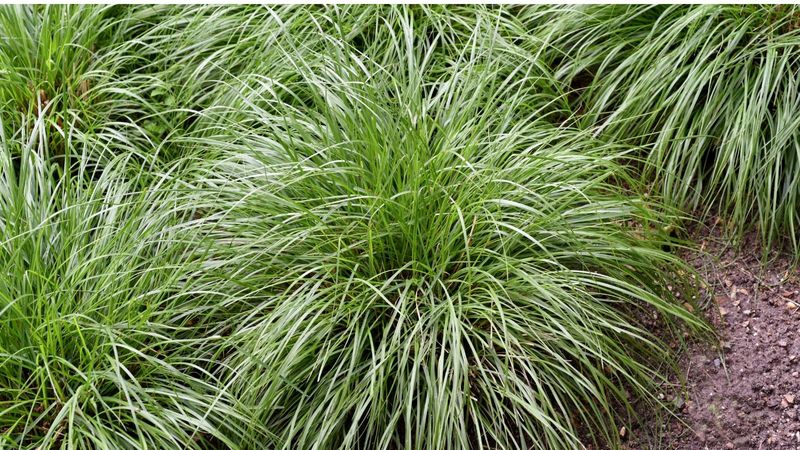
Dry shade under a big oak or maple is one of the most challenging spots in any Ohio yard. The tree roots pull moisture from the soil, the canopy blocks rain, and most plants simply refuse to cooperate.
Pennsylvania sedge, or Carex pensylvanica, is one of the few native plants that genuinely thrives in exactly those conditions.
Pennsylvania sedge grows in a soft, arching clump that gradually expands through rhizomes to form a low, lawn-like layer across the ground.
The foliage stays between 6 and 10 inches tall and has a fine, grass-like texture that gives it a natural, unmanicured look that fits well under trees.
Over time, a planting of Pennsylvania sedge fills in to create a continuous ground layer that shades the soil and leaves very little room for weeds to establish.
Unlike traditional lawn grass, Pennsylvania sedge does not need mowing, though an optional trim in early spring can refresh the look before new growth emerges.
It requires no fertilizing in typical Ohio woodland soil, and once established after the first season, it handles dry periods without supplemental watering.
That combination of low inputs makes it one of the most genuinely low-maintenance ground covers on this list.
Plant plugs about 6 to 12 inches apart for faster coverage. Closer spacing means quicker fill-in, which is worth the extra cost if you are dealing with a heavily weeded area that needs coverage sooner rather than later.
Pennsylvania sedge tolerates clay soil and works in partial to full shade, covering a wide range of Ohio yard conditions.
For anyone who has given up on growing anything useful under a large shade tree, Pennsylvania sedge is the practical, native answer that requires almost nothing once it finds its footing.