8 Reasons Your Bird Of Paradise Isn’t Blooming In Michigan Homes (And How To Fix It)
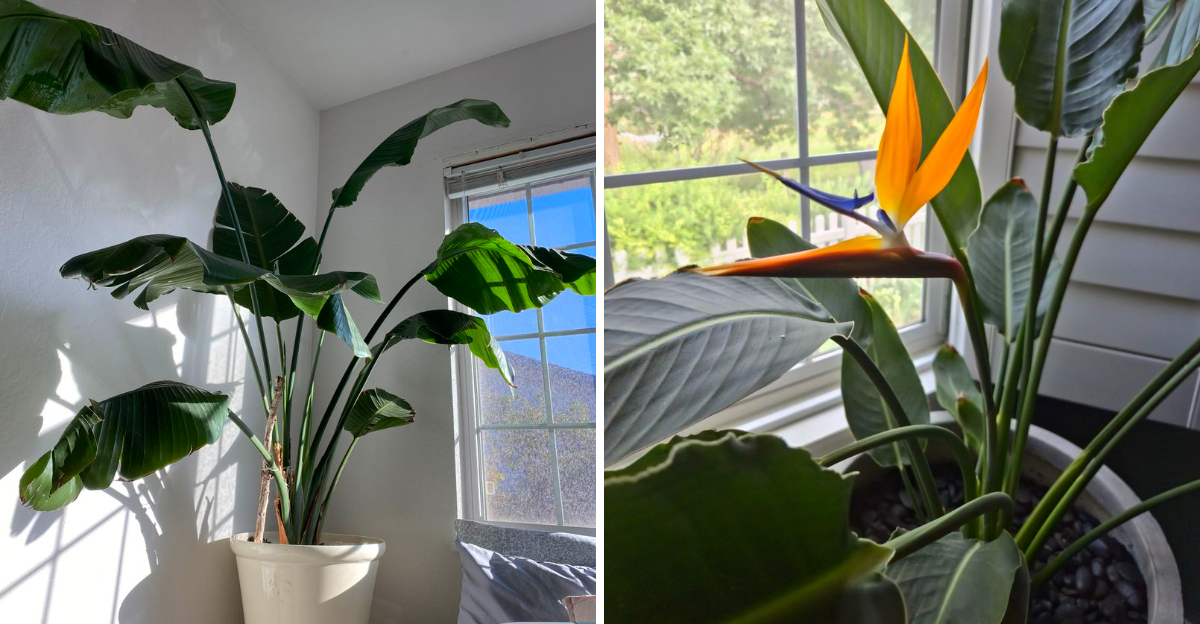
Growing a Bird of Paradise in Michigan can feel like a rewarding challenge. Many local plant owners end up with gorgeous, lush leaves that fill a corner beautifully, yet the flowers they hope for never show up – even after years of careful watering.
Michigan’s long winters, limited natural light, and dry indoor heat create conditions far from what this tropical beauty expects. If you wonder why your healthy-looking plant refuses to bloom, you are definitely not alone.
There are real, practical reasons for this shy behavior.
Understanding the specific environmental hurdles in our state makes it much easier to provide the right care and finally see those iconic blossoms.
1. Insufficient Light In Michigan Homes Limits Blooming
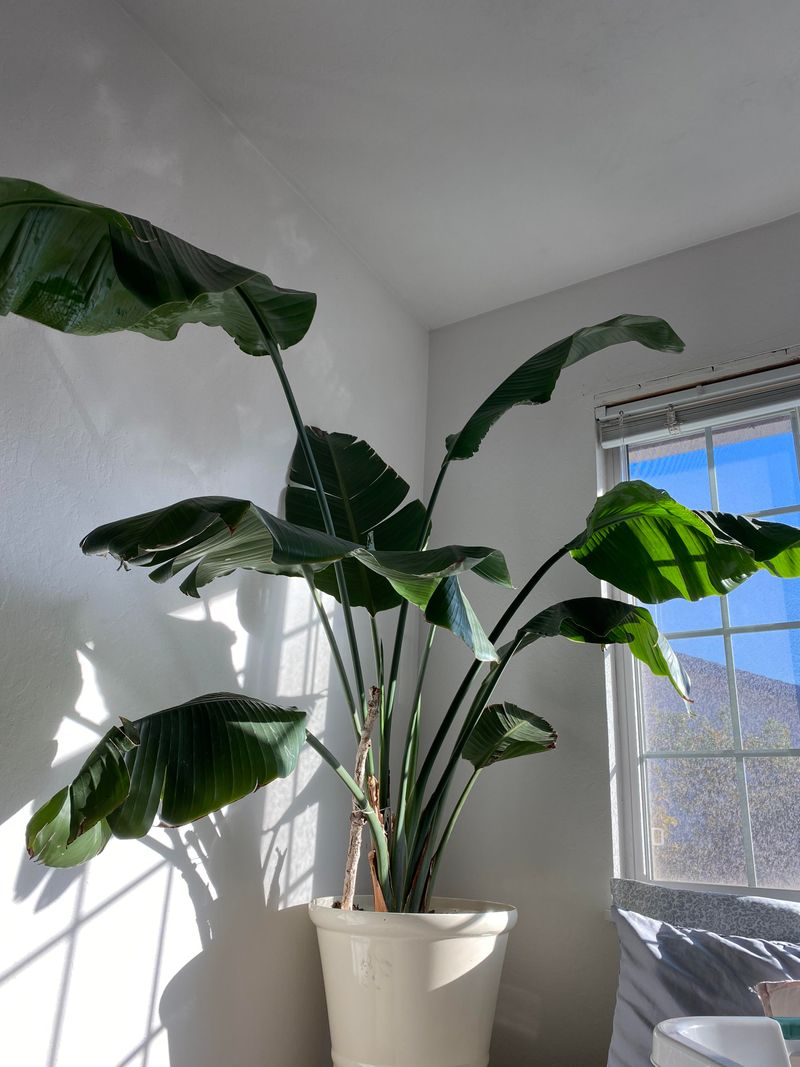
Michigan winters are notoriously dim, and the overcast skies that stretch from November through March can seriously cut into the light your tropical houseplant receives each day.
A Bird of Paradise needs several hours of very bright, direct or near-direct light to build the energy required for flower production.
Without that intensity, the plant will stay in a kind of holding pattern, keeping its leaves alive but never gathering enough reserves to push out a bloom.
South-facing windows are your strongest option in a Michigan home. If your plant has been sitting in an east or north-facing room, moving it closer to the brightest available window can make a meaningful difference over time.
Even a few extra feet from the glass can significantly reduce light intensity, so positioning matters more than most people realize.
During the short days of winter, supplementing with a full-spectrum grow light placed close to the canopy can help bridge the gap. Run the light for 12 to 14 hours daily to mimic longer growing-season days.
Progress won’t be immediate, but consistent bright light exposure over several months is one of the most important steps toward encouraging a bloom in Michigan’s light-limited indoor environment.
2. Plant Is Too Young To Produce Flowers Yet
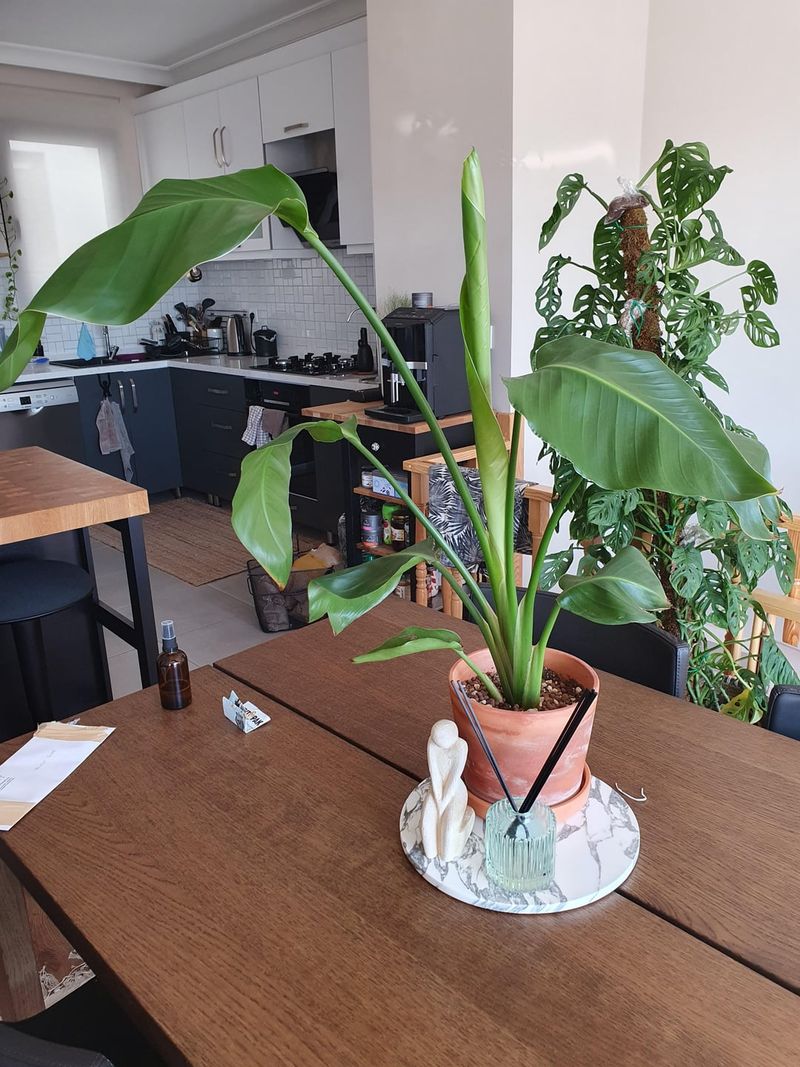
Patience is genuinely one of the hardest parts of growing a Bird of Paradise indoors. Unlike many flowering houseplants that can bloom within a season or two, this one takes years to reach maturity.
A plant started from seed can take anywhere from five to seven years before it has the root mass, leaf count, and stored energy needed to produce its first flower. Even divisions taken from a mature plant may need three to five years to settle in and bloom.
Many Michigan plant owners purchase a Bird of Paradise from a nursery or garden center without knowing how old it actually is.
If the plant has fewer than five or six mature leaves and is growing in a small to medium pot, there is a reasonable chance it simply hasn’t reached flowering age yet.
That doesn’t mean anything is wrong with your care routine.
Tracking the plant’s growth by counting new leaves each season can give you a better sense of where it is in its development. A healthy, actively growing plant that adds two or three leaves per growing season is on the right track.
Your Michigan Garden Changes Every Week. Your Plan Should Too.
Gardening in Michigan changes quickly throughout the season. Every Friday you’ll receive a simple weekly plan showing exactly what to plant, prune, fertilize, harvest, and protect so you never miss the right timing.
Keeping conditions stable and consistent throughout the Michigan growing calendar gives a young plant the best foundation for eventually reaching that long-awaited bloom.
3. Inconsistent Watering Slows Growth And Bloom Development
Watering a Bird of Paradise well isn’t about sticking to a rigid schedule. It’s about reading the soil and responding to what the plant actually needs, which can change quite a bit depending on the season.
During Michigan’s warmer months when the plant is actively growing, it will use water more quickly. In winter, when indoor heating dries out the air and the plant’s growth slows, the soil stays wet longer and the watering frequency should drop accordingly.
Both too much and too little water can interrupt bloom development.
Consistently soggy soil leads to root issues that prevent the plant from absorbing nutrients efficiently, while prolonged dryness forces the plant into a stress response where it prioritizes survival over flowering.
The goal is to water thoroughly when the top inch or two of soil feels dry, then allow the pot to drain completely before the next watering.
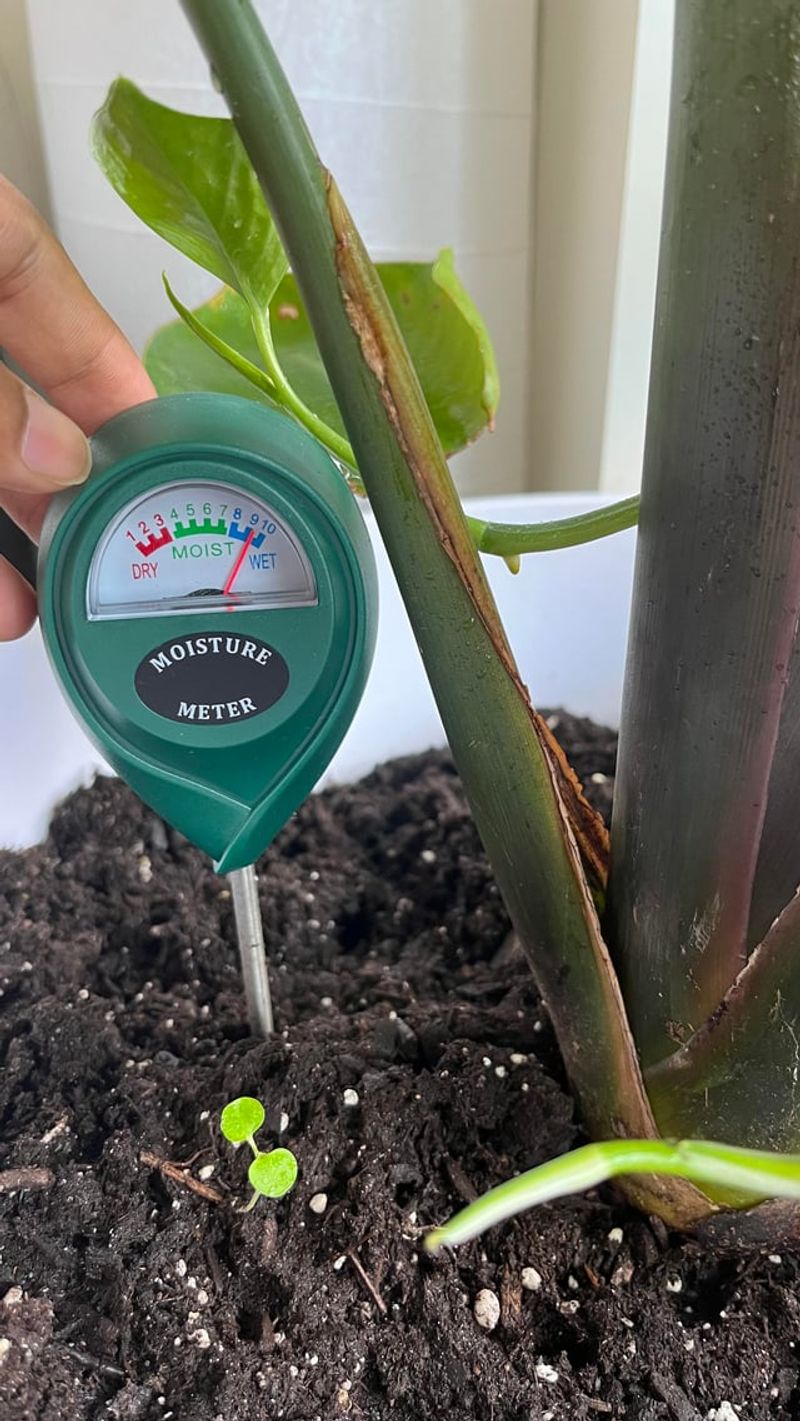
Using a moisture meter takes a lot of the guesswork out of this process, especially during Michigan’s dry heating season when the surface soil can feel dry while deeper roots still hold moisture. Well-draining potting mix also plays a role here.
A heavy, moisture-retaining mix makes it much harder to maintain the balanced watering rhythm that supports steady growth and, eventually, bloom development.
4. Low Indoor Humidity Reduces Plant Vigor
Forced-air heating is a fact of life in Michigan homes from October through April, and it pulls a remarkable amount of moisture out of indoor air.
Relative humidity in Michigan homes during winter can drop to levels that feel more like a desert than a tropical climate, and a Bird of Paradise originally from southern Africa’s warm, humid coastal regions notices that difference.
Low humidity doesn’t typically stop leaves from growing, but it can reduce the plant’s overall vitality in ways that make blooming much less likely.
Signs of humidity stress include leaf edges that curl inward, brown tips on otherwise healthy leaves, and a general lack of new growth during what should be the active season.
When a plant spends energy trying to manage moisture loss through its leaves, it has less to invest in developing flower buds.
Raising the humidity around your plant is a relatively simple adjustment that pays off over time.
Running a small humidifier near the plant is one of the most effective options for Michigan winters. Grouping plants together can also create a slightly more humid microclimate through collective transpiration.
Pebble trays filled with water and placed beneath the pot offer a modest boost as well.
Targeting a relative humidity level somewhere between 40 and 60 percent gives this tropical plant a much more comfortable environment to grow and eventually bloom in.
5. Temperature Fluctuations During Michigan Seasons Stress The Plant
Few things disrupt a tropical houseplant’s rhythm like unpredictable temperature shifts, and Michigan delivers those in abundance.
The gap between a warm summer and a cold Michigan winter is dramatic, and even inside a well-heated home, temperatures near windows and exterior walls can swing significantly between day and night.
A Bird of Paradise grows most comfortably in temperatures that stay consistently between 65 and 80 degrees Fahrenheit, and repeated exposure to cold drafts or sudden drops can put the plant into a low-energy stress mode.
Windows that feel warm and bright in July can become cold and drafty by December.
If your plant is positioned directly against a single-pane window or near an exterior door, the roots and lower leaves may be experiencing temperatures well below what the rest of the room registers on a thermostat.
Cold root zones are particularly problematic because they slow nutrient uptake and reduce the plant’s ability to support new growth.
Moving the plant slightly away from the glass during Michigan’s coldest months, while still keeping it in the brightest available light, can reduce temperature stress considerably.
Checking for drafts with your hand near the window edge on a cold day is a quick way to assess the situation.
Stable warmth throughout the year, combined with adequate light, creates the kind of predictable environment this plant needs to eventually shift its energy toward flowering.
6. Root Bound Conditions Can Either Help Or Restrict Blooming
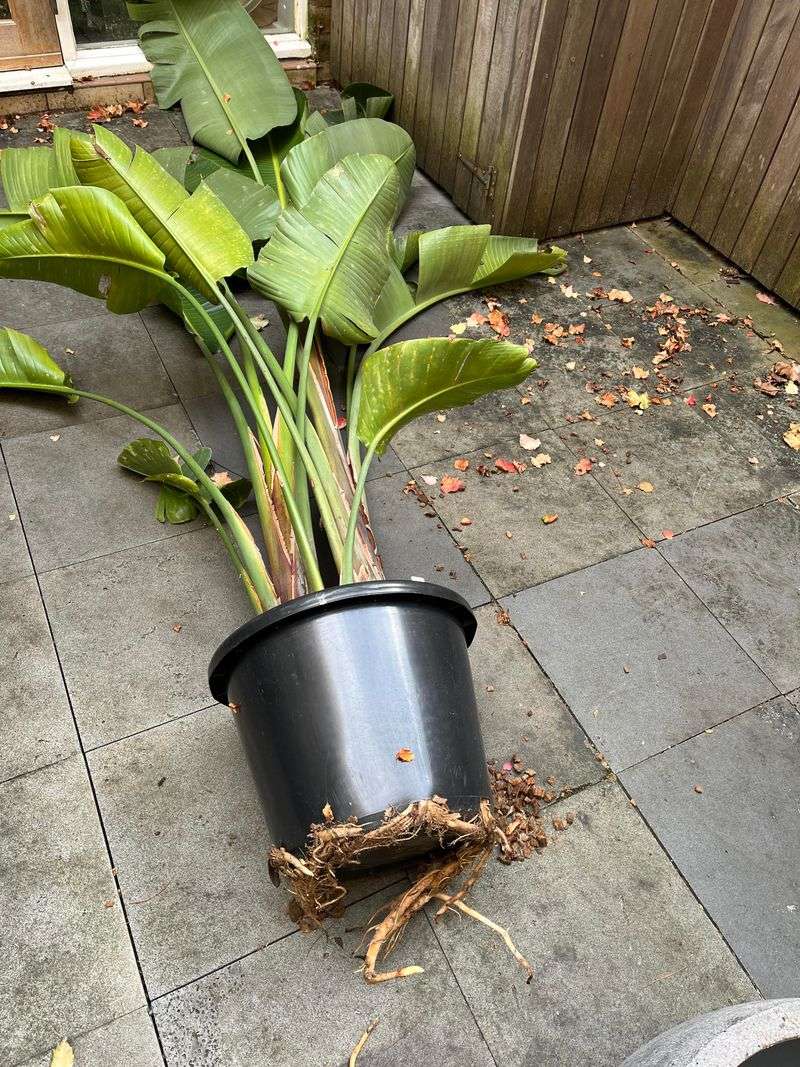
There’s a bit of nuance here that surprises a lot of houseplant owners.
A Bird of Paradise that is moderately root-bound, meaning its roots fill the pot but aren’t severely tangled or circling, can actually be more likely to bloom than one with plenty of loose soil and room to spread.
When roots are somewhat contained, the plant tends to shift focus from vegetative expansion toward reproductive effort, which is what leads to flowers.
It’s a survival-driven response that works in the grower’s favor under the right conditions.
However, when a plant becomes severely root-bound, with roots visibly escaping from drainage holes, circling tightly around themselves, or pushing up through the soil surface, the situation tips the other way.
At that point, the plant can’t take up water or nutrients efficiently, and its overall health suffers enough to make blooming unlikely.
The key is recognizing where your plant falls on that spectrum.
In Michigan homes where plant growth naturally slows during the long winter, it can take years for a Bird of Paradise to outgrow its container. Checking roots every couple of years by carefully tipping the plant out of its pot gives you a clear picture.
If repotting is needed, choose a container only one or two inches larger in diameter to avoid giving the plant so much new space that it redirects all its energy back into root and leaf production rather than blooms.
7. Excess Fertilizer Encourages Leaves Instead Of Flowers
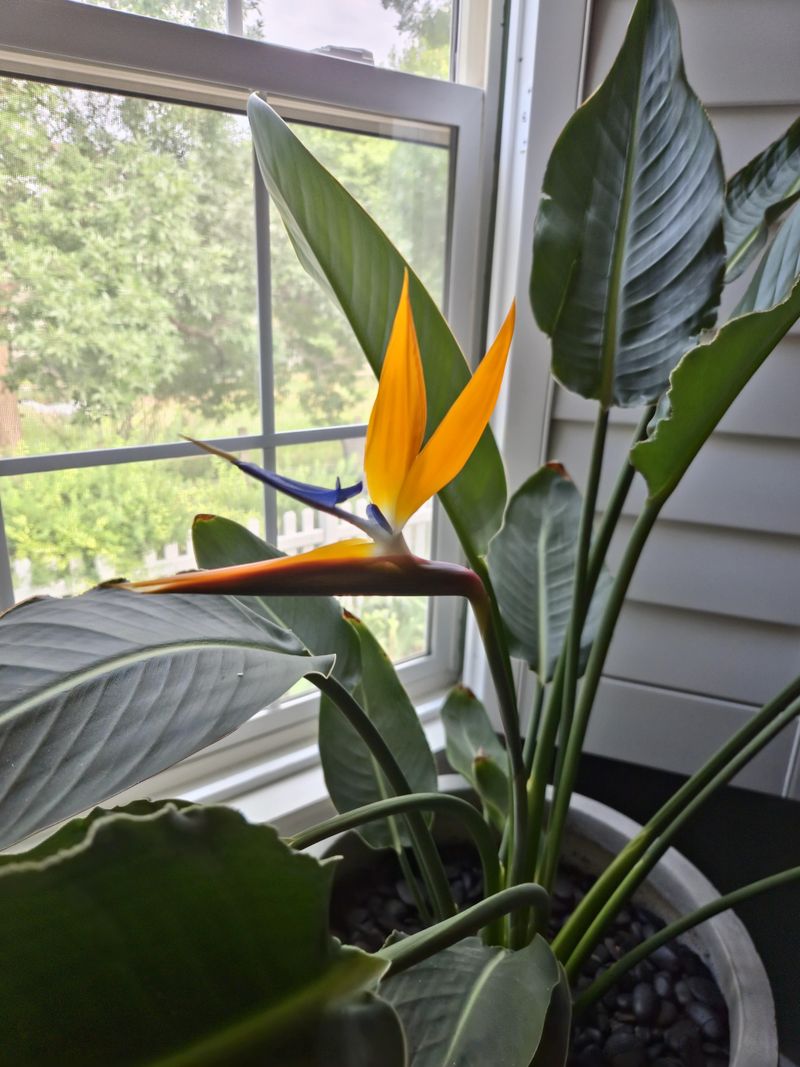
More fertilizer doesn’t always mean more flowers. With a Bird of Paradise, heavy nitrogen feeding is one of the more common reasons a plant produces spectacular, oversized leaves while completely ignoring the idea of blooming.
Nitrogen is the nutrient most responsible for leafy, green growth, and when it’s available in large amounts, the plant happily uses it to push out foliage rather than investing in flowers.
Michigan plant owners who fertilize generously throughout the year often end up with impressive-looking plants that simply won’t bloom.
During the active growing season from spring through late summer, a balanced fertilizer applied at a moderate rate is generally appropriate.
Some growers find that switching to a lower-nitrogen formula with slightly higher phosphorus and potassium levels during late summer can gently nudge the plant toward blooming.
That said, fertilizer alone won’t trigger flowers if other conditions like light and maturity aren’t also in place.
Cutting back on feeding entirely from late fall through winter aligns with the plant’s natural slowdown and prevents nutrient buildup in the soil during a period when the plant can’t use it effectively.
Flushing the pot with plain water occasionally helps clear any accumulated salts from the soil, which can otherwise interfere with nutrient uptake.
Keeping fertilization thoughtful and season-aware is a straightforward adjustment that supports the plant’s overall balance and bloom potential over time.
8. Lack Of Seasonal Rest Period Reduces Flowering Signals
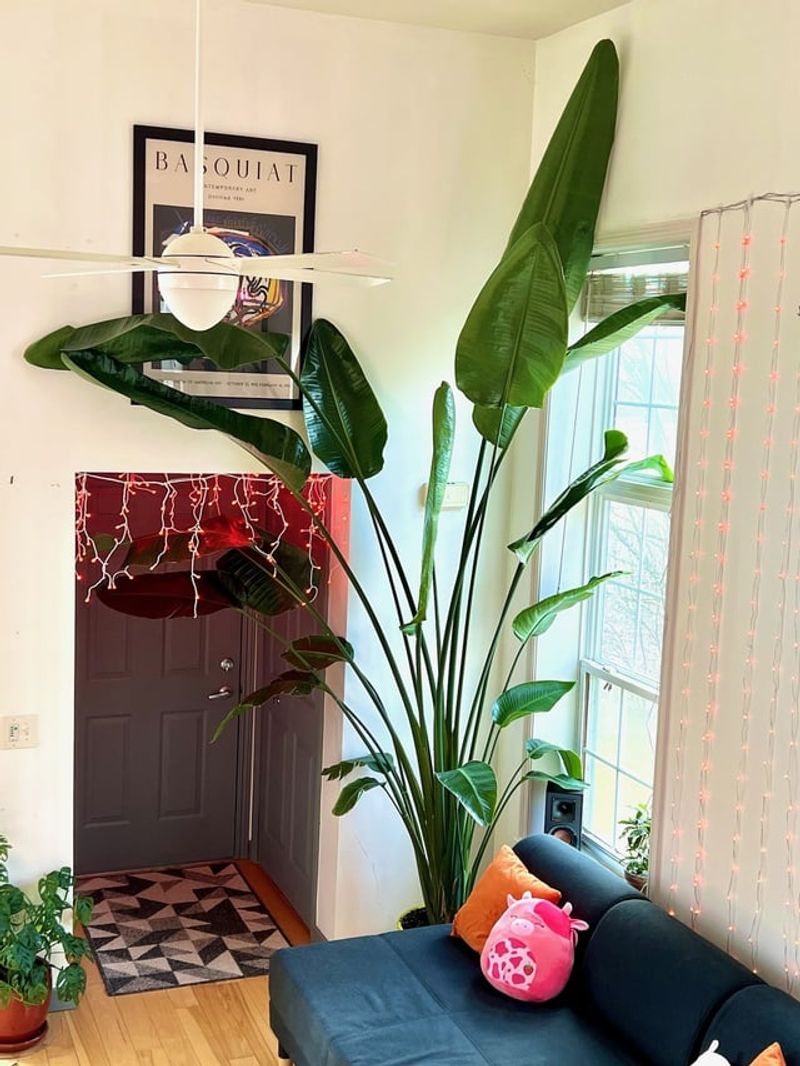
In their native habitat, Bird of Paradise plants experience a cooler, drier period during certain months that acts as a natural reset for the plant’s internal flowering calendar.
This seasonal shift signals the plant that a more active growing phase is coming, and that transition is often what prompts flower bud formation.
Indoors in Michigan, where heating systems keep rooms consistently warm and many owners water on the same schedule year-round, that natural rest cue never arrives, and the plant has no reason to shift into bloom mode.
Allowing a mild rest period during Michigan’s winter months can help recreate that signal. This doesn’t mean neglecting the plant.
It means slightly reducing watering frequency, holding off on fertilizer from November through February, and letting the plant sit in slightly cooler conditions, ideally around 60 degrees Fahrenheit if possible, without cold stress.
A room that cools down naturally at night near a window can work well for this purpose.
When spring arrives and longer days return to Michigan, resuming regular watering and feeding gives the plant a clear signal that the active season has begun.
This shift from rest to growth mirrors what happens in nature and can encourage the plant to put energy into reproductive development.
It won’t produce results overnight, but over one or two annual cycles, a well-timed rest period is one of the more reliable ways to improve blooming prospects for an otherwise healthy, mature plant.