Move These California Plants Away From Wood Fences Before Summer
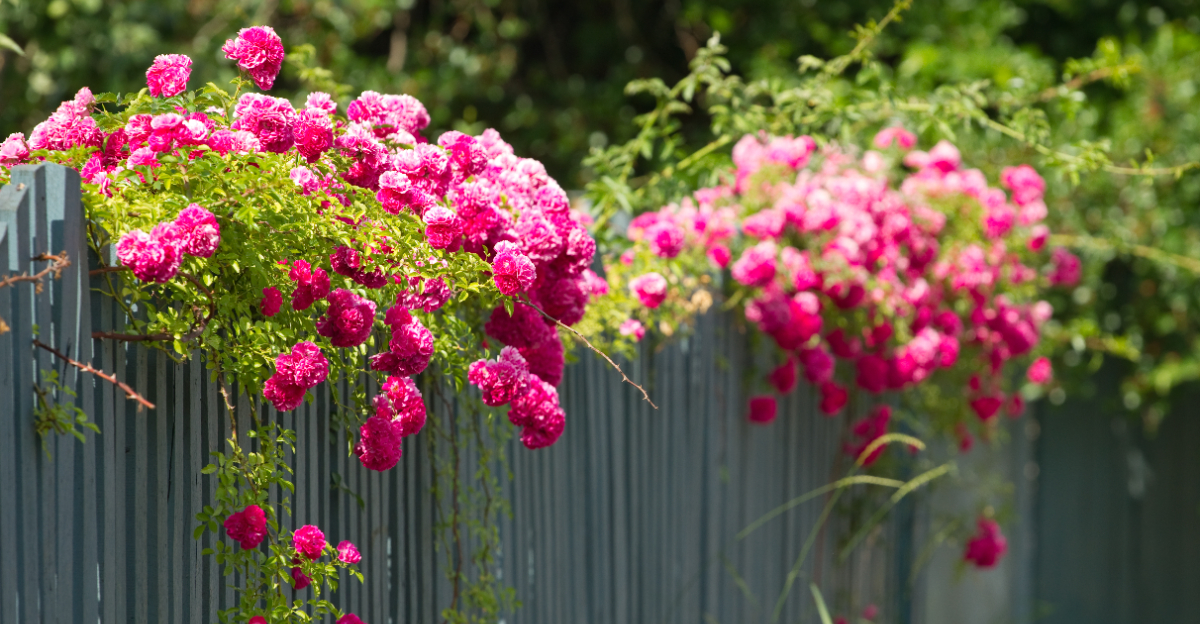
A wood fence can make a California yard feel warm, tidy, and polished, but summer has a funny way of turning that charming backdrop into a problem area.
Heat builds up fast, dry conditions settle in, and suddenly the plants that looked perfectly fine in spring are pressed right up against boards that trap warmth, block airflow, and stay far drier than many gardeners realize. Not exactly a relaxing setup.
That is where plant placement starts to matter a lot more than people expect. Some California favorites get too dense, too thirsty, too woody, or too wild to stay packed against a fence once hotter weather rolls in.
A pretty planting can turn into a crispy mess, a tangled headache, or a fence with far more moisture and wear than it bargained for. The good news is that a few simple moves can save you trouble later.
Sometimes giving a plant a little breathing room is the smartest summer upgrade in the whole yard.
1. Star Jasmine
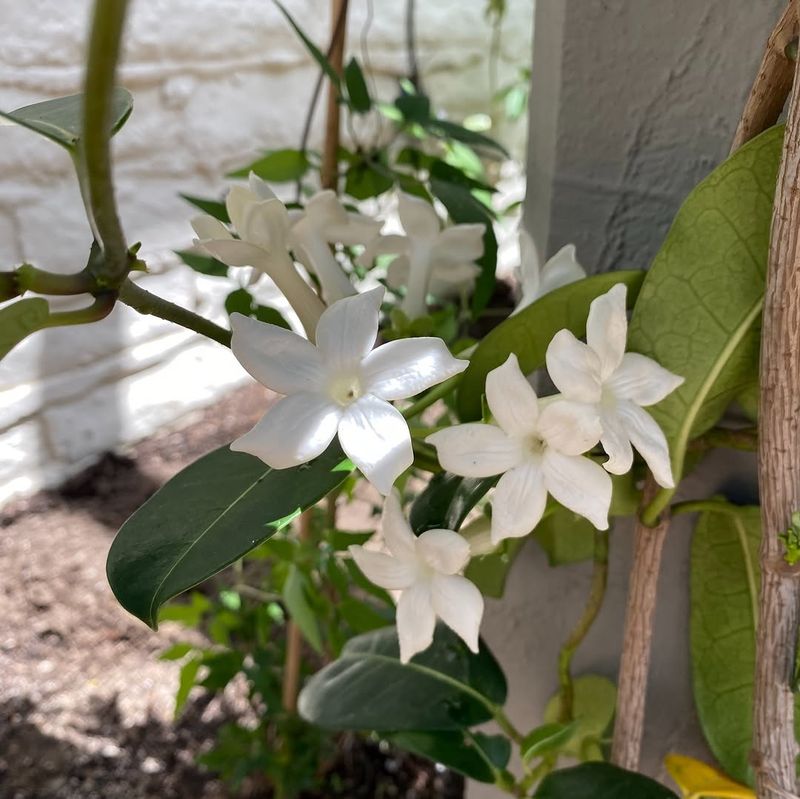
Few plants look as dreamy as star jasmine climbing along a sun-soaked fence. Those tiny white flowers and sweet fragrance make it a California garden favorite.
But here is something many homeowners do not realize: when summer heat arrives and the vine dries out even slightly, it becomes a fire risk right against your wooden fence.
Star jasmine grows fast and thick. Over time, the dense mat of stems and leaves traps dry debris underneath, creating a perfect spot for embers to catch.
In fire-prone parts of California, that is not a risk worth taking.
The good news is that star jasmine can be relocated to a spot away from the fence, like a trellis in the center of the yard or a pergola. Keep it well-watered and pruned during summer months to reduce flammability.
If you love the look, try training it onto a metal or masonry structure instead of wood. Moving it just a few feet can make a real difference.
Regularly clearing dead leaves from the base also helps lower the overall fire risk in your outdoor space.
2. Bougainvillea
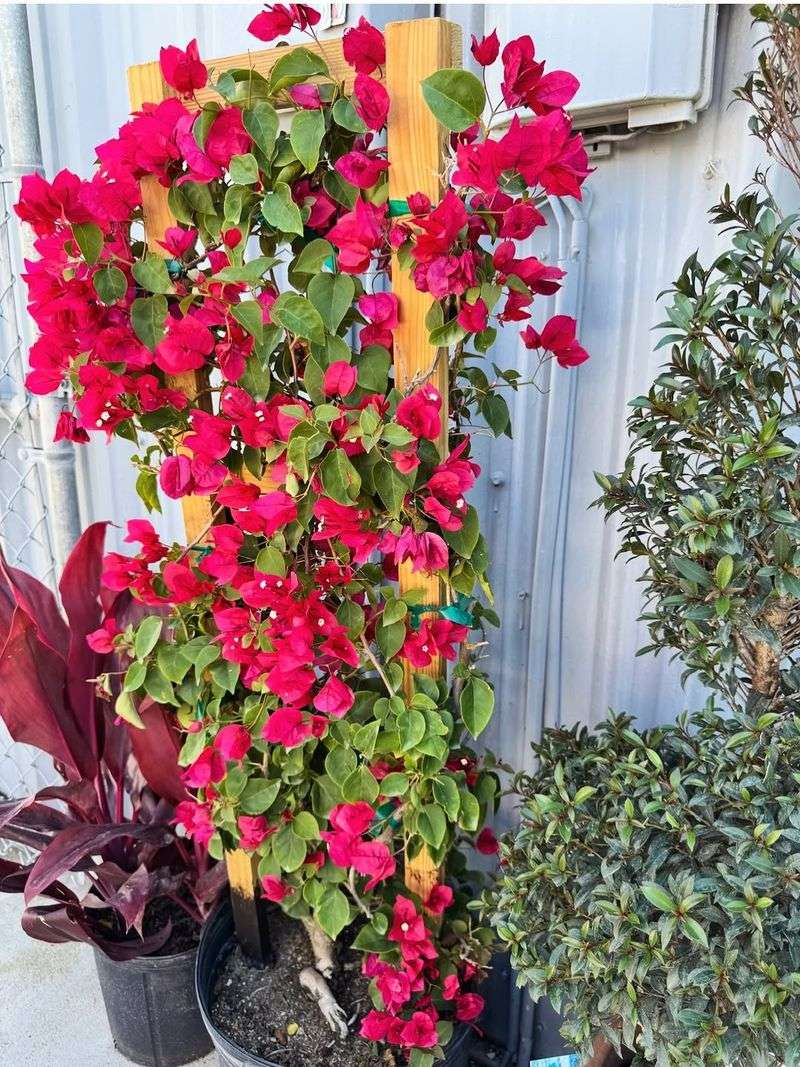
Bougainvillea is practically the mascot of Southern California landscaping. Its vivid pinks, purples, and oranges are impossible to miss.
But behind that gorgeous display hides a serious fire concern, especially when it is pressed right up against a wood fence.
By midsummer, bougainvillea drops enormous amounts of dry, papery bracts. These pile up quickly along the base of your fence.
Combined with the plant’s woody stems and the intense California heat, you end up with a ready-made fire fuel source sitting right next to your fence boards.
CAL FIRE guidelines suggest keeping plants like this at least 5 feet from any wooden structure. If you want to keep your bougainvillea, consider moving it to a freestanding metal arbor or a concrete wall.
Trim it regularly and clean up fallen debris as often as you can, especially in late summer when conditions are driest. Bougainvillea is tough and can handle being transplanted with the right care.
Your California Garden Changes Every Week. Your Plan Should Too.
Gardening in California changes quickly throughout the season. Every Friday you’ll receive a simple weekly plan showing exactly what to plant, prune, fertilize, harvest, and protect so you never miss the right timing.
Giving it a new home away from the fence lets you enjoy its beauty without putting your property at risk during California’s high-fire season.
3. Climbing Roses
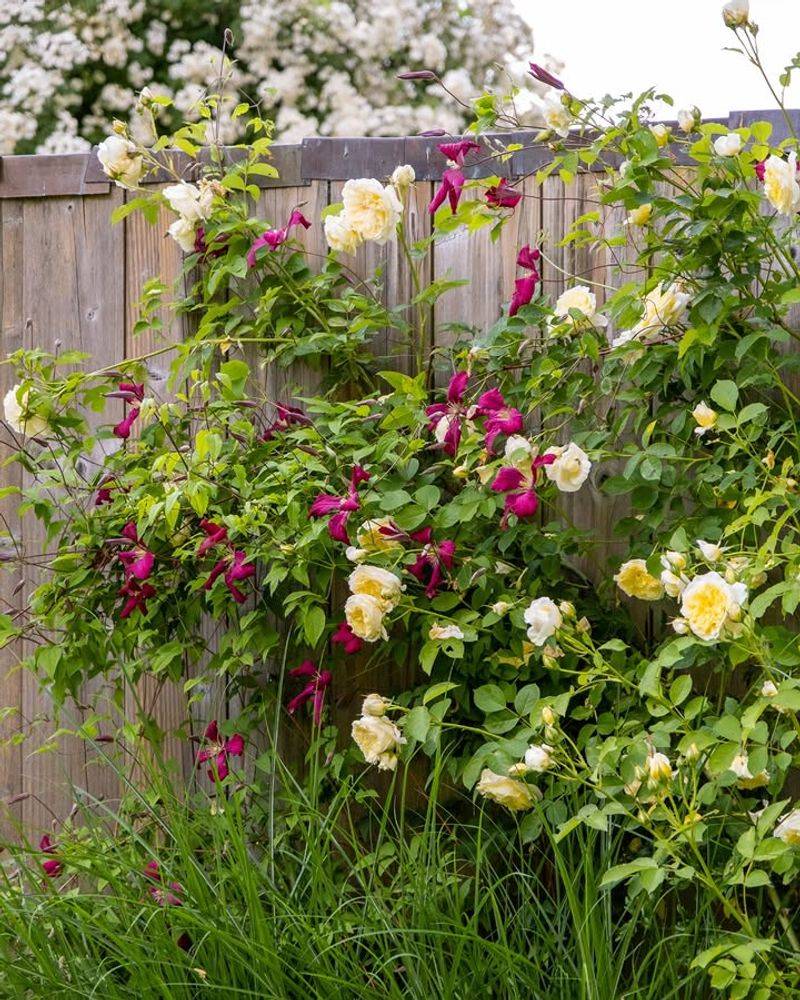
Climbing roses look romantic and classic growing along a fence, and California gardeners have loved them for generations. What is easy to overlook is how much dry, woody growth builds up on these plants through the spring and into summer.
That old cane material does not disappear on its own.
As summer arrives and watering gets harder to keep up with, climbing roses can dry out quickly. The older canes closest to the fence become especially brittle and flammable.
In a fire-prone region like California, this is exactly the kind of material that can help a small spark travel fast.
Pruning climbing roses regularly helps a lot, but the safest move is to keep them away from wood fences entirely during the dry season. Relocate them to a metal trellis or train them up a brick or stucco wall instead.
Remove any dead canes and fallen petals from the base of the fence as well. If you live in a high-risk fire zone, check your local CAL FIRE defensible space guidelines for specific recommendations.
A little effort now protects both your beautiful roses and your property when summer heat peaks.
4. Wisteria
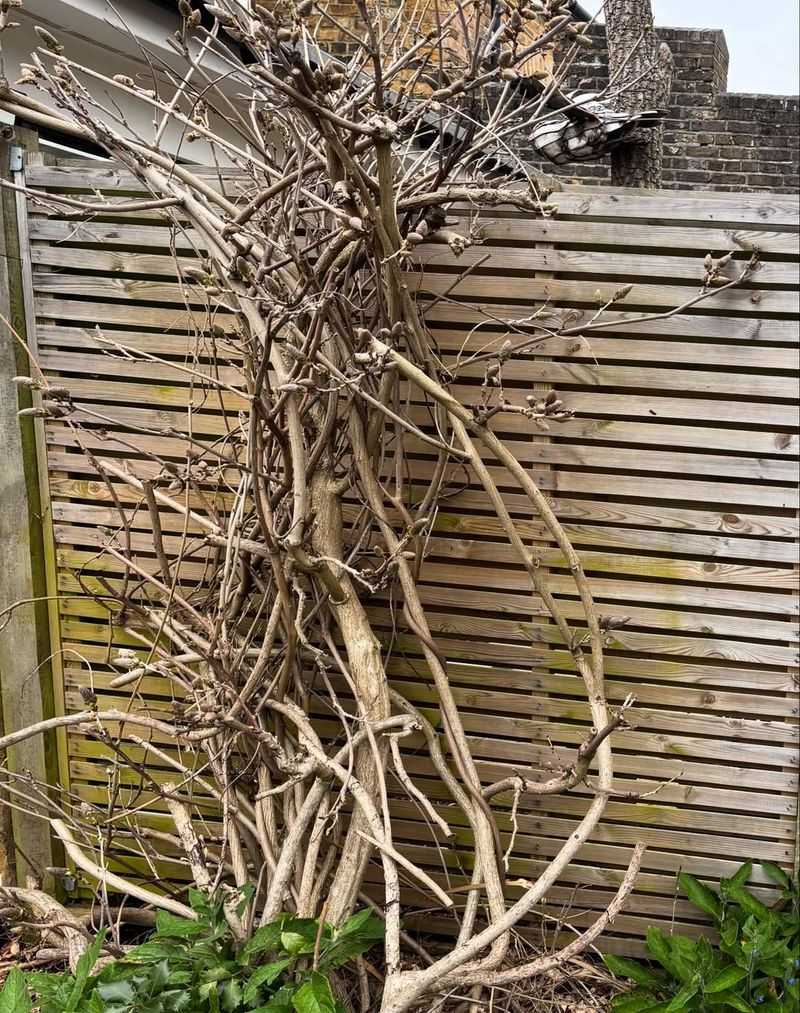
Wisteria is one of the most dramatic plants you can grow in California. Those long, cascading purple flower clusters are absolutely stunning in spring.
But by the time summer rolls around, wisteria turns into something very different: a massive tangle of thick, dry, woody vines that can weigh down and damage a wood fence.
That heavy vine structure holds heat and dryness like a sponge. The woody stems are highly combustible, and wisteria is known for growing so aggressively that it becomes nearly impossible to manage once established.
Pressed against a wood fence, it is a serious fire hazard.
In California, wisteria near a wood fence should be moved or heavily managed well before summer begins. If transplanting the whole plant is not practical, at least cut it back dramatically and pull it away from the fence surface.
A sturdy metal pergola or an iron archway makes a much safer home for wisteria. Keep in mind that wisteria roots run deep, so professional help may be needed for full removal.
Regular pruning throughout the growing season will help you stay ahead of its aggressive spread and keep your yard safer.
5. English Ivy
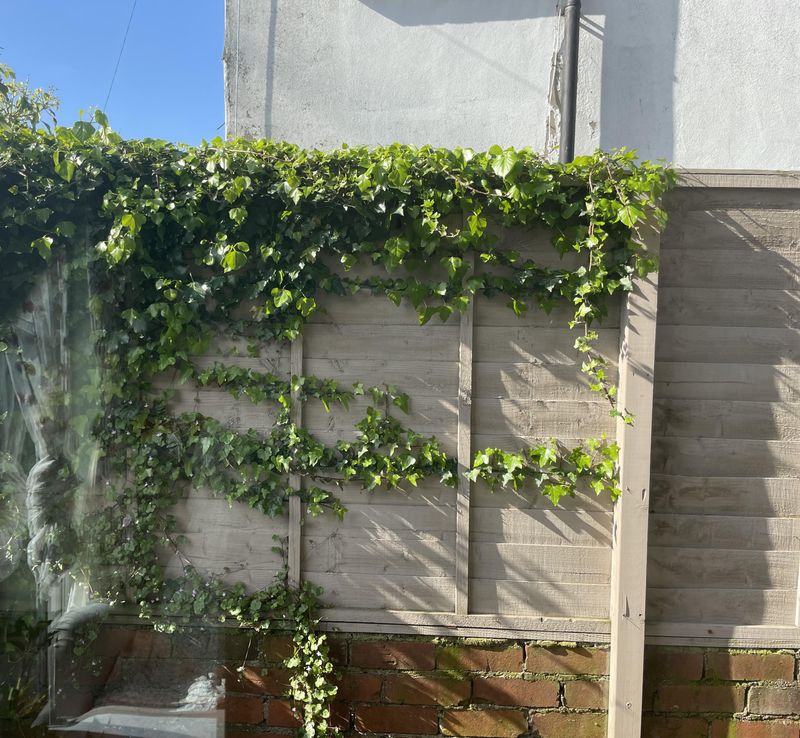
English ivy seems harmless enough at first glance. It stays green, it fills in bare spots quickly, and it gives fences that classic, lush look.
In California, though, it has earned a reputation as both an invasive plant and a fire risk when it dries out against a wood structure.
Here is the tricky part: ivy looks green on the outside but can be dry and dead underneath. That hidden layer of dead material right against your fence is exactly what fire investigators point to as a problem.
The California landscape dries out fast in summer, and ivy does not hold moisture as well as it appears.
Beyond fire risk, English ivy can physically damage wood fences by trapping moisture and encouraging rot, which weakens the fence over time. Removing it from a fence takes some patience since the stems grip tightly.
Use gloves and pull it away section by section. Once it is off the fence, consider replacing it with a low-growing, fire-resistant ground cover like creeping thyme or a native California plant.
Keeping the base of your fence clear of any thick vegetation is one of the simplest steps you can take for fire safety.
6. Rosemary
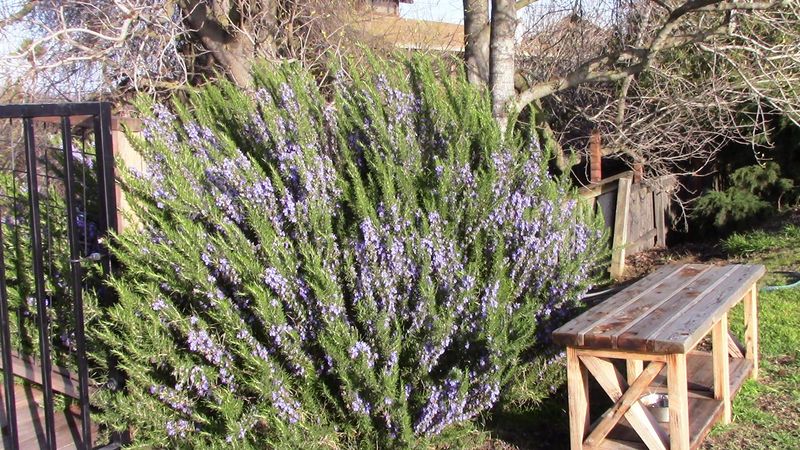
Rosemary is beloved in California gardens for its fragrance, its usefulness in the kitchen, and its ability to thrive in dry conditions. That drought tolerance, though, is part of what makes it risky near a wood fence.
Rosemary contains aromatic oils in its leaves, and those oils are highly flammable when the plant dries out.
CAL FIRE specifically lists rosemary as one of the plants to avoid in defensible space zones near structures. When a rosemary shrub grows large and woody against a fence, it creates a dense, oil-rich fuel source that burns quickly and intensely.
This is especially true in the inland valleys and hillside communities of California where fire danger is highest.
Moving rosemary away from the fence does not mean giving it up entirely. Plant it in a container or relocate it to an open garden bed at least 5 feet from any wooden structure.
Keep it trimmed and do not let it become a massive, unmanaged shrub. Removing dead interior branches regularly also helps reduce its flammability.
Rosemary is a fantastic plant, just not one that belongs right next to your fence once summer and fire season arrive in California.
7. Juniper
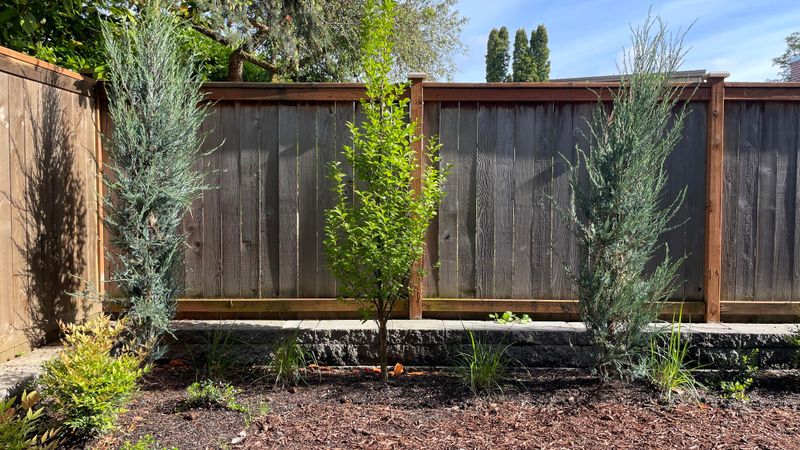
Ask any California firefighter about juniper, and they will tell you the same thing: this plant burns fast and hot. Juniper is packed with resinous oils that make it one of the most flammable plants you can have in a California yard, and that is true even when the plant looks green and healthy.
Juniper shrubs planted along wood fences are a common sight in many California neighborhoods. They offer privacy, stay green year-round, and need very little water.
Those qualities make them popular, but they also make them extremely dangerous in fire-prone conditions. A single ember landing on a juniper next to a wood fence can trigger rapid, intense burning.
Relocating juniper away from fences and structures is one of the most impactful things a California homeowner can do before summer. If you want to keep junipers in your yard, move them to an open area well away from any wooden structure and maintain a clear zone around them.
Better yet, replace fence-line junipers with fire-resistant alternatives like toyon, coffeeberry, or Cleveland sage, all of which are native to California and much safer choices for landscaping near structures during fire season.
8. Large Ornamental Grasses
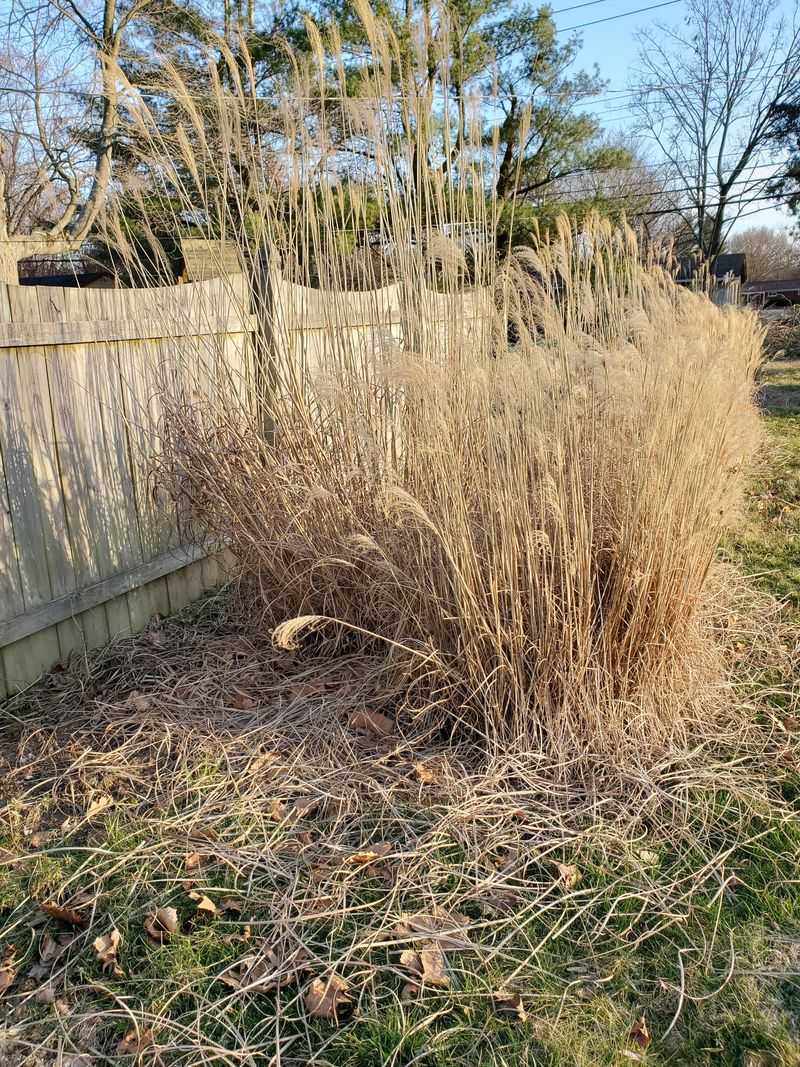
Ornamental grasses add movement and texture to California gardens, and they look especially beautiful when they catch a breeze. The problem is that by midsummer, many large ornamental grasses turn golden, dry, and extremely combustible.
Planted right along a wood fence, they become one of the fastest ways for a fire to spread.
Pampas grass is the most well-known offender, but other large varieties like miscanthus and feather reed grass carry similar risks when they dry out. A full clump of dry ornamental grass burns almost instantly and throws embers into the air.
If that clump is touching your fence, the fence goes with it.
Before summer arrives, move large ornamental grasses at least 10 feet from your wood fence, or better yet, replace them with lower-growing, fire-resistant plants. If you love the look of grasses, consider smaller, less flammable varieties and keep them well-watered throughout the dry season.
Cut back any brown or dead blades regularly to reduce the amount of dry material near your fence. California’s fire season comes earlier and burns hotter each year, so managing what grows along your fence line is truly one of the smartest things you can do for your home’s safety.