8 Native Georgia Shrubs To Plant Instead Of Boxwood This Season
Boxwood has long held its place in Georgia yards, yet more gardeners start to look for options that handle local conditions with less effort and fewer setbacks. Heat, humidity, and soil challenges can turn a reliable choice into a constant task over time.
Native shrubs offer a different path that fits the environment far better from the start. Many keep a neat form, stay dense enough for structure, and hold their color without the same level of upkeep.
Once established, they tend to settle in and perform without constant attention.
A shift like that can change how a landscape feels across the season, especially when each plant works with the conditions instead of against them.
1. Yaupon Holly Forms A Dense Evergreen Shape That Handles Pruning
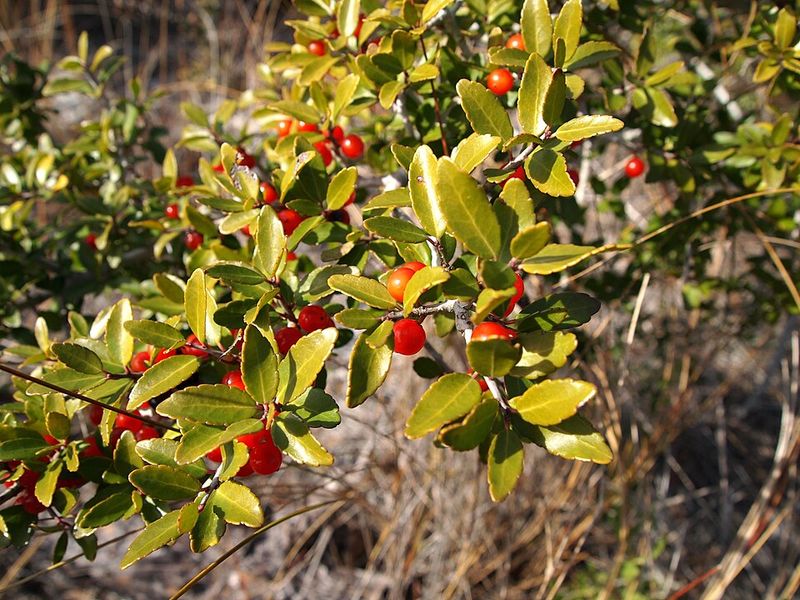
Yaupon holly might be the most underrated shrub in the entire Southeast, and Georgia gardeners are finally starting to notice. It holds a tight, dense form naturally, which means less shaping work on your end.
Shear it into a formal hedge or let it go slightly loose — either way, it stays full and leafy year-round.
Unlike boxwood, yaupon is not bothered by the blight issues that have wiped out so many hedges across Georgia in recent years. It handles clay soil, tolerates dry spells after it roots in, and does not throw a fit in full sun.
Female plants produce small red berries in fall that birds genuinely appreciate.
Dwarf varieties like ‘Nana’ stay compact at three to four feet, which makes them practical for foundation plantings or low borders along walkways. Standard yaupon can grow taller if you want more screening.
Pruning is simple — yaupon bounces back fast and holds its shape well after a trim. It is one of the few evergreen natives in Georgia that gives you real boxwood-style structure without the disease headaches.
Plant it in fall or early spring for the best root development before summer heat arrives.
Once established, it also shows good tolerance to Georgia’s humidity, holding its dense form without the leaf issues that affect more sensitive shrubs.
2. Virginia Sweetspire Stays Compact With Strong Seasonal Interest
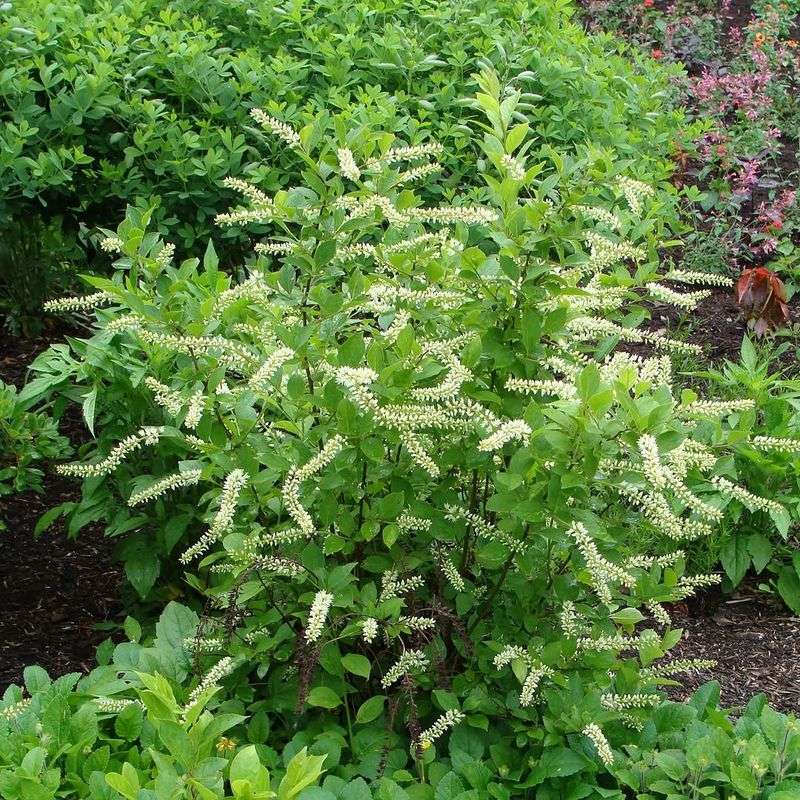
Walk past a Virginia sweetspire in late spring and you will stop — the long, arching white flower spikes have a soft fragrance that catches you off guard. Most people do not expect that from a shrub that looks so tidy and compact the rest of the year.
It earns its place in a Georgia garden through every season, not just one.
Summer brings glossy green foliage that fills out to a neat mounded shape, usually three to five feet tall and wide. Then fall arrives and the leaves shift to deep red, burgundy, and orange — sometimes all three colors on the same plant at once.
It holds that color longer than most deciduous shrubs in Georgia, which is a real bonus when everything else has already gone brown.
Virginia sweetspire handles partial shade well, which makes it useful under trees or along the north side of a house where options feel limited. It does not mind wet feet occasionally, so low spots in the yard are fair game.
Your Georgia Garden Changes Every Week. Your Plan Should Too.
Gardening in Georgia changes quickly throughout the season. Every Friday you’ll receive a simple weekly plan showing exactly what to plant, prune, fertilize, harvest, and protect so you never miss the right timing.
Spread is gradual — it does sucker slowly over time, but it is easy to manage with a shovel if you want to keep it contained. Plant it where you can see it from a window in October and you will not regret it.
It is also a true Georgia native, which means it supports local pollinators and adapts well to the region’s climate without extra care.
3. Wax Myrtle Grows Fast And Fills Out As A Soft Screen
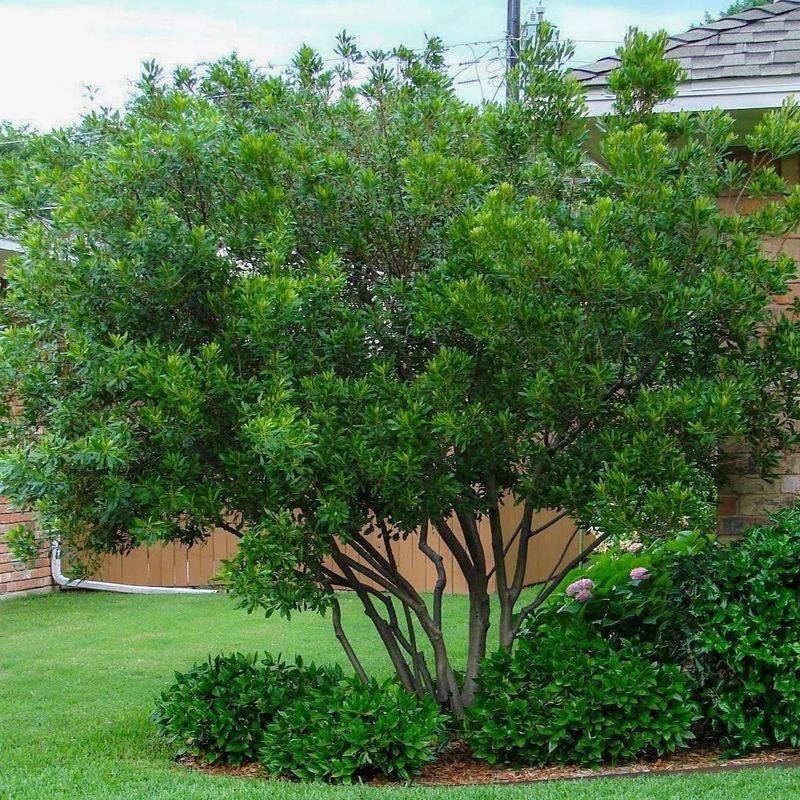
Speed matters when you are trying to block a neighbor’s fence or fill in a bare corner of the yard.
Wax myrtle is one of the fastest-growing native shrubs in Georgia, and it does not sacrifice fullness for speed — the branches layer out densely and create a real visual barrier within a couple of growing seasons.
The foliage has a faint spicy scent when you brush against it, which is one of those small pleasures that makes working in the garden feel worthwhile.
Leaves are gray-green and narrow, giving the whole plant a soft, feathery texture that reads differently from the stiff geometry of a boxwood hedge.
Female plants carry clusters of small waxy blue-gray berries that birds eat through winter.
Wax myrtle is not fussy about soil type — it handles sandy ground, clay, and everything in between across Georgia’s varied terrain. It tolerates occasional wet conditions and grows in full sun or light shade.
Without pruning, it can reach ten to fifteen feet, functioning more like a small tree. Regular trimming keeps it at whatever height you prefer.
It is not a shrub for tight, manicured spaces, but for informal screens and naturalistic plantings, it fills a role that boxwood never could. Fall planting gives roots time to settle before summer.
Wax myrtle shows strong tolerance to coastal exposure and wind, making it a reliable choice for open or exposed parts of the landscape
4. American Beautyberry Adds Structure And Bright Fall Color
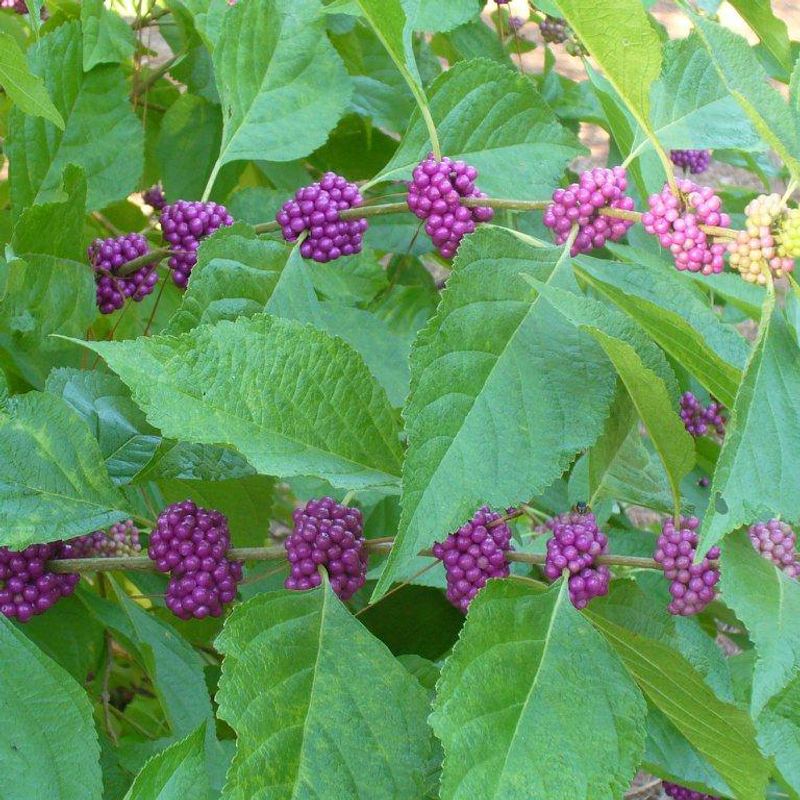
No shrub in Georgia puts on a fall show quite like American beautyberry. The berries are an almost electric magenta-purple, and they line the arching branches in tight clusters that look almost too vivid to be real.
Visitors always ask what it is — it is genuinely one of the most eye-catching native plants you can grow in this state.
Through spring and summer, beautyberry stays relatively quiet — a loose, arching shrub with broad light-green leaves. It is not a shrub for tight, formal spaces.
It wants room to spread its branches outward in a natural, relaxed way, typically reaching four to six feet in both directions. That open structure actually suits it, because the fall berries display best when the branches have space to arch freely.
Wildlife benefit significantly from the berries. Songbirds, mockingbirds, and even white-tailed deer browse them through late fall and into early winter in Georgia.
The plant handles partial shade and typical Georgia clay soil without much complaint. Cutting it back hard in late winter keeps growth vigorous and berry production strong the following season — new growth on young wood is where the berries form.
It is a shrub that rewards low-effort care with a genuinely spectacular autumn display that no boxwood could ever come close to matching.
Another benefit is strong tolerance to Georgia’s humidity, helping it hold healthy foliage through summer without common disease issues.
5. Oakleaf Hydrangea Holds A Shrub Form With Bold Texture
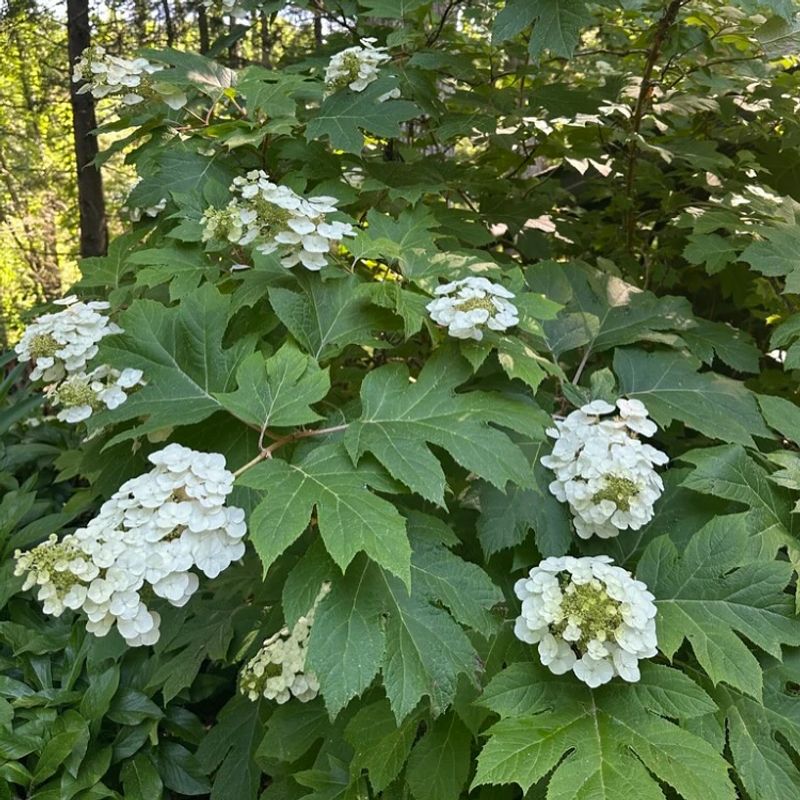
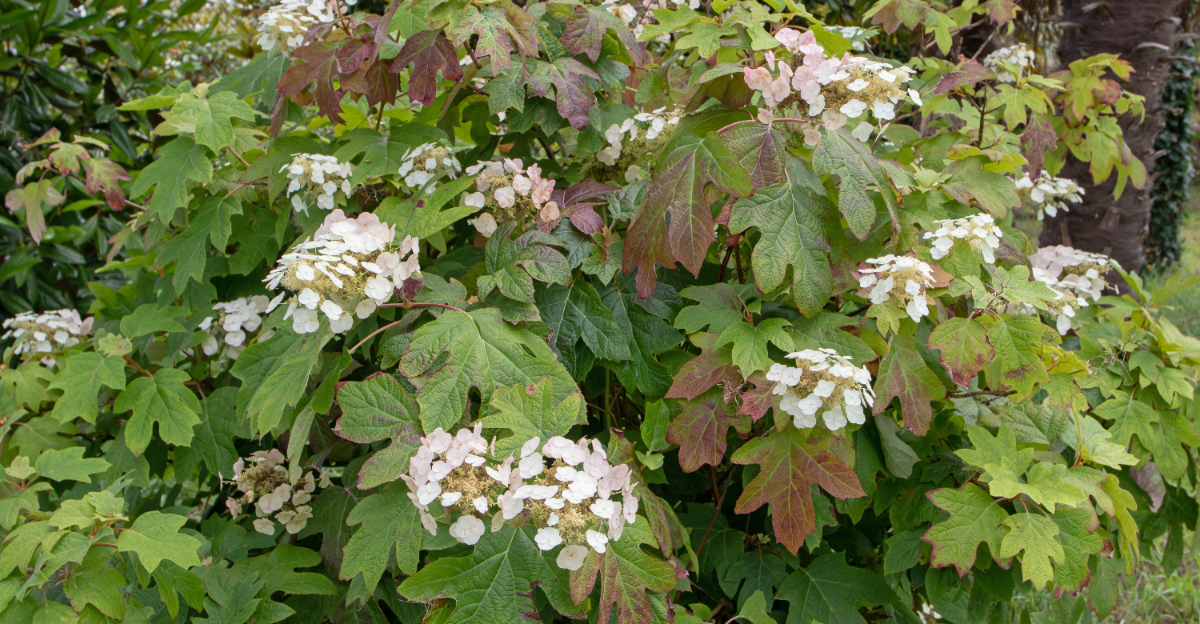
Oakleaf hydrangea earns attention in every season, which is more than most shrubs can claim. The large, cone-shaped flower clusters open creamy white in late spring, then gradually age to parchment and dusty rose through summer.
Leave them on the plant — they hold their shape and add structure well into winter.
The leaves are the other standout feature. They are deeply lobed, roughly oak-shaped, and large enough to give the whole plant a bold, coarse texture that reads from across the yard.
Fall color ranges from burgundy to deep red-purple, and the exfoliating cinnamon-colored bark on older stems makes the plant interesting even after the leaves are gone.
Partial shade suits oakleaf hydrangea well, which makes it a strong choice for the edges of tree canopies — a common situation in Georgia yards where mature pines and oaks dominate.
It prefers moist, well-drained soil and does not perform as well in heavy, poorly drained clay without some soil amendment at planting.
Mature plants can reach six to eight feet tall and wide, so give it space from the start. Pruning should happen right after flowering if you want to shape it, since next year’s buds form on this year’s wood.
It is a shrub that rewards patience and a bit of planning.
6. Buttonbush Thrives In Wet Soil Where Others Fail
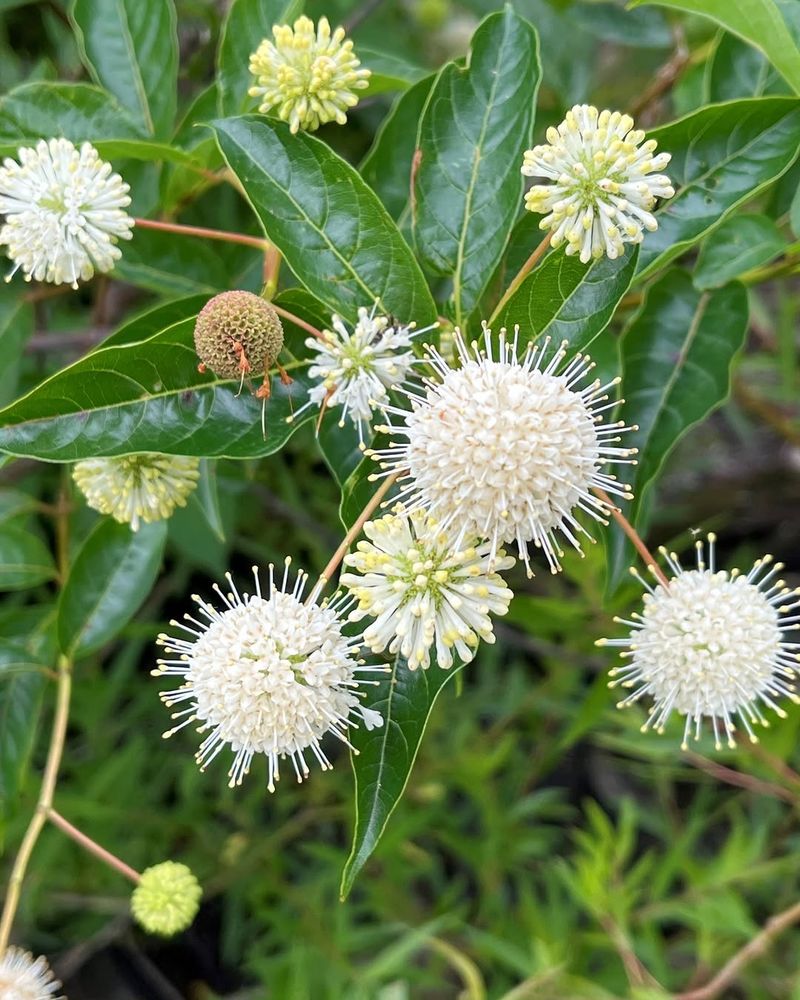
Got a low spot in the yard that stays soggy after every rain? Most shrubs sulk in wet soil, but buttonbush actually prefers it.
Planting it in a problem drainage area is one of those situations where the right plant and the right spot line up perfectly — and the result is a shrub that thrives where others struggle.
The flowers are genuinely unusual. Round, white, and spiky like a golf ball covered in tiny pins, they bloom in summer and attract an impressive number of pollinators.
Bees, butterflies, and hummingbirds all visit regularly. After flowering, the round seed heads persist and provide food for waterfowl and songbirds through fall and into winter — a useful trait for Georgia gardeners near ponds or creek edges.
Buttonbush drops its leaves in winter, so it is not an evergreen substitute for boxwood in the traditional sense.
Its value lies in filling difficult wet areas with something native, wildlife-friendly, and genuinely interesting rather than leaving those spots bare or fighting with unsuitable plants.
It can grow six to ten feet tall without pruning, but responds well to cutting back if you want a more compact form. Full sun produces the best flowering, though it tolerates partial shade.
Rain gardens, pond margins, and drainage swales across Georgia are ideal spots to let this shrub do what it does naturally.
7. Arrowwood Viburnum Creates A Full Natural Hedge
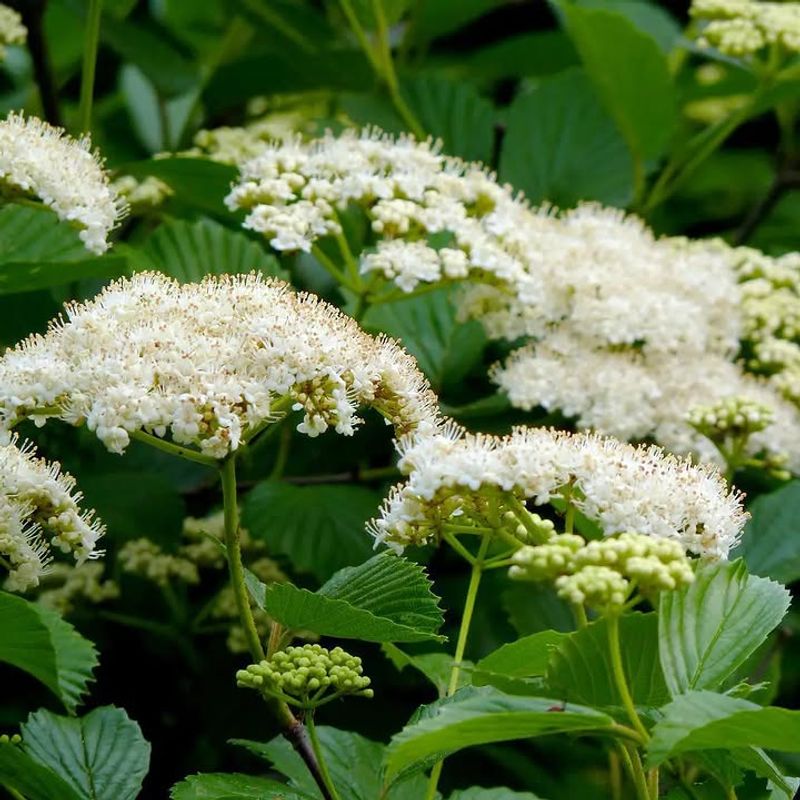
Arrowwood viburnum is the kind of shrub that does not demand attention but quietly becomes one of the most useful plants in the yard. It grows upright and dense, branching out from the base in a multi-stem form that fills horizontal space naturally.
As a hedge, it needs very little coaxing — plant a row and it fills in steadily over a few seasons.
Spring brings flat-topped clusters of small white flowers that cover the plant before most of the summer bloomers get started. By late summer, those flowers become clusters of dark blue-black berries that birds eat quickly.
The fall foliage shifts to shades of red and burgundy, giving the hedge genuine seasonal color rather than just a static green wall.
Across Georgia, arrowwood adapts well to a range of conditions — full sun to partial shade, average to moist soil, and even occasional dry stretches once it is well established in the ground.
It typically reaches six to ten feet tall, making it practical for privacy screens along property lines or as a backdrop for smaller plantings.
Unlike boxwood, it does not require constant trimming to look respectable. A light shaping every year or two keeps it tidy without fighting its natural growth habit.
For a low-effort native hedge in Georgia, arrowwood viburnum is a genuinely reliable option.
8. Dwarf Fothergilla Keeps A Low Shape With Seasonal Color
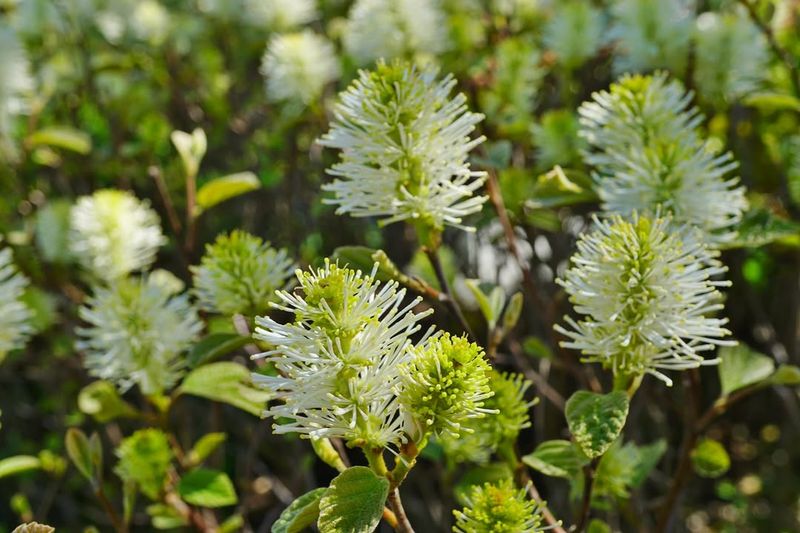
Dwarf fothergilla punches well above its size for a shrub that rarely tops three feet. In early spring, before the leaves even open, it covers itself in small white bottlebrush flowers with a light honey scent.
It is one of the first native shrubs to bloom in Georgia each year, which makes it especially welcome after a long winter.
Summer foliage is clean and blue-green, holding a neat mounded shape that works well in front of taller shrubs or along a border edge.
Then fall arrives and the plant transforms — leaves shift to a mix of orange, red, yellow, and burgundy, often all at once on the same plant.
For a small shrub, the fall color is surprisingly intense and holds for several weeks.
Soil matters with fothergilla more than with some of the other natives on this list. It prefers acidic, well-drained soil with decent organic content — conditions that are actually fairly common in Georgia’s Piedmont region.
Heavy clay or poorly drained spots should be amended before planting. Full sun produces the best fall color, though partial shade is tolerated.
Spacing plants two to three feet apart creates a low, continuous mass planting that fills a bed edge without overwhelming it. For a front border replacement to boxwood that delivers real seasonal change, dwarf fothergilla is a strong, practical choice.