North Carolina Gardeners Are Replacing These Popular Shrubs This Spring
This spring, many North Carolina gardeners are starting to rethink some of the most common shrubs found in their yards.
What once seemed like reliable, easy choices are now being replaced with plants that perform better in the long run.
Issues like disease, pest pressure, and high maintenance needs are pushing homeowners to look for alternatives that fit the climate more naturally.
North Carolina’s mix of heat, humidity, and changing weather can be tough on certain shrubs, especially ones that were never a perfect match to begin with.
As a result, gardeners are choosing plants that grow stronger, require less upkeep, and often bring more life to the landscape.
Some offer better blooms, others support pollinators, and many simply hold up better through the seasons. This shift is changing the look of gardens across the state in a noticeable way.
1. Nandina (Nandina Domestica)
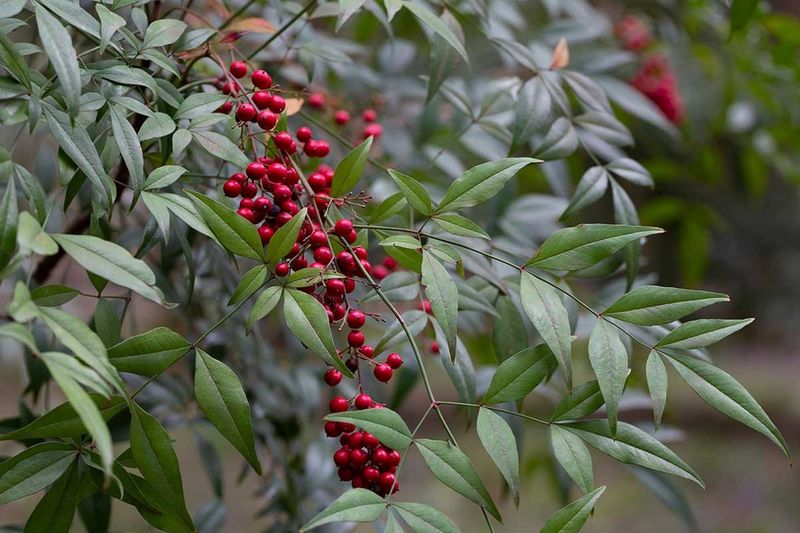
Nandina looks harmless enough with its cheerful red berries and feathery foliage, but underneath that pretty exterior is a serious problem for North Carolina landscapes.
This plant is officially classified as invasive in the state, and its berries have been found to harm native birds that eat them in large quantities.
What seems like a low-maintenance foundation shrub can quietly spread into natural areas and crowd out native plants over time.
Gardeners across the Piedmont and Coastal Plain regions of North Carolina are pulling nandina out and replacing it with plants that actually give back to the local ecosystem.
Inkberry holly is one of the best swaps available, offering that same evergreen structure and dark berry display without any of the invasive baggage.
Dwarf fothergilla is another excellent choice, bringing gorgeous spring flowers and stunning fall foliage to the garden.
Native viburnums round out the list of strong replacements, offering seasonal interest through all four seasons. Making the switch does not have to feel overwhelming.
Start by removing nandina clumps near natural areas or wooded edges first, since those are the spots where seeds spread most easily.
North Carolina gardeners who have already made the swap report that their yards feel more alive, with more birds, bees, and butterflies visiting regularly. That kind of result makes the effort completely worthwhile.
2. Butterfly Bush (Buddleja Davidii)
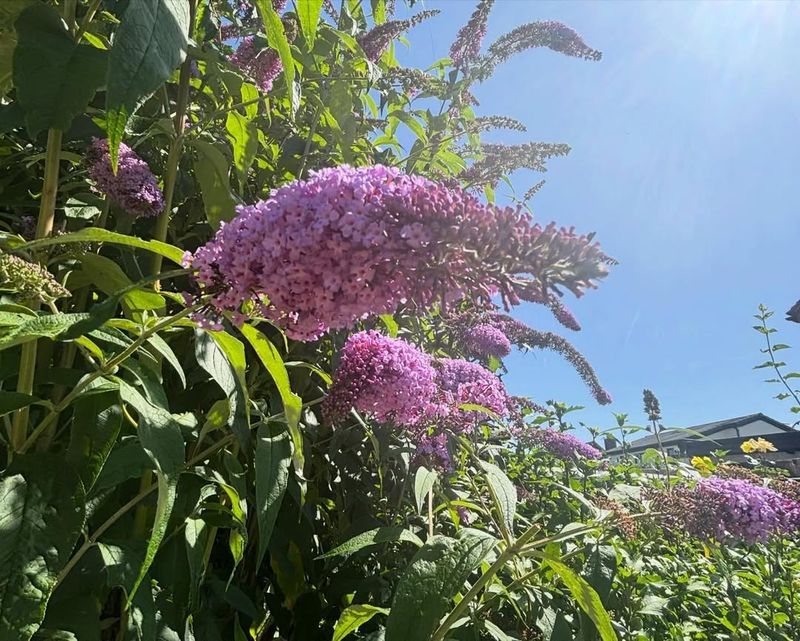
Everyone loves a butterfly bush in full bloom. Those long, cone-shaped flowers covered in colorful butterflies make it one of the most tempting plants at any garden center.
The problem is that butterfly bush does not actually support butterfly larvae, meaning it attracts adult butterflies without helping them complete their life cycle.
In the Piedmont and Mountain regions of North Carolina, it has also been flagged as invasive, spreading into roadsides and natural areas. Swapping out butterfly bush for native alternatives gives pollinators a much better deal.
Buttonbush is one of the most exciting replacements available, producing unique, globe-shaped white flowers that bees and butterflies absolutely love. It also supports a wider range of native insects than butterfly bush ever could.
Summersweet is another standout choice, filling the garden with sweet fragrance and creamy white flower spikes throughout the summer months.
Your North Carolina Garden Changes Every Week. Your Plan Should Too.
Gardening in North Carolina changes quickly throughout the season. Every Friday you’ll receive a simple weekly plan showing exactly what to plant, prune, fertilize, harvest, and protect so you never miss the right timing.
Native viburnums offer a third option for North Carolina gardeners who want to add structure and pollinator value at the same time.
These plants thrive in the state’s varied soil types and climate zones, from the coast all the way to the mountains.
Once established, they need very little extra care, which is a major bonus for busy homeowners.
Making the switch from butterfly bush to one of these natives means you are building a garden that truly works for the local ecosystem, not just one that looks good for a season.
3. Burning Bush (Euonymus Alatus)
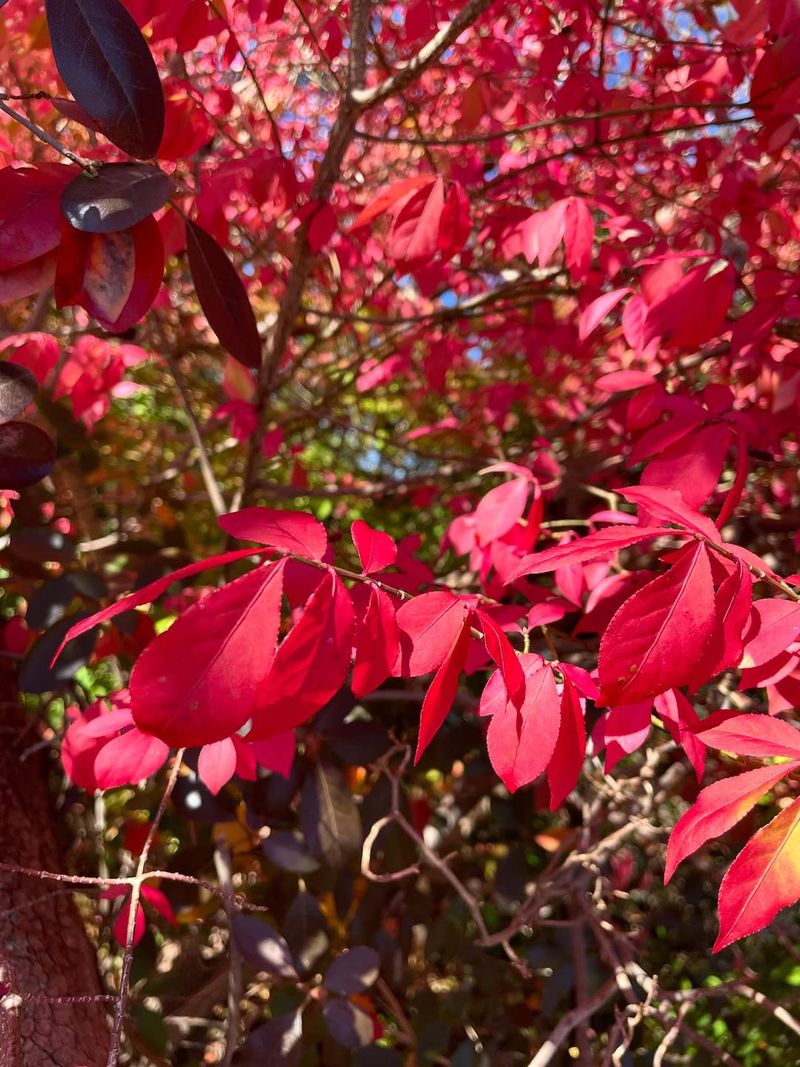
Few shrubs turn heads in autumn the way burning bush does. That electric red fall color made it a staple of suburban landscapes across North Carolina for decades, and plenty of gardeners still have a soft spot for it.
But burning bush has a serious downside that is hard to ignore: it spreads aggressively into forests and natural areas, where it outcompetes native plants and disrupts local ecosystems.
North Carolina has flagged it as an invasive species, and many gardeners are now actively replacing it.
The good news is that you do not have to give up brilliant fall color to make the switch. Possumhaw viburnum delivers stunning red berries and rich autumn foliage that rivals anything burning bush can offer.
Arrowwood viburnum is another top pick, known for its clusters of white spring flowers, blue-black berries, and reliable fall color that ranges from red to deep purple.
Both plants are native to North Carolina and provide real habitat value for birds and insects.
Fothergilla rounds out the list of smart replacements with its bottlebrush-style white flowers in spring and a spectacular mix of orange, yellow, and red tones in fall.
It thrives in the acidic soils common across much of North Carolina, making it an easy fit for most yards.
Gardeners who have replaced burning bush with these natives say the seasonal interest actually feels more layered and interesting, season after season.
4. Japanese Barberry (Berberis Thunbergii)
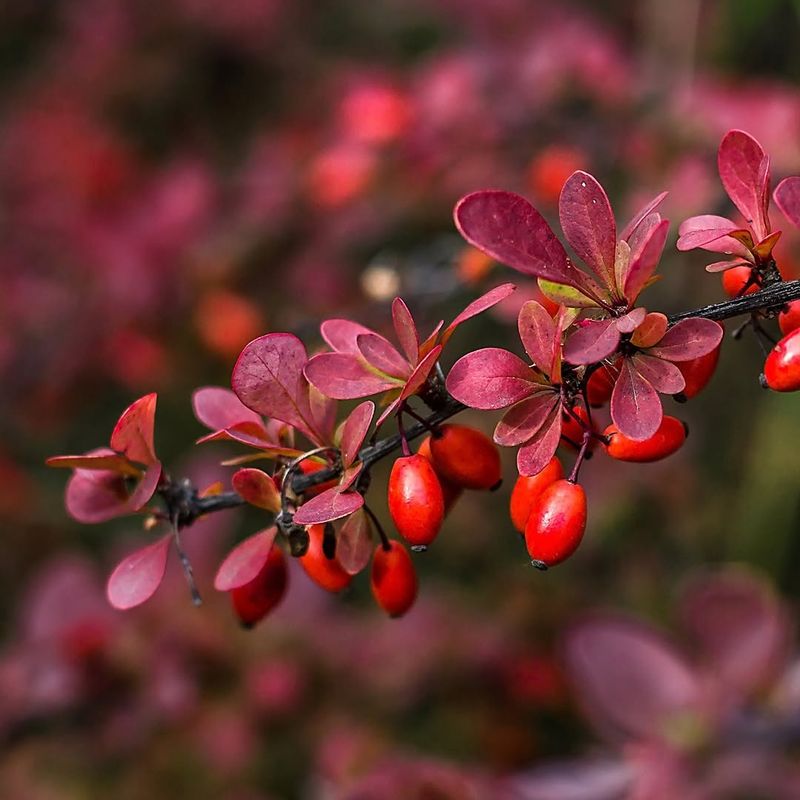
Japanese barberry has been a go-to shrub for decades, mostly because of its low maintenance reputation and colorful foliage.
However, its thorny thickets have become a real problem in North Carolina woodlands, where the plant spreads readily from bird-dropped seeds and forms dense patches that crowd out native understory plants.
Research has also linked barberry thickets to higher populations of ticks, since the dense, humid interior of the shrub creates ideal conditions for them to thrive.
North Carolina gardeners are increasingly choosing American beautyberry as one of the most striking replacements available.
This native shrub produces vivid clusters of bright purple berries in late summer and fall that practically glow against the green foliage, making it one of the most eye-catching plants in any yard.
Birds love the berries, and the shrub grows naturally in the woodland edges and open areas common throughout the state.
Shrubby St. John’s wort is another excellent swap, offering cheerful yellow flowers in summer and a compact, tidy growth habit that works well in sunny beds.
Mapleleaf viburnum is a smart choice for shadier spots, bringing soft pink and purple fall color to areas where many shrubs struggle.
Any of these options outperforms Japanese barberry in terms of ecological value and long-term garden health.
Replacing barberry this spring is one of the most impactful changes North Carolina gardeners can make for their local environment.
5. Chinese Privet (Ligustrum Sinense)
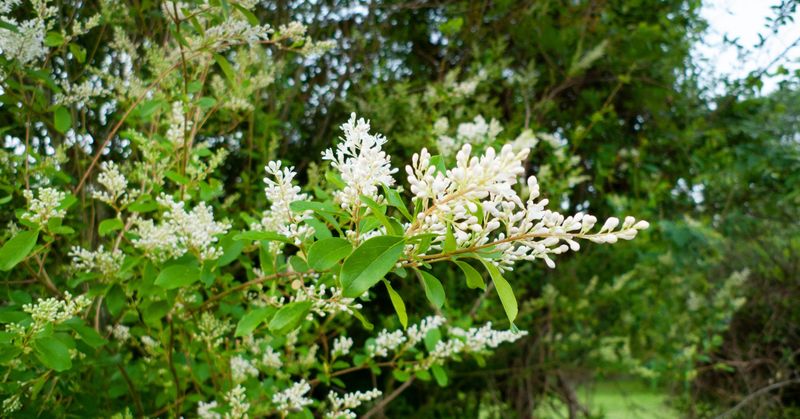
Chinese privet might be the single most problematic shrub on this entire list. It is one of the most aggressively invasive plants in North Carolina, spreading into forests, stream banks, and open fields with remarkable speed.
A mature privet can produce thousands of seeds each year, and birds carry those seeds far and wide, making it nearly impossible to contain once it gets established.
Many conservation groups in the state consider it a top-priority plant to remove from home landscapes.
Replacing Chinese privet with wax myrtle is one of the smartest moves a North Carolina gardener can make.
Wax myrtle grows quickly, provides dense evergreen screening, and produces small waxy berries that songbirds absolutely love through the winter months.
It thrives in a wide range of soil types across the state, from sandy coastal soils to heavier Piedmont clay, making it incredibly versatile.
Winterberry holly is another outstanding replacement, especially for wetter areas of the yard.
Its brilliant red berries in winter create a stunning display and feed birds at a time when other food sources are scarce.
Possumhaw viburnum adds a third option for gardeners who want seasonal berry interest and reliable native structure.
All three of these plants grow naturally across North Carolina and require very little extra attention once they get settled in.
Switching away from Chinese privet is one of the most meaningful things you can do for local ecosystems this spring.
6. Japanese Or Curly-Leaf Privet (Ligustrum Japonicum)
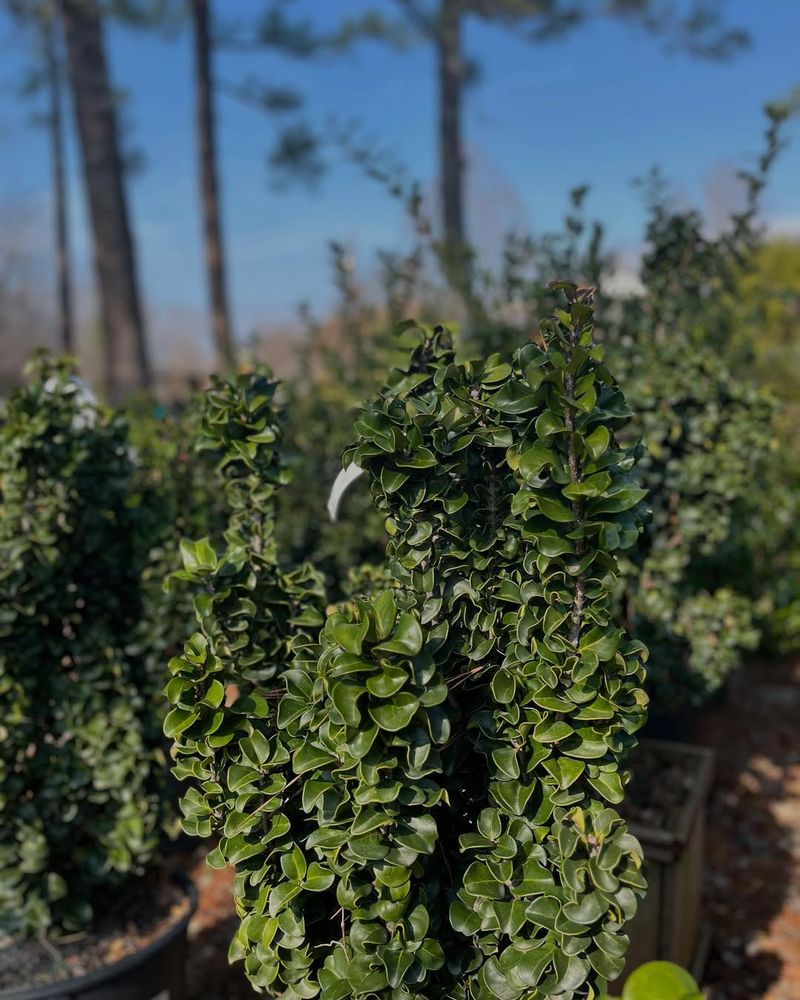
Japanese privet and its curly-leaf cousin have been popular hedge plants in North Carolina for a long time, mostly because they grow fast and stay green year-round.
Older neighborhoods across the state are full of these shrubs lining fences and property edges.
The problem is that both varieties have been flagged by North Carolina extension services as problematic choices that escape cultivation and spread into natural areas, where they displace native plants and reduce habitat quality.
Wax myrtle is the most practical native replacement for anyone who needs a fast-growing, evergreen hedge that can handle the Southern heat.
It grows naturally throughout North Carolina’s coastal plain and Piedmont, adapting easily to a range of soil conditions and sun exposures.
The silvery-green foliage and aromatic leaves give it a distinctive look that feels right at home in a naturalistic Southern landscape.
Possumhaw viburnum brings a different kind of appeal, with clusters of bright red berries that persist through winter and attract flocks of cedar waxwings and other fruit-eating birds.
For gardeners who want a slightly more formal look, native hollies like inkberry can also fill the screening role that privet once played.
Making the switch from Japanese privet to any of these alternatives helps North Carolina yards contribute to the broader health of local forests and watersheds, which is a goal worth planting toward this spring.
7. Loropetalum (Loropetalum Chinense)
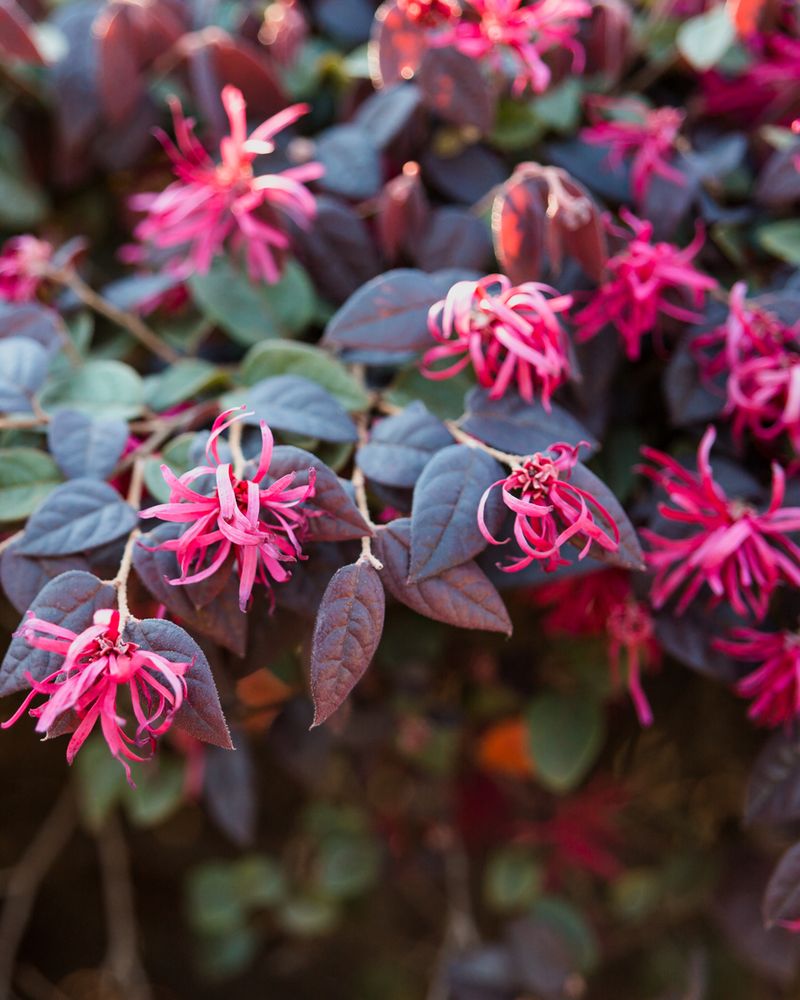
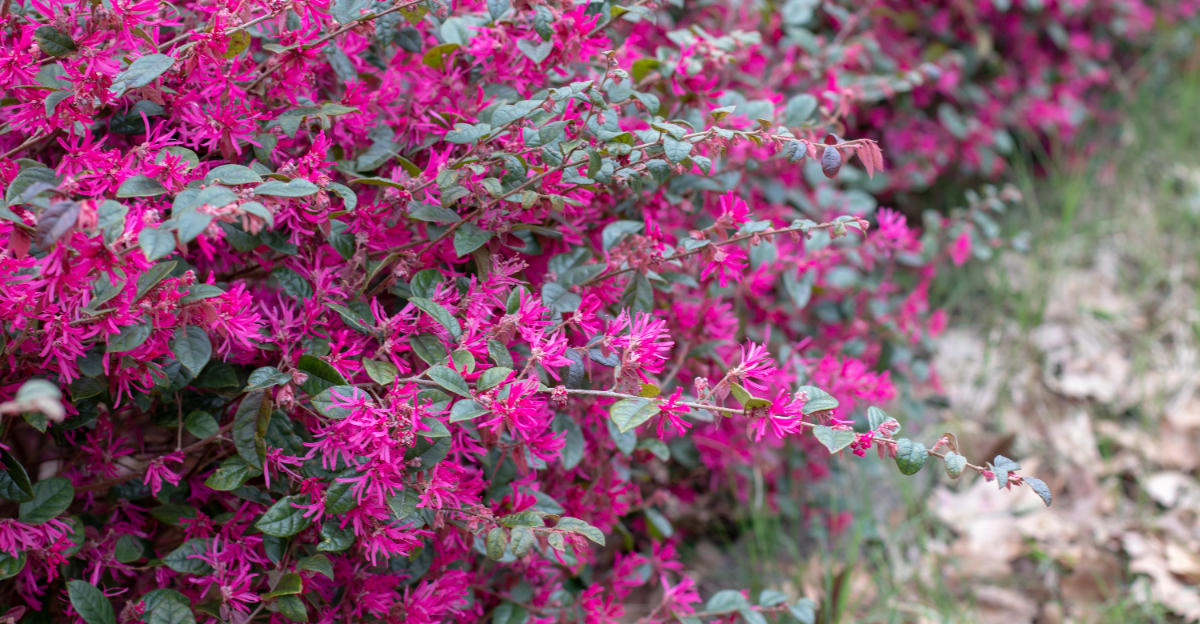
Loropetalum became the darling of Southern landscaping for a reason. Its deep purple foliage and hot pink flowers look bold and dramatic in almost any setting, and it tolerates heat and humidity without much fuss.
You will still find it planted in front of nearly every bank, office building, and subdivision entrance across North Carolina. But that popularity is exactly the problem.
Overplanting has made loropetalum feel monotonous, and since it is not native to the region, it offers very little value to local wildlife.
American witch hazel is one of the most exciting native replacements North Carolina gardeners are discovering this spring.
It blooms in late fall or early winter, producing cheerful yellow ribbon-like flowers when almost nothing else is flowering in the garden.
That timing makes it genuinely unique among landscape shrubs, and it draws in late-season pollinators that desperately need food sources before winter sets in.
Beyond the flowers, American witch hazel has an elegant, arching form that adds real structure and character to foundation plantings and woodland-inspired garden beds.
It grows naturally across much of North Carolina and adapts well to the acidic soils common throughout the state.
Gardeners who have replaced loropetalum with witch hazel often describe the transformation as going from a yard that looks like every other yard on the street to one that feels genuinely special and full of seasonal personality throughout the year.
8. Japanese Holly (Ilex Crenata)
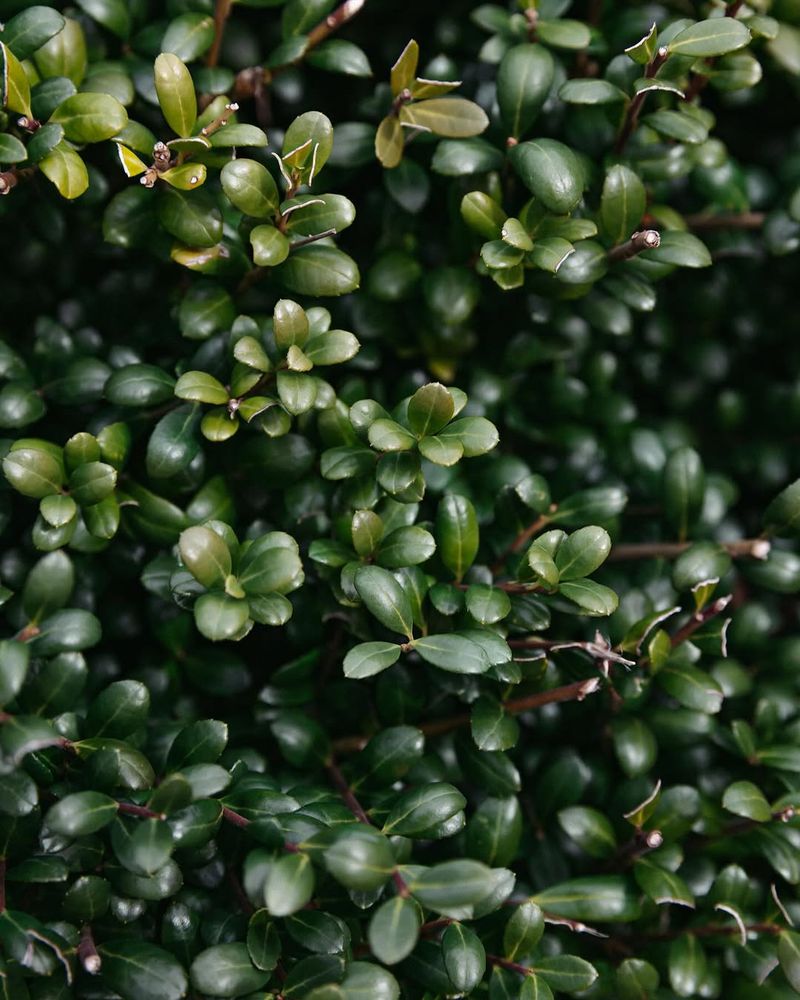
Japanese holly has been a reliable go-to for tidy foundation plantings across North Carolina for years.
Its small, dark green leaves and compact growth habit make it look clean and polished in formal landscape settings.
However, gardeners are starting to question why they are growing a non-native holly when two outstanding native alternatives exist that look nearly identical and actually support local wildlife in meaningful ways.
Inkberry is one of the best native swaps available, offering the same dense, evergreen mounding form that makes Japanese holly so popular.
It tolerates wet soils better than most shrubs and thrives in the heavier clay soils found across much of the North Carolina Piedmont.
Birds love its small black berries, which persist through winter and provide a food source during the toughest months of the year.
Yaupon holly is the other powerhouse native replacement, and it might be the toughest, most adaptable native shrub in all of North Carolina.
It handles drought, flooding, salt spray, poor soil, and heavy pruning without missing a beat, making it perfect for challenging spots in the yard.
Yaupon can be grown as a clipped formal hedge or left to develop its natural form, giving gardeners real flexibility.
Switching from Japanese holly to either of these native alternatives is one of the simplest, most rewarding upgrades a North Carolina homeowner can make to their front foundation planting this spring.
9. Red Tip Photinia (Photinia X Fraseri)
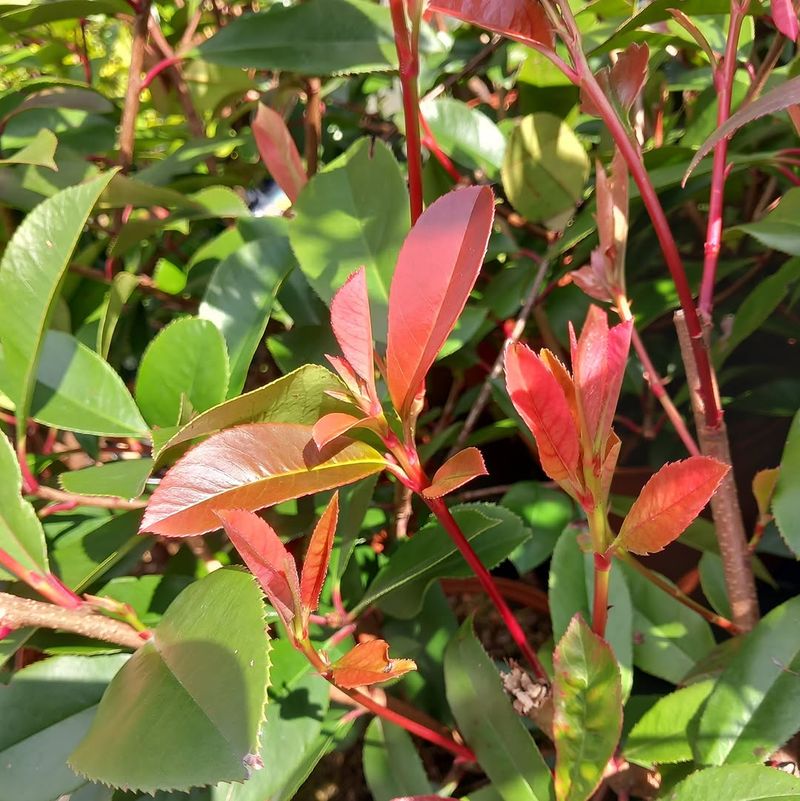
Red tip photinia was once the hottest shrub in Southern landscaping, and North Carolina neighborhoods planted it everywhere through the 1980s and 1990s. Those bright red new leaves made hedges look bold and exciting in spring.
Over time, though, many of those same plants became plagued by Entomosporium leaf spot, a fungal disease that disfigures the foliage and slowly weakens the plant.
Today, many North Carolina gardeners are pulling out tired, struggling photinia and replacing it with native plants that offer better long-term results.
Flowering dogwood is one of the most beloved native replacements, bringing spectacular white or pink spring blooms, brilliant red fall berries, and stunning autumn foliage to the landscape.
Eastern redbud adds early spring color with its bright magenta-pink flowers that bloom directly on the branches before the leaves even appear, creating a show unlike anything photinia could produce.
Carolina silverbell is a lesser-known native gem that deserves far more attention in North Carolina gardens, with its hanging white bell-shaped flowers creating a delicate, elegant display in mid-spring.
American holly rounds out the replacement options for gardeners who need year-round evergreen structure and winter berry interest.
All four of these plants are native to North Carolina, support local wildlife, and bring more seasonal variety than photinia ever could.
Making this swap is one of the most transformative decisions a homeowner can make for their yard this spring.