8 Plants That Handle Georgia’s Hot Afternoons Without Wilting
Georgia spring feels like paradise right now, but every local gardener knows this is just the quiet before the storm. While the breeze is lovely, that legendary southern heat is already lurking around the corner.
Once summer arrives, the sun doesn’t just shine; it attacks. Heat radiating off your sidewalk feels like a broiler, leaving favorite flowers looking like they’re auditioning for a desert survival movie.
Watching your hard work turn into crispy leaves is the ultimate seasonal bummer, but you don’t have to settle for a scorched yard.
Some plants actually thrive in our relentless humidity and blazing afternoons. Choosing these heat-loving stars now ensures your garden remains a stunning oasis throughout the toughest months of the year.
1. Butterfly Weed Adds Bright Color In Sun
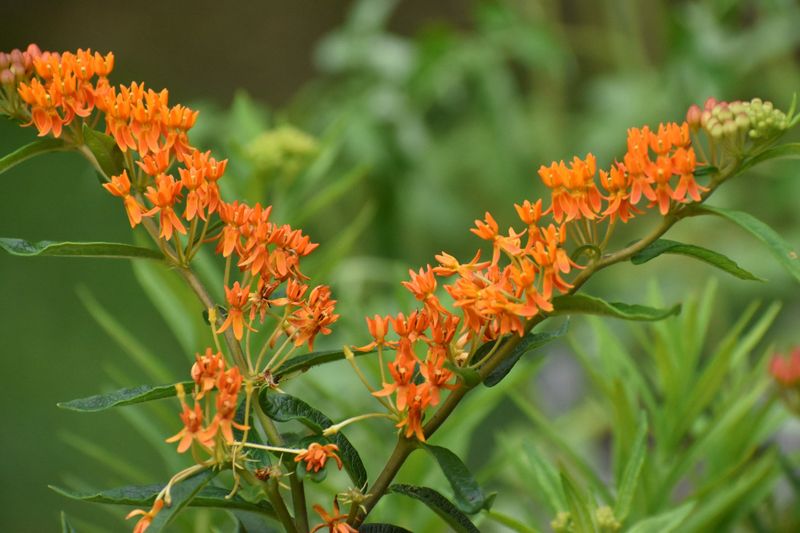
Few plants light up a hot Georgia garden bed quite like butterfly weed, with its vivid clusters of flame-orange flowers rising above the summer heat.
This native perennial belongs to the milkweed family and has deep taproots that allow it to pull moisture from the soil during dry stretches.
Once established, it rarely needs extra watering, making it a solid choice for low-maintenance spots in full sun.
Butterfly weed works well along sunny driveways, in mailbox borders, and in open front-yard beds that receive strong afternoon exposure.
The bold orange blooms typically appear from late spring through midsummer, drawing in monarchs, swallowtails, and a steady stream of native bees.
Gardeners who want pollinator activity in their yard will find this plant earns its keep quickly.
When placing butterfly weed in a Georgia landscape, choose a spot with well-drained soil since soggy conditions can cause root problems over time. Sandy or loamy soils tend to suit it well, and raised beds or slopes work nicely too.
It pairs naturally with coreopsis and purple coneflower for a native garden look that holds up through summer. Because it emerges late in spring, marking the planting location helps avoid accidentally disturbing it before new growth appears.
2. Coreopsis Brings Yellow Blooms In Heat
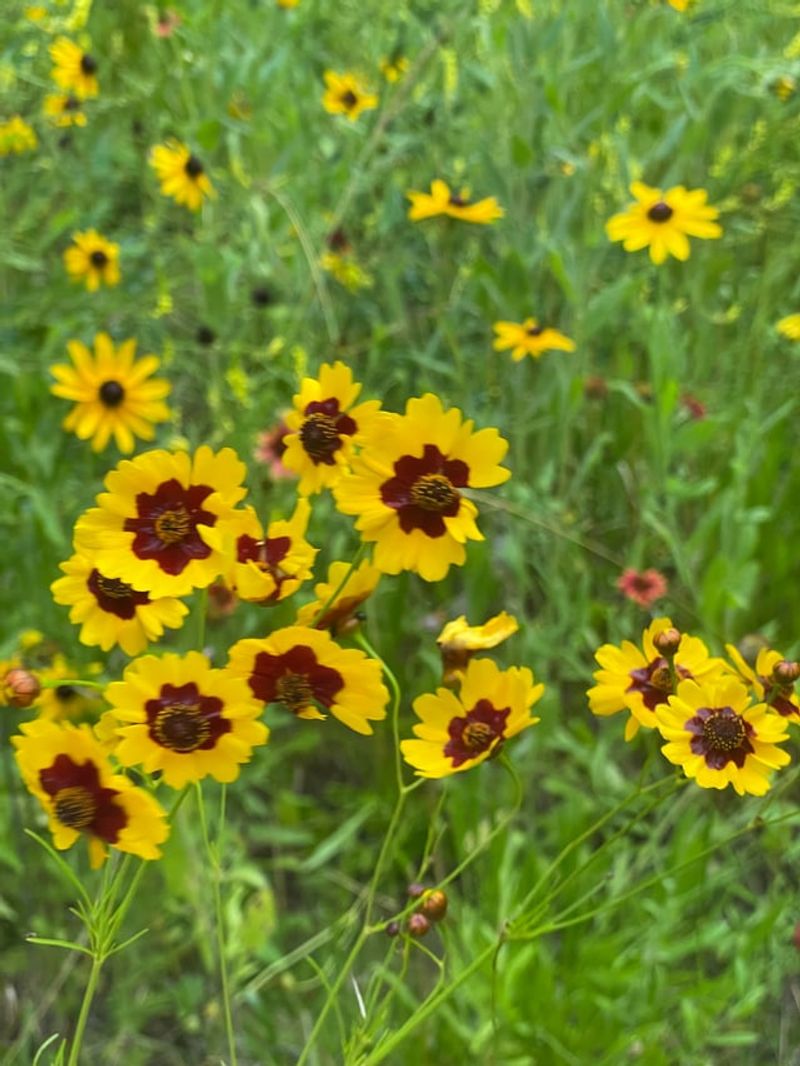
Bright yellow flowers dancing above slender green stems, coreopsis has a cheerful, effortless quality that suits Georgia’s long, sun-drenched summers remarkably well.
Often called tickseed, this native perennial blooms generously from late spring into fall, offering a reliable source of color even during the hottest weeks of the year.
It tends to rebloom heavily, especially when spent flowers are trimmed back occasionally.
Georgia gardeners often use coreopsis in front-yard beds, along walkways, and in naturalistic landscape borders where low maintenance matters.
The plant handles reflected heat near concrete and pavement better than many other flowering perennials, which makes it a smart pick for curbside plantings and open sunny spaces.
It also tolerates poor, dry soil reasonably well once roots are established.
Thread-leaf coreopsis varieties, which feature delicate feathery foliage, tend to perform especially well in Georgia’s climate. The fine texture adds a soft, airy look that balances bolder plants like yucca or ornamental grasses in a mixed bed.
Your Georgia Garden Changes Every Week. Your Plan Should Too.
Gardening in Georgia changes quickly throughout the season. Every Friday you’ll receive a simple weekly plan showing exactly what to plant, prune, fertilize, harvest, and protect so you never miss the right timing.
Coreopsis pairs well with purple coneflower and black-eyed Susan for a native-inspired design that attracts butterflies and small bees throughout the season.
Planting in groups of three or more creates a fuller visual effect and gives pollinators a larger foraging area to work through during warm afternoons.
3. Purple Coneflower Supports Pollinators In Sun
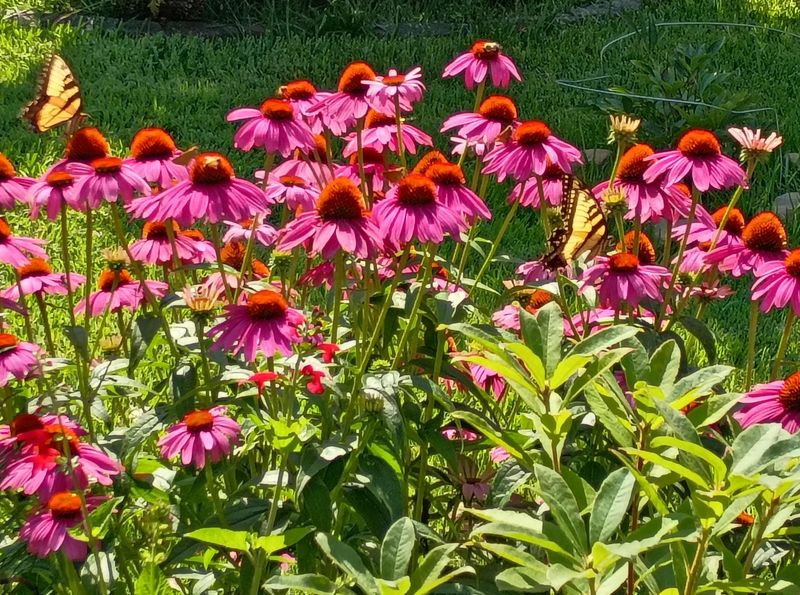
On a warm Georgia afternoon, a patch of purple coneflower buzzing with bees and butterflies is a genuinely satisfying sight. Echinacea purpurea is a tough, native perennial that handles full sun and dry conditions with ease once it settles in.
The rosy-pink to lavender petals surrounding a raised, spiky center cone give it a distinctive look that stands out in sunny garden beds from late June through September.
Beyond its visual appeal, purple coneflower offers real ecological value in a Georgia yard. Pollinators visit the blooms throughout summer, and goldfinches are known to feed on the seed heads during fall and winter if they are left standing.
Leaving the seed heads up through the cooler months adds winter interest and supports local wildlife at the same time.
Purple coneflower performs best in well-drained soil and full sun, though it can handle a bit of afternoon shade in the hottest parts of the state. It fits naturally into pollinator gardens, mixed perennial borders, and sunny foundation beds.
Pairing it with ornamental grasses or coreopsis creates a layered look that feels both intentional and relaxed. Over several seasons, established plants may self-seed modestly, gradually filling in a bed with minimal effort from the gardener.
Deadheading some blooms encourages continued flowering while leaving others for seed production balances beauty with wildlife benefit.
4. Little Bluestem Adds Texture In Dry Spots
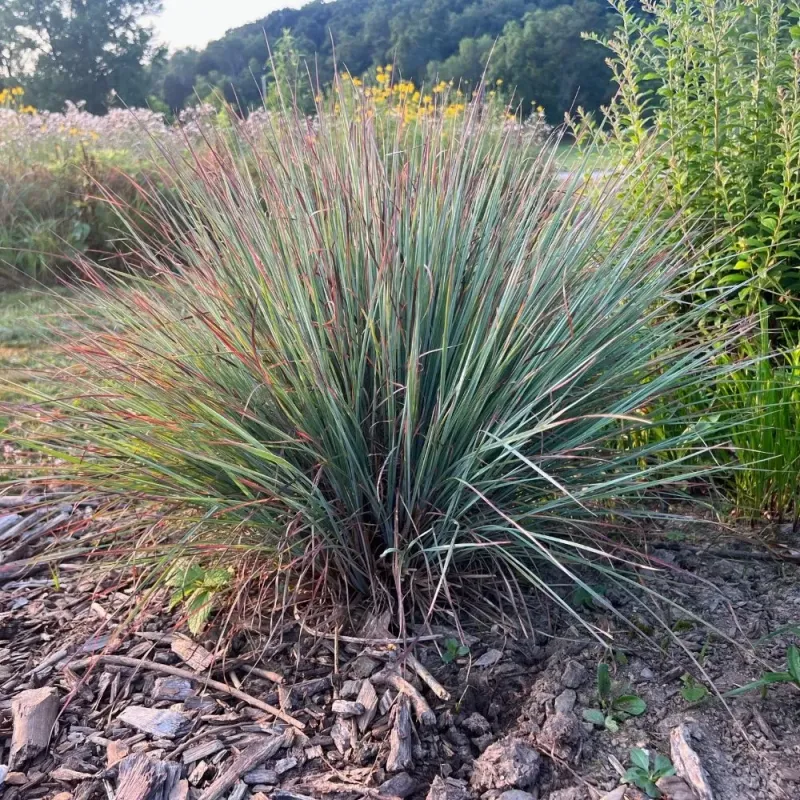
Dry, sunny corners that challenge most flowering plants are exactly where little bluestem tends to thrive.
This native ornamental grass brings strong upright structure and a blue-green color in summer that gradually shifts to rich copper and reddish-bronze tones as temperatures cool in fall.
That seasonal color change makes it one of the more visually interesting plants a Georgia gardener can use in a low-water landscape.
Little bluestem grows well in poor, sandy, or rocky soils that drain quickly, and it rarely needs supplemental watering once established.
Those qualities make it especially useful along roadsides, in open landscape areas, and in curbside beds where irrigation may be limited.
It also holds up well to heat radiating from nearby pavement or gravel surfaces, which is a common challenge in many Georgia front yards.
From a design standpoint, little bluestem works beautifully as a mid-height accent plant or when massed in groups across a large bed.
Pairing it with butterfly weed, white yarrow, or purple coneflower creates a native meadow feel that looks intentional rather than overgrown.
The fluffy white seed heads that appear in late summer and fall add soft texture and catch the light nicely. Cutting plants back to a few inches in late winter or early spring keeps them tidy and encourages fresh growth each season without much fuss.
5. Pink Muhly Grass Brings Color In Late Season
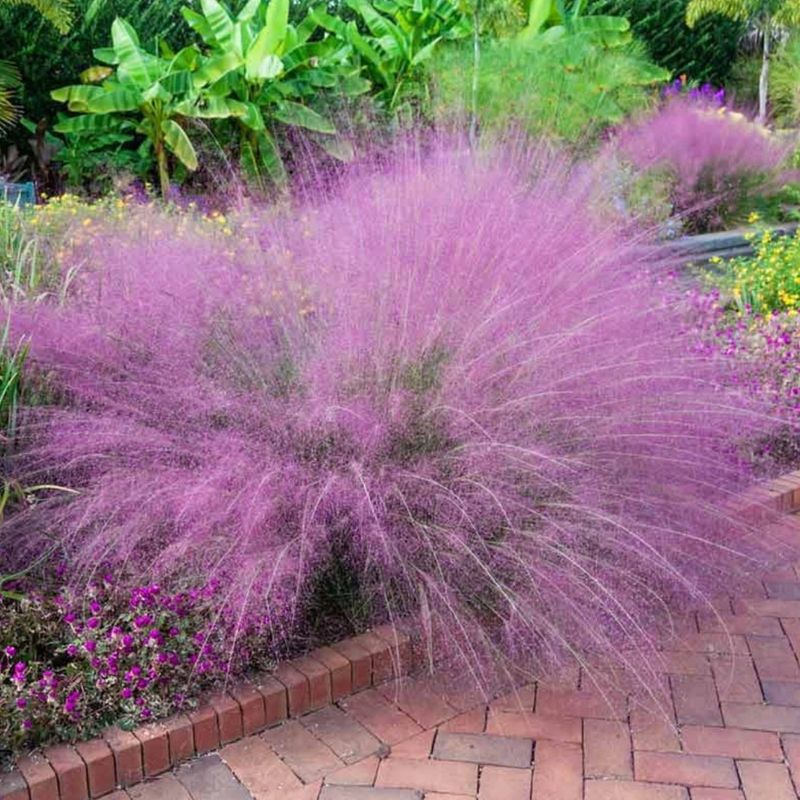
When most summer plants start looking tired by September, pink muhly grass is just getting started. This native ornamental grass produces spectacular clouds of soft pink to rose-colored plumes in fall that seem to glow when backlit by afternoon sun.
In Georgia landscapes, that late-season color is genuinely welcome, especially in beds and borders that may have lost their summer energy.
Pink muhly grass grows in tight, arching clumps that reach roughly two to three feet in height during the growing season, with the airy flower plumes pushing the visual height even higher in fall.
It handles full sun and dry conditions well, and it tolerates the poor, clay-heavy soils found in many Georgia neighborhoods better than some gardeners might expect.
Once established, it is a low-effort plant that rarely needs much intervention.
Placing pink muhly grass near a walkway, along a driveway border, or in an open front-yard bed allows the fall plumes to be fully appreciated from a distance.
The soft texture contrasts well with bold structural plants like Adam’s needle yucca or the upright stems of little bluestem.
Grouping three or more plants together creates a more dramatic effect than a single specimen. Cutting the clumps back in late winter before new growth emerges keeps the planting looking neat heading into the next growing season.
6. Adam’s Needle Yucca Adds Structure In Heat
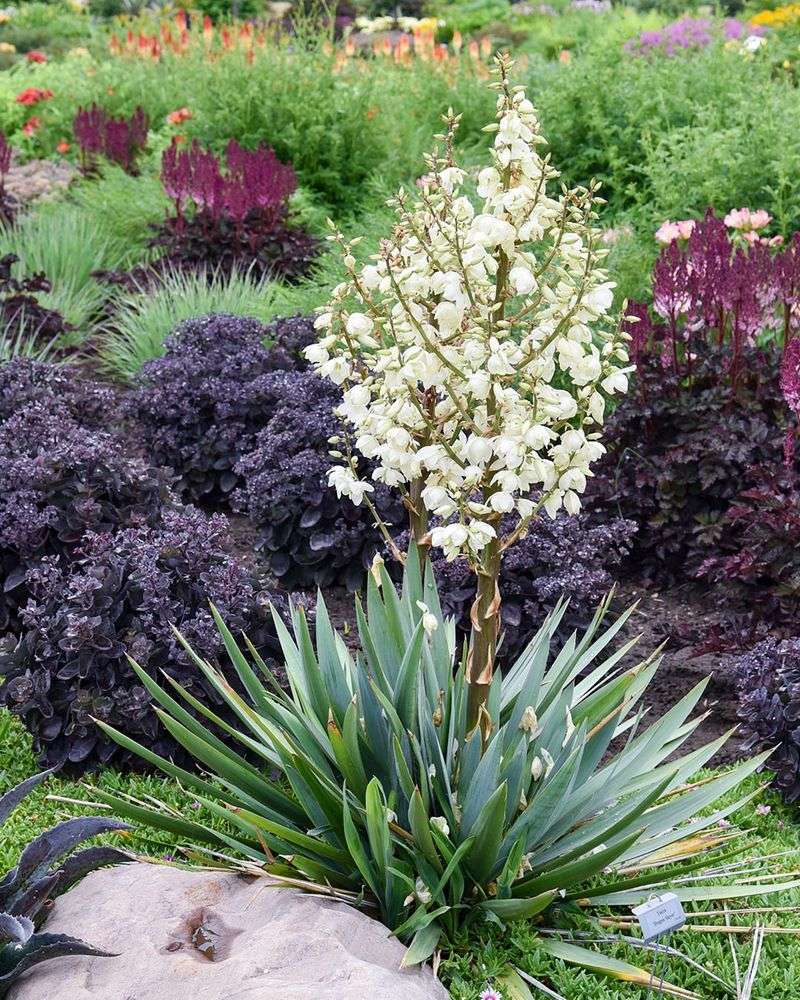
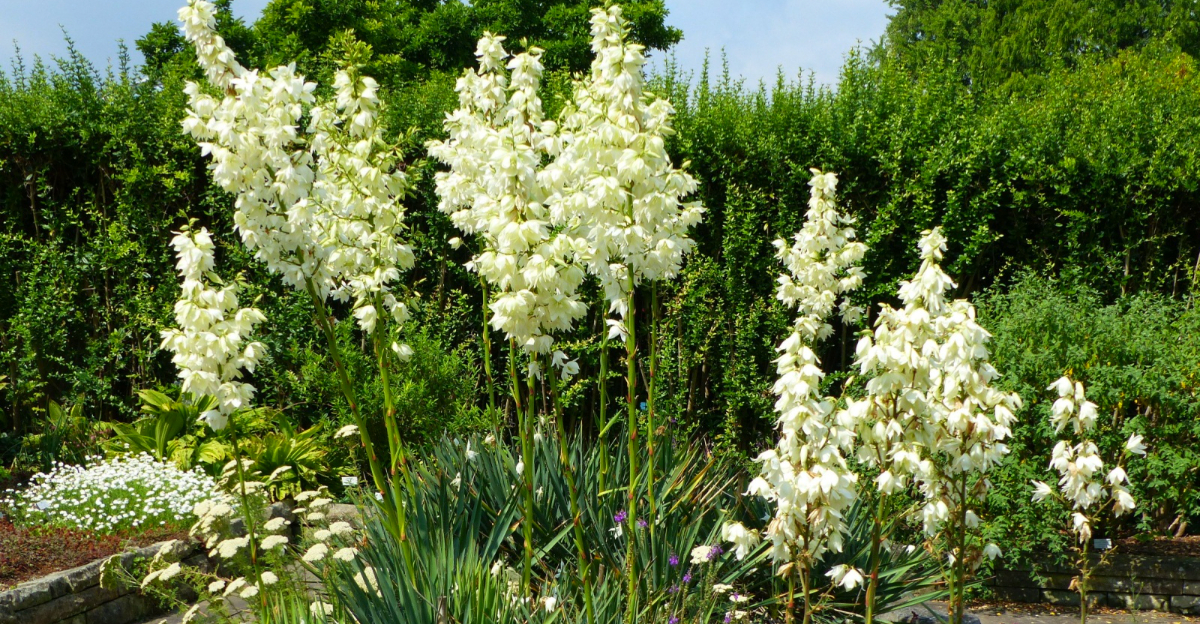
Bold, architectural, and genuinely unfazed by Georgia’s most brutal summer afternoons, Adam’s needle yucca is one of those plants that commands attention without asking for much care in return.
The stiff, sword-shaped leaves radiate outward in a striking rosette form, and in late spring to early summer, a tall flower spike rises dramatically above the foliage, carrying clusters of creamy white bell-shaped blooms that can attract moths in the evening.
This native yucca is well-adapted to the heat, humidity, and dry conditions common across much of Georgia.
It grows in sandy, rocky, or clay soils as long as drainage is reasonable, and it handles reflected heat near pavement and walls without showing signs of stress.
That toughness makes it a reliable anchor plant for sunny foundation beds, open landscape areas, and low-maintenance curbside plantings.
From a design perspective, Adam’s needle yucca works best as a focal point or structural anchor rather than a filler plant.
Surrounding it with lower-growing plants like coreopsis, white yarrow, or pink muhly grass creates a layered composition that highlights the yucca’s height and form.
Gardeners should keep in mind that the leaf tips are sharp, so placement away from high-traffic pathways is worth considering. Very little pruning or maintenance is needed beyond removing older outer leaves as they brown naturally over time.
7. White Yarrow Offers Blooms In Full Sun
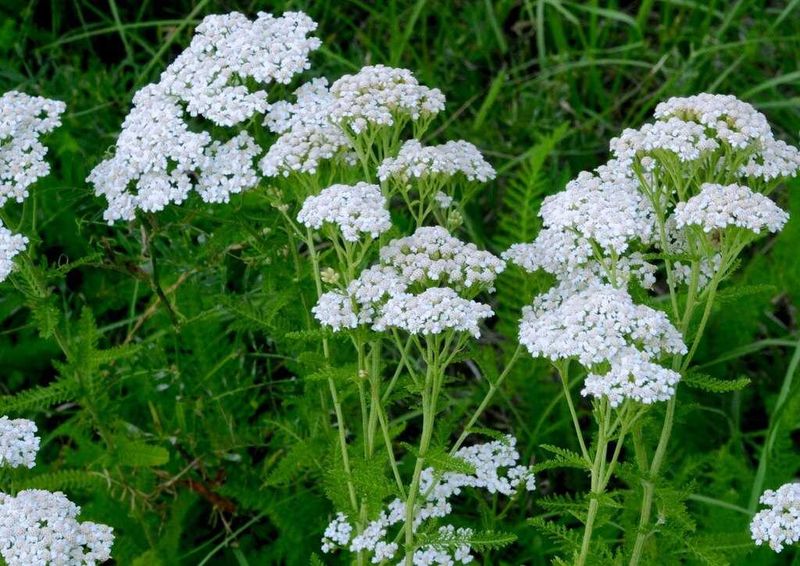
Something about white yarrow feels effortlessly at home in a Georgia garden baking under a July sun. The flat-topped clusters of tiny white flowers sit above feathery, gray-green foliage that releases a pleasant herbal scent when brushed.
Blooms typically appear from late spring through midsummer, and cutting back the spent flower heads often encourages a second round of flowering later in the season.
White yarrow is notably drought-tolerant and thrives in well-drained soil with full sun exposure. It handles poor soil conditions reasonably well and does not require regular fertilizing to perform.
Those qualities make it a natural fit for mailbox borders, sunny slope plantings, and open landscape beds where watering may be inconsistent or limited during dry stretches common across Georgia summers.
The soft white color of yarrow blooms pairs nicely with bolder plants like purple coneflower, butterfly weed, and ornamental grasses, offering a visual contrast that keeps mixed beds from feeling too heavy or uniform.
Pollinators, including small native bees and beneficial wasps, visit the flowers regularly, adding quiet ecological value to the planting.
Yarrow spreads gradually over time through underground rhizomes, so dividing established clumps every few years helps keep the planting tidy and prevents it from crowding neighboring plants.
Overall, it rewards Georgia gardeners with reliable beauty and minimal upkeep across the warm season.
8. Aromatic Aster Extends Color Into Fall
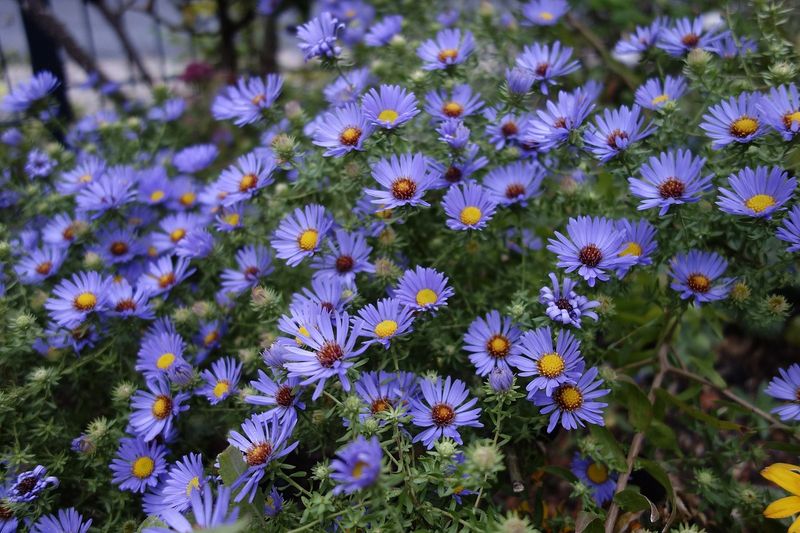
Just when the garden calendar seems to be winding down, aromatic aster steps in with a generous flush of small violet-purple flowers that can cover the entire plant by late September and October.
This native perennial is a reliable late-season performer in Georgia landscapes, providing color and pollinator activity at a time when most other flowering plants have already finished for the year.
Bees and butterflies visit the blooms actively, making it a valuable addition to any pollinator-focused planting.
Aromatic aster handles full sun and dry conditions well, and it adapts to a range of soil types found across Georgia, including clay-heavy ground that drains slowly. The foliage has a pleasant scent when touched, which is where the common name comes from.
Plants tend to spread into low, mounding clumps over time and can be used along borders, in open landscape beds, or as a ground-level filler beneath taller plants like little bluestem or pink muhly grass.
One practical tip for Georgia gardeners is to cut aromatic aster back by roughly half in early to midsummer, which encourages a more compact, bushy form and a heavier bloom display in fall.
Without that trim, plants can get somewhat floppy by the time flowering begins.
Pairing it with ornamental grasses and coneflowers creates a layered native planting that carries visual interest from summer straight through the first cool weeks of autumn.