7 Florida Shrubs To Plant Instead Of Nandina This Spring
Nandina has held its spot in Florida landscapes for ages, but plenty of gardeners are starting to look at it and think, there has to be something better. And honestly, they are not wrong.
A shrub can take up a lot of visual space in a yard, so when it looks thin, tired, or just plain ordinary, the whole landscape feels flat. Spring is when that realization really hits.
Everything starts waking up, fresh growth kicks in, and suddenly the plants that are not pulling their weight stand out like a sore thumb.
That is why so many homeowners are ready to swap nandina for shrubs that bring more color, more fullness, and a lot more curb appeal.
A better choice can change the whole mood of a front yard, soften the look of the house, and make the landscape feel richer without turning care into a chore. Sometimes one smart switch is all it takes to breathe new life into the whole space.
1. Replace Nandina With Simpson’s Stopper This Spring
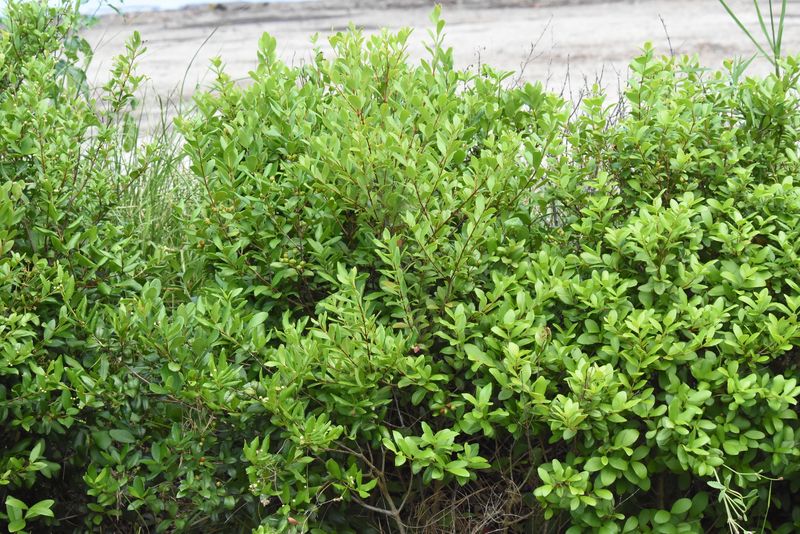
A shrub that looks polished in the yard while quietly feeding the neighborhood birds is a rare find, and Simpson’s stopper pulls that off effortlessly.
Botanically known as Myrcianthes fragrans, this Florida native produces clusters of small white flowers followed by bright orange-red berries that songbirds love.
It has a naturally tidy, upright form that makes it a genuinely strong substitute for Nandina in spaces where structure matters.
Simpson’s stopper grows well across Central and South Florida, though it can also perform in protected spots in North Florida. It handles full sun to part shade and adapts to a range of soil types, including the sandy, well-drained soils that dominate much of the state.
Mature plants typically reach six to fifteen feet tall depending on pruning, which means you can shape it as a compact accent or let it fill out into a privacy screen.
Homeowners who want a formal hedge will appreciate how well it responds to trimming. The foliage stays dense and glossy year-round, giving the yard a clean, finished look through every season.
Because it is native, it requires very little once established, and you can skip the fertilizer routine that many non-native ornamentals demand.
One thing to keep in mind is that Simpson’s stopper grows at a moderate pace, so it is not the fastest option for immediate screening. Plan accordingly if you need coverage quickly.
For anyone who wants a beautiful, bird-friendly, and truly Florida-appropriate shrub that brings real structure to the landscape, Simpson’s stopper is one of the most rewarding choices available this spring.
2. Trade Nandina For Dense Green Cocoplum
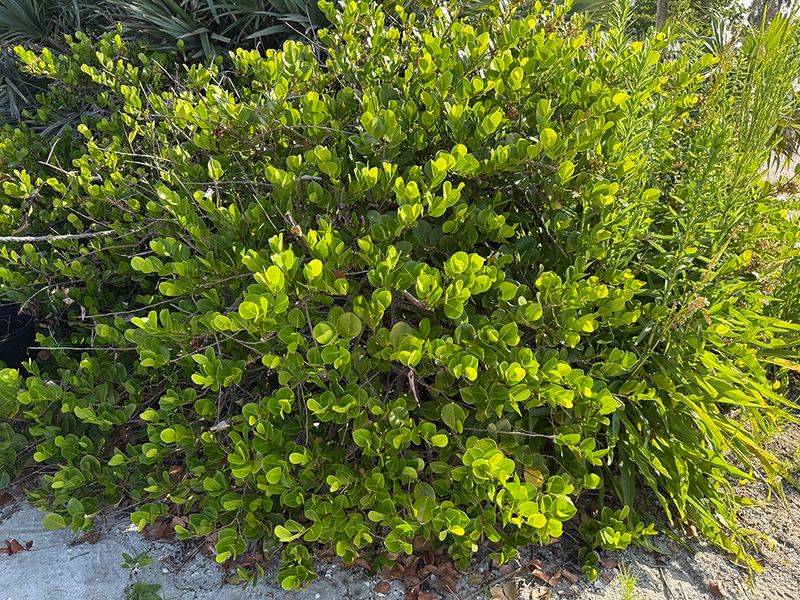
Few shrubs in Florida can match cocoplum when it comes to sheer density. Chrysobalanus icaco is a native evergreen that builds a thick, lush wall of foliage that holds its shape season after season.
If Nandina was giving your yard a sense of structure and screening, cocoplum will do the same job and then some, without any of the ecological baggage that comes with a known invasive plant.
Your Florida Garden Changes Every Week. Your Plan Should Too.
Gardening in Florida changes quickly throughout the season. Every Friday you’ll receive a simple weekly plan showing exactly what to plant, prune, fertilize, harvest, and protect so you never miss the right timing.
Cocoplum thrives across Central and South Florida, and it is especially well-suited to coastal properties. It handles salt spray, sandy soils, and periodic flooding better than most ornamental shrubs, which makes it a practical powerhouse for yards close to the water.
Inland gardeners in warmer parts of the state can also count on strong performance as long as temperatures stay mild through winter.
The shrub grows in full sun to light shade and can be pruned into a formal hedge or left to develop a fuller, more rounded natural shape. Mature height ranges from roughly four to fifteen feet depending on variety and maintenance.
The round fruits that develop in summer and fall range from white to deep purple and attract birds and other wildlife, adding real ecological value to the yard.
North Florida homeowners should know that cocoplum is sensitive to frost and may sustain cold damage in freeze-prone areas. It is best suited to Zone 9b and warmer.
For homeowners in South Florida or along the Gulf and Atlantic coasts who want a dense, low-fuss, native hedge that provides privacy and supports local wildlife, cocoplum is one of the most dependable choices available right now.
3. Give Your Yard A Native Upgrade With Walter’s Viburnum
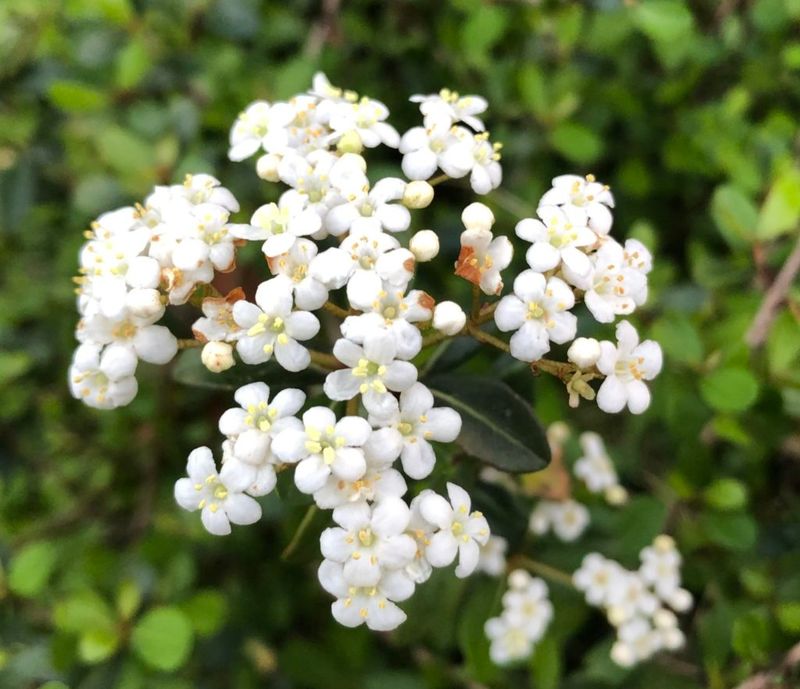
There is something quietly impressive about a shrub that blooms beautifully in spring, feeds wildlife in fall, and stays evergreen through the whole year without asking for much in return.
Walter’s viburnum, Viburnum obovatum, does exactly that, and Florida homeowners are increasingly turning to it as a smart, native-grown alternative to the overused Nandina.
This shrub is native to Florida and grows well across the northern two-thirds of the state, performing reliably from the Panhandle down through Central Florida.
It thrives in full sun to partial shade and adapts well to moist or periodically wet soils, which makes it a solid choice for low spots in the yard where other shrubs might struggle.
The small, white flower clusters that appear in late winter and early spring are a genuine seasonal highlight.
After flowering, the plant produces small red to black berries that attract birds through the fall and into winter.
The foliage is dense and fine-textured, giving the shrub a soft but full appearance that works beautifully as a background planting, a naturalistic screen, or a foundation shrub near the house.
It can be shaped into a formal hedge or allowed to grow into a more relaxed, multi-stemmed form.
Walter’s viburnum can reach eight to twelve feet tall at maturity, so give it space to develop. It is not the best fit for very small beds or tight corners.
South Florida gardeners may find it less reliable in the warmest zones, so check with your local UF IFAS extension office for regional guidance.
For homeowners across North and Central Florida who want a dependable native shrub with real seasonal interest, this one earns its place.
4. Count On Yaupon Holly For A Stronger Shrub Border
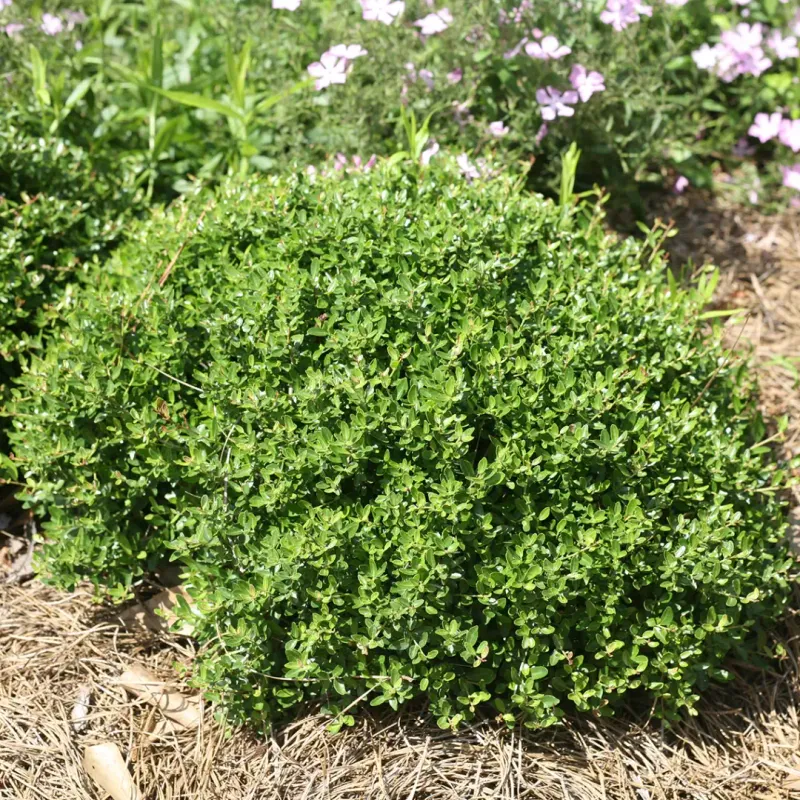
Tough, adaptable, and genuinely underrated, yaupon holly is the kind of shrub that earns more respect the longer it grows in your yard.
Ilex vomitoria is a native evergreen that tolerates drought, poor soils, salt air, and occasional flooding, a combination of resilience that very few ornamental shrubs can match.
For Florida homeowners who want something that simply holds up, season after season, yaupon holly is hard to beat.
It grows across the entire state of Florida, from the Panhandle all the way down through Central Florida, making it one of the most widely adaptable native shrubs available.
Female plants produce small, glossy red berries in fall and winter that birds find irresistible, which adds real wildlife value to any yard.
The berries persist on the plant for an extended period, giving the shrub strong ornamental appeal through the cooler months when many other plants look tired.
Yaupon holly works equally well in full sun or part shade, and it responds beautifully to pruning. Nurseries carry it in many forms, from compact dwarf varieties that stay under three feet to upright selections that can reach fifteen feet or taller.
That range of options makes it useful for everything from low borders and foundation plantings to tall privacy hedges and natural screens.
One honest note: the species name, vomitoria, sometimes raises eyebrows, though the plant itself is perfectly safe to grow and handle.
For South Florida gardeners, it performs better in the northern and central regions of the state, so check regional suitability before planting.
Overall, yaupon holly offers the structure, durability, and year-round good looks that many homeowners were hoping Nandina would provide.
5. Use Wax Myrtle For Faster Fuller Coverage
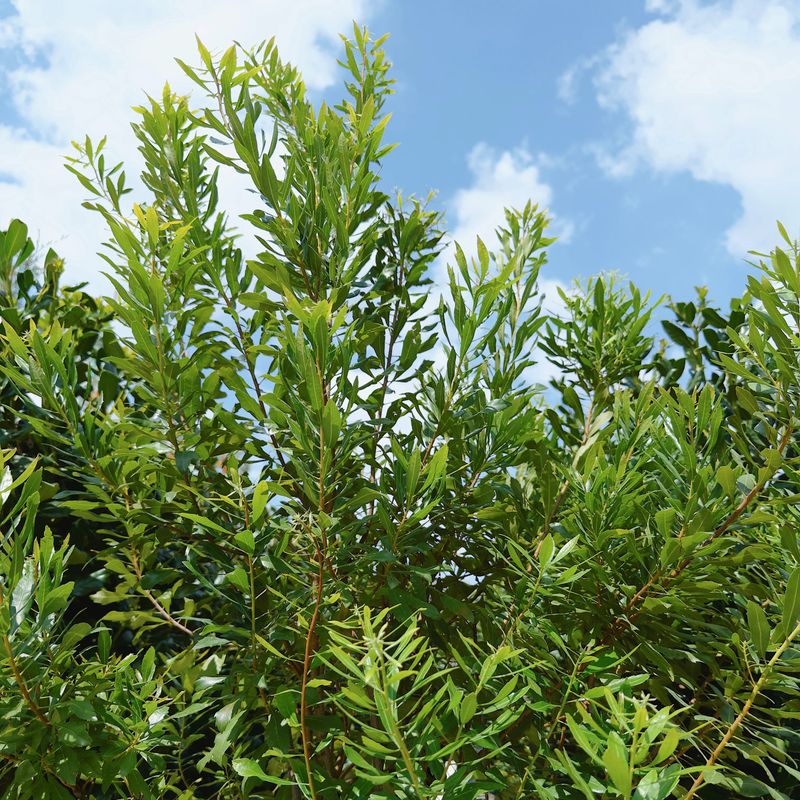
Speed matters when you are replacing a shrub and want your yard to look full again quickly.
Wax myrtle, Morella cerifera, is one of the fastest-growing native shrubs in Florida, and it fills a space with dense, aromatic foliage in a way that few plants can rival at the same pace.
It is a strong candidate for homeowners who want real coverage without waiting years to get it.
Native throughout Florida, wax myrtle grows in full sun to light shade and handles a wide range of soil conditions, including wet areas, sandy soils, and sites with occasional salt exposure.
It is a frequent sight along roadsides, pond edges, and natural area borders, which gives you a good sense of just how tough and adaptable it really is.
Established plants are notably drought-tolerant and require very little ongoing care.
The silvery-blue berries that appear on female plants in fall and winter are a major draw for birds, particularly yellow-rumped warblers and tree swallows that pass through Florida during migration. That wildlife value alone makes wax myrtle worth considering for any yard where birds are welcome.
The foliage releases a pleasant, spicy fragrance when brushed or pruned, which is a nice bonus during yard work.
The main thing to know upfront is that wax myrtle has a naturally loose, multi-stemmed habit. It does not look like a clipped formal hedge unless you are willing to prune it regularly, and even then it leans toward a more naturalistic appearance.
It suits casual, wildlife-friendly, or cottage-style landscapes better than highly manicured settings. For homeowners who want coverage fast and do not mind a relaxed, layered look, wax myrtle delivers exactly that.
6. Brighten Shady Beds With Florida Anise
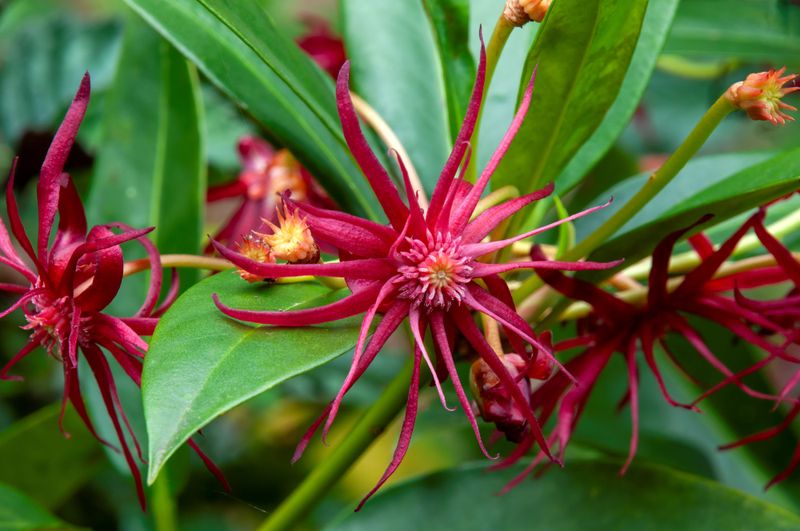
Most shrubs that do well in shade come with a trade-off, usually thin foliage, weak structure, or a look that never quite fills a bed the way you want. Florida anise, Illicium floridanum, breaks that pattern.
It grows into a dense, full shrub with rich, dark green leaves that stay attractive year-round, and it does this in the kind of low-light spots where Nandina was often planted by default.
This native shrub is found naturally in moist, shaded woodland areas across North and Central Florida, and it performs best in those same conditions in the home landscape.
It prefers partial to full shade and moist, acidic soil, making it an excellent fit for shaded beds near the house, along fence lines under tree canopy, or in any spot that stays damp and out of direct afternoon sun.
It is not suited to dry, sandy, or exposed sites.
The flowers are unusual and striking, dark red, star-shaped blooms that appear in spring and carry a rich, spicy fragrance. The entire plant is aromatic, and the foliage releases a strong anise-like scent when touched or pruned.
That sensory quality sets it apart from most other shade shrubs and makes it memorable in a way that plain green hedging rarely achieves.
Florida anise grows to around six to ten feet tall and responds well to pruning if you want to keep it more compact. It is worth noting that all parts of the plant are toxic if ingested, so keep that in mind for households with curious pets or young children.
For shaded beds in North and Central Florida where structure, fragrance, and density all matter, Florida anise is a genuinely excellent choice.
7. Bring In Wild Coffee For Rich Tropical Texture
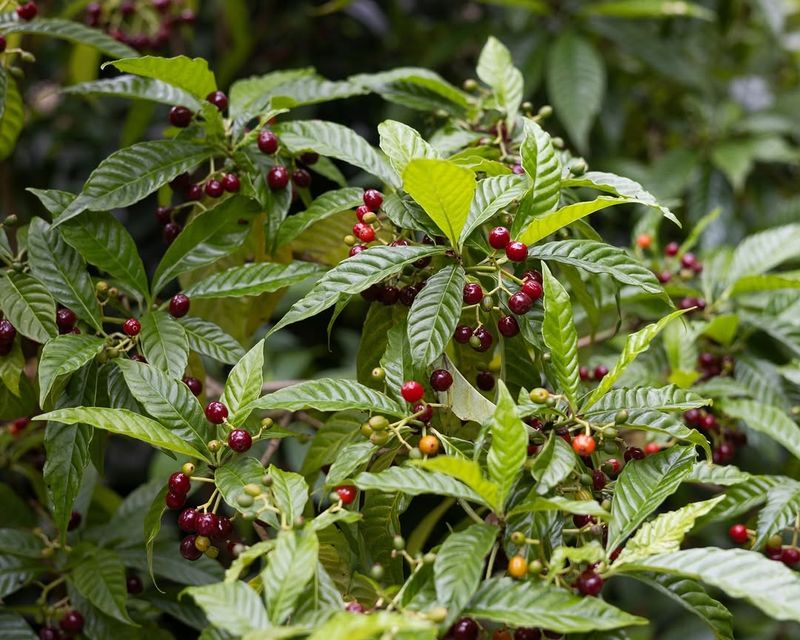
Walk through a shaded South Florida hammock and you will almost certainly pass by wild coffee without knowing it. Psychotria nervosa is one of those native shrubs that blends seamlessly into a lush, layered landscape while quietly doing a lot of ecological work.
Bring it into your yard and you get that same rich, tropical quality, glossy deep green leaves, clusters of small red berries, and a full, layered texture that makes any planting bed look intentional and alive.
Wild coffee grows best in South Florida and the warmer parts of Central Florida, roughly Zone 9b and warmer. It prefers partial to full shade and moist, well-drained soil, making it an ideal understory shrub beneath larger trees or along shaded fence lines.
It handles the heat and humidity of South Florida summers without complaint, which is more than many ornamental shrubs can honestly claim.
The small red berries that ripen in fall and winter are eaten by birds, including mockingbirds and vireos, giving this shrub real value for anyone trying to support local wildlife.
The plant tends to stay in the three-to-six-foot range in home landscapes, which makes it useful as a mid-height filler or a layered background shrub rather than a tall privacy screen.
Its naturally mounding habit gives it a softer, more organic shape than Nandina’s stiff, upright form.
Homeowners in North Florida should skip this one, as it is not cold-hardy enough for freeze-prone areas.
For South Florida and warmer Central Florida yards that need shade-tolerant, wildlife-friendly texture with a distinctly tropical feel, wild coffee brings something genuinely special to the spring planting season.