These Fruits And Veggies Handle Arizona Heat Well In Hanging Baskets
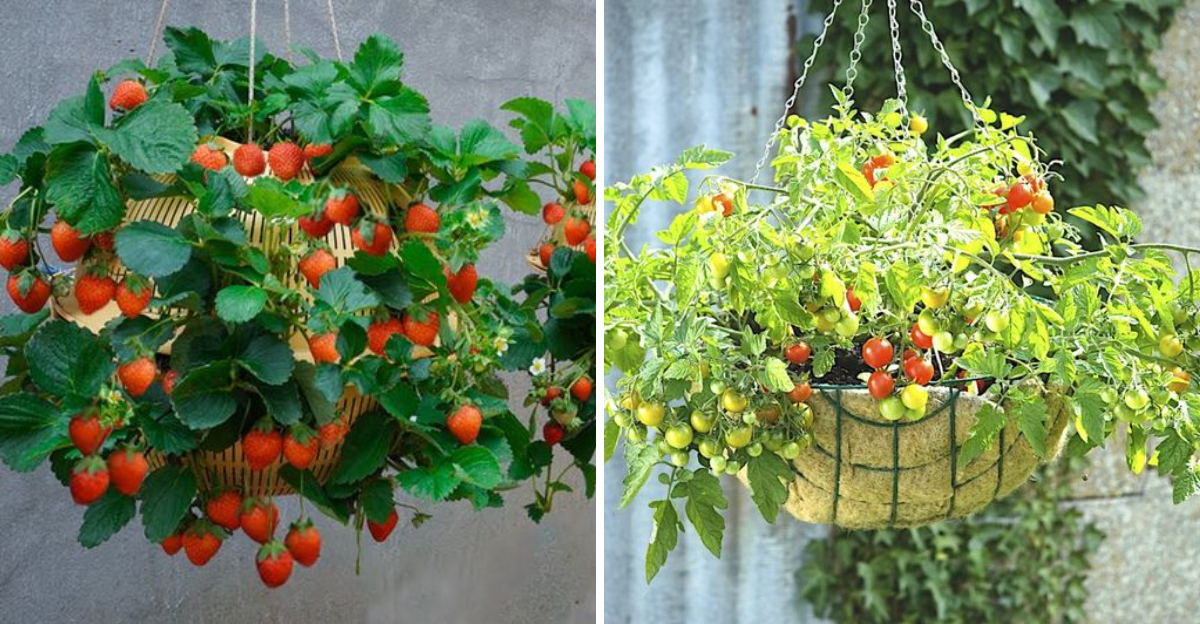
Arizona heat can be rough on most plants, especially once containers start heating up faster than the ground. Hanging baskets dry out quickly, and many plants struggle to keep up once temperatures stay high.
Some fruits and veggies handle this setup much better than others. Growth stays steady, and they keep producing even when the heat builds through the day.
At first glance, everything may look the same, but certain plants clearly perform better in these conditions.
Picking the right ones makes a big difference. Strong growers stay productive, need less constant care, and handle the heat without slowing down.
Once those better options are in place, hanging baskets stop feeling like a challenge and start working the way they should.
Some of these plants perform best before extreme summer heat sets in, while others continue producing even as temperatures rise in Arizona.
1. Strawberries Grow Well In Hanging Baskets
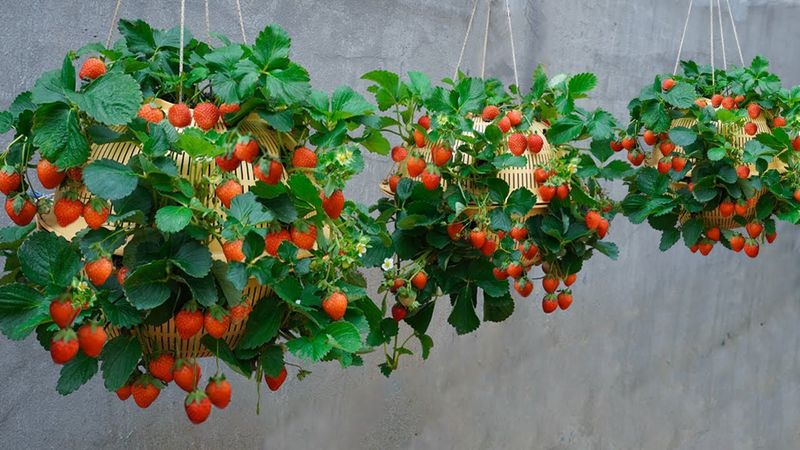
Strawberries in a hanging basket might sound fancy, but it’s actually one of the more practical setups for Arizona gardeners. Everbearing varieties like ‘Ozark Beauty’ keep producing fruit across a long season rather than dumping everything out at once.
That matters a lot when you want a steady harvest instead of a one-week rush.
In Arizona, timing is everything with strawberries. Most gardeners plant them in fall or early spring to catch cooler temperatures before summer heat ramps up.
A south-facing wall can reflect too much heat, so a spot with morning sun and afternoon shade tends to give better results.
Hanging baskets dry out quickly in dry desert air, so daily watering during warm months is usually necessary. Adding a layer of moisture-retaining potting mix with some perlite helps the roots stay hydrated without sitting in soggy soil.
Baskets with coco-fiber liners tend to breathe well and hold shape through the season.
The trailing runners strawberries naturally produce look great spilling over the sides of a basket. Pinching off runners early redirects the plant’s energy toward fruit production rather than spreading.
With decent care and the right variety, a single basket can give you a reliable handful of berries over several weeks in the milder parts of the Arizona growing calendar.
With consistent watering and the right placement, hanging baskets can turn into one of the easiest ways to keep strawberries productive even as conditions start to warm up.
2. Ground Cherries Produce Well In Warm Conditions
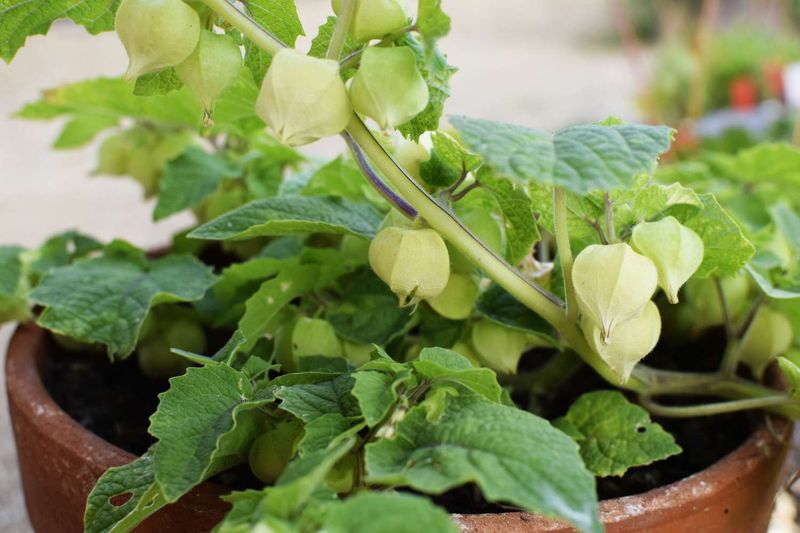
Not many people outside of serious gardeners have even heard of ground cherries, which is a shame because they handle Arizona warmth better than most fruiting plants you’d consider for a basket.
Wrapped in papery husks like tiny tomatillos, the golden fruits have a sweet, slightly tropical flavor that catches people off guard the first time they try one.
Ground cherries belong to the nightshade family, so they share growing needs with tomatoes and peppers — warm soil, consistent moisture, and plenty of sun. Arizona’s long warm season actually suits them well.
Plants tend to stay compact enough for a 12-to-14-inch basket without needing aggressive pruning.
Your Arizona Garden Changes Every Week. Your Plan Should Too.
Gardening in Arizona changes quickly throughout the season. Every Friday you’ll receive a simple weekly plan showing exactly what to plant, prune, fertilize, harvest, and protect so you never miss the right timing.
Start seeds indoors about six weeks before your last frost date, or buy transplants if you can find them at a local nursery. Transplanting directly into a basket with quality potting mix works fine.
Water regularly since baskets lose moisture faster than ground soil, especially during hot Arizona afternoons.
Husks turning tan and papery is your signal that the fruit inside is ready. Fruits left on the plant too long can drop on their own, and they’ll keep for weeks in their husks at room temperature.
Ground cherries aren’t flashy, but they’re reliable, productive, and genuinely fun to grow in a hanging setup across Arizona’s warmer growing zones.
3. Alpine Strawberries Stay Compact And Produce Well
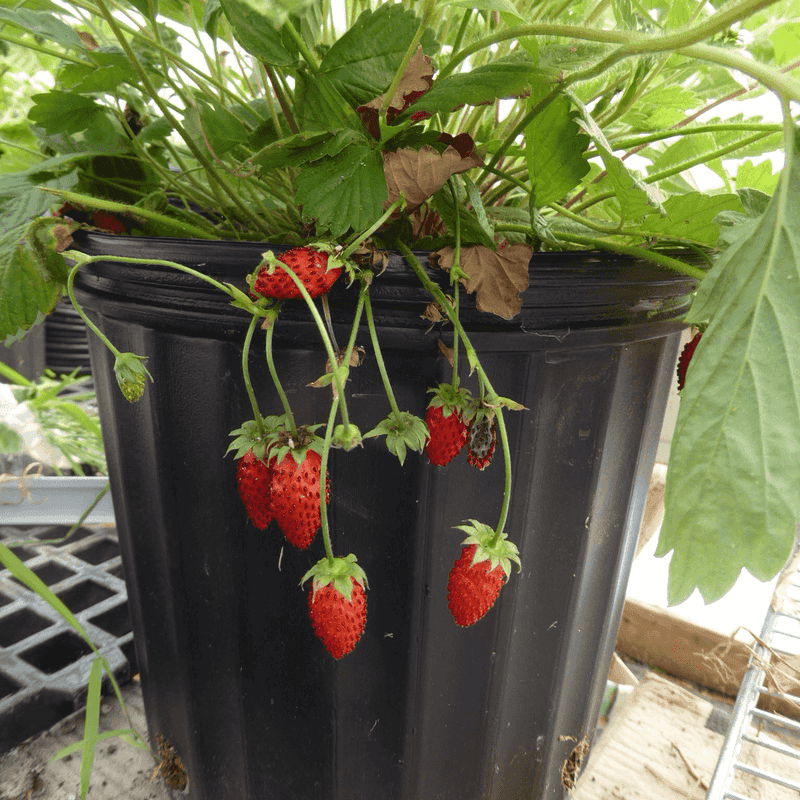
Alpine strawberries are a different animal compared to standard grocery-store varieties. Smaller in fruit size but surprisingly productive, they grow in tidy mounds rather than spreading runners everywhere.
That compact habit makes them genuinely well-suited to hanging baskets, especially in Arizona where space and heat management both matter.
Unlike regular strawberries, alpines don’t send out runners, which means the plant puts its energy straight into flowering and fruiting.
Varieties like ‘Alexandria’ and ‘Mignonette’ are commonly available and handle warm conditions reasonably well when given some afternoon shade during Arizona’s peak summer months.
Full morning sun with filtered afternoon light tends to keep them productive longer.
Soil quality matters more with alpines than with standard varieties. A rich, well-draining potting mix with added compost gives them what they need to keep setting fruit.
Consistent watering is non-negotiable in Arizona’s dry air — letting the basket dry out completely can stress the plant and slow fruit production noticeably.
The fruits are small but intensely flavored, almost perfume-sweet in a way that larger commercial strawberries rarely match. Expect a modest but steady harvest rather than huge quantities at once.
For someone with a small patio in Tucson or the Phoenix metro area who wants something edible and attractive hanging near the door, alpine strawberries check a lot of boxes without demanding too much space.
4. Pineberries Grow Like Strawberries In Hanging Baskets
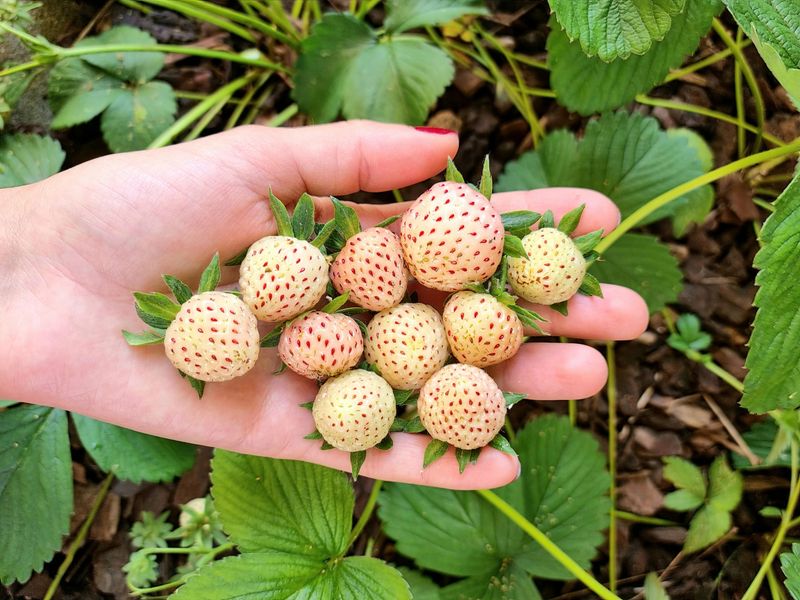
White strawberries with red seeds sound like something from a novelty catalog, but pineberries are a real, edible fruit with a flavor often described as somewhere between a strawberry and a pineapple.
They grow almost identically to regular strawberries, which makes the transition to a hanging basket pretty straightforward for anyone who has grown strawberries before.
Pineberries prefer slightly cooler root temperatures, so in Arizona, choosing a basket location with afternoon shade is genuinely helpful rather than optional.
Morning sun gives the plant what it needs for fruiting without the brutal heat that peaks between 1 and 4 p.m. in the desert Southwest.
Lighter-colored baskets also help reflect heat away from the root zone.
Soil moisture is the biggest management challenge in Arizona’s dry climate. Pineberries don’t tolerate drought stress as well as some other heat-adapted plants, so checking the basket daily during warm spells and watering thoroughly when the top inch of soil feels dry keeps them in better shape.
A slow-release fertilizer worked into the potting mix at planting can reduce the need for frequent feeding later.
Expect smaller harvests compared to everbearing strawberry types — pineberries tend to produce in flushes rather than continuously. Still, even a modest amount of these unusual fruits is worth the effort.
Guests always ask about them, and they’re genuinely good to eat fresh off the plant on a warm Arizona morning.
5. Malabar Spinach Thrives In Extreme Heat And Trails Well
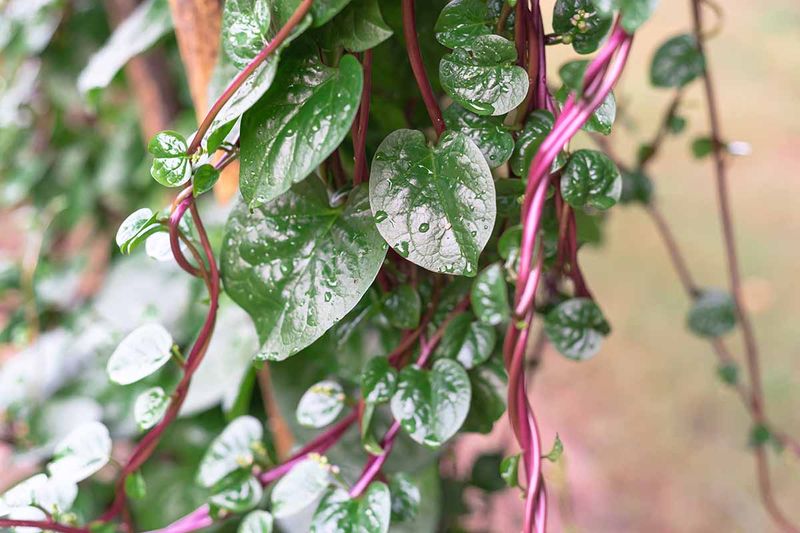
Regular spinach gives up the moment Arizona temperatures climb above 80 degrees, but Malabar spinach seems to read the thermometer and decide it’s finally time to get comfortable.
Technically a different plant from true spinach, it produces thick, glossy leaves on trailing vines that spill beautifully over the edges of a hanging basket.
Malabar spinach is a warm-season green, which means it actually performs better as Arizona summers heat up rather than fading out. Vines can grow several feet long over a season, so regular trimming keeps the basket looking tidy and encourages bushier, leafier growth.
Harvesting young leaves frequently also keeps the flavor milder and more tender.
Full sun suits this plant fine in most Arizona locations, though some afternoon shade during the absolute peak of summer can help slow bolting.
Water needs are moderate compared to other leafy greens — consistent moisture without waterlogged soil keeps vines growing steadily.
A basket with good drainage holes and a quality potting mix handles this balance well.
Leaves can be eaten raw in salads when young, or cooked like spinach in stir-fries and soups. The flavor is mild with a slight mucilaginous texture when cooked, similar to okra.
For Arizona gardeners looking for a productive, heat-tolerant green that actually looks attractive trailing from a basket, Malabar spinach is one of the more dependable options available during the long desert summer.
6. Small Chili Peppers Grow Well In Hanging Baskets
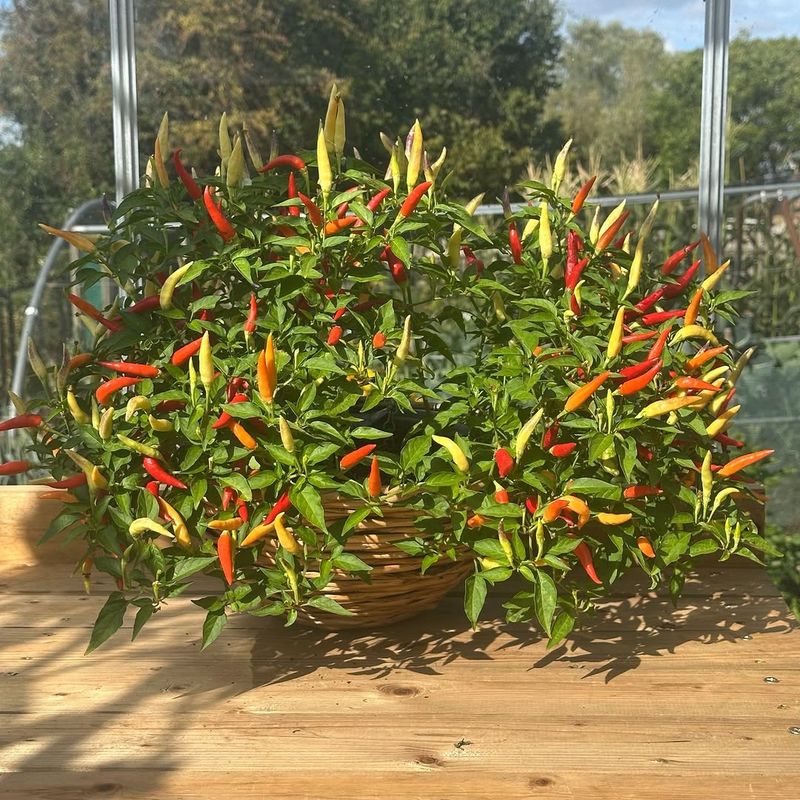
Few plants look as striking in a hanging basket as a compact chili pepper loaded with colorful fruits pointing upward in shades of purple, orange, yellow, and red.
Varieties like ‘Basket of Fire’ and ‘Numex Twilight’ were practically designed for container growing, staying small enough to fit comfortably in a standard basket while still producing a solid amount of fruit.
Chili peppers and Arizona heat have a natural relationship. These plants come from hot climates and don’t flinch at high temperatures the way tomatoes sometimes do.
Consistent watering matters more than almost anything else — peppers in hanging baskets dry out fast, and drought stress can cause flowers to drop before setting fruit.
A basket at least 12 inches wide gives roots enough room to establish without feeling cramped. Lightweight potting mix with good drainage keeps roots healthy and prevents the waterlogged conditions that can slow growth.
Feed with a balanced fertilizer every two to three weeks during the growing season to support continued flowering and fruiting.
Ornamental peppers are edible, though heat levels vary widely by variety — some are mild enough for casual snacking, others will genuinely test your tolerance. Either way, the visual payoff is real.
A basket of colorful chili peppers hanging near an Arizona entryway or covered porch is both productive and genuinely eye-catching from spring through fall without much fuss.
7. Bush Beans Grow Well In Warm Hanging Containers
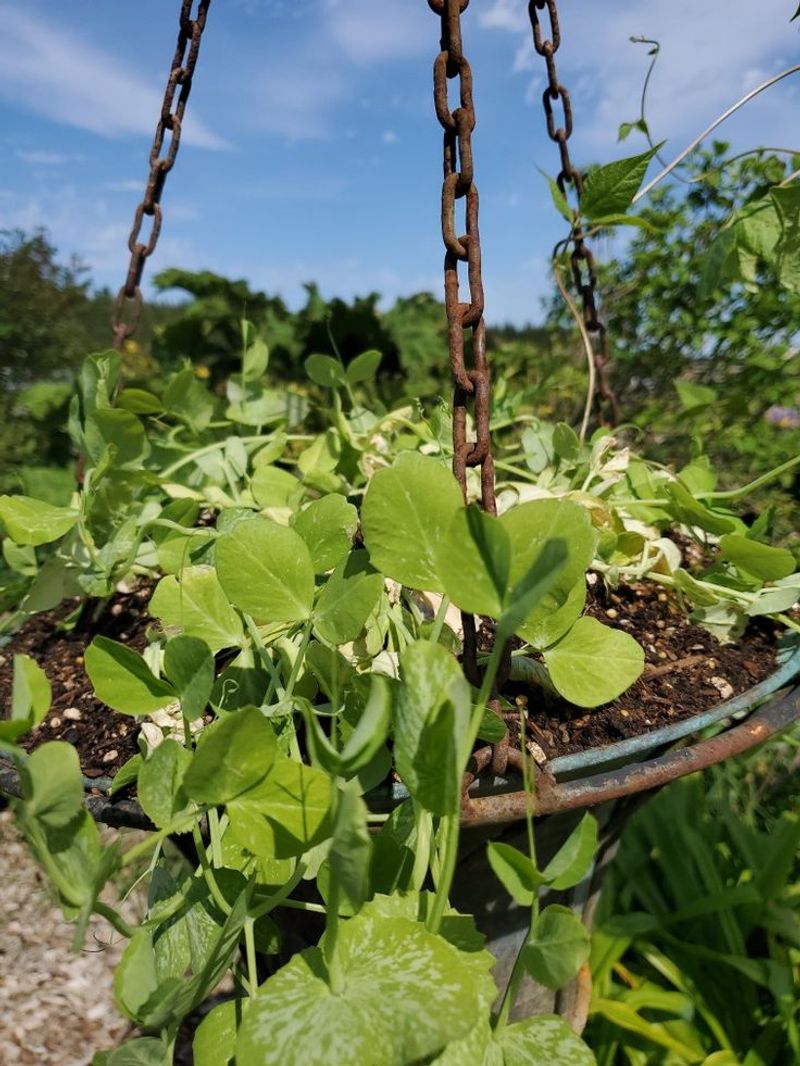
Bush beans don’t get much attention in the hanging basket conversation, but they’re a surprisingly solid choice for Arizona gardeners who want a real vegetable crop without a lot of setup.
Unlike pole beans, bush varieties stay compact and upright, fitting into a deep basket without needing a trellis or support structure to climb.
Warm soil is exactly what bush beans want, and Arizona delivers that reliably. Plant seeds directly into the basket rather than starting them indoors — beans don’t transplant well and germinate quickly in warm conditions anyway.
A basket at least 10 to 12 inches deep gives roots enough room to anchor properly and access consistent moisture.
Watering is the part that requires the most attention. Hanging baskets lose moisture faster than ground beds, especially in low-humidity desert air.
Letting the soil dry out during flowering can cause pods to form poorly or drop prematurely. Checking the basket daily and watering deeply when the top inch of soil feels dry keeps plants on track.
Harvest pods while they’re still young and tender — waiting too long makes them tough and fibrous. Regular picking also signals the plant to keep producing rather than putting energy into seed development.
Bush beans aren’t a huge producer in a single basket, but they give you something genuinely useful from a small space, which makes them worth including in an Arizona patio setup.
8. Dwarf Cherry Tomatoes Grow Well In Hanging Baskets
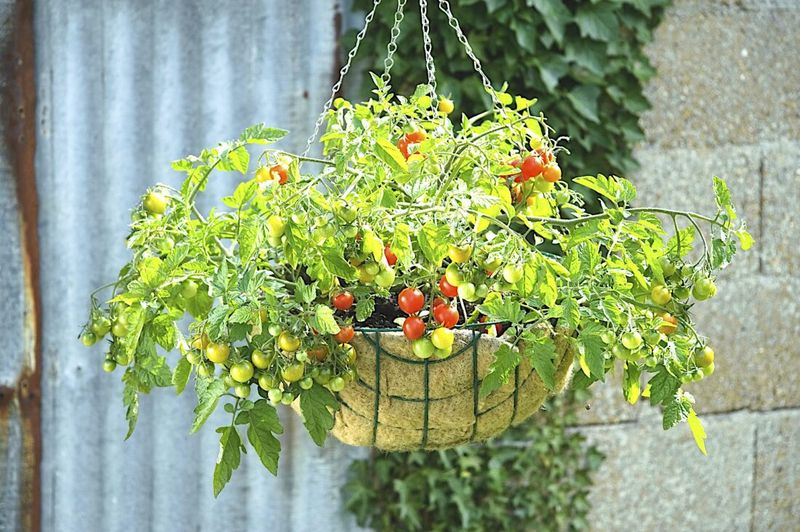
Cherry tomatoes are probably the most popular vegetable choice for hanging baskets, and for good reason — compact trailing varieties like ‘Tumbling Tom’ produce clusters of small, sweet fruits that hang down attractively as the season progresses.
In Arizona, picking the right variety and timing your planting correctly makes the difference between a productive basket and a struggling one.
Spring planting works best in most Arizona locations, getting plants established before summer heat peaks. In lower desert areas like Phoenix, starting in late January or February gives plants time to produce before temperatures push consistently above 100 degrees.
A covered patio or east-facing wall that gets morning sun and afternoon protection tends to extend the productive period noticeably.
Watering daily — sometimes twice daily during the hottest stretches — is just the reality of growing tomatoes in hanging baskets in the desert.
Adding water-retaining crystals to the potting mix can help reduce how often you need to water, though they’re not a complete substitute for regular attention.
Consistent moisture also reduces the chance of blossom end rot, which can show up when watering is erratic.
Feed every two weeks with a balanced liquid fertilizer once flowering starts to support continued fruit set. Compact varieties rarely need staking, but pinching off the growing tips occasionally encourages bushier growth and more fruit clusters.
Fresh cherry tomatoes from your own basket, still warm from the Arizona sun, taste noticeably better than anything from a store.