How To Help Bunny Ear Cactus Bloom In Arizona Without Stress
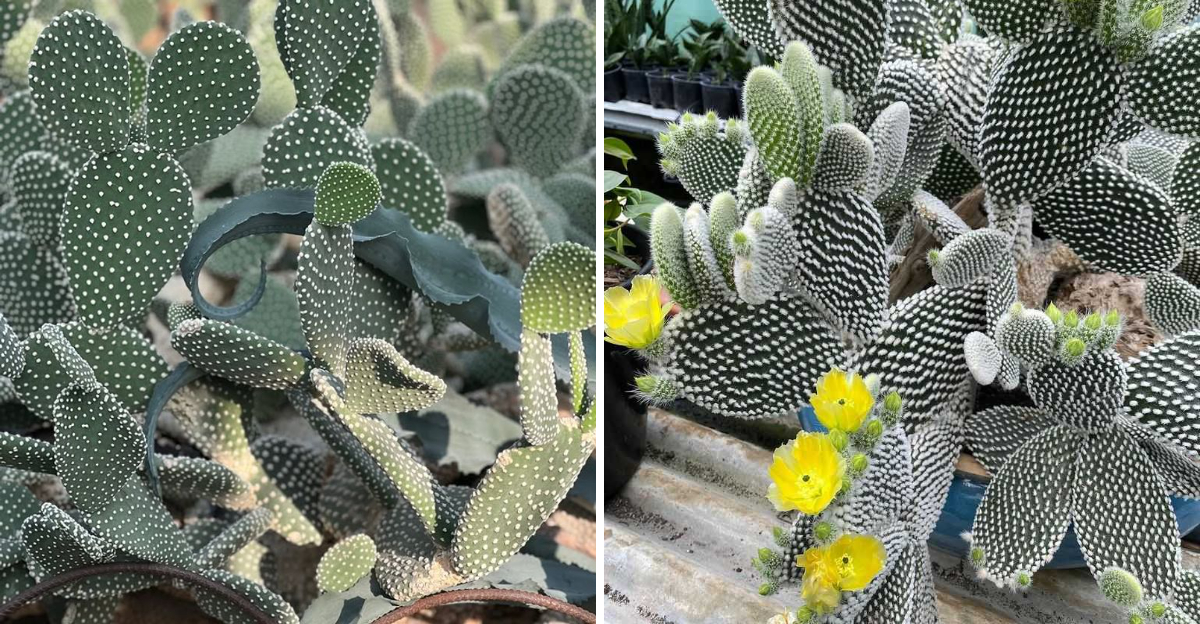
Bunny ear cactus can look perfectly healthy for months in Arizona, then bloom season passes with nothing to show.
Pads stay firm, color looks right, and growth continues, yet flowers never appear. Extra water or fertilizer often gets added, hoping to push it along, but the plant does not respond the way expected.
Frustration builds right here, especially when everything seems correct on the surface. Desert conditions shift fast, and this cactus reacts to small changes in timing, light, and care during key periods.
When those details fall out of sync in Arizona heat, blooming quietly stalls. Fixing that starts with understanding what the plant actually needs before it sets buds.
1. Give It Full Sun To Support Strong Flower Production
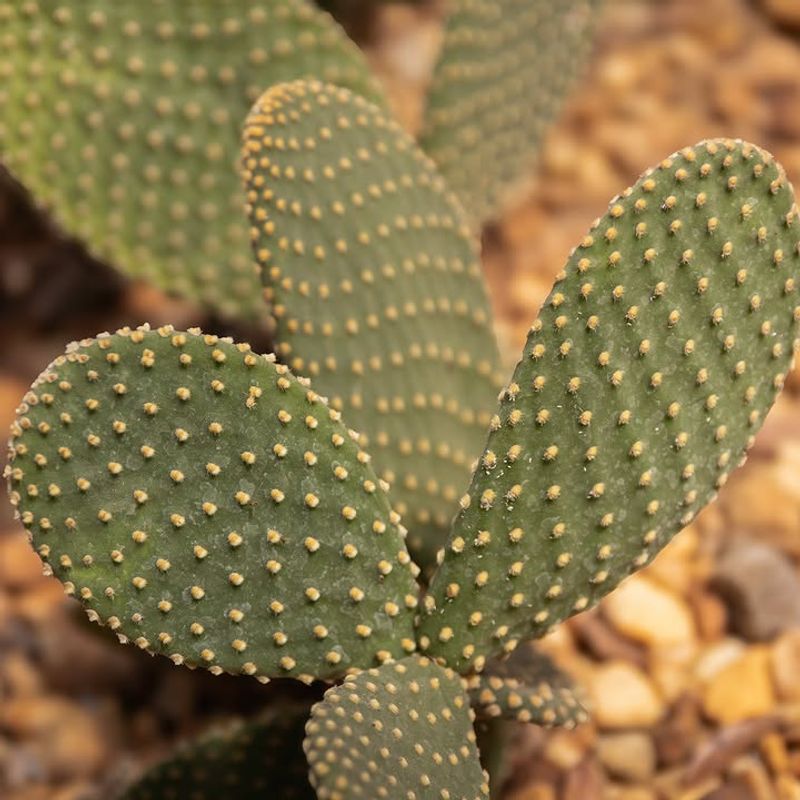
Sunlight is the single biggest factor most Arizona gardeners overlook when their bunny ear cactus refuses to bloom. Six to eight hours of direct sun daily is not a suggestion — it is genuinely what this plant was built for.
Opuntia microdasys evolved in open desert terrain where shade is rare and sunlight is relentless.
Placing your cactus in a spot with partial shade might keep it alive, but it rarely produces flowers. The pads can look fine and even grow new segments, yet blooming stays out of reach without that consistent, unfiltered sun exposure.
Arizona’s long sunny seasons are actually a major advantage here.
South-facing or west-facing spots in Phoenix or Tucson tend to work well for outdoor plants. If yours is in a container, rotating it occasionally helps all sides receive even light, which encourages more balanced pad growth and better flowering potential over time.
Indoor plants placed near a bright window often struggle to bloom because glass filters out some of the UV intensity. Moving a potted bunny ear cactus outside from late spring through early fall, when temperatures stay above 50 degrees Fahrenheit at night, can reset its blooming cycle naturally.
2. Avoid Overwatering Since Excess Moisture Stops Blooming
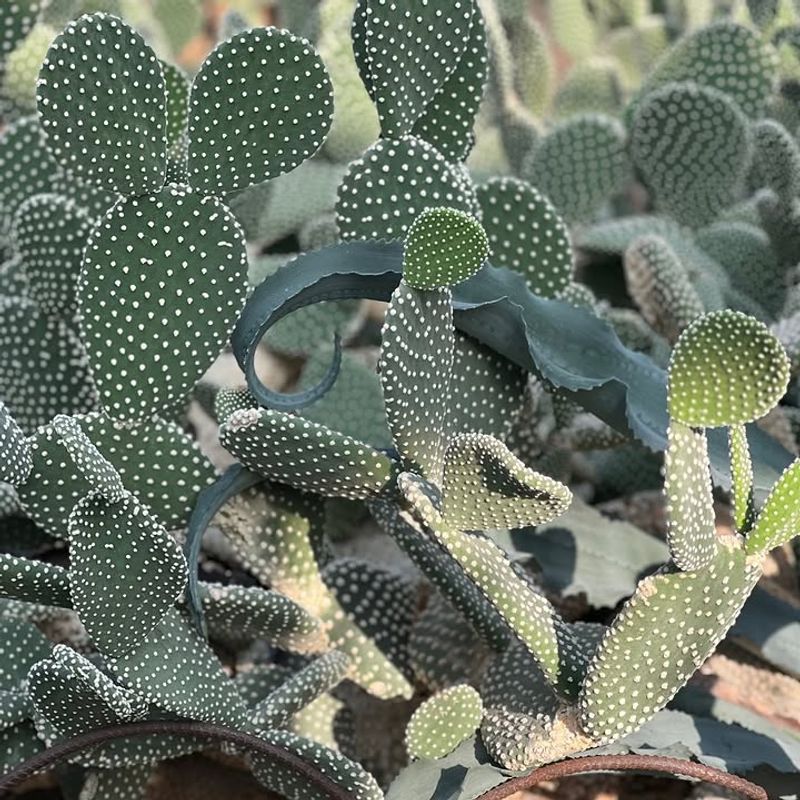
Watering too often is probably the most common mistake Arizona cactus growers make, and it directly interferes with blooming. When roots stay wet for extended periods, the plant shifts its energy toward survival rather than reproduction.
Blooms simply do not happen when the root zone is consistently damp.
During spring and summer in Arizona, watering once every two to three weeks is usually enough for established plants in the ground. Container plants dry out faster, so checking the soil before watering is smarter than following a fixed schedule.
Push a finger or a wooden skewer about two inches into the soil — if it comes out dry, watering is appropriate.
Root rot is a real risk with overwatered Opuntia microdasys, and the symptoms can be subtle at first. Pads may look slightly soft or discolored before any obvious damage becomes visible.
By the time pads are mushy, the root damage is often already serious.
Arizona summers bring monsoon rains, which can add unexpected moisture to the soil. If your cactus is in a garden bed exposed to heavy rainfall, consider whether the drainage is adequate before adding any extra water yourself.
Your Arizona Garden Changes Every Week. Your Plan Should Too.
Gardening in Arizona changes quickly throughout the season. Every Friday you’ll receive a simple weekly plan showing exactly what to plant, prune, fertilize, harvest, and protect so you never miss the right timing.
Letting nature do the watering during monsoon season often works fine.
3. Use Fast-Draining Soil To Keep Roots Healthy And Dry
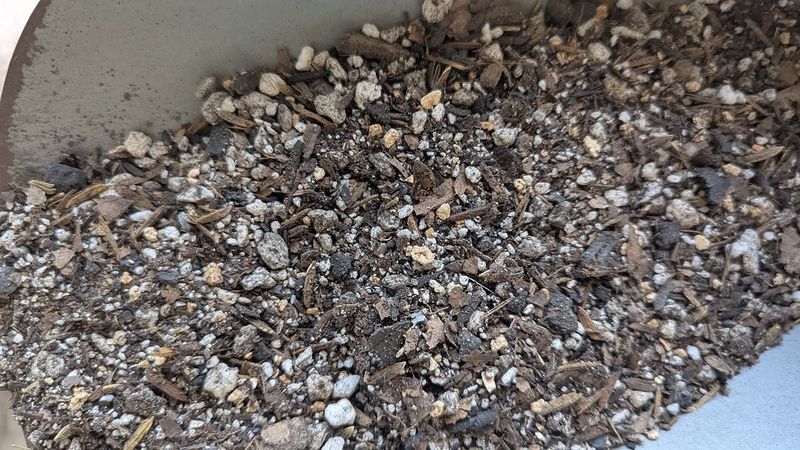
Soil type matters far more than most people expect when it comes to blooming. A bunny ear cactus planted in regular potting mix holds moisture too long, which keeps the roots in a state of stress that works against flower production.
Sandy, gritty soil that drains fast is what this plant genuinely thrives in.
A good cactus mix from a garden center is a solid starting point, but adding extra perlite or coarse sand improves drainage even further. Aim for a ratio of about 50 percent cactus mix to 50 percent inorganic material like perlite or decomposed granite.
That blend mimics the rocky, mineral-heavy desert soils where Opuntia microdasys grows naturally.
In Arizona, decomposed granite is widely available and works well as a soil amendment or top dressing. It keeps moisture from pooling around the base of the plant and also reflects heat upward, which bunny ear cacti seem to respond well to during the warmer months.
Container drainage holes are non-negotiable. Even perfect soil cannot compensate for a pot with blocked or absent drainage.
Water must move through and out of the container quickly, especially after Arizona’s summer monsoon rains add unexpected moisture to the equation.
4. Let The Soil Dry Completely Between Watering Cycles
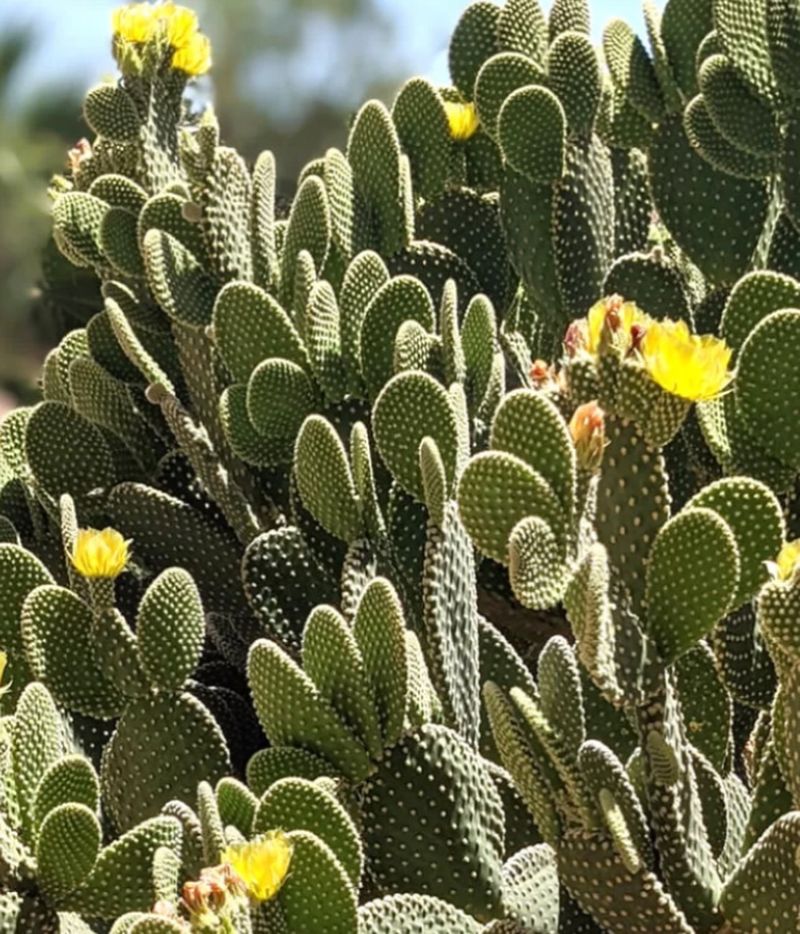
Completely dry soil before the next watering is not just a preference for bunny ear cactus — it is a hard requirement for keeping roots in good shape and giving blooms a real chance.
Moist soil between watering sessions tells the plant conditions are too comfortable for flowering to feel necessary.
From a biological standpoint, slight drought stress can actually encourage a cactus to produce flowers.
Reproduction is a survival response, and a plant that experiences controlled dry periods is more likely to flower than one kept in consistently moist conditions.
This is a well-documented behavior in Opuntia species.
Checking soil dryness before watering is the most reliable method available. Visual cues help, but soil can look dry on the surface while staying damp a few inches down.
Using a wooden skewer or a soil moisture meter removes the guesswork entirely and prevents unnecessary watering.
Arizona summers are hot enough that soil in terracotta pots can dry out within a week during peak heat.
Glazed ceramic or plastic containers retain moisture longer, so watering frequency should be adjusted based on the container material, not just the season or a calendar reminder.
5. Protect From Cold Snaps That Can Disrupt Flowering
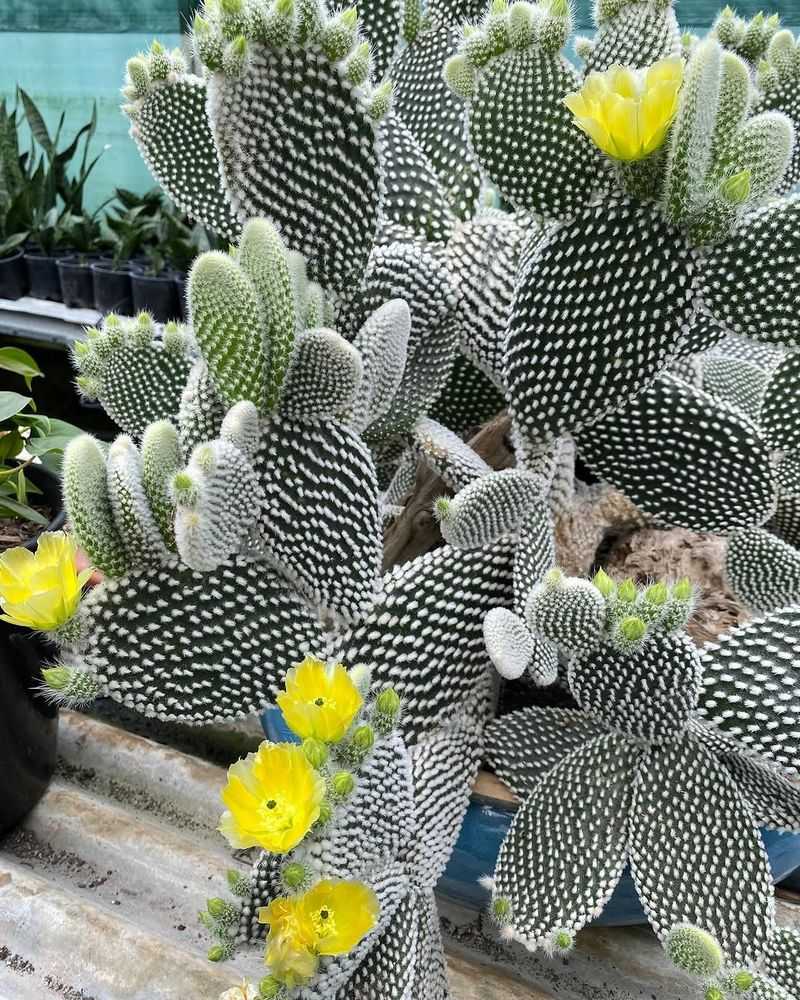
Arizona winters are mild by most standards, but cold snaps do happen, and they can set back a bunny ear cactus more than people expect.
Temperatures dropping below 50 degrees Fahrenheit consistently, or dipping near freezing even briefly, can stress the plant in ways that delay or prevent spring blooming.
Northern Arizona locations like Flagstaff face genuine frost risk, and even the Phoenix metro area sees overnight lows in the low 40s during January and February.
A single hard frost can damage exposed pads and disrupt the internal signals the plant uses to prepare for flowering.
Cold damage often shows up as soft, slightly sunken spots on the pads. Damaged tissue does not recover, but the rest of the plant can continue growing if the roots stayed warm enough.
Protecting the plant before a cold event is far more effective than trying to manage damage after the fact.
Frost cloth or lightweight garden fabric draped over outdoor plants works well for short cold events. Avoid plastic sheeting, which can trap excess moisture and cause more harm than the cold itself.
Remove the covering during the day so the plant can still receive sunlight.
6. Skip Heavy Fertilizing That Pushes Weak Growth Instead Of Blooms
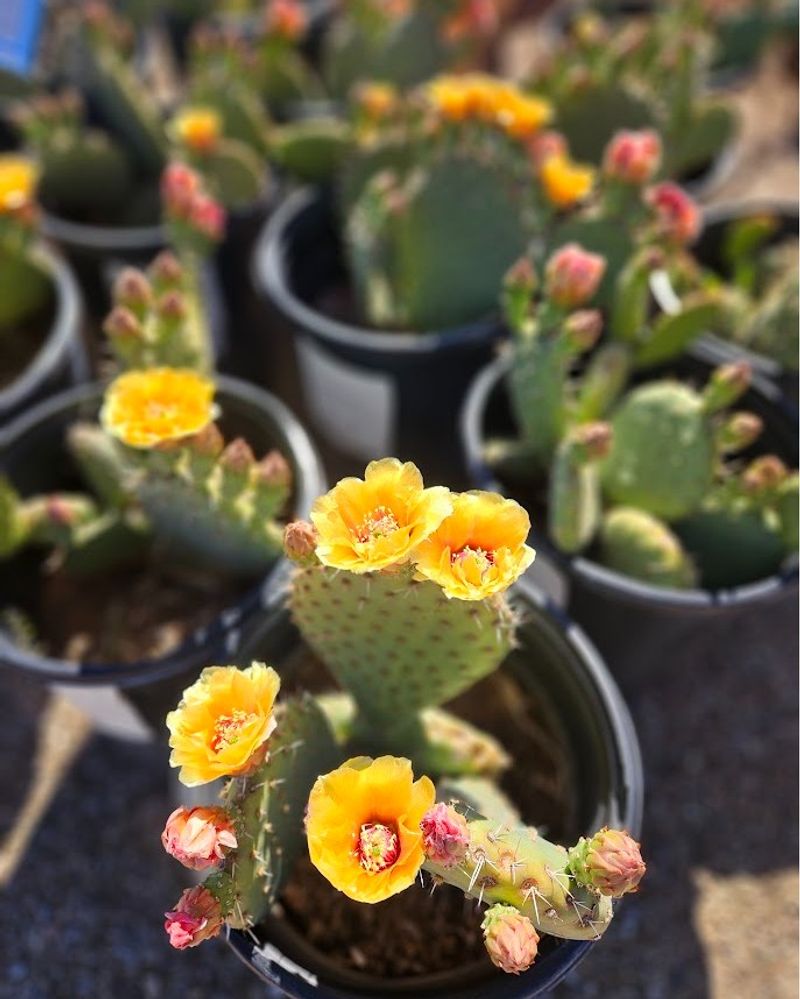
More fertilizer does not mean more flowers — at least not with bunny ear cactus. Heavy feeding, especially with nitrogen-rich formulas, pushes the plant to produce soft, fast-growing pads instead of putting energy toward blooming.
Lush green growth might look healthy, but it often signals that flowering has been pushed to the back burner.
Opuntia microdasys is adapted to nutrient-poor desert soils. Feeding it the same way you would a vegetable garden or flowering annual works against its natural tendencies.
A little goes a long way, and less is usually more effective than more.
If fertilizing feels necessary, a diluted low-nitrogen cactus fertilizer applied once in early spring is a reasonable approach.
Something with a formula closer to 5-10-10 or similar, where phosphorus is higher than nitrogen, supports root development and can encourage blooming without triggering excessive soft growth.
Avoid fertilizing during fall and winter entirely. Feeding a dormant or slowing plant stimulates out-of-season growth that is more vulnerable to cold damage and tends to look weak and stretched.
Arizona winters are mild but not warm enough to support healthy new growth driven by fertilizer.
Plants growing in the ground in Arizona garden beds often need no fertilizer at all if the soil has reasonable mineral content.
7. Keep It Slightly Root-Bound To Encourage Flowering
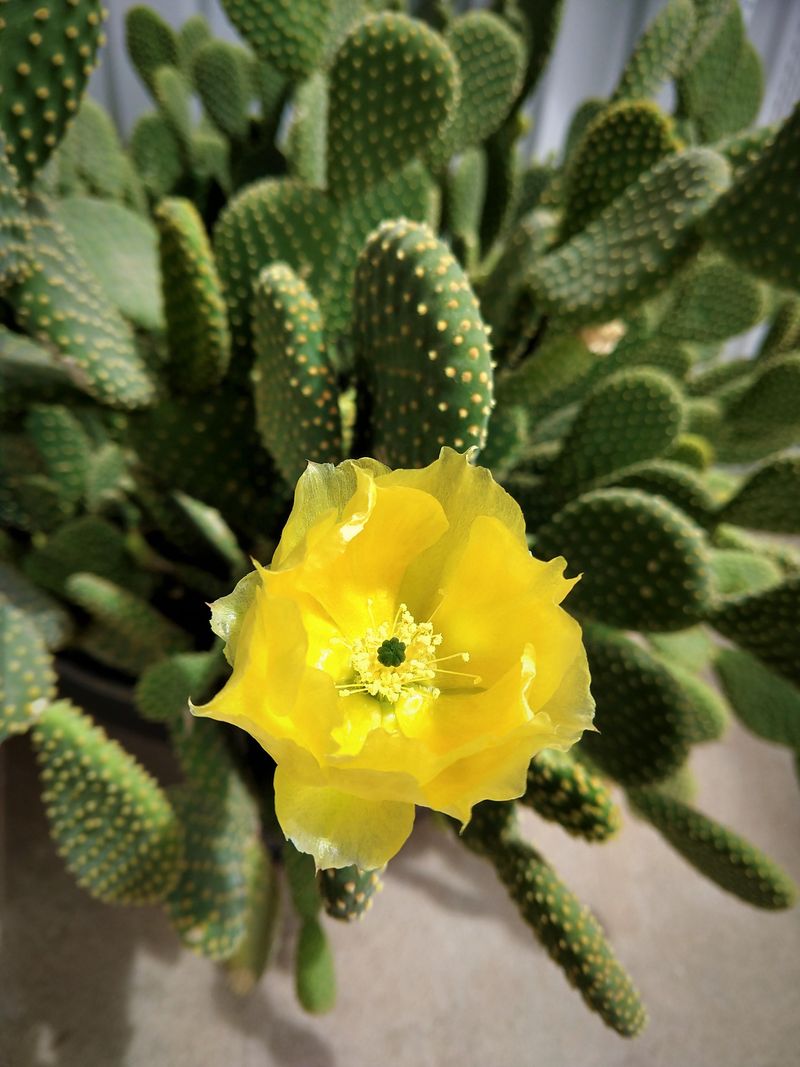
Root-bound conditions sound like a problem, but for bunny ear cactus, a slightly tight pot can actually trigger flowering.
When roots fill a container and begin to feel restricted, the plant often responds by shifting resources toward reproduction rather than vegetative growth.
Blooms become more likely when the root system has less room to expand.
Repotting into a much larger container too quickly resets this dynamic. The plant redirects energy into filling the new root space with fresh growth, which delays blooming by months or even longer.
Choosing a pot that is only one size up from the current one keeps the plant slightly snug without causing stress.
Terracotta pots are a popular choice in Arizona for good reason. They are breathable, which helps soil dry faster, and their weight keeps larger plants stable during the gusty winds that come through in spring and ahead of monsoon season.
A six to eight inch terracotta pot works well for most medium-sized bunny ear cacti.
Signs that repotting is genuinely needed include roots growing out of drainage holes, pads that look disproportionately large for the container, or soil that dries out within a day or two of watering.
At that point, moving up one pot size makes sense without going overboard.