Native Arizona Plants That Attract Hummingbirds With Very Low Water Use
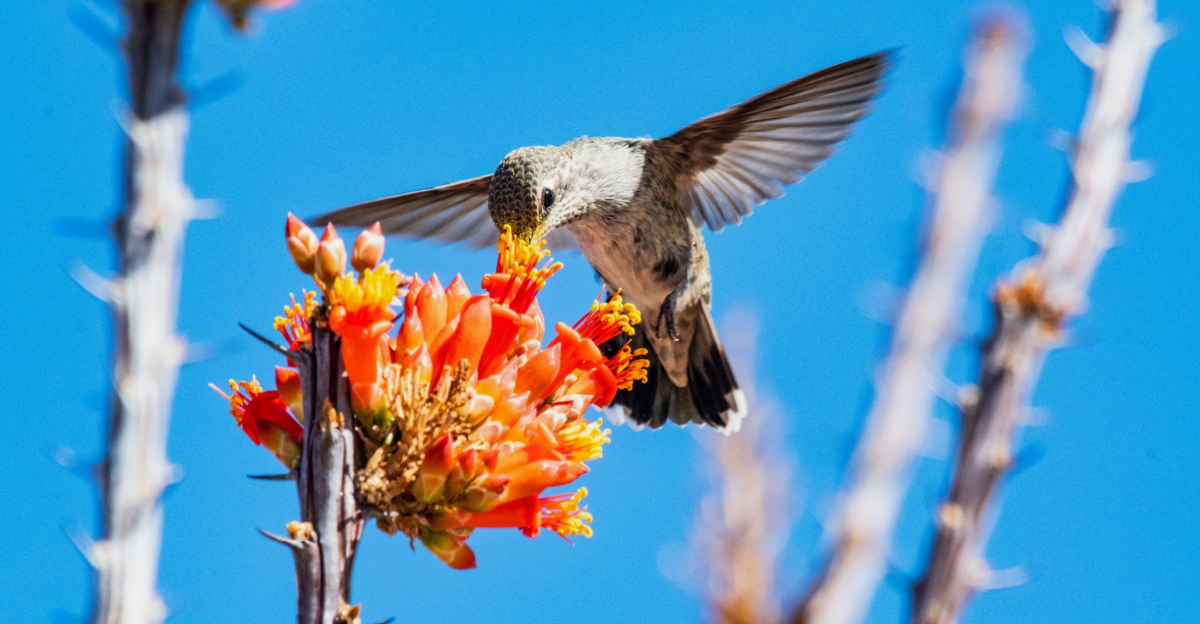
Living in Arizona means accepting that the sun is essentially a giant heat lamp set to “extra crispy.”
When the thermometer cruises past 110 degrees and the clouds disappear for months, keeping a yard looking lively feels like a full-time job. Most plants just give up and turn into tumbleweeds, which isn’t exactly the curb appeal we are going for!
The secret to a gorgeous yard that doesn’t cost a fortune in water is leaning into our local desert superstars.
These drought-tolerant natives actually enjoy the heat (weird, right?) and stay vibrant while your neighbor’s grass is struggling.
Even better, these plants act like a five-star diner for hummingbirds. You get a stunning, low-maintenance outdoor space and a front-row seat to a colorful bird show.
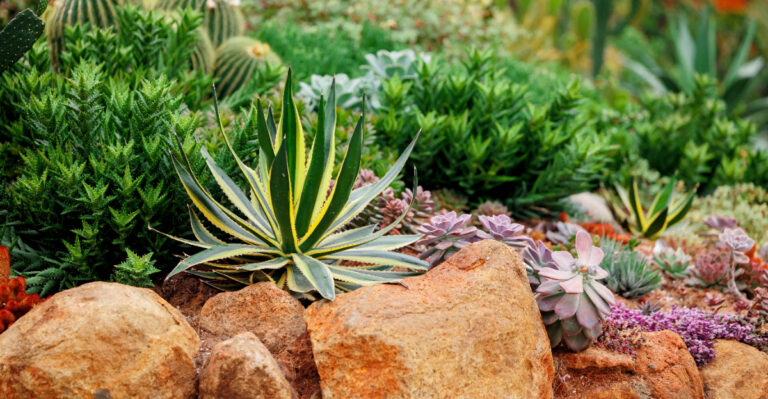
These specific varieties handle the Arizona sizzle perfectly and turn your gravel beds into a bustling wildlife habitat.
1. Chuparosa Brings Bright Winter Color For Hummingbirds
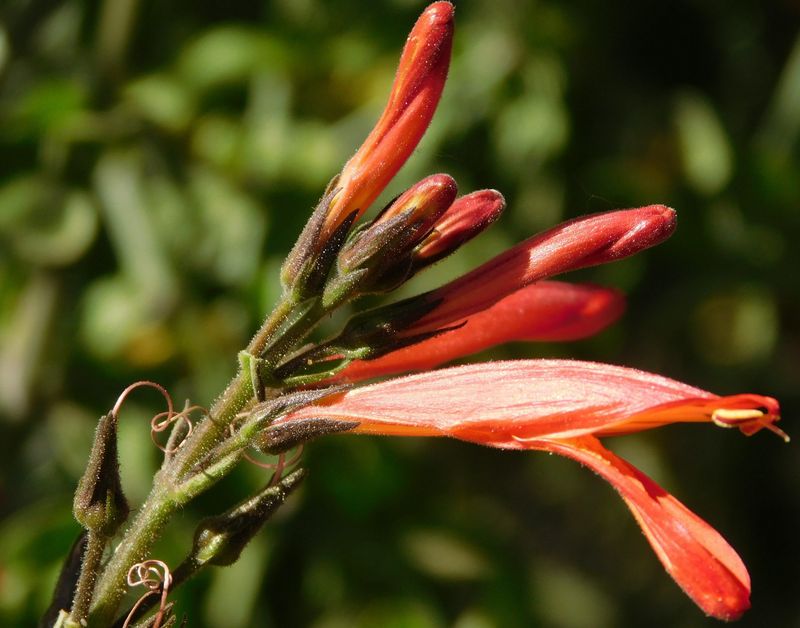
Few plants put on a winter show quite like chuparosa, a native shrub that seems to wake up just when the rest of the Arizona landscape settles into its quietest season.
While many gardens go bare between December and February, chuparosa fills that gap with clusters of slender, tube-shaped flowers in vivid shades of red and orange-red.
That timing is not accidental; it lines up almost perfectly with the movement of hummingbirds through the lower desert regions of Arizona.
This seasonal bloom pattern can make a noticeable difference in keeping a yard visually active during months when color is often limited.
The plant itself is a loosely branched shrub that can reach around three to five feet tall and wide under good conditions.
Its stems have a slightly gray-green color, and the leaves tend to be small or even absent during dry stretches, which is part of how the plant conserves moisture.
Despite looking sparse at times, chuparosa is remarkably tough and handles the kind of extended dry periods that Arizona winters and springs often bring.
In a low-water landscape, chuparosa works well when planted near boulders, along dry washes, or mixed into a gravel garden with other desert natives.
It tends to thrive in full sun and needs very little supplemental irrigation once it has settled in after the first growing season.
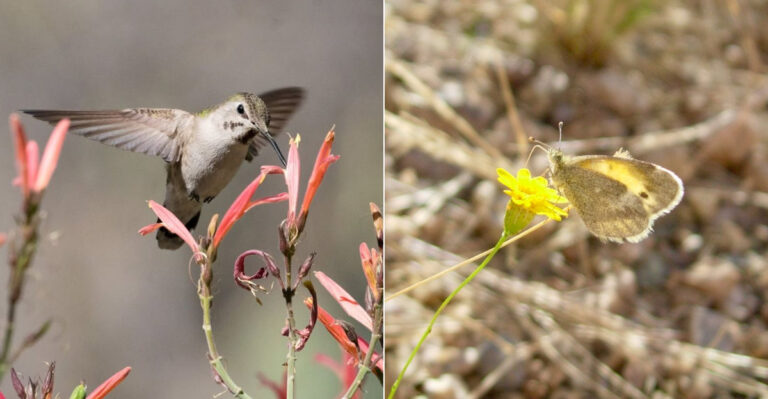
Anna’s hummingbirds and Costa’s hummingbirds are among the species most commonly seen visiting the blooms in Arizona yards.
For homeowners who want year-round wildlife activity without heavy watering, chuparosa is a reliable and visually rewarding choice that fits naturally into the desert palette.
2. Ocotillo Adds Striking Blooms In Desert Landscapes
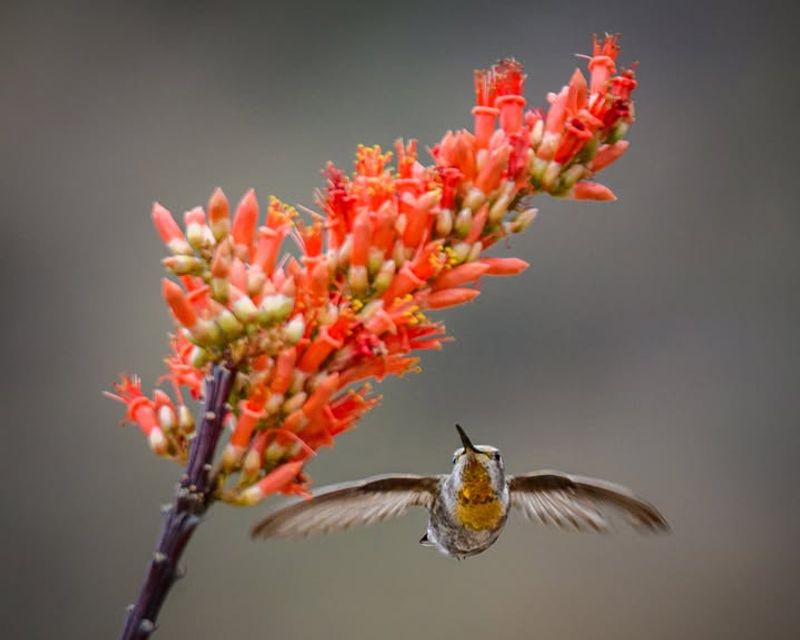
Standing tall with whip-like canes that can stretch fifteen feet or more into the Arizona sky, ocotillo is one of the most recognizable silhouettes in the desert Southwest.
When spring arrives and rains trigger a flush of growth, the tips of those long thorny stems burst into torches of bright red-orange blooms that are nearly impossible to miss from the street.
That flash of color is exactly what draws hummingbirds in, and the timing often coincides with the northward migration of several species moving through Arizona in March and April.
Your Arizona Garden Changes Every Week. Your Plan Should Too.
Gardening in Arizona changes quickly throughout the season. Every Friday you’ll receive a simple weekly plan showing exactly what to plant, prune, fertilize, harvest, and protect so you never miss the right timing.
In bloom, the plant can turn an otherwise muted desert planting into one of the most eye-catching spots in the yard.
Its upright shape also gives Arizona landscapes a strong architectural look without needing dense foliage to make an impact.
One of the more interesting traits of ocotillo is how it responds to moisture. After a good rain, the plant leafs out quickly and looks lush and green.
During dry spells, the leaves drop and the canes return to their lean, gray-brown form. This cycle can repeat several times through the year, which means the plant is never really dormant – it is simply managing its resources with impressive efficiency.
In an Arizona yard, ocotillo works best when given plenty of space and full sun exposure. It fits naturally into open desert plantings, xeriscaped front yards, and large rock gardens where its dramatic vertical form adds structure and height.
The plant needs virtually no supplemental water once established and does best in well-drained, rocky, or sandy soil.
For homeowners who want a plant that makes a bold visual statement while also supporting hummingbird activity during peak migration, ocotillo is a hard-to-beat option in the low-water Arizona garden.
3. Parry’s Penstemon Lights Up Spring With Color
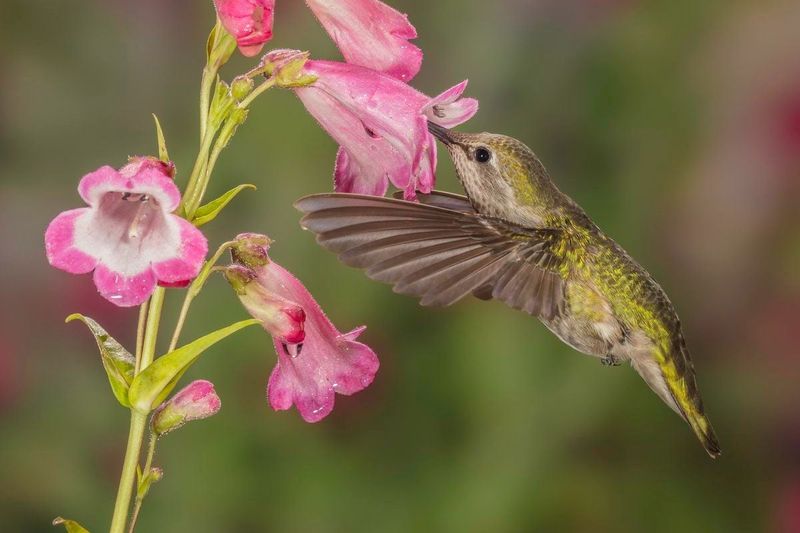
Spring in Arizona has a way of sneaking up on you – one week the desert looks quiet and brown, and the next, tall spikes of hot pink are shooting up from the ground like something out of a nature documentary.
That is the arrival of Parry’s penstemon, one of the most eye-catching native wildflowers in the state.
Its magenta-pink tubular blooms appear on upright stalks that can reach three to four feet tall, and they are almost irresistible to hummingbirds passing through Arizona during spring migration.
The flowers are built for hummingbird pollination. The tubular shape and rich color are classic signals to these birds, and the nectar reward is enough to keep them coming back repeatedly.
In Arizona yards, Parry’s penstemon tends to bloom from late February through April, making it one of the earlier spring-flowering natives and a valuable early-season food source when other plants have not yet reached their peak.
From a gardening standpoint, this plant is straightforward to work with. It grows well in full sun, tolerates rocky or sandy soil, and handles the dry conditions that define much of the Arizona growing season.
It tends to spread gradually through self-seeding, which means a small planting can slowly expand into a more substantial display over time.
Parry’s penstemon looks especially striking when planted in groups along a pathway, in a pollinator garden, or near the edge of a gravel yard where its tall, colorful stalks can stand out without crowding other plants.
It is a genuinely rewarding spring plant for any water-wise Arizona garden.
4. Fairy Duster Offers Soft Blooms And Pollinator Appeal
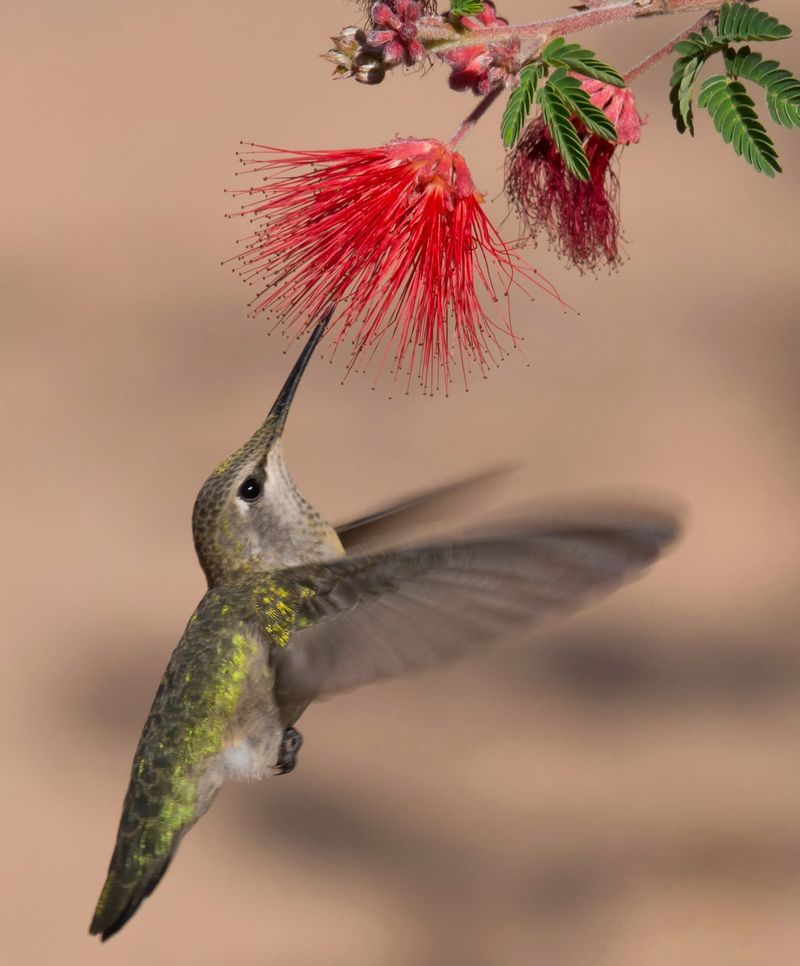
There is something almost playful about the way fairy duster blooms. Instead of bold trumpet shapes or tall spikes, this low-growing native shrub produces clusters of delicate, thread-like flowers that look like tiny pink powder puffs scattered across the plant.
The effect is soft and feathery, which makes fairy duster one of the more charming options in any Arizona low-water garden.
What might surprise some gardeners is that those wispy blooms are genuinely attractive to hummingbirds, especially the species that move through the lower desert elevations of Arizona in late winter and early spring.
The shrub itself stays fairly compact, usually reaching two to four feet tall and spreading a similar width. It has small, fern-like leaves that give it a fine texture, which contrasts nicely with the bolder, chunkier forms of plants like ocotillo or agave.
In Arizona landscapes, this textural variety is part of what makes fairy duster a useful design plant – it softens edges, fills in gaps between larger specimens, and adds a gentle visual layer without demanding much space or water.
After the main spring bloom, fairy duster may rebloom following summer monsoon rains, giving the garden a second round of color during a season when many plants are struggling with heat.
It grows best in full sun and well-drained soil, and established plants need only minimal watering.
Whether placed along a front yard border, tucked into a rock garden, or used as a low informal hedge, fairy duster brings both pollinator activity and understated beauty to Arizona yards throughout the year.
5. Desert Honeysuckle Extends Color Through Warm Months
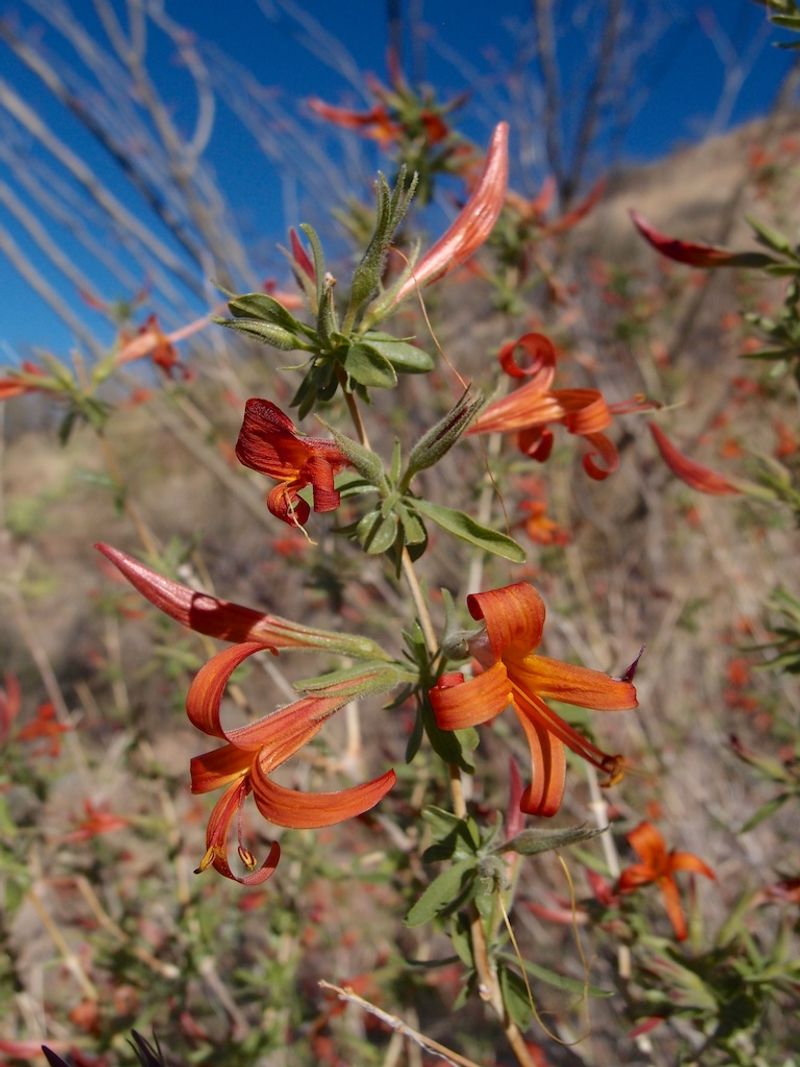
When most flowering plants in Arizona start to slow down under the intensity of summer heat, desert honeysuckle seems to take it as a personal challenge to keep going.
This native shrub produces bright orange to red tubular flowers from late spring well into the fall, covering a stretch of the calendar that few other low-water plants can match.
That extended bloom season makes it especially valuable for homeowners who want to maintain hummingbird activity in their Arizona yards from one season into the next.
The flowers are shaped almost like small trumpets, which is a design that hummingbirds are naturally drawn to.
The vivid color and accessible nectar make desert honeysuckle a frequent stop for broad-billed and black-chinned hummingbirds, both of which are common summer residents in many parts of Arizona.
Having a plant that blooms through July and August – the hottest and sometimes wettest months of the year – means the yard stays active with bird movement even when the garden might otherwise feel static.
Desert honeysuckle grows as an upright to slightly arching shrub, typically reaching three to six feet tall depending on conditions.
It handles full sun well and thrives in the well-drained soils that are common across Arizona, including rocky hillsides, sandy washes, and amended backyard beds.
Once established, it needs very little irrigation beyond what Arizona monsoon rains naturally provide.
For gardeners building a layered, wildlife-friendly landscape, desert honeysuckle is a dependable and colorful anchor that bridges the gap between spring bloomers and fall-flowering natives.