The Best Unique Succulent Plants For Texas Gardens
Walk through most Texas gardens and you will see a lot of the same familiar plants showing up again and again. They do their job, they handle the heat, and they keep things looking nice enough.
But every now and then, a garden stands out in a way that makes you pause for a second look. A big part of that comes down to plant choice, and unique succulents are one of the easiest ways to bring that kind of fresh energy into the space.
Succulents already have a reputation for being tough, which is a huge advantage in Texas. What many gardeners do not realize is just how much variety they offer beyond the usual picks.
Some have bold shapes, others bring unexpected colors, and many add a sculptural look that feels almost like living art. Even a small grouping can change the entire feel of a bed or container.
For Texas gardeners who want something a little different without taking on extra work, unique succulents hit a sweet spot. They handle the conditions, stand out visually, and give your garden a style that feels both modern and easy to maintain.
1. Whale’s Tongue Agave (Agave Ovatifolia)
Picture a plant so bold it stops people in their tracks. That is exactly what the Whale’s Tongue Agave does in a Texas garden.
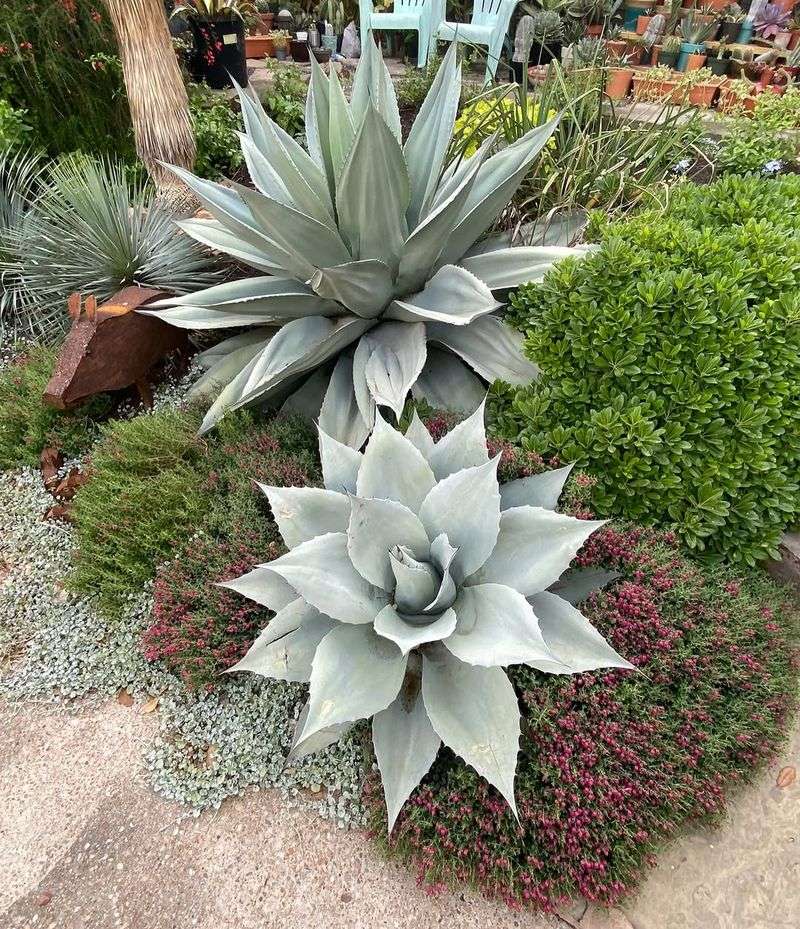
Its wide, powder-blue leaves curve gently outward, almost like the tongue of a whale, giving it one of the most dramatic silhouettes you will ever see in a landscape. This agave is a showstopper for many reasons. First, it handles Texas heat with ease.
Even during brutal summer temperatures, it keeps its cool-blue color and stays strong. It also handles cold snaps better than most other agaves, which makes it a reliable choice across many parts of the state, from the Panhandle to Central Texas.
Because of its large size, it works best as a focal point in the yard. Plant it where it has room to spread out and show off.
Pair it with smaller plants around the base to make those blue leaves pop even more. Gravel or decomposed granite around it adds a clean, polished look.
One thing to know is that this plant grows slowly. But that is actually a good thing, because it means less maintenance over time.
Water it deeply but infrequently, and make sure it is planted in well-draining soil. Standing water around the roots is the one thing this plant does not appreciate.
Gardeners across Texas love this agave because it delivers maximum visual impact with minimal effort. It is the kind of plant that makes your whole yard look professionally designed without requiring a lot of work on your part.
2. Twist-Leaf Yucca (Yucca Rupicola)
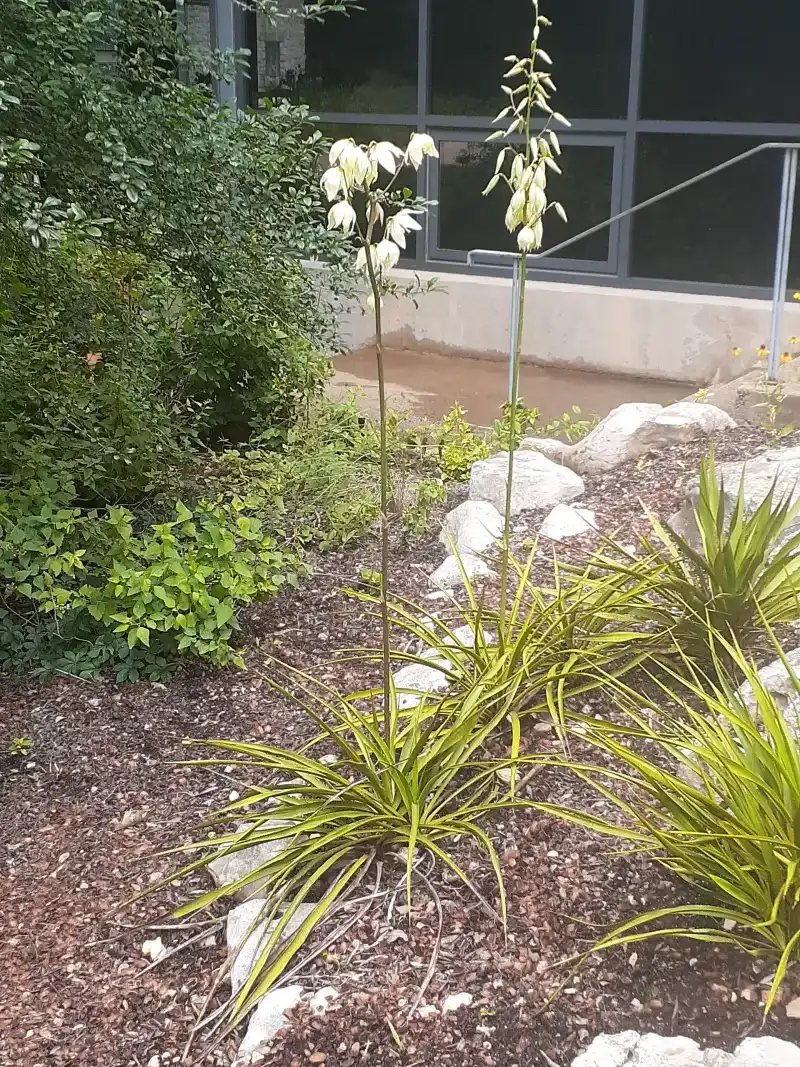
Not all yuccas look stiff and spiky. The Twist-Leaf Yucca breaks that mold completely. Its long, flat leaves curl and twist in gentle spirals, giving the plant a soft, flowing appearance that feels almost alive in a breeze. It is one of the most graceful plants you can grow in a Texas garden.
Your Texas Garden Changes Every Week. Your Plan Should Too.
Gardening in Texas changes quickly throughout the season. Every Friday you’ll receive a simple weekly plan showing exactly what to plant, prune, fertilize, harvest, and protect so you never miss the right timing.
What makes this yucca really special is that it is native to Texas. That means it evolved right here, in the rocky soils and dry conditions of the Hill Country and surrounding regions.
Being a native plant means it is already perfectly adapted to local weather patterns, soil types, and temperature swings. You do not need to baby it or give it special treatment.
In terms of design, the Twist-Leaf Yucca adds movement to dry landscapes. Most drought-tolerant plants look very static, but the twisted leaves of this yucca catch the wind and shift gently, giving your garden a more dynamic, lively feel.
It pairs beautifully with boulders, gravel pathways, and native grasses. Growing conditions are simple. Full sun and rocky or sandy, well-drained soil work best.
Once it is established, it rarely needs watering. In the spring, it sends up tall flower spikes covered in creamy white blooms that attract pollinators.
For Texas gardeners who want something native, low-maintenance, and visually interesting, this yucca checks every box. It is a quiet standout that earns more admiration the longer you look at it.
3. Spineless Prickly Pear (Opuntia Ellisiana)
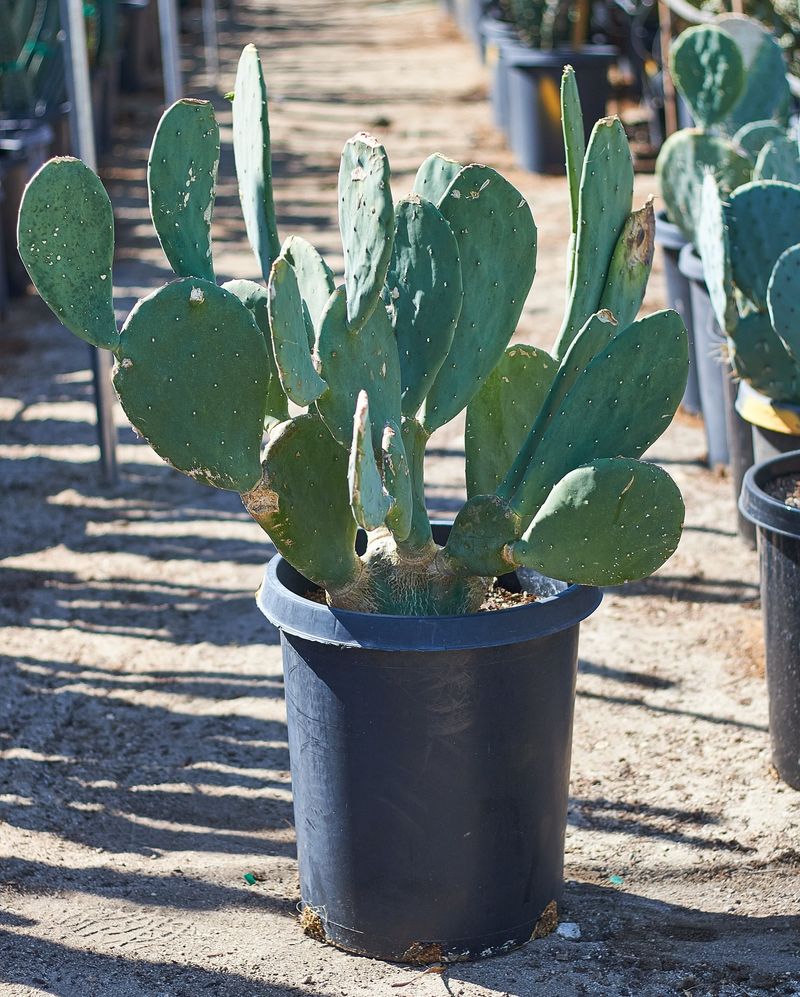
Prickly pear cactus is a Texas classic, but most people hesitate to plant it near walkways or areas where kids and pets roam. The Spineless Prickly Pear solves that problem beautifully.
With far fewer sharp spines than traditional prickly pears, it brings all the bold cactus look without the constant worry of getting poked.
Landscape designers in Texas love this variety for that exact reason. You can place it along borders, near garden paths, or even in front yard beds without stressing about accidental contact.
It still has some tiny glochids, which are small hair-like bristles, so light gloves during handling are smart. But compared to other cacti, it is much more garden-friendly.
When spring arrives, this plant puts on a real show. Bright yellow, orange, or pink flowers bloom across the flat pads, drawing bees and butterflies in large numbers.
After the flowers fade, colorful red or purple fruits appear, adding another layer of visual interest through the summer months.
Drought tolerance is one of its strongest features. Once established in Texas soil, it needs almost no supplemental watering.
Plant it in full sun with well-drained soil, and it will reward you season after season with very little effort on your part.
Fun fact: the pads and fruits of prickly pear are actually edible and used in traditional Texas and Mexican cooking. So this plant is not just beautiful, it is also surprisingly practical for adventurous home cooks.
4. Blue Chalksticks (Senecio Serpens)
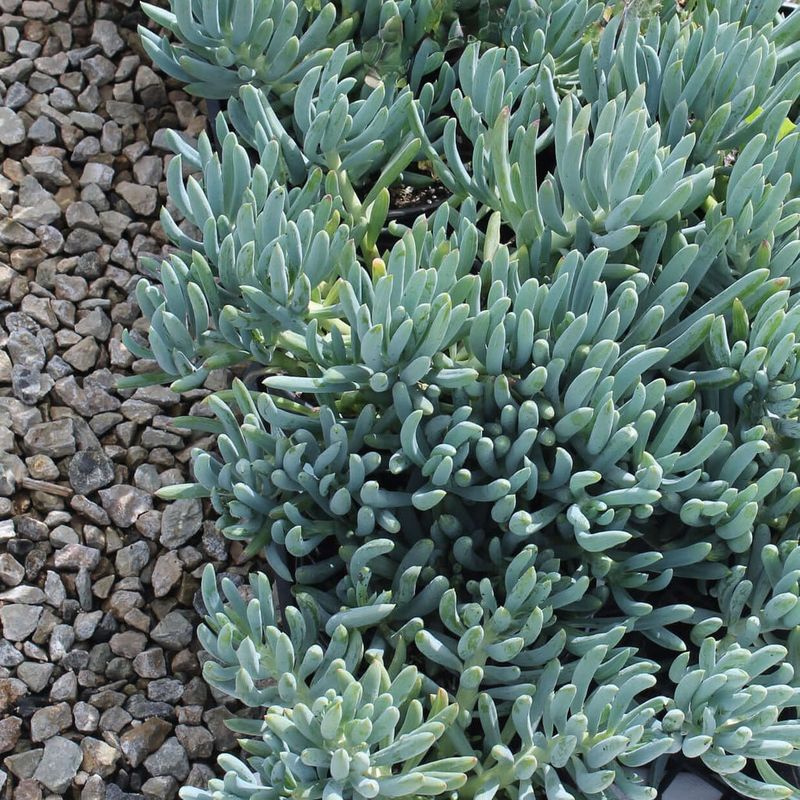
If you have ever wanted a plant that looks like it belongs in a modern art installation, Blue Chalksticks is your answer. The short, finger-shaped leaves are a stunning shade of powdery blue-gray that looks almost painted on.
It is one of the most eye-catching low-growing succulents available for Texas gardens. Color contrast is where this plant truly shines. In a garden full of green plants, the cool blue tone of Blue Chalksticks stands out immediately.
It pairs especially well with warm-toned plants like red yucca or orange-flowering cacti. The contrast creates a visual punch that makes the whole garden bed look more intentional and polished.
It works wonderfully in borders, rock gardens, or containers. When planted in a pot, it spills slightly over the edges as it grows, creating a soft, cascading effect that looks elegant on patios or front porches.
In Texas, where patio gardens are popular year-round, this plant earns its spot with ease. Heat and full sun are exactly what it wants. Texas summers are no challenge for this tough little plant.
It thrives in well-drained soil and needs very little water once established. Overwatering is actually the main thing to avoid, so hold back on the hose and let the soil dry out completely between waterings.
Blue Chalksticks stays compact and tidy, which means minimal pruning and clean edges in your garden design. For low-effort, high-impact color, very few plants match what this one delivers.
5. Ghost Plant (Graptopetalum Paraguayense)
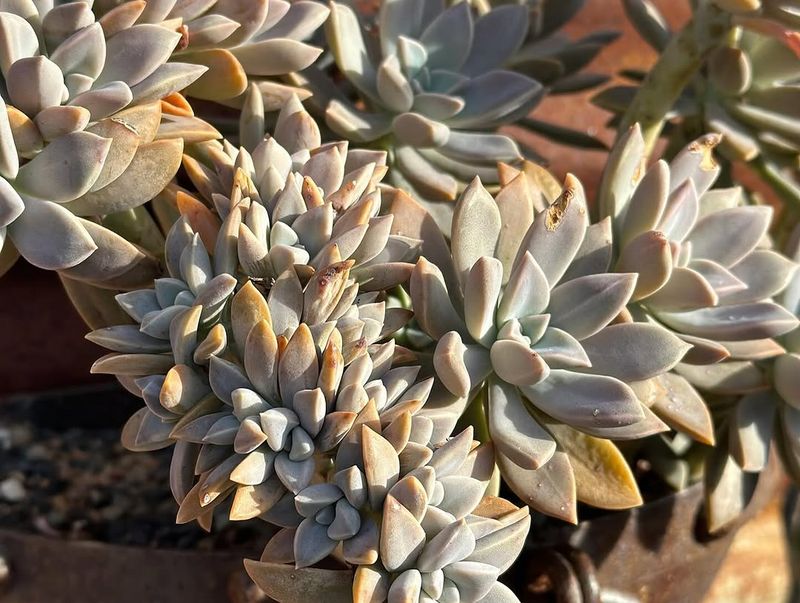
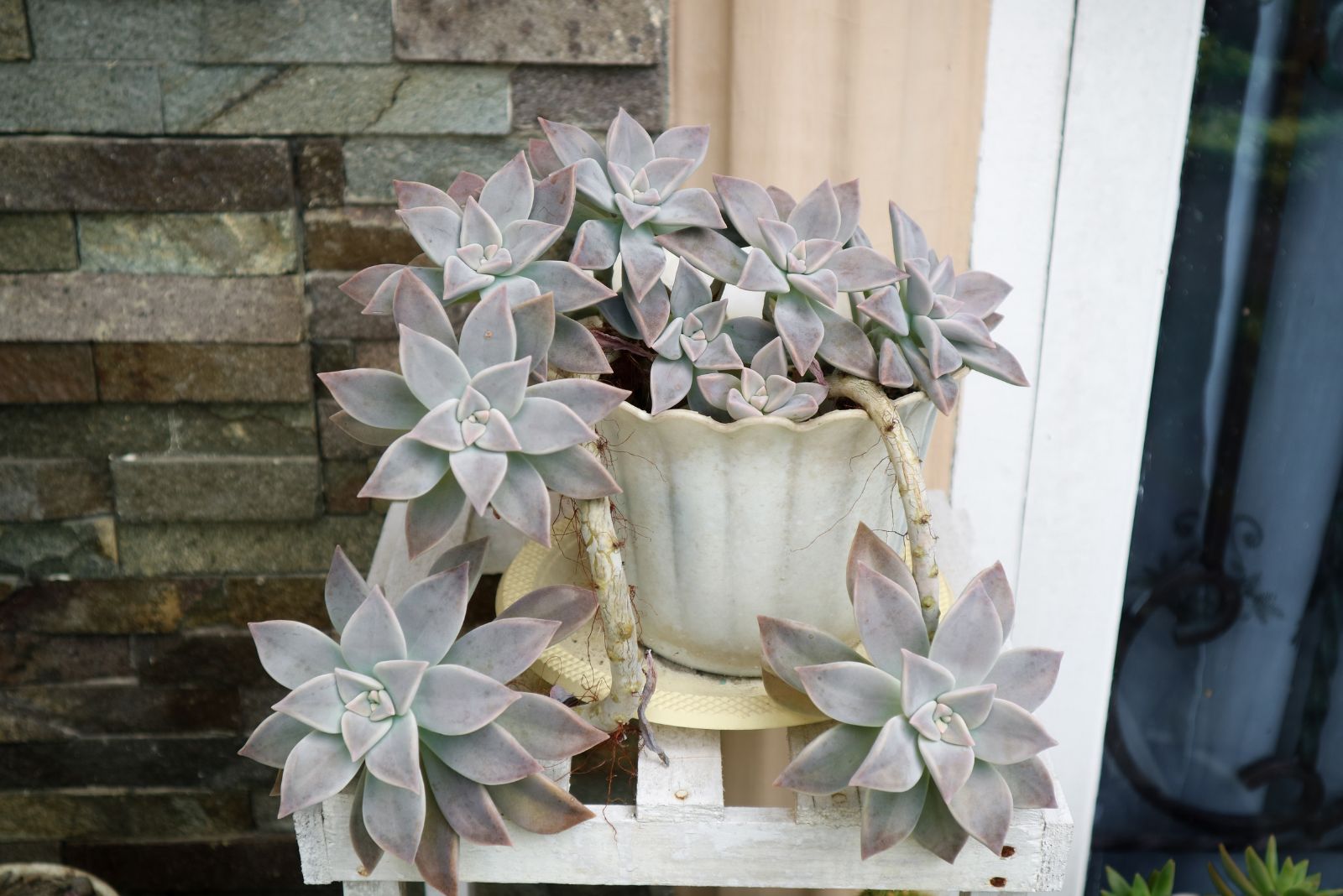
There is something almost magical about the Ghost Plant. Its rosette-shaped leaves shift between pale silver, soft pink, and lavender depending on how much sun they receive.
More sun means deeper, warmer tones. Less sun brings out cooler, ghostly silver hues. No two plants look exactly the same, which makes each one feel unique.
Gardeners in Texas love this plant because it spreads on its own over time. New rosettes form along trailing stems and eventually root wherever they touch the soil.
This spreading habit makes it an excellent ground cover for dry areas where other plants struggle to fill in. It softens the edges of rock gardens and slopes without any extra effort from you.
Containers are another great option for Ghost Plant. It looks stunning in shallow pots, hanging baskets, or mixed succulent arrangements on patios and porches.
The trailing stems drape over the sides of containers in a relaxed, natural way that always looks intentional.
Care is refreshingly simple. Full sun to partial shade works well across Texas. Water deeply every couple of weeks during summer, and pull back even more in the cooler months. Well-drained soil is a must, so avoid heavy clay without amending it first.
Did you know the Ghost Plant is originally from Mexico? It crossed the border and found a second home in Texas, where the climate suits it perfectly.
It is one of those plants that looks delicate but proves surprisingly tough when the Texas heat turns up.
6. Red Yucca (Hesperaloe Parviflora)
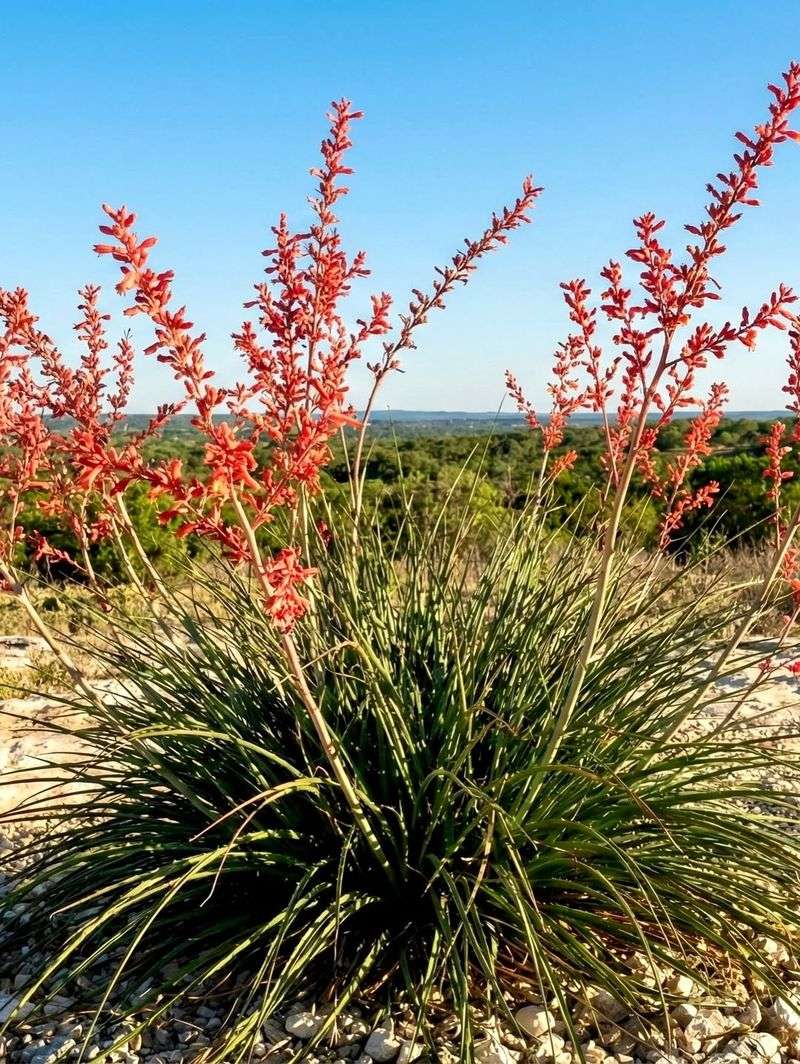
Walk through almost any well-designed Texas garden in summer, and you will likely spot a Red Yucca in bloom. Tall, arching flower spikes loaded with coral-pink blossoms rise dramatically above the grassy foliage, sometimes reaching five or six feet high.
The effect is stunning, and the hummingbirds absolutely cannot resist it. Despite its name, Red Yucca is not actually a true yucca. It belongs to a different plant family and lacks the sharp, spine-tipped leaves that make true yuccas risky around bare feet.
The leaves are long, narrow, and slightly flexible, making it a much friendlier plant to have near seating areas or play spaces in the yard.
This plant is a certified Texas tough performer. It tolerates extreme heat, long droughts, poor soil, and even periods of flooding.
Once it gets established, it practically takes care of itself. Water it occasionally during the first growing season, and after that, rainfall alone is usually enough to keep it healthy and blooming.
Red Yucca works in almost every Texas garden style, from native wildscape plantings to modern minimalist designs.
It looks great when planted in groups of three or five, creating a flowing mass of color that moves gently in the wind. It also works as a single specimen near a mailbox, driveway, or entryway.
Blooming season runs from late spring through early fall, giving you months of color and wildlife activity. Few plants in Texas offer that kind of extended performance with so little care required.
7. Zebra Plant (Haworthiopsis Attenuata)
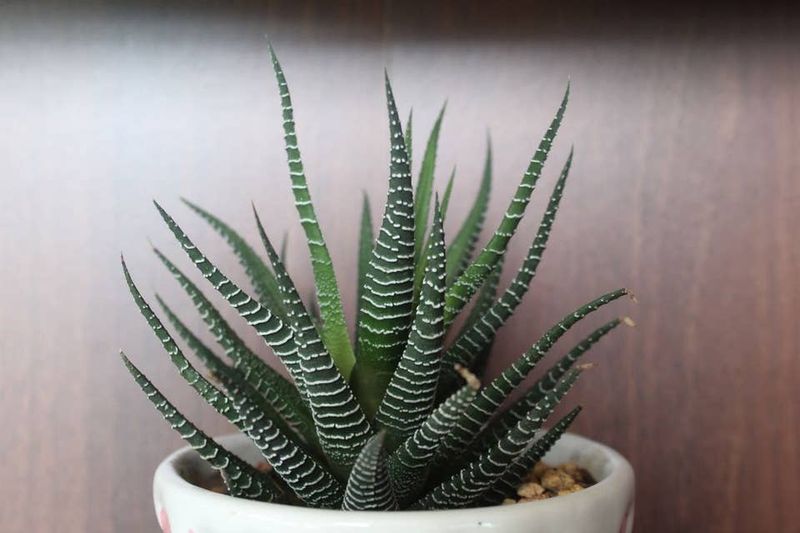
Small but seriously striking, the Zebra Plant earns its name from the bold white stripes that run across its dark green leaves. The pattern looks almost too perfect to be real, like nature decided to get creative with a paintbrush.
It is one of those plants that makes visitors stop and ask, what is that? For Texas gardeners with limited space, this plant is a dream. It stays compact and tidy, rarely growing more than a few inches tall.
That makes it perfect for container gardens, apartment balconies, shaded patios, or indoor windowsills near a bright window. You do not need a big yard to enjoy this one.
Unlike most succulents on this list, the Zebra Plant actually prefers some shade. In Texas, where summer sun is intense, that is genuinely useful.
Tuck it under a covered porch, beneath a shade tree, or in a spot that gets morning sun and afternoon shade. It will reward you with healthy, deep green leaves and those gorgeous white markings staying crisp and clear.
Watering is minimal. Let the soil dry out completely between waterings, and never let the pot sit in standing water.
A well-draining cactus mix works perfectly. Fertilize lightly once in spring and once in summer for the best results.
Maintenance is about as low as it gets. No pruning, no staking, no fussing. The Zebra Plant just sits there looking incredible, which honestly makes it one of the most satisfying plants you can add to your Texas garden or home.