Native Michigan Shrubs That Bring Four Seasons Of Interest Without Any Care
Some shrubs look good for a few weeks, then fade into the background for the rest of the year. Others keep showing off in different ways as the seasons change, and those are the ones many Michigan gardeners are starting to appreciate more.
Native shrubs, in particular, can offer something interesting in every season without needing constant attention. They are built for Michigan’s climate, which means they handle cold winters, changing weather, and local soil with far less effort.
In spring, they may bloom or leaf out with fresh color. Summer brings fuller growth and texture, fall adds rich tones or berries, and winter reveals structure or bark that still stands out.
If you want a landscape that stays engaging all year without extra work, these native shrubs are worth a closer look. They prove a low effort garden can still feel dynamic and full of life.
1. Winterberry (Ilex Verticillata)
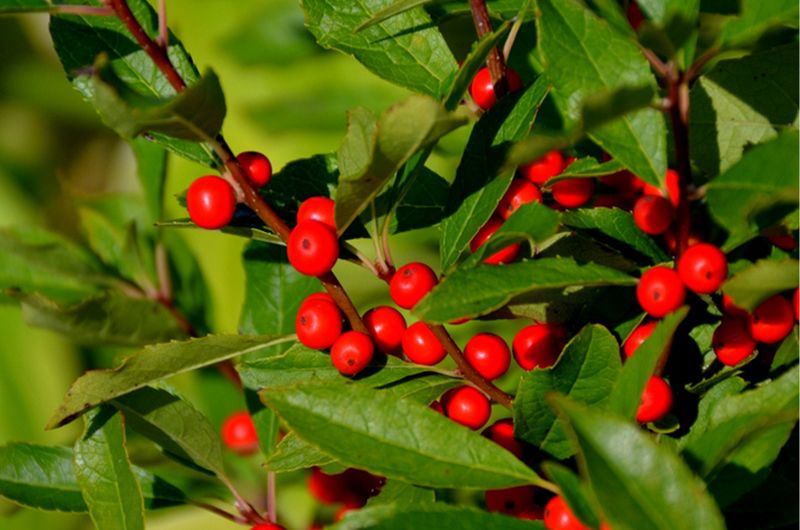
Picture a shrub that practically lights up your yard in the middle of a gray Michigan winter. Winterberry does exactly that, turning bare branches into a brilliant display of fire-engine red berries that seem to glow against fresh snow.
Few native plants deliver such a jaw-dropping winter show with zero effort on your part.
In spring, small white flowers appear along the stems and quietly attract pollinators to your yard. Summer brings lush, deep green foliage that blends beautifully into any Michigan garden border or rain garden.
Then fall arrives and the leaves drop, revealing those famous red berries in full glory, right when the yard needs color the most.
One thing to keep in mind is that you need both a male and a female plant to get berries. Plant one male for every three to five females and you will have berries every single year.
Winterberry absolutely loves wet soil, making it a perfect choice for low spots in Michigan yards where other plants struggle. It handles everything from full sun to partial shade without complaint.
Once established, it spreads slowly into a natural colony that looks stunning season after season.
2. Red Chokeberry (Aronia Arbutifolia)
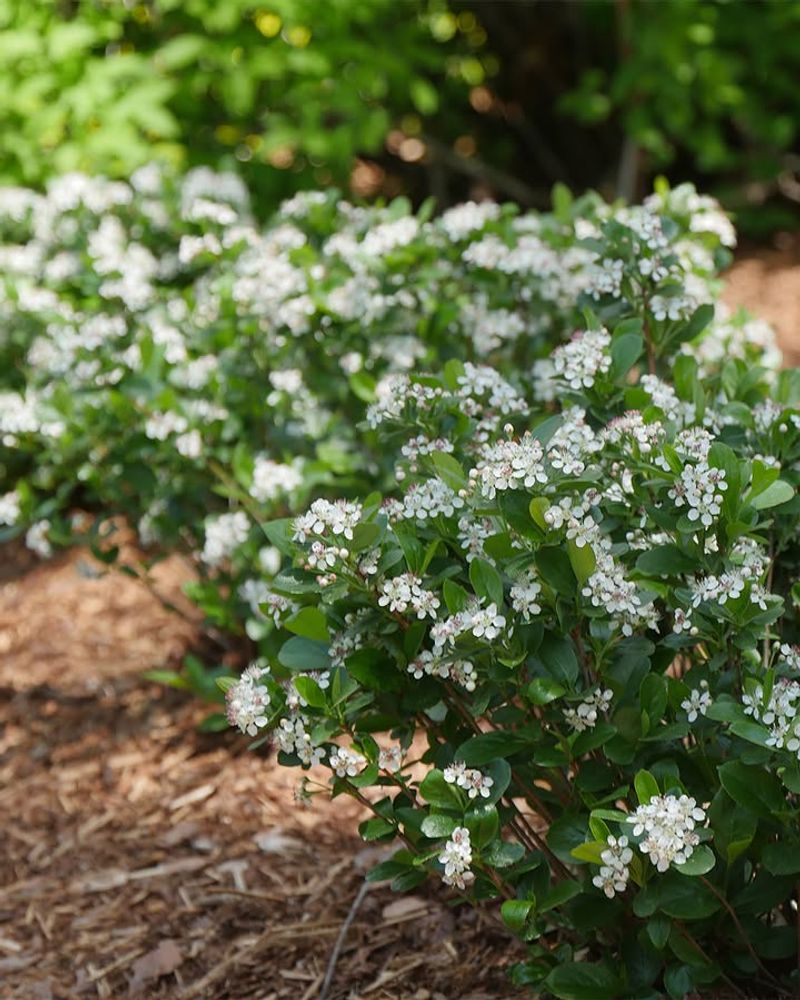
Red chokeberry might just be the hardest-working native shrub in all of Michigan. It offers something genuinely beautiful in every single season without asking for fertilizer, pruning, or any special treatment from you.
Gardeners who plant it once almost always wish they had planted more.
Spring kicks off with clusters of bright white flowers that cover the entire shrub and attract bees and butterflies in huge numbers. Summer follows with glossy, deep green leaves that give the shrub a clean, polished look in borders or naturalized areas.
Then the real show begins in fall, when the foliage ignites into brilliant shades of scarlet red that rival any ornamental plant at the garden center.
The bright red berries hang on well into late fall and even early winter, giving birds a reliable food source and your Michigan yard a pop of color long after most other plants have faded.
Your Michigan Garden Changes Every Week. Your Plan Should Too.
Gardening in Michigan changes quickly throughout the season. Every Friday you’ll receive a simple weekly plan showing exactly what to plant, prune, fertilize, harvest, and protect so you never miss the right timing.
Red chokeberry handles wet soil, dry soil, full sun, and partial shade with equal ease, which makes it incredibly versatile for different spots around the yard.
It grows about six to ten feet tall at maturity, making it a great choice for naturalized hedgerows or wildlife borders.
Michigan gardeners dealing with tough or poorly drained spots will find this shrub to be one of the most rewarding plants they ever put in the ground.
3. Common Ninebark (Physocarpus Opulifolius)
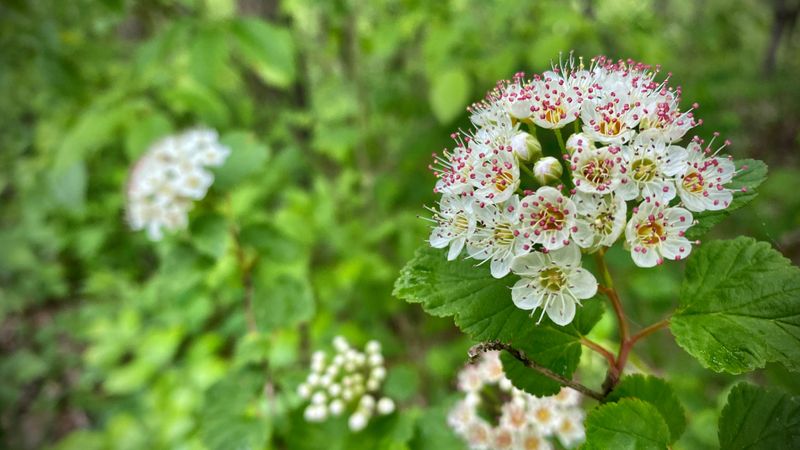
Tough, adaptable, and genuinely beautiful in every season, common ninebark is one of those native Michigan shrubs that makes every other plant in the yard look like it needs more attention.
The name comes from the older stems, which peel and curl back in layers to reveal rich cinnamon and tan inner bark that adds real visual texture all winter long.
Come late spring, the entire shrub covers itself in rounded clusters of pink-white flowers that pollinators absolutely swarm.
Summer brings full, arching stems loaded with green foliage that give the shrub a relaxed, natural look perfect for Michigan woodland gardens or mixed borders.
As summer winds down, small rose-red seed capsules appear and add a warm, rosy tone that carries the shrub nicely into fall.
What makes ninebark especially valuable for Michigan gardeners is its incredible tolerance for tough conditions. It handles everything from heavy clay to sandy soil, full sun to deep shade, and dry slopes to occasionally wet areas without missing a beat.
No pruning is required to keep it looking good, though a light trim after flowering can keep it tidy if you prefer.
It typically grows six to eight feet tall and wide, creating a full, rounded shape that works beautifully as a screen, a hedge, or a standalone focal point in any Michigan landscape through all four seasons.
4. Arrowwood Viburnum (Viburnum Dentatum)
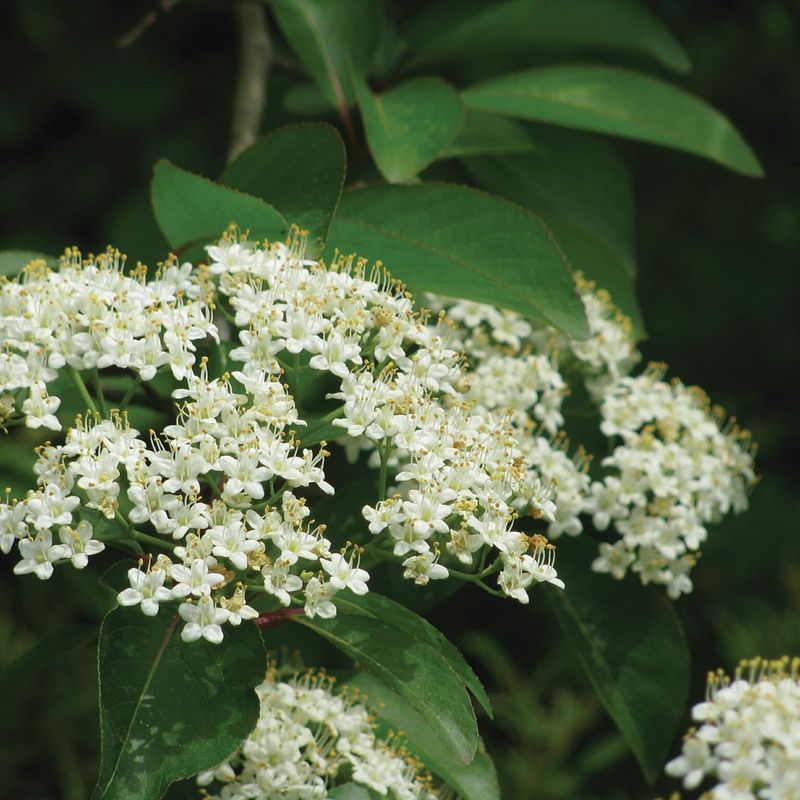
Arrowwood viburnum earned its name from Native Americans who used its perfectly straight young stems to make arrows, which tells you something about how strong and reliable this shrub really is.
Today Michigan gardeners use it for something just as practical: filling the yard with beauty from April all the way through November with almost no work required.
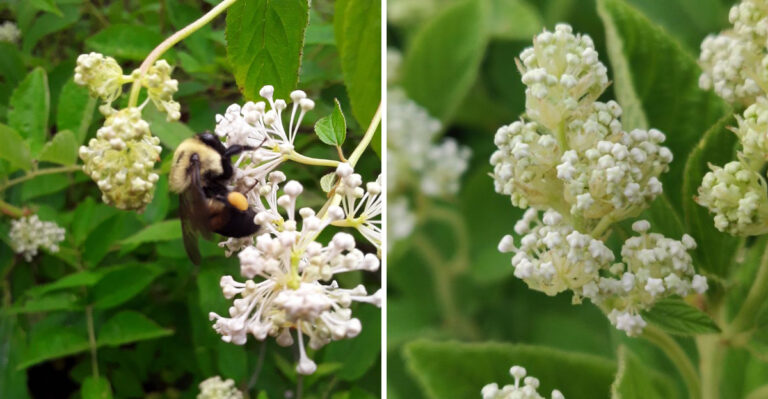
In late spring, flat-topped clusters of creamy white flowers open up and attract a wide variety of native bees and butterflies.
The dark, glossy green leaves that follow through summer give the shrub a clean and polished look that works well in formal borders or naturalized plantings across Michigan.
Then in late summer, clusters of dark blue berries ripen and become an important food source for migrating birds passing through the region.
Fall color on arrowwood viburnum is genuinely impressive, shifting through shades of yellow, orange, red, and deep burgundy depending on how much sun the shrub receives.
It handles full sun or partial shade and adapts to a wide range of soil types, including the clay soils that frustrate so many Michigan gardeners.
The multi-stemmed form naturally grows six to ten feet tall and wide, creating a rounded, full-bodied shape that requires no staking or shaping to look good. Plant it near a window or along a fence line and enjoy the wildlife show it attracts all season long.
5. Blackhaw Viburnum (Viburnum Prunifolium)
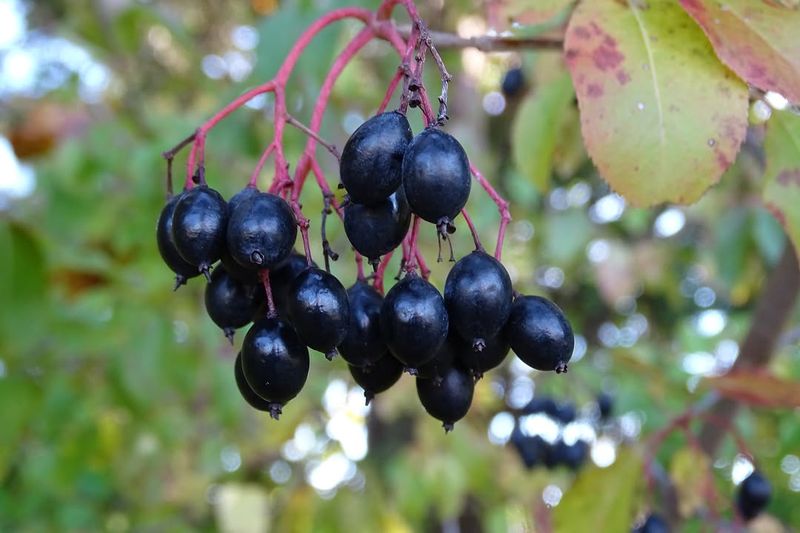
Blackhaw viburnum is one of those plants that quietly becomes the most admired shrub in the yard without ever demanding any attention.
It grows naturally across Michigan as a large, multi-stemmed shrub or a small informal tree, and it brings something genuinely beautiful to every single month of the growing season and beyond.
Creamy white flower clusters open in May and attract pollinators while giving the yard a fresh, clean look right as spring kicks into gear.
The deep green, oval leaves that follow provide solid summer interest, and the overall form of the plant is naturally attractive without any shaping or pruning.
Early fall brings clusters of edible black fruit that ripen from pink to deep blue-black, and wildlife absolutely loves them, especially birds stocking up before migration.
The fall foliage color on blackhaw is truly one of its most underrated qualities. Leaves shift into rich shades of purplish red that glow warmly in the low autumn light across Michigan landscapes.
After leaf drop, the horizontal branching pattern of the shrub creates a strong, sculptural silhouette that adds real structure to the winter garden. Blackhaw adapts to full sun or moderate shade and tolerates both dry and moderately moist soils with ease.
It typically reaches twelve to fifteen feet tall when left to grow naturally, making it a great choice for privacy screens or naturalized back borders throughout Michigan.
6. Bush Honeysuckle (Diervilla Lonicera)
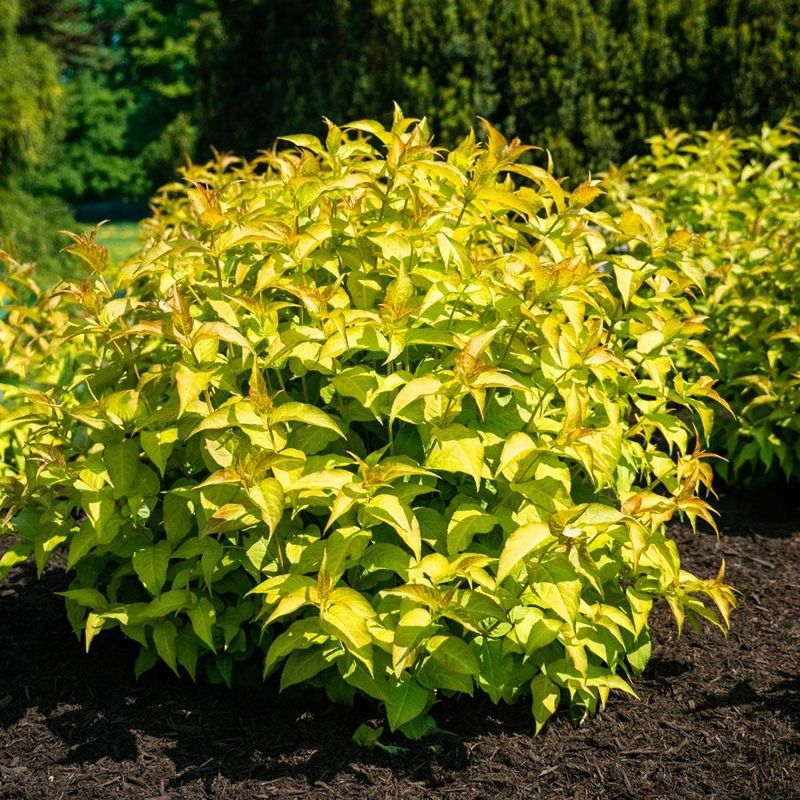
Most people hear the word honeysuckle and immediately think of the invasive Japanese species that takes over roadsides and natural areas across Michigan. Native bush honeysuckle is nothing like that.
It stays right where you plant it, spreads modestly, and delivers four seasons of quiet, understated beauty without ever becoming a problem for the surrounding landscape.
New growth in spring emerges with a gorgeous bronze-green color that catches the eye before most other shrubs have even leafed out. Yellow, tubular flowers open in June and July and attract hummingbirds and native bees throughout the summer months.
The flowers are smaller than those of invasive honeysuckles but still charming and worth noticing up close when you walk past them in the garden.
As summer shifts into fall, the foliage takes on reddish-bronze tones that warm up the entire planting bed with a soft, coppery glow.
Bush honeysuckle is especially useful on slopes and in dry, sandy soils where Michigan gardeners often struggle to find native plants that will actually thrive.
It handles full sun to partial shade and is one of the most cold-hardy native shrubs available for Michigan gardens, surviving even the harshest Upper Peninsula winters without any protection.
Growing only two to four feet tall, it fits beautifully at the front of a mixed border or along a woodland path where low, spreading ground cover is needed most.
7. Common Witch Hazel (Hamamelis Virginiana)
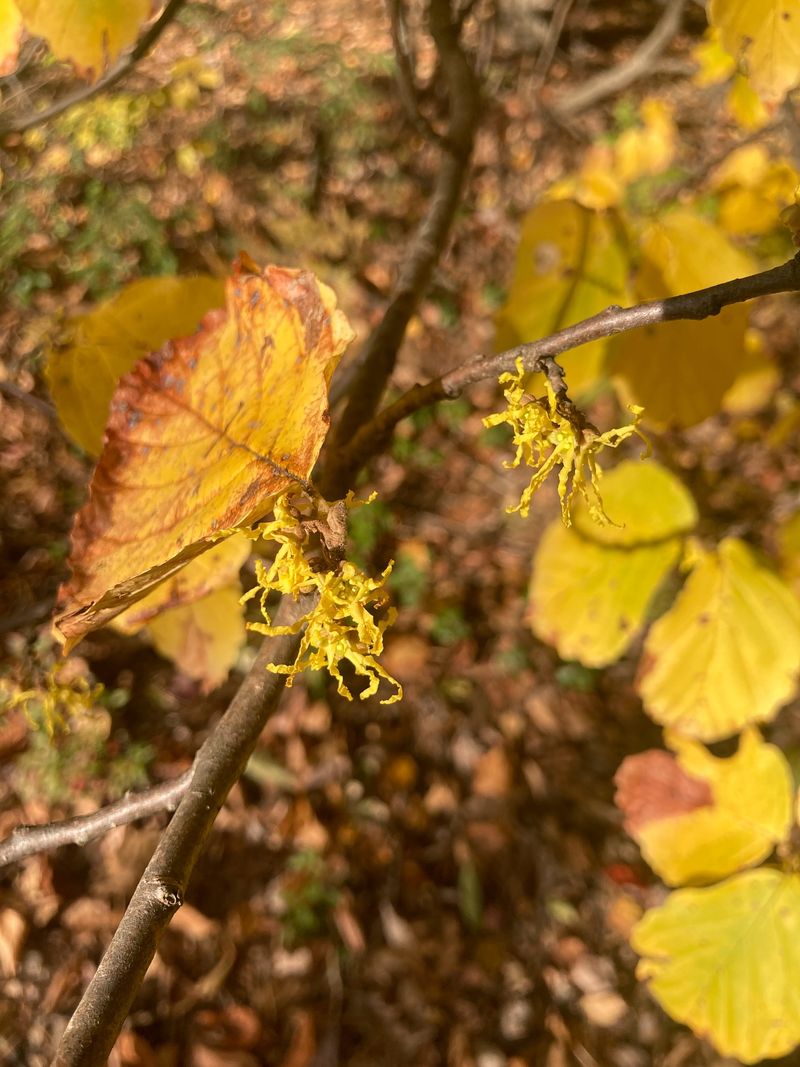
Witch hazel has a trick that no other native Michigan shrub can pull off. It waits until every other flowering plant has finished for the year, then bursts into bloom in late October and November, sometimes even into December, covering bare branches with spidery yellow flowers that smell faintly sweet on cool autumn air.
It is one of the most surprising and delightful plants you can put in a Michigan yard.
Before the flowers even open, the fall foliage puts on a show of its own, turning bright golden yellow and illuminating shaded woodland edges and garden borders with warm, cheerful light.
The leaves and flowers often overlap for a brief but magical window where both appear on the shrub at the same time.
After the leaves fall, those ribbon-like yellow petals curl and twist in the cold air, lasting for weeks on the bare gray branches.
Winter structure is another strong point for witch hazel, with its spreading, layered branching creating an attractive silhouette against snow or a gray Michigan sky.
Spring brings fresh green leaves that provide clean, simple summer interest throughout the warmer months.
Witch hazel thrives in moist, partially shaded spots and grows well beneath taller trees, making it a natural fit for Michigan woodland gardens. It typically reaches ten to fifteen feet tall and wide at maturity, filling space gracefully without ever needing pruning or special soil preparation.
8. Red-Osier Dogwood (Cornus Sericea)
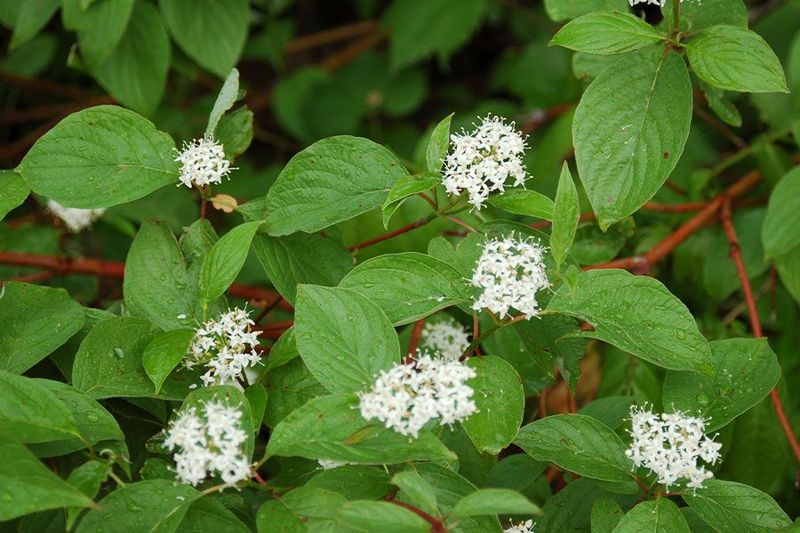
When a heavy snowfall blankets a Michigan yard and every other shrub disappears into shades of gray and brown, red-osier dogwood stands out like a signal fire.
The stems glow a brilliant, saturated red that looks almost unnatural against white snow, turning an ordinary winter garden into something that stops people in their tracks from the street.
The color is most vivid on young stems, which means the shrub actually rewards you for doing almost nothing at all.
New growth each season produces the brightest red, and since the plant spreads naturally by sending up fresh stems from the base, the display renews itself year after year without any intervention.
White flower clusters appear in late spring and attract pollinators, while the green summer foliage is clean and full-bodied through the warmest months in Michigan.
Fall brings a shift to reddish-purple leaf color before the leaves drop and reveal those famous stems in all their winter glory. White berries ripen in late summer and provide food for birds and other wildlife well into the colder months.
Red-osier dogwood grows naturally along stream banks, pond edges, and wet meadows across Michigan, making it an outstanding choice for low areas and rain gardens where standing water is sometimes an issue.
It spreads into a colony over time, which is perfect for erosion control on slopes or for creating a natural wildlife habitat planting along the back edge of a Michigan property.
9. Highbush Cranberry (Viburnum Trilobum)
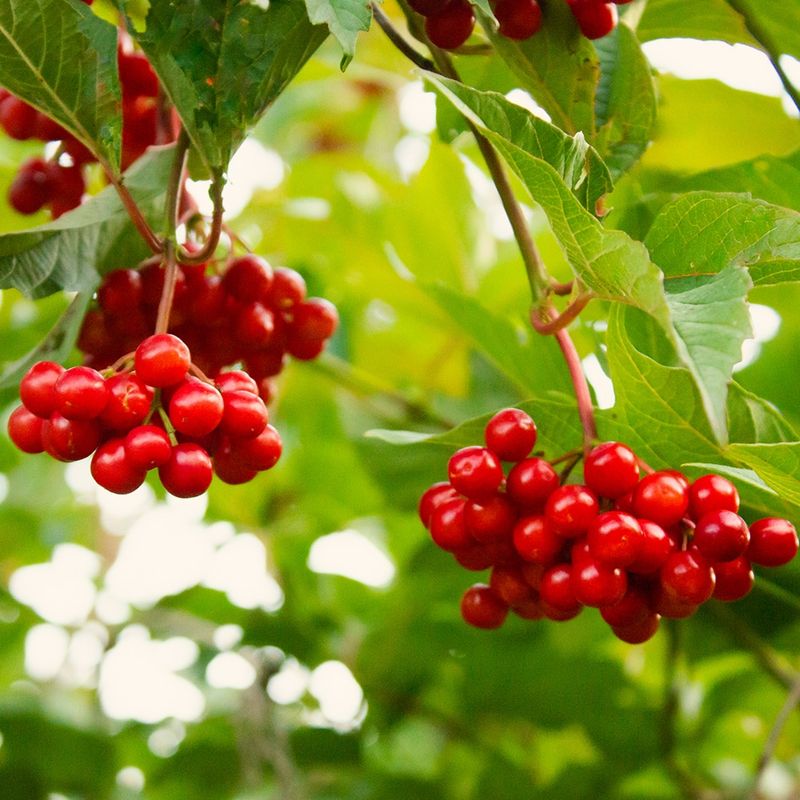
Highbush cranberry is a true Michigan classic, and for good reason. It produces clusters of bright red berries in fall that cling tightly to the branches through the coldest winter months, feeding cedar waxwings, robins, and other birds that visit Michigan yards during the cold season.
The berries look like tiny ornaments hanging on the bare stems, and they genuinely make the whole yard feel festive without any decorating on your part.
Spring starts the season with flat-topped white flower clusters that attract pollinators and give the shrub a soft, lacy appearance in the garden.
The large, maple-shaped leaves that follow are bold and attractive through the summer, providing good texture contrast when planted alongside finer-leaved shrubs or perennials in a Michigan border planting.
Fall color shifts to shades of yellow and red before the leaves drop and expose those stunning clusters of translucent red fruit.
Despite the name, highbush cranberry is not a true cranberry but a native viburnum that grows naturally in moist woodlands and along stream banks throughout Michigan.
It adapts well to average garden soils and handles both full sun and partial shade without struggling.
Growing eight to twelve feet tall and wide, it works beautifully as a privacy screen, a wildlife hedge, or a large focal point in a naturalized backyard planting. Once it settles in, it requires nothing from you but space to grow and time to show off.
10. Nannyberry (Viburnum Lentago)
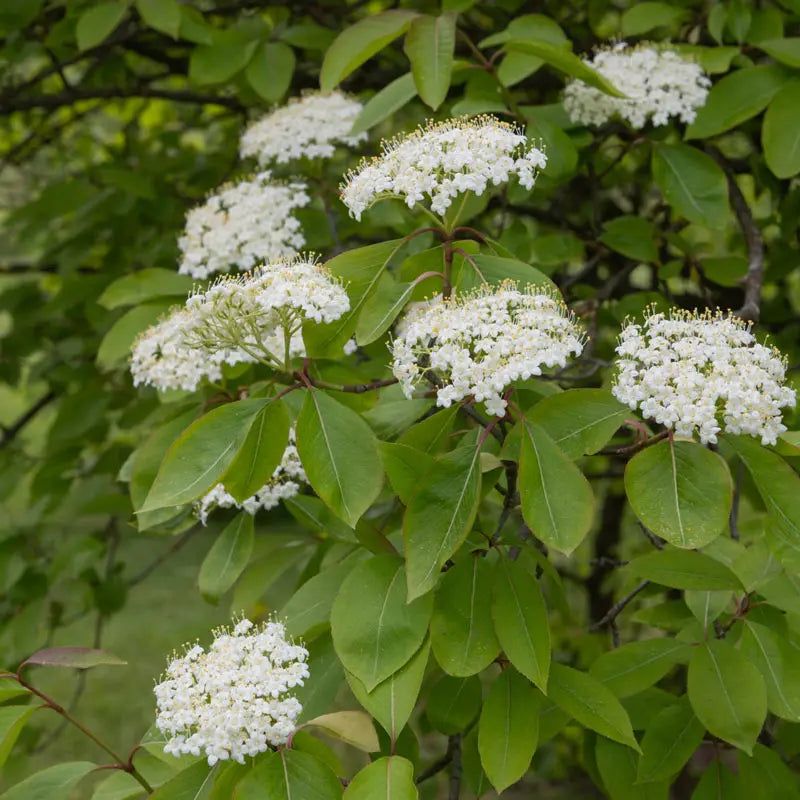
Nannyberry is one of those native Michigan shrubs that experienced gardeners quietly recommend to everyone they know, yet it still somehow flies under the radar at most nurseries.
Michigan State University specifically calls it out as a native shrub that adds outstanding winter color and interest, which is high praise from one of the most respected horticultural programs in the Midwest.
Creamy white flower clusters open in May and fill the air with a pleasant fragrance while attracting bees and butterflies to the yard.
The glossy, dark green leaves that follow through summer are some of the most attractive of any native viburnum, with a slightly wavy edge and a shiny surface that catches light beautifully on sunny Michigan afternoons.
As fall arrives, the foliage shifts into rich shades of purple-red while clusters of berries ripen from yellow to pink to deep blue-black.
The berries are sweet and edible, enjoyed by both wildlife and adventurous humans willing to give them a taste.
After the leaves fall, the strongly upright, arching branches create a bold and graceful winter silhouette that adds real structure to the garden when everything else looks bare.
Nannyberry grows naturally in moist woodlands and along stream banks across Michigan, and it adapts to a wide range of garden soils and light conditions with ease.
It can reach fifteen to eighteen feet tall over time, working perfectly as a tall screen, a layered background shrub, or a small multi-stemmed tree in any Michigan landscape.