These Ohio Plants Can Create Privacy Without Raising HOA Red Flags
Trying to get more privacy in an HOA neighborhood can feel like playing a game you never signed up for. You want a backyard that feels calm, covered, and a little more your own, but every choice starts to feel loaded.
Too open, and you feel exposed. Too dense, too tall, or too obvious, and suddenly it looks like the kind of thing that gets attention for all the wrong reasons.
That is where a lot of homeowners get stuck. Privacy sounds simple until you realize you are not just choosing plants.
You are choosing how your yard is going to be read by neighbors, by the street, and yes, by the HOA.
The trick is finding plants that do the job without making it look like you are building a green barricade.
Some shrubs and small trees blend in beautifully, soften the edges of a yard, and create that tucked-away feeling without setting off visual alarm bells. In Ohio, you have more of those options than you might think.
1. Arborvitae Keeps Privacy Clean And Classic
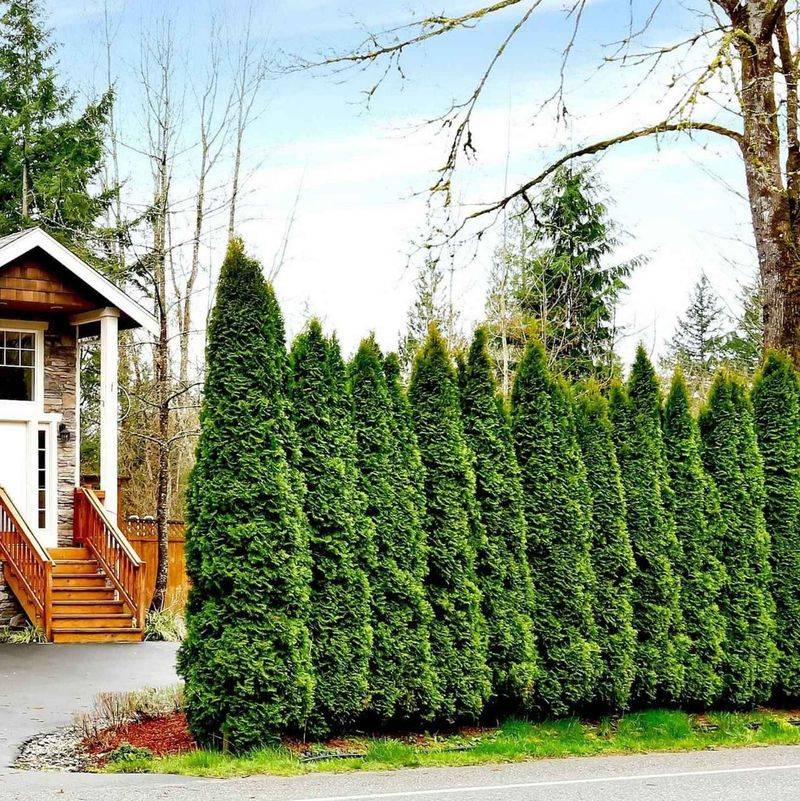
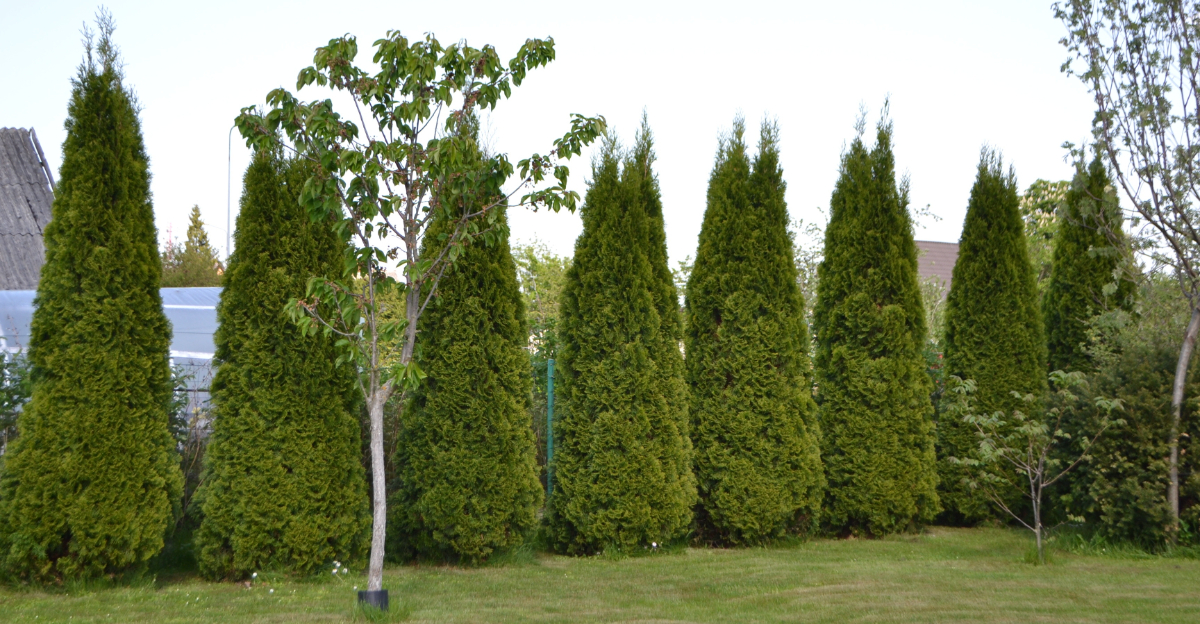
Few plants have earned their spot in Ohio neighborhoods quite like arborvitae. Walk through almost any residential street in Columbus, Cleveland, or Cincinnati, and you will likely spot these tall, narrow evergreens standing guard along property lines.
Their upright, columnar form gives them a tidy, intentional look that fits right in with well-kept suburban yards, which is a big reason HOA boards rarely have complaints about them.
Arborvitae belongs to the Thuja genus, and varieties like Thuja occidentalis ‘Emerald Green’ are especially popular in Ohio because they stay compact and do not spread out aggressively.
They keep their rich green color year-round, which means your privacy screen does not disappear in November when deciduous plants drop their leaves.
That consistent coverage matters a lot if your goal is to block sightlines to a neighbor’s yard or a nearby road.
Planting arborvitae in a straight row along a property edge gives you the clean, classic look that many HOAs actually prefer over a wooden privacy fence. The plants create a living wall effect without the rigid, closed-off feeling that solid fencing can produce.
Spacing them about three to four feet apart is a common recommendation, since this allows the plants to grow together and fill in gaps over a few seasons without crowding each other too severely.
Ohio State University Extension notes that arborvitae prefers well-drained soil and full sun to partial shade. Watering regularly during the first growing season helps establish strong roots.
Once established, these plants are fairly low-maintenance. Light shearing can keep their shape tidy if any branches start to look uneven.
Avoid heavy pruning into old wood, as arborvitae does not regenerate well from bare stems. With a little patience, this plant delivers reliable, attractive screening that feels timeless rather than trendy.
In some Ohio areas, winter snow or deer browsing can affect arborvitae, so placement and protection matter.
2. Holly Adds Structure Without The Fence Look
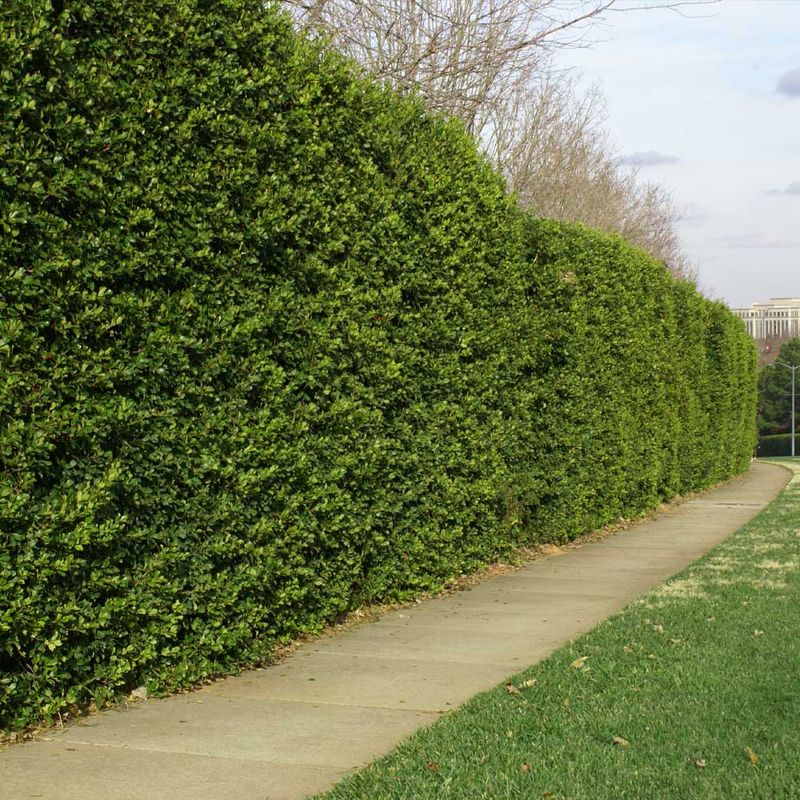
Imagine pulling into your driveway in January and seeing a wall of glossy, deep-green leaves still holding their shape while every other plant in the neighborhood has gone bare. That is the quiet power of holly as a privacy plant.
Your Ohio Garden Changes Every Week. Your Plan Should Too.
Gardening in Ohio changes quickly throughout the season. Every Friday you’ll receive a simple weekly plan showing exactly what to plant, prune, fertilize, harvest, and protect so you never miss the right timing.
It brings year-round structure to a yard without ever looking like a substitute fence, and that distinction matters a great deal in neighborhoods where aesthetics are taken seriously.
American holly, known botanically as Ilex opaca, is native to Ohio and grows into a dense, pyramidal shrub or small tree that can reach 15 to 30 feet tall at maturity, though it can be maintained at more modest heights with selective pruning.
Its thick, leathery leaves overlap generously, creating the kind of visual barrier that genuinely blocks sightlines without looking forced or industrial.
The bright red berries that appear in fall and winter add an ornamental quality that few other privacy plants can match.
For neighborhoods where a polished, formal appearance matters, holly fits the aesthetic naturally. It looks like a deliberate landscaping choice rather than a quick fix, which tends to sit well with HOA committees focused on curb appeal.
Planting holly along a side yard or back property line, where it has room to fill out over time, lets it reach its full screening potential without encroaching on walkways or driveways.
Holly grows best in well-drained, slightly acidic soil and prefers full sun to partial shade.
Ohio State University Extension recommends planting both male and female varieties nearby if berry production is desired, since holly requires cross-pollination.
Pruning is straightforward and best done in late winter before new growth appears. With minimal care, holly delivers structured, handsome screening that looks right at home in any tidy Ohio neighborhood year after year.
3. Rhododendrons Bring Privacy With Spring Color
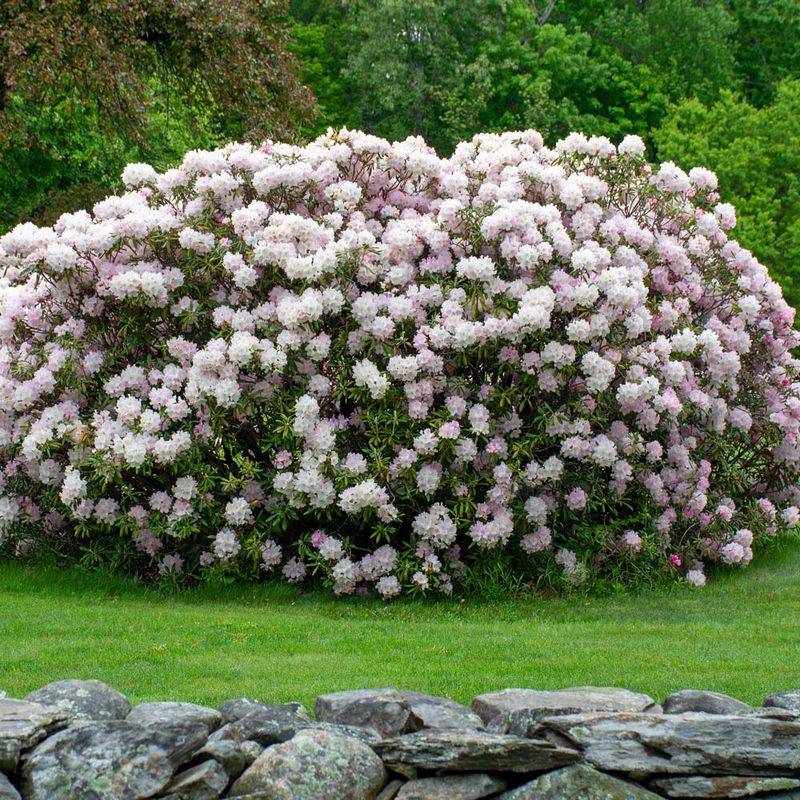
Every spring, rhododendrons turn heads in Ohio neighborhoods with their bold, lush flower clusters that can range from soft lavender to deep magenta.
But beyond the seasonal show, these evergreen shrubs offer something practical that many homeowners overlook: a dense, leafy structure that provides genuine screening even during the months when no blooms are present.
For anyone wanting privacy planting that earns compliments instead of complaints, rhododendrons are a compelling option.
Rhododendrons are broad-leaved evergreens, which means they hold onto their large, dark-green leaves through winter. That characteristic makes them useful as year-round screening plants, not just springtime ornamentals.
Depending on the variety, they can grow anywhere from four to twelve feet tall, giving homeowners flexibility when choosing a scale that suits their yard and any relevant HOA height guidelines.
Varieties like ‘Nova Zembla’ and ‘Roseum Elegans’ have shown solid performance in Ohio’s climate according to horticulture resources from Ohio State University Extension.
Placement matters with rhododendrons.
They perform best in partial shade with protection from harsh afternoon sun and drying winter winds, which makes them an excellent choice for the north or east side of a property where taller trees may already provide some canopy.
They prefer moist, well-drained, acidic soil with good organic content. Amending Ohio’s clay-heavy soils with compost before planting can make a meaningful difference in long-term health.
Maintenance is relatively simple. Deadheading spent flower clusters after blooming encourages stronger growth the following year.
Mulching around the base helps retain soil moisture and regulate root temperature through Ohio’s variable seasons. Because rhododendrons grow gradually rather than aggressively, they rarely outpace their space in a way that creates problems.
The result is a privacy screen that feels lush, colorful, and genuinely ornamental rather than purely functional.
4. Arrowwood Viburnum Softens The View Beautifully
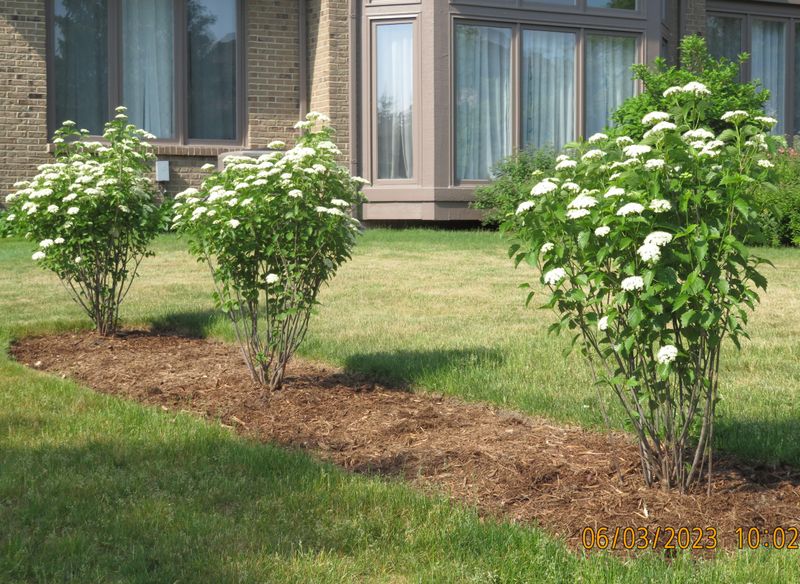
Not every homeowner wants a privacy screen that looks like a wall. Some prefer something that feels a little more relaxed and natural, something that blends into the yard rather than dominating it.
Arrowwood viburnum, known scientifically as Viburnum dentatum, delivers exactly that kind of easygoing privacy. Its multi-stemmed, arching growth habit creates a layered, organic silhouette that reads as intentional landscaping rather than a barrier.
Native to Ohio, arrowwood viburnum typically reaches six to ten feet tall and wide, forming a rounded mass of dense foliage that effectively blocks sightlines without making a yard feel closed off.
In late spring, flat-topped clusters of creamy white flowers appear across the plant, adding genuine ornamental value.
By late summer, those flowers give way to blue-black berries that attract birds and add seasonal interest well into fall. The leaves themselves shift to shades of red and purple in autumn, giving the plant a second visual moment after its spring flowering.
Arrowwood viburnum adapts well to a wide range of Ohio soil conditions and tolerates both full sun and partial shade, which makes it a flexible choice for different yard configurations.
It handles Ohio’s humidity and cold winters without significant stress, which is one reason it appears in Ohio Department of Natural Resources planting guides as a recommended native shrub.
For privacy purposes, planting several arrowwood viburnums in a staggered row along a property edge creates a soft, natural-looking screen that fills in reliably over time. Spacing plants about five to six feet apart gives each one room to develop its full, rounded form.
Pruning needs are minimal. Removing a few of the oldest stems at the base every few years keeps the plant vigorous and well-shaped.
Neighbors and HOA reviewers alike tend to find this plant hard to object to.
5. Blackhaw Viburnum Makes Screening Look Natural
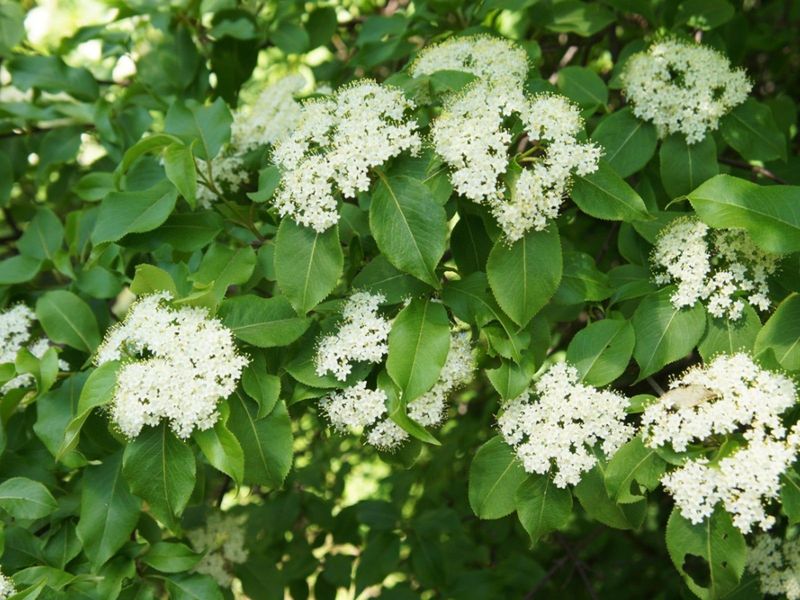
Some privacy plants announce themselves loudly. Blackhaw viburnum, Viburnum prunifolium, takes a quieter approach.
It settles into a landscape with the calm, unhurried presence of something that has always belonged there, which is exactly what makes it so effective in residential neighborhoods where subtlety matters as much as function.
Blackhaw viburnum is a native Ohio plant that grows as a large multi-stemmed shrub or a small tree, typically reaching eight to fifteen feet tall depending on how it is pruned and trained.
Its dark, glossy leaves create a dense canopy that works well for screening purposes, particularly along back property lines or side yards where a natural-looking buffer is more welcome than a formal hedge.
In spring, flat clusters of white flowers appear across the plant, similar in appearance to arrowwood viburnum but with a slightly different leaf texture and branching pattern.
Fall brings a second wave of visual interest when the foliage turns deep burgundy and red, and small blue-black fruits develop that birds find attractive.
What sets blackhaw apart from more obvious screening choices is its relaxed, layered character. It does not look like someone planted it to block a view.
It looks like it grew there naturally, which tends to sit well in neighborhoods where the aesthetic goal is a landscape that feels cohesive rather than segmented by barriers.
Ohio State University Extension lists blackhaw viburnum as a native shrub well-adapted to Ohio conditions, tolerant of varied soil types, and capable of performing in both full sun and partial shade.
Pruning blackhaw viburnum is mostly a matter of removing crossing branches and any withered wood in late winter. If a more tree-like form is desired, lower branches can be gradually removed over time to reveal the plant’s attractive branching structure.
Consistent watering during the first season after planting helps establish a strong root system that will support reliable growth for many years ahead.
6. Nannyberry Builds A Backyard Buffer Gracefully
Picture the back edge of a yard where the lawn just sort of trails off into a neighbor’s fence or a utility easement. That transitional space often feels unfinished and exposed.
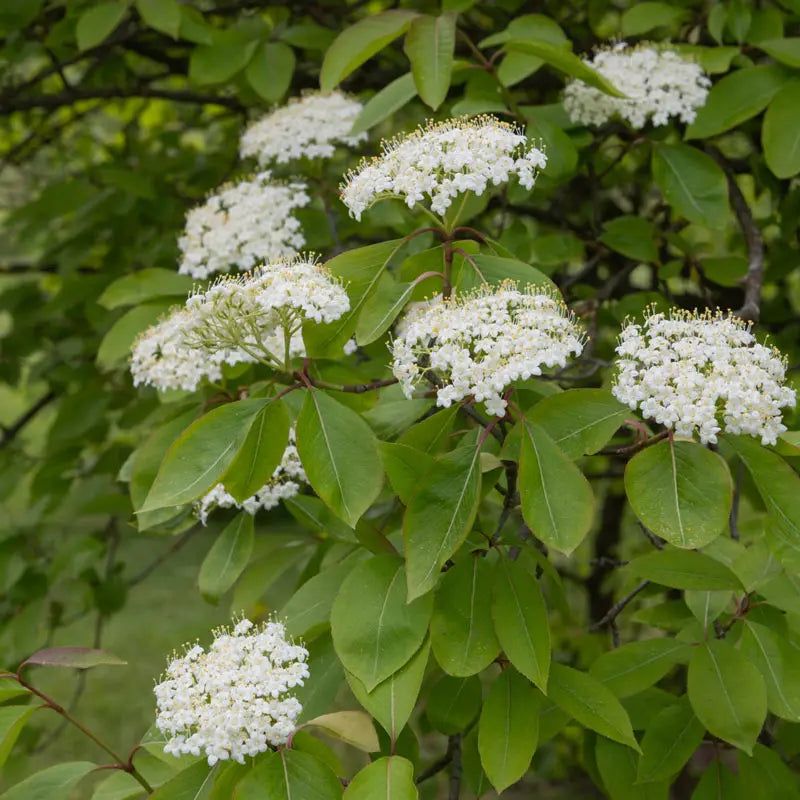
Nannyberry, Viburnum lentago, is the kind of plant that transforms that awkward edge into something that looks deliberately designed. It fills space with confidence, growing large enough to create a genuine buffer without requiring constant management to stay in bounds.
Nannyberry is a native Ohio viburnum that can grow anywhere from ten to eighteen feet tall, which puts it in a category somewhere between a large shrub and a small tree.
That scale makes it genuinely useful for creating a layered sense of privacy along back property lines, especially in larger yards where a compact shrub would simply not be tall enough to do the job.
Its arching branches carry clusters of creamy white flowers in spring, followed by bluish-black berries in late summer that are attractive to birds and wildlife.
Fall foliage turns a rich burgundy red, adding seasonal color that makes the plant look like a valued landscape feature rather than a utility screen.
Ohio State University Extension recognizes nannyberry as a native plant well-suited to Ohio’s range of soil conditions. It tolerates clay soils, periodic moisture variation, and both full sun and partial shade, which gives homeowners flexibility in where they site it.
Planting nannyberry in a loose grouping of two or three plants creates a layered, naturalistic screen that feels calm and visually restful rather than imposing.
Maintenance requirements are low. Light pruning to remove any wayward branches can be done in late winter, and established plants are quite resilient once their root systems develop fully.
For homeowners who want screening that feels graceful and settled rather than forced or formal, nannyberry is one of the most reliable choices available in the Ohio landscape palette.