This Is The Biggest Mistake Georgia Gardeners Make With Wisteria In Spring
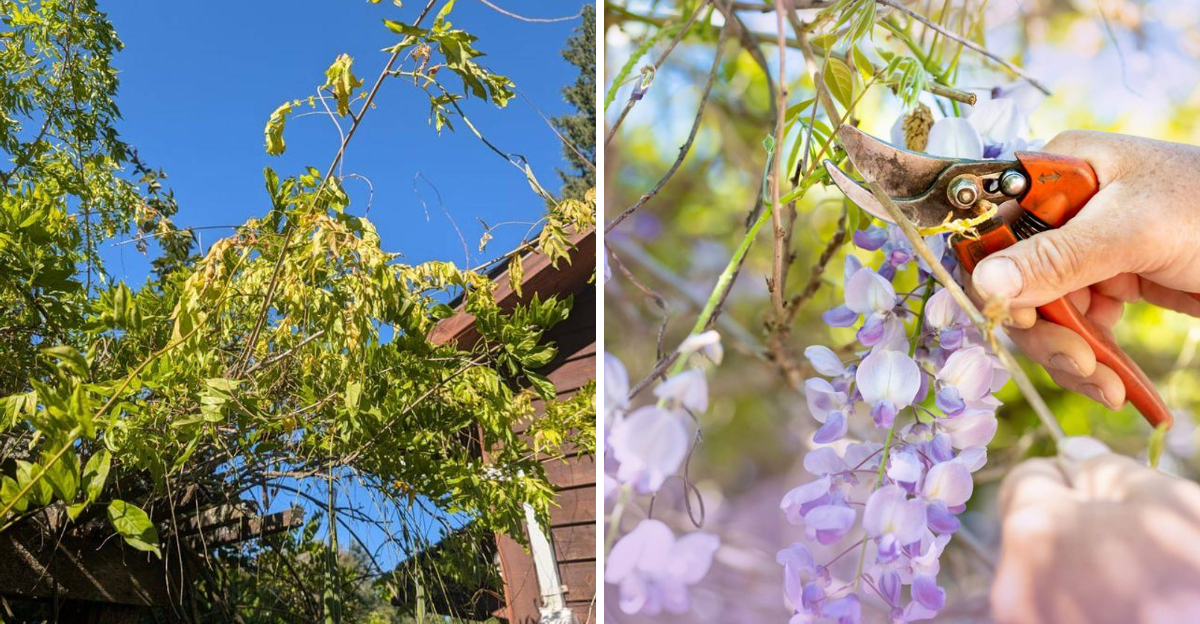
You step outside in a Georgia yard in early spring and glance at the wisteria, expecting that familiar wave of blooms to start taking over the fence or arbor.
This time, something feels slightly off, with more leaves pushing out while the flowers look lighter or uneven in places that used to be covered.
It is easy to brush it off as another Georgia spring doing its own thing, especially after a season that felt a little unpredictable.
Still, that quiet shift stands out more than it should, particularly if this vine used to bloom heavily without much effort year after year.
That is where many Georgia gardeners get caught without realizing it. A small spring habit can quietly change how wisteria performs, and by the time it becomes obvious, the chance to fix it has already started to slip.
1. Pruning At The Wrong Time Removes Flower Buds
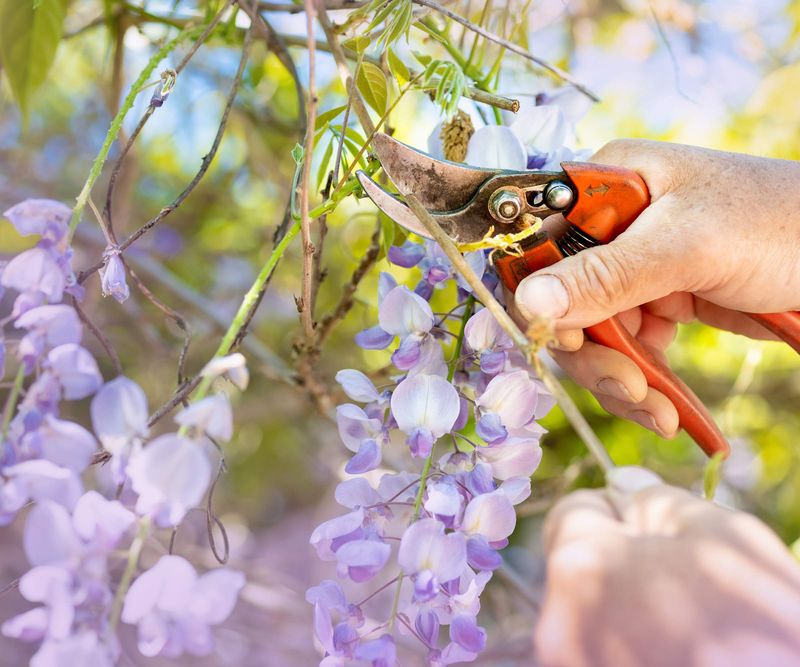
Cut wisteria at the wrong moment and you will spend the whole spring staring at bare stems wondering what went wrong. Timing is everything with this vine, especially in Georgia where warm temperatures arrive early and the plant moves fast.
Wisteria blooms on old wood, meaning the flower buds were actually formed the previous season. If you pick up your pruners in early spring and start trimming before those buds open, you are removing the very growth that holds your blooms.
Lots of Georgia gardeners make this mistake in late February or early March when the vine looks messy and they want to tidy it up.
The right approach is to wait until after the spring bloom finishes before doing any major pruning. Once the flowers fade, cut back the new growth to about five or six leaves.
That shapes the plant without touching next season’s potential.
A second pruning round in late summer, around July or August in Georgia, helps control the vine and encourages bud formation for the following year. Then in winter, around January, you can do a harder prune back to two or three buds on last year’s wood to build a strong flowering framework.
2. Planting Aggressive Wisteria Instead Of Safer Varieties
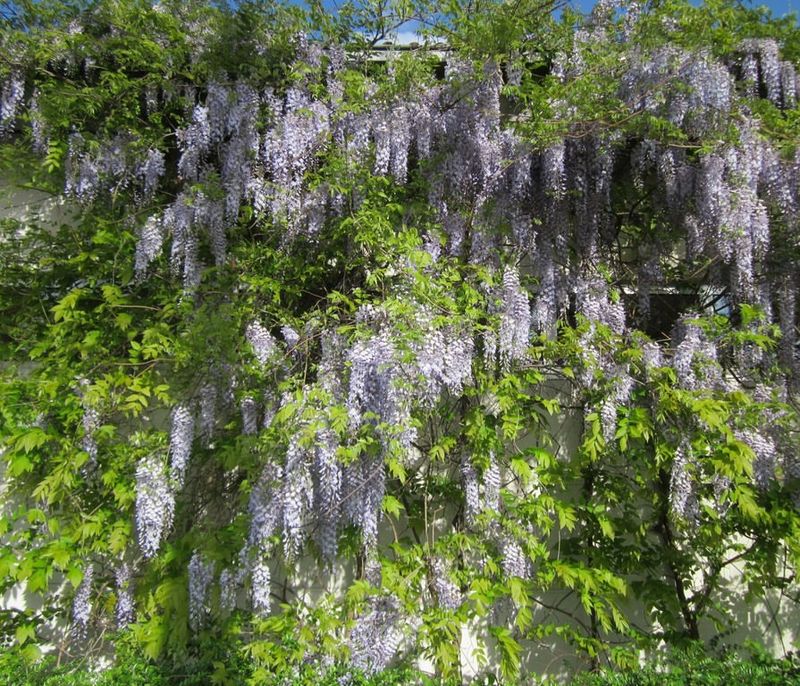
Not all wisteria is created equal, and planting the wrong species in a Georgia yard can cause years of regret. Japanese wisteria and Chinese wisteria are the two most aggressive types, and both spread fast in Georgia’s warm climate.
These Asian varieties can wrap around tree trunks, pull down gutters, and creep under siding if left unchecked for even one season. Their root systems run deep and wide, and removing an established plant is a serious project.
Georgia gardeners are often drawn to them because they are widely available at garden centers and produce those long, dramatic flower clusters, but the long-term management can be exhausting.
American wisteria, specifically Wisteria frutescens, and Kentucky wisteria, Wisteria macrostachya, are much more manageable choices for Georgia gardens.
Varieties like ‘Amethyst Falls’ and ‘Blue Moon’ bloom reliably, stay within reasonable bounds, and do not require the same level of constant control.
Your Georgia Garden Changes Every Week. Your Plan Should Too.
Gardening in Georgia changes quickly throughout the season. Every Friday you’ll receive a simple weekly plan showing exactly what to plant, prune, fertilize, harvest, and protect so you never miss the right timing.
They also tend to bloom earlier in their life, sometimes in the first or second year after planting.
Before buying, check the label carefully. If it just says wisteria without specifying the species, ask the nursery directly.
Picking the right variety from the start saves an enormous amount of work down the road.
3. Letting Vines Grow Without Strong Support Early On
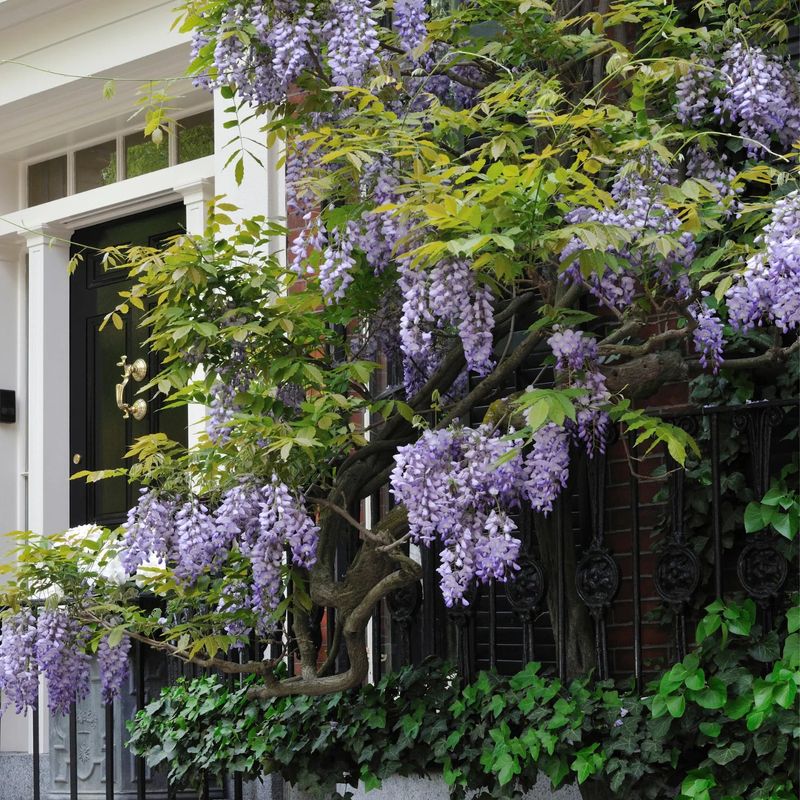
Wisteria is not a lightweight vine you can tie to a flimsy trellis and forget about. Within a few seasons, the woody stems thicken up and the overall weight of the plant becomes surprisingly heavy, especially after a wet Georgia spring.
A lot of gardeners stake wisteria to whatever is nearby when they first plant it, whether that is a thin metal post, a lattice panel, or even a chain-link fence.
Those structures might hold the young plant just fine, but give it two or three years and the vine will start to pull things apart.
Fence posts lean, trellises warp, and pergola boards crack under the pressure of a mature wisteria.
Getting the support structure right before the vine needs it is the smarter approach. A sturdy pergola built from pressure-treated lumber or heavy-gauge metal is the most reliable option.
The posts should be set deep in the ground and anchored properly, not just surface-mounted. In Georgia, where the growing season is long and growth happens quickly, the vine can put on significant new length in a single season.
Train the main stems along the support early and tie them loosely but deliberately. Letting the vine sprawl randomly from the beginning makes it much harder to manage later.
4. Using Too Much Nitrogen And Getting Leaves Instead Of Blooms
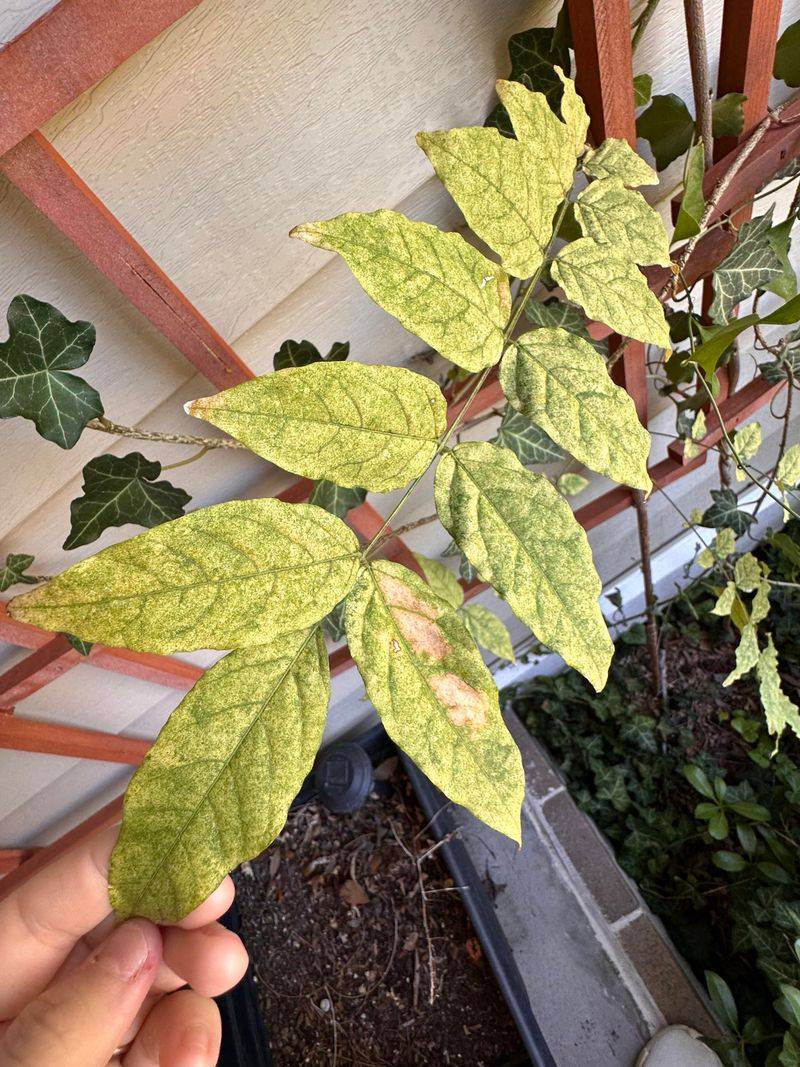
Feeding wisteria too much nitrogen is one of the fastest ways to end up with a plant that looks healthy but never actually blooms. Nitrogen pushes leafy, vegetative growth, and wisteria does not need much encouragement in that department to begin with.
Georgia’s soils vary widely across the state, but gardeners who regularly apply lawn fertilizer near their wisteria or use a general high-nitrogen blend are often the ones wondering why their vine refuses to flower.
The plant essentially puts all its energy into producing more leaves and longer stems instead of developing flower buds.
Wisteria actually performs better in slightly lean soil conditions. If your soil is already reasonably fertile, you may not need to fertilize the vine at all.
When feeding is necessary, choose a low-nitrogen option with higher phosphorus, which supports root development and flowering.
Something like a 5-10-10 formula applied in late winter can be appropriate in some situations, but always test your soil first to understand what it actually needs.
Root disturbance and stress can also sometimes trigger blooming in a stubbornly non-flowering wisteria, though results vary depending on the plant’s age and overall health.
5. Growing In Too Much Shade Reduces Flowering
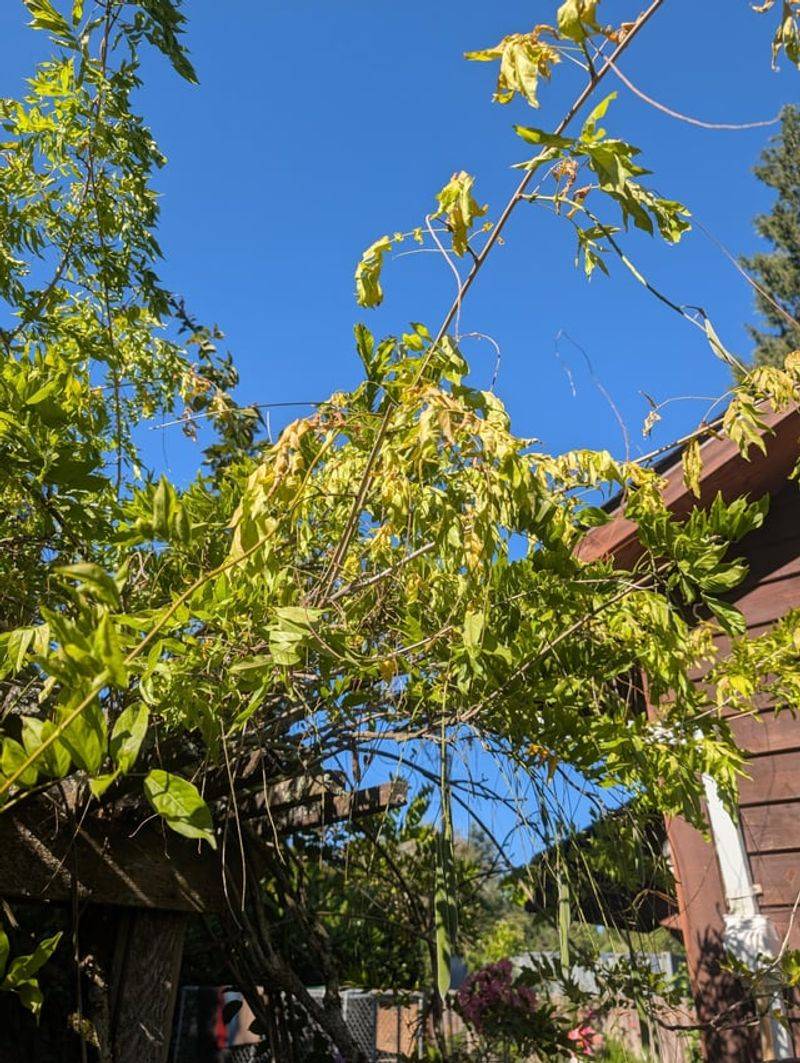
Shade is one of the most overlooked reasons why wisteria refuses to bloom, and in Georgia, where large oaks and mature trees are common in residential yards, this problem comes up more than you might expect.
Wisteria wants sun, and a lot of it. Six hours of direct sunlight per day is generally considered the minimum for reliable flowering.
Plant it under a canopy or against a north-facing wall and the vine may grow vigorously for years without producing more than a handful of blooms. The foliage will look lush, but that spectacular spring display just never materializes.
Georgia gardeners sometimes plant wisteria in a spot that gets decent sun at planting time, then the surrounding trees fill in over the following years and gradually steal that light.
By the time the problem becomes obvious, the vine is already well established and moving it is not a simple task.
Before planting, observe the spot at different times of day across a full week in spring, when the sun angle matters most for this plant. South-facing and west-facing exposures tend to work well in Georgia.
6. Skipping Early Training Leads To Tangled, Unmanageable Growth
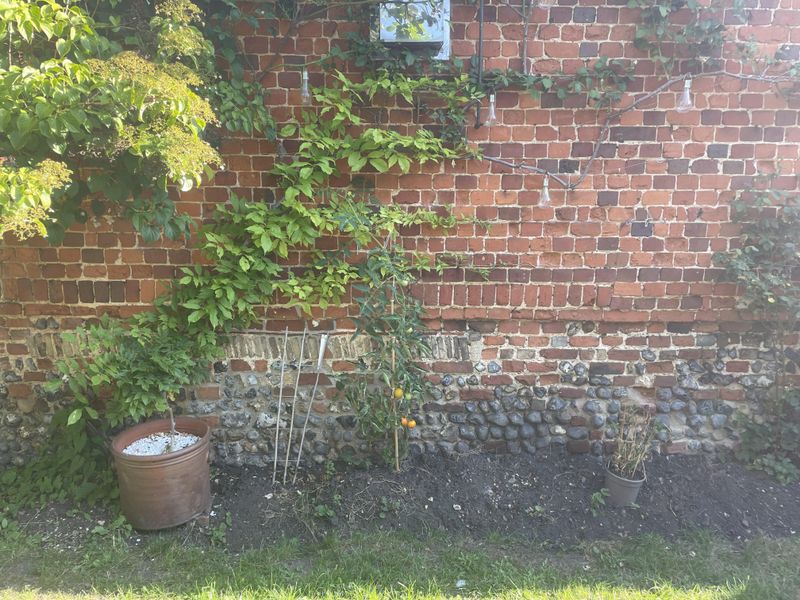
Young wisteria grows with a kind of cheerful chaos that seems harmless at first but becomes a real problem within a season or two if nobody steps in early.
Without deliberate training from the beginning, the vine wraps around itself, crosses over neighboring plants, and develops a tangled framework that is hard to correct later.
Early training is about deciding where you want the main stems to go and guiding them there while the wood is still young and flexible.
In Georgia, where spring growth can be rapid, checking on a young vine every couple of weeks during the growing season is not excessive.
New shoots can extend several inches in a short period and quickly attach themselves to whatever is nearby.
Select one or two strong main stems early on and train them along the support structure in the direction you want. Remove competing shoots that head off in the wrong direction rather than letting them develop.
Tying stems loosely with soft garden twine or flexible ties gives them direction without cutting into the bark.
Gardeners who skip this step often end up with a dense, bird-nest-style tangle at the base of the vine that becomes woody and impossible to sort out without removing large sections.
7. Allowing It To Climb Trees Or Structures Unchecked
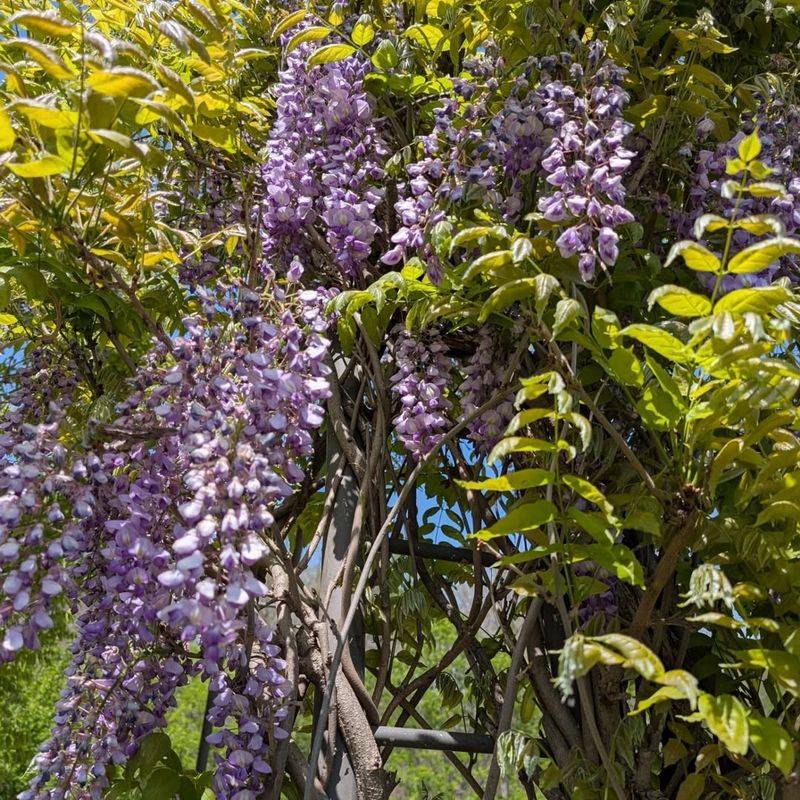
Wisteria given a tree to climb will take full advantage of the opportunity, and in Georgia’s growing climate, it can move up a trunk surprisingly fast. What starts as a vine casually resting against a tree can become a serious situation within a few seasons.
The stems wrap in a tight spiral and eventually constrict the tree as they thicken. Older vines can become genuinely difficult to remove without damaging the host tree.
Beyond trees, wisteria will also find its way into gutters, under roof tiles, through gaps in wooden fencing, and along any surface it can grip. Once it gets behind siding or into a soffit, the damage can be costly to repair.
Checking the vine’s direction of growth every few weeks during spring and summer is the most practical prevention strategy. In Georgia, the warm months accelerate growth considerably, so what seemed fine in April can look very different by June.
Redirect or cut back any stems heading toward trees, structures, or areas where you do not want the vine to establish.
If wisteria has already started climbing a tree on your property, cutting the vine at the base and then removing the stems over time is the standard approach, though it requires patience.