Ohio Native Shrubs That Grow Into Beautiful Privacy Hedges Faster Than You Think
A fence can block a view, but it rarely makes a yard feel better. That is where native shrubs have the upper hand.
They soften a property line, screen an exposed patio, give birds a place to land, and turn an awkward open edge into something that feels intentional. For Ohio homeowners, the right shrub can do more than hide the neighbor’s deck.
It can bring flowers, berries, fall color, winter stems, and movement back into the landscape. The trick is choosing shrubs that actually fit Ohio conditions.
Some grow fast in moist soil. Some spread by suckers and fill gaps naturally.
Others take a little longer but create a fuller, more polished screen over time. A living hedge will not appear overnight, but it can surprise you when the right plants are matched to the right spot.
Give them enough room, start with healthy nursery plants, and let them grow into their natural shape. These Ohio native shrubs can help create privacy without making your yard feel boxed in.
1. Start Fast With American Elderberry
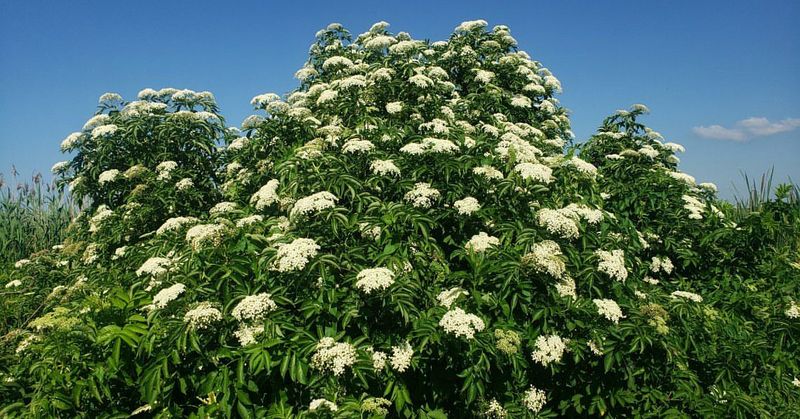
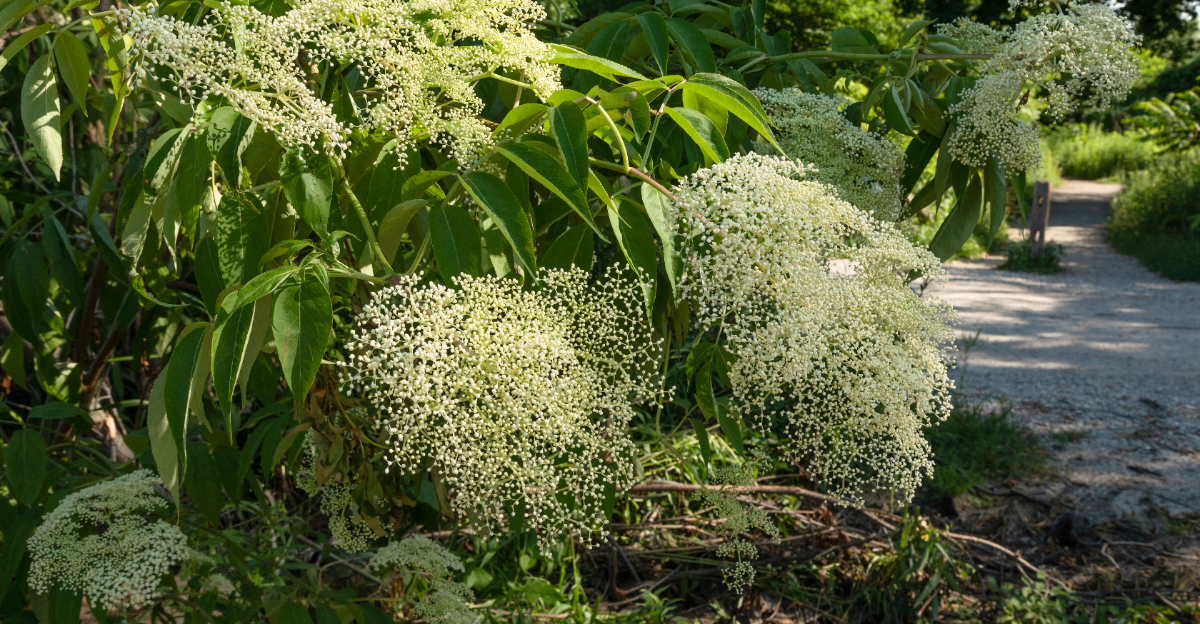
Few native shrubs in Ohio can match the sheer speed of American elderberry, Sambucus canadensis, when it comes to filling in a privacy screen. In moist, rich soil with full sun to part sun, this shrub can put on several feet of growth in a single season.
That kind of momentum is hard to find in a plant that is also native, wildlife-friendly, and genuinely attractive.
Elderberry grows best along stream edges, rain gardens, low areas, and any spot in your yard that holds a little extra moisture. It spreads by underground suckers, which means it will gradually form a loose, leafy thicket rather than a single tidy shrub.
For homeowners who want a natural screen along a wide property line or a back fence, that spreading habit is a real advantage.
Plan to space plants about five to eight feet apart to let them fill in without crowding. Flat-topped clusters of creamy white flowers appear in early summer, followed by dark purple berries that birds absolutely love.
Prune out old stems every few years to keep the planting vigorous and attractive. Give elderberry room to stretch, because it can reach eight to twelve feet tall in good conditions, and it earns every inch of that height as a privacy screen.
2. Build A Thicket With Silky Dogwood
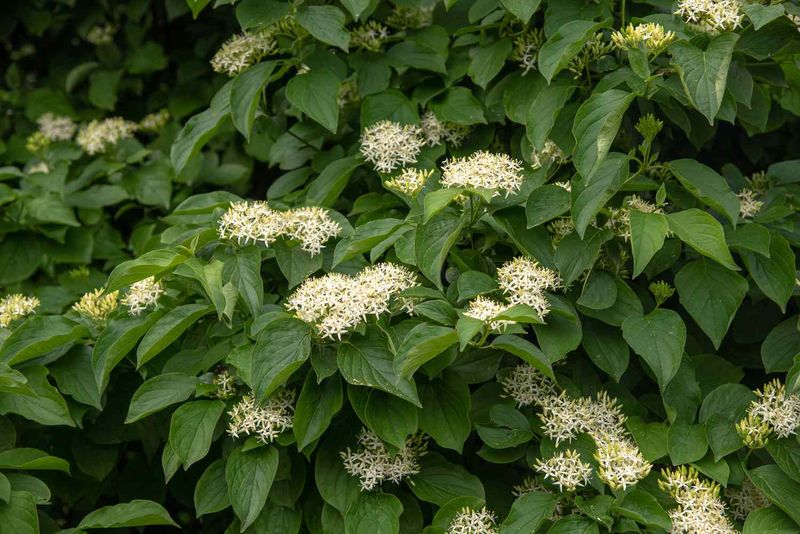
Soggy corners and low spots in an Ohio yard can feel impossible to plant, but silky dogwood, Cornus amomum, treats those conditions like an invitation.
This native shrub thrives in moist to wet soil, making it a natural fit for stream edges, rain gardens, and drainage areas where most traditional hedge plants simply struggle to survive.
Silky dogwood grows into a multi-stemmed, arching thicket that can reach six to ten feet tall and equally wide. It spreads gradually by layering and suckering, which helps a row of plants fill in over time and create a soft, layered screen.
The growth rate is solid rather than explosive, but in the right moist conditions, it fills in faster than many people expect.
Your Ohio Garden Changes Every Week. Your Plan Should Too.
Gardening in Ohio changes quickly throughout the season. Every Friday you’ll receive a simple weekly plan showing exactly what to plant, prune, fertilize, harvest, and protect so you never miss the right timing.
Spring brings clusters of creamy white flowers that are attractive to native bees and other pollinators. By late summer, blue-white berries ripen on bright red stems, and they do not last long because birds find them quickly.
Silky dogwood is not the right choice for a clipped, formal hedge shape, but for an informal privacy screen along a wet property line or a natural border, it is hard to beat.
Space plants five to six feet apart and let them grow into each other naturally for the best screening effect.
3. Fill The Gaps With Gray Dogwood
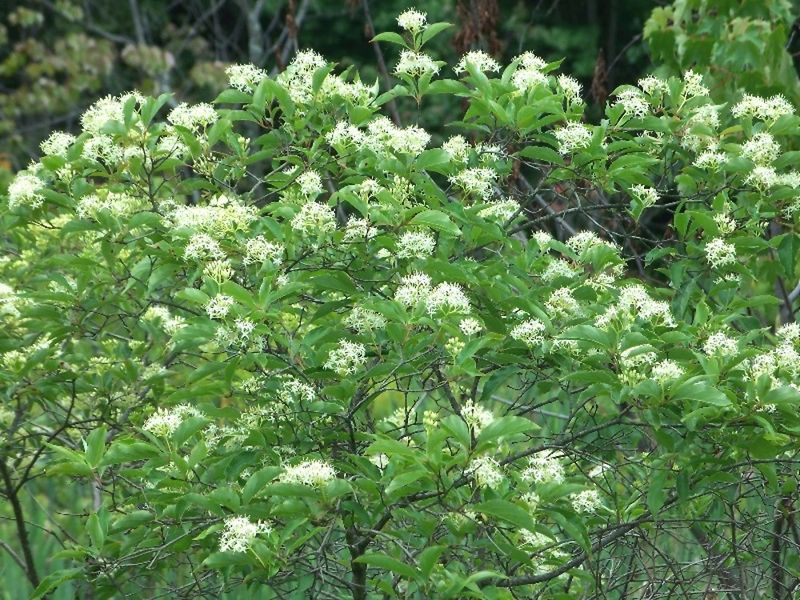
A privacy hedge is only as good as its ability to fill in the gaps, and gray dogwood, Cornus racemosa, is one of the best Ohio natives for doing exactly that.
This colony-forming shrub spreads steadily by root suckers, creating a layered, multi-stemmed mass that thickens over time and blocks sightlines surprisingly well.
Gray dogwood adapts to a wide range of soil conditions, from dry to moist, and handles sun to part shade without much complaint. That flexibility makes it useful in mixed privacy plantings where soil conditions vary across a long property line.
It typically reaches six to ten feet tall, with a naturally dense, twiggy structure that provides year-round coverage even after leaves drop.
In late spring, flat clusters of small white flowers attract pollinators. By late summer, the berries turn white and sit on bright red stems, creating a two-tone display that birds find irresistible.
The spreading habit that makes gray dogwood such a good gap-filler can become a management challenge in a small yard, so it works best in naturalized borders, wide property lines, or larger landscapes.
Space plants four to six feet apart and expect them to gradually knit together into a cohesive screen over two to four seasons.
4. Add Winter Color With Redosier Dogwood

Most shrubs in a privacy hedge go quiet in winter, blending into the gray landscape without much to show for themselves.
Redosier dogwood, Cornus sericea, breaks that pattern with brilliant red stems that glow against snow and brown winter soil, making your hedge border interesting even when everything else looks bare.
This Ohio native grows best in moist to wet soil and full sun to light shade. It forms a broad, multi-stemmed clump that can reach six to nine feet tall and spread just as wide.
In the right moist location, redosier dogwood fills in quickly and creates a solid screen through the growing season, while the winter stem show is a bonus that no fence can offer.
The brightest red color appears on younger stems, so renewal pruning every two to three years, cutting one-third of the oldest stems to the ground, keeps the winter display looking its best.
White flower clusters appear in late spring and attract pollinators, followed by white to bluish berries that birds enjoy.
Redosier dogwood works beautifully along pond edges, rain gardens, and low-lying areas of Ohio yards. Space plants five to seven feet apart, and avoid planting it in dry, exposed soil where it will struggle to reach its potential as a privacy screen.
5. Make A Dense Hedge With Common Ninebark
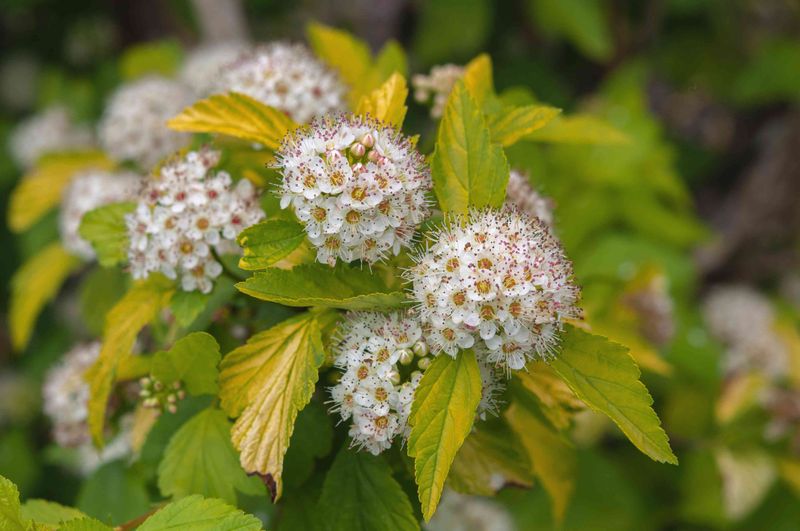
If you want a native shrub that behaves more like a traditional hedge plant without sacrificing wildlife value, common ninebark, Physocarpus opulifolius, deserves a close look.
It grows with arching, layered branches that create a naturally dense silhouette, and it establishes quickly once it settles into a sunny, well-drained to moderately moist spot.
Ninebark is one of the more adaptable native shrubs on this list. It tolerates a range of soil types, handles full sun to part shade, and does not demand the consistently moist conditions that the dogwoods prefer.
That flexibility makes it a reliable choice for Ohio homeowners who want a hedge that works across different sections of the yard.
Clusters of small white flowers appear in late spring and attract native bees. The peeling, cinnamon-colored bark adds texture to the planting in winter when leaves are gone.
Native green-leaved straight species forms are the best choice for wildlife value, though some cultivars with darker foliage are also available.
Prune ninebark lightly after flowering to maintain shape, but avoid cutting it into a stiff, boxy form because the natural arching habit is part of its appeal.
Space plants five to six feet apart for a privacy hedge that fills in within two to three seasons in good growing conditions.
6. Use Buttonbush In Wet Spots
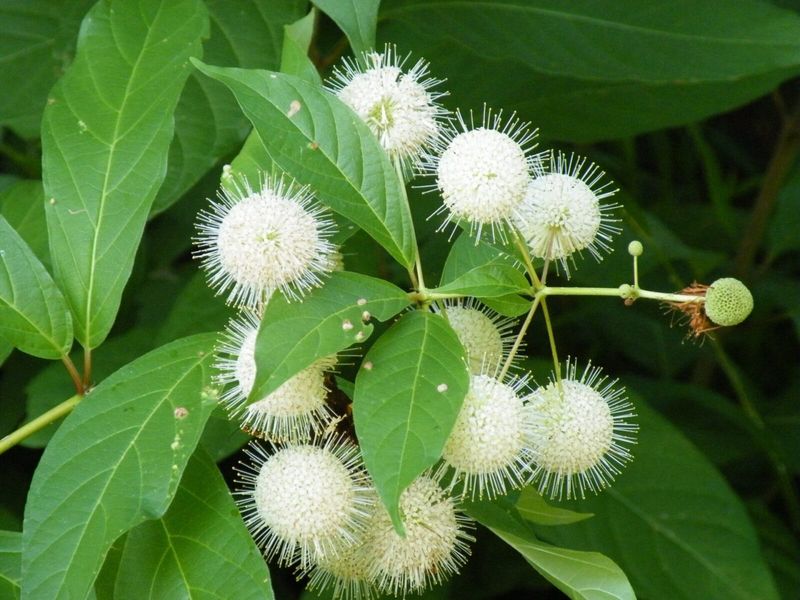
Every yard has at least one spot that stays wet long after a rain, where the ground never quite dries out and ordinary shrubs look miserable. Buttonbush, Cephalanthus occidentalis, was practically made for those places.
This Ohio native thrives in standing or seasonally flooded soil, making it the go-to privacy shrub for pond edges, drainage areas, and consistently moist low spots.
Buttonbush grows into a rounded, multi-stemmed shrub that can reach six to twelve feet tall in ideal wet conditions. The growth rate picks up noticeably once it is established in moist soil, and a row of plants will begin providing real screening within two to three seasons.
The site requirement is firm though, because buttonbush planted in dry, exposed soil will not perform the way this article describes.
The flowers are unlike anything else in an Ohio native hedge. Round, white, golf-ball-sized globes appear in summer and draw an impressive crowd of bees, butterflies, and other pollinators.
The rounded seed heads that follow persist into winter and provide food for waterfowl. Buttonbush pairs beautifully with silky dogwood and redosier dogwood in a wet-site privacy planting.
Space plants five to seven feet apart, and plan for a shrub that will reward patience with a truly unique look that no standard hedge plant can replicate.
7. Create A Living Fence With American Plum
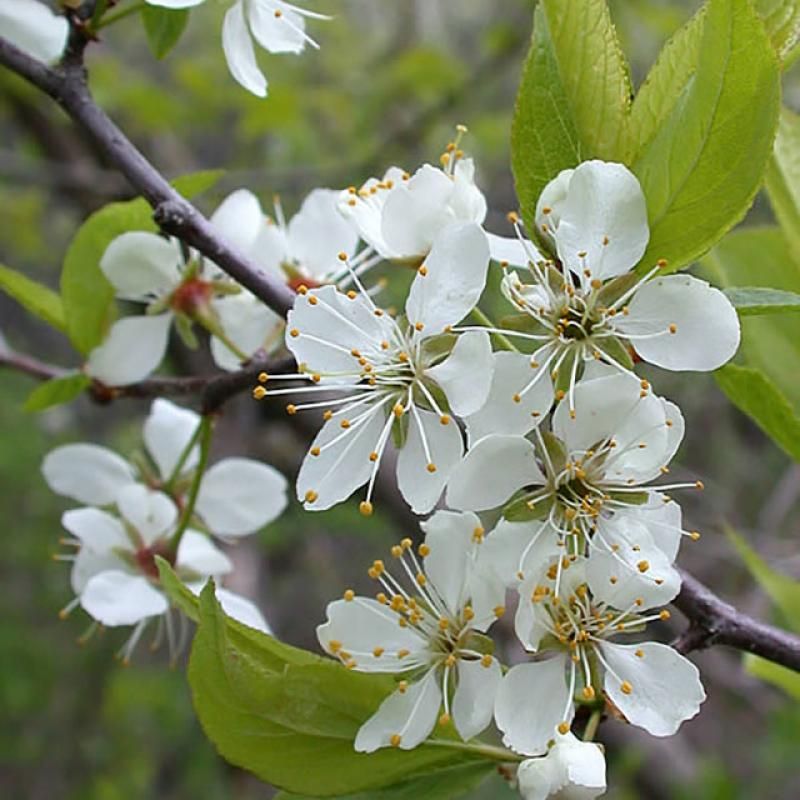
Along a rural property line or a wide open backyard edge, American plum, Prunus americana, can do something most shrubs cannot: it creates a barrier that people and large animals actually think twice about crossing.
The thorny branches, suckering habit, and dense colony growth combine to make this native shrub one of the most effective living fences available to Ohio homeowners with space to spare.
American plum grows as a large shrub or small tree, typically reaching ten to fifteen feet tall, and it spreads aggressively by root suckers.
That spreading habit is a genuine advantage along a long property line or a farm edge, but it requires management in smaller yards.
Plan to mow or cut back suckers regularly outside the area where you want the hedge to grow.
In early spring, before the leaves emerge, the branches are covered in clusters of small white flowers that are stunning against a gray sky and attractive to early pollinators.
The small red or yellow plums that follow in late summer are eaten by deer, foxes, turkeys, and many other Ohio wildlife species.
The thorns add a layer of function that makes this planting feel genuinely fence-like. Give American plum full sun, reasonable soil, and plenty of room, and it will reward you with a tough, wildlife-rich barrier that improves every year.
8. Add Flowers And Berries With Arrowwood Viburnum
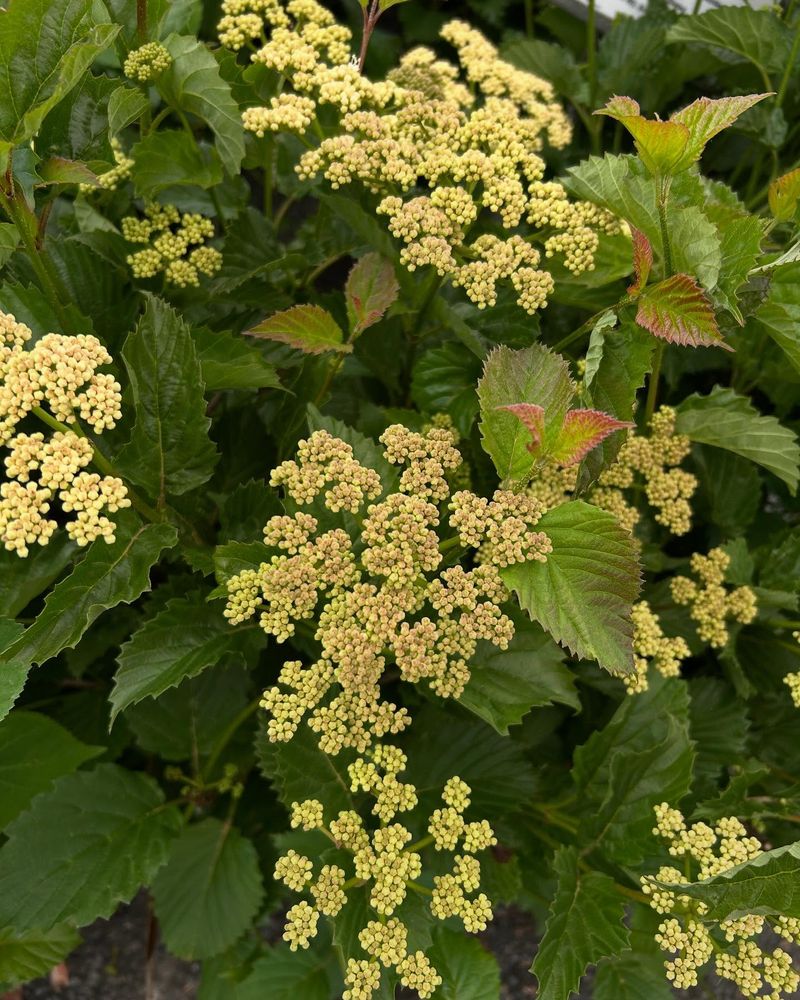
Arrowwood viburnum, Viburnum dentatum, brings something to a native privacy hedge that the faster, thicket-forming shrubs on this list sometimes lack: a polished, multi-season appearance that works equally well in a naturalized border or a more intentional landscape design.
The dense, upright to arching growth habit creates solid coverage, and the shrub looks attractive from spring through fall.
Growth rate is honest rather than dramatic. Arrowwood viburnum adds one to two feet per year under good conditions, so reaching full screening height of six to ten feet takes several seasons.
Planting larger nursery stock or combining it with faster-growing species like elderberry or ninebark in a mixed hedge is a practical way to get privacy sooner while arrowwood fills in over time.
Flat-topped clusters of white flowers appear in late spring and attract native bees and other pollinators reliably.
By late summer, clusters of blue-black berries ripen and disappear quickly because many bird species, including cedar waxwings and thrushes, seek them out.
Fall foliage can turn red to burgundy depending on light conditions. Arrowwood adapts well to full sun or part shade and handles average Ohio soil without fuss.
Space plants four to five feet apart for a hedge, and prune lightly after flowering if needed to maintain a tidy shape without sacrificing the berry crop.