What North Carolina Crape Myrtles Really Need In May And What To Stop Doing
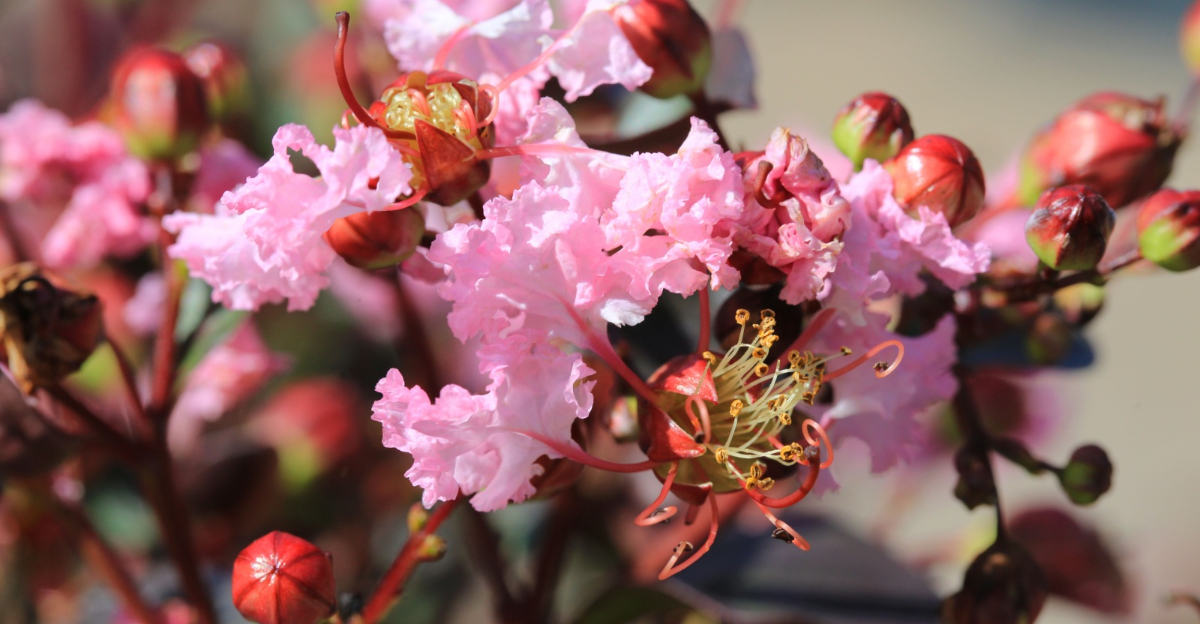
May has a funny way of making people want to fuss over their crape myrtles.
The weather warms up, fresh growth starts moving fast, and suddenly it feels like the trees need a big haircut, extra fertilizer, and a long drink every other day.
In North Carolina, that impulse can get a little messy. A yard in the mountains may behave very differently than one in the Piedmont or along the coast, so quick fixes do not always land the way people hope.
The encouraging part is that crape myrtles usually do better with a lighter touch. They are not asking for a dramatic spring makeover, no matter how tempting the pruners may look leaning against the garage wall.
A few smart choices in May can support better growth, stronger structure, and a nicer bloom season ahead.
Just as important, skipping a few common habits can save these trees a surprising amount of stress.
1. Water Deeply During Dry Spells

May in North Carolina can feel unpredictable when it comes to rainfall. Some weeks bring steady showers, while others turn surprisingly dry, especially in the Piedmont and coastal plain regions where spring dry spells can arrive without much warning.
Established crape myrtles are fairly resilient once their root systems are well developed, but dry stretches during active spring growth can slow leaf development and affect how well the tree prepares for summer flowering.
Deep, infrequent watering tends to work better than frequent shallow watering for crape myrtles. When you water deeply, moisture reaches further into the soil and encourages roots to grow downward rather than staying near the surface.
A slow trickle from a hose at the base of the tree for 20 to 30 minutes, or a thorough soaking every week or two during dry spells, can make a meaningful difference without overdoing it.
Overwatering is a real concern, particularly in clay-heavy soils common across much of North Carolina. Soggy soil can stress roots and reduce the tree’s ability to take up nutrients.
Before reaching for the hose, check the soil a few inches down. If it still feels moist, the tree likely does not need water yet.
Matching your watering to what the soil and weather actually call for, rather than following a fixed schedule, tends to produce the best results.
2. Avoid Wetting The Foliage
Overhead watering sounds convenient, but for crape myrtles in North Carolina, it can create conditions that invite fungal problems.
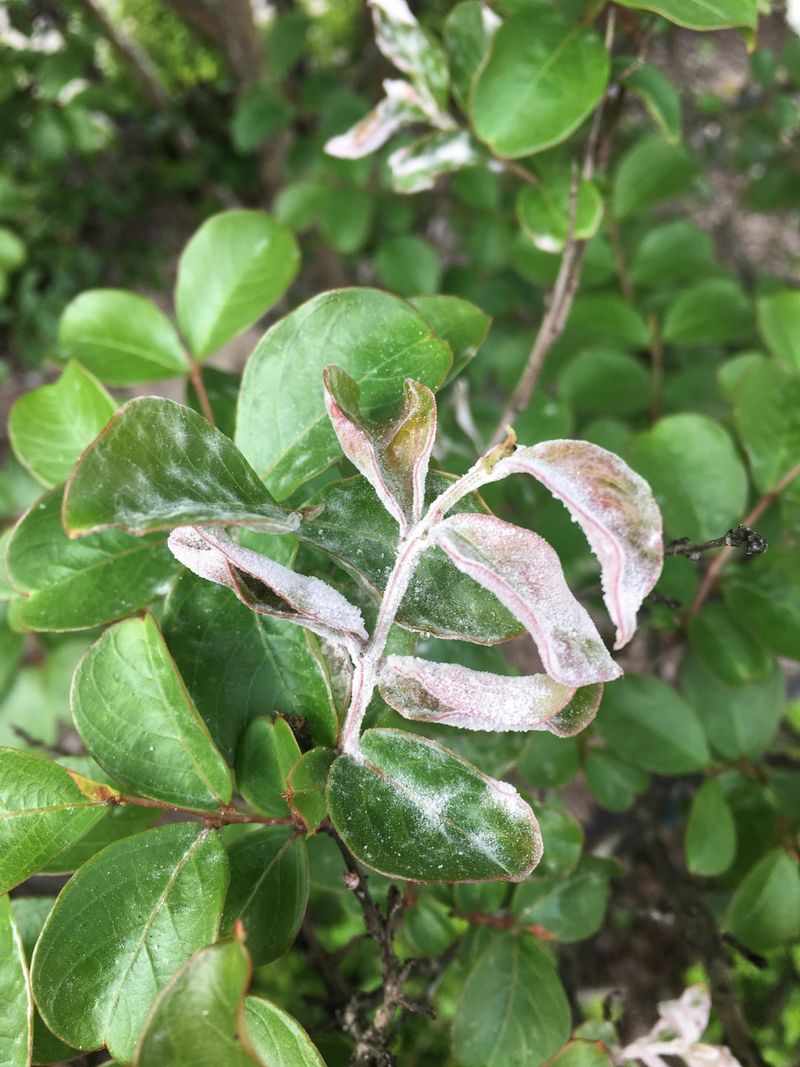
Powdery mildew is one of the most common issues crape myrtles face, and wet foliage combined with warm, humid air gives this fungus a favorable environment to take hold.
May temperatures across North Carolina, especially in the central and eastern parts of the state, can climb quickly, and humidity levels often follow.
When water sits on leaves for extended periods, especially overnight, the risk of powdery mildew increases noticeably. You may start to see a white or grayish powder appearing on young leaves and shoot tips.
While powdery mildew rarely causes severe long-term damage to an established crape myrtle, it can affect the appearance of new growth and reduce the overall vigor of the canopy heading into summer.
Your North Carolina Garden Changes Every Week. Your Plan Should Too.
Gardening in North Carolina changes quickly throughout the season. Every Friday you’ll receive a simple weekly plan showing exactly what to plant, prune, fertilize, harvest, and protect so you never miss the right timing.
Watering at the base of the tree, rather than spraying the canopy, is a straightforward way to reduce this risk. Drip irrigation or a slow-running hose directed toward the root zone keeps foliage dry while still delivering moisture where the tree needs it most.
If you use a sprinkler system that hits your crape myrtles, consider adjusting the heads or timing so that water reaches the soil without soaking the leaves.
Keeping foliage as dry as reasonably possible during warm, humid stretches can support healthier growth through the season.
3. Refresh Mulch And Keep It Off The Trunk
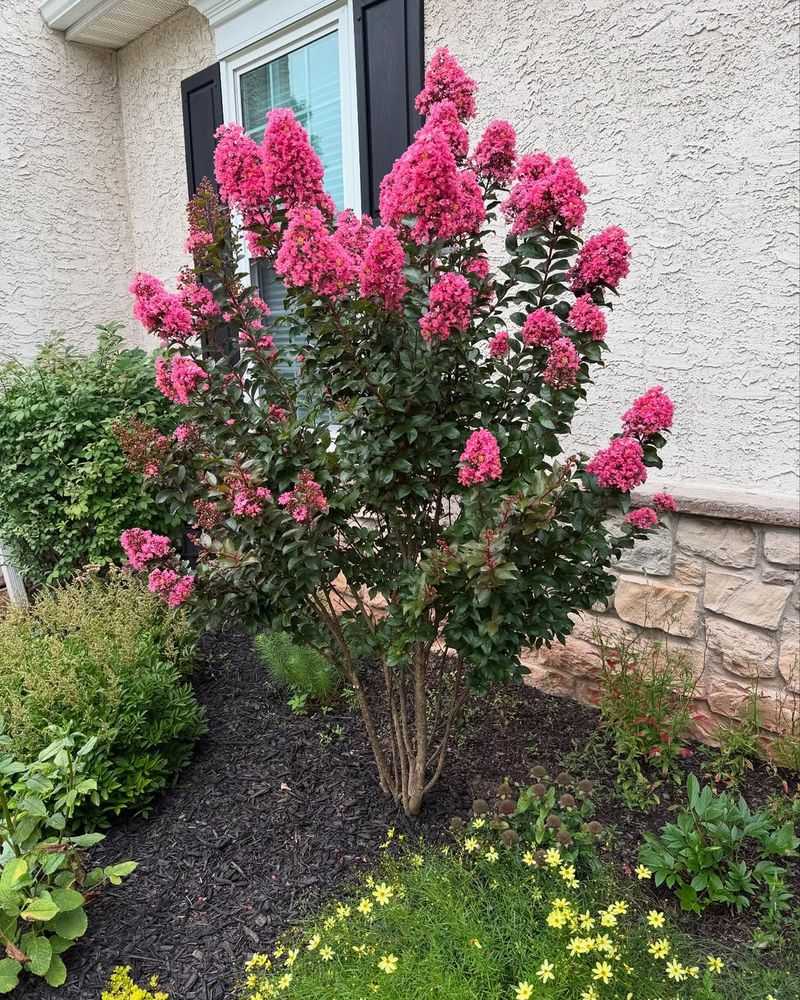
Mulching around crape myrtles in May is one of the most practical things you can do for their long-term health, but how you apply it matters just as much as whether you apply it at all.
A fresh layer of mulch, about two to three inches deep, spread in a wide ring around the base of the tree can help hold soil moisture during dry spells, moderate soil temperature, and reduce competition from grass and weeds as the season heats up.
One of the most common mulching mistakes in North Carolina yards is piling mulch directly against the trunk of the tree.
This practice, sometimes called mulch volcanos, traps moisture against the bark and can create conditions where rot and pests find an easier foothold.
Keeping mulch pulled back at least a few inches from the trunk allows the base of the tree to stay dry and breathe properly.
May is a good time to refresh old mulch that has broken down over the winter. Rake out any compacted material before adding a new layer, and try to extend the mulch ring out toward the drip line of the tree if space allows.
Organic mulches such as shredded hardwood, pine bark, or pine straw are commonly used across North Carolina and break down gradually to improve soil structure over time.
A well-applied mulch ring can reduce your watering needs and support root health through the summer months ahead.
4. Do Not Top Or Severely Prune In May
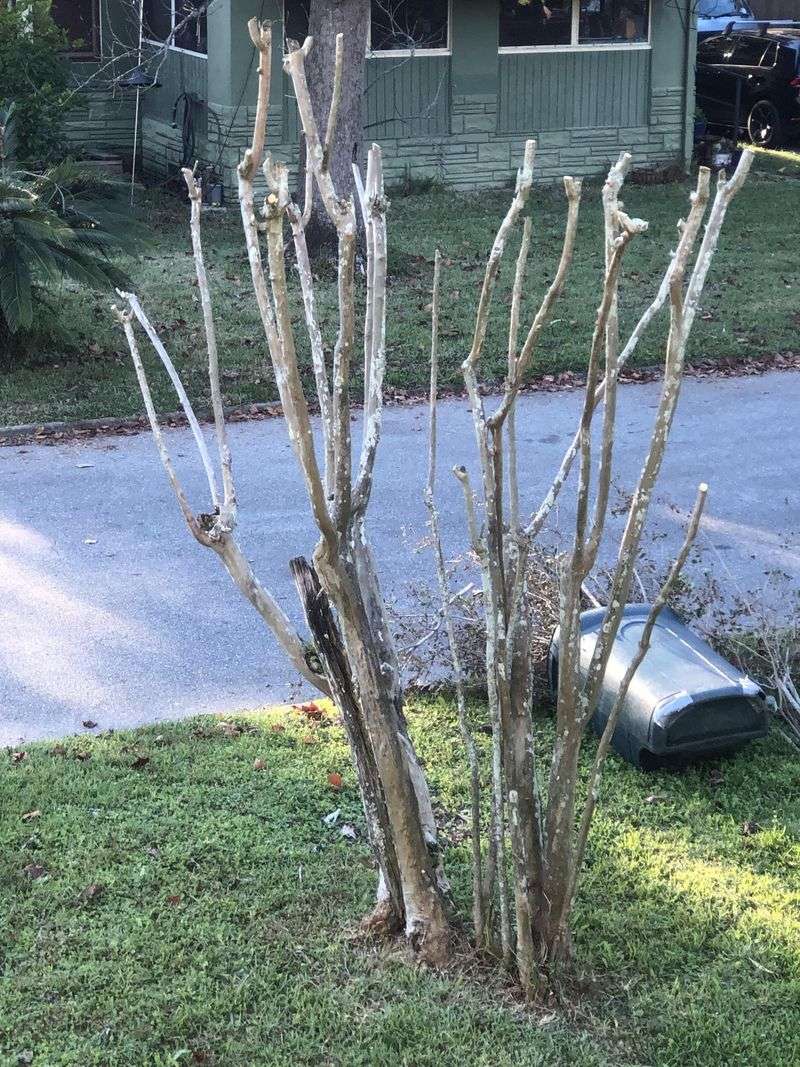
Few practices frustrate crape myrtle enthusiasts more than topping, and May is unfortunately a month when some gardeners reach for pruning saws out of habit or impatience.
Topping means cutting the main branches back to thick stubs, often dramatically reducing the height and natural form of the tree.
Across North Carolina neighborhoods, topped crape myrtles are easy to spot, and the results tend to work against what most gardeners are hoping to achieve.
Severe pruning in May removes much of the new growth that the tree has spent weeks building up since late winter. Crape myrtles bloom on new wood, meaning the flower clusters develop on the tips of the current season’s growth.
When you cut those branches back hard in spring, you delay flowering and push the tree to spend energy regrowing what was removed rather than channeling that energy into blooms and healthy canopy development.
If pruning is needed, light corrective work is far less disruptive than heavy cuts. Removing crossing branches, trimming low-hanging growth, or tidying up any winter-damaged wood are reasonable tasks for May.
Selecting a crape myrtle cultivar that fits the space naturally, rather than relying on annual heavy pruning to manage size, is widely considered the most practical long-term approach by horticulture specialists.
North Carolina landscapes offer a wide range of cultivar sizes, from compact shrub forms to tall shade trees, making it easier to find a good fit for most planting spots.
5. Remove Suckers And Water Sprouts Selectively
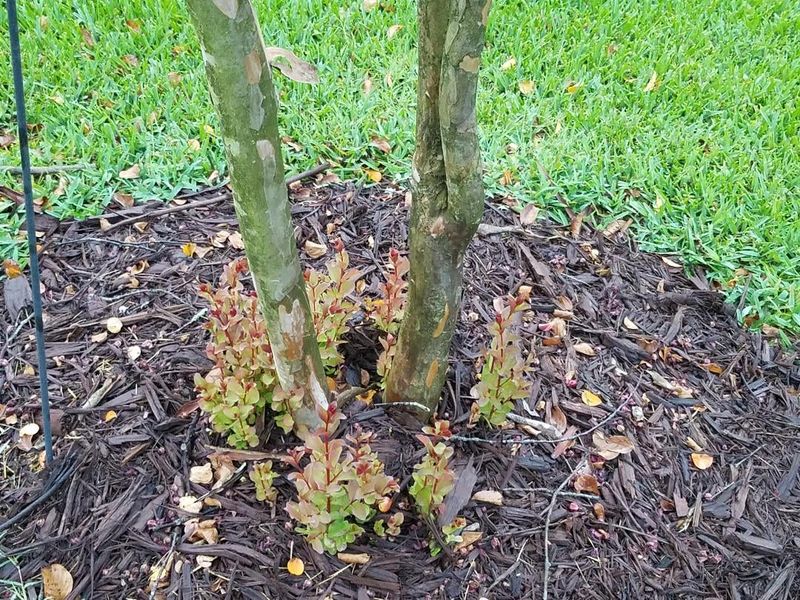
Spring growth on crape myrtles is not always where you want it. Suckers are shoots that emerge from the base of the tree or from the root zone, and water sprouts are vigorous, upright shoots that push out along the trunk or main branches.
Both are common in May as the tree responds to warming temperatures and the surge of spring energy. Left unchecked, they can clutter the base of the tree and divert resources away from the main canopy.
Removing suckers and water sprouts is generally worth doing in May, but the key word is selectively. Pulling or cutting them off as close to their point of origin as possible tends to slow their return better than cutting them higher up on the stem.
Removing them by hand when they are still small and tender is often easier than waiting until they have stiffened into woody growth later in the season.
Not every shoot at the base needs to go immediately. If you are training a crape myrtle into a multi-trunk form, some of these sprouts may be useful for developing additional structural stems.
The goal is to make intentional choices rather than leaving all of them in place by default.
In North Carolina yards where crape myrtles serve as focal points or street trees, keeping the base clean and the canopy uncluttered tends to produce a more appealing shape over time and makes future maintenance more manageable.
6. Do Not Overfertilize
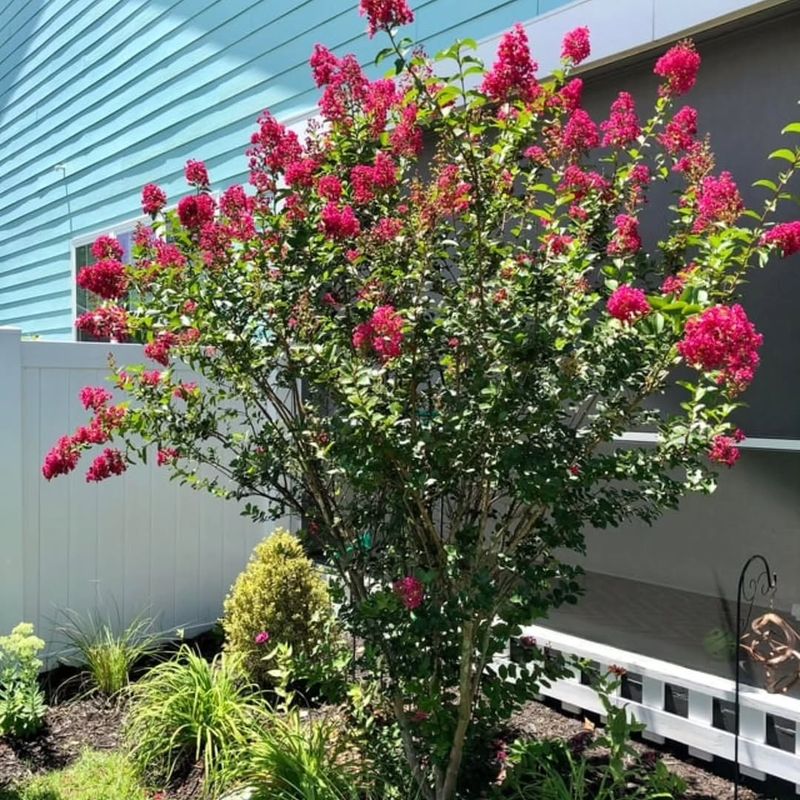
Fertilizer is one of those things where more does not automatically mean better, and crape myrtles in North Carolina are a good example of that principle in action.
May is a month when many gardeners feel the urge to feed their trees heavily, hoping to boost growth and flowering.
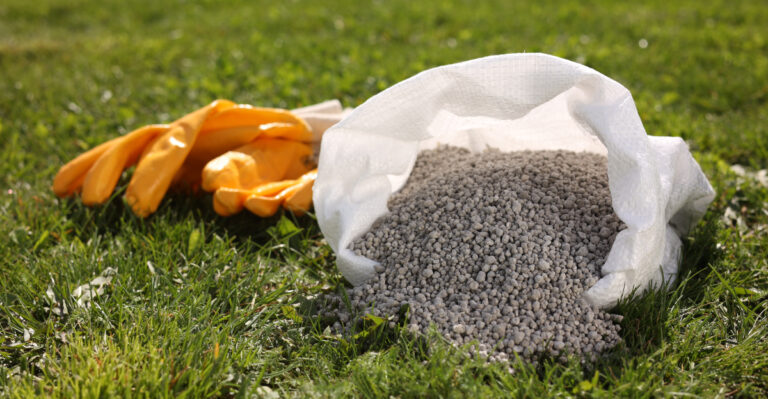
However, applying too much fertilizer, especially nitrogen-heavy products, can push rapid vegetative growth at the expense of flower production and overall plant balance.
Excessive nitrogen tends to stimulate a surge of soft, leafy growth that is more attractive to aphids and other insects. It can also reduce the proportion of flower buds that form relative to the volume of new foliage.
Established crape myrtles in reasonably fertile soil often need little to no supplemental fertilizer, particularly if organic mulch is breaking down around them and contributing nutrients over time.
If your crape myrtle shows signs of poor growth or pale foliage, a soil test is a practical starting point before adding any fertilizer.
Soil tests can reveal whether nutrient deficiencies are actually present or whether another factor, such as drainage, pH, or compaction, is the underlying issue.
When fertilizer is warranted, a slow-release, balanced product applied at a conservative rate tends to be more forgiving than high-nitrogen formulas.
Applying fertilizer to dry soil or during a drought without adequate follow-up watering can also stress roots rather than support them.
7. Inspect For Crape Myrtle Bark Scale
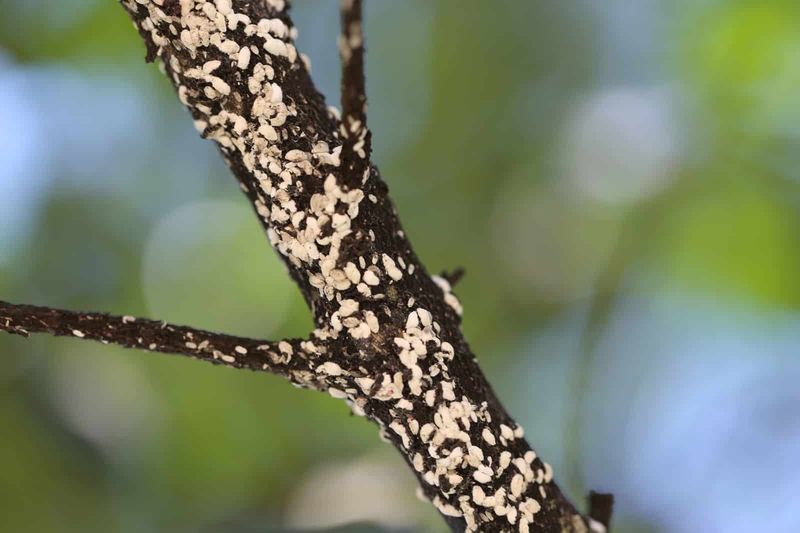
Crape myrtle bark scale has become one of the more serious pest concerns for crape myrtles across the South, and North Carolina is no exception.
First detected in Texas in 2004, this invasive insect has spread through much of the Southeast and has been found in various parts of North Carolina in recent years.
May is a good time to start checking your trees carefully, because catching an infestation early gives you more management options before populations grow through the summer.
The scale insects appear as white or grayish, felt-like encrustations on branches, trunks, and even the undersides of larger limbs.
As they feed, they excrete a sticky substance called honeydew, which then supports the growth of a black sooty mold on the bark and nearby surfaces.
The sooty mold itself does not harm the wood directly, but it is a visible indicator that scale activity is present and worth addressing.
Lightly infested trees can sometimes be managed by scrubbing visible scale off with a soft brush and water or by using horticultural oil applied carefully to affected areas according to label directions.
More significant infestations may warrant a systemic insecticide treatment, though timing and product selection matter.
Reviewing reliable guidance on managing crape myrtle bark scale is a worthwhile step before choosing a treatment approach, especially in landscapes where beneficial insects are present and worth protecting.
8. Avoid Broad Insect Sprays That Can Disrupt Beneficial Insects
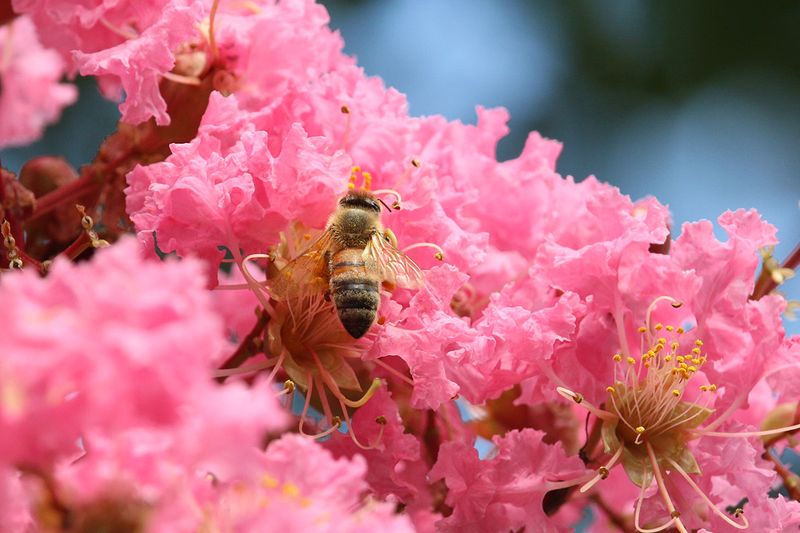
Crape myrtles in full bloom are magnets for pollinators, and even in May before the main flowering push, the trees attract beneficial insects as the landscape wakes up for the season.
Broad-spectrum insecticide sprays applied routinely, rather than in response to a specific identified pest problem, can reduce populations of bees, parasitic wasps, and other beneficial insects that help keep pest populations in check naturally.
Many gardeners reach for insect sprays at the first sign of any bug activity on their crape myrtles, but not all insects on the tree are problems.
Aphids sometimes appear on new growth in May and can look alarming in large numbers, but they are also a food source for ladybugs, lacewings, and parasitic wasps.
In many cases, beneficial insect activity brings aphid populations down without any intervention needed from the gardener.
When pest pressure does warrant treatment, targeted options tend to cause less collateral impact on the broader insect community than broad-spectrum sprays.
Insecticidal soap or horticultural oil, applied directly to the affected area and used according to label directions, can address localized problems with softer impact.
Avoiding routine calendar-based spraying and instead scouting for actual pest problems before acting is a more sustainable approach for North Carolina home landscapes.
Healthy, well-maintained crape myrtles with good sun exposure, appropriate watering, and reasonable soil conditions tend to handle moderate pest pressure reasonably well on their own.