The DIY Pallet Projects That Make Arizona Yards More Functional
Pallets do not look like much at first, yet they can completely change how an Arizona yard works. Empty corners, cluttered walkways, and wasted spots become obvious once the space gets used every day.
That is usually when the need for something more practical starts to show.
Simple builds made from pallets can create structure where it is missing and make outdoor areas easier to manage through long dry seasons. Storage feels less like a problem, and certain parts of the yard finally start to serve a clear purpose.
With the right ideas in place, even a basic setup can feel more organized and far more useful without turning into a big project.
1. Build A Vertical Garden To Save Space And Add Greenery
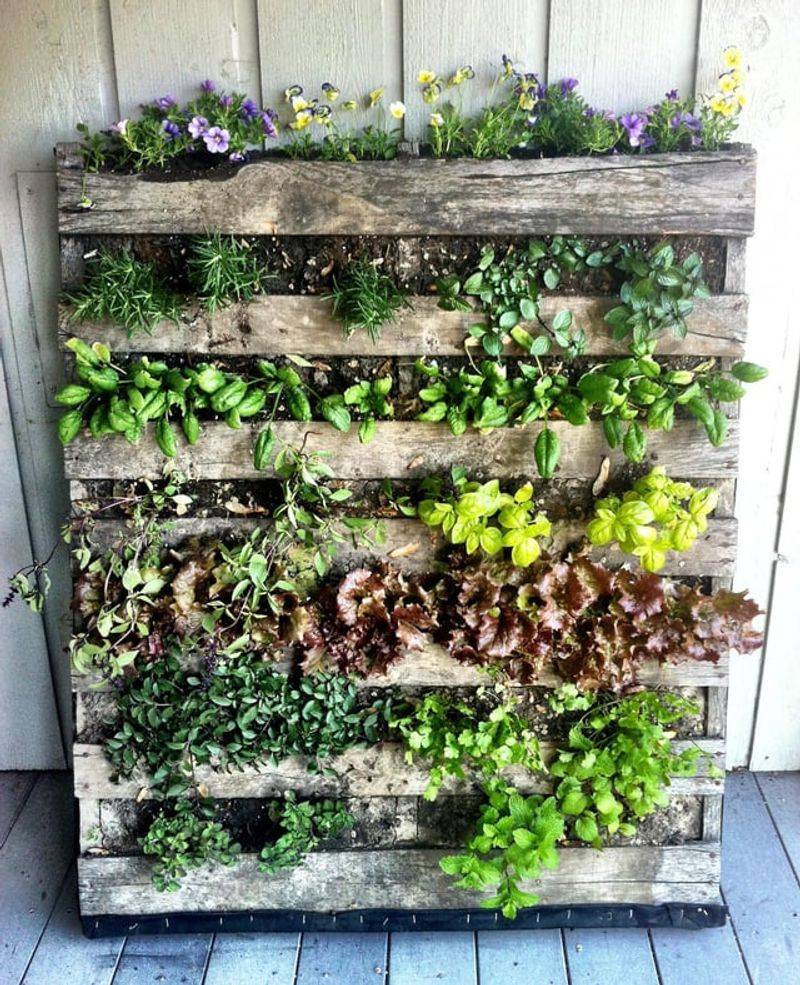
Vertical space is something most Arizona homeowners forget about completely. A pallet turned on its end and mounted against a wall or fence can hold a surprising number of plants without eating up any ground space at all.
Sand it smooth, seal it with an exterior wood treatment, and you have a solid base for planting.
Fill the gaps between the slats with landscape fabric to hold soil in place, then pack in small succulents, herbs like basil or rosemary, or even compact flowering plants that handle heat reasonably well. Keep in mind that full afternoon sun in Phoenix or Mesa can stress even tough plants, so a spot with morning sun and afternoon shade tends to work better for most species.
Watering is the part most people underestimate. Vertical setups dry out faster than ground-level beds, especially in July when temperatures are brutal.
A drip line running along the top of the pallet and threading down between sections saves a lot of daily effort. Check soil moisture every day during summer until you get a feel for how quickly things dry out in your specific yard.
2. Create A Raised Planter Box With Better Drainage
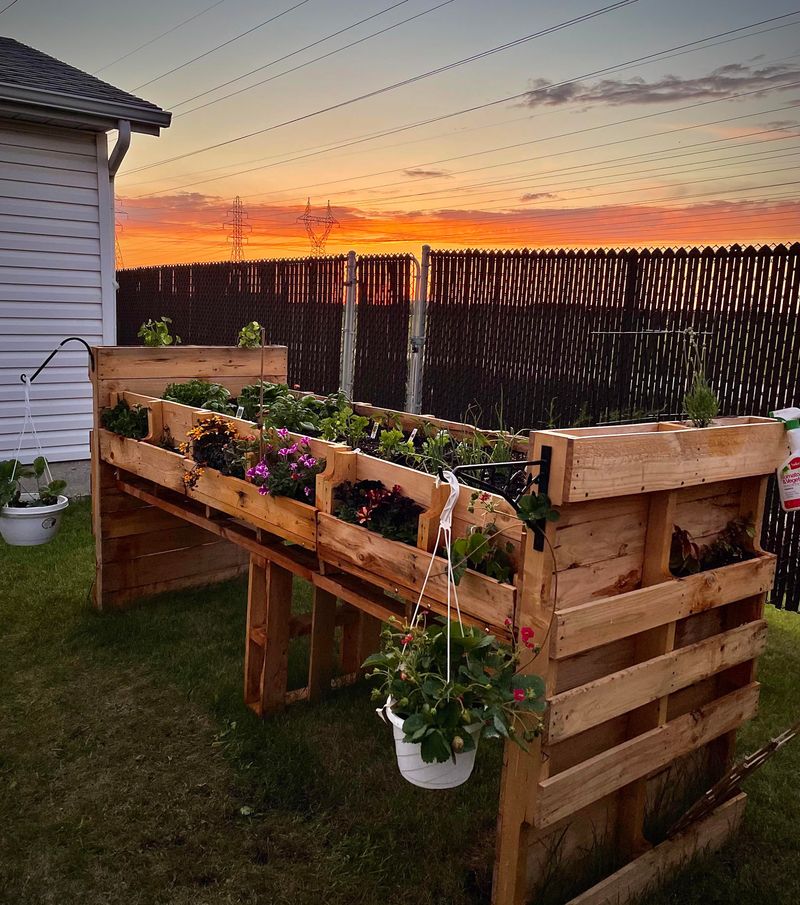
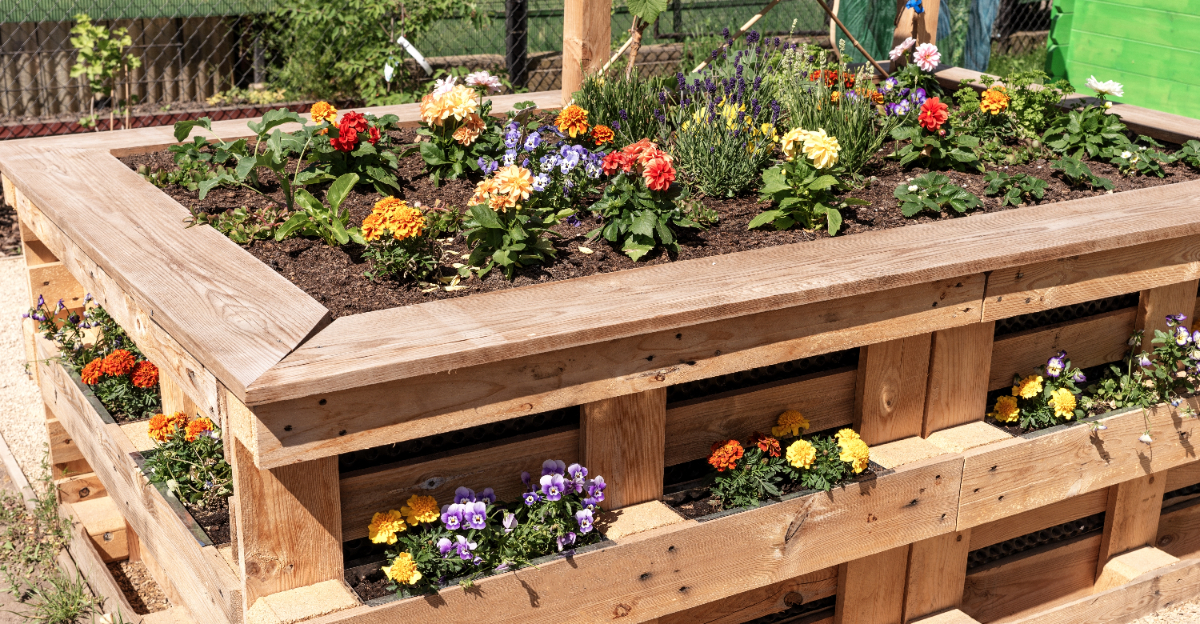
Raised planter boxes built from pallets solve one of the most common gardening headaches in Arizona: poor native soil. Caliche layers, compacted clay, and low organic matter make in-ground planting frustrating in many parts of the state.
Lifting your soil up and away from all of that gives plants a real chance.
Break down two or three pallets and reassemble the boards into a box shape, leaving small gaps between the bottom slats for drainage. Arizona soil can stay waterlogged in spots during monsoon season, and roots sitting in standing water for too long will struggle.
Those small gaps let excess moisture escape while still holding your soil mix in place.
Fill the box with a blend of compost, perlite, and a quality potting mix rather than native desert dirt. A 60/20/20 ratio works decently for most vegetables and herbs, though you may need to experiment based on what you’re planting.
Tomatoes, peppers, and squash all do well in raised beds across Arizona when planted at the right time of year, typically late winter through spring and again in early fall.
Your Arizona Garden Changes Every Week. Your Plan Should Too.
Gardening in Arizona changes quickly throughout the season. Every Friday you’ll receive a simple weekly plan showing exactly what to plant, prune, fertilize, harvest, and protect so you never miss the right timing.
Seal the interior walls with a food-safe wood preservative before filling to slow moisture absorption into the wood. Untreated pallet wood in an Arizona raised bed can start breaking down within a season or two from repeated watering.
3. Make A Simple Potting Bench For Everyday Garden Tasks
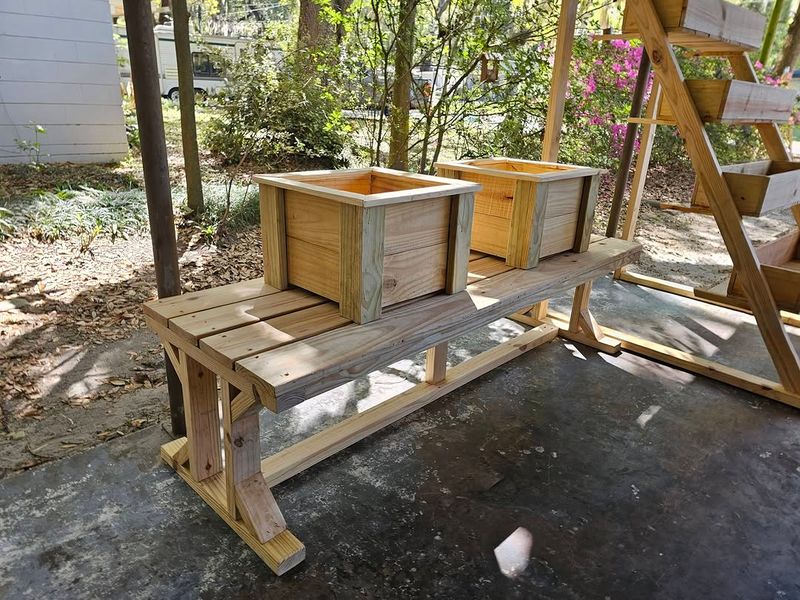
Anyone who gardens regularly knows how quickly a yard can become cluttered with soil bags, pots, tools, and half-finished projects. A potting bench built from pallet wood gives you a dedicated spot to work and keeps things from spreading across the patio.
It does not need to be fancy to be functional.
Start with a full pallet as the base frame and build up the work surface using boards pulled from a second pallet. The standard pallet height of around 40 inches is close to a comfortable working height for most adults, though you can adjust with added legs if needed.
Sand every surface well since rough pallet wood can leave splinters in your hands during long gardening sessions.
Add a row of hooks along the back panel for hanging small tools, and build a lower shelf from leftover boards for storing bags of soil or fertilizer off the ground. Keeping supplies elevated matters in Arizona because ground moisture during monsoon months can soak through paper bags quickly.
A simple roof overhang or placement under an existing patio cover extends the life of the bench considerably.
Seal the entire bench with an exterior wood stain or sealant rated for outdoor use. Arizona summers are rough on untreated wood, with UV exposure and heat causing cracking and fading faster than in most other states.
4. Turn A Pallet Into A Tool Storage Wall
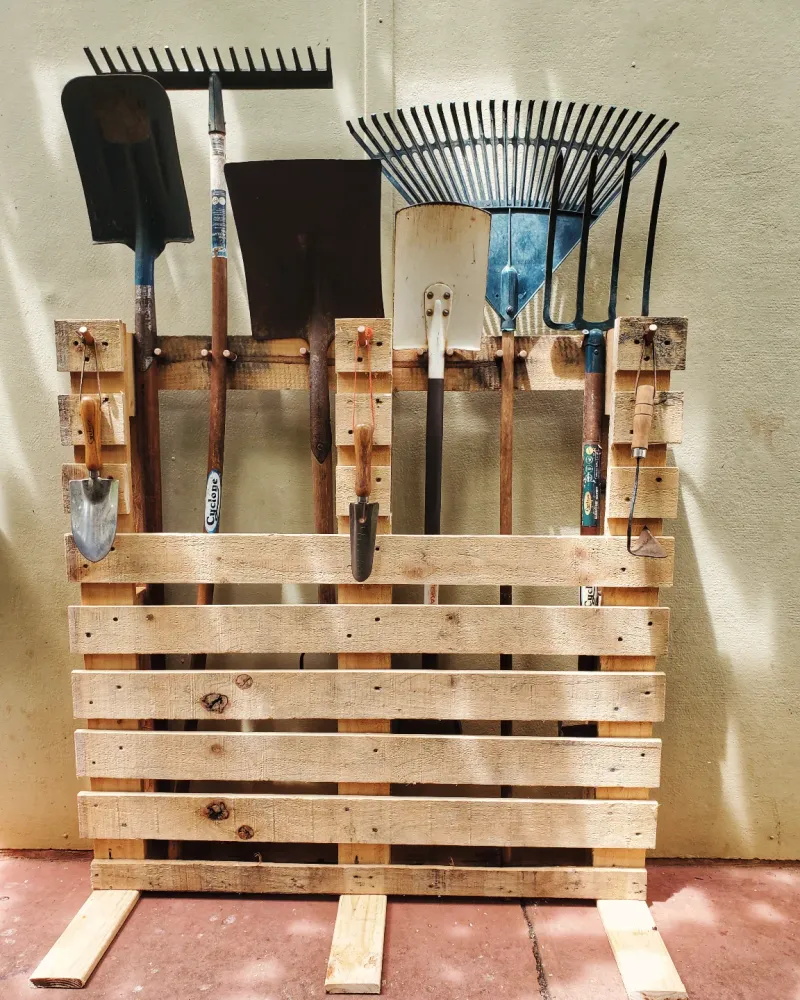
Garden tools scattered across a yard or piled in a garage corner are a minor frustration that adds up over time. Mounting a pallet flat against a wall and using the slat gaps as a built-in organizer solves that problem without buying a single storage rack.
The structure of a standard pallet is almost perfectly designed for hanging long-handled tools.
Sand the pallet thoroughly and apply a coat of exterior paint or sealant before mounting it. If you’re attaching it to a stucco wall, which is common across Arizona homes, use appropriate masonry anchors rather than standard wood screws.
A pallet loaded with tools gets surprisingly heavy, and a secure mount prevents it from pulling away from the wall over time.
Slide rakes, shovels, and hoes between the slats horizontally so the handles rest securely. Add S-hooks to the lower boards for hanging smaller items like trowels, gloves, and pruning shears.
A few small baskets zip-tied to the frame can hold seed packets, twist ties, or other small supplies that tend to disappear in a typical garage.
Placement matters more than most people realize. A shaded wall on the north or east side of a structure stays cooler and protects both the wood and your tool handles from prolonged sun exposure.
Direct western sun in Arizona afternoons can warp wooden handles and dry out rubber grips faster than expected.
5. Build A Compact Outdoor Seating Area
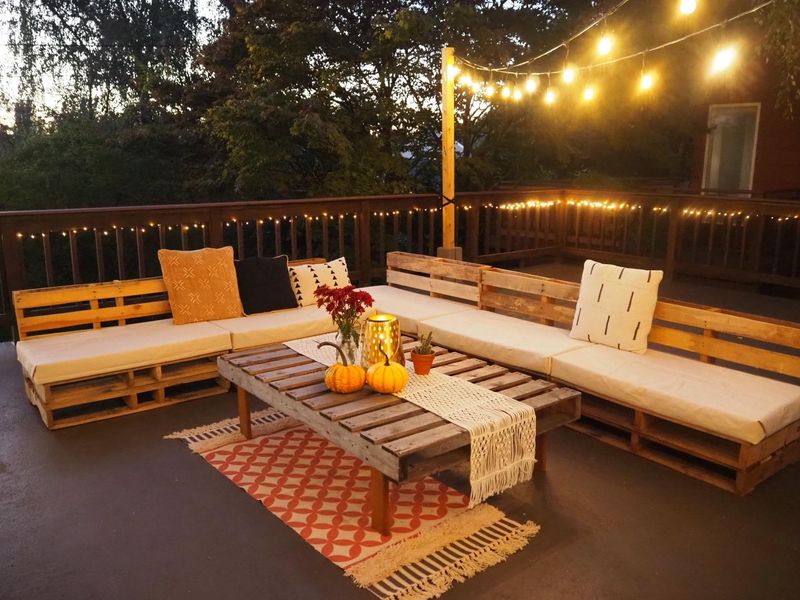
Pallet furniture has a reputation for looking rough or unfinished, but with the right prep work, it can hold up well and look decent in an Arizona backyard. The key is treating the wood properly before you ever set a cushion on it.
Skip this step and you’ll be dealing with splinters, warping, and faded wood within a single summer.
Stack two pallets to create a sofa base and add a third laid flat as a coffee table. Sand everything down to a smooth finish, fill any cracks with exterior wood filler, then apply two coats of a UV-resistant outdoor sealant or stain.
Arizona’s sun is intense enough to bleach and crack untreated wood within a few months, so this part is not optional.
Outdoor cushions rated for UV resistance make a big difference in how long the seating looks good. Standard indoor cushions fade and break down quickly in the desert climate.
Look for solution-dyed acrylic fabrics, which hold color better under extended sun exposure than most alternatives you’ll find at a general home goods store.
Position the seating in a spot that gets shade during the hottest part of the afternoon, ideally under a pergola, ramada, or large shade tree. Sitting outside in an Arizona summer without shade is uncomfortable regardless of how well the furniture is built.
6. Create A Hanging Planter For Small Spaces
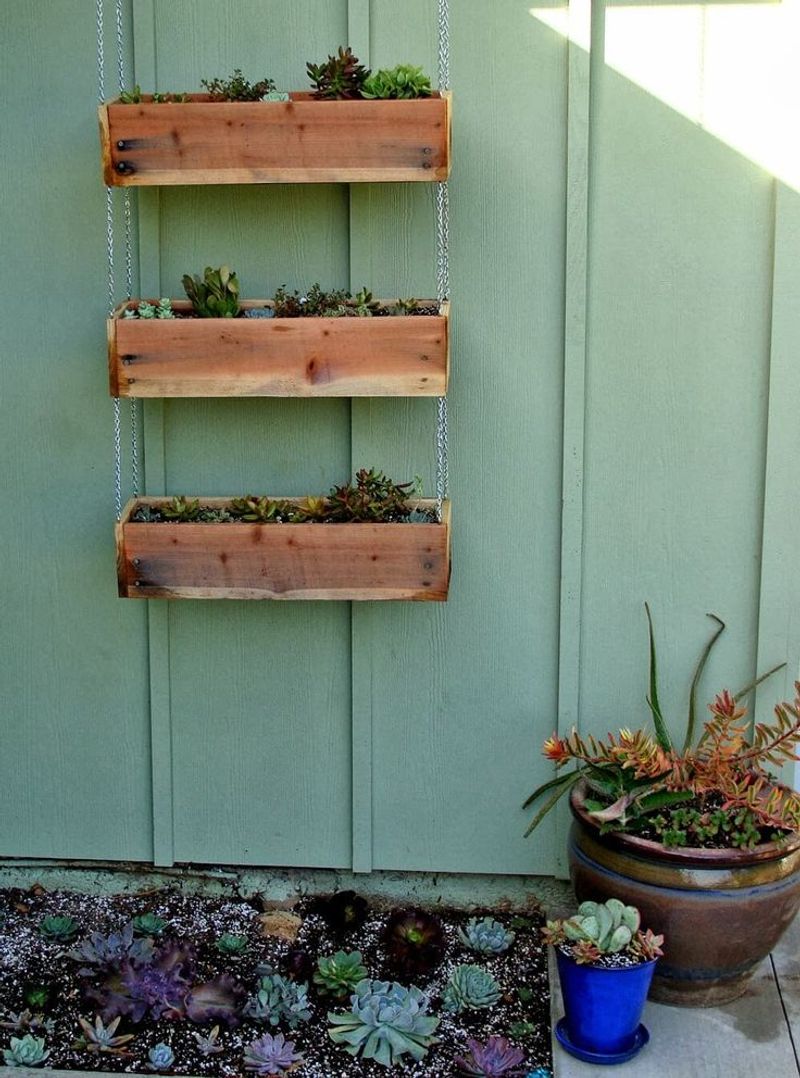
Small patios and narrow side yards in Arizona neighborhoods do not leave much room for traditional planters. Hanging a pallet planter from a wall, fence, or pergola beam gets plants off the ground entirely and adds life to otherwise bare vertical surfaces.
It works well in Tucson townhouses or smaller Phoenix lots where ground space is limited.
Cut a pallet down to a manageable size if needed, usually half a standard pallet works well for most spaces. Staple landscape fabric across the back and sides to form planting pockets between the slats, then fill with a lightweight potting mix.
Heavier soil mixes make the planter harder to hang safely and put more stress on whatever you’re mounting it to.
Succulents are the most forgiving choice for this type of setup in Arizona because they handle irregular watering better than most other plants. Sedums, echeverias, and small aloes look good in the pockets and do not need daily attention once they settle in.
Herbs like thyme and oregano also do reasonably well in a hanging pallet if the location gets morning light rather than full afternoon exposure.
Water slowly and let it absorb before adding more, since hanging planters drain quickly and it’s easy to either overwater or miss spots entirely. Check the mounting hardware every few months because heat cycles and monsoon moisture can loosen screws over time.
7. Use A Pallet As A Ground Cover Walkway
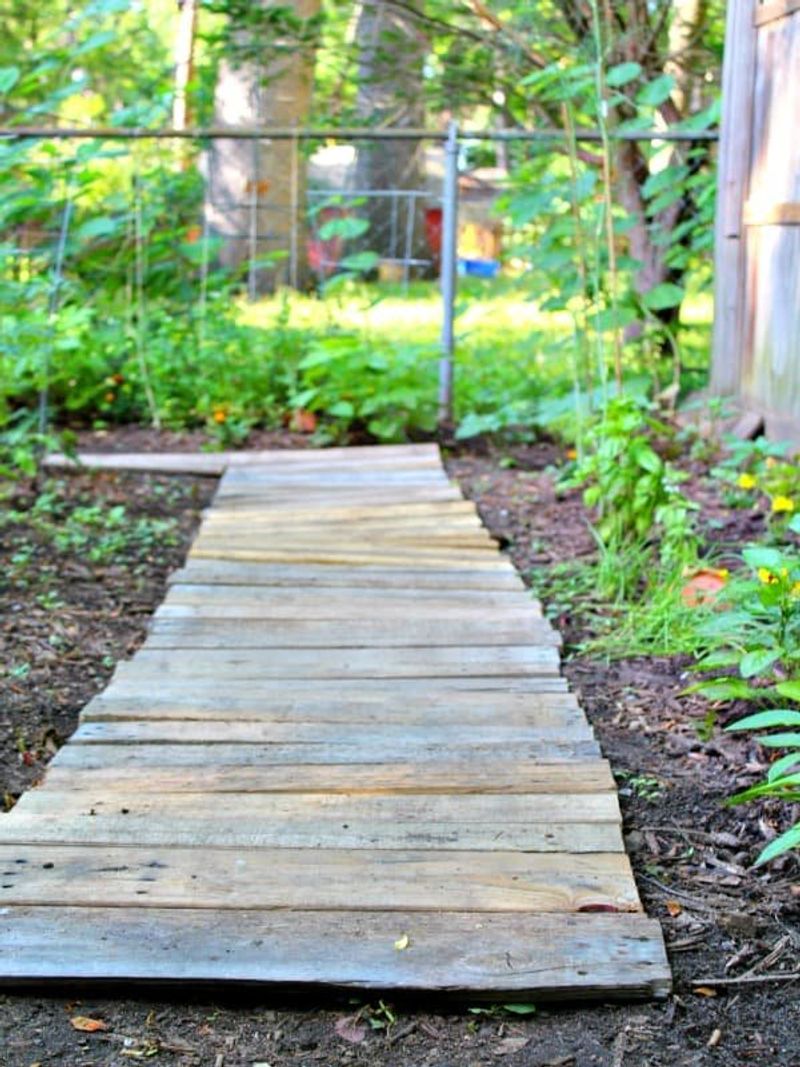
Bare dirt paths through an Arizona yard turn into muddy tracks during monsoon season and dusty corridors the rest of the year. Laying pallets flat along a frequently walked route gives you a firm, stable surface without pouring concrete or buying pavers.
It is one of the fastest pallet projects to put together on a weekend afternoon.
Level the ground as much as possible before placing the pallets, since uneven spots create trip hazards and cause the wood to sit at odd angles.
A few inches of decomposed granite or coarse sand underneath each pallet helps with leveling and improves drainage so water does not pool under the wood after rain.
Standing water under wood in Arizona’s monsoon months speeds up rot considerably.
Space the pallets closely so there are no large gaps between them, or fill the gaps with gravel to prevent weeds and make the path feel more connected.
Desert weeds are persistent and will push through any gap given enough time, so addressing that from the start saves effort later.
A layer of weed barrier fabric beneath the gravel filling helps keep maintenance lower over the long term.
Seal the tops of the pallets with an exterior deck sealant to reduce moisture absorption and slow surface weathering. Foot traffic wears down the sealant faster than on vertical projects, so plan to reapply it once a year.