How To Protect Saguaro Cactus During May Heat In Arizona
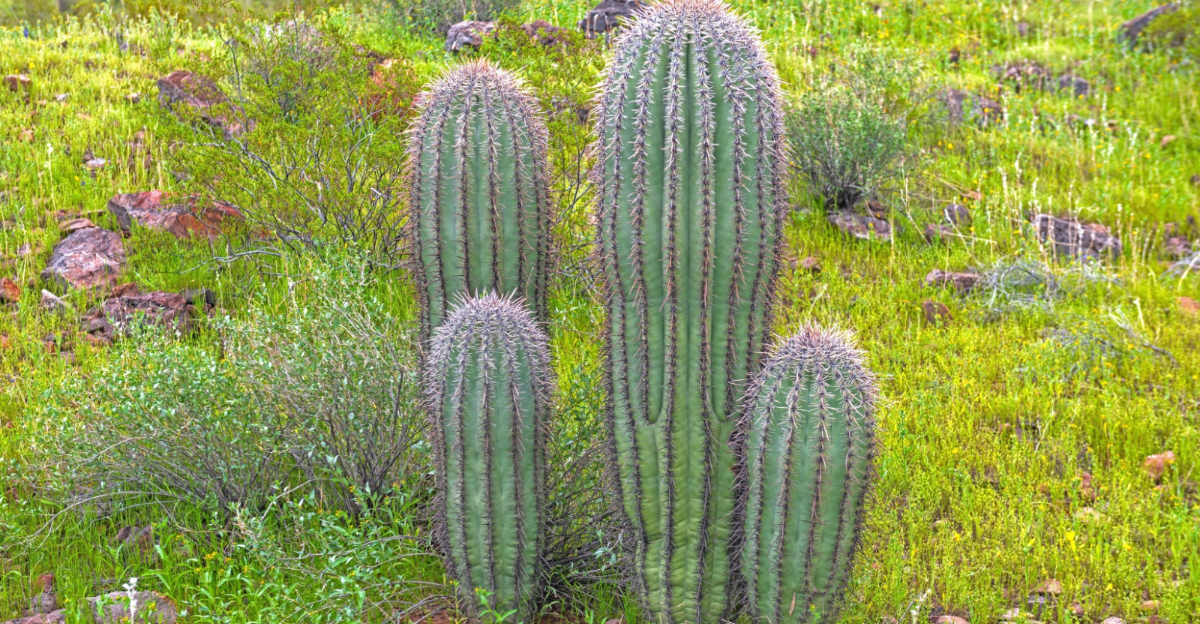
May in Arizona turns up the heat fast, and the desert does not hold back. Even the mighty saguaro, standing tall like it owns the place, can feel that intense sun during the long, dry stretch before monsoon season.
This is when the landscape looks a little extra crispy and your plants start giving you subtle hints that they would appreciate some attention.
Saguaros are known for handling tough conditions, but they are not completely hands-off, especially in a home landscape.
A little awareness right now can go a long way in helping them stay strong through the hottest part of the year. Think of it as giving your cactus a bit of backup during a challenging stretch.
If you have a saguaro in your Arizona yard, this is the perfect time to check in and make sure everything is set up for the heat ahead.
1. Established Saguaros Thrive In May Heat Conditions
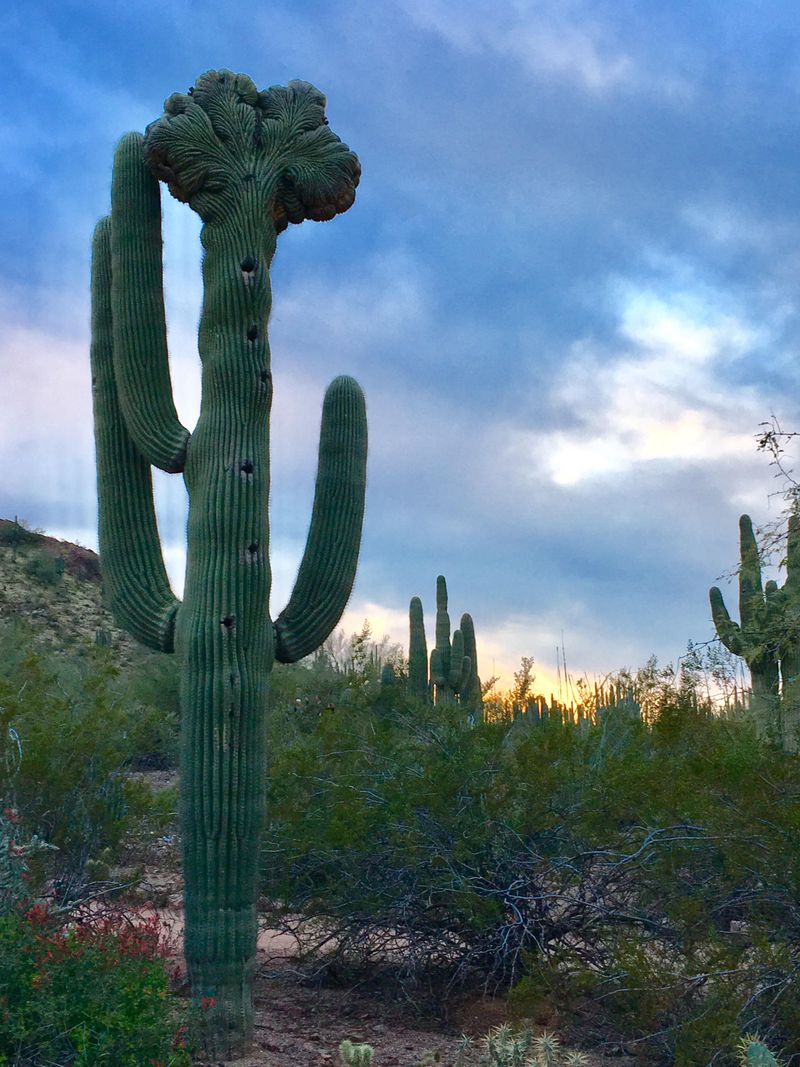
Saguaros that have been growing in the Arizona desert for decades are surprisingly well-equipped to handle May heat.
Their thick, accordion-like skin expands and contracts to store water collected during past rain events, giving them a built-in reservoir that carries them through dry stretches.
An established saguaro can hold hundreds of gallons of water inside its tissues, which is a remarkable adaptation for surviving the pre-monsoon period.
During May, a healthy, mature saguaro will often look slightly slimmer than it did after the last good rain. That slight narrowing of the pleats is completely normal and just means the plant is drawing on its stored water supply.
As long as the cactus remains firm to the touch and shows no soft spots or discoloration, it is handling the heat well.
Arizona homeowners sometimes worry when they notice their saguaro looking a bit leaner in late spring. Resist the urge to intervene with extra watering unless the cactus is newly planted.
Established saguaros in residential landscapes across Arizona have survived many May heat waves without any help.
Trusting the plant’s natural biology is often the best approach, and unnecessary interference can sometimes cause more harm than the heat itself ever would.
2. Young And Newly Planted Saguaros Need Extra Attention
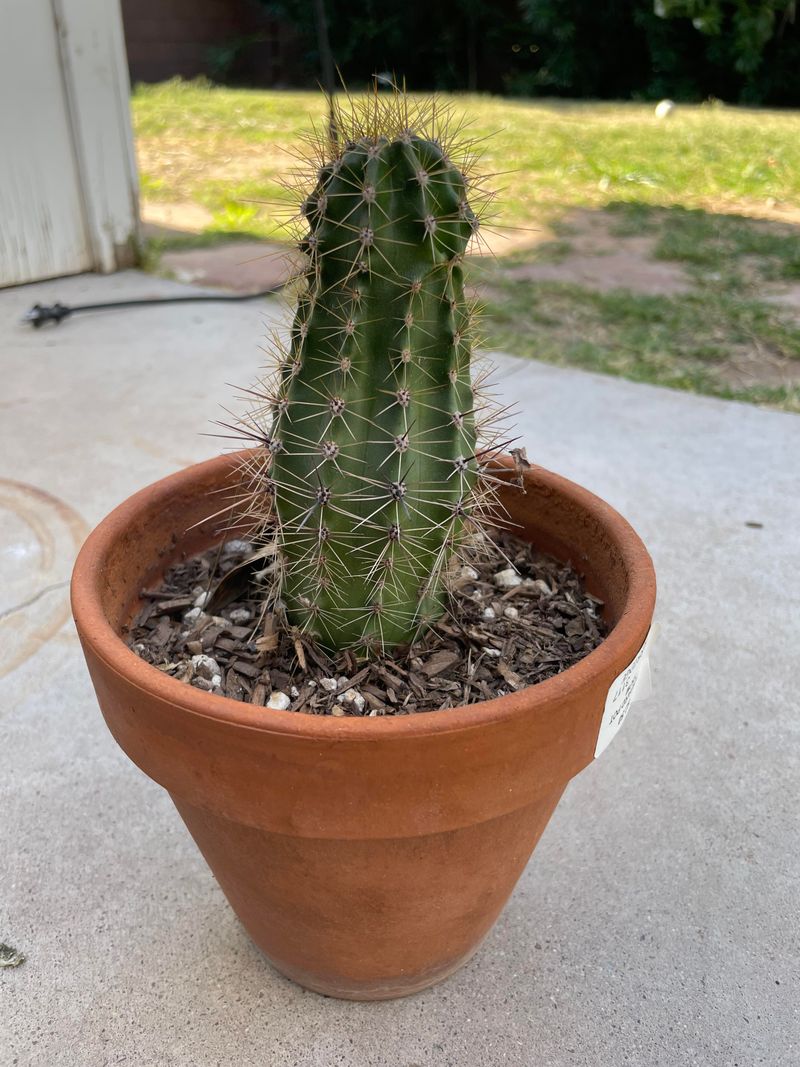
Freshly planted saguaros face a very different challenge than their older, established relatives.
A young saguaro that has been in the ground for less than two years has not yet developed a deep or wide root system, which means it cannot pull moisture from a large area of soil the way a mature plant can.
May heat in Arizona can stress these smaller cacti fairly quickly if they are left without any support.
For newly planted saguaros, a deep watering once or twice per month during May can help bridge the gap until monsoon moisture arrives. Water slowly and allow it to soak in near the base of the plant, roughly at the drip line, rather than right against the trunk.
Letting the soil dry out completely between waterings is still important, since saguaros are highly sensitive to sitting in wet conditions.
Your Arizona Garden Changes Every Week. Your Plan Should Too.
Gardening in Arizona changes quickly throughout the season. Every Friday you’ll receive a simple weekly plan showing exactly what to plant, prune, fertilize, harvest, and protect so you never miss the right timing.
Shade cloth is another helpful tool for young saguaros in Arizona yards. A loosely draped shade cloth that reduces sun intensity by around 30 to 40 percent can lower the surface temperature around the cactus without cutting off too much light.
Remove it once the monsoon season begins and temperatures start to moderate. Giving a young saguaro this kind of early support sets it up for stronger, healthier growth in the years ahead.
3. Watering Guidelines For Saguaros During Dry Pre-Monsoon Months
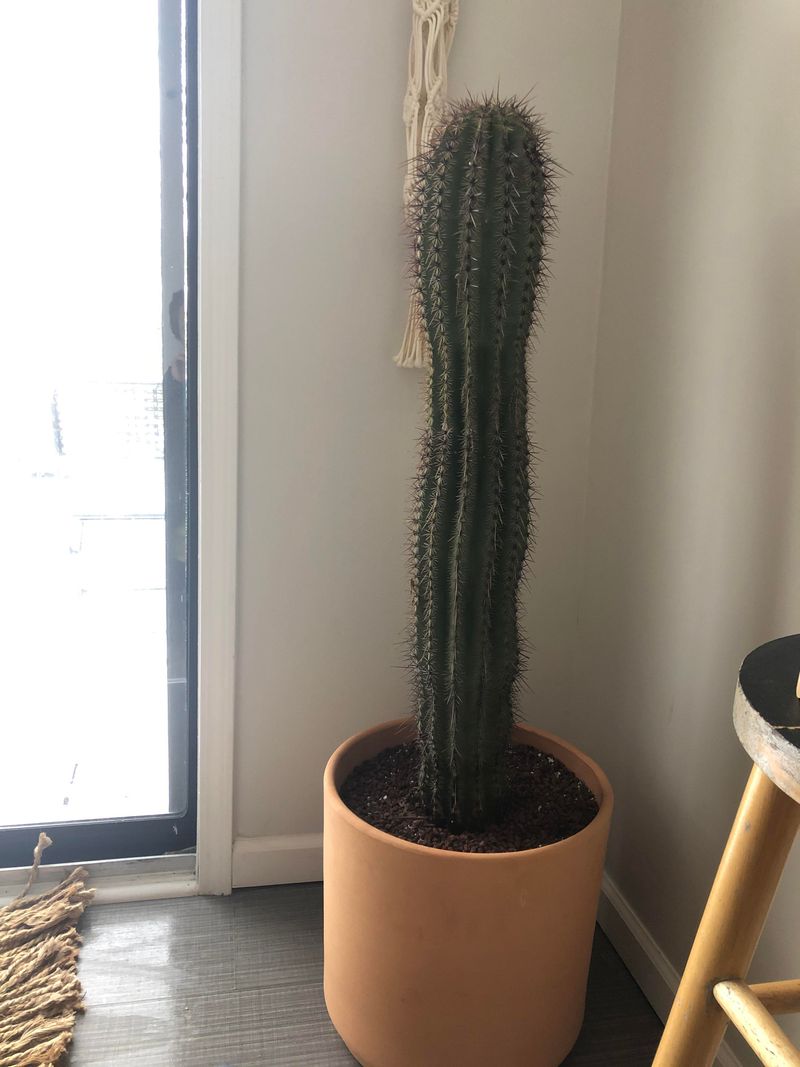
Watering a saguaro correctly during Arizona’s dry pre-monsoon window takes a bit of thought.
Unlike most garden plants, saguaros do not need frequent watering, and their roots are designed to absorb large amounts of water quickly after a rain event and then go weeks without more.
Mimicking that pattern is the key to keeping them comfortable during May.
For established saguaros in Arizona landscapes, supplemental watering is generally not needed unless there has been no significant rainfall for several months and the plant shows clear signs of stress.
If you do water, apply it slowly and deeply at the outer edge of the root zone, which typically extends out as far as the cactus is tall.
Avoid spraying water on the trunk or allowing it to pool right at the base.
Early morning is the best time to water if you choose to do so, since it allows moisture to soak into the soil before the intense midday heat causes rapid evaporation.
Using a drip system or a slow soaker approach works much better than a quick spray.
Keep in mind that Arizona’s rocky and sandy soils drain quickly, so deep watering encourages roots to reach downward rather than staying shallow. Shallow roots leave a saguaro more vulnerable to wind and physical damage during summer storms.
4. Signs Of Bacterial Necrosis And Other Common Issues To Watch
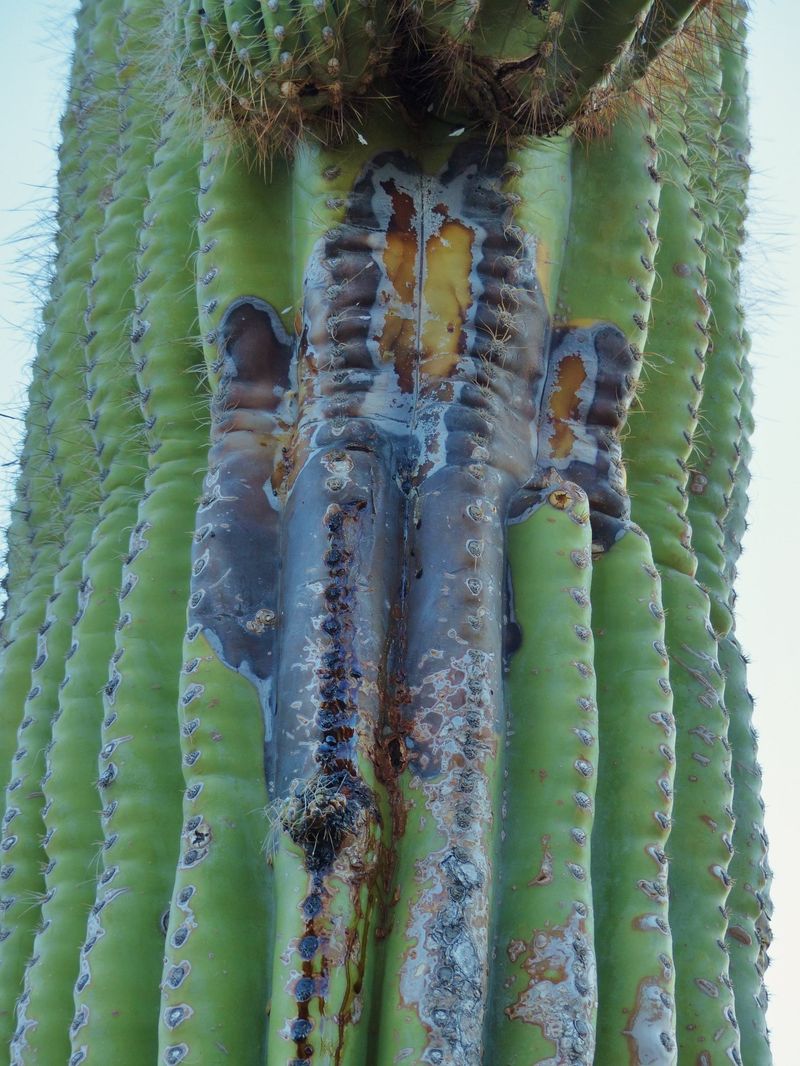
Bacterial necrosis is one of the more serious conditions that can affect saguaros, and May heat can sometimes trigger or accelerate its progression.
The disease is caused by bacteria that enter the cactus through wounds, insect activity, or freeze damage from the previous winter.
As temperatures rise in Arizona, the bacteria become more active, and symptoms can become more visible during late spring.
The most recognizable sign is a soft, dark, and often foul-smelling area on the trunk or arm of the cactus. The tissue may appear sunken or wet, and a dark liquid can sometimes ooze from the affected spot.
If you notice this on a saguaro in your Arizona yard, do not panic, since the cactus has a natural defense response that involves walling off the infected tissue over time.
Other issues to watch for in May include yellowing of the skin, which can signal nutrient stress or root problems, and unusual softening that is not linked to a visible wound.
Insect activity, particularly from the cactus longhorn beetle or cactus borers, can also become more noticeable in warmer months.
Regularly walking your property and giving your saguaros a visual check during May is one of the simplest and most effective ways to catch problems early before they spread or worsen.
5. Overwatering Poses A Major Risk To Saguaros In Summer
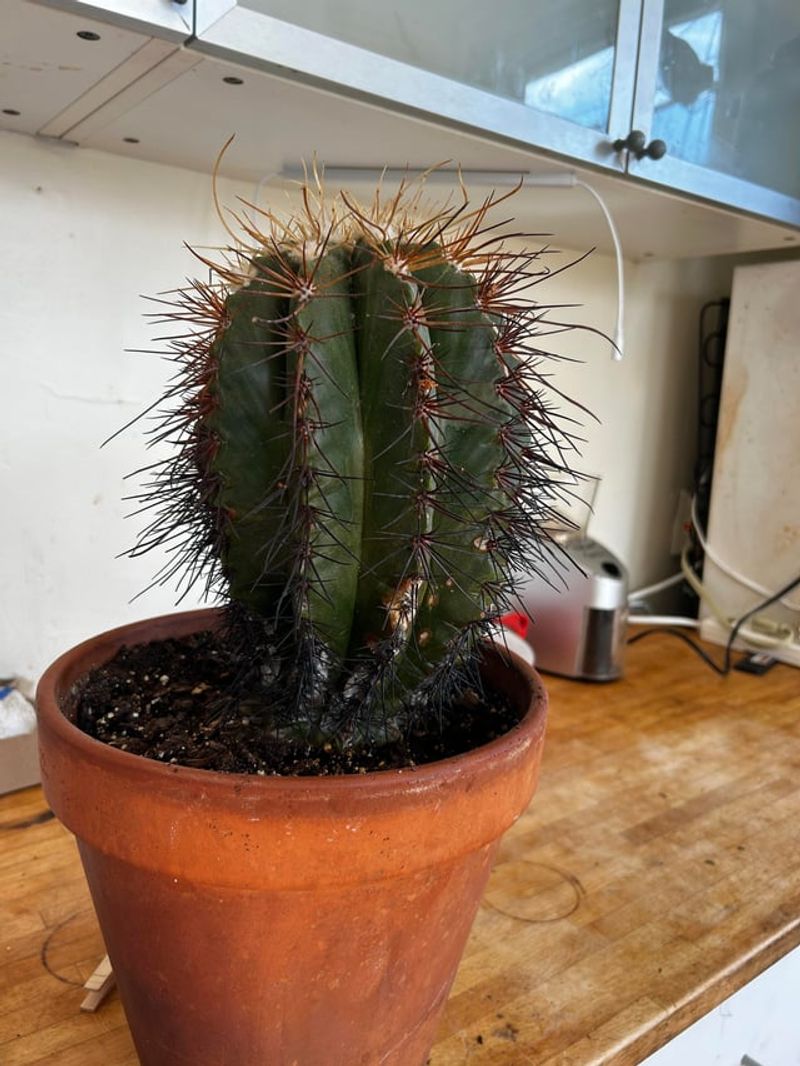
One of the most common mistakes Arizona homeowners make with saguaros is giving them too much water, especially during May when the impulse to help a plant through the heat feels natural.
Saguaros are built for drought, and their root systems are highly sensitive to prolonged moisture.
Too much water, particularly in poorly drained soil, creates conditions where root rot can take hold fairly quickly.
When a saguaro receives more water than it can absorb and store, the excess moisture around the roots creates an environment where harmful fungi and bacteria thrive.
The plant may begin to show soft patches near the base, and the lower trunk can start to look swollen or discolored.
These are warning signs that the root zone has been too wet for too long.
In Arizona residential landscapes, overwatering often happens accidentally when a saguaro is planted too close to lawn irrigation zones or flower beds that receive regular watering.
Adjusting sprinkler heads and irrigation schedules so that water does not reach the saguaro’s root zone can solve the problem quickly.
Gravel or decomposed granite mulch around the base of the plant also helps by improving drainage and reducing soil moisture retention. Keeping the area around a saguaro dry and well-drained is just as important as providing water during the right moments.
6. Avoiding Accidental Damage From Landscaping Equipment
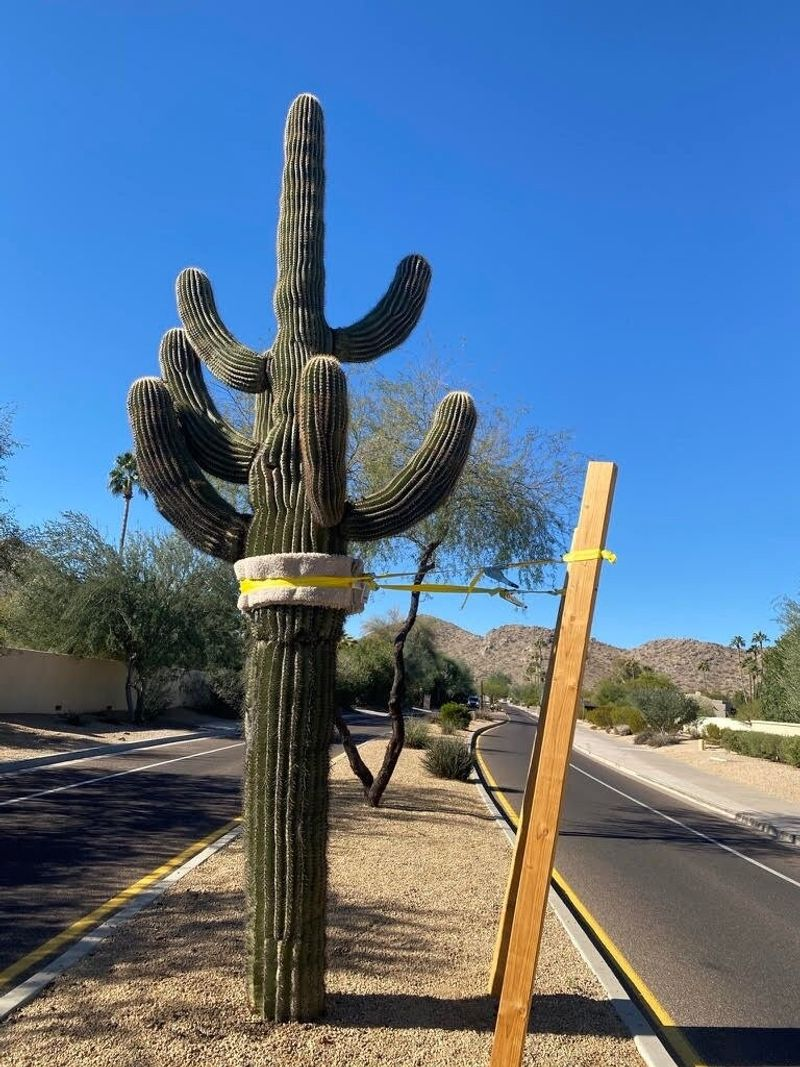
Saguaros may look tough on the outside, but their skin is actually more vulnerable to mechanical damage than many people realize.
Lawnmowers, string trimmers, edgers, and other landscaping tools can nick or gouge the outer layer of a saguaro, creating entry points for bacteria and insects.
In May, when Arizona heat is already placing some stress on these plants, even a small wound can become a bigger issue if it is not managed carefully.
Creating a clear buffer zone around the base of each saguaro in your yard is a practical way to prevent accidental contact.
Placing a ring of decorative rock or gravel around the trunk, extending out at least two to three feet, signals to anyone doing yard work that the area should be approached carefully.
This also helps keep soil from splashing up onto the trunk during watering, which can introduce pathogens.
If a saguaro does receive a fresh wound from a tool or equipment, avoid treating it with paint, sealants, or other coatings.
Saguaros are capable of forming a natural callus over wounds on their own, and covering the area can trap moisture or interfere with that process.
Simply keep the wound dry and monitor it over the following weeks.
Arizona landscape professionals who work regularly around native plants are generally familiar with these practices, but it is worth communicating your expectations clearly before any work begins.
7. Sunscald Can Affect Saguaros Under Certain Conditions
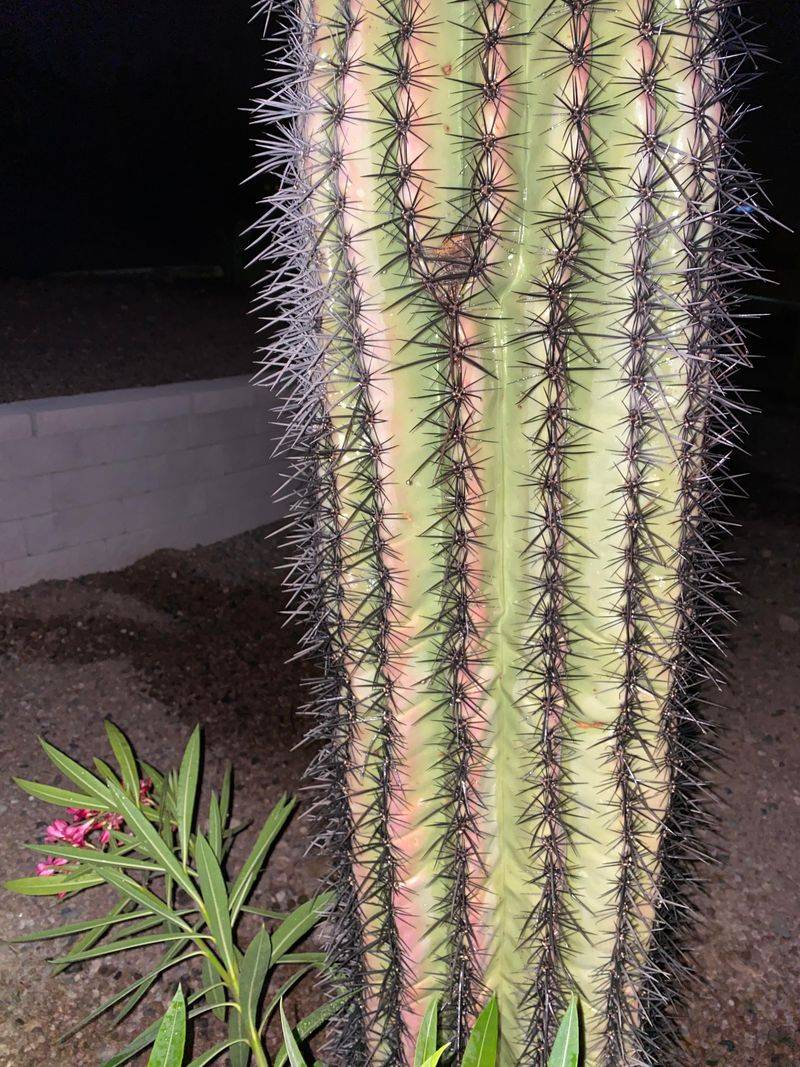
Sunscald might seem like an unlikely problem for a plant that lives in full Arizona sun year-round, but it can actually happen under specific circumstances.
When a saguaro is transplanted from a shaded or partially shaded location to a fully exposed spot, or when a neighboring plant or structure that once provided shade is removed, the suddenly exposed side of the cactus can suffer from too-intense direct sun exposure.
The affected area typically shows up as a pale, yellowish, or bleached patch on the south or southwest-facing side of the trunk. The tissue may feel slightly dry or papery compared to the rest of the skin.
While a healthy, well-rooted saguaro can often recover from mild sunscald on its own, more severe cases can leave the plant vulnerable to secondary infections from bacteria or fungi.
Preventing sunscald is easier than treating it. If you are transplanting a saguaro in Arizona, try to match its original orientation so that the same side of the plant continues to face south.
Marking the south-facing side before moving the cactus and replanting it in the same direction is a simple step that many experienced Arizona desert gardeners recommend.
For existing plants that have lost nearby shade, a temporary shade screen on the vulnerable side during the hottest weeks of May can give the cactus time to adjust gradually to its new exposure level.
8. Steps To Take When A Saguaro Shows Physical Damage
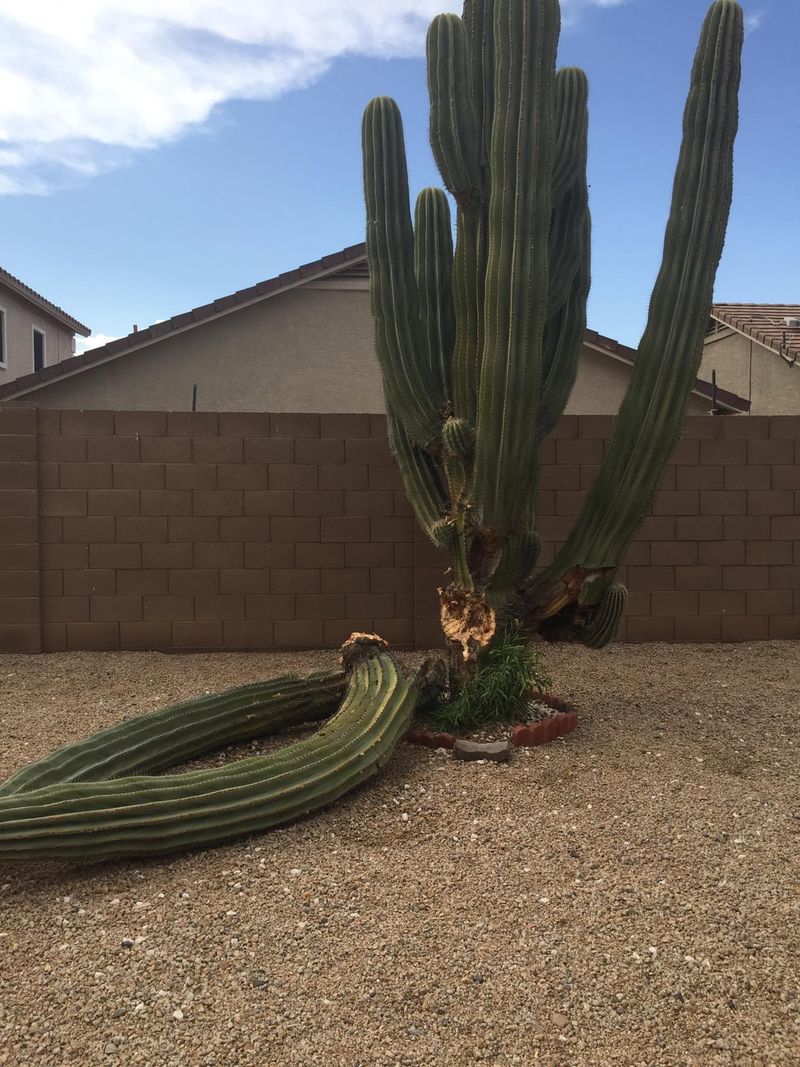
Noticing physical damage on a saguaro can feel alarming, especially during the heat of May when the plant is already working hard to stay balanced. Damage can come from many sources, including wind, wildlife, hail, or accidental contact with vehicles or equipment.
The good news is that saguaros are resilient, and many minor wounds heal on their own with little intervention needed from the homeowner.
When you spot a crack, gouge, or broken arm on a saguaro in your Arizona yard, the first step is to assess the extent of the damage. A clean, dry wound with no signs of soft tissue or discoloration is likely to heal naturally.
Keep the area dry and avoid watering near the base for a couple of weeks to reduce the chance of moisture-related complications while the cactus begins forming a callus.
If the damage is more significant, such as a large section of the trunk that appears soft, or an arm that has fallen away and left a wide open wound, consulting a licensed Arizona arborist or a certified nursery professional with experience in native cacti is a wise move.
They can assess whether any action is needed and advise on the best way to support the plant through recovery.
Avoid the temptation to apply household products or wound sealers, since saguaros respond best when their natural healing process is left undisturbed.