Help Young Avocado Trees Survive California Summer With These Simple Steps
California summers are legendary for a lot of great reasons. The beach days, the sunshine, the perfect backyard barbecue weather.
But if you’re a young avocado tree that just got planted, that same blazing summer sun and relentless heat can feel a lot less like paradise and a lot more like a survival situation.
Baby avocado trees are surprisingly vulnerable, and losing one to summer stress after all that effort of planting it is genuinely heartbreaking.
The good news is that getting a young avocado tree through its first California summer is very doable once you know what it actually needs.
These trees aren’t hopeless, they’re just a little needy during that critical establishment period, and a few simple steps can make the difference between a tree that struggles and one that comes out of summer stronger and ready to grow like crazy. A little attention now sets you up for years of homegrown guacamole later.
1. Shade Young Trees First
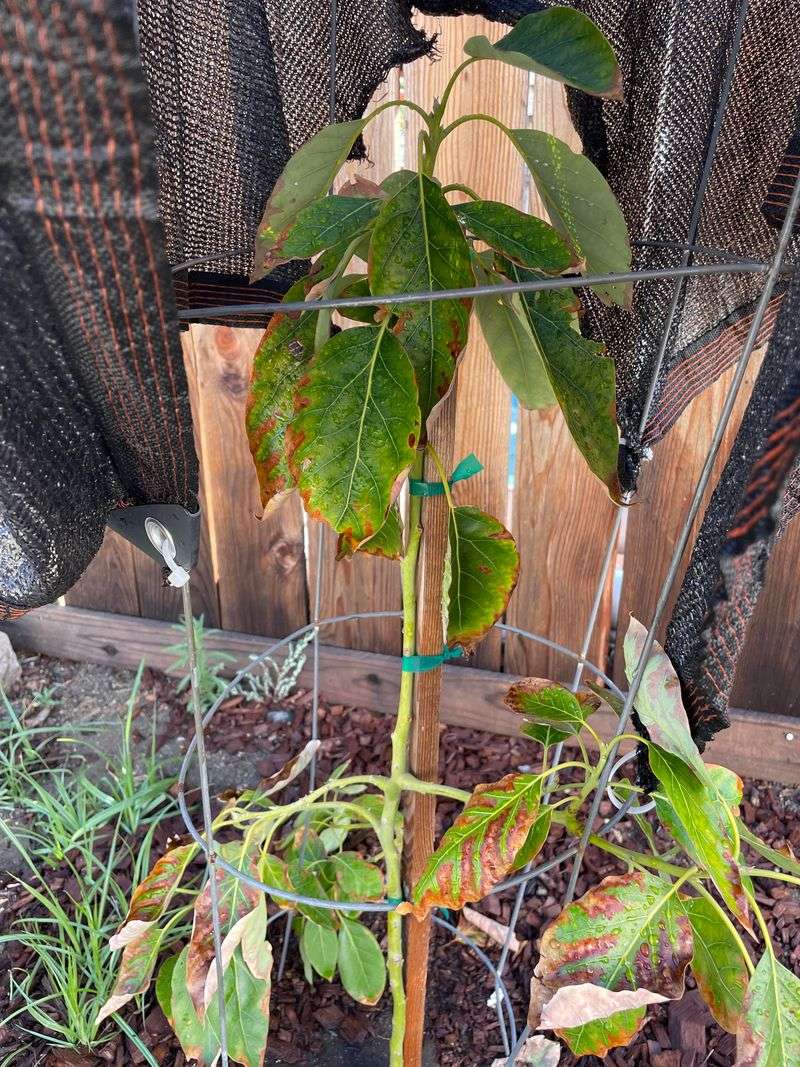
Before anything else, think about shade. Young avocado trees planted in California have not yet developed the thick canopy that helps older trees manage the blazing summer sun.
Without some protection, the leaves can get scorched and the tree can struggle to stay healthy during those long, hot days.
Setting up a temporary shade cloth is one of the easiest ways to help. Look for a cloth that blocks about 30 to 50 percent of sunlight.
That level of filtering gives the tree enough light to keep growing while cutting back on the heat stress that causes so much damage.
You can find shade cloth at most garden centers or hardware stores across California. Use simple wooden stakes or a PVC frame to hold the cloth above and around the tree.
Make sure there is still some airflow around the branches. Good air circulation helps prevent fungal problems that can show up when moisture gets trapped.
Start shading early in the season before temperatures climb above 90 degrees Fahrenheit. Once your tree is two to three years old and more established, it will handle the California sun much better on its own.
2. Water Deeply And Slowly
Watering a young avocado tree the right way makes a huge difference during California summers. Many people make the mistake of watering too often but not deeply enough.
Shallow watering keeps moisture near the surface, which means the roots never learn to reach down where the soil stays cooler and more consistent.
Deep, slow watering encourages roots to grow downward. A drip irrigation system works really well for this.
Set it to run for a long period at a low flow rate so the water has time to soak into the soil rather than run off the surface. Aim to water young trees about two to three times per week during the hottest months, depending on your soil type and local conditions.
Sandy soils common in parts of Southern California drain faster and may need more frequent watering. Clay-heavy soils hold moisture longer but can get waterlogged if you overdo it.
Your California Garden Changes Every Week. Your Plan Should Too.
Gardening in California changes quickly throughout the season. Every Friday you’ll receive a simple weekly plan showing exactly what to plant, prune, fertilize, harvest, and protect so you never miss the right timing.
Always check the soil before adding more water. The goal is moist soil, not soggy soil.
Avocado roots are sensitive to sitting in standing water, so finding the right balance is key to keeping your tree thriving all summer long in California.
3. Protect Shallow Roots
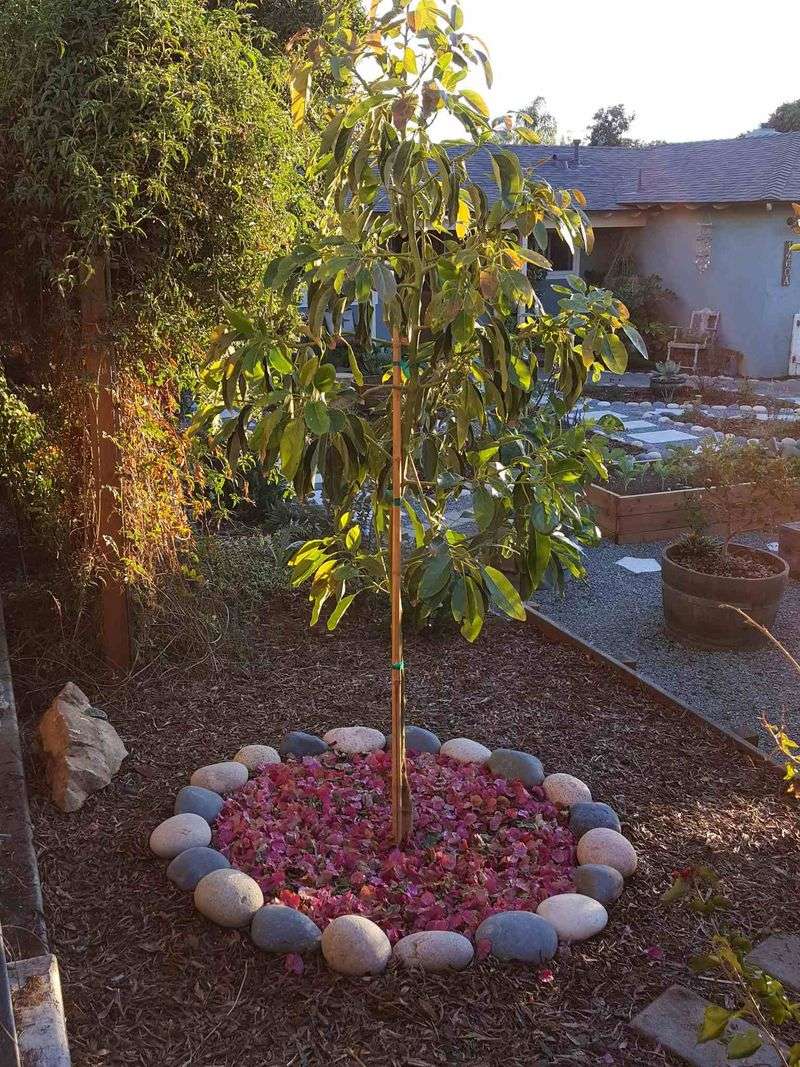
One thing that surprises a lot of new avocado growers in California is just how shallow the root system really is. Most of the feeder roots that absorb water and nutrients sit in the top six inches of soil.
That means they are very close to the surface and very vulnerable to heat, foot traffic, and dry conditions during summer.
Keeping people and pets from walking near the base of the tree is a simple but effective way to protect those roots. Compacted soil from foot traffic reduces the space between soil particles, making it harder for roots to breathe and absorb water.
Try placing a small barrier or decorative border around the drip line of the tree.
Avoid digging or cultivating near the base of the tree, especially during summer. Even a shallow pass with a hoe can cut through feeder roots and set the tree back significantly.
If you need to remove weeds near the trunk, pull them by hand rather than using tools. Protecting those shallow roots during California’s dry, hot months helps the tree focus its energy on staying hydrated and healthy rather than trying to recover from root damage.
4. Mulch Without Touching Trunk
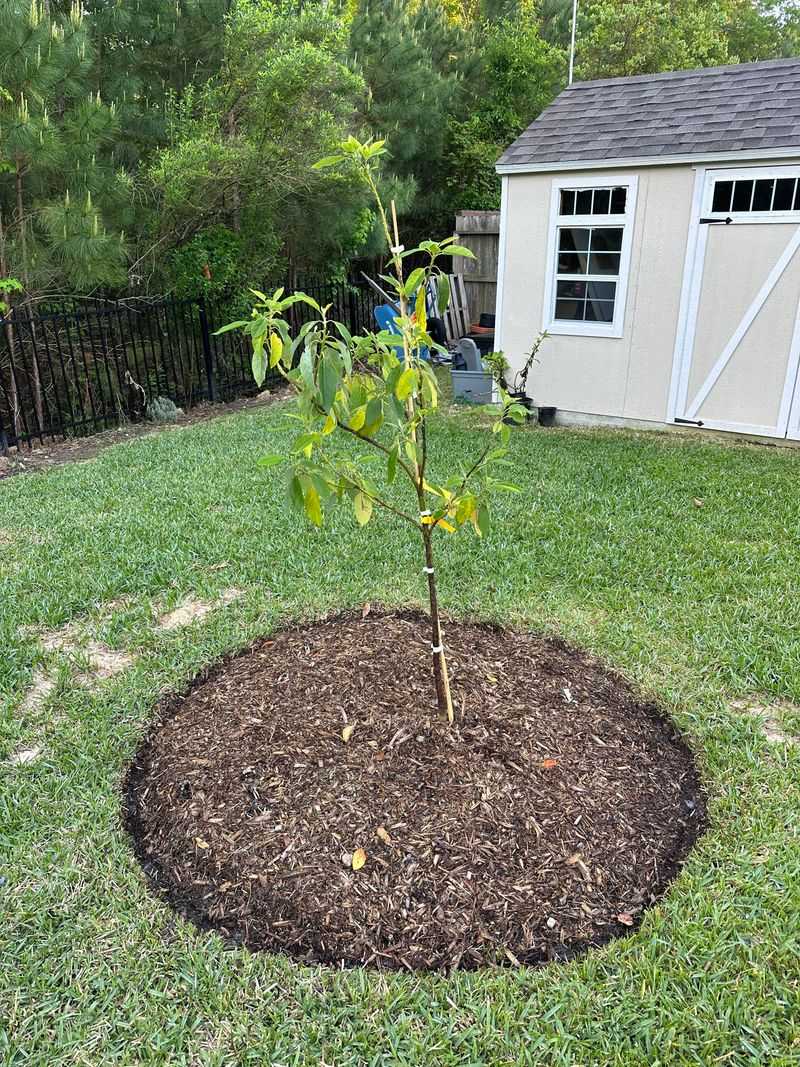
Mulching is one of the best things you can do for a young avocado tree during a California summer, but there is a right way and a wrong way to do it. The right way keeps moisture in the soil and roots cool.
The wrong way can actually cause problems by trapping moisture right against the trunk, which leads to rot and disease.
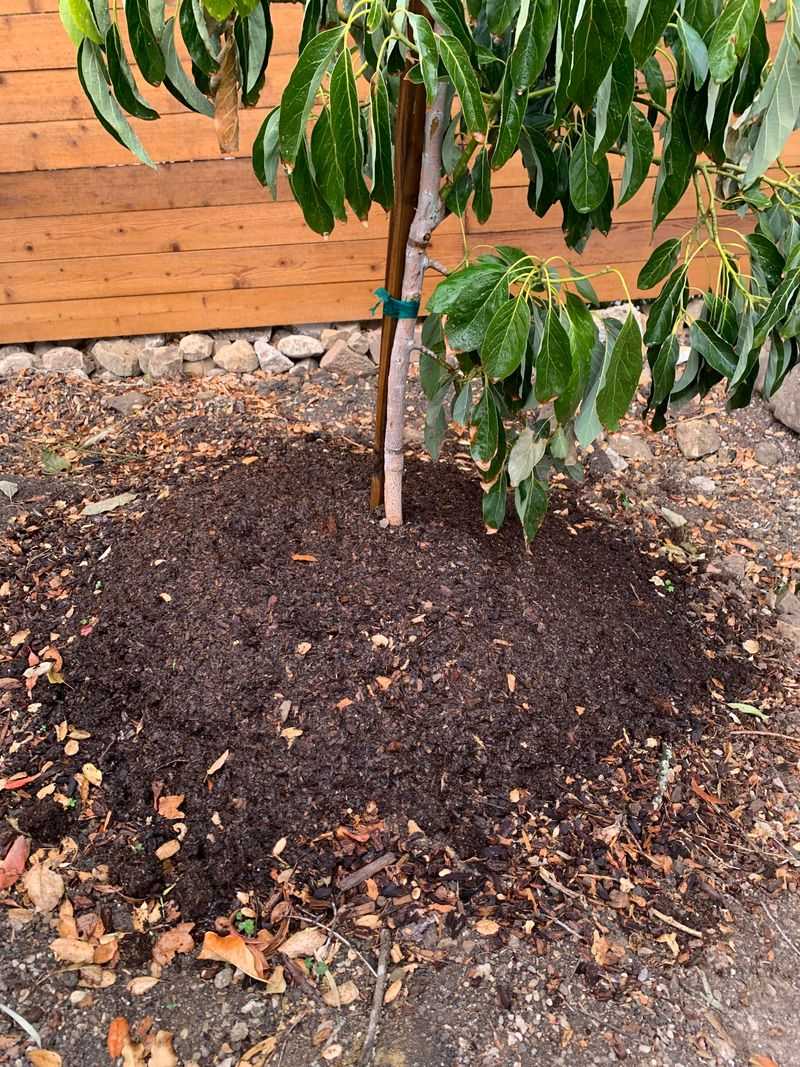
Always leave a gap of at least three to four inches between the mulch and the base of the trunk. Think of it like a donut shape around the tree rather than a mound piled up against it.
Spread the mulch out to the drip line of the tree, which is roughly where the outer branches end above the ground.
Use organic materials like wood chips, straw, or shredded bark. A layer about three to four inches deep works well.
This thickness is enough to keep the soil temperature lower and slow down evaporation without smothering the roots. In California’s summer heat, soil temperatures without mulch can climb high enough to stress roots directly.
Refreshing your mulch layer once or twice during the season keeps it working effectively and gives your young avocado tree a much better chance of thriving.
5. Avoid Summer Fertilizer Stress
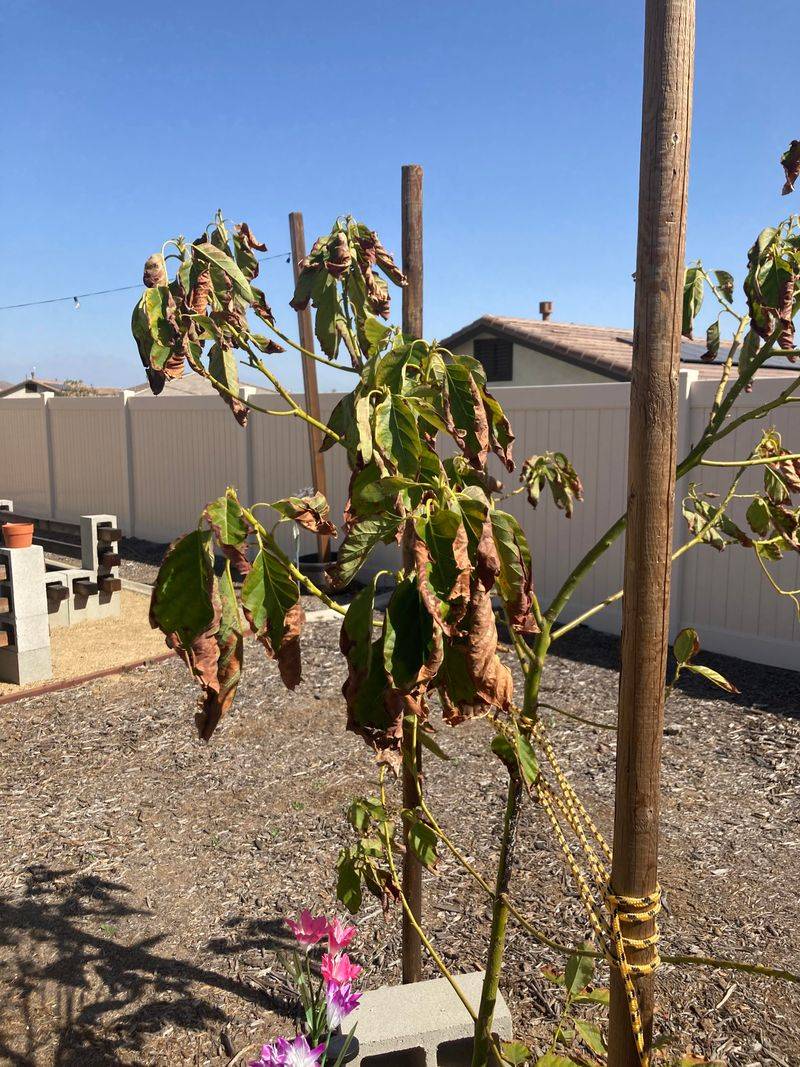
It might seem like summer is a great time to push your young avocado tree to grow faster with extra fertilizer. Actually, the opposite is true.
Applying heavy doses of fertilizer during the hottest months of a California summer can stress the tree rather than help it. Fertilizer salts can build up in dry soil and damage roots that are already working hard just to stay hydrated.
Young avocado trees generally do not need fertilizing during peak summer heat. If you want to support the tree during this time, focus on keeping the water and mulch situation dialed in first.
A healthy, well-watered root system is far more valuable to the tree right now than extra nutrients.
If you feel the tree needs a boost, wait until late summer or early fall when temperatures begin to cool down a bit. At that point, a light application of a balanced, slow-release fertilizer can help the tree prepare for the next growing season.
Always water thoroughly before and after applying any fertilizer to help it move through the soil safely. Following this approach in California’s climate keeps your young tree from getting overwhelmed when it is already managing serious heat stress.
6. Watch Leaves For Sunburn
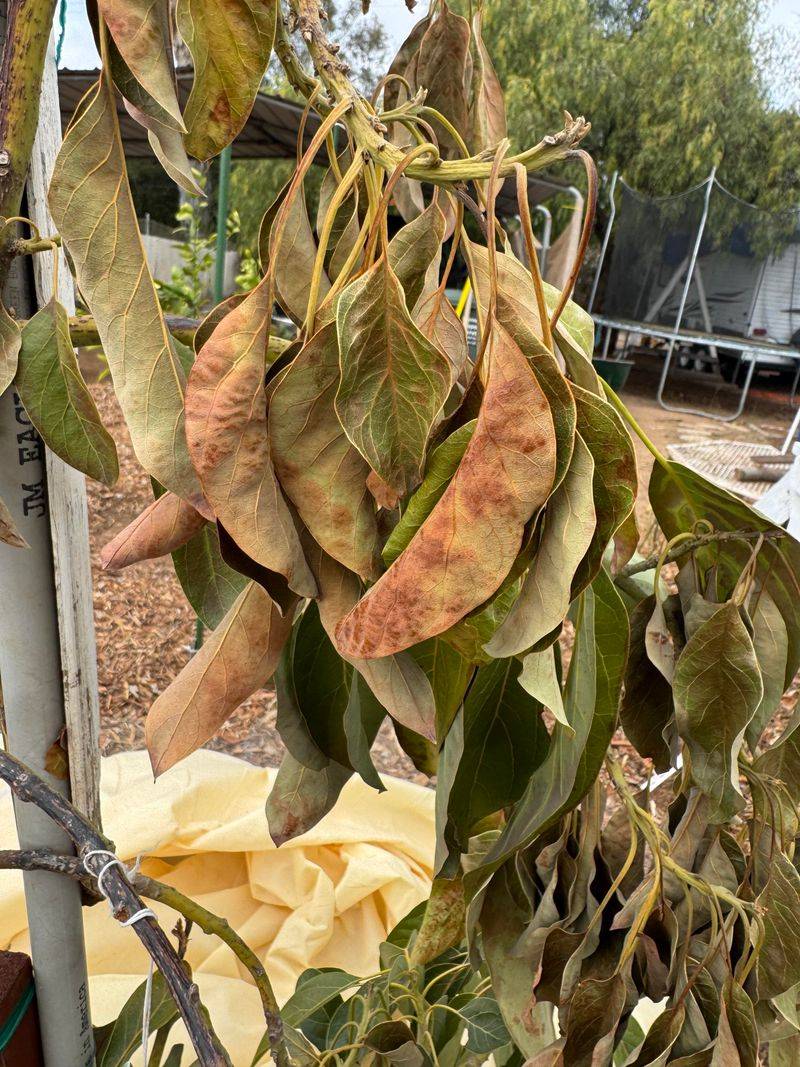
Leaves tell you a lot about how your young avocado tree is feeling. During a California summer, one of the first signs that something is wrong is sunburn on the leaves.
It usually shows up as brown or yellowish patches, often on the side of the canopy that faces the afternoon sun. The edges of leaves may also turn crispy and dry.
Mild sunburn is not the end of the world. The tree can recover if you act quickly.
Adding shade cloth, adjusting your watering schedule, or even repositioning a potted tree can make a big difference. For trees planted in the ground, focus on improving shade coverage and making sure the root zone stays consistently moist.
Severe sunburn over a large portion of the canopy is a bigger concern and can set the tree back for months. Keep a close eye on your tree throughout July and August, which tend to be the most intense months in California.
Check the leaves every few days and look for any new signs of stress. Catching sunburn early gives you the best chance to adjust your care routine before the damage becomes too widespread.
Healthy green leaves are your best signal that the tree is doing well.
7. Block Hot Afternoon Wind
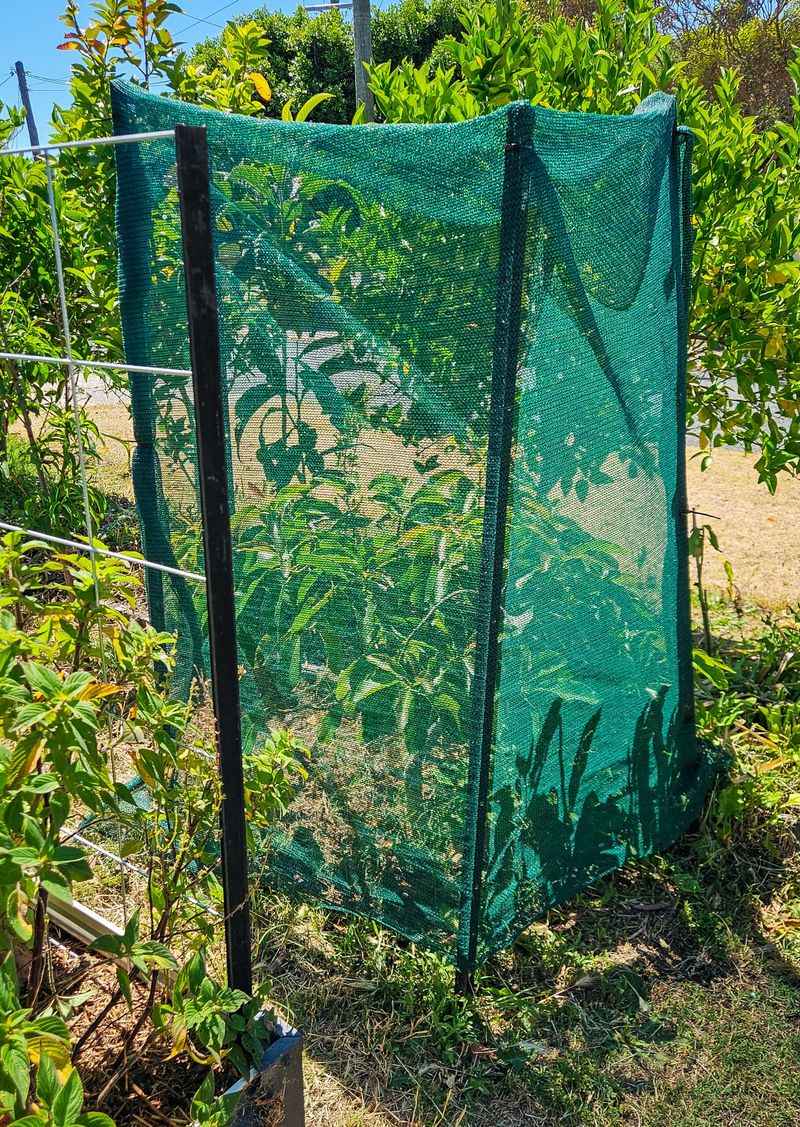
Hot afternoon winds are a real problem for young avocado trees in California, especially in areas like the Inland Empire, the Central Valley, and parts of Southern California where Santa Ana or dry desert winds can roll through fast. These winds pull moisture right out of the leaves faster than the roots can replace it, causing the tree to wilt and stress out quickly.
Setting up a simple windbreak on the west or southwest side of the tree can cut down on wind exposure significantly. Burlap fencing, shade cloth panels, or even a row of potted plants can serve as a barrier.
The goal is not to block all airflow, just to slow down the strongest gusts that hit the tree during the hottest part of the afternoon.
Permanent windbreaks using shrubs or hedges are a great long-term solution for California gardens that deal with regular wind exposure. For now, a temporary barrier works fine while your young tree builds up its strength.
Even reducing wind speed by 30 to 40 percent can make a noticeable difference in how well the tree handles summer conditions. Less wind means less water loss, and less water loss means a healthier, more resilient tree heading into fall.
8. Check Soil Before Watering
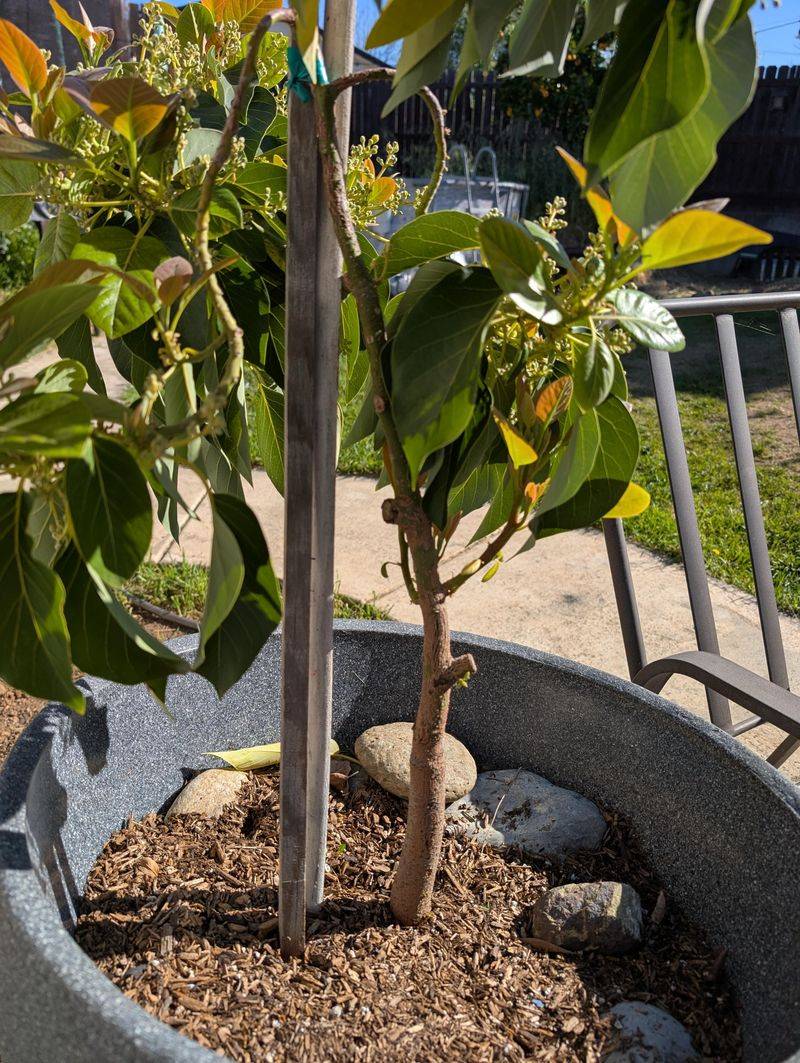
Getting into the habit of checking your soil before watering is one of the smartest things you can do for a young avocado tree in California. Overwatering is actually one of the most common mistakes people make, and it can cause root rot that is very hard to reverse.
Just because it looks dry on the surface does not mean the deeper soil is dry too.
The finger test is simple and effective. Push your finger about two inches into the soil near the root zone.
If it feels moist, hold off on watering for another day or two. If it feels dry at that depth, it is time to water.
A soil moisture meter is another handy tool that takes the guesswork out of the process entirely.
Checking soil moisture is especially important during California summers because temperatures can swing quite a bit between days. A cooler, overcast day means the soil holds moisture longer.
A hot, windy day can dry things out much faster than usual. Adjusting your watering schedule based on actual soil conditions rather than a fixed calendar keeps the root zone in the ideal range.
Consistent moisture without waterlogging gives young avocado trees the stable environment they need to grow strong through the summer season.