8 Ohio Evergreens That Keep Their Shape Without Constant Pruning
Evergreens in Ohio can be a blessing or a constant chore, depending on what you choose.
Some seem to lose their form the moment you stop shaping them, turning trimming into a never-ending task that eats up more time than expected.
But there are evergreens that hold their structure with surprising discipline. They grow into their natural shape and keep it, even through Ohio’s shifting seasons, from icy winters to humid summers that test plant form and strength.
These are the kinds of plants that quietly keep a yard looking put together without asking for constant attention.
They frame spaces, anchor landscapes, and stay reliable year after year, making them a smart choice for gardeners who want structure without the maintenance cycle.
1. Boxwood Holds A Clean Shape With Minimal Effort
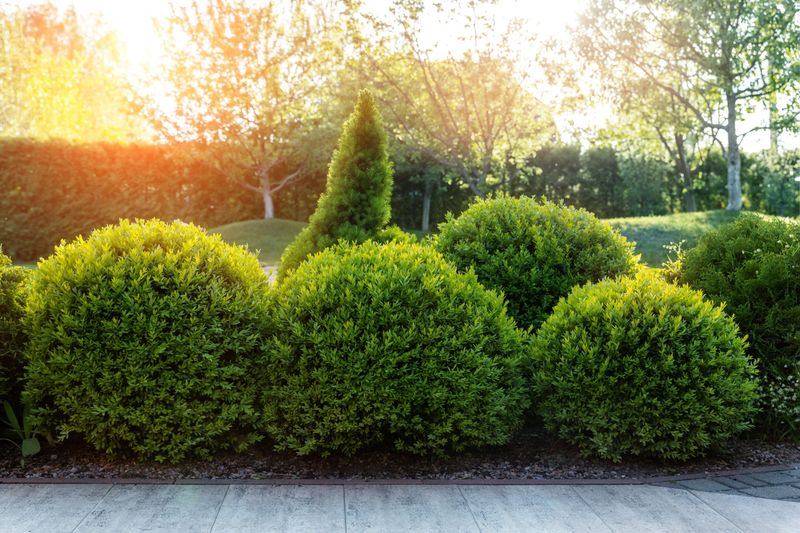
Garden centers across Ohio stock boxwood for good reason. Its dense branching habit creates a naturally tidy appearance that holds up throughout the year.
Homeowners appreciate how it maintains structure without weekly attention, making it a go-to choice for foundation plantings and garden borders.
Most boxwood varieties grow slowly, adding just a few inches annually. This measured pace means less frequent intervention compared to fast-growing alternatives.
The foliage stays thick from top to bottom, creating a full look that rarely develops bare patches.
Winter can bring some browning, particularly during harsh cold snaps or when drying winds hit exposed plants. Selecting sheltered spots helps minimize this seasonal stress.
Adequate spacing also improves air circulation, which reduces disease pressure.
Boxwood blight has become a concern in recent years, though proper site selection and avoiding overhead watering can help. Choosing resistant varieties and purchasing from reputable sources further reduces risk.
Despite these considerations, boxwood remains popular for its classic appearance and manageable growth.
Boxwood species used in landscaping are non-native but widely planted across Ohio and not considered invasive. They typically reach 3 to 5 feet depending on variety, fitting well into mixed borders or as low hedges.
Their evergreen nature provides structure when perennials fade, anchoring the garden through winter months.
2. Inkberry Holly Stays Neat Without Constant Trimming
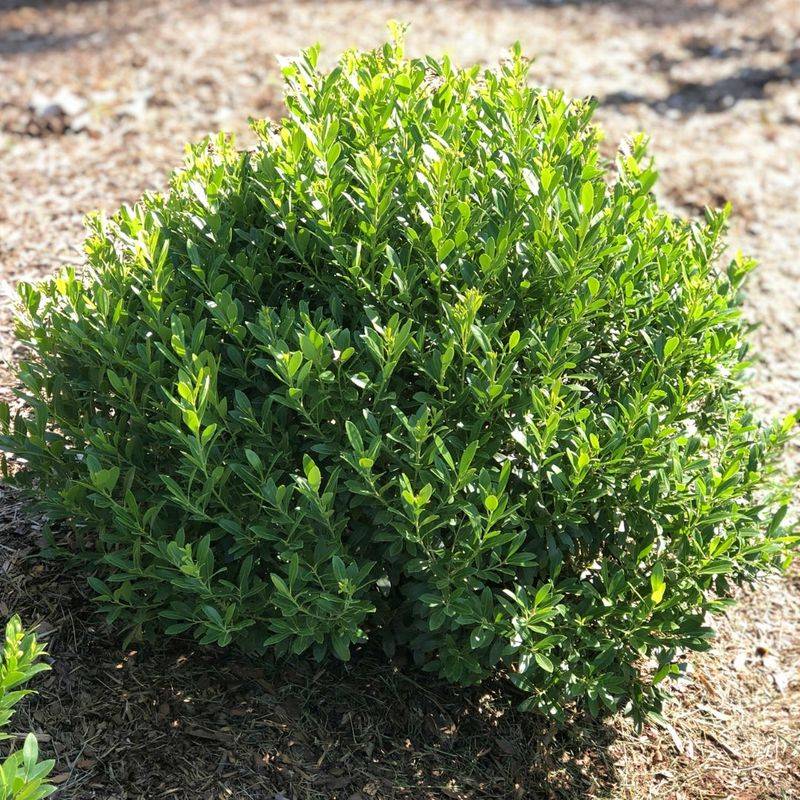
Native to parts of the eastern United States, Inkberry holly adapts beautifully to Ohio conditions. Its naturally rounded growth habit eliminates the need for regular shaping, making it an excellent choice for gardeners seeking low-maintenance structure.
The dark green foliage provides year-round interest without demanding constant attention.
Moisture-loving by nature, Inkberry tolerates wetter areas where other evergreens might struggle. This adaptability makes it useful for rain gardens or low-lying sections of the yard.
Once established, it handles average garden conditions equally well, showing impressive flexibility.
Height typically ranges from 3 to 5 feet, with a similar spread. This moderate size works well as a boxwood alternative, particularly in areas where boxwood diseases pose concerns.
The growth rate stays moderate, reducing the pruning schedule significantly.
Small black berries appear on female plants when a male pollinator grows nearby, adding winter interest for wildlife. The berries attract birds while the dense branching provides shelter.
Your Ohio Garden Changes Every Week. Your Plan Should Too.
Gardening in Ohio changes quickly throughout the season. Every Friday you’ll receive a simple weekly plan showing exactly what to plant, prune, fertilize, harvest, and protect so you never miss the right timing.
Deer tend to leave Inkberry alone, another advantage for Ohio gardeners dealing with browsing pressure.
Inkberry (Ilex glabra) is native to parts of the eastern U.S. and suitable for Ohio conditions. Partial shade tolerance expands placement options beyond full-sun locations.
The plant’s ability to maintain form independently makes it ideal for gardeners wanting structure without the maintenance commitment.
3. Dwarf Alberta Spruce Keeps Its Tight Natural Form
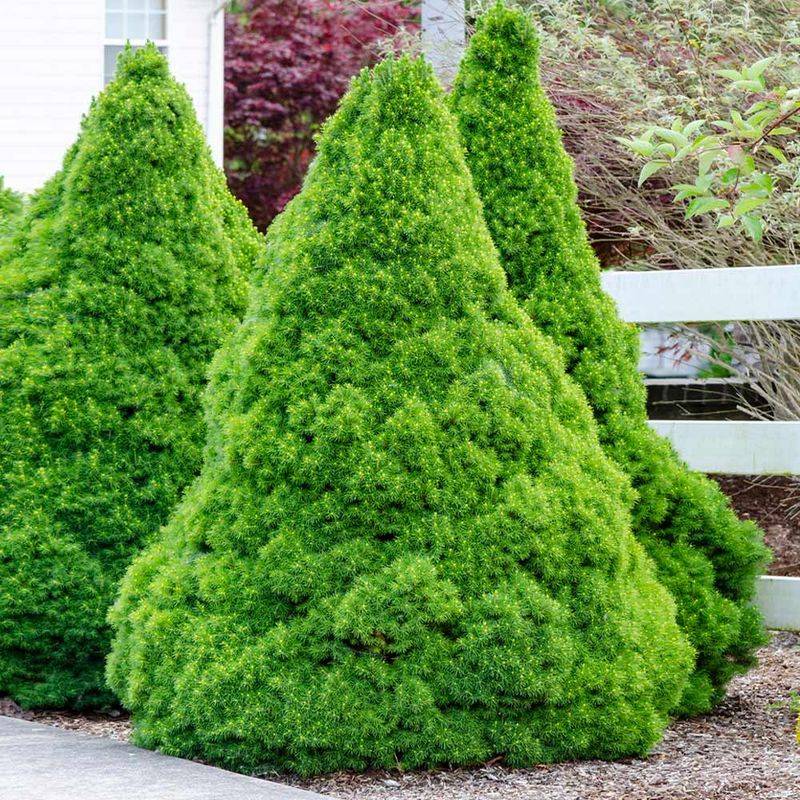
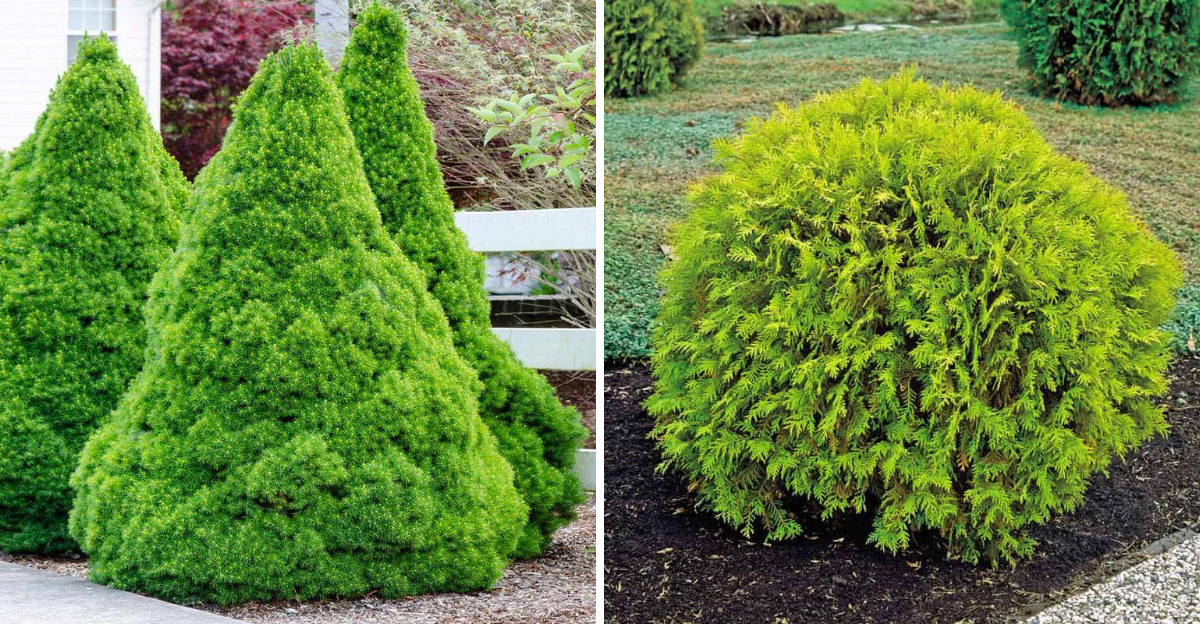
Few evergreens match the precision of Dwarf Alberta spruce. Its naturally conical shape develops without any shaping, creating a formal appearance that looks carefully maintained even when left alone.
The bright green needles add a cheerful note to winter landscapes when most plants look dormant.
Growth proceeds at a crawl, typically adding just 2 to 4 inches per year. This slow pace means the plant stays in scale for many years without outgrowing its space.
Homeowners can plan placements knowing the size will remain manageable for the long term.
Full sun exposure brings out the best color and tightest growth. Crowding should be avoided since good air circulation helps prevent spider mite issues that occasionally affect spruces.
Spacing plants appropriately from the start saves headaches later.
Mature specimens generally reach 3 to 4 feet tall with a 2 to 3 foot spread, though older plants can grow larger over many years. The compact size makes them suitable for flanking entryways or anchoring small garden beds.
Their formal appearance pairs well with traditional landscape designs.
This non-native species is widely used in landscapes and not considered invasive in Ohio. Container growing is also possible for several years before root space becomes limiting.
The spruce tolerates cold winters without issue, making it reliable across all Ohio growing zones.
4. Globe Arborvitae Maintains A Rounded Look On Its Own
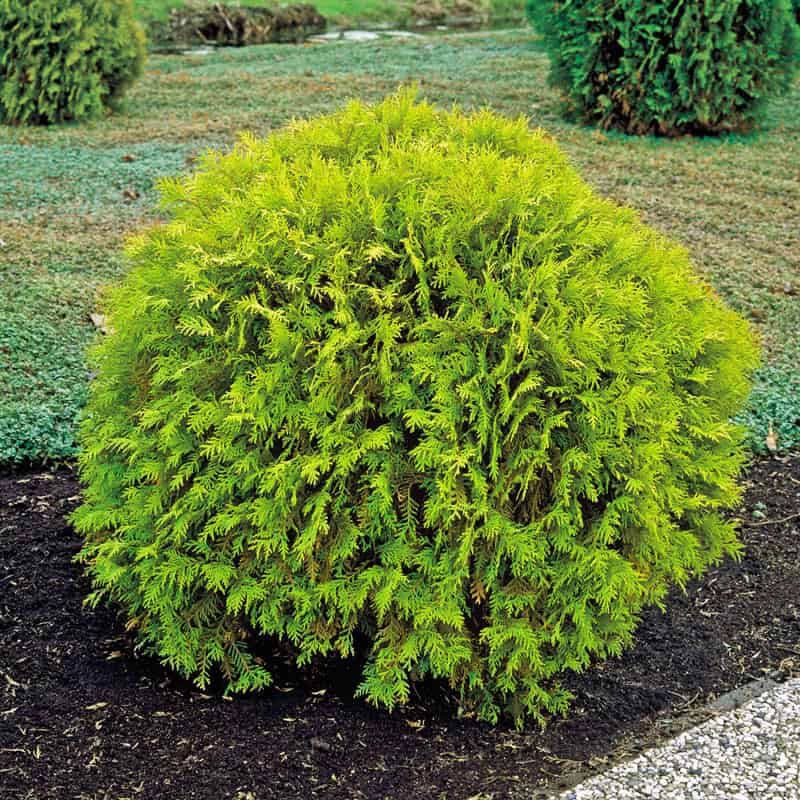
Perfectly rounded without scissors, Globe arborvitae grows into a neat sphere that looks intentionally shaped. This natural geometry makes it a favorite for gardeners who want polished results without the effort.
The soft, fine-textured foliage stays dense throughout, maintaining fullness from every angle.
Compact varieties typically stay under 3 feet tall and wide, making them useful for small spaces or as repeated elements in foundation plantings. The slow growth rate means they hold their size for years without expanding beyond their intended footprint.
This predictability simplifies landscape planning considerably.
Arborvitae species like Thuja occidentalis are native to North America, with many cultivated varieties used in Ohio. Winter exposure can cause some browning on the side facing harsh winds, so protected locations work best.
Mulching around the base helps retain soil moisture during dry spells.
Full sun to partial shade suits Globe arborvitae well, though fuller sun produces the densest growth. Deer browsing can be an issue in some areas, particularly on younger plants.
Fencing or repellents may be necessary in neighborhoods with heavy deer populations.
The rounded form works beautifully as a low hedge or planted in groupings for repetition. Pairing them with perennials creates interesting contrasts between the structured evergreen and looser plant forms.
Their year-round presence provides continuity when surrounding plants come and go with the seasons.
5. Yew Shrubs Stay Dense And Easy To Manage
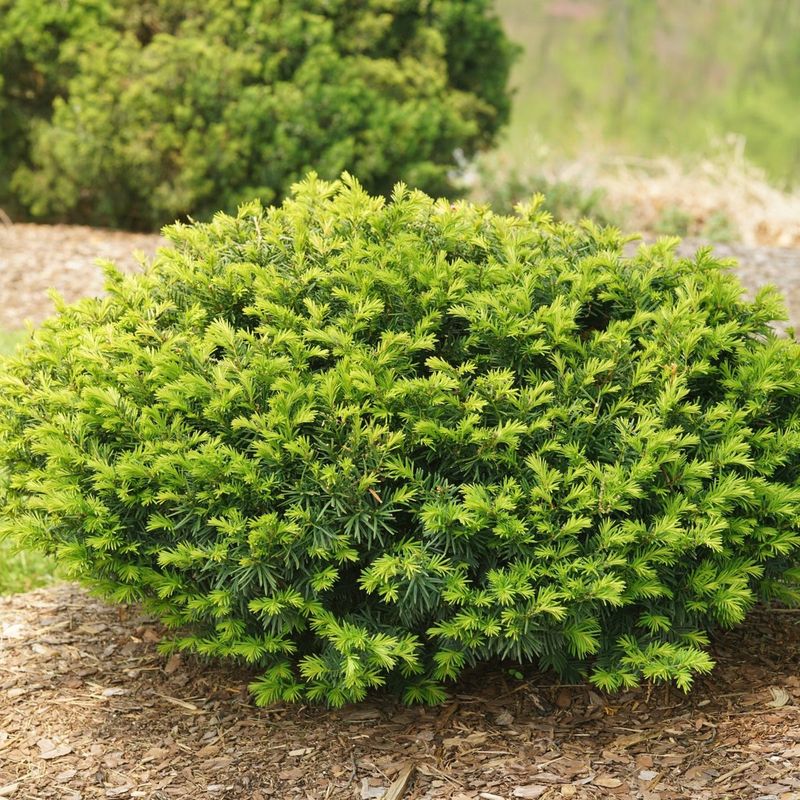
Shade tolerance sets yews apart from many evergreens that demand full sun. They maintain dense growth even in partially shaded locations, making them valuable for north-facing foundations or under tree canopies.
The dark green needles create a rich backdrop for lighter-colored plants throughout the growing season.
While yews tolerate pruning exceptionally well, they don’t actually require it to look good. Left alone, most varieties develop attractive, naturally rounded or upright forms depending on the cultivar.
This flexibility means gardeners can choose to shape them or let them grow freely.
Growth rates vary by type, but most landscape yews add 4 to 8 inches annually. This moderate pace keeps them manageable without constant attention.
Mature sizes range widely from 3-foot spreaders to 10-foot upright forms, so selecting the right variety for your space matters.
Canada yew (Taxus canadensis) is native to the region, while common landscape yews (Taxus x media, Taxus cuspidata) are non-native but not classified as invasive in Ohio. The adaptability to various light conditions expands placement options considerably.
Deer resistance varies, with some reports of browsing and others noting yews are left alone.
The fine texture contrasts nicely with bold-leaved plants like hostas or hydrangeas. Yews provide structure year-round while requiring minimal intervention.
Their reliability in challenging spots makes them workhorses in Ohio landscapes.
6. Mugo Pine Keeps A Compact Shape With Little Work
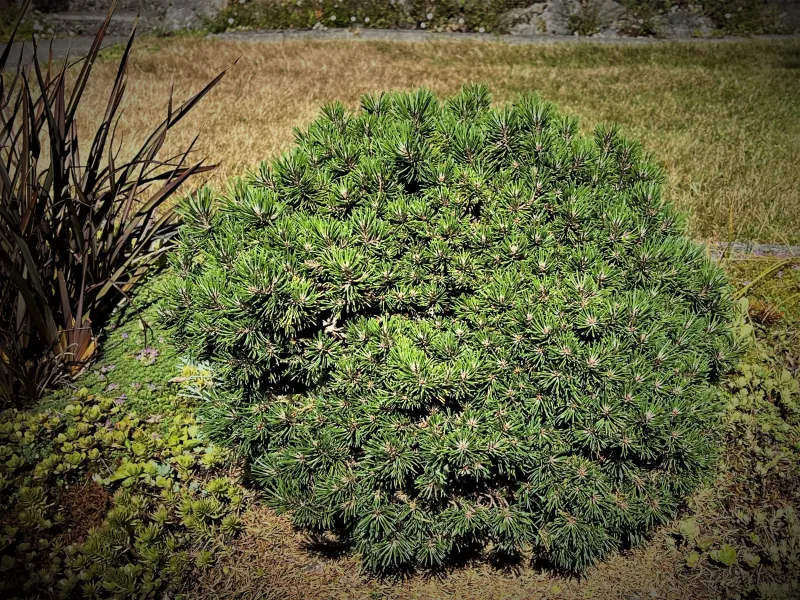
Low and spreading, Mugo pine brings a different form to the evergreen palette. Rather than growing upright, it naturally develops a mounded, spreading habit that stays close to the ground.
This horizontal growth creates interesting layering opportunities in landscape designs.
The growth rate stays slow, with most varieties adding just a few inches per year. This measured expansion means Mugo pines stay in proportion for many years without outgrowing their space.
Mature plants typically reach 3 to 5 feet tall with a wider spread.
Some gardeners practice candle pruning in spring, pinching back new growth to control size even further. However, this step is optional rather than necessary.
Left unpruned, Mugo pine still maintains an attractive, naturalistic form that looks intentional.
This non-native species is widely used in landscapes and not invasive in Ohio. Full sun brings out the best growth and densest needles.
Once established, Mugo pine handles drought reasonably well, making it suitable for spots that don’t receive regular watering.
The coarse texture and dark green color provide strong contrast against fine-textured perennials or lighter foliage. Rock gardens often feature Mugo pine for its naturally rugged appearance.
The low profile works well on slopes or berms where taller plants might look out of scale. Winter interest remains strong as the evergreen needles catch snow and add structure to dormant landscapes.
7. Bird’s Nest Spruce Forms A Low Tidy Mound Naturally
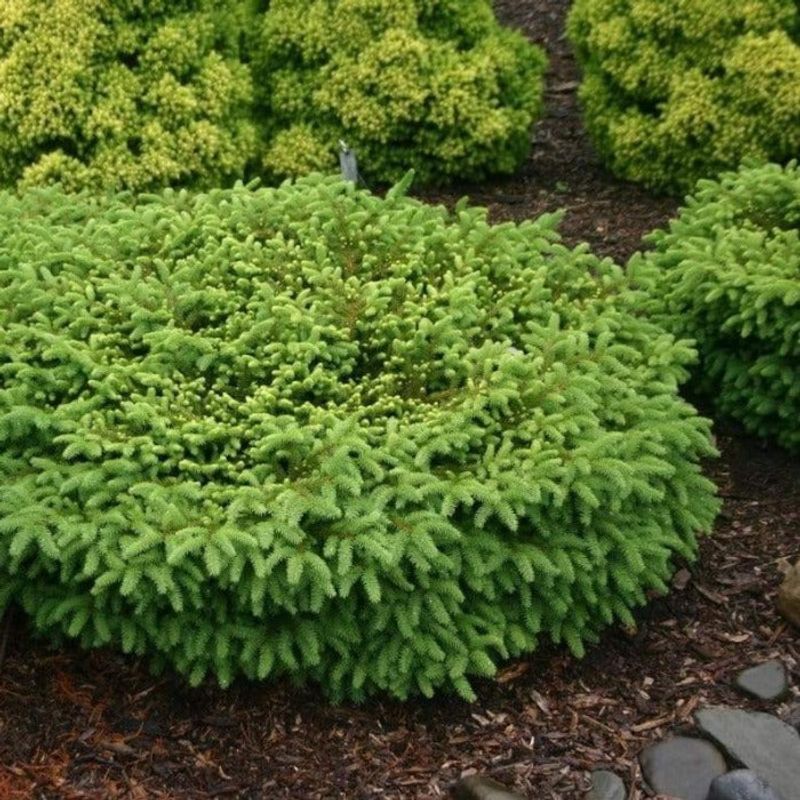
The common name describes this spruce perfectly. A natural depression forms in the center as the plant grows, creating a nest-like appearance that makes it instantly recognizable.
This distinctive growth pattern develops without any shaping, making it a true set-and-forget evergreen.
Staying low and wide, Bird’s Nest spruce typically reaches 1 to 2 feet tall with a 2 to 3 foot spread. This compact size makes it ideal for foundation plantings where taller evergreens would eventually block windows.
The slow growth rate ensures it won’t outpace its location.
Bright green needles provide a cheerful color that stands out among darker evergreens. The fine texture creates interesting contrasts when planted near bold-leaved plants or ornamental grasses.
Year-round color keeps the landscape interesting even during winter months.
This non-native ornamental spruce is not considered invasive in Ohio. Full sun to partial shade suits it well, though fuller sun produces the most compact growth.
Good drainage is important since waterlogged soil can cause root problems.
Minimal maintenance needs make Bird’s Nest spruce appealing for busy gardeners. Occasional removal of withered needles from the interior keeps it looking fresh, but pruning is unnecessary.
The naturally tidy appearance works well in formal or informal settings, adapting to various landscape styles. Pairing it with upright evergreens creates pleasing height variation while maintaining year-round structure.
8. Upright Juniper Adds Height Without Needing Regular Cuts
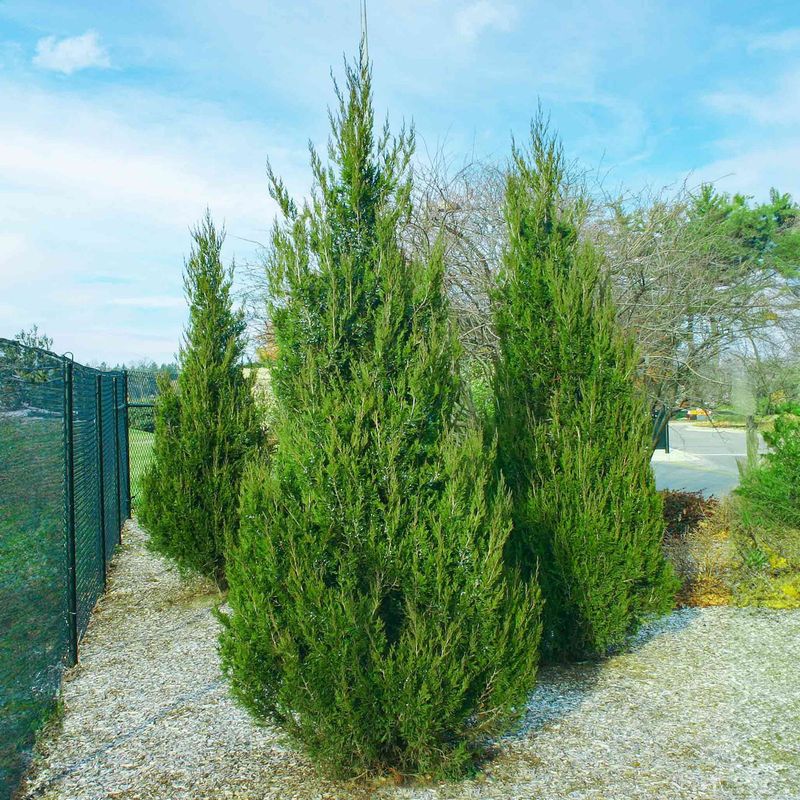
Vertical accent plants solve design challenges, and upright junipers deliver that height naturally. Their columnar growth habit develops without intervention, creating narrow spires that draw the eye upward.
This natural architecture eliminates the need for regular shaping to maintain the vertical form.
Heights vary by cultivar, with some reaching 6 to 8 feet while others grow to 15 feet or more. The narrow width, often just 2 to 4 feet, makes them useful in tight spaces where wider plants won’t fit.
Flanking doorways or gates with matching specimens creates a formal entrance.
Some juniper species are native to North America, while many cultivated forms are non-native but generally non-invasive in Ohio landscapes. Foliage colors range from deep green to blue-gray, providing options to match different color schemes.
The fine-textured foliage adds softness despite the strong vertical lines.
Drought tolerance once established makes upright junipers suitable for spots that don’t receive regular irrigation. Full sun produces the densest growth and best color.
Poor drainage can cause problems, so avoiding wet locations helps ensure success.
The strong vertical form contrasts beautifully with rounded shrubs or spreading groundcovers. Using them as repeated elements creates rhythm in the landscape while providing year-round structure.
Deer generally avoid junipers, reducing browsing damage. Winter color remains consistent, offering reliable interest when deciduous plants lose their leaves and perennials fade away.