These Pennsylvania Wildflowers Bloom In Summer When Everything Fades
Summer in Pennsylvania has a way of thinning out the garden just when you most want it looking its best.
Spring bloomers have long finished their show, the early perennials are done, and that stretch from July into August can leave gardens looking surprisingly sparse if you haven’t planned specifically for it.
It’s one of the most common complaints Pennsylvania gardeners have, and it’s almost entirely avoidable. Native wildflowers are where the solution lives.
While cultivated garden plants often struggle through Pennsylvania’s humid, hot summers or simply finish blooming too early, certain native wildflowers hit their stride right in the middle of the season.
They evolved to bloom precisely when conditions get tough, filling that mid to late summer gap with color, texture, and a kind of relaxed natural beauty that formal garden plants rarely match.
These are the wildflowers that keep Pennsylvania gardens looking alive and vibrant straight through the hardest stretch of the growing season.
1. Black-Eyed Susan (Rudbeckia Hirta)
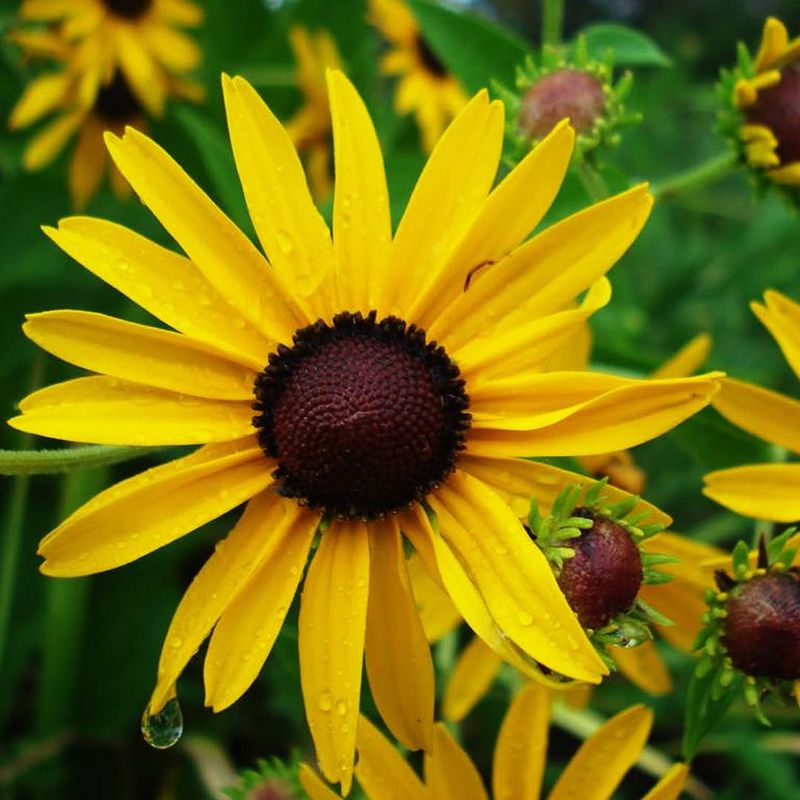
Few wildflowers say “summer” quite like the Black-Eyed Susan. Those bold yellow petals surrounding a dark brown center are nearly impossible to miss along Pennsylvania roadsides, open fields, and sunny garden beds.
They start blooming in early summer and keep going strong well into late summer, making them one of the most dependable wildflowers in the state.
What makes this flower so special is its toughness. Black-Eyed Susans can handle intense heat, dry spells, and even poor soil conditions without skipping a beat.
If you forget to water them for a week during a hot July, they will likely still be standing tall and blooming. That drought tolerance is a huge reason why they thrive so well across Pennsylvania landscapes.
Bees, butterflies, and even goldfinches love this plant. The flowers provide nectar for pollinators, and the seed heads attract birds in late summer and fall.
Planting a patch of Black-Eyed Susans is one of the easiest ways to support local wildlife in Pennsylvania.
For gardeners, this flower is a dream. It spreads naturally over time, filling in empty spaces without much help.
You can plant it in a wildflower meadow, along a fence line, or in a formal garden bed. It pairs beautifully with purple coneflowers and wild bergamot.
If you want one flower that is low-effort and high-reward throughout Pennsylvania summers, Black-Eyed Susan is the one to start with.
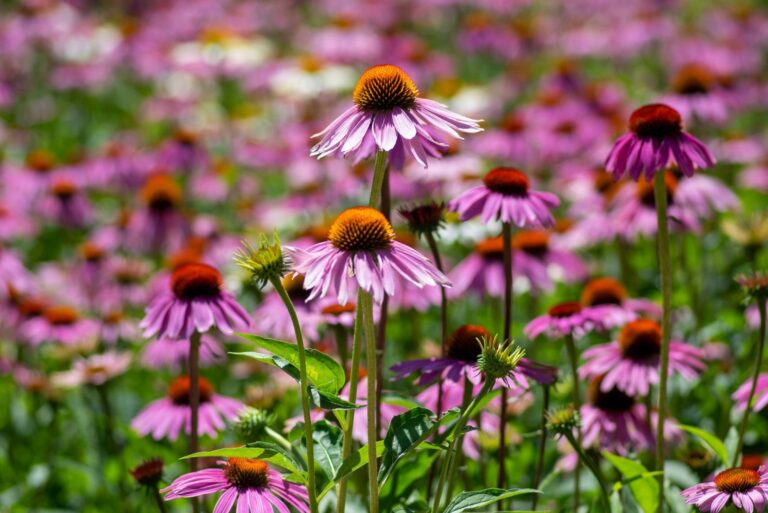
2. Purple Coneflower (Echinacea Purpurea)
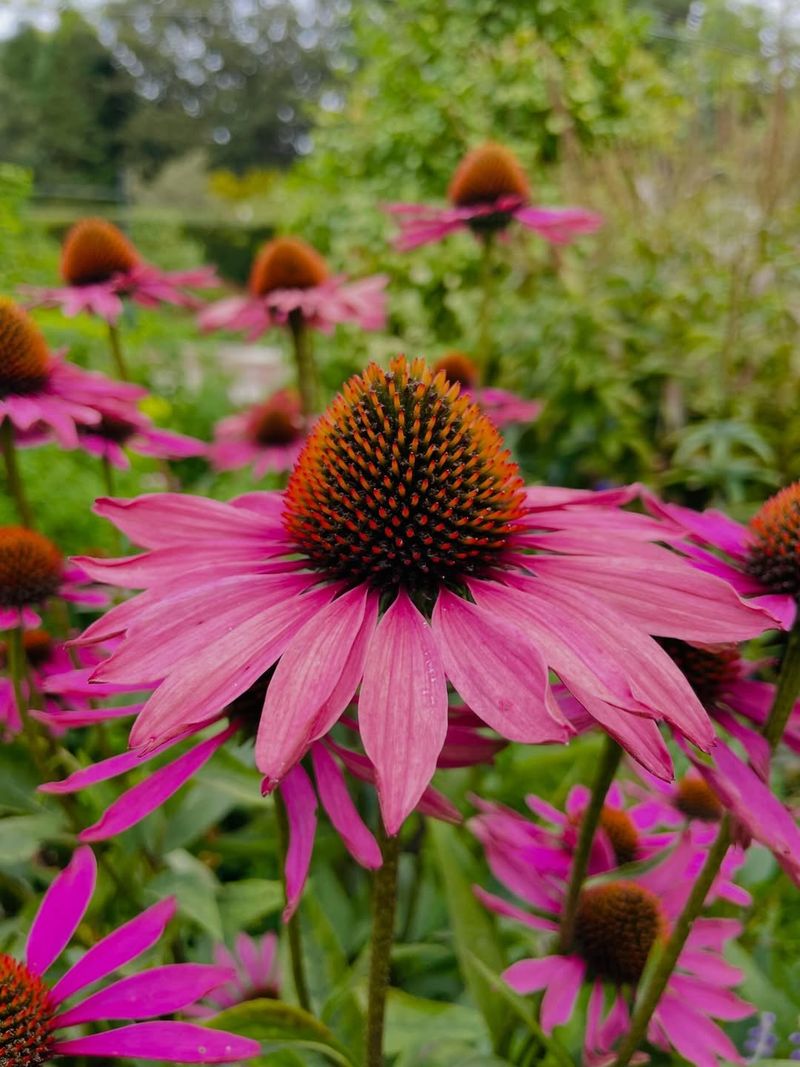
Walk through almost any Pennsylvania nature preserve in July and you will likely spot the Purple Coneflower standing tall above the surrounding greenery.
Its rosy-purple petals droop slightly downward from a spiky, copper-colored center, giving it a look that is both elegant and wild at the same time. This plant is a true summer champion.
One of the best things about Purple Coneflower is how long it blooms. Most flowers put on a show for a few weeks and then disappear.
Echinacea purpurea starts blooming in early summer and keeps producing fresh flowers all the way into early fall. That extended bloom time makes it incredibly valuable for pollinators that need food sources throughout the season.
Your Pennsylvania Garden Changes Every Week. Your Plan Should Too.
Gardening in Pennsylvania changes quickly throughout the season. Every Friday you’ll receive a simple weekly plan showing exactly what to plant, prune, fertilize, harvest, and protect so you never miss the right timing.
Bees go absolutely wild for this plant. Butterflies flock to it too, especially swallowtails and monarchs passing through Pennsylvania on their migration routes.
Even after the petals fall off, the spiky seed heads remain standing and provide food for birds like finches during late summer and into autumn.
Gardeners across Pennsylvania love Purple Coneflower because it is nearly impossible to mess up. It tolerates heat, handles drought reasonably well, and comes back reliably year after year.
You can plant it in full sun or partial shade, and it will still perform beautifully. Over time, established clumps grow larger and more impressive.
Did you know Echinacea has also been used in herbal remedies for centuries? That history adds an extra layer of appreciation for this already remarkable wildflower.
3. Wild Bergamot (Monarda Fistulosa)
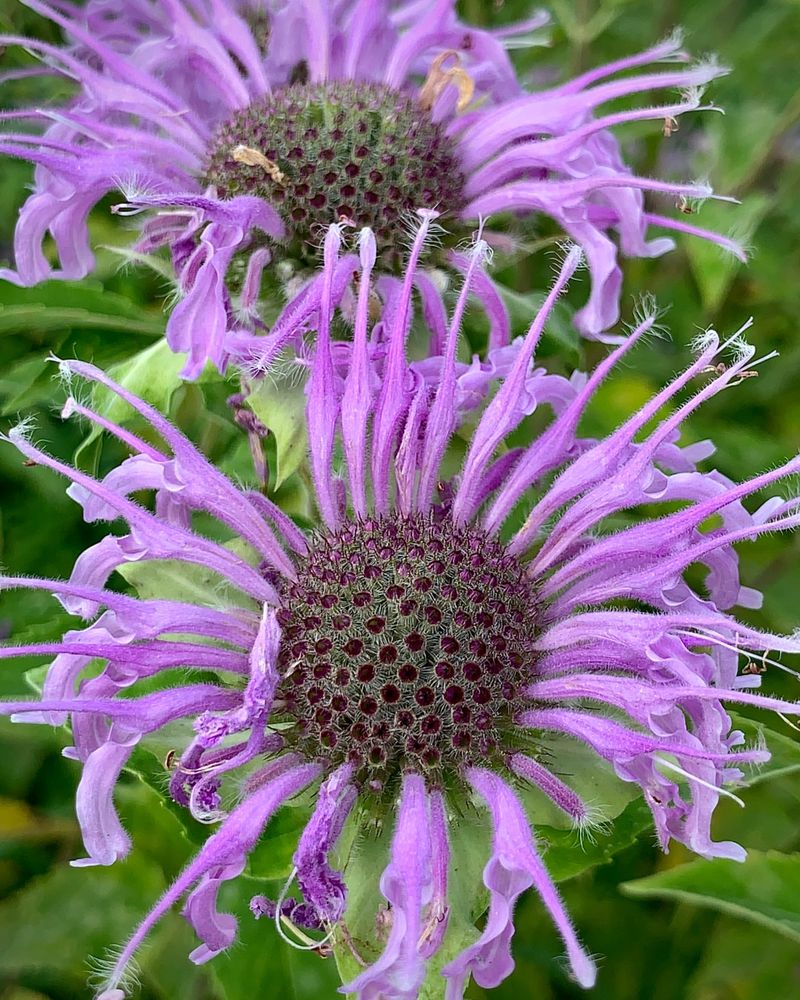
There is something almost magical about a patch of Wild Bergamot in full bloom. The lavender-pink flower clusters sit on top of tall stems and seem to float above the surrounding greenery like tiny fireworks.
Mid to late summer is when this native Pennsylvania wildflower really steals the show, and pollinators cannot seem to get enough of it.
Wild Bergamot belongs to the mint family, and if you crush one of its leaves between your fingers, you will immediately notice a strong, pleasant herbal scent.
That fragrance is part of what makes it so attractive to bees, especially native bumblebees and sweat bees that are vital to Pennsylvania ecosystems. Hummingbirds and butterflies are also frequent visitors.
This plant thrives in open meadows, prairies, and along sunny roadsides throughout Pennsylvania. It is well-adapted to the region’s summer heat and can handle dry conditions once it is established.
You do not need rich soil or constant watering to keep Wild Bergamot happy. In fact, overly rich soil can sometimes cause it to flop over rather than stand upright.
For home gardeners in Pennsylvania, Wild Bergamot works beautifully in naturalized areas or mixed wildflower plantings. It spreads gradually through underground rhizomes, slowly creating larger colonies over time.
Pairing it with Black-Eyed Susans and Purple Coneflower creates a stunning summer display that supports pollinators from June through September. It is a plant that gives back to the landscape in so many ways beyond just its looks.
4. Coreopsis (Coreopsis Lanceolata)
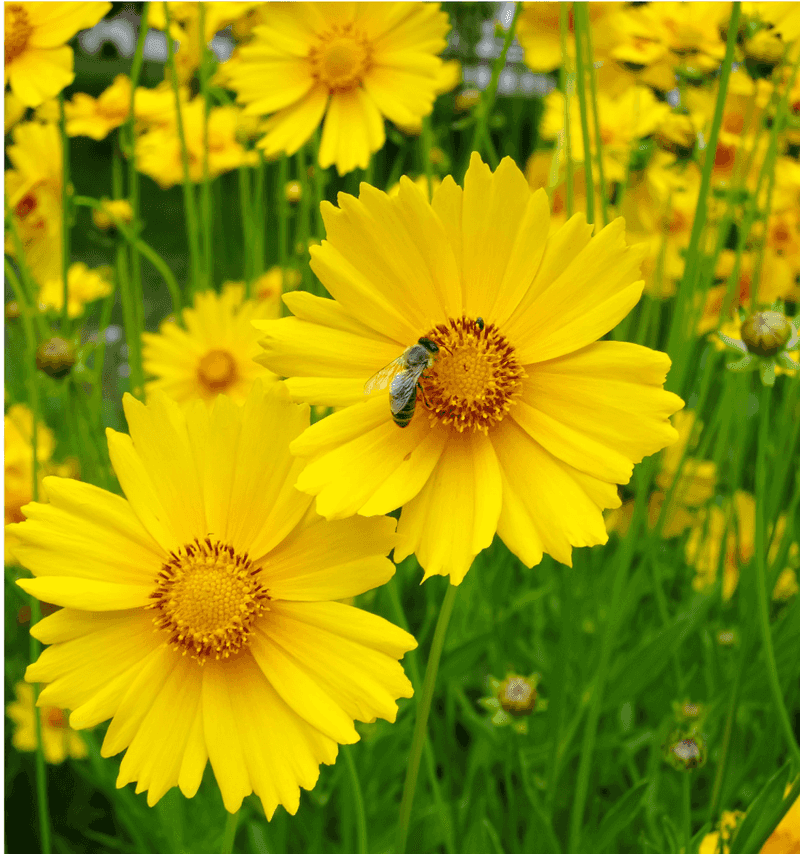
Cheerful is the only word that truly fits Coreopsis. Those bright yellow, daisy-like flowers seem to radiate pure sunshine, and they show up in full force during early summer across Pennsylvania fields, roadsides, and gardens.
Also called Lance-Leaved Coreopsis or Tickseed, this native wildflower is one of the most enthusiastic bloomers you will find anywhere in the state.
Early summer is when Coreopsis really explodes with color. The plants can cover themselves so completely in flowers that you can barely see the foliage underneath.
After the first big flush of blooms slows down, a light trim of the spent flower heads encourages the plant to push out another round of fresh flowers. That simple trick can keep your Coreopsis blooming well into late summer.
Pennsylvania gardeners love this plant for its easygoing attitude. It handles heat and drought without complaint, and it actually prefers well-drained or even sandy soil over rich, heavy garden soil.
Too much moisture can cause root problems, so planting it in a sunny, well-drained spot is the key to long-term success.
Beyond its good looks, Coreopsis is a fantastic resource for pollinators. Bees and butterflies visit the flowers regularly throughout the blooming season.
The seed heads that form after blooming also attract small birds. If you are putting together a Pennsylvania wildflower garden and want something that hits hard and fast in early summer while still delivering color later in the season, Coreopsis lanceolata is a must-have addition to the mix.
5. Blanket Flower (Gaillardia Pulchella)
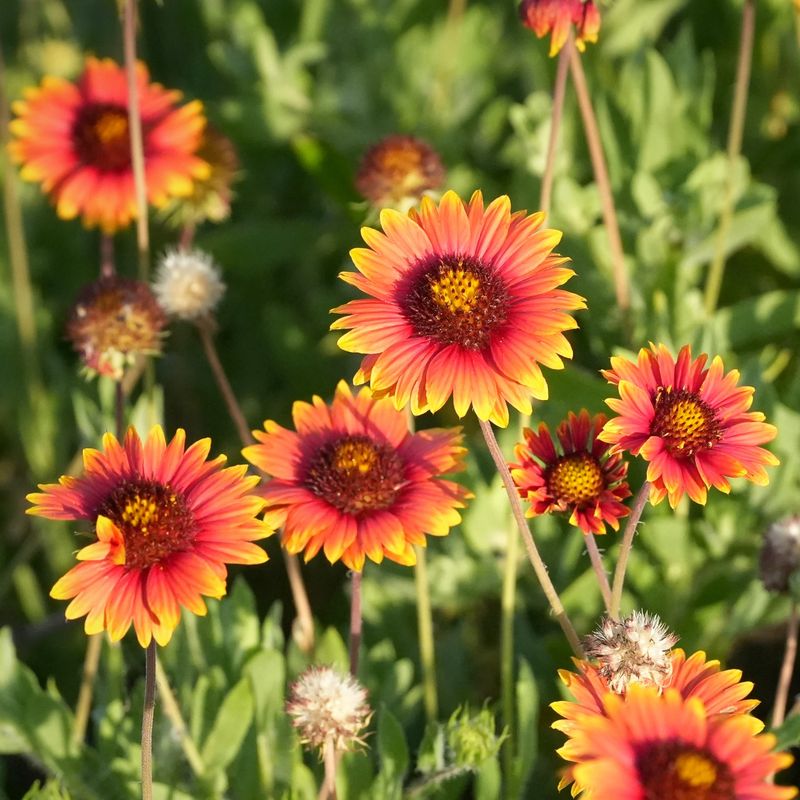
If you have ever seen a Blanket Flower up close, you already know why it earned that name. The bold red and yellow petals, often banded together in fiery rings, look like the bright patterns found on traditional Native American blankets.
This wildflower is one of the most eye-catching plants you can grow in Pennsylvania, and it loves summer heat more than almost anything else.
Gaillardia pulchella is not picky about where it grows. Poor soil, sandy ground, rocky patches, and dry hillsides are all perfectly fine with this tough little plant.
In fact, it actually performs better in lean soil than in rich garden beds. Too much fertilizer or overly rich conditions can make the plant floppy and reduce its flowering.
Pennsylvania gardeners with challenging spots in their yards will appreciate just how adaptable Blanket Flower really is.
One of its most impressive qualities is its nonstop blooming habit. From late spring all the way through summer and into early fall, Blanket Flower keeps pushing out fresh blooms without much encouragement.
Deadheading spent flowers helps extend the display even further. Bees and butterflies are drawn to the colorful flowers regularly.
Blanket Flower is a short-lived perennial in Pennsylvania, meaning individual plants may only last two or three years. However, it reseeds itself generously, so new plants tend to pop up naturally to replace older ones.
Once you have it established in a spot, it often takes care of itself. That self-sufficient quality makes it an ideal choice for low-maintenance wildflower plantings throughout the state.
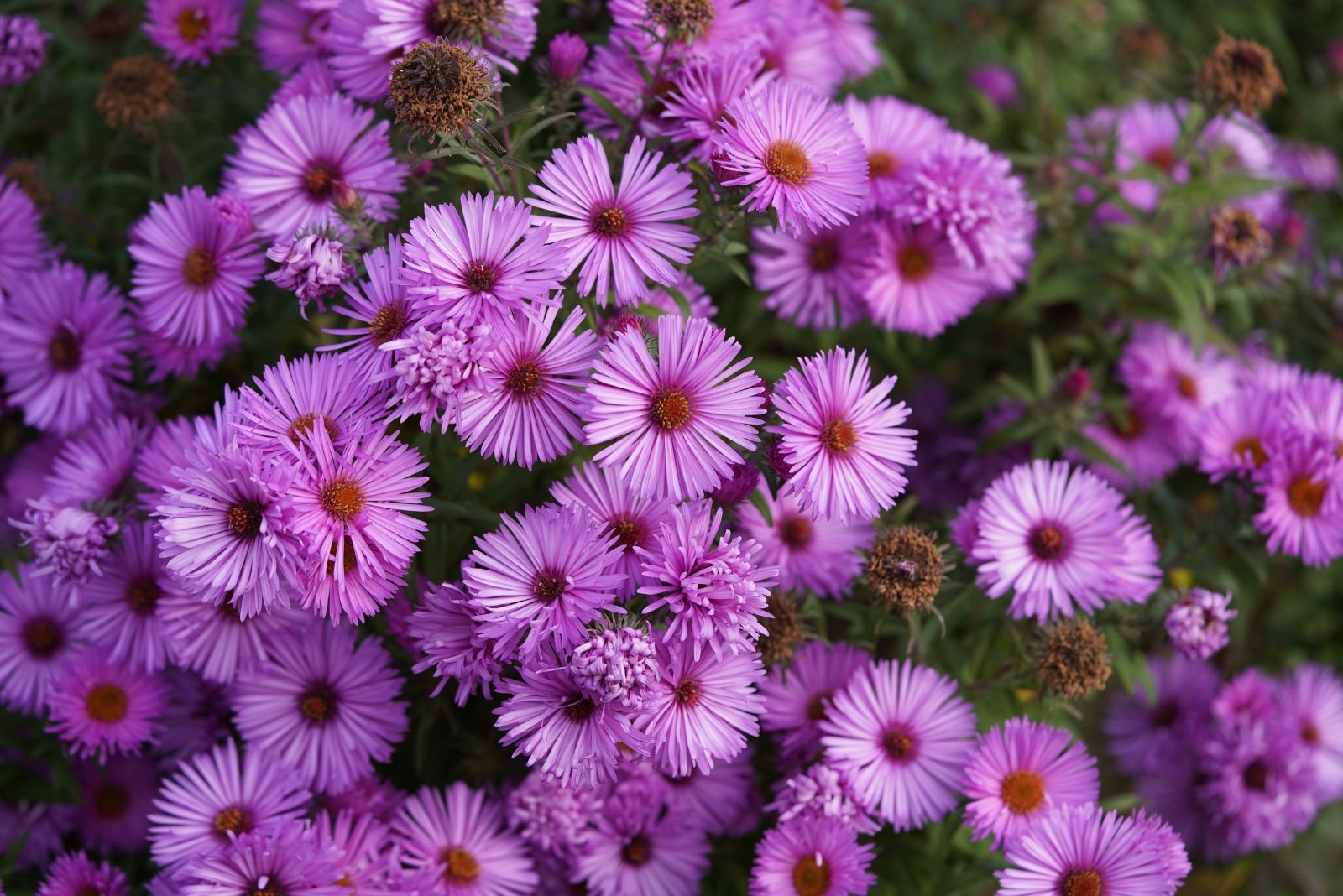
6. New England Aster (Symphyotrichum Novae-Angliae)
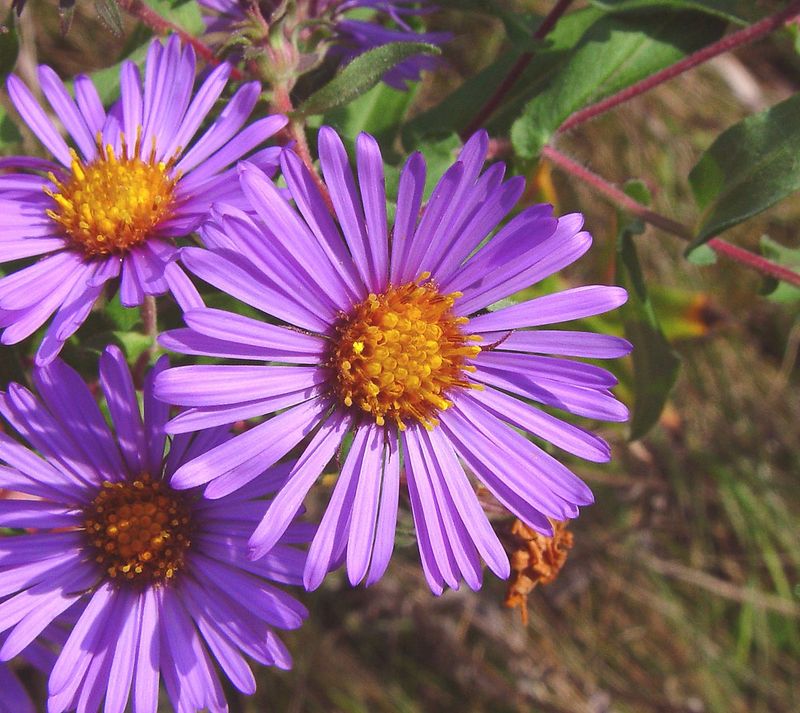
When late summer arrives and most wildflowers are winding down, New England Aster shows up like a grand finale.
The deep purple, violet, or sometimes pink flowers with bright yellow centers are some of the most vibrant colors you will see anywhere in Pennsylvania from August through October. This plant does not just survive the end of summer, it thrives in it.
New England Aster can grow quite tall, sometimes reaching four to six feet in height under good conditions. That impressive size makes it a standout in any wildflower planting or natural garden area.
In Pennsylvania meadows and along roadsides, large colonies of New England Aster create breathtaking waves of purple color that are hard to forget once you have seen them in person.
Monarch butterflies depend heavily on late-blooming plants like New England Aster during their fall migration through Pennsylvania. The flowers provide a critical nectar source right when monarchs need energy most for their long journey south.
Bees and other native pollinators also rely on asters as one of the last major food sources before winter sets in.
Growing New England Aster in a Pennsylvania garden is straightforward. It prefers full sun and moist, well-drained soil, though it tolerates a range of conditions reasonably well.
Cutting plants back by about half in late June encourages bushier, more compact growth and prevents the tall stems from falling over. With just that one simple step, you can enjoy a fuller, more impressive display of blooms every single fall season.
7. Goldenrod (Solidago Spp.)
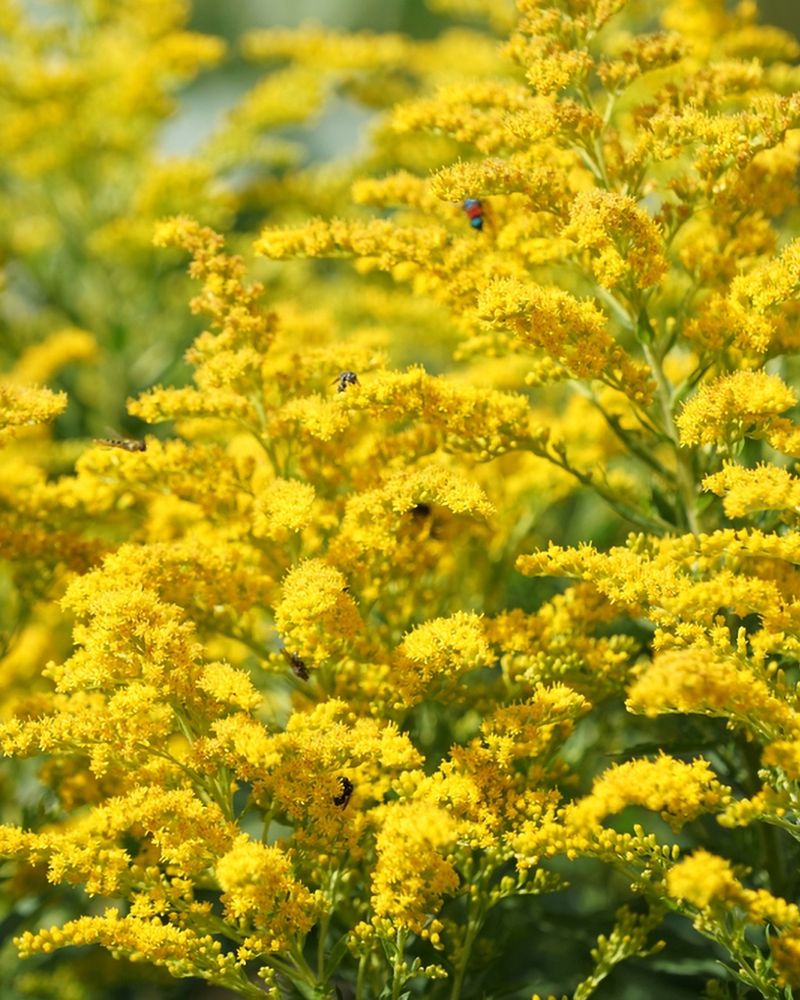
Goldenrod gets a bad reputation that it absolutely does not deserve. Many people blame it for hay fever season, but the real culprit is ragweed, which blooms at the same time.
Goldenrod’s pollen is heavy and sticky, carried by insects rather than the wind. It is not responsible for your sneezing, but it is responsible for some of the most stunning late summer scenery in all of Pennsylvania.
Those tall, arching plumes of bright yellow flowers are a signature sight across Pennsylvania fields, roadsides, and forest edges from late July through September. When almost every other wildflower has finished for the season, Goldenrod is just getting started.
It fills the landscape with warm golden color at a time when everything else is fading to brown and green.
From a wildlife perspective, Goldenrod is extraordinarily valuable. More than 100 species of bees visit Goldenrod in North America, and Pennsylvania’s native bee populations depend on it heavily during late summer.
Butterflies, beetles, and other beneficial insects also flock to the flowers. The plant even provides habitat for certain insects that spend the winter inside its hollow stems.
For gardeners, Goldenrod is one of the easiest native plants to establish in Pennsylvania. It spreads through both seeds and underground rhizomes, which means it can fill in an area fairly quickly.
Planting it alongside New England Aster creates a classic late-summer color combination of gold and purple that looks stunning and supports enormous numbers of pollinators at the same time. It is truly one of Pennsylvania’s most underappreciated wildflowers.